Tag: planetary science

  • Venusian Gravity Currents

    Venusian Gravity Currents

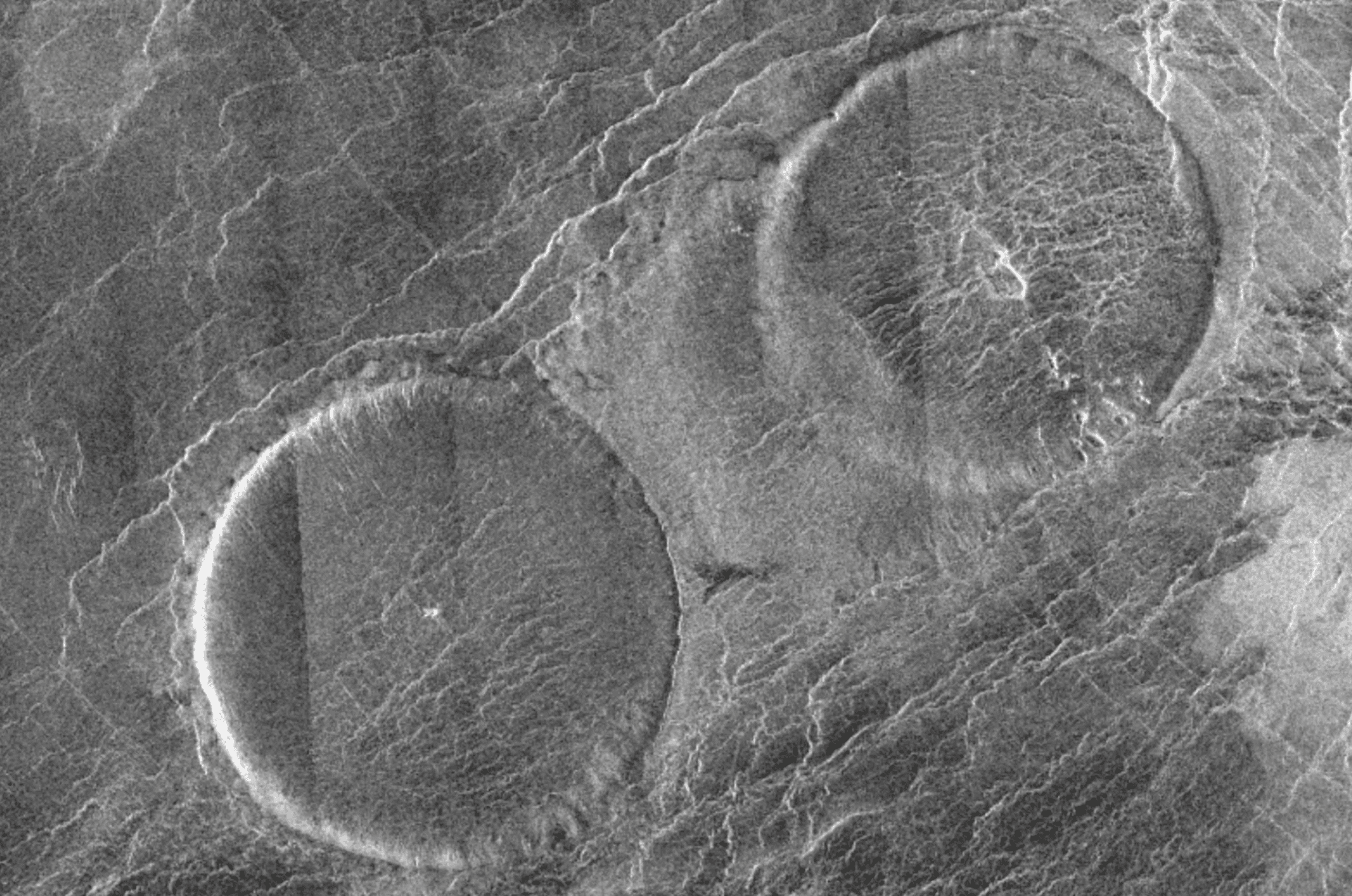
    Radar measurements of Venus‘s surface reveal the remains of many volcanic eruptions. One type of feature, known as a pancake dome, has a very flat top and steep sides; one dome, Narina Tholus, is over 140 kilometers wide. Since their discovery, scientists have been puzzling out how such domes could form. A recent study suggests that the Venusian surface’s elasticity plays a role.

    According to current models, the pancake domes are gravity currents (like a cold draft under your door, an avalanche, or the Boston Molasses Flood), albeit ones so viscous that they may require hundreds of thousands of Earth-years to settle. Researchers found that their simulated pancake domes best matched measurements from Venus when the lava was about 2.5 times denser than water and flowed over a flexible crust.

    We might have more data to support (or refute) the study’s conclusions soon, but only if NASA’s VERITAS mission to Venus is not cancelled. (Image credit: NASA; research credit: M. Borelli et al.; via Gizmodo)


    Fediverse Reactions
  • Martian Streaks Are Dry

    Martian Streaks Are Dry

    Dark lines appearing on Martian slopes have triggered theories of flowing water or brine on the planet’s surface. But a new study suggests that these features are, instead, dry. To explore these streaks, the team assembled a global database of sightings and correlated their map with other known quantities, like temperature, wind speed, and rock slides. By connecting the data across thousands of streaks, they could build statistics about what variables correlated with the streaks’ appearance.

    What they found was that streaks didn’t appear in places connected to liquid water or even frost. Instead, the streaks appeared in spots with high wind speeds and heavy dust accumulation. The team included that, rather than being moist areas, the streaks are dry and form when dust slides down the slope, perhaps triggered by high winds or passing dust devils.

    Although showing that the streaks aren’t associated with water may seem disappointing, it may mean that NASA will be able to explore them sooner. Right now, NASA avoids sending rovers anywhere near water, out of concern that Earth microbes still on the rover could contaminate the Martian environment. (Image credit: NASA; research credit: V. Bickel and A. Valantinas; via Gizmodo)

    Fediverse Reactions
  • Io’s Missing Magma Ocean

    Io’s Missing Magma Ocean

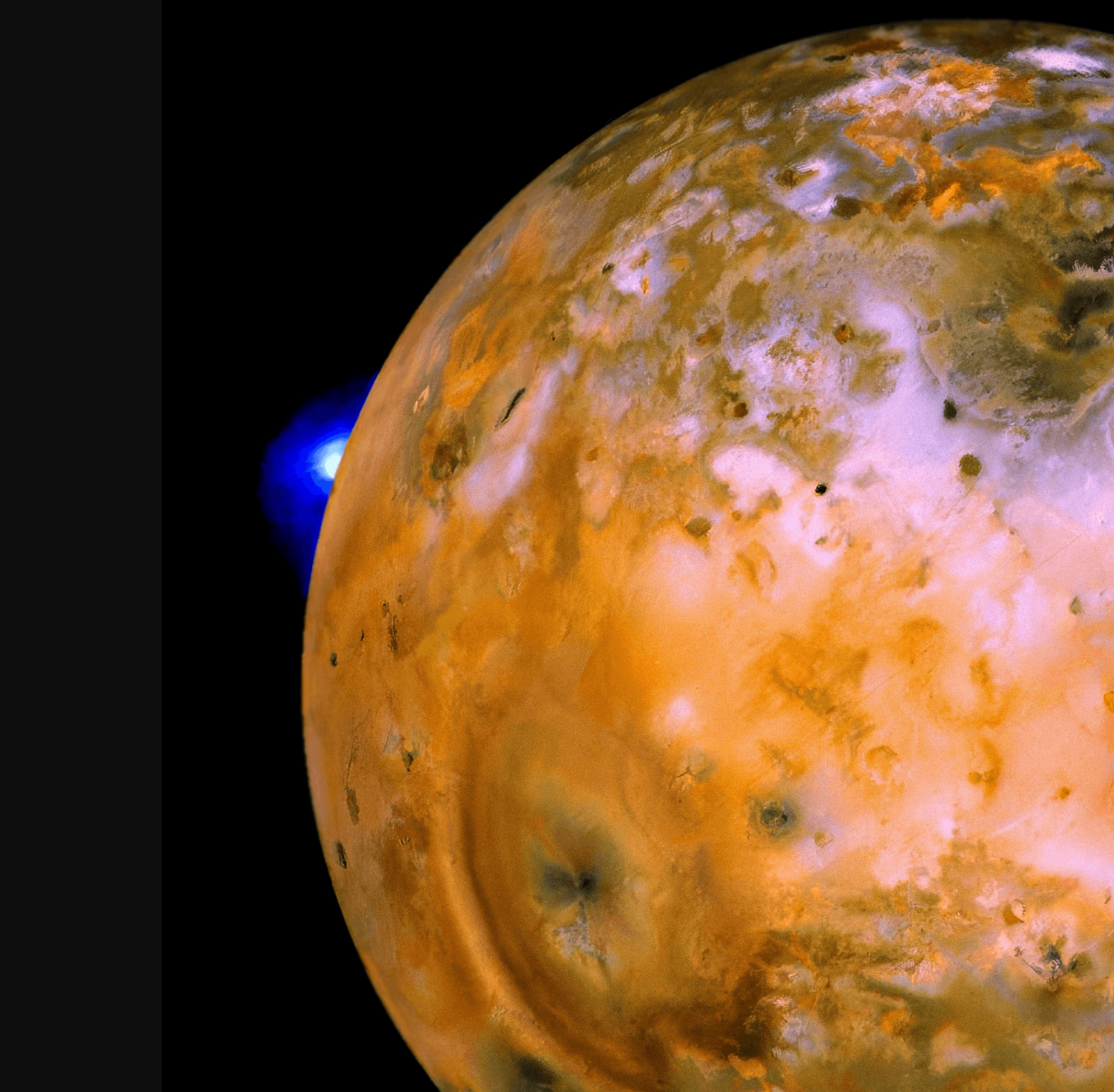
    In the late 1970s, scientists conjectured that Io was likely a volcanic world, heated by tidal forces from Jupiter that squeeze it along its elliptical orbit. Only months later, images from Voyager 1’s flyby confirmed the moon’s volcanism. Magnetometer data from Galileo’s later flyby suggested that tidal heating had created a shallow magma ocean that powered the moon’s volcanic activity. But newly analyzed data from Juno’s flyby shows that Io doesn’t have a magma ocean after all.

    The new flyby used radio transmission data to measure any little wobbles that Io caused by tugging Juno off its expected course. The team expected a magma ocean to cause plenty of distortions for the spacecraft, but the effect was much slighter than expected. Their conclusion? Io has no magma ocean lurking under its crust. The results don’t preclude a deeper magma ocean, but at what point do you distinguish a magma ocean from a body’s liquid core?

    Instead, scientists are now exploring the possibility that Io’s magma shoots up from much smaller pockets of magma rather than one enormous, shared source. (Image credit: NASA/JPL/USGS; research credit: R. Park et al.; see also Quanta)

    Fediverse Reactions
  • Ponding on the Ice Shelf

    Ponding on the Ice Shelf

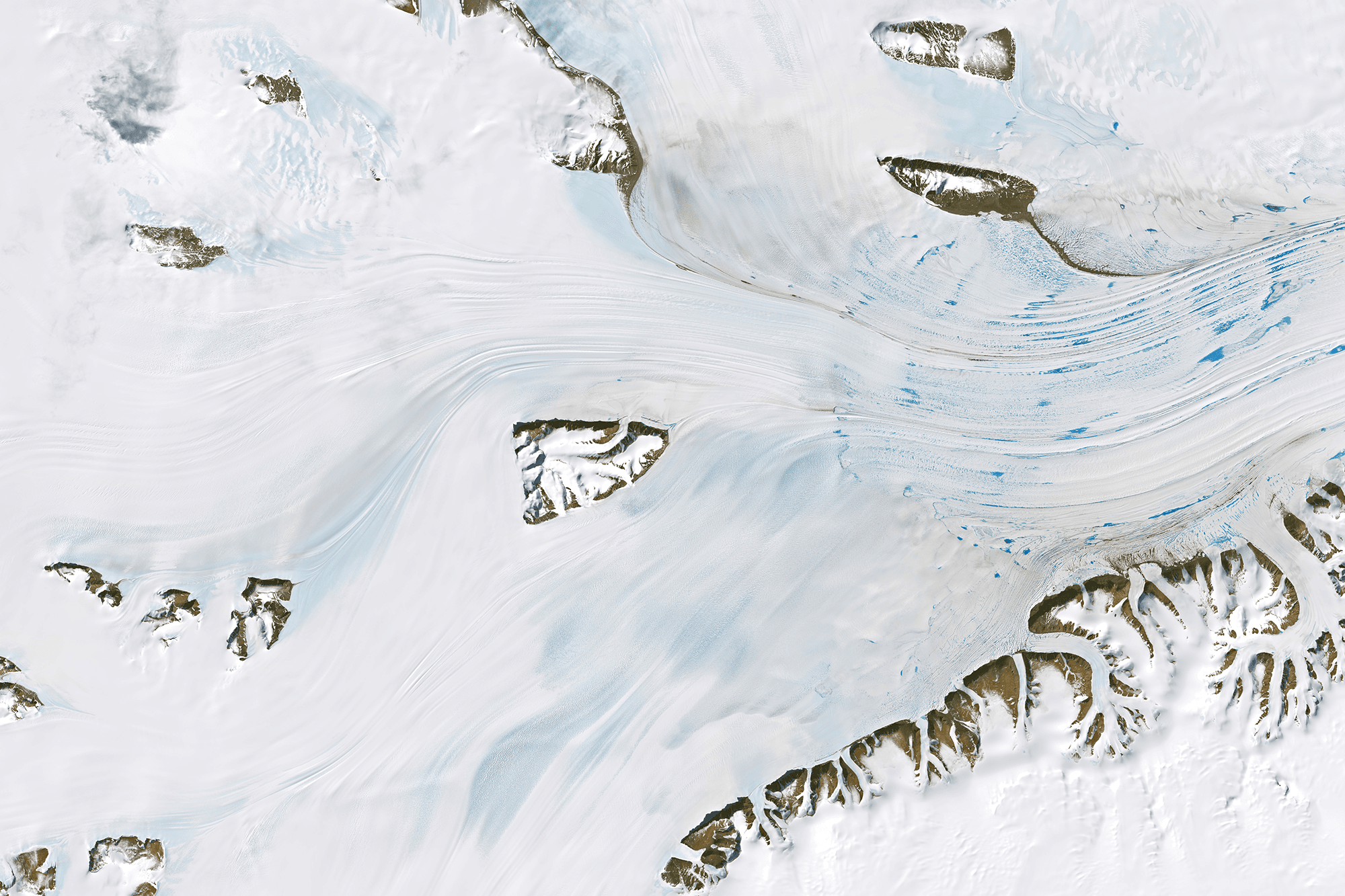
    Glaciers flow together and march out to sea along the Amery Ice Shelf in this satellite image of Antarctica. Three glaciers — flowing from the top, left, and bottom of the image — meet just to the right of center and pass from the continental bedrock onto the ice-covered ocean. The ice shelf is recognizable by its plethora of meltwater ponds, which appear as bright blue areas. Each austral summer, meltwater gathers in low-lying regions on the ice, potentially destabilizing the ice shelf through fracture and drainage. This region near the ice shelf’s grounding line is particularly prone to ponding. Regions further afield (right, beyond the image) are colder and drier, often allowing meltwater to refreeze. (Image credit: W. Liang; via NASA Earth Observatory)

    Fediverse Reactions
  • Seeking Uranus’s Spin

    Seeking Uranus’s Spin

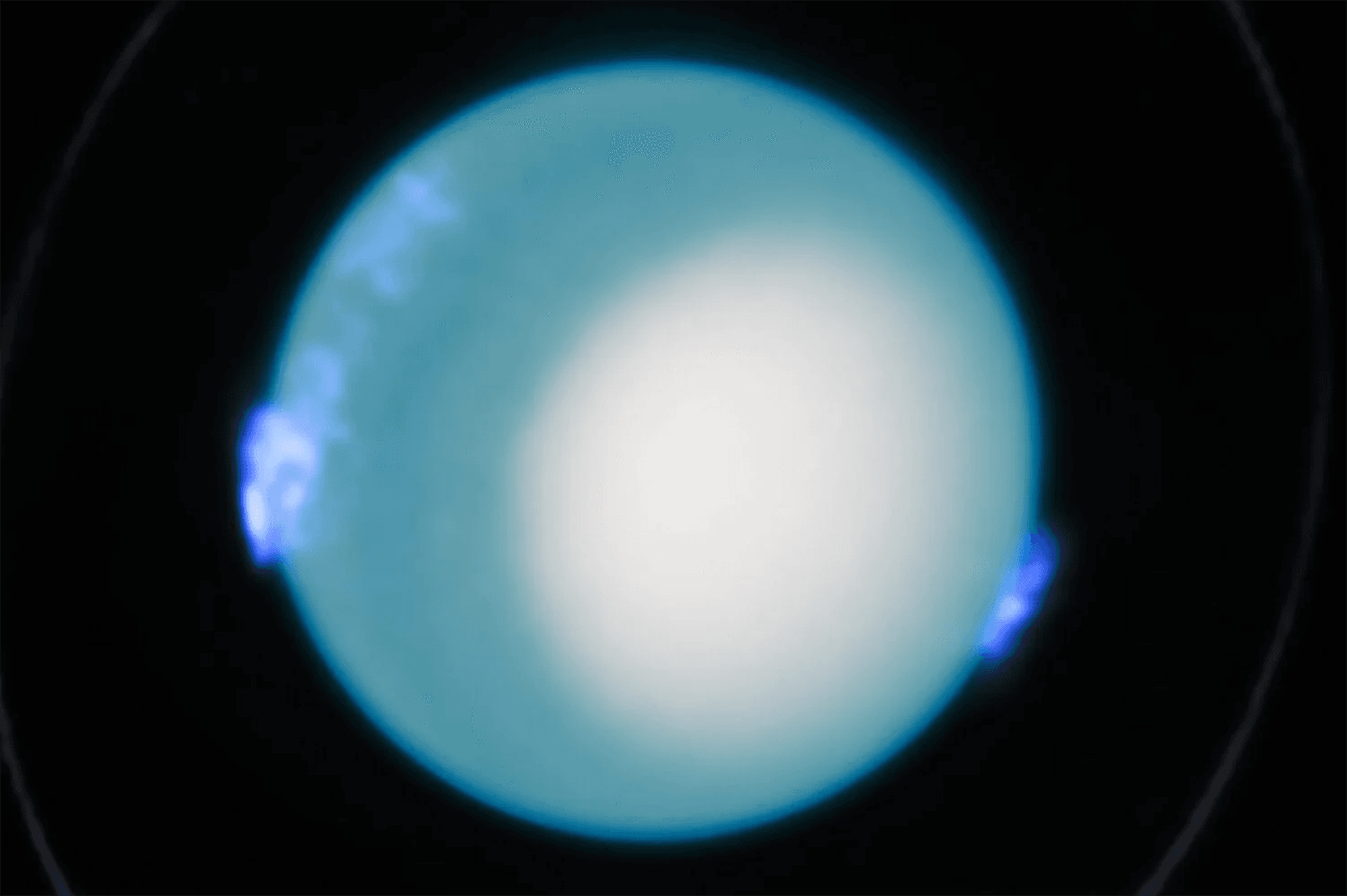
    Uranus is one of our solar system’s oddest planets. An ice giant, it spins on its side. We originally estimated its rate of rotation using measurements from Voyager 2, the only spacecraft to have visited the planet. But that measurement was so imprecise that within two years, astronomers could no longer use it to predict where the planet’s poles were. Now a new study, drawing on over a decade of Hubble observations of Uranus’s auroras, has pinned down the planet’s rotation rate far more precisely: 17 hours, 14 minutes, and 52 seconds. While that’s within the original measurement’s 36-second margin of error, the new measurement has a margin of error of only 0.036 seconds. In addition to helping plan a theoretical future Uranus mission, this more accurate rotation rate allows researchers to reexamine decades of data, now with certainty about the planet’s orientation at the time of the observation. (Image credit: ESA/Hubble, NASA, L. Lamy, L. Sromovsky; research credit: L. Lamy et al.; via Gizmodo)

  • Martian Mud Volcanoes

    Martian Mud Volcanoes

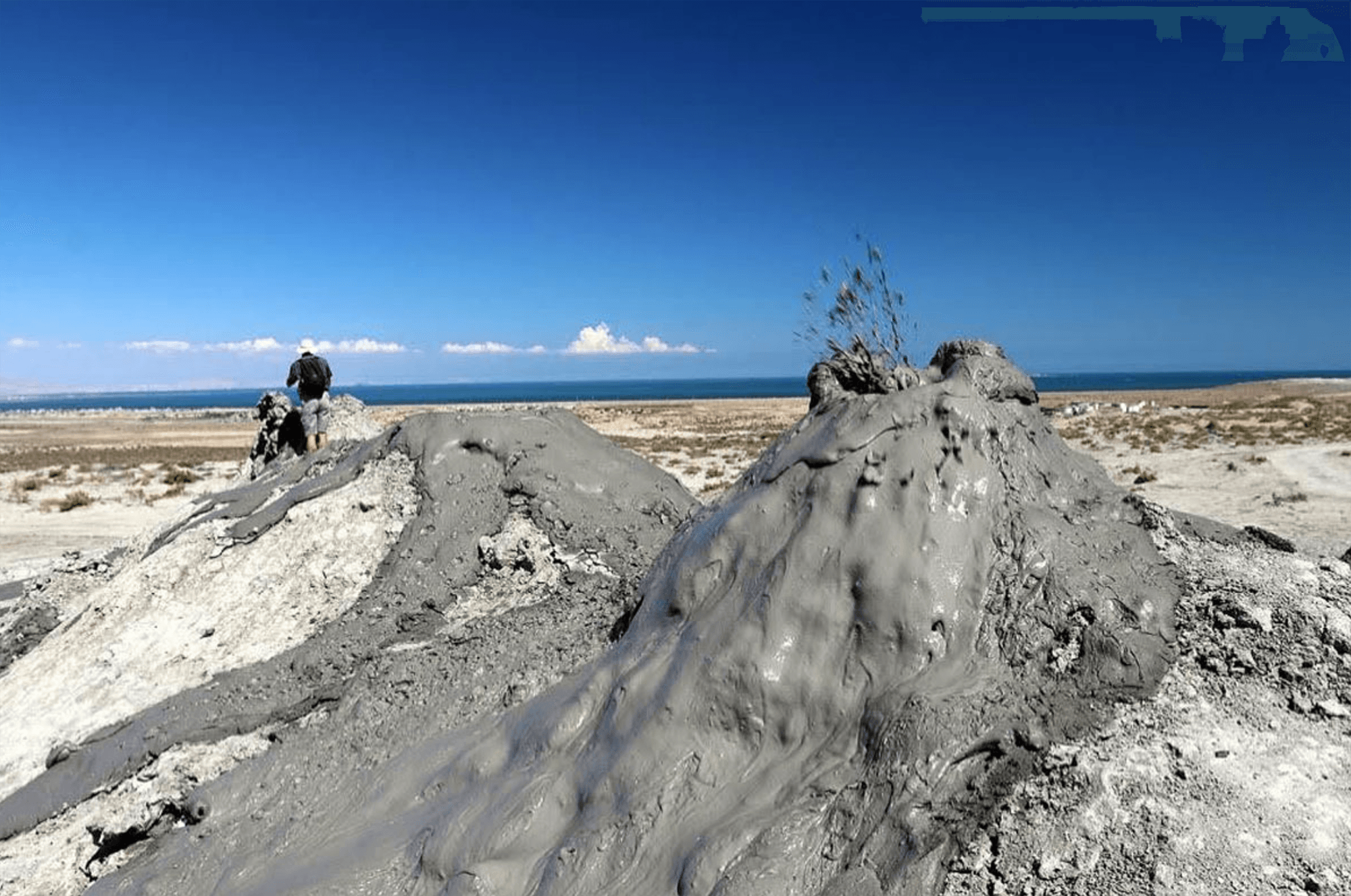
    Mars features mounds that resemble our terrestrial mud volcanoes, suggesting that a similar form of mudflow occurs on Mars. But Mars’ thin atmosphere and frigid temperatures mean that water — a prime ingredient of any mud — is almost always in either solid or gaseous form on the planet. So researchers explored whether salty muds could flow under Martian conditions. They tested a variety of salts, at different concentrations, in a low-pressure chamber calibrated to Mars-like temperatures and pressures. The salts lowered water’s freezing point, allowing the muds to remain fluid. Even a relatively small amount of sodium chloride — 2.5% by weight — allowed muds to flow far. The team also found that the salt content affected the shape the flowing mud took, with flows ranging from narrow, ropey patterns to broad, even sheets. (Image credit: P. Brož/Wikimedia Commons; research credit: O. Krýza et al.; via Eos)

    Fediverse Reactions
  • Climate Change and the Equatorial Cold Tongue

    Climate Change and the Equatorial Cold Tongue

    A cold region of Pacific waters stretches westward along the equator from the coast of Ecuador. Known as the equatorial cold tongue, this region exists because trade winds push surface waters away from the equator and allow colder, deeper waters to surface. Previous climate models have predicted warming for this region, but instead we’ve observed cooling — or at least a resistance to warming. Now researchers using decades of data and new simulations report that the observed cooling trend is, in fact, a result of human-caused climate changes. Like the cold tongue itself, this new cooling comes from wind patterns that change ocean mixing.

    As pleasant as a cooling streak sounds, this trend has unfortunate consequences elsewhere. Scientists have found that this cooling has a direct effect on drought in East Africa and southwestern North America. (Image credit: J. Shoer; via APS News)

    Fediverse Reactions
  • Inside an Alien Atmosphere

    Inside an Alien Atmosphere

    Studying the physics of planetary atmospheres is challenging, not least because we only have a handful of examples to work from in our own solar system. So it’s exciting that researchers have unveiled our first look at the 3D structure of an exoplanet‘s atmosphere.

    Using ground-based observations, researchers studied WASP-121b, also known as Tylos, an ultra-hot Jupiter that circles its star in only 30 Earth hours. One face of the planet always faces its star while the other faces into space. The team found that the exoplanet has a flow deep in the atmosphere that carries iron from the hot daytime side to the colder night side. Higher up, the atmosphere boasts a super-fast jet-stream that doubles in speed (from an estimated 13 kilometers per second to 26 kilometers per second) as it crosses from the morning terminator to the evening. As one researcher observed, the planet’s everyday winds make Earth’s worst hurricanes look tame. (Image credit: ESO/M. Kornmesser; research credit: J. Seidel et al.; via Gizmodo)
    Fediverse Reactions
  • Growing Ice

    Growing Ice

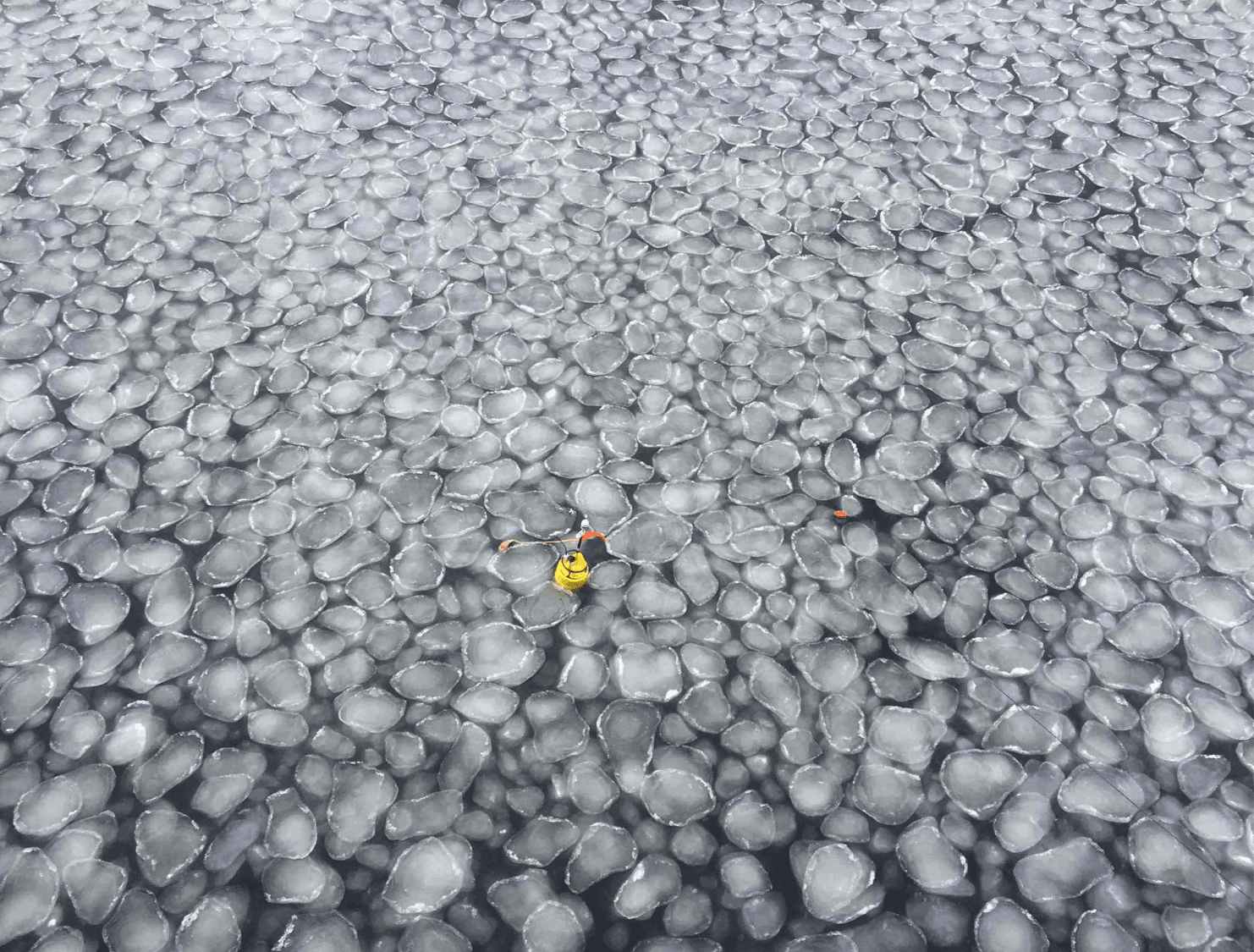
    While much attention is given to the summer loss of sea ice, the birth of new ice in the fall is also critical. Ice loss in the summer leaves oceans warmer and waves larger since wind can blow across longer open stretches. Those warmer waters and more dynamic waves affect how ice forms once autumn sets in. Higher waves mean that ice tends to form in “pancakes” like those seen here. Pancake ice is small — typically under 1 meter wide — and can only be observed from nearby, since they’re smaller than typical satellite resolution. Only once there’s enough pancake ice to dampen the waves will the pieces begin to cement together to form larger pieces that will form the basis of the year’s new ice. (Image credit: M. Smith; see also Eos)
    Fediverse Reactions
  • Disappearing Sea Ice Ridges

    Disappearing Sea Ice Ridges

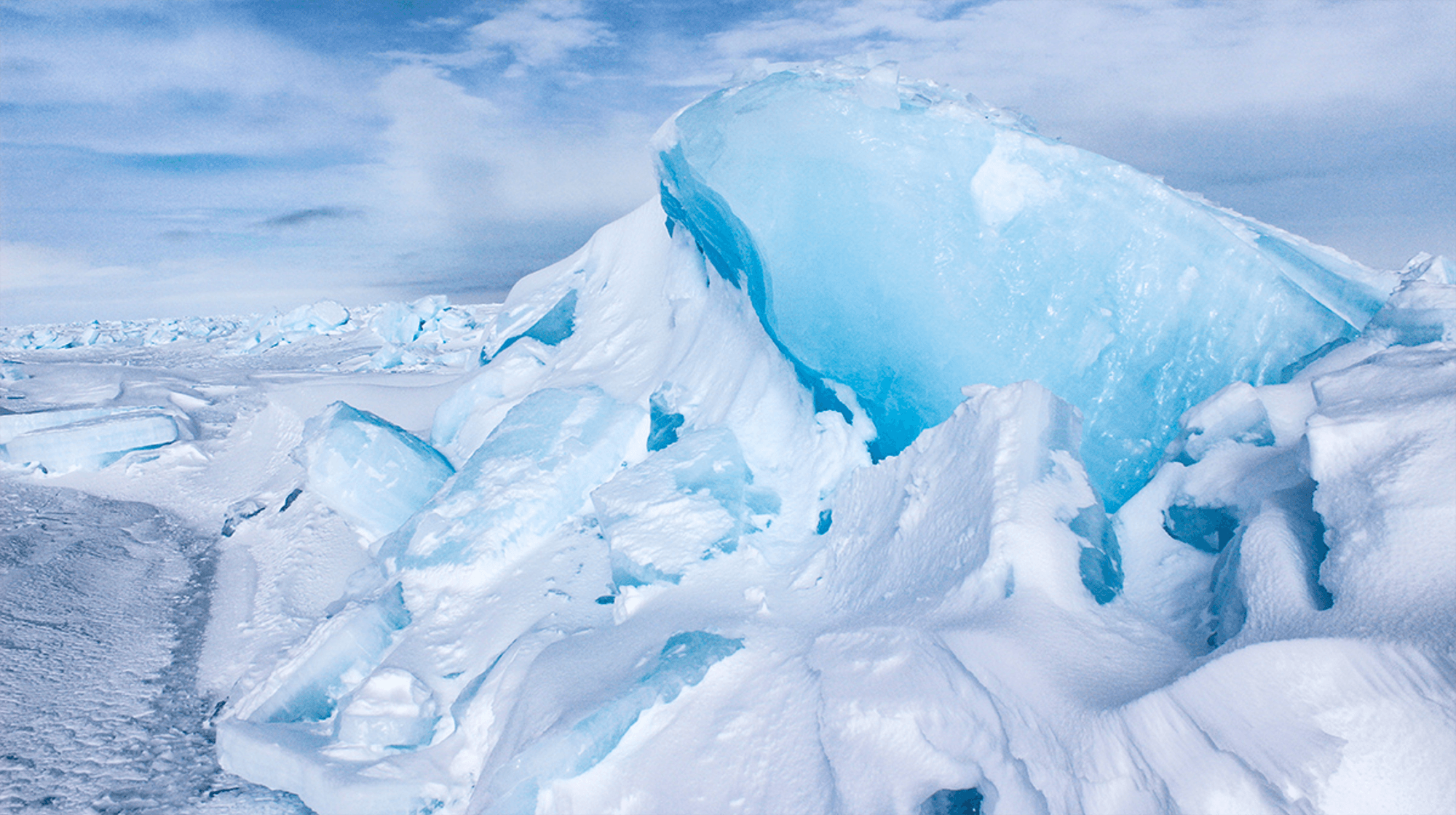
    As blocks of sea ice shift and float, they can press together, forming ridges spaced every few hundred meters or so. A new study uses aerial observations from recent decades to show that these sea ridges are getting smaller in both size and number, a smoothing of Arctic topography that has many consequences.

    The team showed that the overall changes in the sea ridges correspond to a loss of older sea ice. The current smoother sea ice presents less drag to winds and currents, which might suggest that the ice is slower-moving, but instead the opposite seems true. Scientists are not sure why the ice is moving faster, though faster ocean currents may play a role.

    Another consequence of smoother sea ice is wider, shallower melt ponds each summer. These wider ponds increase the amount of sunlight the ice absorbs, hastening melting even further. (Image credit: USGS; research credit: T. Krumpen et al.; via Eos)