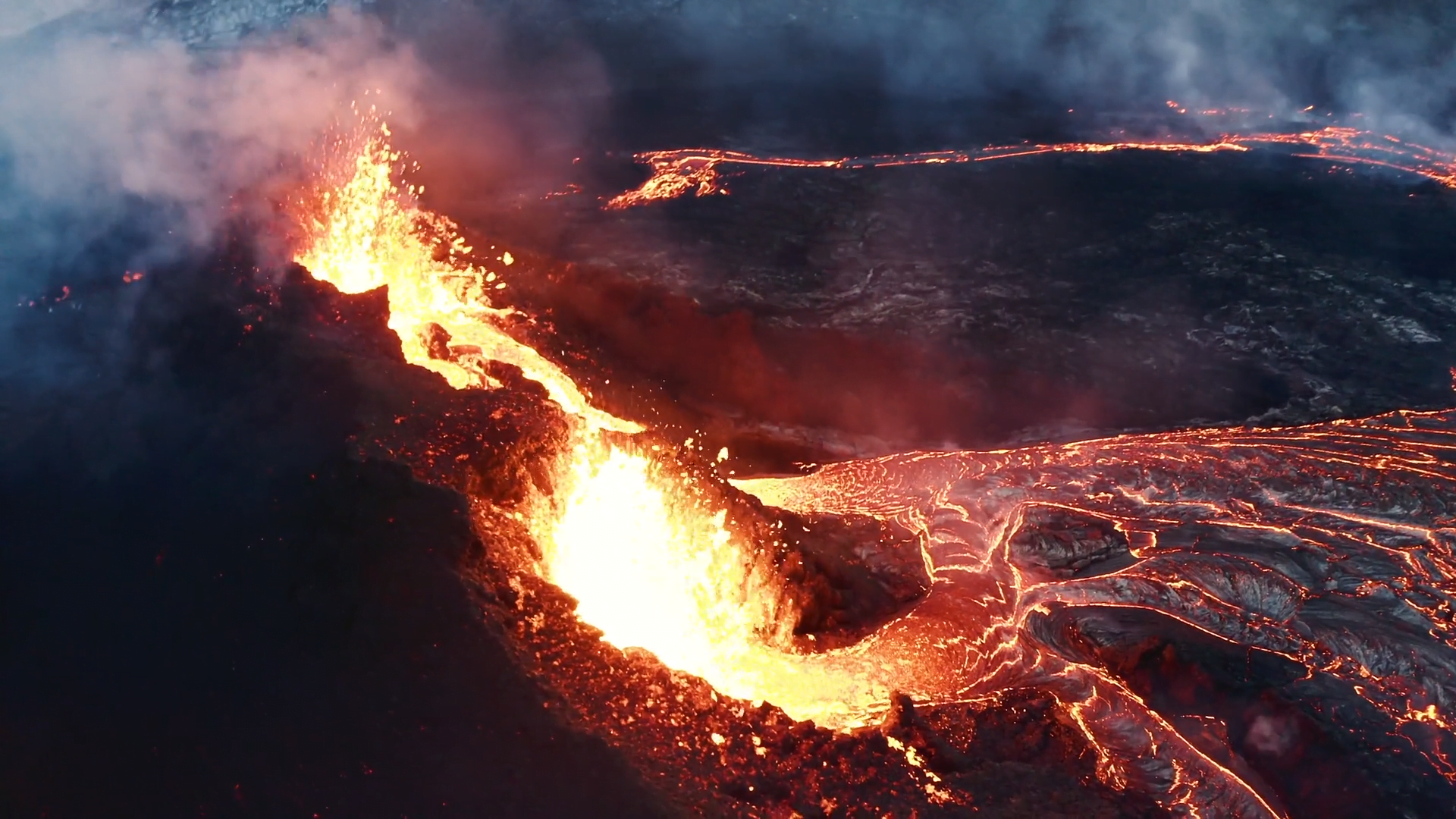
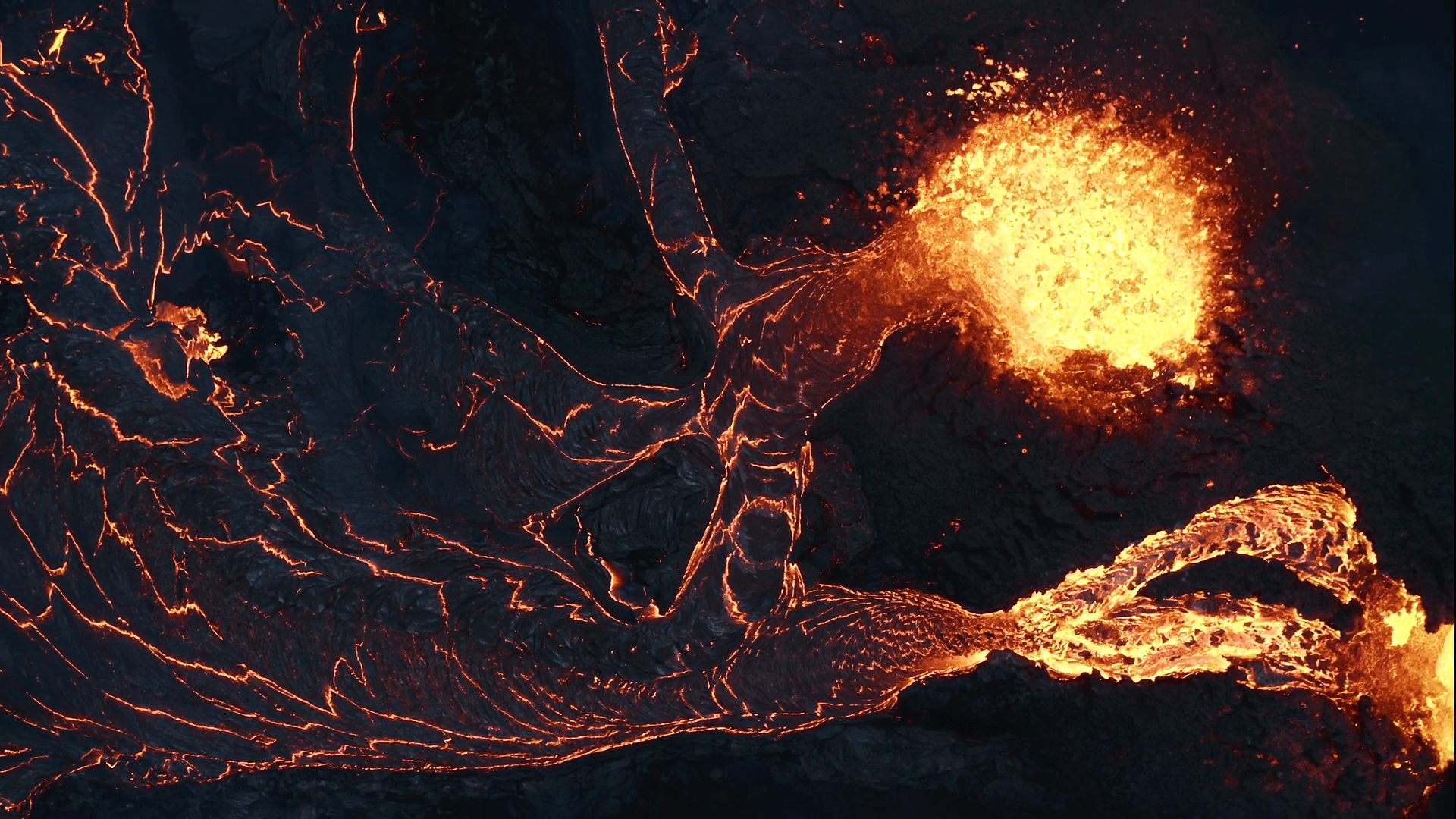
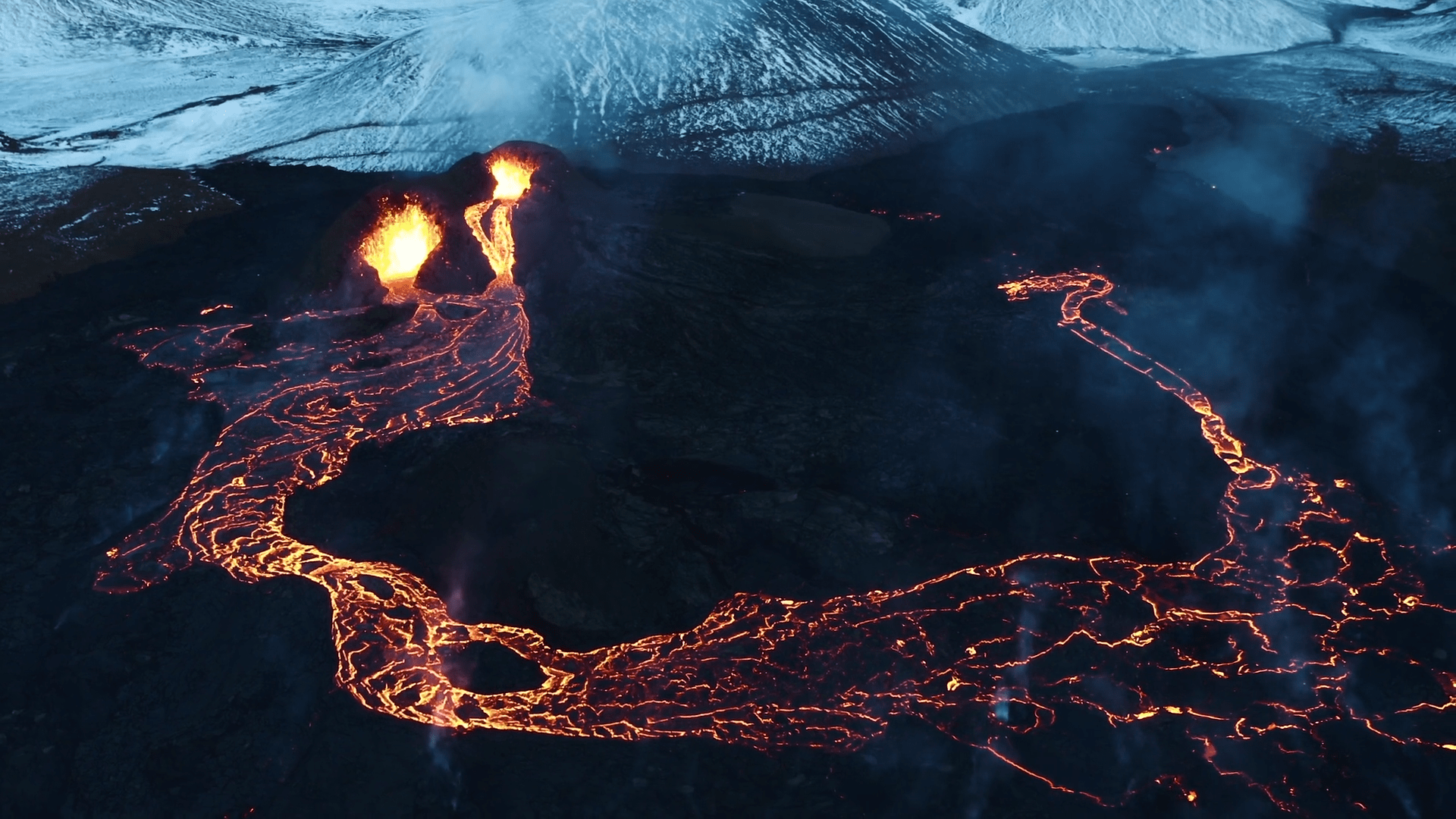
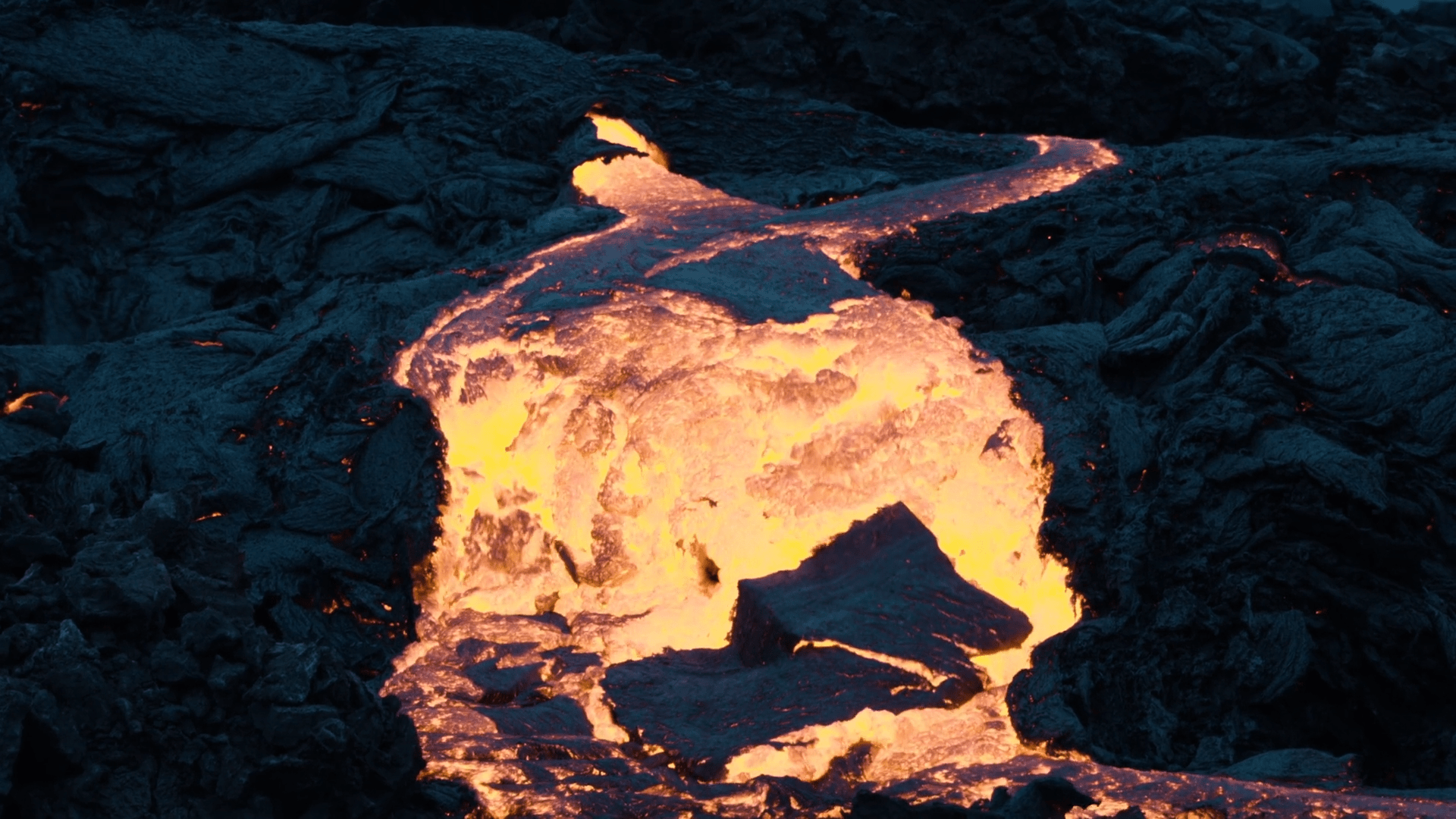
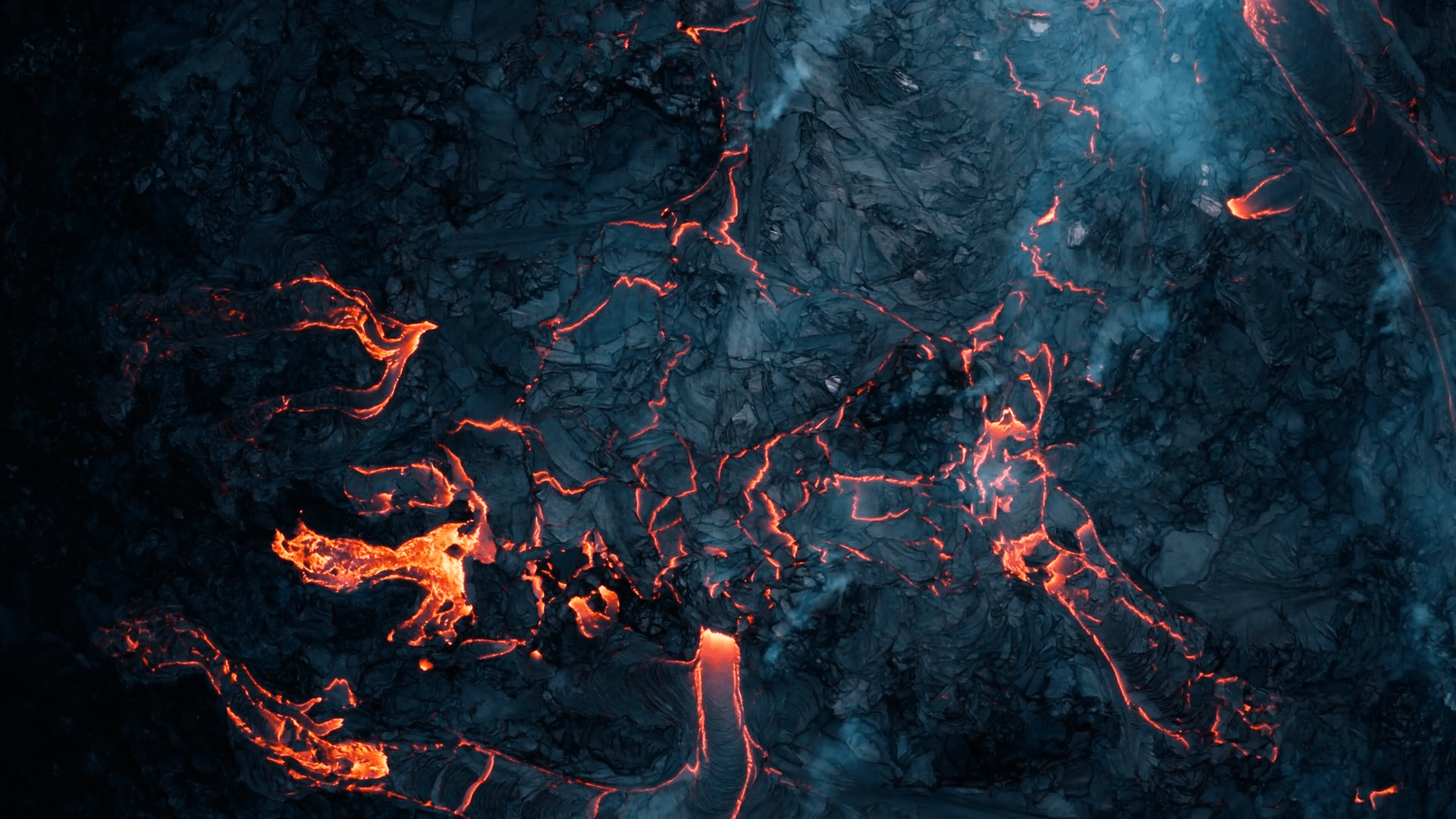
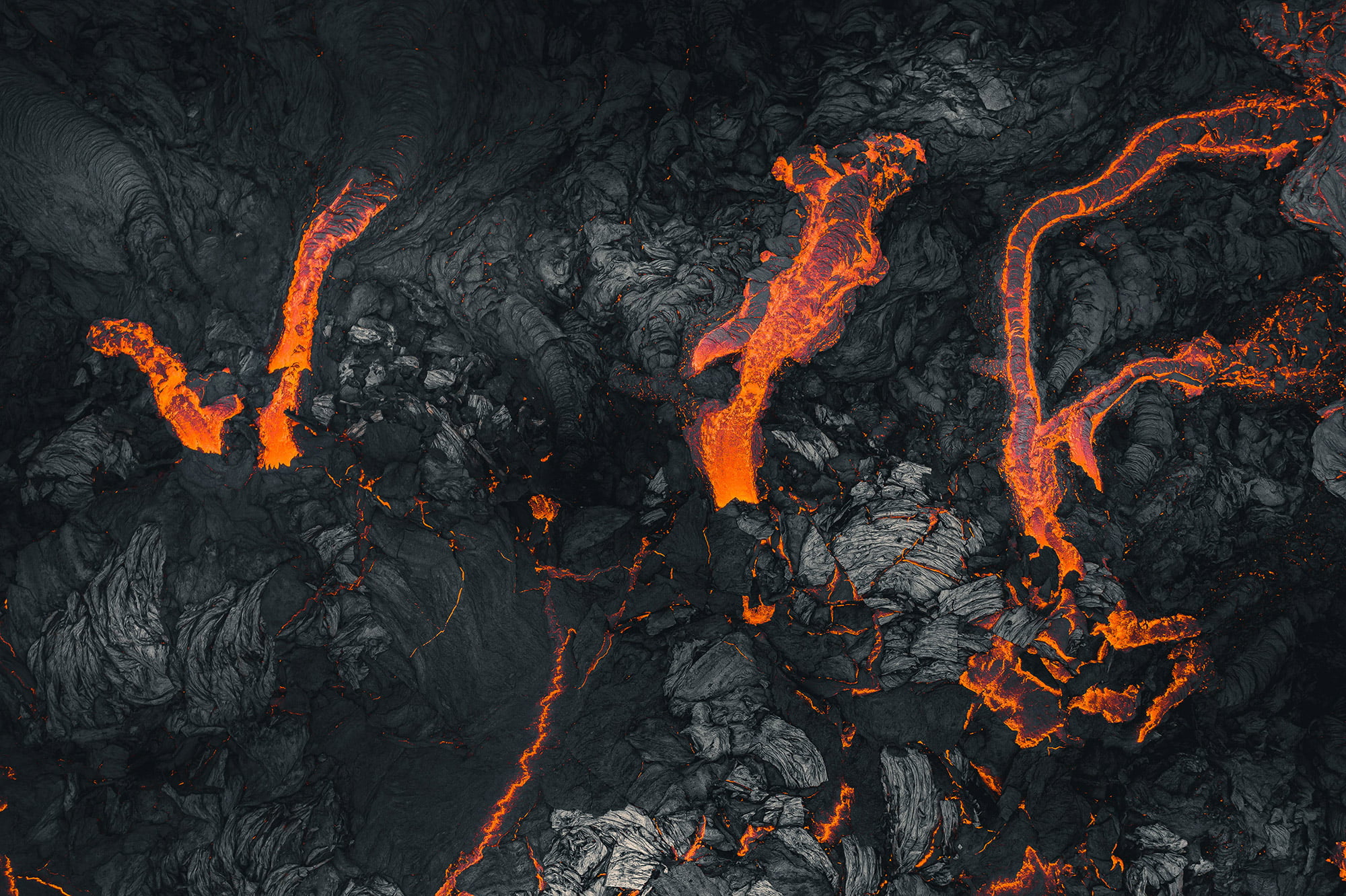
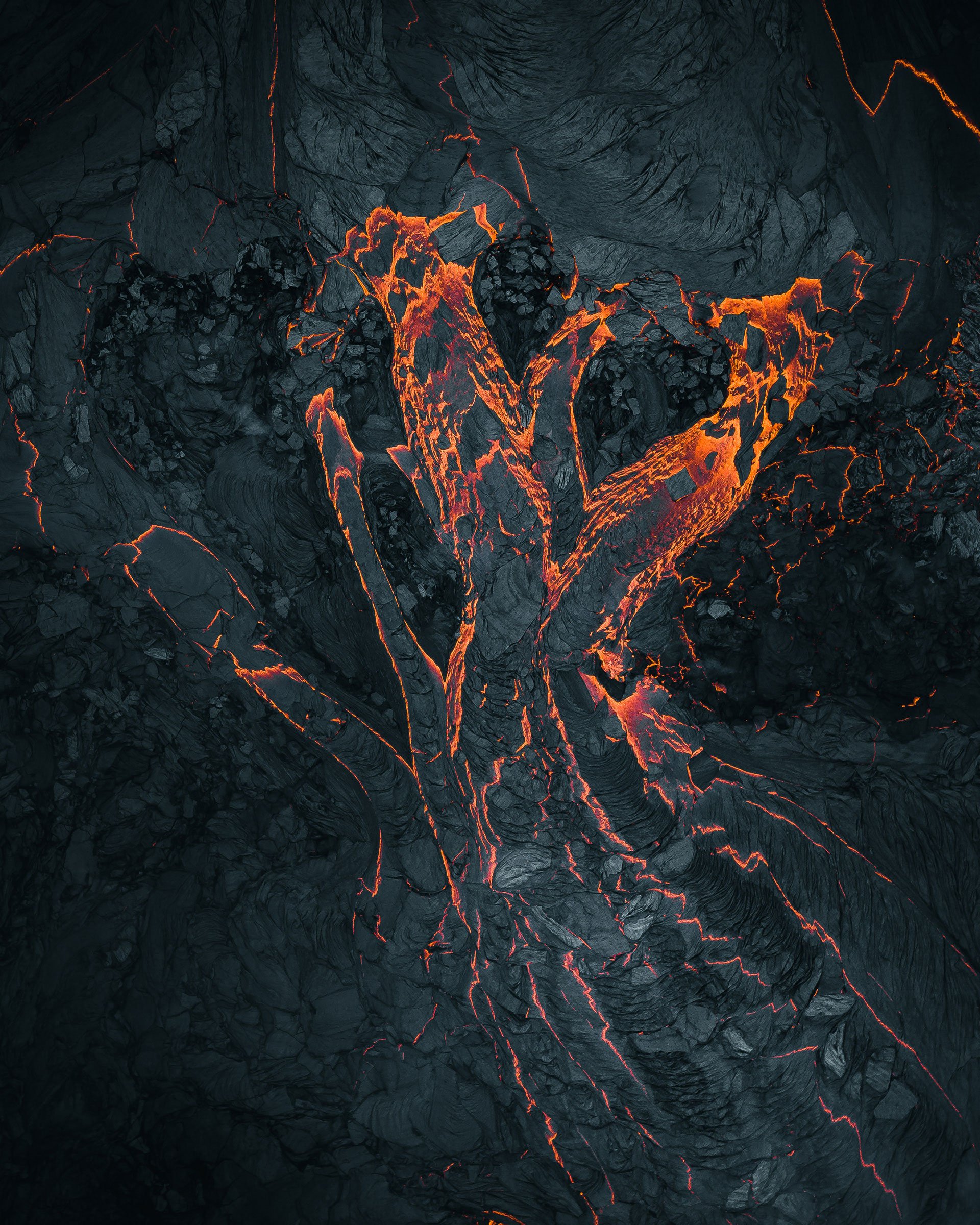
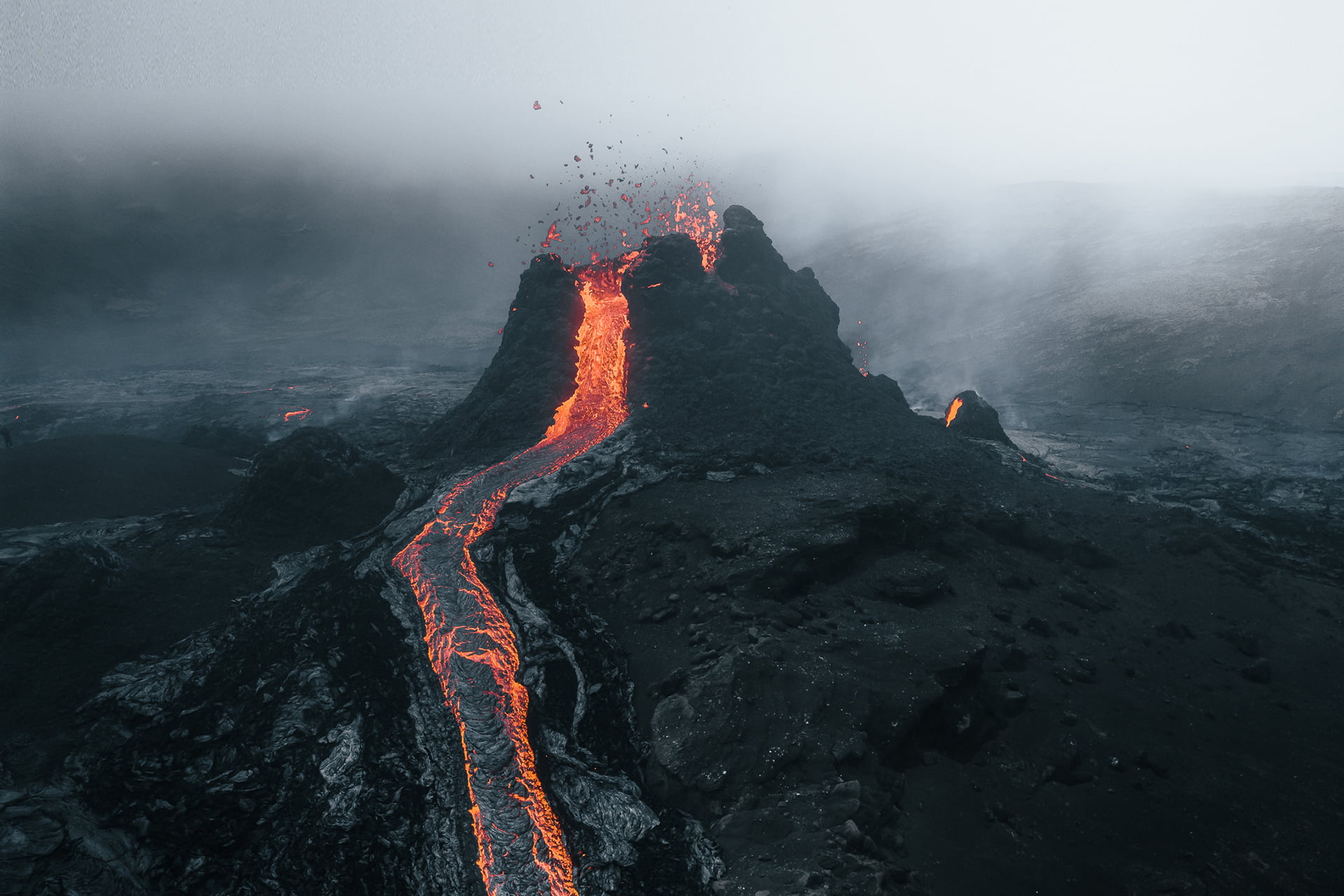
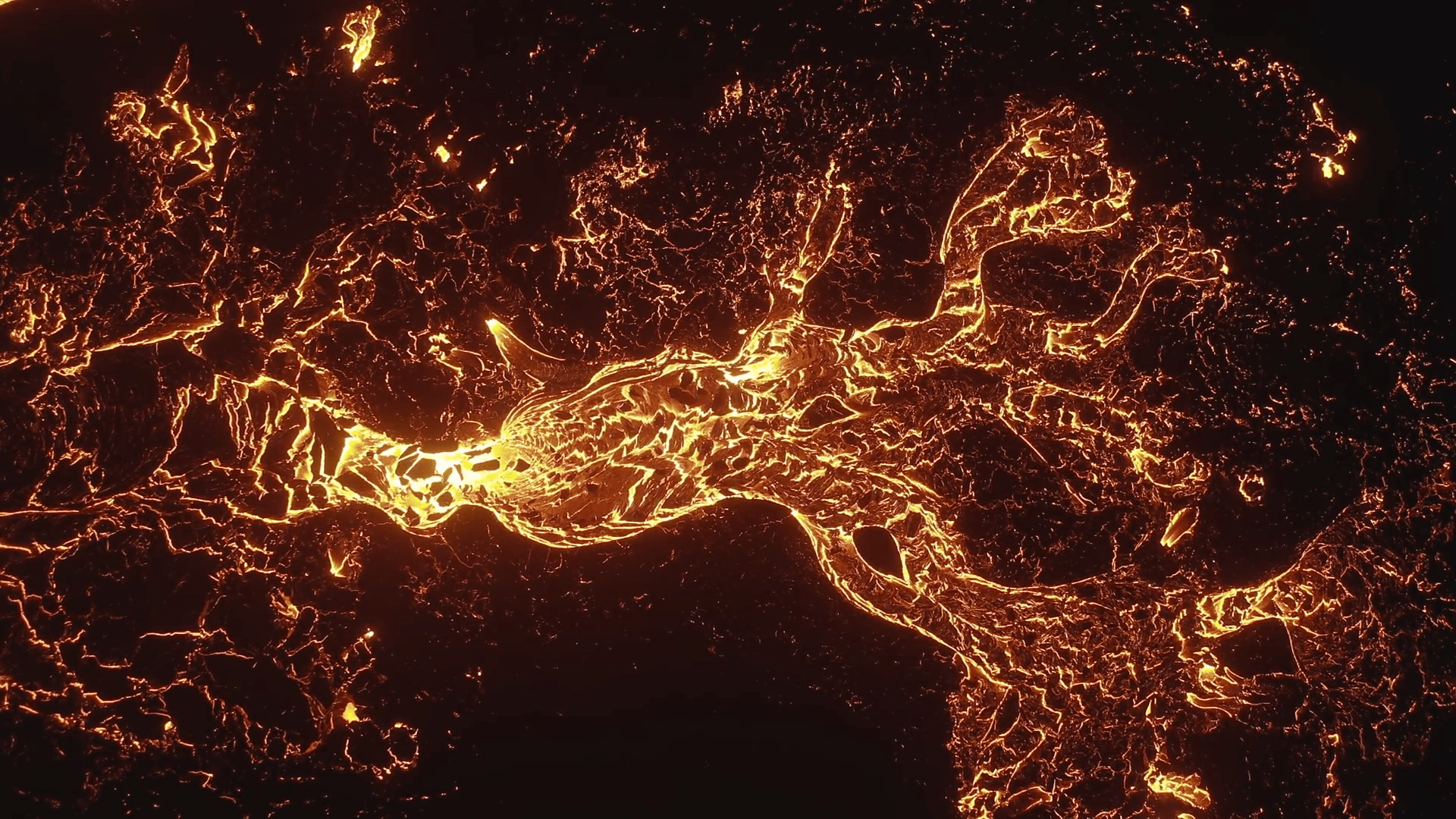
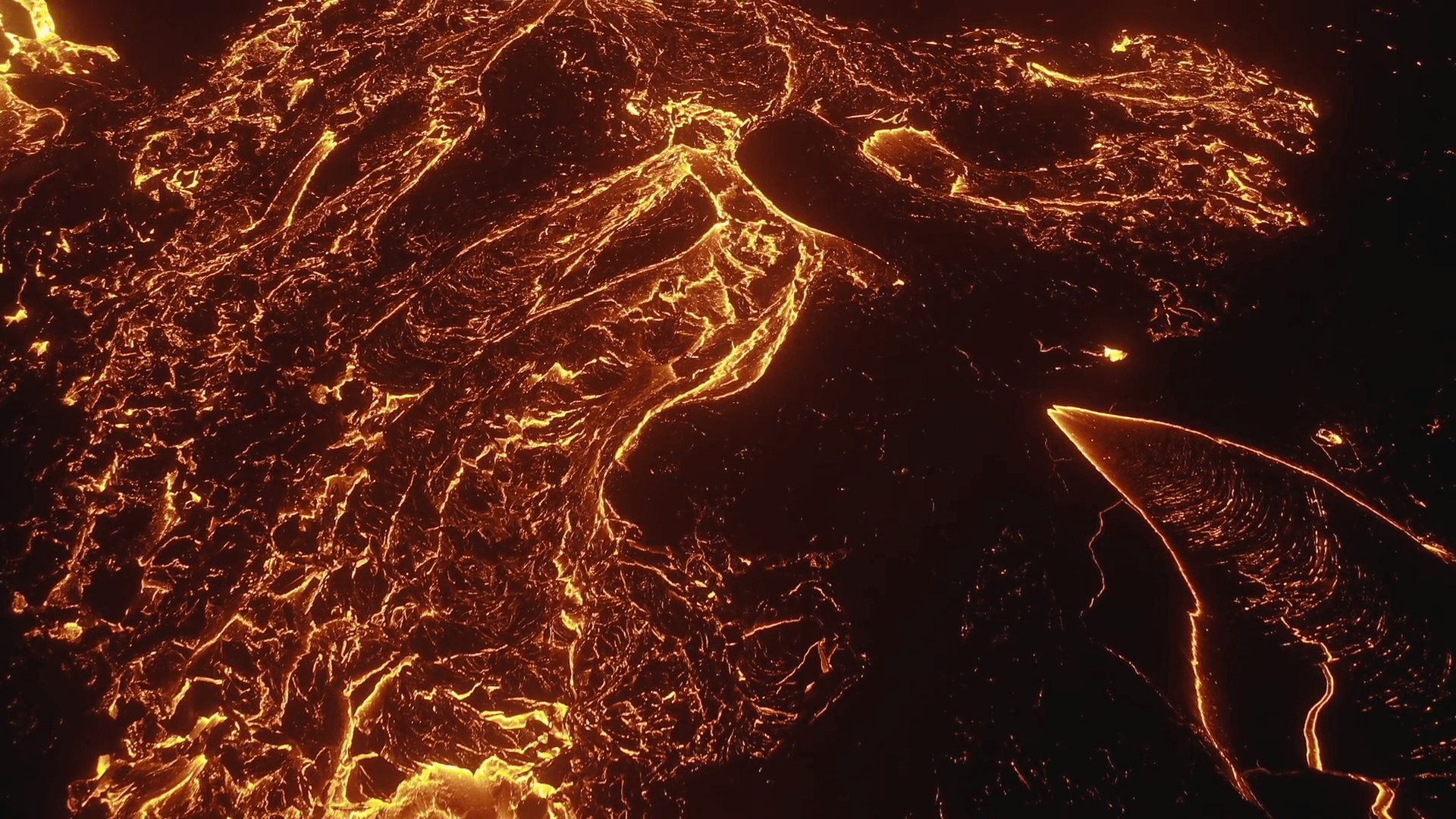
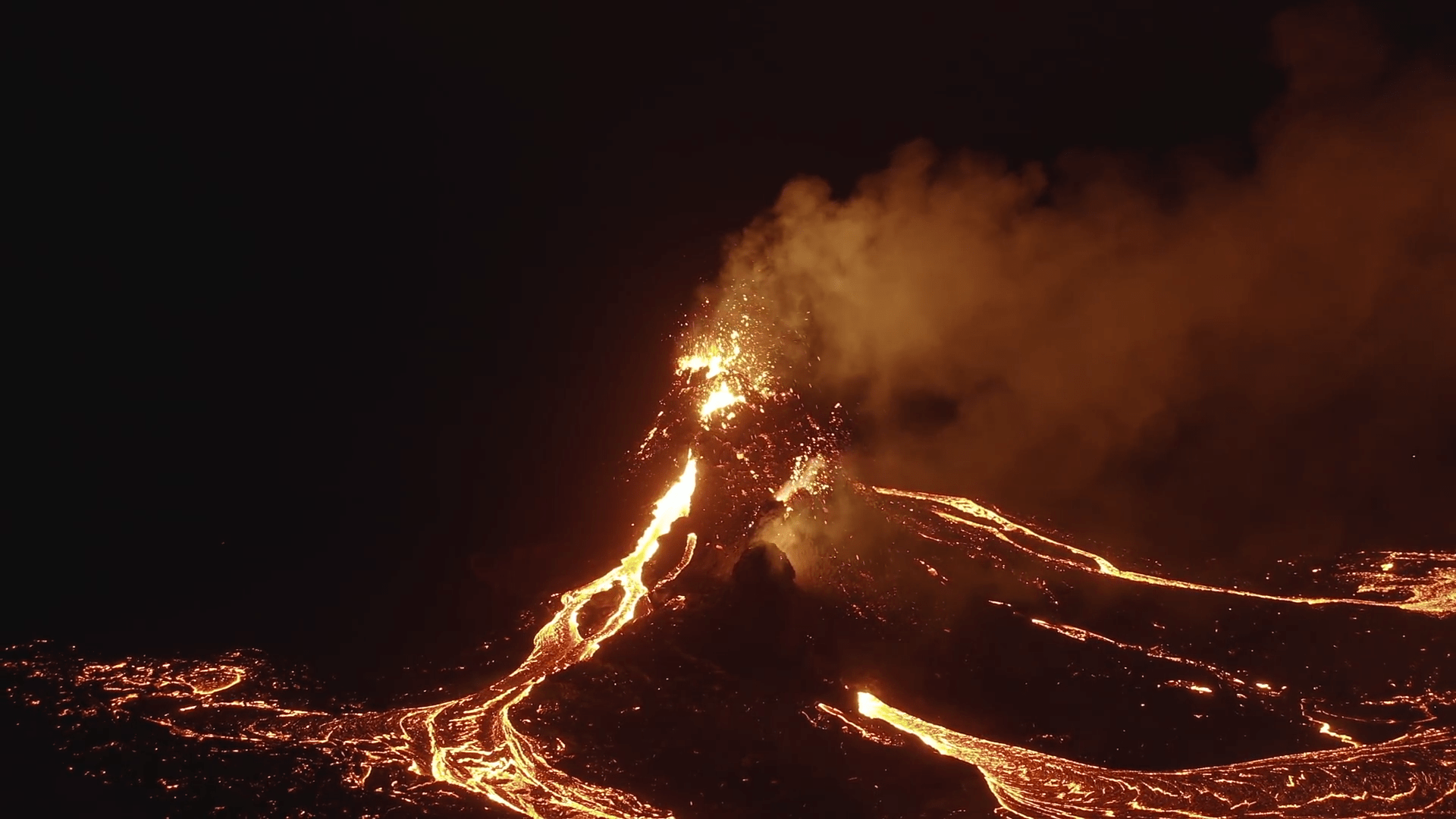
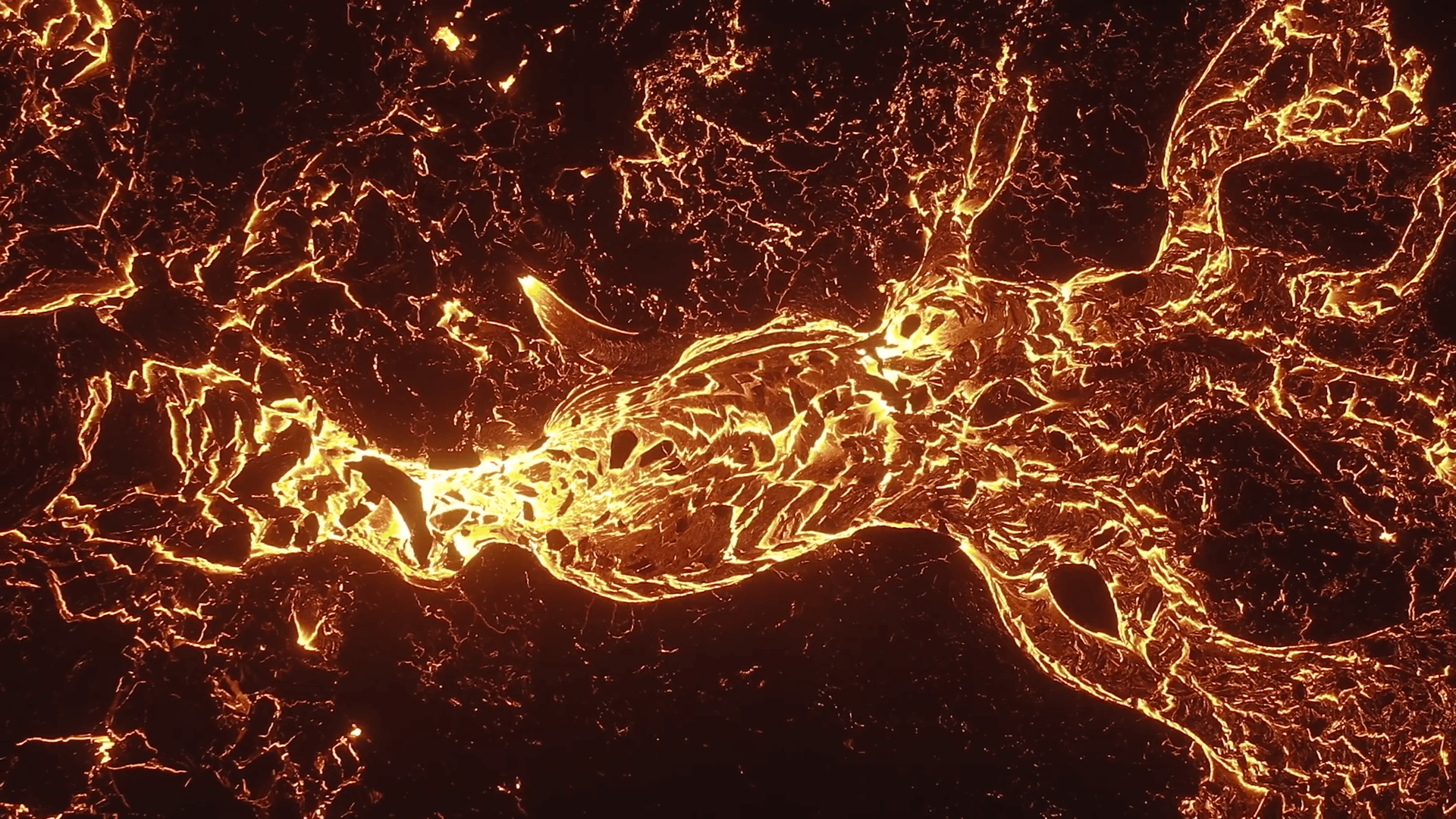
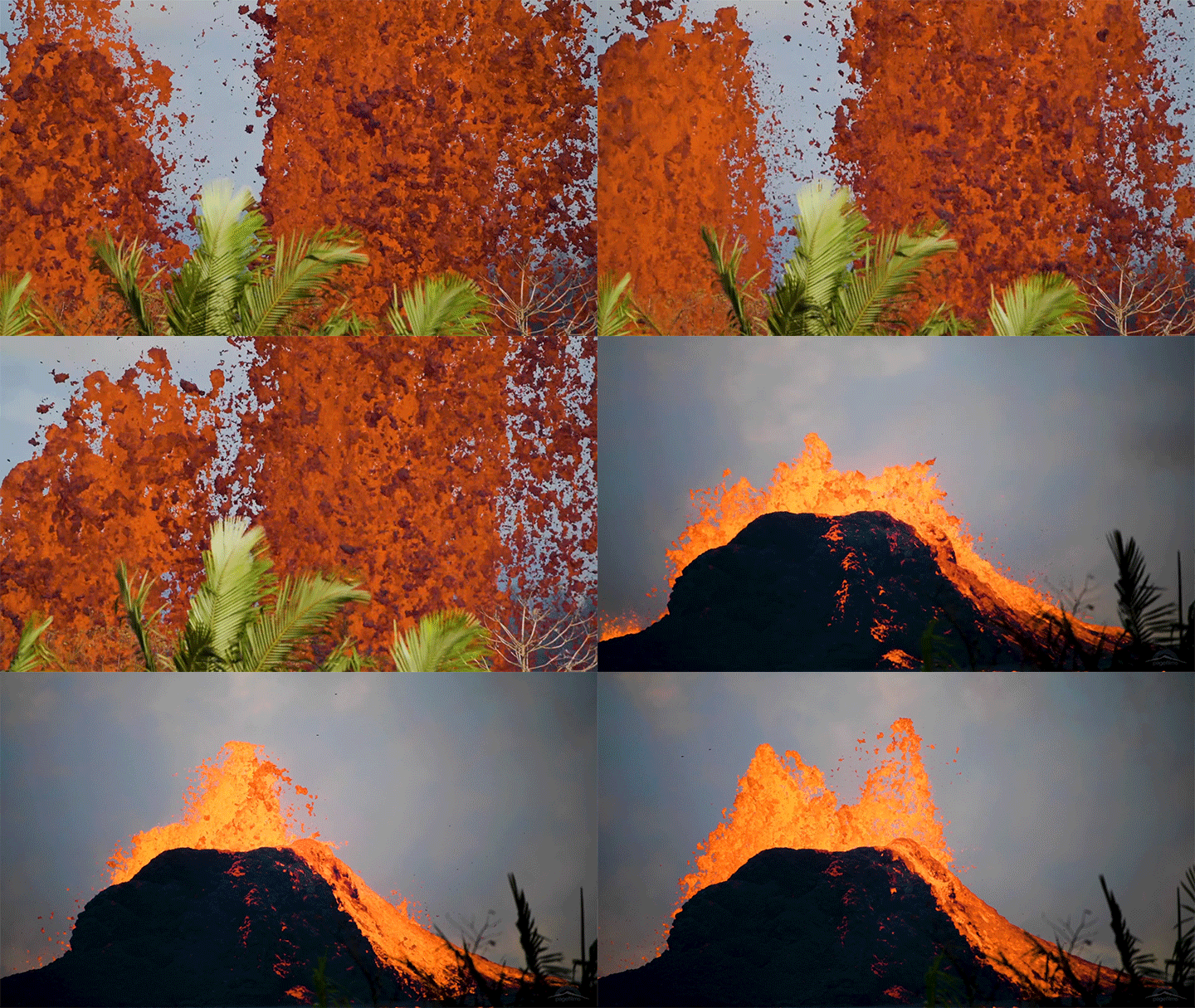
The advantage of flying a drone over a volcanic eruption is getting all of the beauty with none of the danger. No asphyxiating on sulfuric gases, no burns from intense heat, no ash or flying rocks. Just the stunning, glowing beauty of fresh earth being born. “Stranded” takes us over and around the recent Icelandic eruption in a way that no human can ever experience. Sit back, relax, and feast your eyes on the spectacle. (Image and video credit: S. Ridard; via Colossal)
Tag: lava

Lava Fields From Above
Lava flows are endlessly fascinating to watch. They’re a destructive act of creation that seems in many ways familiar; after all, lava moves the same way we see other viscous fluids move. But it’s so much more extreme in its temperature, viscosity, and destructive potential. These beautiful aerial photos by photographer Thrainn Kolbeinsson show the recent eruption at Iceland’s Fagradalsfjall volcano. I love the vivid texture of the lava in these shots and the sharp contrast between the hot and cooling flows. You can see the pahoehoe forming before your very eyes! (Image credit: T. Kolbeinsson; via Colossal)

Lava and Life
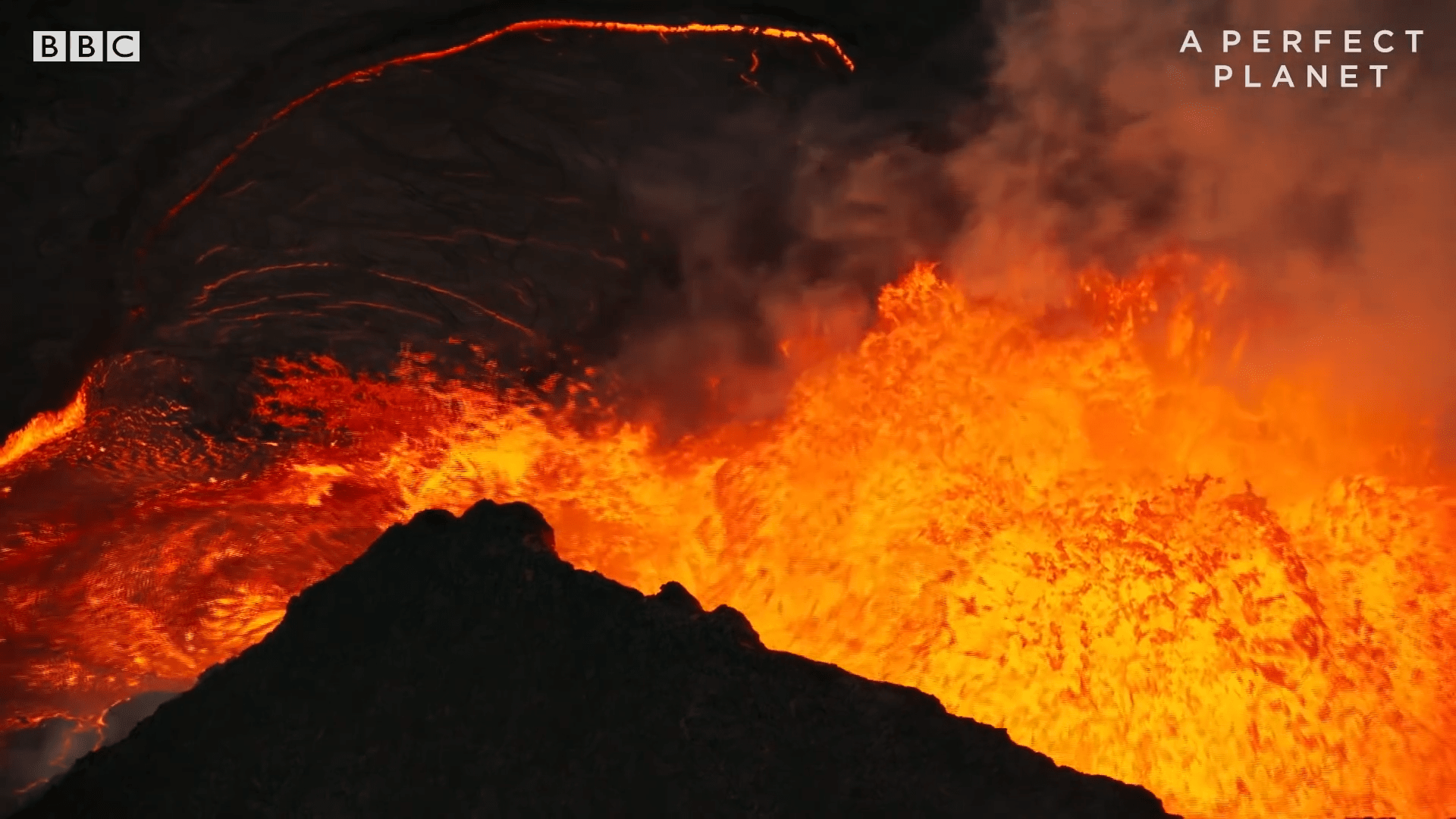
Kilauea’s 2018 eruption gave us some of the most stunning volcanic footage ever seen, a tradition carried on in this BBC footage. As powerful and destructive as lava is, it’s also critical to life as we know it here on Earth. Volcanoes are a piece of the tectonic activity on our planet that drives the carbon cycle, without which we’d have no oceans or breathable atmosphere. It’s tough to imagine the geological scales over which these cycles act, but fortunately, there are numerical simulations to help! (Image and video credit: BBC Earth)

Lava at Night
Today’s cameras and drones capture volcanic eruptions in ways that were unthinkable in years past. This incredible footage shows the recent eruption in Iceland as it glows in the night. I love the crisp details of the flow. You can clearly see how the hotter, molten lava moves compared to the cooling crust. There’s some great footage of spurting fountains and blocks of lava getting swept along by the river. Enjoy! (Image and video credit: B. Steinbekk; submitted by jpshoer)

Bubbles Affect Lava Flow
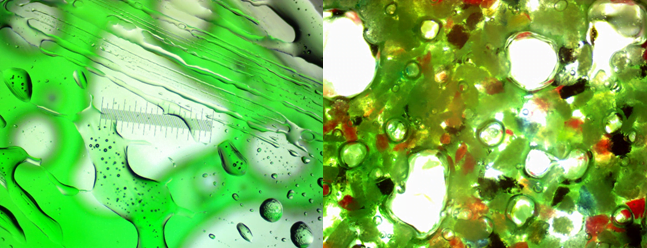
During the 2018 eruption at Kilauea, scientists noticed that the lava flowed very differently depending on how bubbly it was. In this experiment, researchers used corn syrup as a lava analogue and studied how bubbly and particle-filled bubbly flows differed from bubble-free ones. They found that bubble-free syrup flowed fastest, while particle-filled bubbly flows were by far the slowest.
The bubbles also affected the structure of the flows. Large bubbles gathered near the surface of the flow’s leading edge, allowing faster flow beneath. And in the particle-filled flow, the corn syrup developed channels that flowed at different speeds. The authors hope that their relatively simple experimental set-up will inspire more research on bubbly lava flows. (Image and research credit: A. Namiki et al.; via AGU Eos; submitted by Kam-Yung Soh)

Lava Barriers
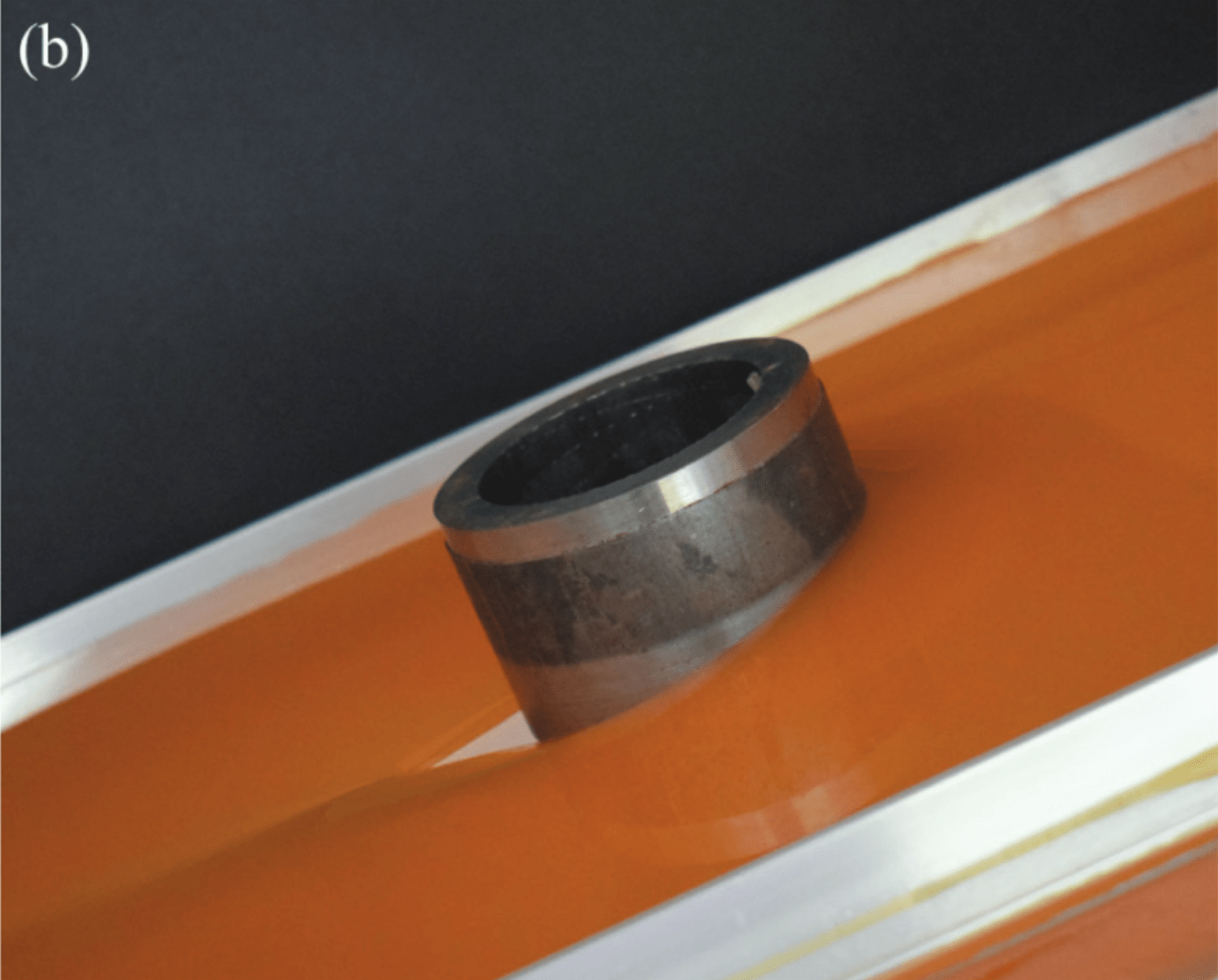
Inspired by protecting people and property from lava flows, researchers investigated how viscous fluids flow downhill past large obstacles. As seen above, when the obstacle is tall enough that the flow does not overtop it, there’s substantial deflection of the fluid both up- and downstream. Upstream of the barrier, the flow gets deeper, and downstream there’s a dry region left behind.
The researchers modeled these flows numerically, leading to equations designers can use to predict the necessary height, strength, and shape of barrier necessary to protect areas from encroaching lava. (Image and research credit: E. Hinton et al.)

Exploring Martian Mud Flows
When looking at Mars and other parts of our solar system, planetary scientists are faced with a critical question: if what I’m looking at is similar to something on Earth, did it form the same way it does here? In other words, if something on Mars looks like a terrestrial lava flow, is it actually made of igneous rock or something else?
To tackle this question, a team of researchers explored mud flows in a pressure chamber under both Earth-like and Martian conditions. They found that mud flowed quite freely on Earth, but with Martian temperatures and pressures, the flows resembled lava flows like those found in Hawaii or the Galapagos Islands.
On Mars, mud begins boiling once it reaches the low pressure of the surface. This boiling cools it, causing the outer layer of the mud to freeze into an increasingly viscous crust, which changes how the mud flows. In this regard, it’s very similar to cooling lava, even though the heat loss mechanisms are different. (Video and research credit: P. Brož et al.; image credit: N. Sharp; see also P. Brož; submitted by Kam-Yung Soh)

‘Aila’Au: Forest Eater
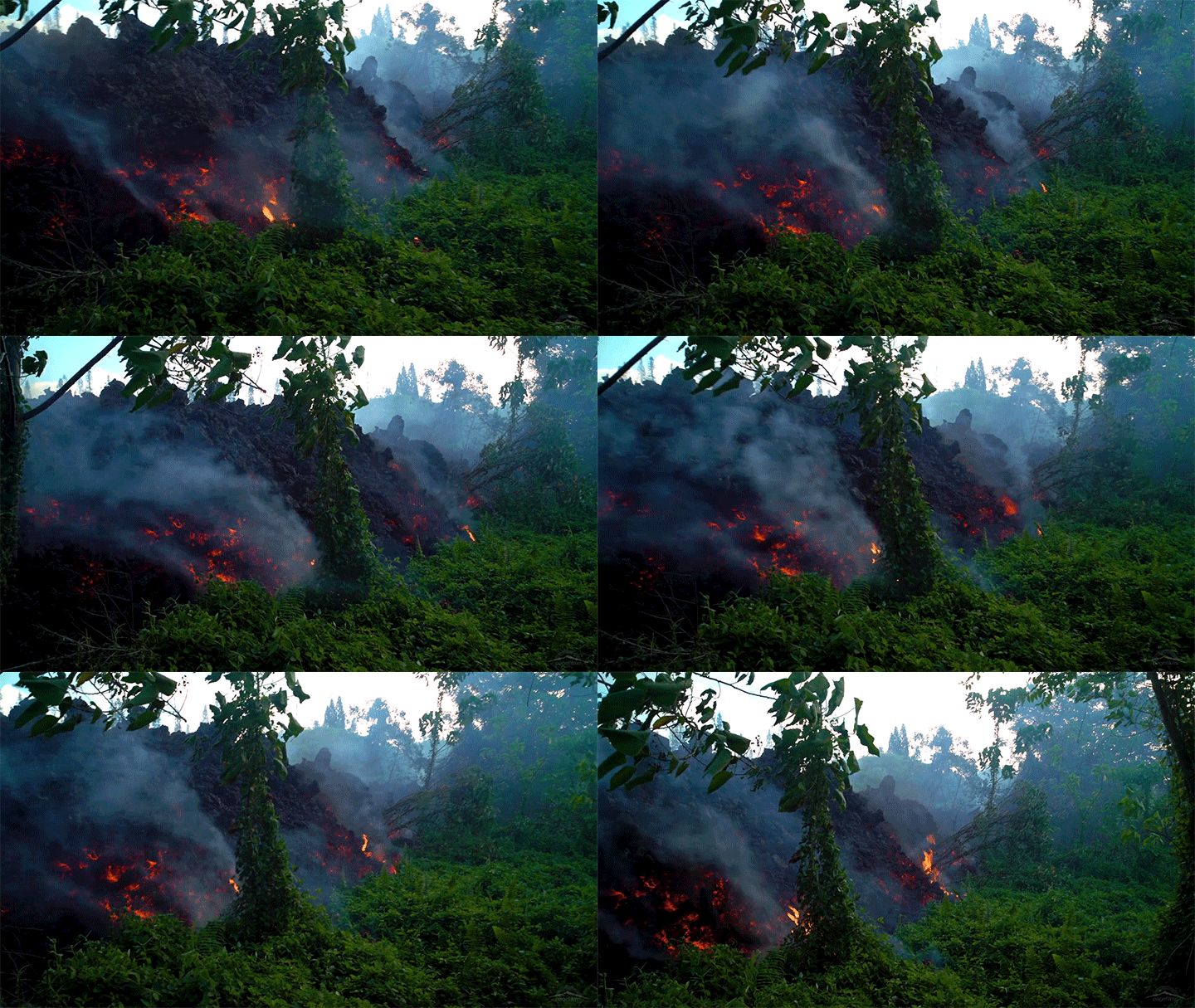
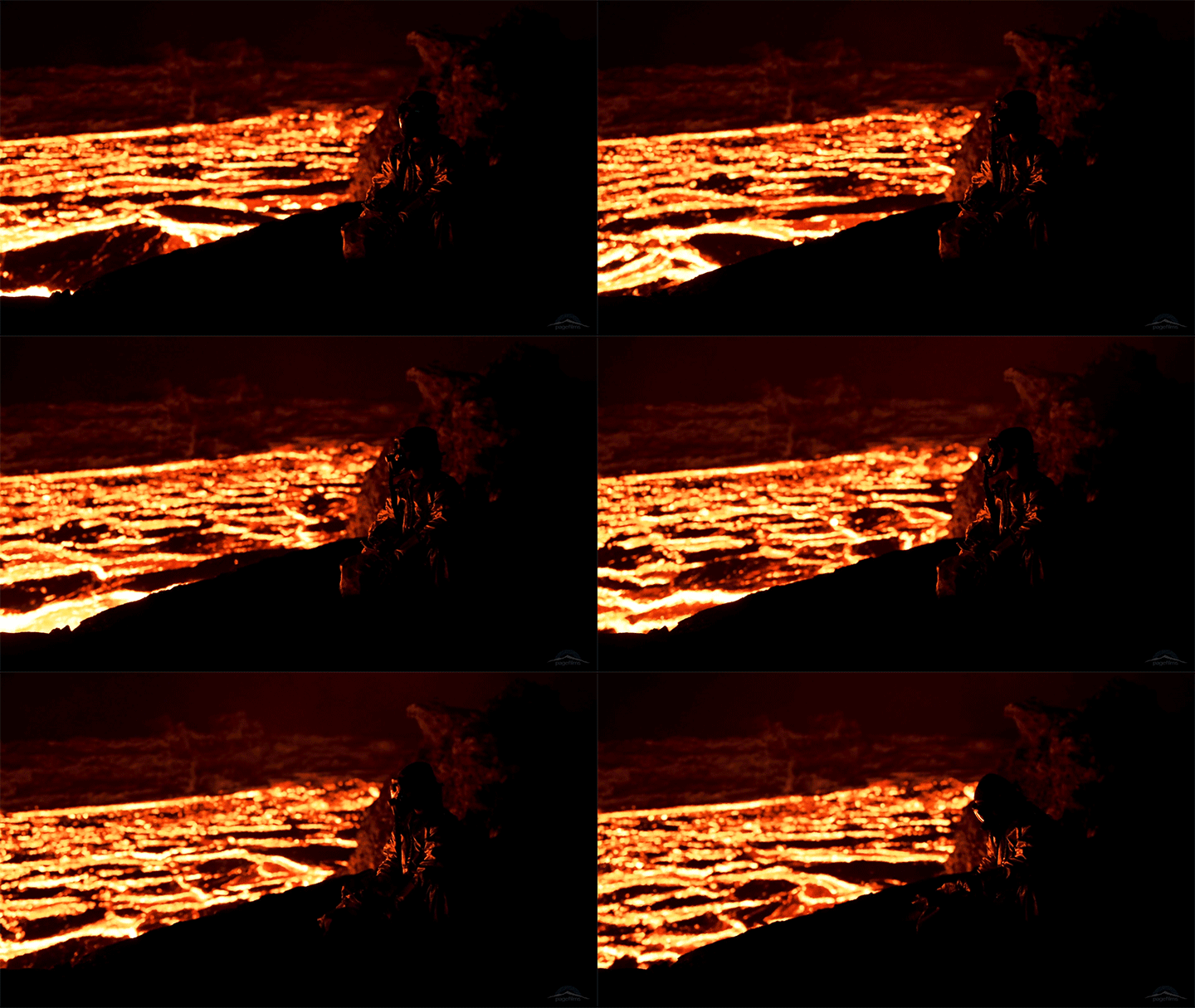
The 2018 eruption of Kilauea was a dramatic example of nature’s power. This short film shows both some familiar views of that eruption as well as new ones. I found the slow-moving wall of cooling a’a lava eating the forest particularly intriguing, not least thanks to the glass-like sound of the lava advancing. Whether slow-moving or fast, lava’s destructive power is incredible to watch. (Video and image credit: Page Films)
How to Build a Lava Moat
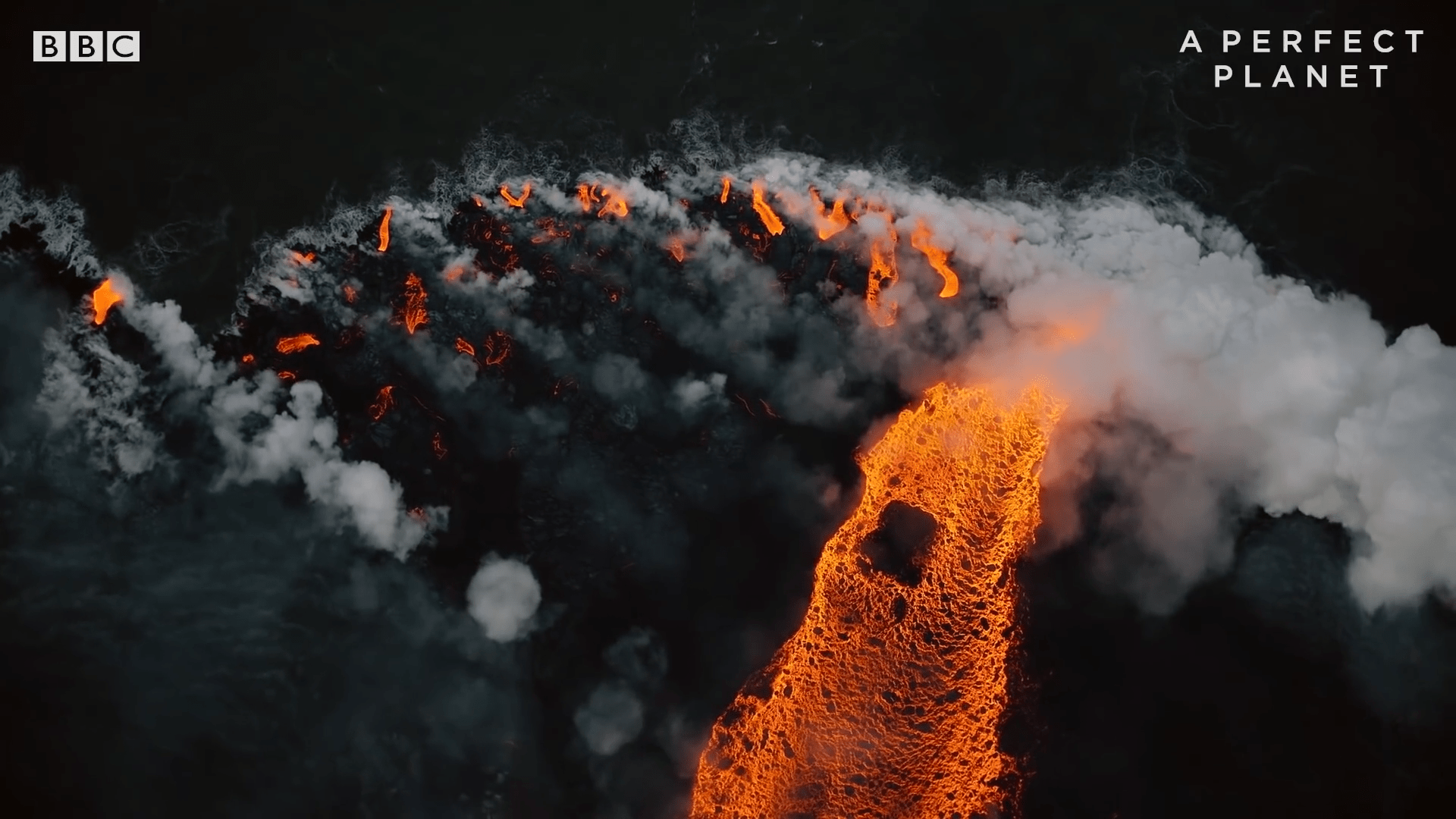
If you’re looking for a new and impractical way to protect your home, here’s a great option: a lava moat. Nothing says “Don’t try to knock on my door” like a glowing inferno of molten rock. And Minute Physics – along with xkcd – has put together a short, handy guide to some of the challenges you’ll face in building and maintaining this fearsome fortification. If running your own commercial-scale power plant seems overly daunting but you still want to see what lava’s all about, I have good news; here’s a selection of some of my favorite looks at lava here at FYFD:
– Upstate NY’s homemade lava
– What happens when you step on lava
– A veritable river of lava in action
– What happens when water meets lavaNow, if you’ll excuse me, I’m off to Hawai’i for the next two weeks. There will be lava. (Video credit: Minute Physics)