It’s time for another JFM/FYFD collab video! April’s video brings us a taste of spring with research on how bees carry pollen, squid-inspired robotics, and understanding the physics of underwater plumes like the one that occurred in the Deepwater Horizons spill eight years ago. Check it all out in the video below. (Image and video credit: T. Crawford and N. Sharp)
Tag: FYFD

Can Zooplankton Mix Oceans?
Krill and other tiny marine zooplankton make daily migrations to and from the ocean surface. Previously, models of ocean mixing ignored these migrations; these animals are tiny, researchers argued, so any effects they could have would be too small to matter. But zooplankton make these migrations in huge swarms, and studies of a laboratory analog of their migrations (using brine shrimp rather than krill) reveal that, when moving en masse, these tiny swimmers create turbulent jets and eddies far larger than an individual. Their collective motion is enough to mix salty water layers 1000 times faster than molecular diffusion alone! Learn more in the latest FYFD video, embedded below. (Image and video credit: N. Sharp; research credit: I. Houghton et al.; h/t to Kam-Yung Soh)

Happy 2000 Posts!
Happy Friday and happy 2000th FYFD post! To celebrate, I played with surface tension and the Marangoni effect to make some art. For a run-down on the physics, check out this previous post on water calligraphy. Two thousand posts feels like a major milestone. Not everyone realizes this, but FYFD is a one-woman operation, so 2000 posts is a whole lot of research, image editing, and writing. For fun, I’m including here eight completely random FYFD entries, representing less than one-half of one percent of my total archives:
1. Why did Chinese junks put holes in their rudders?
2. Making droplets in an ultrasonic humidifier
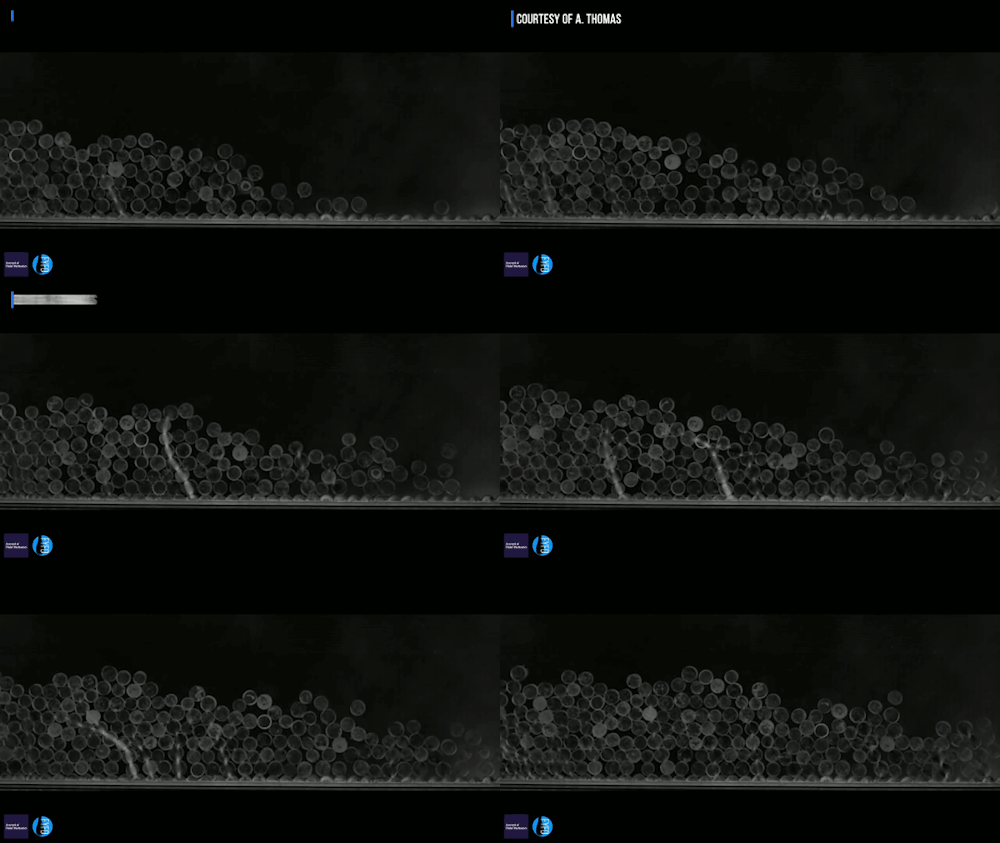
3. Floating on a granular raft
4. Air-trapping fur keeps otters warm
5. The physics of the knuckleball
6. What makes badminton so fast?
7. Playing with fluorescein
8. How frost formsWant to keep up the random walk? Use https://fyfluiddynamics.com/random to find random entries, or if you prefer your browsing to be more directed, check out the visual archive or the themed series page.
As always, a special thanks to those who help support FYFD through Patreon subscriptions – I couldn’t keep writing and making videos without your help! And thank you to all of you who read and share FYFD. Whether you’ve been following along for a week or for the last eight years, your enthusiasm keeps me motivated! Thank you!
(Image credits: 2k animation – N. Sharp; Chinese junk ship – Premier Ship Models; ultrasonic humidifier – S. J. Kim et al.; granular raft – E. Jambon-Puillet and S. Protiere; 3D-printed “fur” – F. Frankel; knuckleball – L. Kang; shuttlecock – Science Friday; fluorescein – Shanks FX; freezing droplets – J. Boreyko et al.)

Bouncing, Floating, and Jetting
Get inside some of the latest fluid dynamics research with the newest FYFD/JFM video. Here researchers discuss oil jets from citrus fruits, balls that can bounce off water, and self-propelled levitating plates. This is our third entry in an ongoing series featuring interviews from researchers at the 2017 APS DFD conference. Missed one of the previous ones? Not to worry – we’ve got you covered. (Video and image credit: N. Sharp and T. Crawford)

Under Pressure, Part 2
Our adventures with pressure continue after the trip to the aquarium. To see just how much pressure we could generate with height, A.J. and I teamed up with the Corvallis Fire Department to recreate an experiment attributed to 17th-century French physicist Blaise Pascal. In Pascal’s experiment, he (supposedly) used a column of water to burst a wooden barrel. In ours, we use a ladder truck to make a 30-meter column of water burst a glass carboy! We also got a little help from our friends at the Lutetium Project to introduce you to Pascal and his work. (Thanks, Guillaume!) We’ll tell you more about Pascal and his contributions in an upcoming video, so stay tuned. (Video and image credit: A. Fillo and N. Sharp)

Under Pressure
Pressure is a concept that can be unintuitive, but it’s incredibly important in physics and engineering. So I’m excited to debut a collaborative video series that @mostlyenginerd and I are producing all about hydrostatic pressure! Today’s video is one of our openers: it focuses on where pressure comes from and why it’s a function of height but not volume. And to show you just how pressure increases with depth, we teamed up with divers from the Oregon State University Scientific Diving Team and headed to the Oregon Coast Aquarium’s Halibut Flats exhibit. Ever seen what a balloon looks like 7 meters underwater? You’re about to! (Video and image credit: N. Sharp and A. Fillo)
Want to see how this was made? Support FYFD on Patreon, and you can get access to behind-the-scenes content and a chance to see upcoming videos early!

Skiing, Avalanches, and Freezing Bubbles
To wrap up our look at Olympic physics, we bring you a wintry mix of interviews with researchers, courtesy of JFM and FYFD. Learn about the research that helped French biathlete Martin Fourcade leave PyeongChang with 3 gold medals, the physics of avalanches, and how bubbles freeze.
If you missed any of our previous Olympic coverage, you can find our previous entries on the themed series page, and for more great interviews with fluids researchers, check out our previous collab video. (Video credit: T. Crawford and N. Sharp; image credits: GettyImages, T. Crawford and N. Sharp)

The Best of FYFD 2017
2017 was a busy, busy year here at FYFD, but a lot of that happened behind the scenes with multiple collaborations that were months in the planning. You’ll start to see the results of those collaborations here in January, starting this Friday. I’m really excited for you all to see what I’ve been up to!
In the meantime, we’ll take our traditional look back at the top 10 FYFD posts of 2017, according to you:
1. Cinemagraph of a breaking wave
2. Visualizing radiation in a cloud chamber
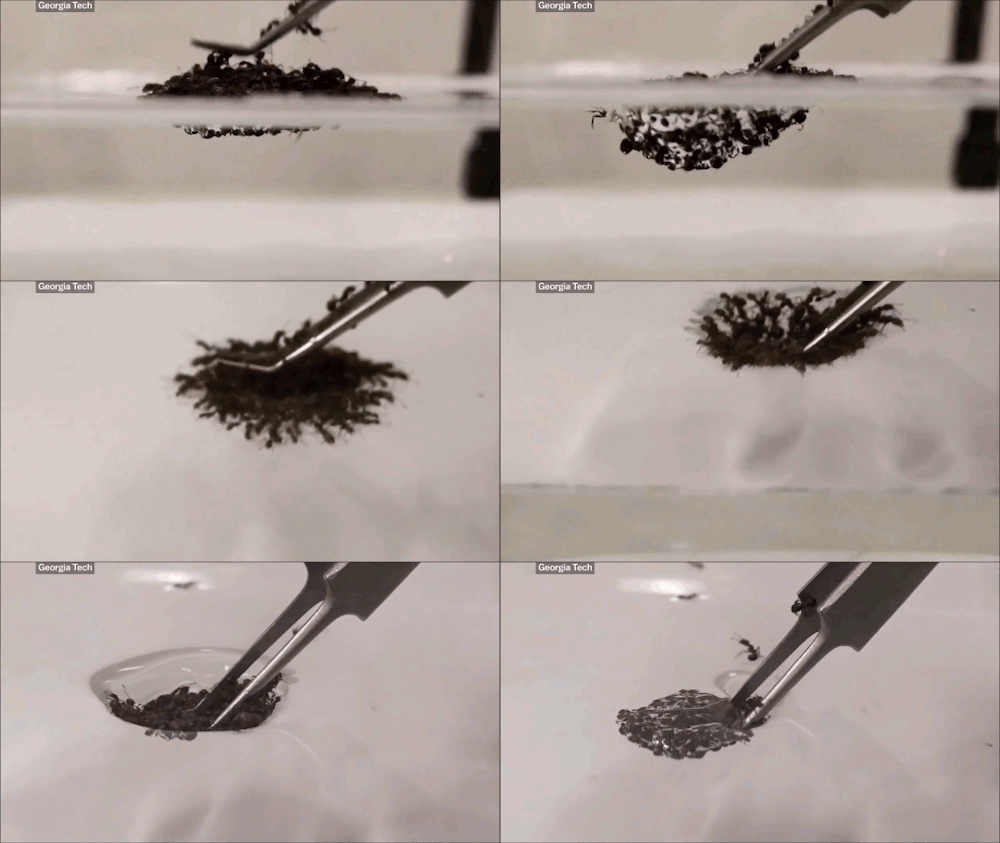
3. Fire ants as a fluid
4. The water music of Vanuatu
5. How hummingbirds drink nectar
6. When vortex rings collide
7. How water balloons can bounce off a bed of nails
8. Spinning ice disks form on freezing rivers
9. A hot-tub-sized fluidized bed
10. The physics of fluidized bedsLots of crazy, cool stuff in there! Special congrats to The Splash Lab for making the top 10 two years in a row. Stay tuned in 2018 for more exciting fluid dynamical developments, and if you’d like to help support FYFD, remember that you can always become a patron, make a one-time donation, or purchase some merch!
(Image credits: R. Collins / J. Maria; Cloudylabs; Vox/Georgia Tech; R. Hurd et al.; A. Varma; A. Lawrence; T. Hecksher et al.; K. Messer; M. Rober; R. Cheng)

Merch on Sale Through Dec. 15th
Reminder: FYFD merchandise is on sale through December 15th! If you’re like me and you’re still looking for holiday gifts, this is a great option 🙂
As a bonus, Redbubble is running a special sale today, December 11th. Use the code: DAYTWELVE at checkout to get an extra 25% off sitewide!

FYFD Merch!
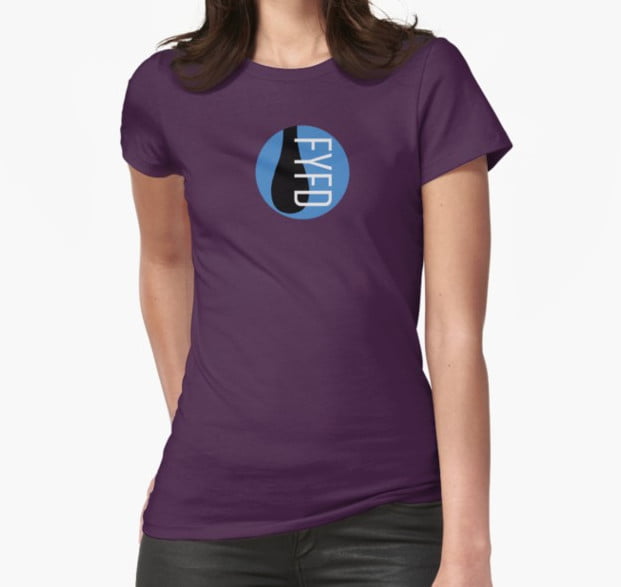
Whether you’re into stickers or t-shirts, experimental fluid dynamics or CFD, we’ve got you covered. I’m running a special introductory sale through December 15th – holiday shopping anyone? – so it’s a great time to grab some merch!
See a design you want available on more products? Got a concept for a new design? Let me know!
For those attending the APS DFD meeting here in Denver in a few days, I’ll be sporting some of the new t-shirts there, and I’ll be selling selected sticker designs in person (no shipping costs for you!). More DFD details to come.
In the meantime, everyone go check out the store!