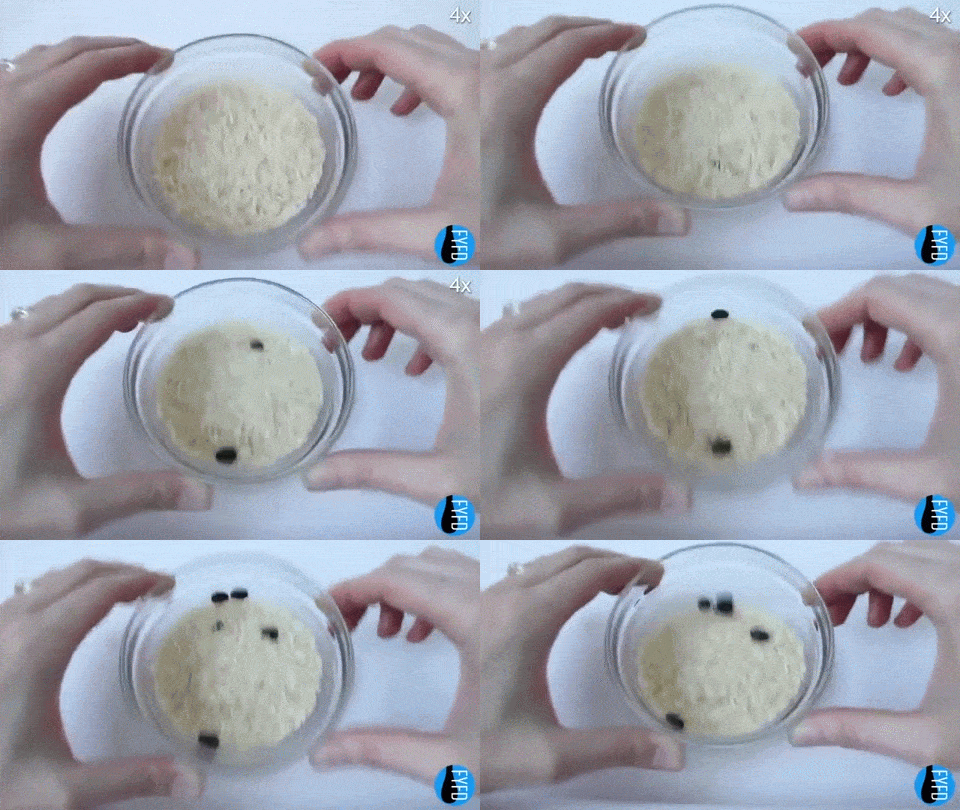
The Brazil nut effect is a common name for the phenomenon where large particles tend to rise to the top of a mixture when it’s shaken. It’s also the subject of the latest FYFD video, which you can see above.
I’ve seen other mentions of the topic previously, but when I started researching the literature, I discovered that the Brazil nut effect was much more complicated than I’d thought! Hopefully, you’ll find the results as interesting as I did. And if you want to dig further, there are links to the papers I used over on YouTube.
Filming was also interesting this time around. I tried out stop-motion animation for the first time. It takes so much patience! But I think the results are so cute. (Image and video credit: N. Sharp/FYFD)
This weekend I’ll be holding my second live webcast for FYFD patrons. This month we’ll be focusing on the subject of planetary science, one of the coolest applications out there for fluid dynamics. My guests will be Keri Bean, a NASA JPL mission operations engineer and atmospheric scientist, and Professor Geoffrey Collins, a geologist at Wheaton College in Massachusetts. Keri has worked on all the recent Martian missions, including Mars Curiosity and the Phoenix Lander. She currently works on operations for the Dawn mission to Ceres. Geoff studies the geophysics of icy planets and moons like Pluto and Titan. He was part of the Galileo and Cassini missions to Jupiter and Saturn and is currently part of the team working on a future mission to Europa.
Saturday I topped off a week of water-walking physics by holding a webcast with Professor Tadd Truscott and PhD student Randy Hurd of The Splash Lab. We had an absolutely blast talking about skipping balls, aesthetics and art, sailing, STEM outreach, and much more. The video above is a short teaser for the webcast – you can watch the full hour here. There are demos, a lab tour, and even a chance to learn about how I do FYFD. If you’d like to see or take part in future webcasts, you can do so by becoming an FYFD patron! (Video credit: FYFD)
Reminder:I’ll be doing a special webcast with Professor Tadd Truscott and PhD student Randy Hurd of The Splash Labtomorrow Saturday, March 5th at 1pm EST! We’ll be talking about skipping elastic balls, people running on water, urine black holes, and much more. I will be posting the livestream link on Patreon tomorrow afternoon. If you want to tune in, you should sign up as an FYFD patron!
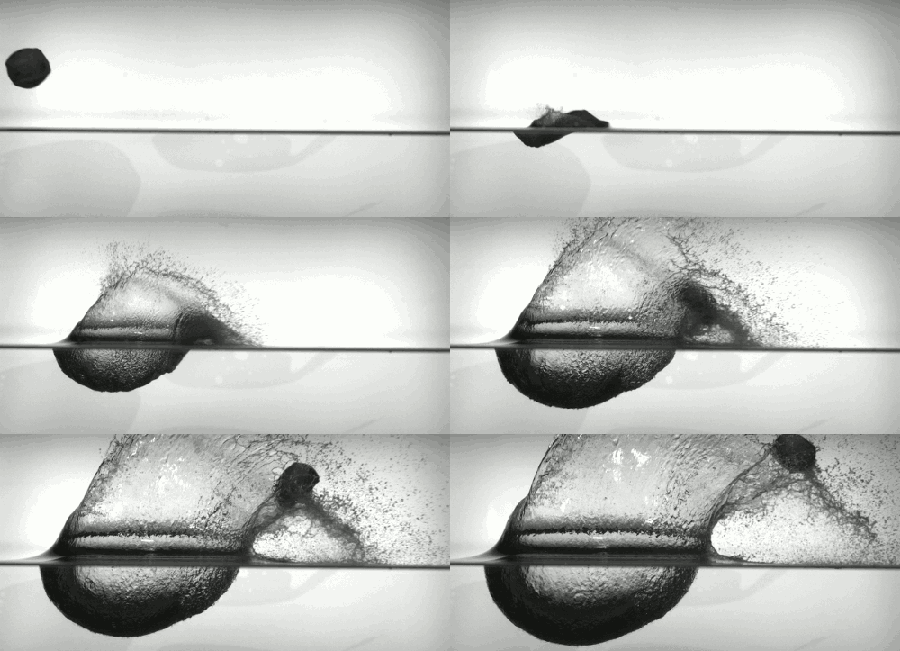
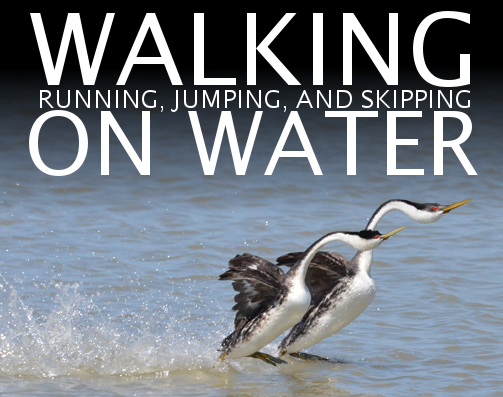
For the next week, FYFD is going to be exploring the physics of walking on water. Birds, bugs, and balls can all do it – we’ll look at how! To top off the week, I’ll be holding my first-ever FYFD live webcast on Saturday, March 5th at 1 pm EST (10 am PST; 6 pm GMT). My guests are Professor Tadd Truscott and PhD student Randy Hurd of the Splash Lab! Tadd, Randy, and their Splash Lab compatriots have been responsible for someofmyfavoriteFYFDtopicsoverthepastfiveyears and I’m super excited to have them on the webcast.
Normally, my webcasts will be reserved for FYFD’s $5+ Patreon patrons, but since this is a special occasion, we’re going to make the Hangout on Air link live to any FYFD patron on Patreon. Not a patron yet? What are you waiting for? Go sign up! You don’t want to miss this.
As a bonus, here’s Randy demonstrating his research:
tl;dr version: FYFD is launching a Patreon campaign. If you enjoy FYFD and want to help support its continued growth, please become a patron today!
And the longer version: At the start of the year, I hinted that there were big things ahead for FYFD. Today’s announcement is part of that. In the past five years, FYFD has grown beyond my wildest dreams. I’m so excited, grateful, and happy to share my love for science with all of you. As FYFD’s audience has grown, so have my plans and dreams for expanding the site and what it does. I want to bring you more: videos that take you behind-the-scenes to see the scientific process firsthand, interviews that let you meet the people behind the work, and articles that explore new and exciting fluid phenomena.
All of the research, filming, writing, and editing necessary to bring those dreams to life takes time and money. I can provide the first: from now on, I’ll be dedicating my full-time attention to FYFD. But I need your help and support to make this possible. That’s why I’m launching a campaign on Patreon. If you enjoy FYFD and want to help it continue and grow, please consider becoming a patron. Your monthly support will enable me to dedicate my full energy to FYFD and will provide funding for materials, equipment, and travel so that I can bring the science back to you.
There are also some pretty cool rewards available to patrons! All patrons will have access to a patrons-only activity feed where I post behind-the-scenes content and extras like video outtakes. It’s also a place where I’ll look for feedback on new ideas. Think of it as an extra dose of FYFD. Other rewards include getting your name added to the FYFD supporter page, getting a handwritten postcard from me, and access to a monthly webcast where I’ll chat with guest scientists and patrons. (I’m really excited about that last one!)
Whether you become a patron or not, I want to thank you for your support. None of those would be possible without you and your enthusiasm. As always, the best thing you can do to support FYFD is to tell others how much you like it.Thank you!
If you have any questions, I’ll be online all day. You can reach me via Tumblr, Twitter, or email.
When it’s really cold outside–to the tune of -40 degrees (Fahrenheit or Celsius)–physics can get a little crazy. In this photo, boiling-hot water from a thermos turns into an instant snowstorm when tossed. How is this possible? It turns out there are a combination of factors that affect this. Firstly, the rate of heat transfer between two objects depends on the magnitude of the temperature difference between them. The bigger the difference in temperature, the faster the hot object cools. Of course, as the hot object cools down, the temperature difference between it and its surroundings is smaller and the rate of heat transfer decreases.
The second important factor here is that the water is being tossed. When you throw water, it breaks into droplets, and droplets have a large surface area compared to their volume. As it turns out, the rate of heat transfer also depends on surface area. By breaking the hot water into smaller droplets, you increase the surface area exposed to the cold air, allowing the hot water to freeze faster. (Image credit: M. Davies et al.; via Gizmodo)
Also: Since there are a few events scheduled around the country over the next couple months, I’ve added an events page where you can find details for those appearances. And as always, if you’re interested in scheduling a talk or event, feel free to contact me directly.
What do shark scales, underwater robots, blood flow, and art have in common? They’re all a part of the latest FYFD video! Check out my behind-the-scenes look at the latest American Physical Society Division of Fluid Dynamics meeting. Meet the researchers and find out about the science everyone was talking about! (Image/video credit: N. Sharp)