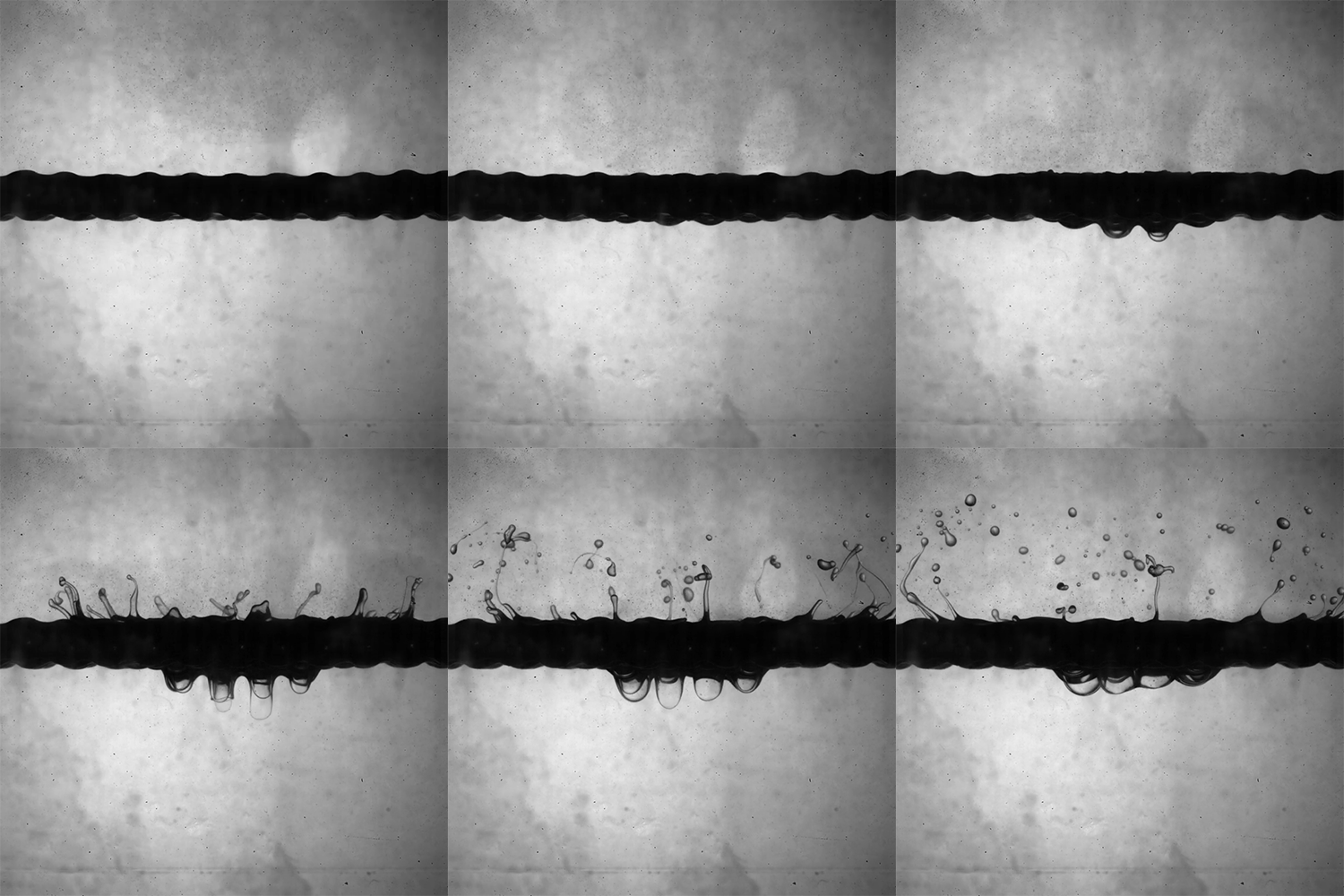
Spraying a surface clean with a jet of fluid can be an energy-intensive operation. But a recent experiment shows that pulsed flow — which creates vortex rings — could be a viable cleaning alternative. Here we see vortex rings impacting a porous, beaded surface that’s covered in oil. Vortex rings with lots of rotation actually pass through the beads, knocking oil off both the front and back surfaces (Image 1). Even with a lower rotation rate, a vortex ring can still help clean the upper surface (Image 2). (Image and research credit: S. Jain et al.; via APS Physics)
Tag: flow visualization

“Eternal Spring”
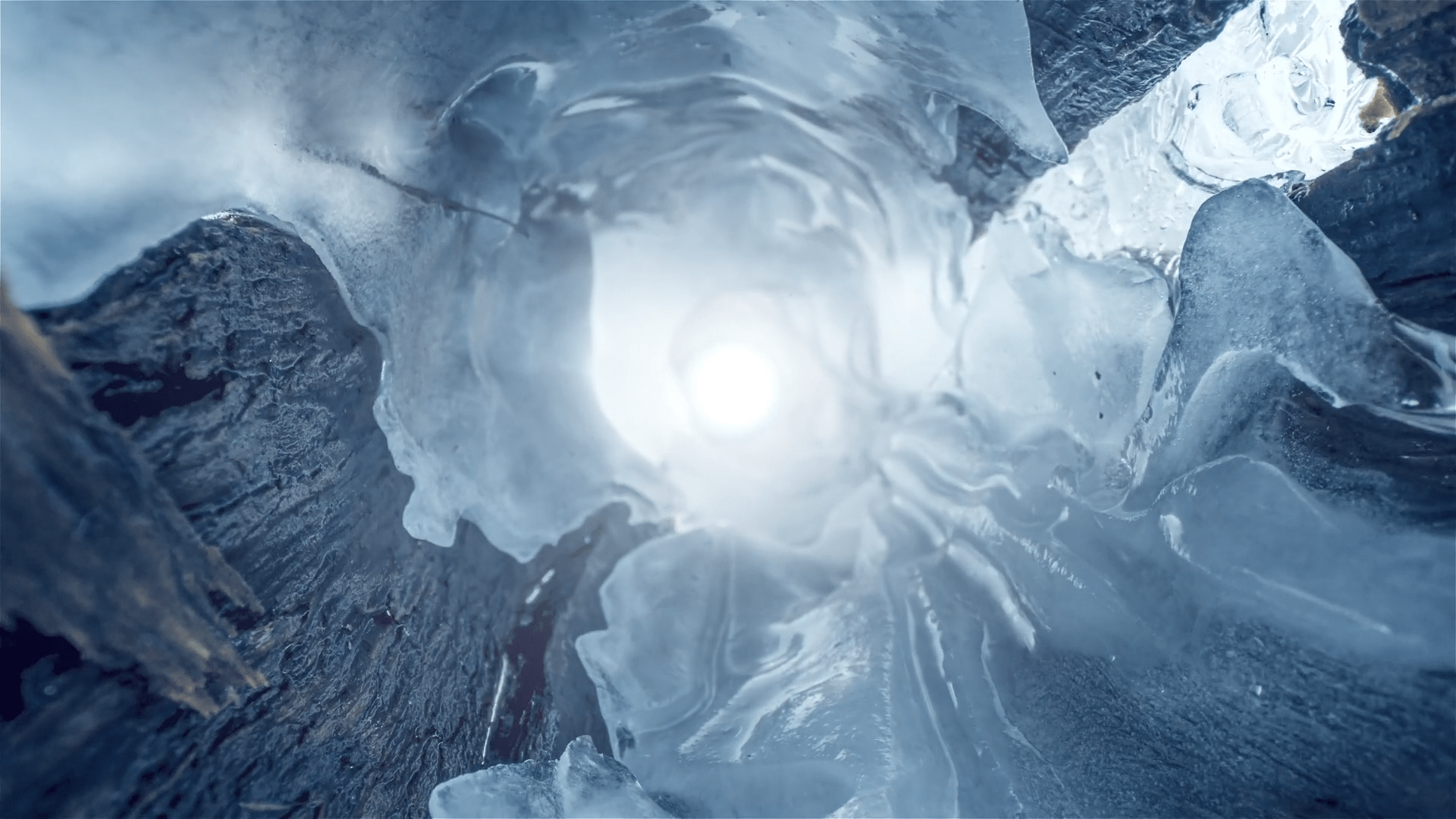
With every spring comes the thaw. Warming temperatures melt winter’s ice, carving it away to reveal the surfaces beneath. Christopher Dormoy’s macroscale timelapse “Eternal Spring” captures this dynamic, showing the process drop-by-drop and rivulet-by-rivulet. It’s also a commentary on melting in general as human-driven climate change chips away at ice that formed over millennia. (Video and image credit: C. Dormoy)

Bending in the Stream
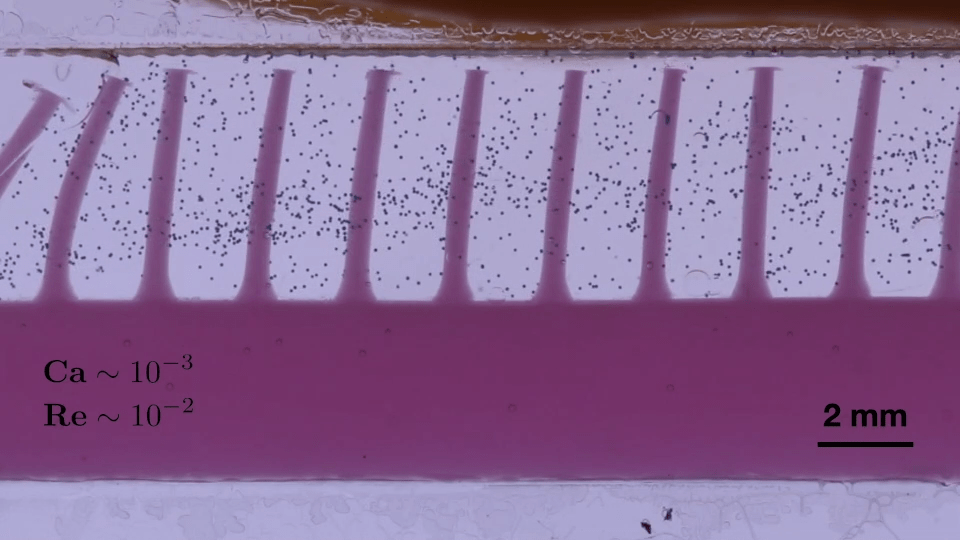
Nature is full of cilia, hairs, and similar flexible structures. Unsurprisingly, flows interact with these structures very differently than with smooth surfaces. Here, researchers investigate flow in a channel lined with flexible, hair-like plates. Initially, the channel is filled with oil and dark particles that help visualize the flow. Then, they pump water into the setup.
As the water intrudes, it forms an interface with the oil. That interface is powerful enough to bend individual hairs in the system. When the hair bends far enough, it can touch its neighbor, sealing the oil inside the gap between them. Along the length of the channel, this behavior leads to trapped pockets of oil that never drain, no matter how much water flows by. (Image and research credit: C. Ushay et al.)

Why We Can’t Control Rivers
Rivers are systems in a constant state of change, balancing flow speeds, path length, sediment deposition, and erosion, as seen in this previous Practical Engineering video. The next video in this mini-series considers what human interventions do to rivers. As convenient as it is for humanity to force a river into a straight and constant course, the long-term effects can be incredibly destructive both upstream and downstream.
In this video, Grady takes a look at several types of interventions: stream straightening, dams, river crossings, and more. With the help of a stream table, he demonstrates just how these efforts shift the river’s balance and what effects — in terms of erosion, deposition, and flooding — each can cause. These disadvantages, along with habitat destruction, are part of why stream remediation projects are on the rise. (Video and image credit: Practical Engineering)

Finding the Red in the Red Tide
Blooms of the algae Karenia brevis — known as a red tide — bring havoc to Gulf Coast shores. The algae can kill fish and other marine life, and it causes skin irritation and even respiratory problems for humans. But in spite of the moniker, these algae can be hard to spot; they can add a green, brown, red, or black hue to the water.
The false-color image above uses a new image processing technique that reveals the bloom. Using satellite images taken over multiple days, scientists can track and study the red tide in unprecedented detail. The new technique will be a boon to those trying to monitor and understand red tides. (Image credit: Y. Yao/USF/Planet Labs/L. Dauphin; via NASA Earth Observatory)

Can Water Solve a Maze?
Inspired by a simulation, Steve Mould asks a great question in this video: can water solve a maze? Yes — with some caveats. Steve makes two different maze patterns — a simple and a complex path — in two different sizes. With the small, simple-path version, the water immediately follows the correct path without taking any wrong turns. What keeps it on the right path seems to be a combination of air pressure and surface tension. In the dead-end passages, the air has nowhere to go in order to allow the water in. So the pressure of the trapped air and the narrowness of the passages (which allows surface tension to help hold the water in place) keeps the water out of the false paths.
With the larger mazes, the water is able to take some false turns as it seeks the lowest possible path. But after awhile the incorrect region fills and the water takes the next lowest path available, which eventually leads it to the outlet.
Toward the end of the video, Steve notes that the large mazes sometimes stop flowing, even though water is still in the reservoir. I’ll quibble slightly here with his explanation, though; I don’t think surface tension is playing as much of a role in this stoppage as friction. The water is basically being driven through a long, narrow pipe, which means quite a lot of friction between it and the walls. Just as you need a certain driving pressure to keep water in a pipe flowing, the maze needs a high enough driving pressure to keep the water going. The point at which drainage stops is the point where the upstream pressure (caused by the depth of the reservoir above the maze) is equal to the pressure lost due to friction in the pipe. All in all, it’s a very cool experiment and a video well-worth watching! (Video and image credit: S. Mould)
Long-Lived Bubbles
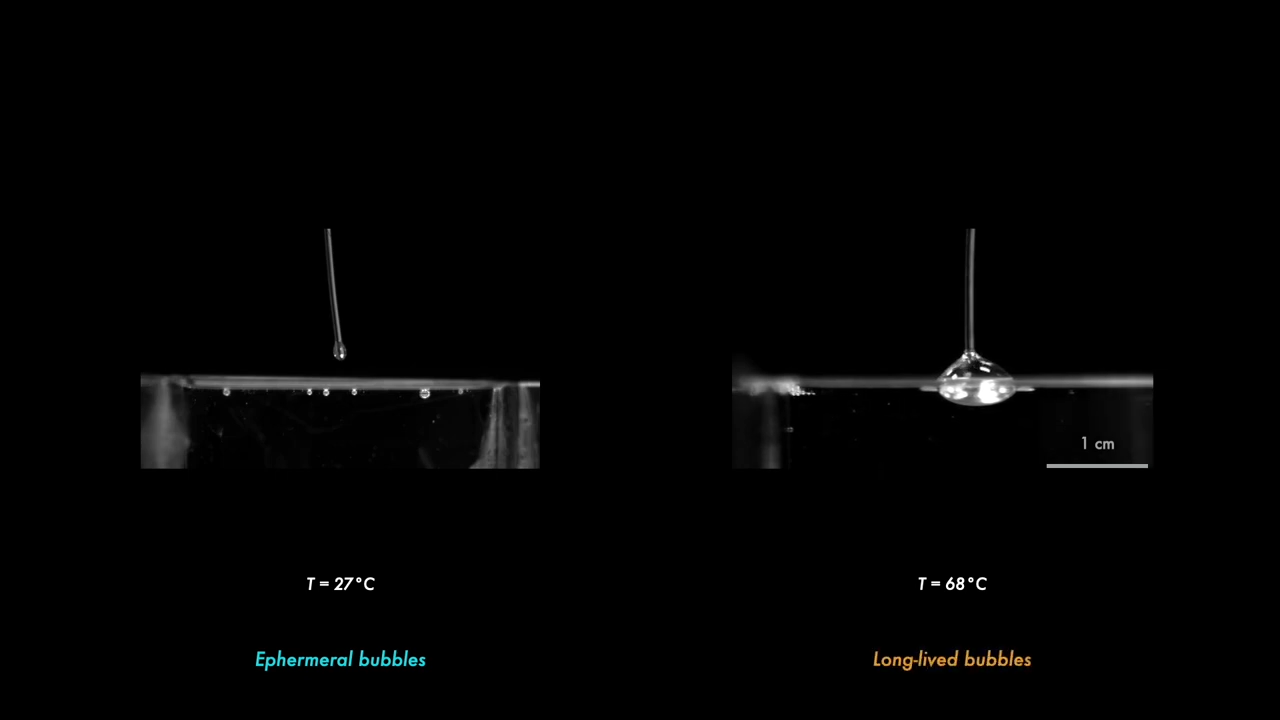
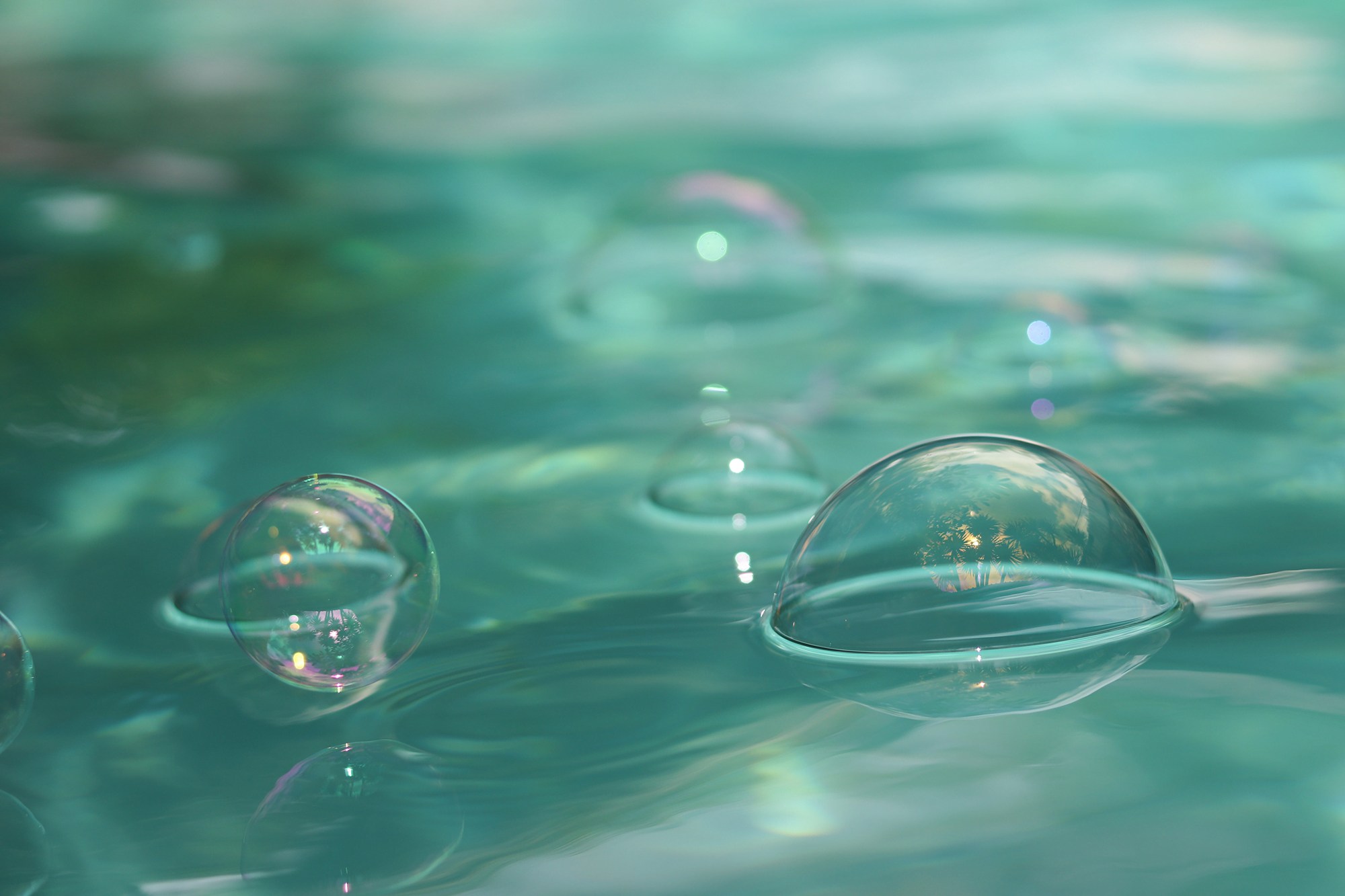
Without surfactants to stabilize them, bubbles don’t last long at room temperature. But adding a little heat changes the picture. When heated, the bubbles get stabilized by a thermal gradient that lifts fluid toward the bubble’s peak, where it cools and gathers. Eventually, the cold fluid grows heavy enough to sink down the side of the bubble (in either a constant stream or occasional drips); with warm fluid getting pulled up to replace it (via the Marangoni effect), the process repeats and the bubble lives on. (Video credit: S. Nath et al.; see also)

Oil-Covered Bubbles Popping
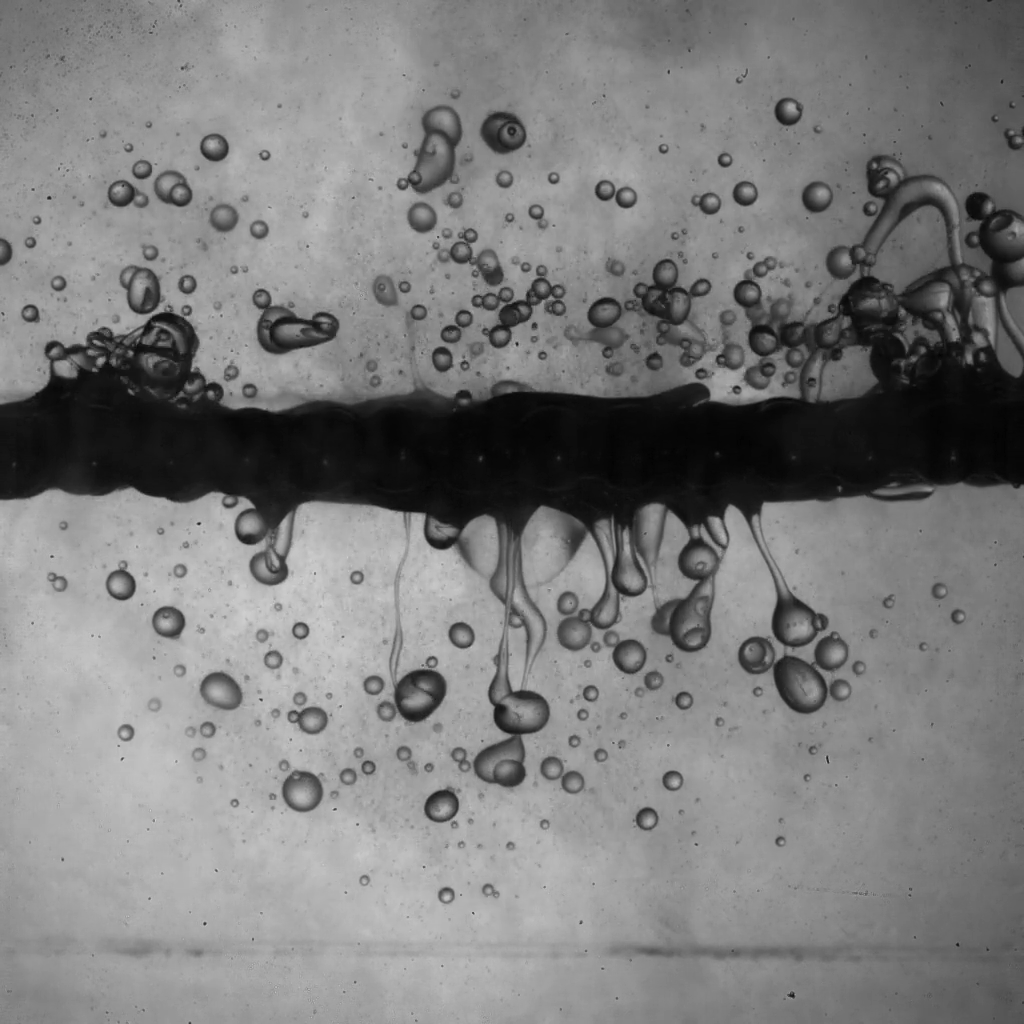
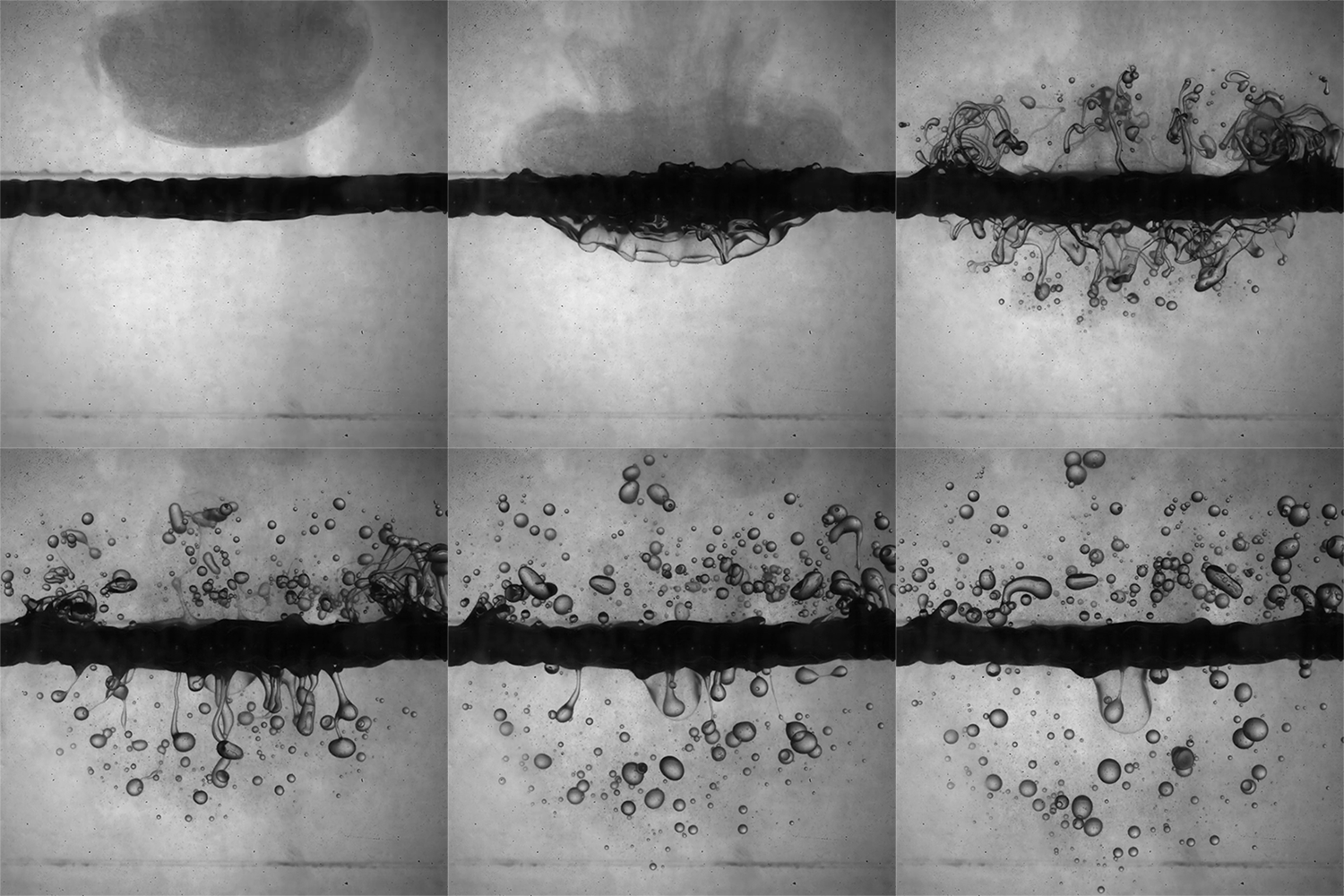
When bubbles burst, they release smaller droplets from the jet that rebounds upward. Depending on their size, these droplets can fall back down or get lofted upward on air currents that spread them far and wide. Thus, knowing what kind of bubbles produce small, fast droplets is important for understanding air pollution, climate, and even disease transmission.

The jet from a bubble of clean water is broad and slow, releasing fewer and larger drops. In a recent study, researchers compared droplets made by clean, water-only bubbles, and the ones generated from water bubbles with a thin layer of oil coating them. The clean bubbles created jets that were broad and relatively slow moving; this motion produced a few large drops that quickly fell back down.

The jet from an oil-covered bubble is skinny and fast-moving. It produces many small droplets. In contrast, the oil-slicked bubbles made a narrow, fast-moving jet that broke into many small droplets. These droplets could stay aloft for longer periods, indicating that contaminated water can produce more aerosols than clean. (Image credit: top – J. Graj, bursting – Z. Yang et al.; research credit: Z. Yang et al.; submitted by Jie F.)

Walking in the Wake of a Cylinder
A cylinder in a flow produces a series of alternating vortices known as a von Karman vortex street. Changing the flow speed and rotating the cylinder both allow researchers to tune the frequency of these shed vortices. What happens to an object in the wake?
For a simple hydrofoil tethered to the cylinder, the object wends back and forth along the vortices. But when that hydrofoil sits at the end of a double-pendulum, something very interesting happens. The whole apparatus follows a consistent trajectory similar to a human walking gait. Researchers are using this motion to build a robot that will help physical therapy patients regain a natural walking style. (Image and video credit: A. Carleton et al.)

Flow Over an AT-AT
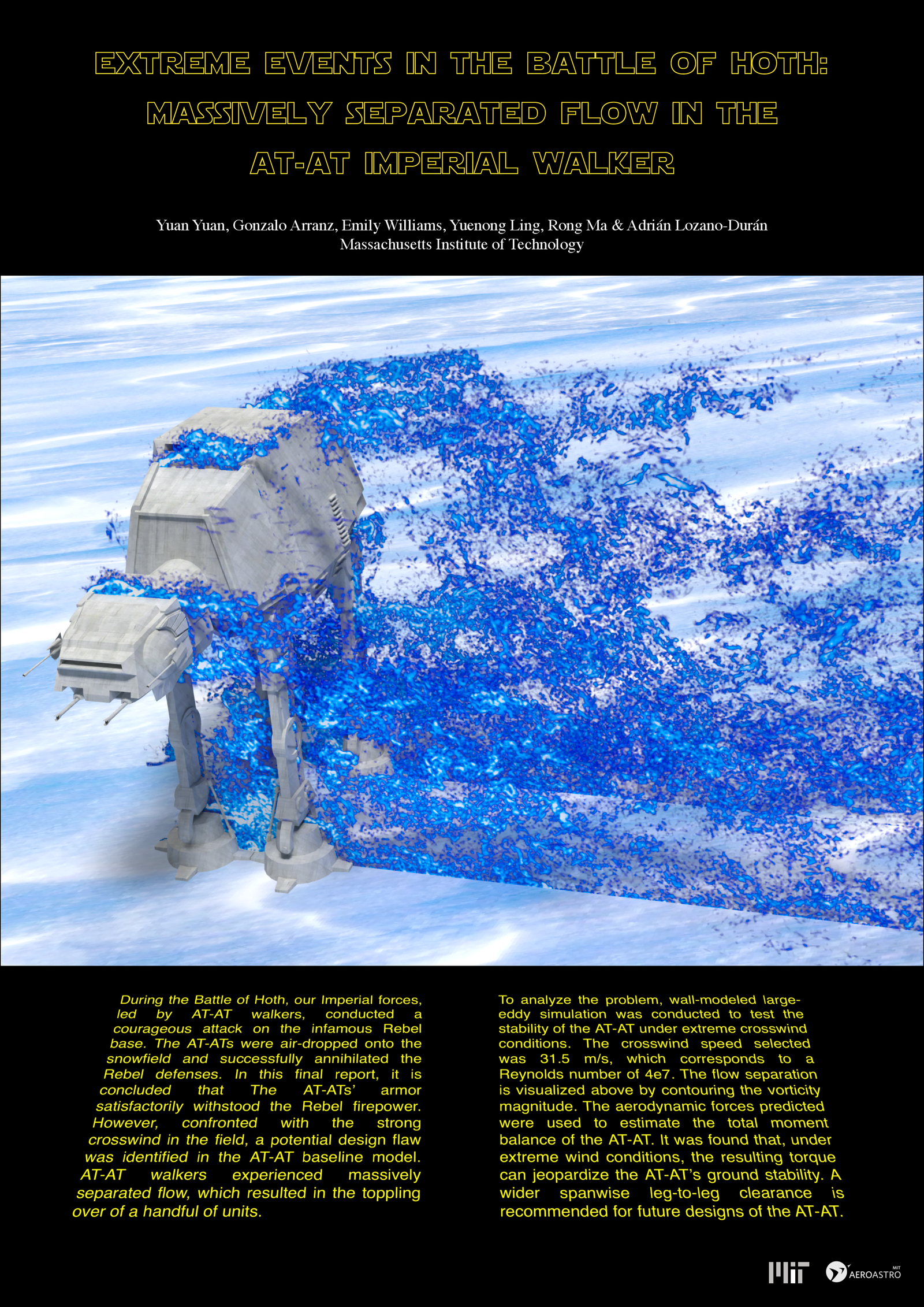
Having previously examined the re-entry characteristics of an X-Wing, a group of engineers are back to look at Imperial vehicle physics. In this poster, they look at what happens to the AT-AT walker when strong crosswinds, like those seen in the Battle of Hoth, blow across the vehicle’s path. Given its boxy body and gangly legs, it will come as no surprise that the AT-AT is not at all streamlined and instead causes lots of separated flow. Those flow separations come with strong side forces that can tip the walkers.
Be sure to take a closer look at the text on the poster. It’s written from the perspective of Imperial engineers, complete with recommendations for the next generation of AT-AT. (I don’t think those got built, at least not by the Empire!) May the 4th be with you! (Image credit: Y. Yuan et al.)