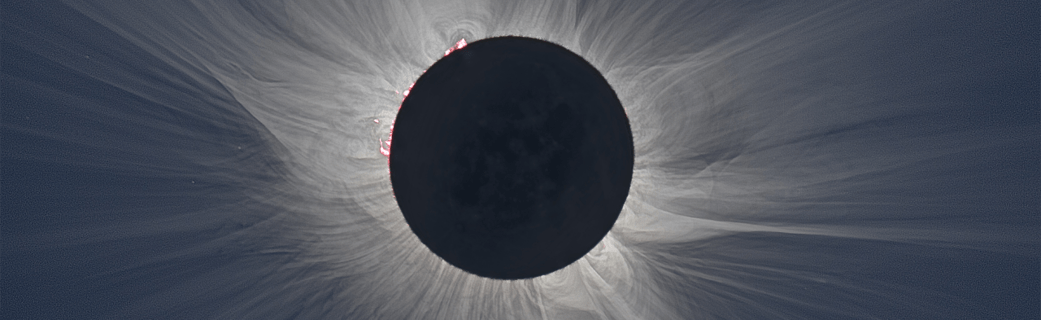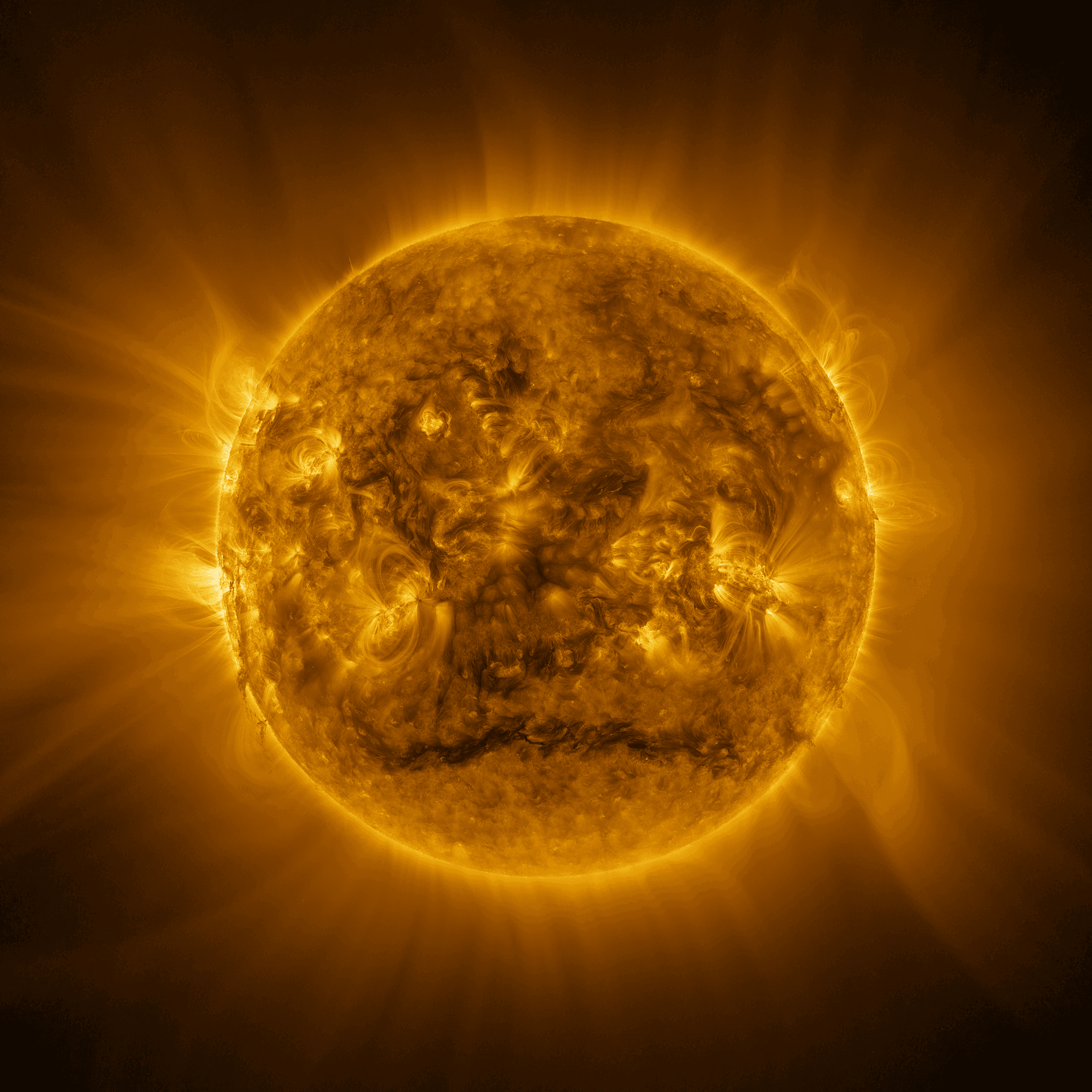
Fall into our nearest star in this gorgeous high-resolution view of the Sun. Taken by Solar Orbiter, a joint NASA-ESA mission, the image stretches from the fiery photosphere — full of filaments and prominences — to the wispy yet unbelievably hot corona. It’s well worth clicking through to zoom in and around the full size image. (Image credit: ESA & NASA/Solar Orbiter/EUI Team, E. Kraaikamp; via Gizmodo)
Tag: coronal mass ejection

Solar Filament Eruption
From Earth, we rarely glimpse the violent flows of our home star. Here, a filament erupts from the photosphere creating a coronal mass ejection, captured in ultraviolet wavelengths by the Solar Dynamics Observatory. This particular eruption took place in 2012, and, while it was not aimed at the Earth, it did create auroras here a few days later. Eruptions like these occur as complex interactions between the sun’s hot, ionized plasma and its magnetic fields. Magnetohydrodynamics like these are particularly tough to understand because they combine magnetic physics, chemistry, and flow. (Image credit: NASA/GSFC/SDO; via APOD)

Our Sun’s Corona Unfurled
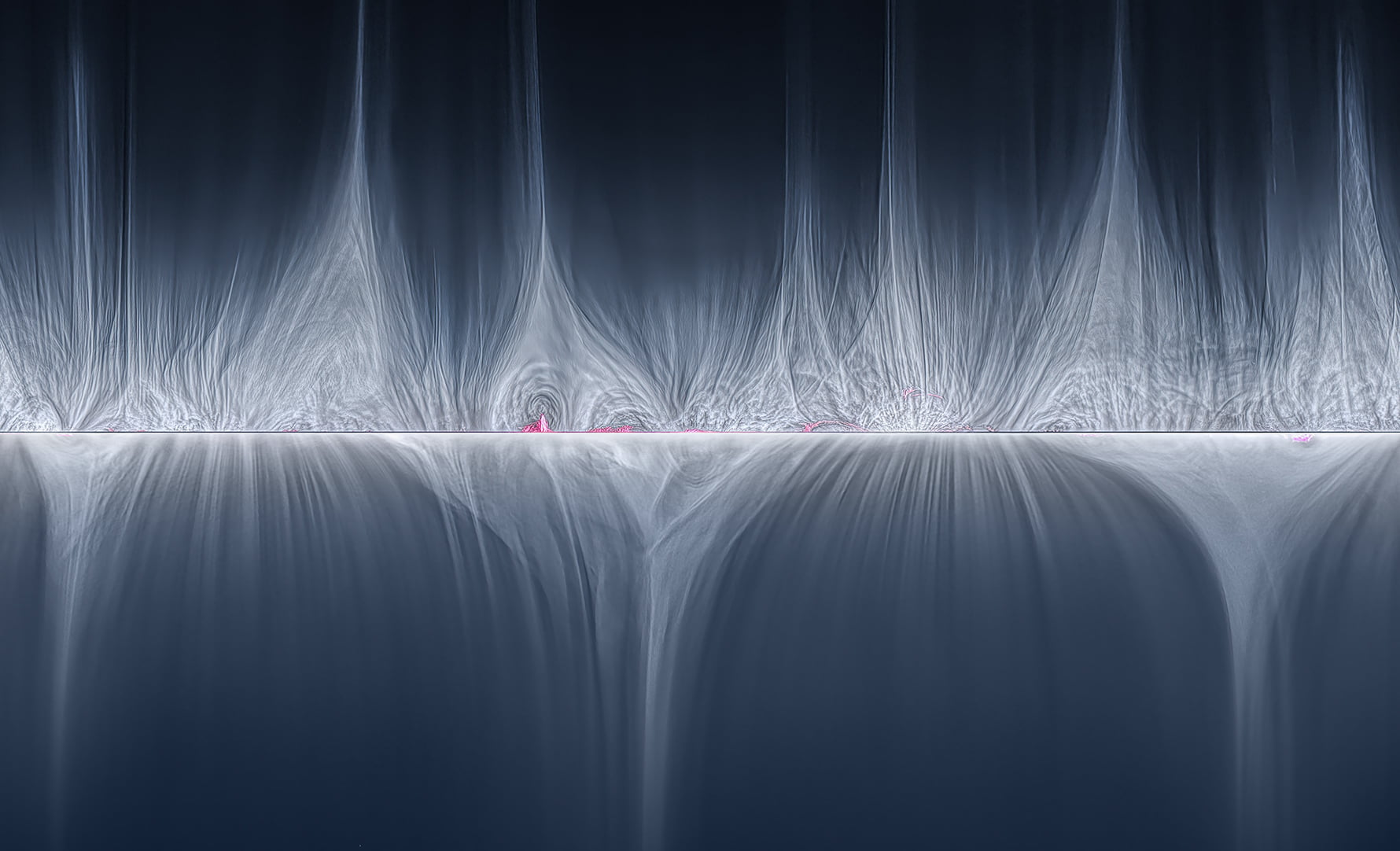
This clever image is actually two solar eclipses stacked atop one another. The bottom half of the image shows the sun‘s corona — its wispy, dramatic outer atmosphere — during the a 2017 total solar eclipse, and top half shows a 2023 total solar eclipse. In both, the corona has been unwrapped from around the sun’s circumference and project instead into a rectangle.
The 2017 eclipse took place near the minimum of the sun’s solar cycle and appears relatively tranquil. The 2023 eclipse, in contrast, came near solar cycle’s maximum and shows a far more chaotic and turbulent environment. Notice the bright pink solar prominences dotting the mid-line and the field of shadowy plasma loops above them. (Image credit: P. Ward; via APOD)

Kelvin-Helmholtz and the Sun
Kelvin-Helmholtz instabilities (KHI) are a favorite among fluid dynamicists. They resemble the curls of a breaking ocean wave — not a coincidence, since KHI create those ocean waves to begin with — and show up in picturesque clouds, Martian lava coils, and Jovian cloud bands. The instability occurs when two layers of fluid move at different speeds and the friction between them causes wrinkles that grow into waves.
Scientists have long suspected that KHI could occur in solar phenomena, too, like the coronal mass ejections that drive space weather. The Parker Solar Probe, a spacecraft designed to explore the sun, caught evidence of a series of turbulent eddies during a 2021 coronal mass ejection, and a recent study of those observations shows that the series of vortices are consistent with KHI. Put simply, the team found that the features are spaced and aligned as we’d expect for KHI and, during the probe’s measurements, the features grew at the rate Kelvin-Helmholtz eddies would. Although the instability itself may be common in the sun’s corona, it’s unlikely that we’ll see it often, simply because conditions need to be just right for them to be visible. (Image credit: NASA/Johns Hopkins APL/NRL/Guillermo Stenborg and Evangelos Paouris; research credit: E. Paouris et al.; via Gizmodo)
Fediverse Reactions
-

Solar Eclipses and Coronal Mass Ejections
Observations of many solar phenomena have only become accessible to humans relatively recently with the advent of satellites. Prior to that, it simply wasn’t feasible to observe dynamics in the sun’s atmosphere, like solar prominences or coronal mass ejections – the sun was simply too bright to see them – except during the occasional total solar eclipse!
In the 1970s, scientists identified massive bursts of solar plasma as coronal mass ejections. These solar storms are responsible for so-called space weather and, when directed toward Earth, can pose a hazard to technologies on the ground and astronauts in orbit. Scientists initially thought this was the first time such storms had been observed, but they later recognized that photographs and sketches of an 1860 total eclipse revealed that humanity had seen a coronal mass ejection more than 100 years before! Check out the NASA video below for the full story. You can also learn about some of the science that will be going on in today’s eclipse. And, for those in the U.S. today, have a fun and safe time viewing the ecliipse! (Image credit: S. Habbal, M. Druckmüller and P. Aniol, source; video credit: NASA Goddard)