
Soap foams represent an interplay of gravitational, capillary, interfacial, and viscous forces, none of which is easily isolated in a laboratory experiment. This makes it difficult to sort out the various effects governing the foam since individual variables cannot be controlled independently. The image above is of a special foam, one in which the liquid phase has been replaced with a ferrofluid. This adds an additional parameter–external magnetic fields–to the problem, but, unlike the others, this is an independent variable. By manipulating the external magnetic field, researchers can control the foam’s drainage rate and even the structure it takes on. (Photo credit: E. Janiaud)
Search results for: “ferrofluid”

INK World v01
In this video, mixtures of inks (likely printer toners) and fluids move and swirl. Magnetic fields contort the ferrofluidic ink and make it dance, while less viscous fluids spread into their surroundings via finger-like protuberances. (Video credit and submission: Antoine Delach)

Fluidic Public Art by Charles Sowers
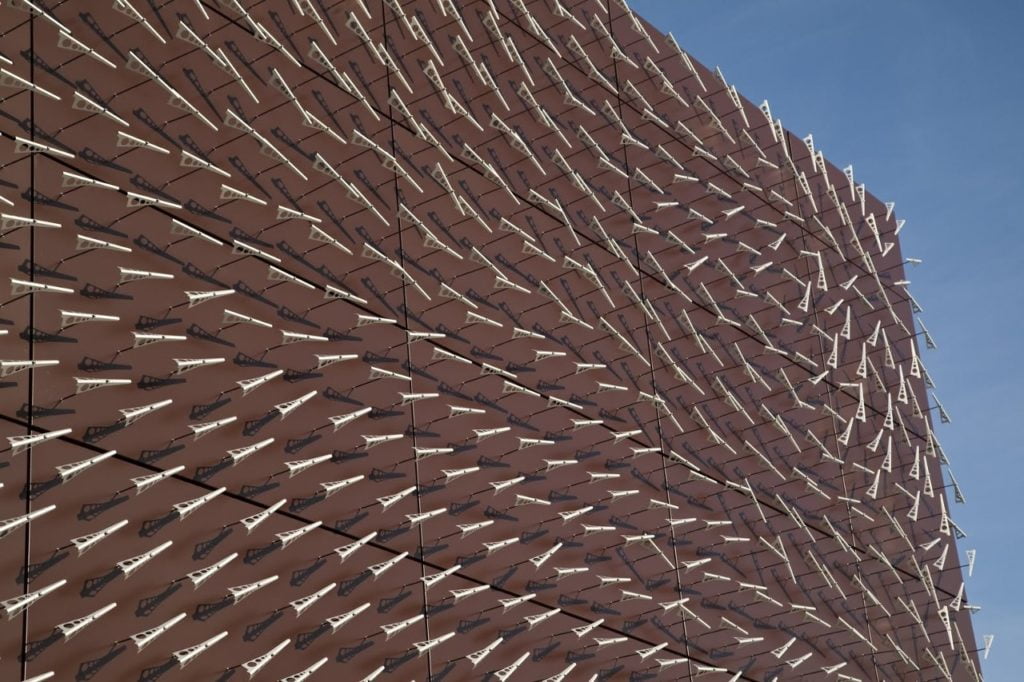


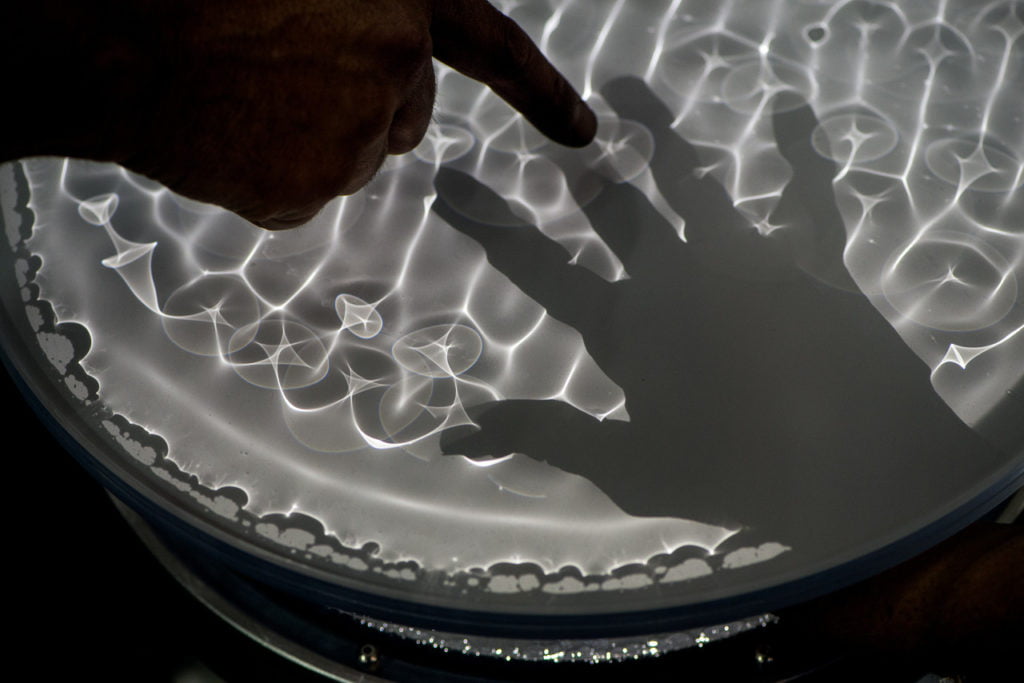


Artist Charles Sowers creates exhibits and public art focused on illuminating natural phenomenon that might otherwise go unnoticed, and much of his work features fluid dynamics directly or indirectly. “Windswept” and “Wave Wall” are both outdoor exhibits that show undulations and vortices corresponding to local wind flow. Other pieces explore ferrofluids through magnetic mazes or feature foggy turbulence. My own favorite, “Drip Chamber”, oozes with viscous fluids whose dripping forms patterns reminiscent of convection cells. Be sure to check out his website for videos of the exhibits in action. (Photo credits: Charles Sowers; submitted by rreis)
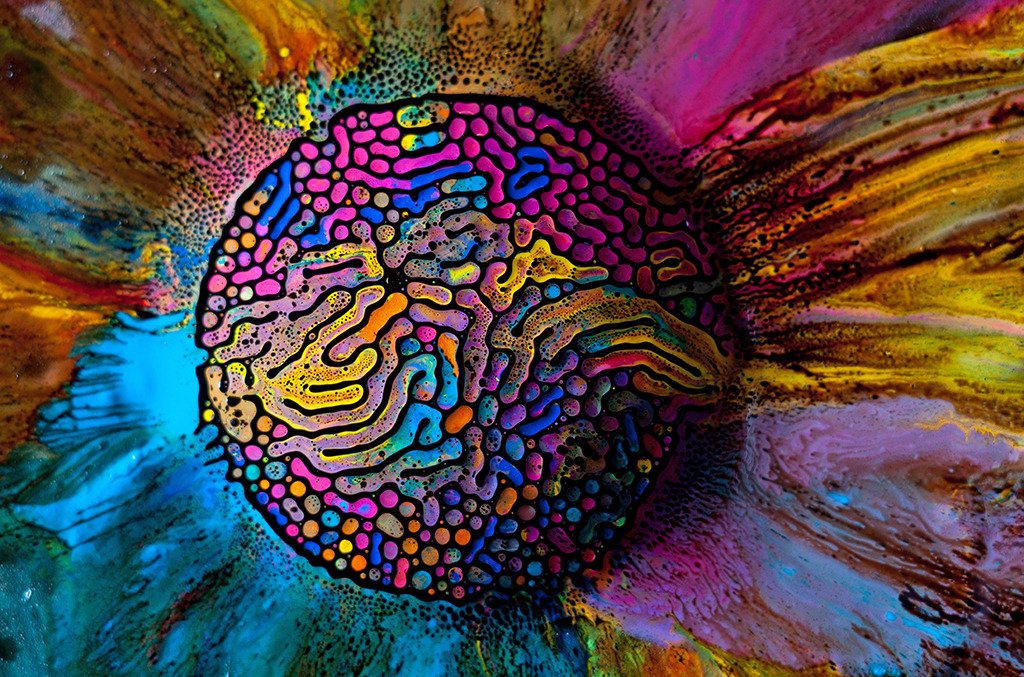
“Millefiori”
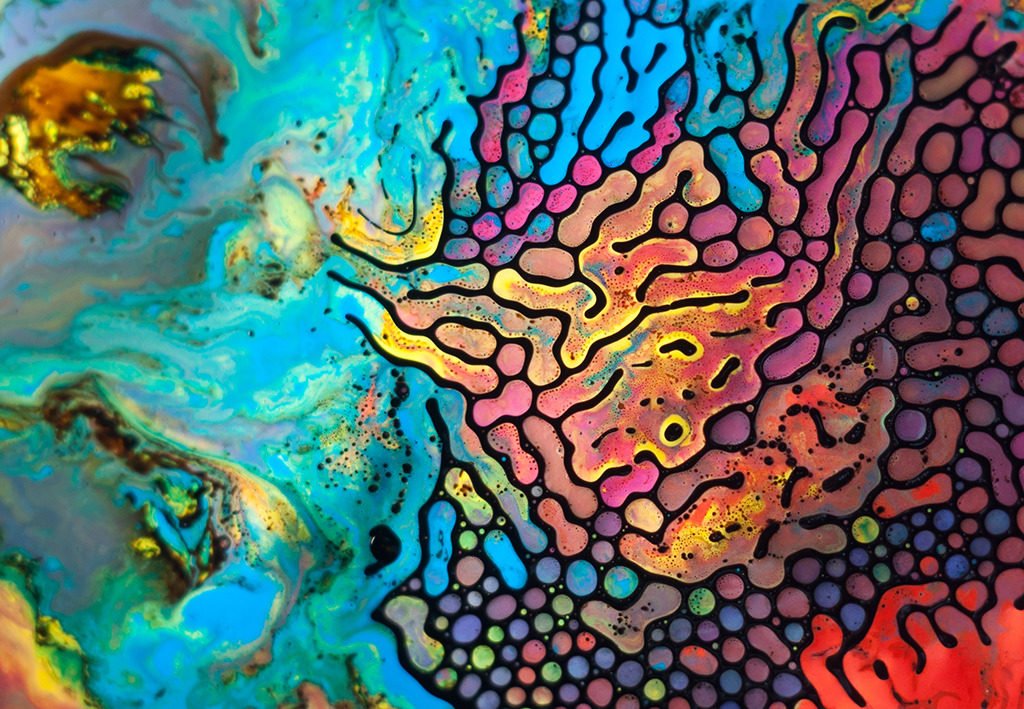
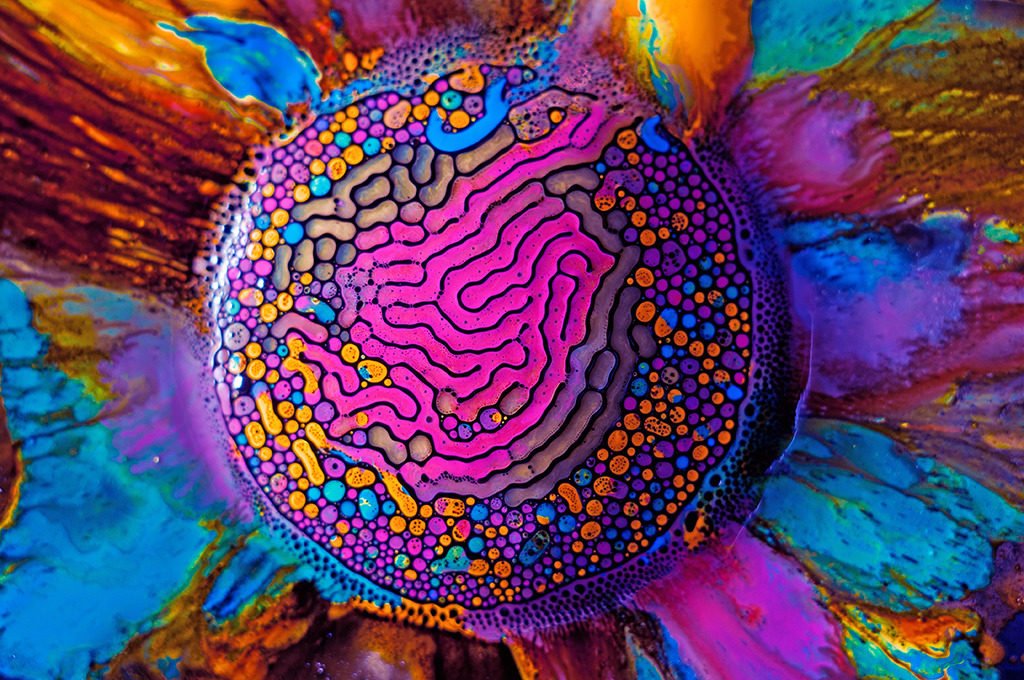
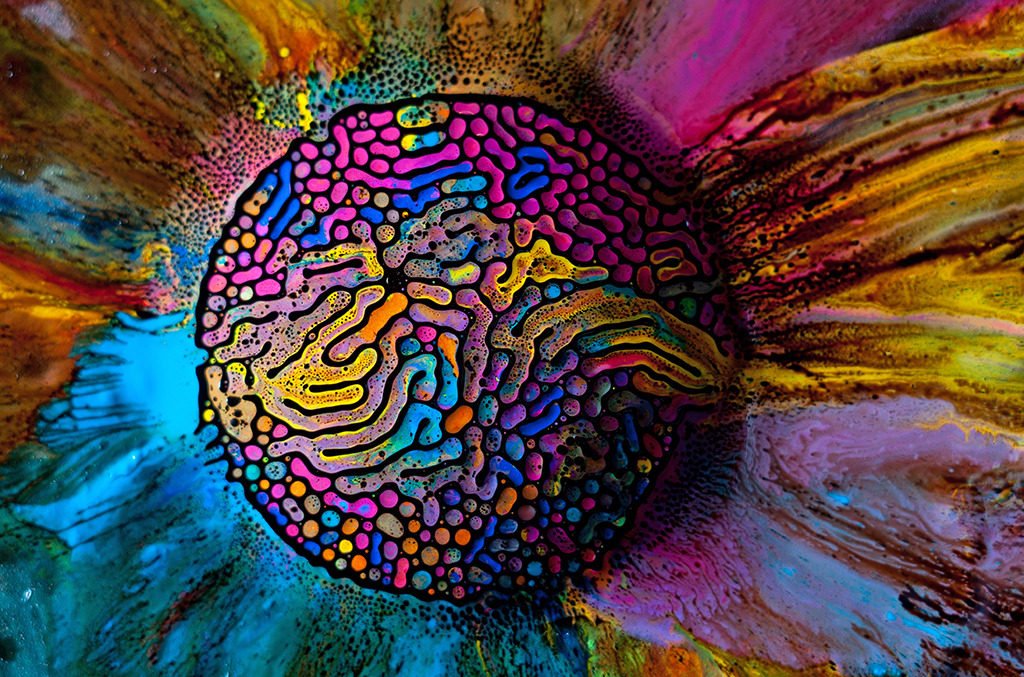
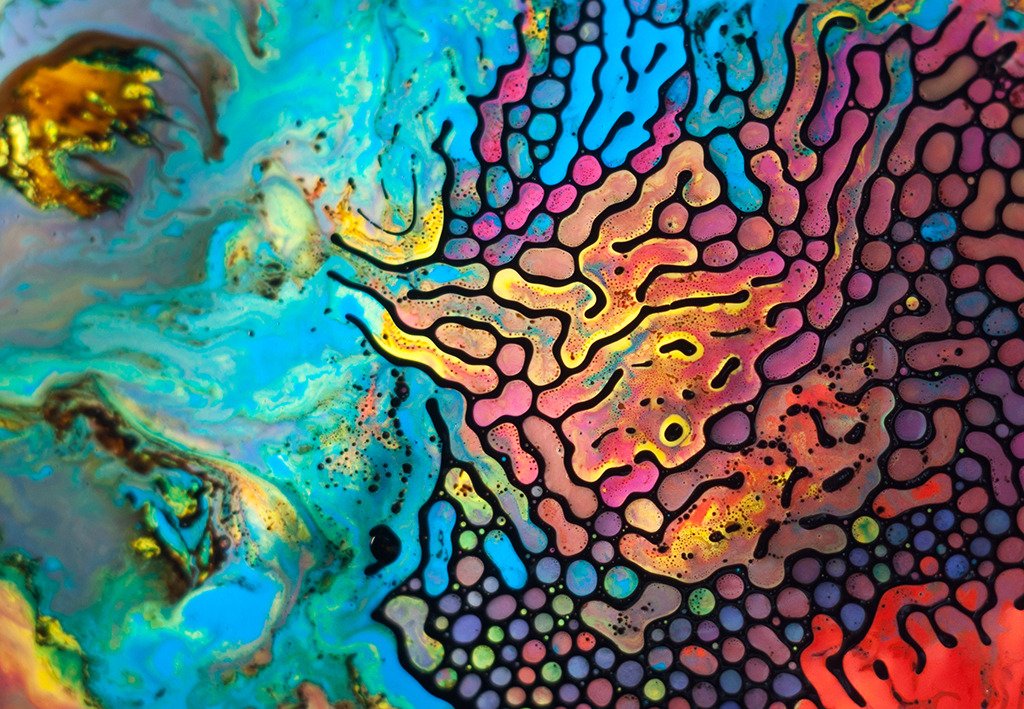
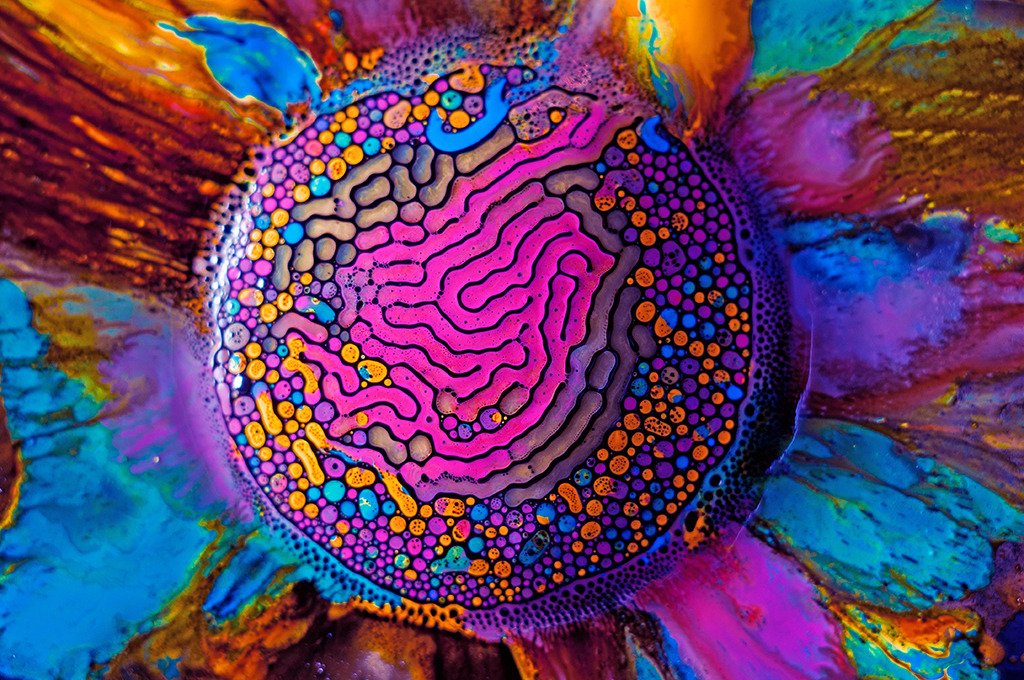
In “Millefiori” artist Fabian Oefner mixes watercolors with ferrofluids to create bright fluid microcosms. Each photograph represents an area about the size of a thumbnail. Ferrofluids contain iron-based nanoparticles suspended in a carrier fluid and thus respond to magnetic fields. They can form sharp points, labyrinthine mazes, or even brain-like patterns depending on the magnetic field and the substances surrounding them. For more on this art project, see this interview with the artist. (Photo credit: Fabian Oefner)
“Ferienne”
In “Ferienne” artist Afiq Omar utilizes ferrofluids, magnetism, and vibration to create analog visual effects. Most of the dot and labyrinthine patterns result from the reaction of a ferrofluid submerged in a nonmagnetic fluid to an external magnetic field. Diffusion effects and surface tension instabilities are also visible in the way the darker ferrofluid breaks down in the carrier fluid. Also be sure to check out Omar’s previously featured fluid film “Ferroux”. (Video credit: Afiq Omar)
Labyrinth
A labyrinthine pattern forms in this timelapse video of a multiphase flow in a Hele-Shaw cell. Initially glass beads are suspended in a glycerol-water solution between parallel glass plates with a central hole. Then the fluid is slowly drained over the course of 3 days at a rate so slow that viscous forces in the fluid are negligible. As the fluid drains, fingers of air invade the disk, pushing the beads together. The system is governed by competition between two main forces: surface tension and friction. Narrow fingers gather fewer grains and therefore encounter less friction, but the higher curvature at their tips produces larger capillary forces. The opposite is true of broader fingers. Also interesting to note is the similarity of the final pattern to those seen in confined ferrofluids. (Video credit and submission: B. Sandnes et al. For more, see B. Sandes et al.)
“Compressed” Outtakes
Bubbles, viscosity, diffusion, capillary action, and ferrofluids all feature in the artistic experiments of Kim Pimmel. Be sure to check out his previous film featured here. (Video credit: Kim Pimmel)
“Ferroux”
In this video, artist Afiq Omar mixes ferrofluid with soap, alcohol, milk, and other liquids to create a surrealistic fluidic dance. In addition to using different fluid mixtures, I suspect he accomplishes many effects using several different permanent magnets and electromagnets to vary the magnetic fields around the ferrofluid mixtures. (Video credit: Afiq Omar; via Wired)
“Compressed 02”
This timelapse video shows the spreading of food coloring and a ferrofluid through soap suds surrounding a magnet. Capillary action, the same force that enables sap to flow up through a tree against gravity, helps draw the fluids through the interfaces between the soap bubbles without disturbing the suds. The magnet’s field provides a preferred direction for the ferrofluid flow. (via Gizmodo)
Morpho Towers
Artists Sachiko Kodama and Yasushi Miyajima use ferrofluids and magnetic fields to create their “Morpho Towers – Two Standing Spirals” artwork. Ferrofluids are formed from a suspension of ferrous material in a oil or water and are a popular subject for fluid dynamics as art. You can even make your own ferrofluid at home. (via ageekmom)