Search results for: “balloon”

  • Albuquerque: Balloonist Paradise

    Albuquerque: Balloonist Paradise

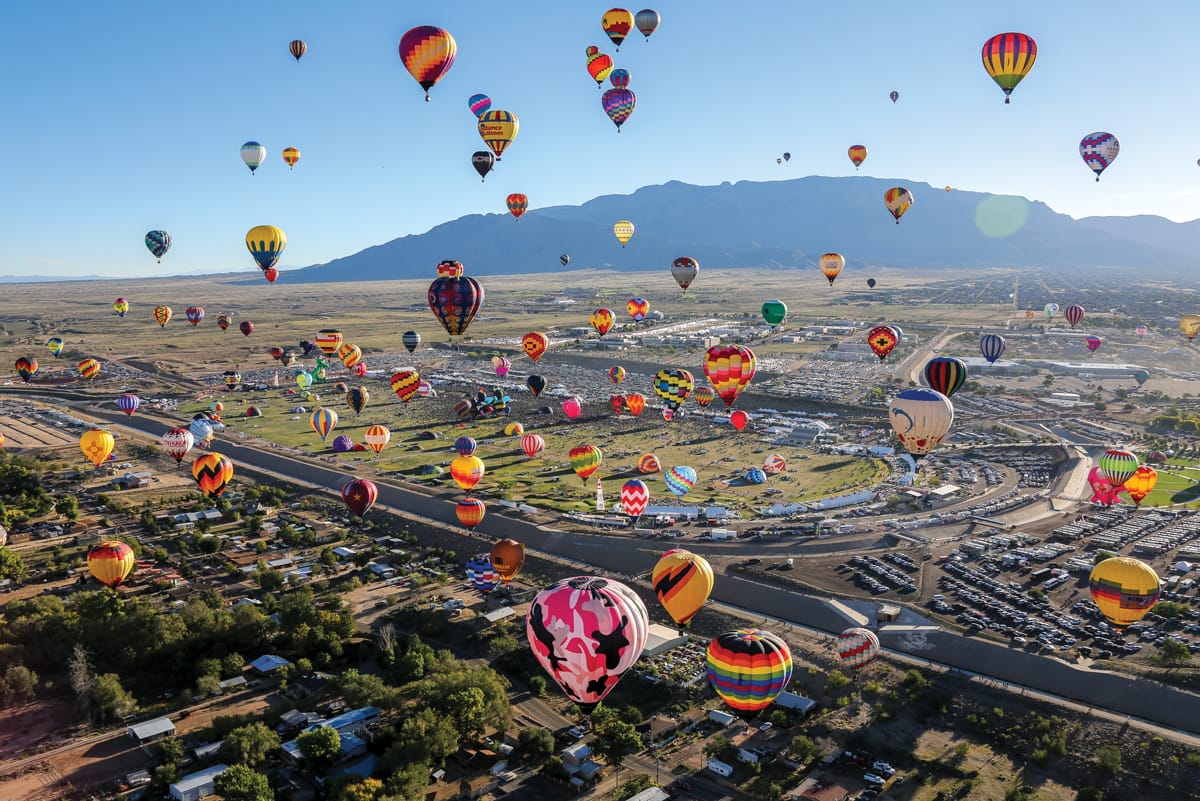
    Albuquerque, New Mexico’s unique weather characteristics make it a popular destination for hot-air balloonists. While balloonists can control their altitude by warming or venting the air in their balloon, their horizontal travel comes at the mercy of the wind. (Just ask the erstwhile Wizard of Oz.) What makes Albuquerque special is a combination of topography, dry air, and altitude. Together, these features create the “Albuquerque box,” a circulation that gives south-flowing drainage winds below north-flowing prevailing winds.

    The key to the box’s flow is a temperature inversion, where cooler, denser air is trapped near the surface and lighter, warmer air sits above. This typically occurs after a night of clear skies when much of the ground layer’s warm gets radiated away to space — something that’s easily done in high, dry altitudes.

    Temperature inversions like this don’t last very long, though; by late morning, the sun’s warmth will dismantle the Albuquerque box. Still, it is a frequent enough occurrence, especially in the stable atmospheric conditions common in the autumn, that the city hosts an International Balloon Fiesta every October. (Image credit: B. Bos; via Physics Today)

    Fediverse Reactions
  • “Bulging Balloons”

    “Bulging Balloons”

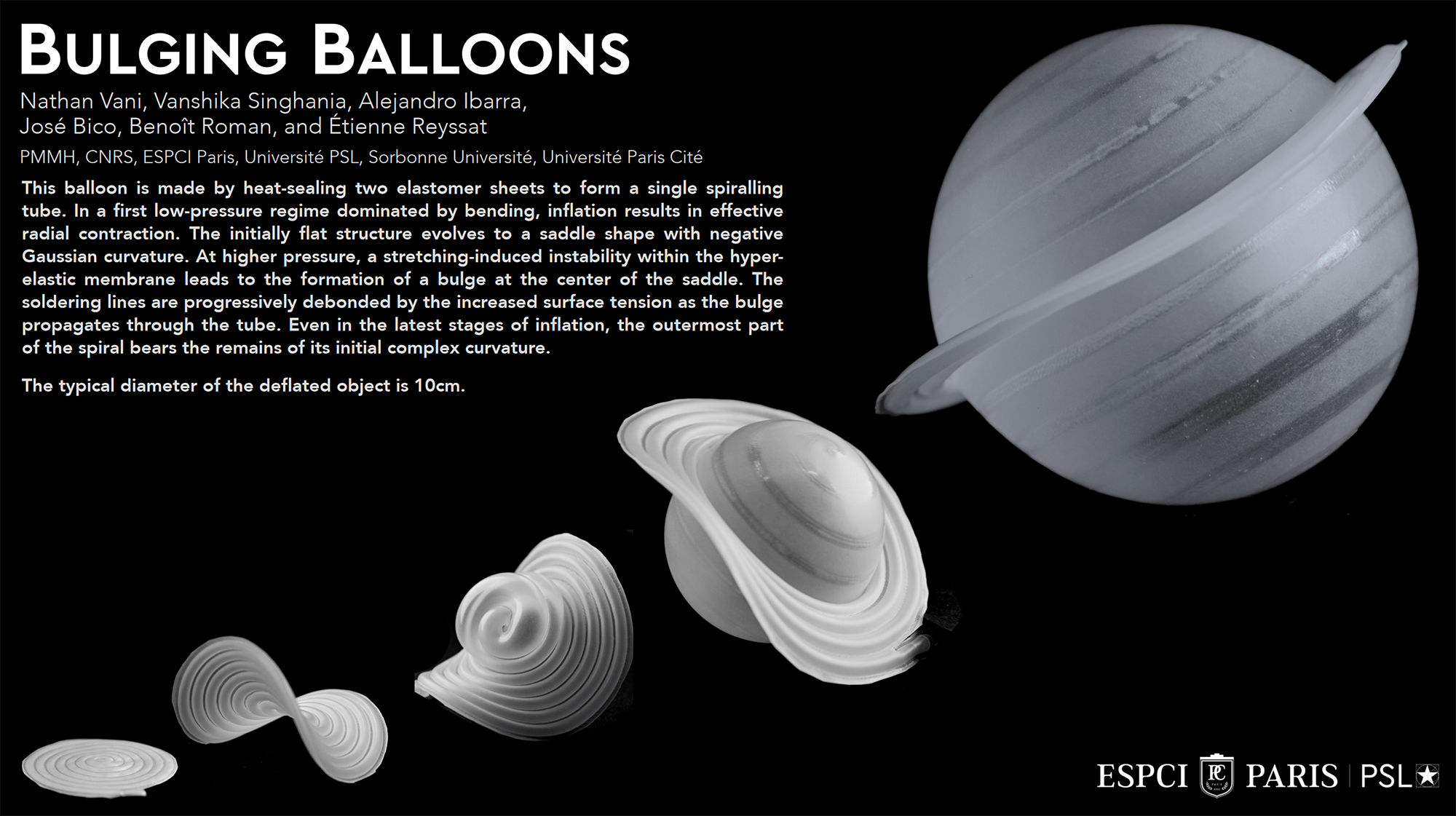
    This planet-like balloon started out as two elastomer sheets, heat-sealed together into a spiraling tube. As the balloon was inflated, it changed from flat to a saddle-like shape. With more air, the pressure inside increased, triggering an instability that caused the middle of the balloon to bulge. As inflation continued, the central bulge expanded, unbonding layer after layer of the seal. Even late in inflation, the balloon maintains hints of its original shape in the form of a ring around the Jovian bulge in the middle. (Image credit: N. Vani et al.)

    Fediverse Reactions
  • Featured Video Play Icon

    Popping an Oil Balloon

    Oil and water don’t mix — or at least they won’t without a lot of effort! In this video, we get to admire just how immiscible these fluids are as oil-filled balloons get burst underwater.

    Visually, the two bursts are quite spectacular. In the first image, the initial balloon has a sizeable air bubble at the top, which rises even more rapidly than the buoyant oil, creating a miniature, jelly-fish-like plume that reaches the surface first. The large oil plume follows, behaving similarly to the balloon burst without an added air bubble.

    The last of the oil in both cases comes from a cloud of smaller droplets formed near the bottom of the balloon. Being smaller and less buoyant, these drops take a lot longer to rise to the surface and remain much closer to spherical as they do. I suspect these smaller droplets form due to the forces created by the fast-moving elastic as it tears away. (Video and image credit: Warped Perception)

  • Featured Video Play Icon

    Paint Balloons

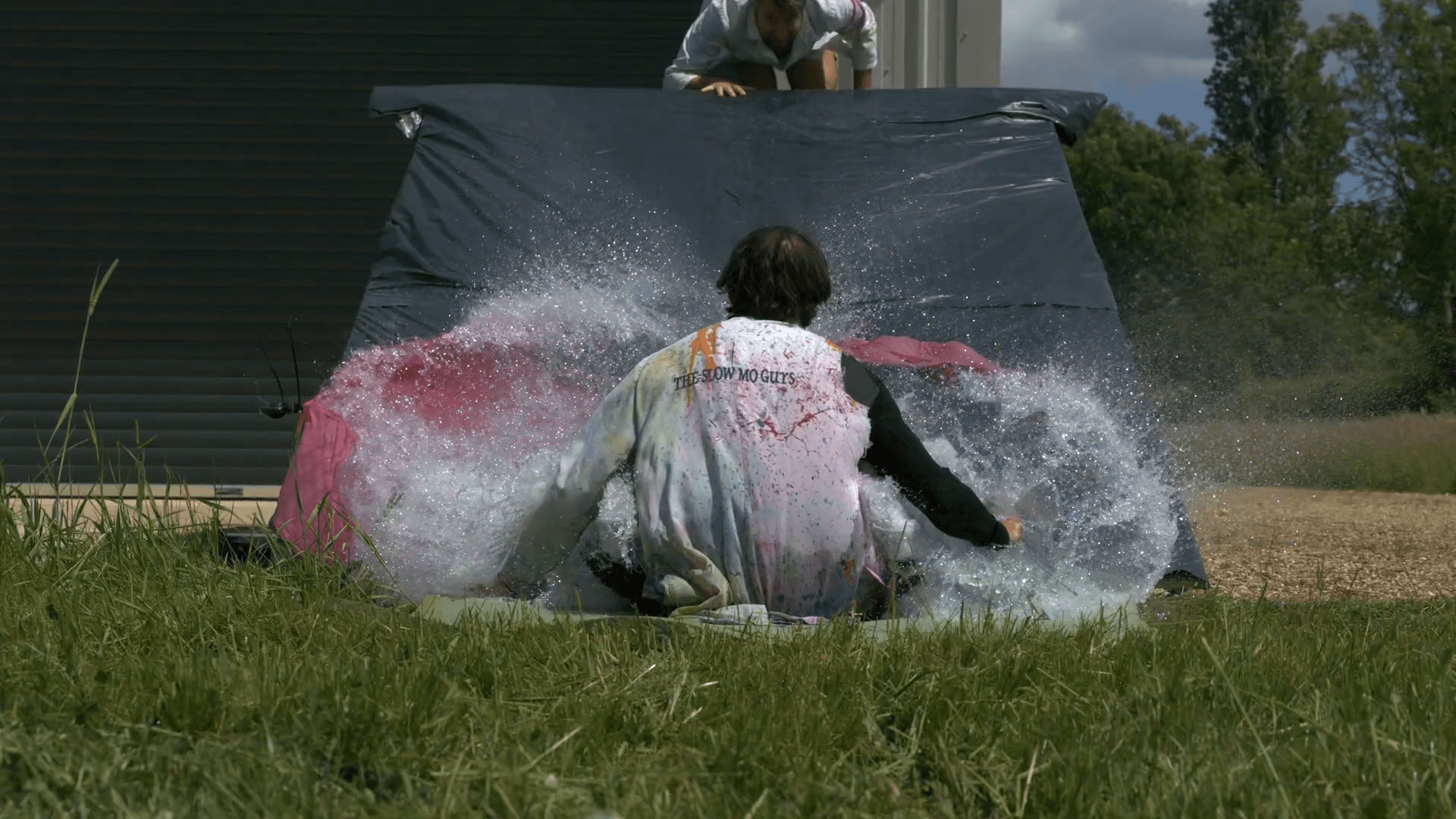
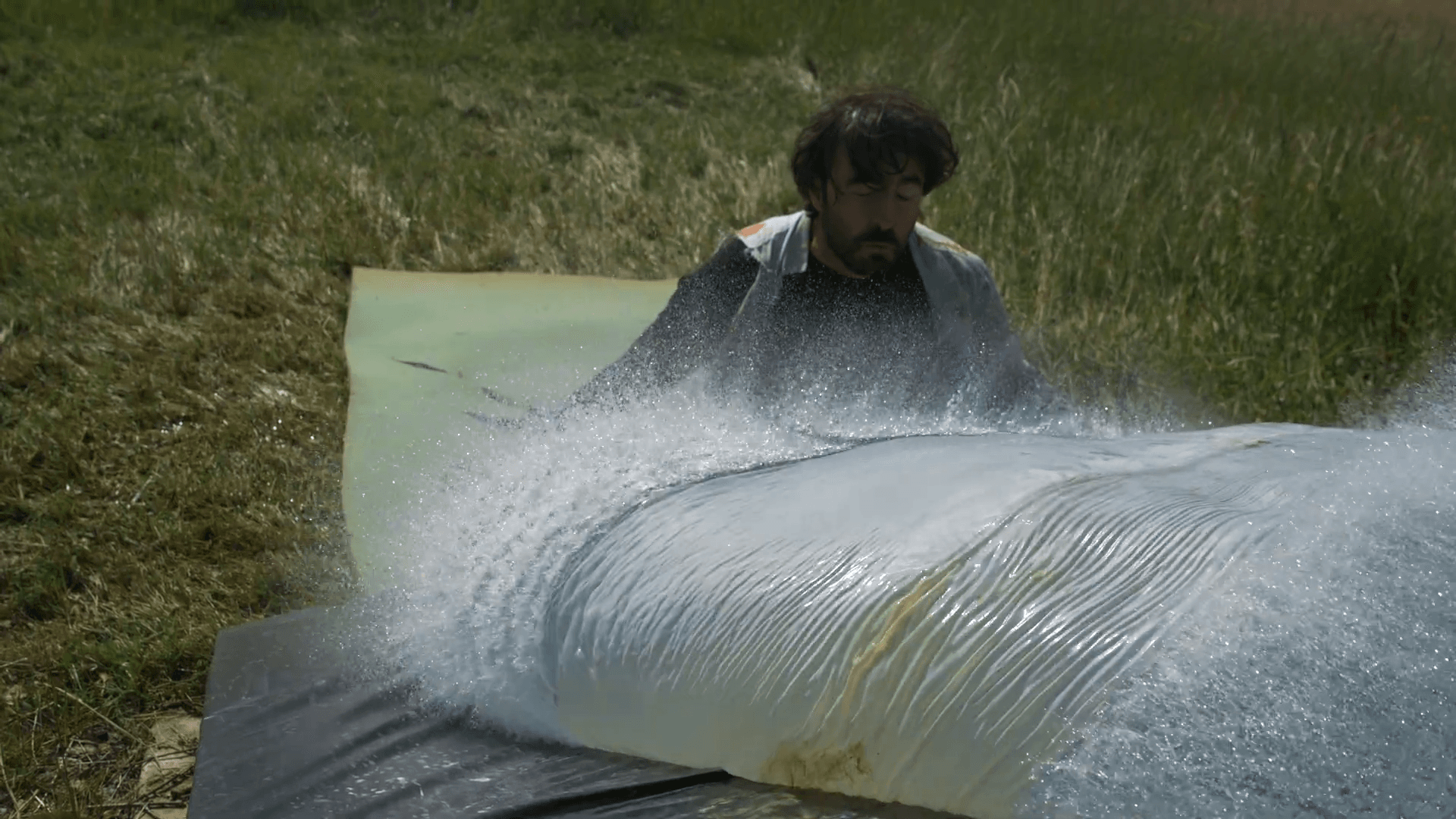
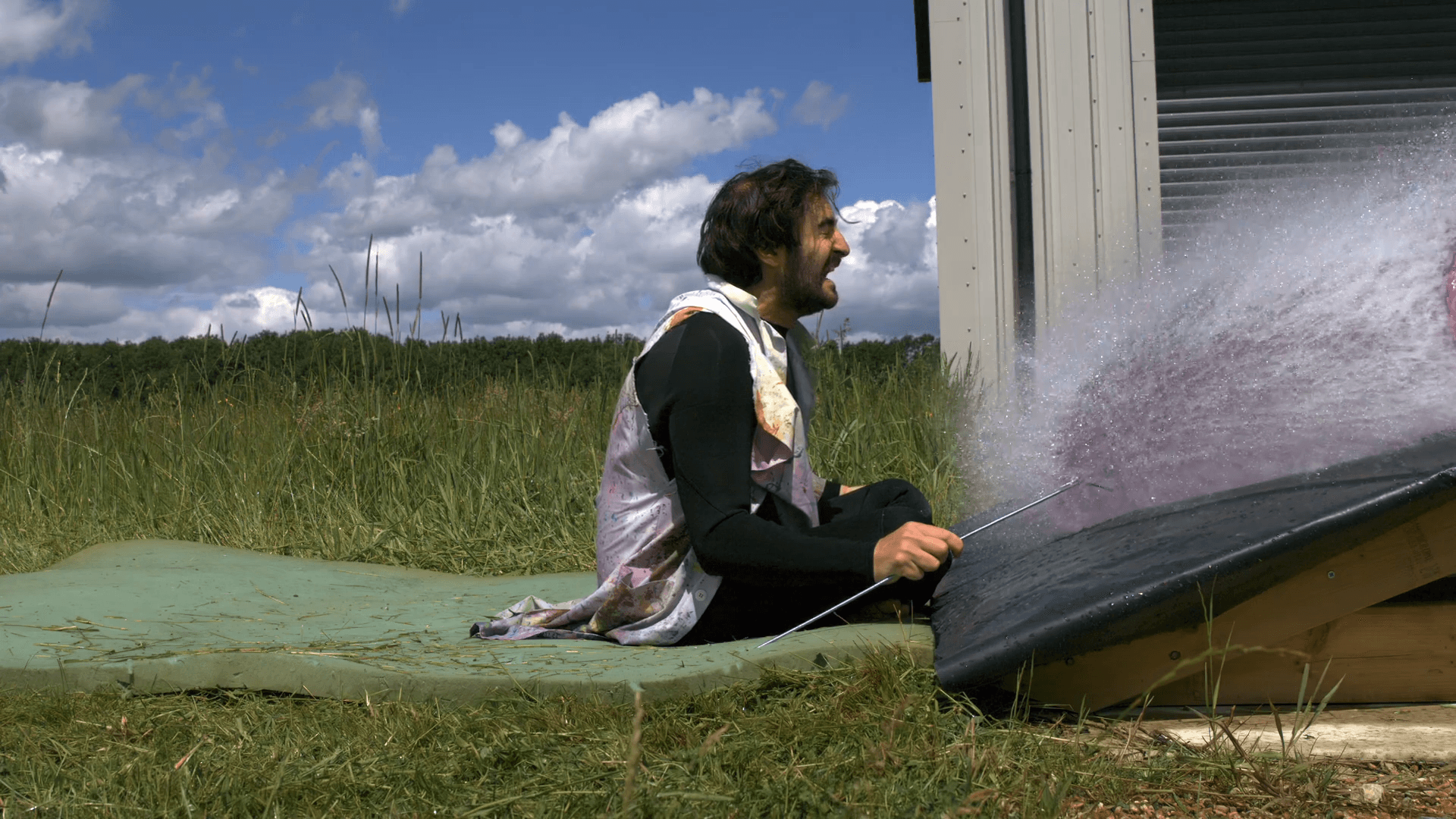
    The Slow Mo Guys have a history of personal sacrifice in the name of cool high-speed footage, and their Super Slow Show is no exception. In a recent segment, both Dan and Gav were knocked flat by giant swinging balloons of paint, and, as you might expect, the splashes are spectacular. The speed is just right for some of the paint to form nice sheets before momentum pulls them into long ligaments. Eventually, that momentum overcomes surface tension’s ability to keep the paint together, and the paint separates into droplets, which, as you see below, rain down on the hapless victims. (Video and image credit: The Slow Mo Guys)

  • Swimming Like a Balloon

    Swimming Like a Balloon

    For humans, swimming is relatively easy. Kick your legs, wheel your arms, and you’ll move forward. But for microswimmers, swimming can be more complicated. For them, the world is a viscous place, and the rules that we swim by can’t help them get around. In a highly viscous world, flows are reversible. Kick one limb down and you might move forward, but when you pull the limb up, you’ll be sucked right back to where you started. So microswimmers must use asymmetry in their swimming. In other words, their recovery stroke cannot be the mirror-image of their power stroke.

    A new study suggests that simple elastic spheres could make good microswimmers through cyclic inflation and deflation. When the sphere deflates, it buckles, making a shape unlike its inflating one. This difference in shape change is enough to propel the sphere a little with each cycle. Right now the test system is a macroscale one, but the researchers hope to continue miniaturizing. (Image and research credit: A. Djellouli et al.; via APS Physics; submitted by Kam-Yung Soh)

  • A Water Balloon on a Bed of Nails

    A Water Balloon on a Bed of Nails

    If you dropped a water balloon on a bed of nails, you’d expect it to burst spectacularly. And you’d be right – some of the time. Under the right conditions, though, you’d see what a high-speed camera caught in the animation above: a pancake-shaped bounce with nary a leak. Physically, this is a scaled-up version of what happens to a water droplet when it hits a superhydrophobic surface.

    Water repellent superhydrophobic surfaces are covered in microscale roughness, much like a bed of tiny nails. When the balloon (or droplet) hits, it deforms into the gaps between posts. In the case of the water balloon, its rubbery exterior pulls back against that deformation. (For the droplet, the same effect is provided by surface tension.) That tension pulls the deformed parts of the balloon back up, causing the whole balloon to rebound off the nails in a pancake-like shape. For more, check out this video on the student balloon project or the original water droplet research. (Image credits: T. Hecksher et al., Y. Liu et al.; via The New York Times; submitted by Justin B.)

    image
  • The Sound of a Balloon Popping

    The Sound of a Balloon Popping

    The pop of an overfilled balloon is enough to make anyone jump, but you’ve probably never seen it like this. The photo above uses an optical technique known as schlieren photography that reveals changes in density of a transparent gas like air. The shredded rubber of the balloon is still visible in black, and around the balloon there’s an expanding spherical shock wave. It’s the sudden release of energy when the balloon ruptures and the gas inside begins to expand that causes the shock wave. Notice, though, that the gas from the balloon is still clearly visible and balloon-shaped–much like a water balloon that’s just popped. From that clear delineation, I would say that this balloon was filled with a different gas than air–otherwise the density shouldn’t be different enough to make the interior gas distinguishable.  (Image credit: G. Settles)

  • Balloon Explosion

    Balloon Explosion

    These photos are shadowgraphs of a hydrogen flame exploding inside a balloon. The shadowgraph optical technique highlights density and temperature variations through their effect on a fluid’s refractive index. Here we see that the hydrogen flame has a strong cellular structure and is more turbulent than a methane flame. The cellular structure is a sign of an instability in the curved flame front. The instability and accompanying cellular appearance are a result of the complicated transport and reaction of fuel and oxidizer inside the flame. (Photo credits: P. Julien et al.)