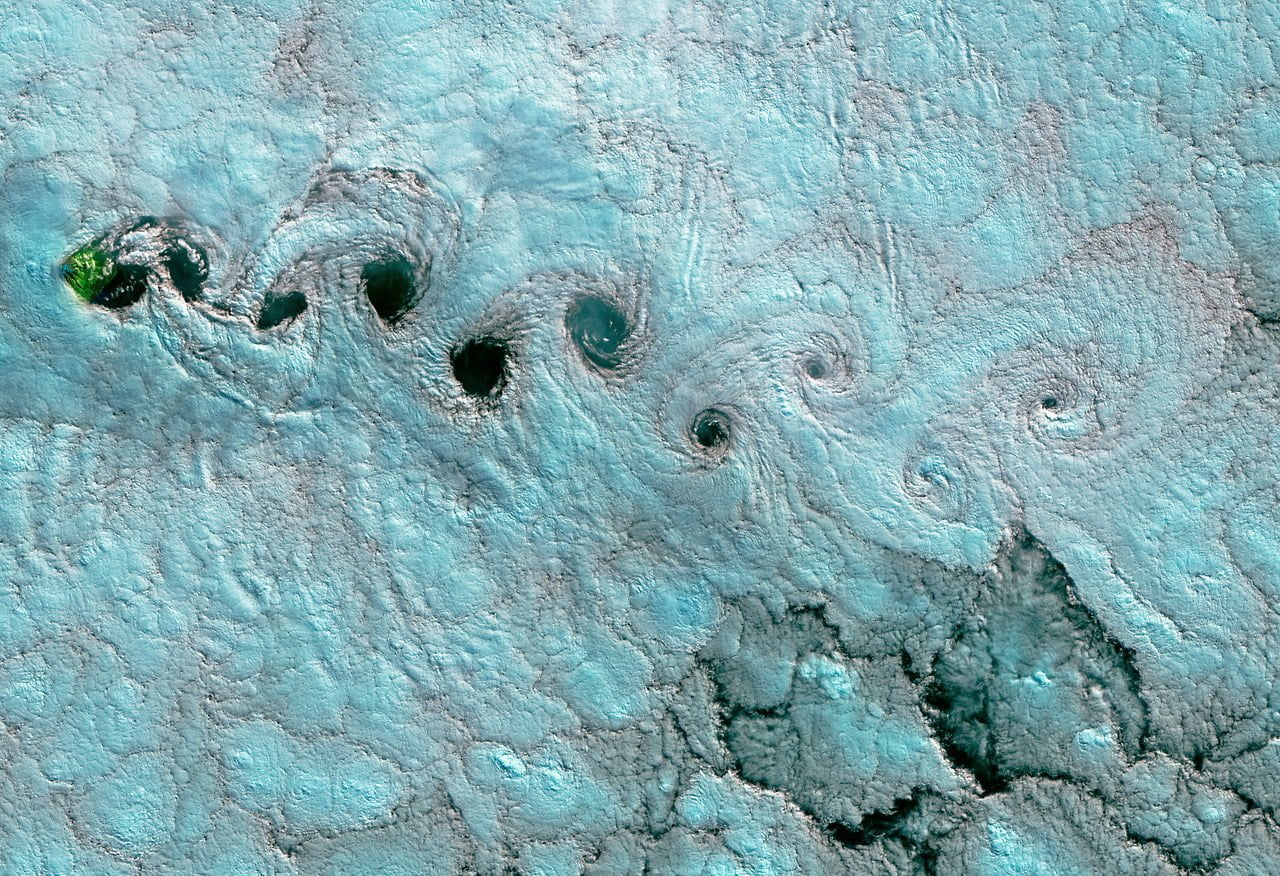
One of my favorite aspects of fluid dynamics is watching how patterns repeat at all kinds of scales. The cotton-candy-colored image above is a false-color satellite image of the island Tristan da Cunha (left), a volcanic island group in the South Atlantic. The prevailing winds, oriented roughly left to right in the image, flow over the rocky island and part in a series of swirls that alternate in their direction of rotation: clockwise for the upper set and counter-clockwise for the lower ones. This pattern is called a von Karman vortex street, named for an aerodynamicist who studied the mechanism. Von Karman vortices are frequently observed in satellite images of remote islands, but they are also common behind spherical and cylindrical objects of all sizes. Sometimes they even show up in sci-fi! (Image credit: NASA Earth Observatory; submitted by Steve G.)
Search results for: “art”

Jupiter’s Atmosphere
Jupiter’s atmosphere is fascinatingly complex and stunningly beautiful. This close-up from the Juno spacecraft shows a region called STB Spectre, located in Jupiter’s South Temperate Belt. The bluish area to the right is a long-lived storm that’s bordering on very different atmospheric conditions to the left. Shear from these storms moving past one another creates many of the curling waves we see in the image. These are examples of the Kelvin-Helmholtz instability, which generates ocean waves here on Earth, creates spectacular clouds in our atmosphere, and is even responsible for waves in galaxy clusters. Check out some of the other amazing images Juno has sent back of our solar system’s largest planet. (Image credit: NASA/JPL-Caltech/SwRI/MSSS/R. Tkachenko; via Gizmodo)

Galapagos Week: Diving Birds

One of my favorite things to do while we were sailing along the Galapagos was watching the blue-footed boobies hunt. Like the gannets shown above, boobies are plunge divers. They circle overhead until they spot their prey, then they fold their wings and dive headfirst into the water, impacting at speeds of more than 20 m/s (~45 mph). It’s absolutely incredible to watch. The physics involved are impressive, too, especially considering how badly a human would be injured diving at their speeds!
Fluid dynamically speaking, there are three important phases to the birds’ entry. The first is the impact phase, which lasts from initial contact until the bird’s head is underwater. In the second phase, an air cavity forms behind the head and around the neck as it enters the water. Finally, when the chest – the widest point of the bird – hits the water, the bird reaches the submerged phase.
Mechanically, the most interesting part is the air cavity phase. During this time, the bird’s head is slowing down due to high hydrodynamic drag from the water, but the rest of the bird is still moving fast. That means the bird’s slender neck experiences strong compressive forces, which would tend to make it buckle. Researchers at Virginia Tech examined this very problem and found that the birds’ sizing – its head shape, neck length, and so forth – combined with their typical diving speeds kept these birds well away from the conditions that would cause their necks to buckle. With the added stabilization from the birds’ neck muscles, they estimated that gannets and other plunge divers might be able to safely dive at speeds twice what would kill a human! Check out the BBC video below to see high-speed footage of gannets diving. (Image credits: G. Lecoeur; B. Chang et al.; research credits: B. Chang et al., pdf; video credit: BBC)
Tomorrow will be the final day of Galapagos Week. Catch up on previous posts here.

Galapagos Week: Pistol Shrimp
One of the most striking things about snorkeling in the Galapagos was how loud it was underwater. There were hardly any boats nearby, but every time my ears dipped below the surface, I could hear a constant cacophony of sound. Some it came from waves against the sand, some of it was the sound of parrotfish nibbling on coral, but a lot of it was likely the work of a culprit I couldn’t see hidden in the sand: the pistol shrimp.
These small crustaceans hunt with an oversized claw capable of snapping shut at around 100 kph. When the two halves of the claw come together, they push out a high-speed jet of water. High velocity means low pressure – a low enough pressure, in fact, to drop nearby water below its vapor pressure, causing bubbles to form and expand. These cavitation bubbles collapse quickly under the hydrostatic pressure of the surrounding water, creating a distinctive pop that makes the pistol shrimp one of the loudest sea creatures around. (Image credit: BBC Earth Unplugged, source; research credit: M. Versluis et al.)
All week we’re celebrating the Galapagos Islands here on FYFD. Check out previous posts in the series here.

Galapagos Week: Marine Iguanas


One of the most unique inhabitants of the Galapagos Islands is the marine iguana. These reptiles live in colonies of thousands and subsist entirely on marine algae. Smaller iguanas are intertidal feeders, grazing on green and red algae when it is exposed near low tide. But the largest iguanas feed near midday by swimming out and diving to feed on richer pastures.
The iguanas are surprisingly good swimmers, even though marine iguanas exhibit little extra specialization for it compared to other iguana species. They swim both at the surface and underwater with an undulatory motion driven by their tails. The iguana also streamlines its body somewhat by tucking its legs along its sides. Although the marine iguana is a much slower and less efficient swimmer than a bony fish of equal size, swimming is still a good choice for getting around. The marine iguana expends only 75% as much energy per distance swimming as it does walking. The big challenge is staying warm in the cold Galapagos waters. Small iguanas are both less efficient swimmers and lose body heat faster. This is why you’ll only see the biggest iguanas feeding underwater. (Image credits: N. Sharp; research credit: K. Trillmich and F. Trillmich; J. Videler and B. Nolet; G. Bartholomew)
This is the first post of Galapagos Week here on FYFD. Check back every day for new Galapagos-themed posts!
Galapagos Week: Introduction
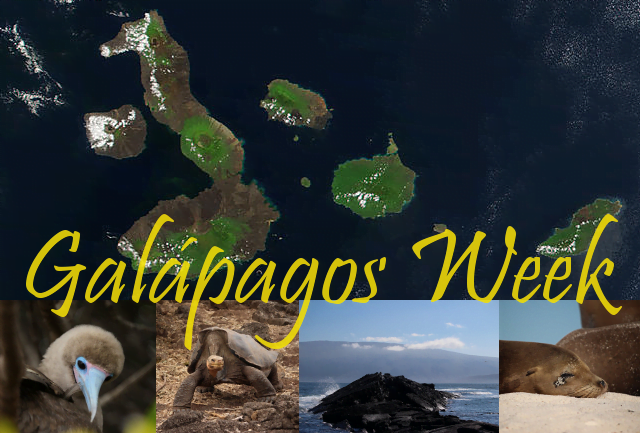
One hundred and eighty-two years ago today, the H.M.S. Beagle reached the Galapagos archipelago carrying, among others, naturalist Charles Darwin. The ship would spend the next month exploring the islands, and Darwin’s experiences during that time, and the specimens he collected, would ultimately lead him to propose the concept of evolution.
I had the incredible opportunity to visit the Galapagos Islands last October, and, like so many before me, I was fascinated by the islands and their remarkable ecosystems. The Galapagos Islands are located at the equator, but they owe much of their rich biodiversity to sitting at the confluence of several ocean currents, both warm and cold. In particular, the cold Cromwell Current’s upwelling on the western side of the archipelago carries valuable nutrients up from the deep and helps support vibrant marine life from bioluminescent plankton to leaping mobula rays. (And, yes, I geeked out over both.)
Over the next week, FYFD will be exploring some of the fluid dynamics of the Galapagos Islands and their denizens on land, sea, and air. Be sure to check back every day for a new post! (Image credit: N. Sharp and J. Shoer)

Farewell, Cassini!
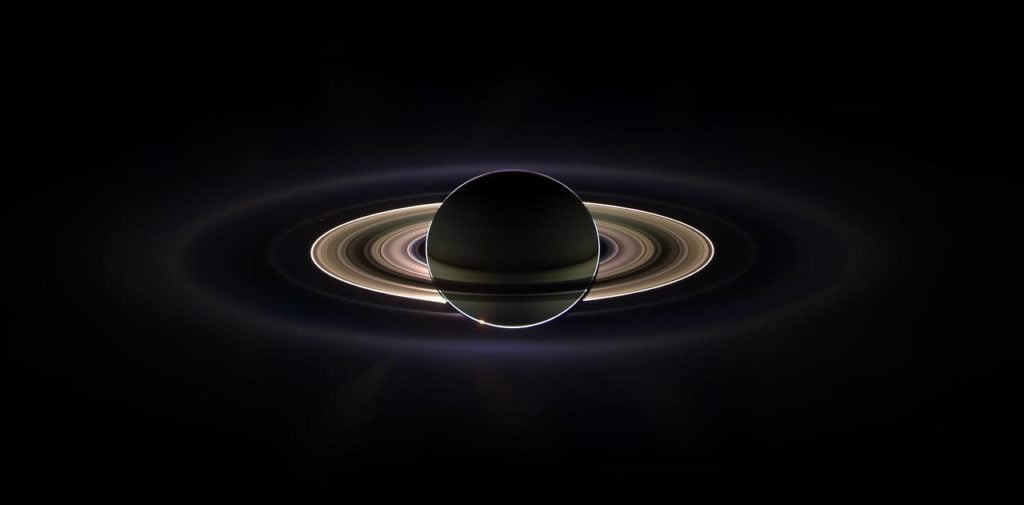
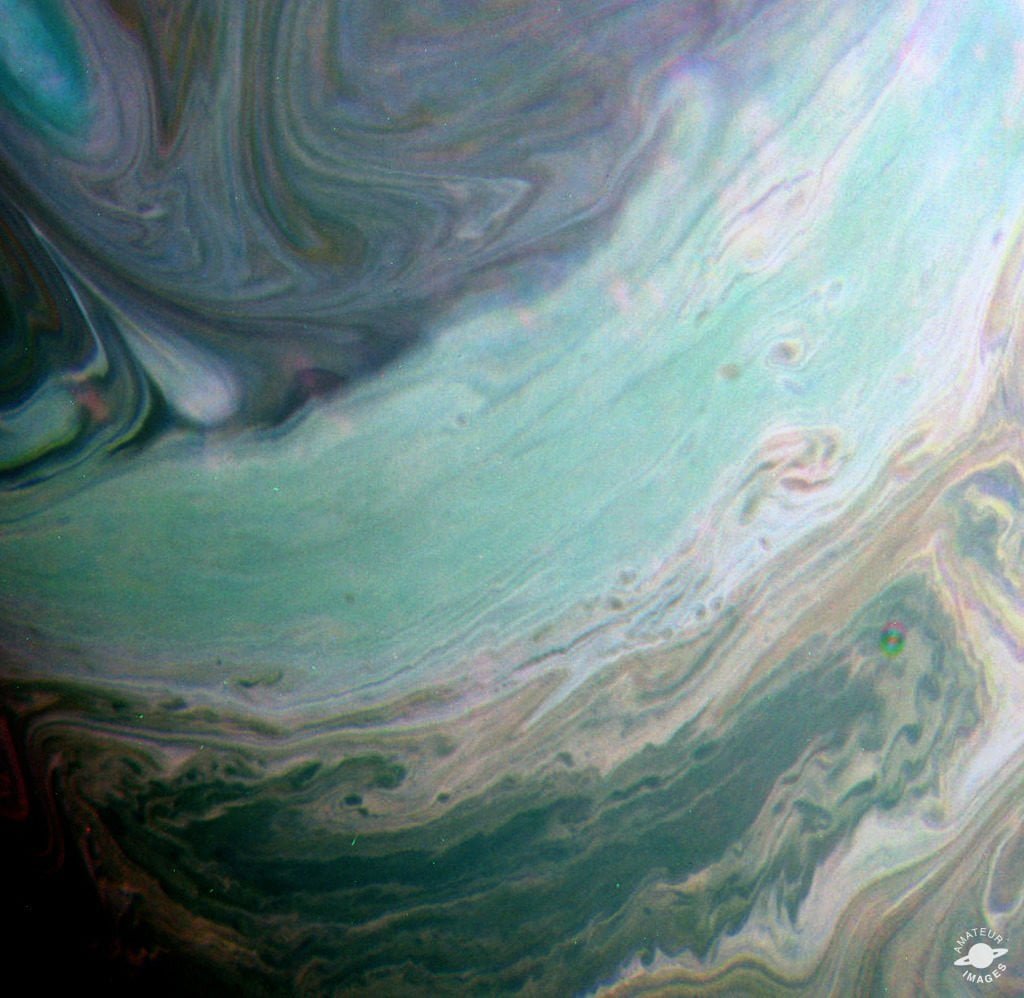
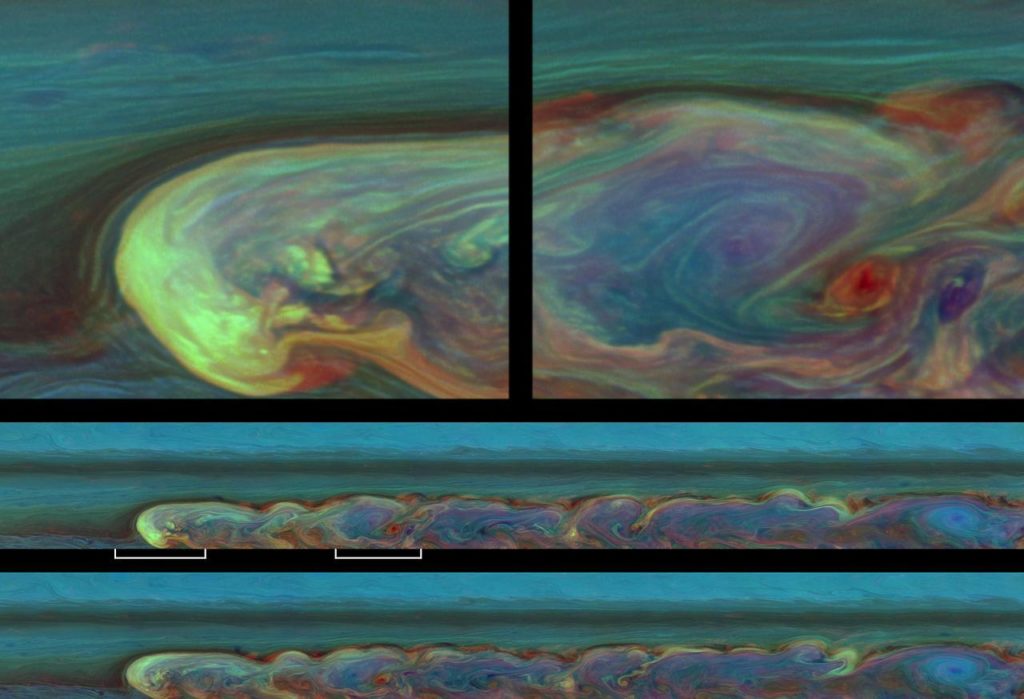


Tomorrow one of the most prolific and beloved spacecraft missions will come to an end when the Cassini spacecraft makes its final plunge into Saturn. After nearly 20 years in space and 13 years orbiting Saturn, the Cassini mission is close to running out of fuel. To prevent the craft from contaminating one of Saturn’s moons – which its mission revealed may harbor the ingredients for life – mission operators are instead sending it on a fatal dive into the gas giant.
Cassini has and will continue to provide a trove of scientific insights about Saturn and its environs. It has given us front-row seats to a storm that wrapped around the entire planet. It shed new light on Saturn’s spectacular hexagonal polar vortex and showed us the beauty of auroras on other planets. Cassini also showed us that Saturn’s moon Titan has stable hydrocarbon lakes at its surface, fed by methane rains and driven by processes unfamiliar to terrestrial ones. It also gave us paths for future exploration by documenting plumes of water ejected from Enceladus’ icebound oceans.
Cassini also holds a special place in my heart. It launched while I was in middle school, reached Jupiter while I was in college, and collected data throughout my postgraduate research career. It was an inspiration for my undergraduate spacecraft mission design projects, and it provided fun and exciting fluid dynamical discoveries throughout my time writing FYFD. It’s my favorite mission (sorry, Mars rovers, New Horizons, Dawn, and Juno!) and likely to remain so for years to come.
So thank you, Cassini, and many thanks to all the scientists, engineers, and operators who’ve worked on the mission during the decades from its conception to completion. You did a hell of a job. Godspeed, Cassini! (Photo credits: NASA/JPL)
P.S. – Tonight I’ll be helping kick off the Ig Nobel Prize ceremony. You can tune into the live webcast here. The ceremony officially starts at 6 PM Eastern time, but I recommend tuning in early, especially if you want to catch my full spiel. – Nicole

Lift Over Wings
One of the most vexing topics for fluid dynamicists and their audiences is the subject of how wings generate lift. As discussed in the video above, there are a number of common but flawed explanations for this. Perhaps the most common one argues that the shape of the wing requires air moving over the top to move farther in the same amount of time, therefore moving faster. The flaw here, as my advisor used to say, is that there is no Conservation of Who-You-Were-Sitting-Next-To-When-You-Started. Nothing requires that air moving over the top and bottom of a wing meet up again. In fact, the air moving over the top of the wing outpaces air moving underneath it.
In the Sixty Symbols video, the conclusion presented is that any complete explanation requires use of three conservation principles: mass, momentum, and energy. In essence, though, this is like saying that airplanes fly because the Navier-Stokes equations say they do. It’s not a terribly satisfying answer to someone uninterested in the mathematics.
Part of the reason that so many explanations exist – here’s one the video didn’t touch on using circulation – is that no one has presented a simple, intuitive, and complete explanation. This is not to say that we don’t understand lift on fixed wings – we do! It’s just tough to simplify without oversimplifying.
Here’s the bottom line, though: the shape of the wing forces air moving around it to change direction and move downward. By Newton’s 3rd law (equal and opposite reactions), that means the air pushes the wing up, thereby creating lift. (Video credit: Sixty Symbols)
Elastic Bounces
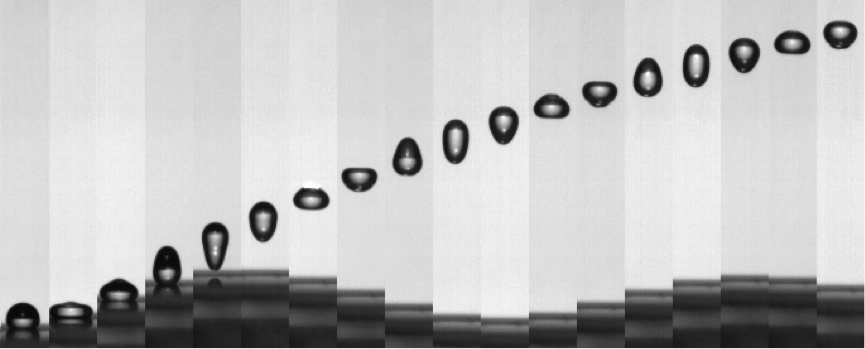
A rigid ball accelerated by a moving surface can only ever move as fast as the surface propelling it. But that’s not true for squishy objects like a water droplet. The composite image above shows the trajectory of a water droplet launched from a moving superhydrophobic surface. As the surface starts rising, it squishes the droplet like a pancake, triggering a deformation cycle where the droplet will squish and extend repeatedly. How quickly the drop changes shape depends on factors like its size and surface tension. The researchers found that a droplet’s launch was strongly affected by the ratio of the droplet’s shape-changing frequency and the frequency of the plate’s motion. When the drop’s shape changed three times faster than the surface’s motion, it would catapult off the surface with 250% of the kinetic energy of a rigid ball!
Launching elastic balls works the exact same way as droplets, indicating that the phenomenon depends on the way the projectiles deform. The process is similar to jumping on a trampoline. If a trampolinist times her jump just right, she’ll get more energy from the trampoline and fly higher. The droplet does the same when its deformation is properly tuned to its catapult. (Image credit: C. Raufaste et al.; via APS Physics; submitted by Kam-Yung Soh)

Flying Fish Aerodynamics


Flying fish, strange as it sounds, have aerodynamic prowess comparable to hawks. The fish aren’t true fliers, but they do glide for hundreds of meters using their large pectoral and pelvic fins as wings. Wind tunnel research shows the fish have their maximum lift at an angle of attack around 30-35 degrees, matching their typical take-off angle (top). Their best gliding performance occurs when they’re roughly parallel to the water (middle). The researchers even found that the fish use ground effect to enhance their lift. Although their aerodynamics allow flying fish to get out of reach of their aquatic predators, the fish must be wary of flying too high, as this makes them a target for frigatebirds (bottom). These acrobatic seabirds can’t get wet, but they have some impressive aerodynamics of their own to help make up for it. (Image credit: BBC Earth, source; research credit: H. Park and H. Choi; see also SciAm)
