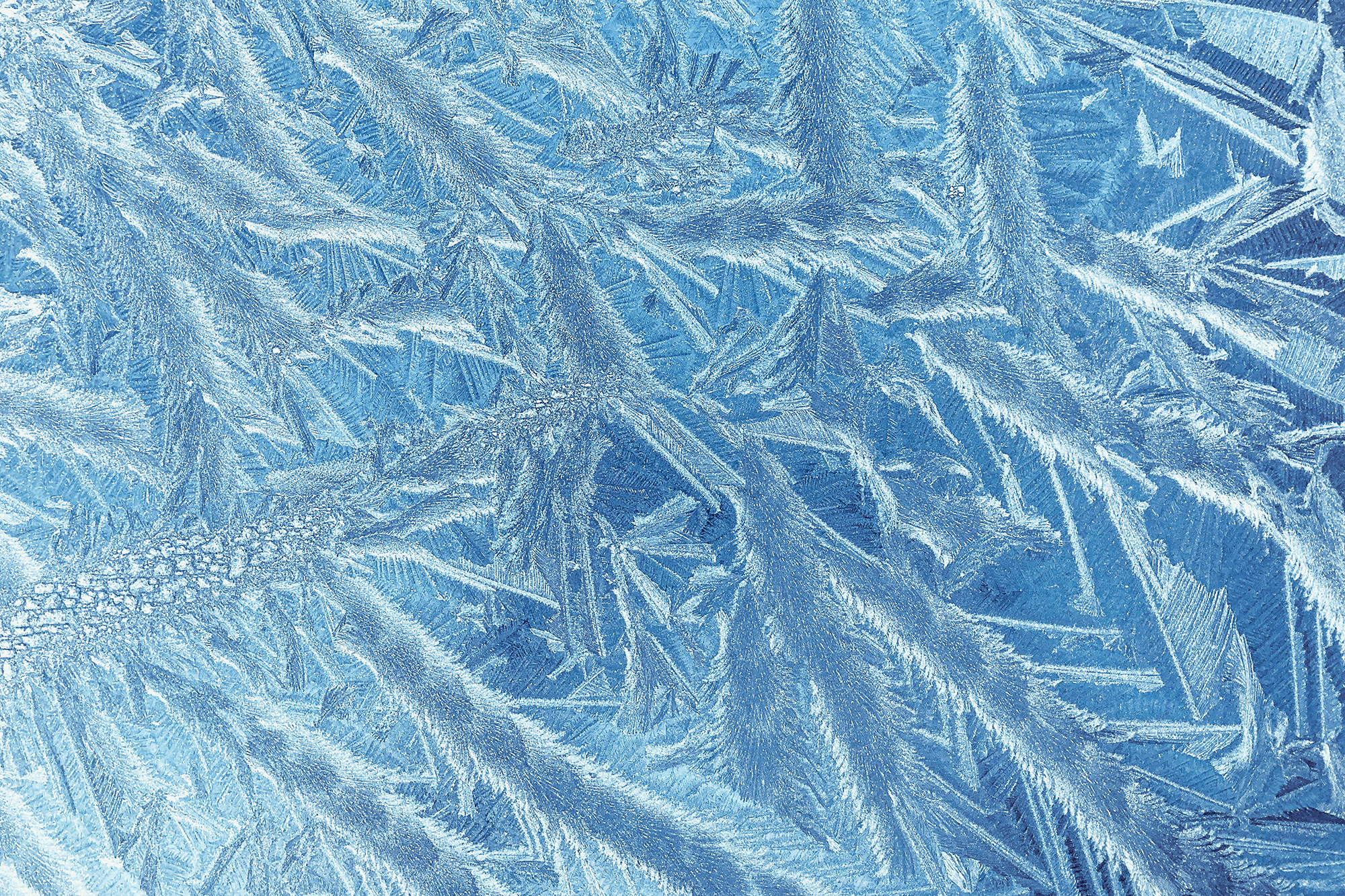
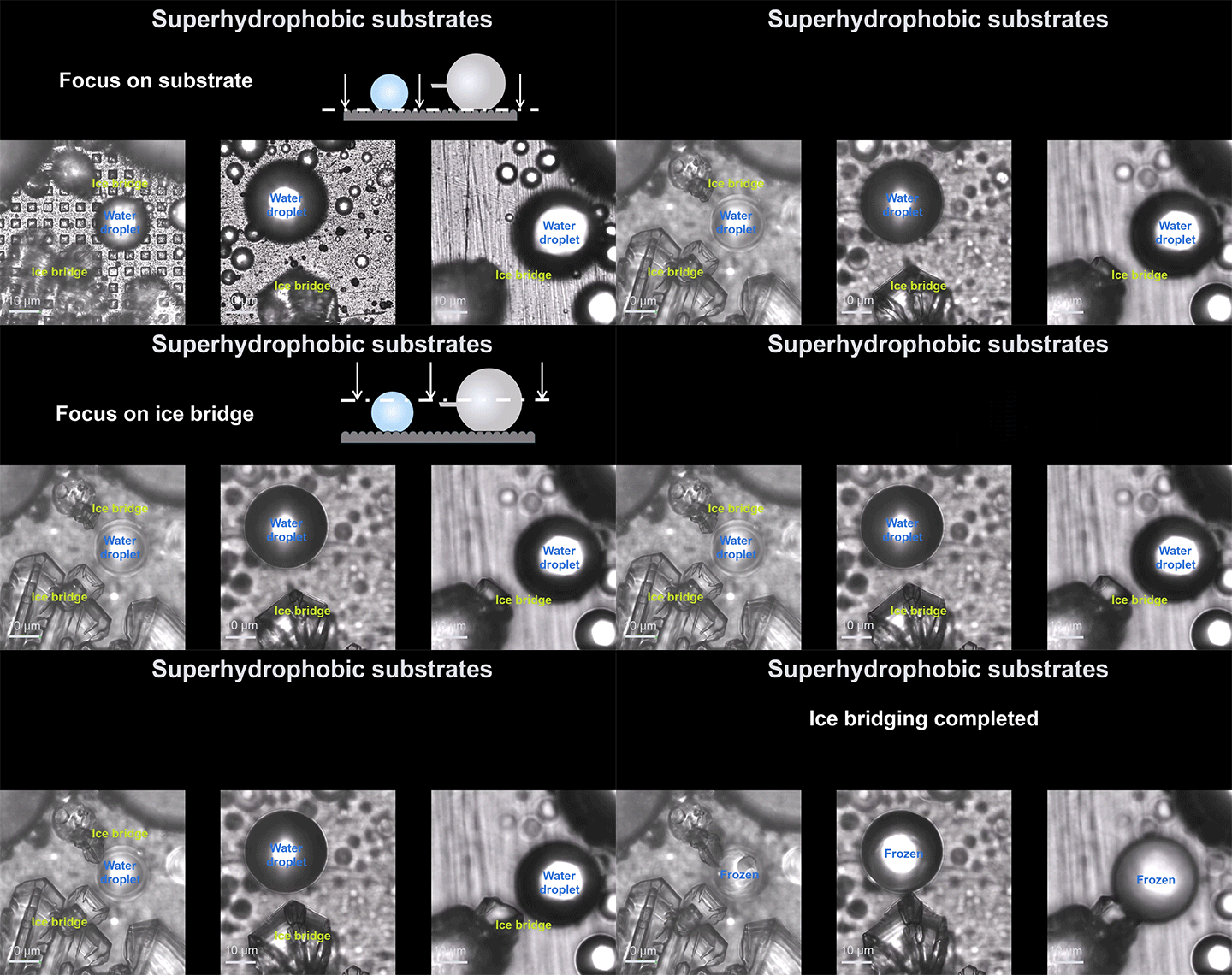
For frost to spread on a surface, individual water droplets freeze and then spread the freezing front to a nearby droplet. Frequently that happens through an ice bridge that connects one droplet to the next. On hydrophilic surfaces, the bridge grows along the surface, slowly connected one droplet to the next and the next until the entire surface is covered in frost. On superhydrophobic surfaces, frost still spreads via ice bridge, but those ice bridges are suspended in the air, cantilevered out from the frozen droplet. You can watch the process in the image below.
The researchers found that frost was later to form and slower to spread on these superhydrophobic surfaces, which could be valuable for applications like the heat exchanger found in heat pumps. Once a heat exchanger’s finned surface is frost-covered, its efficiency plummets. The team suggests that coating these surfaces to be superhydrophobic could help keep them operating efficiently longer in cold and humid conditions. (Image credit: frost – K. Shimizu, experiment – S. Yang et al.; research credit: S. Yang et al.; via Physics World)











Leave a Reply