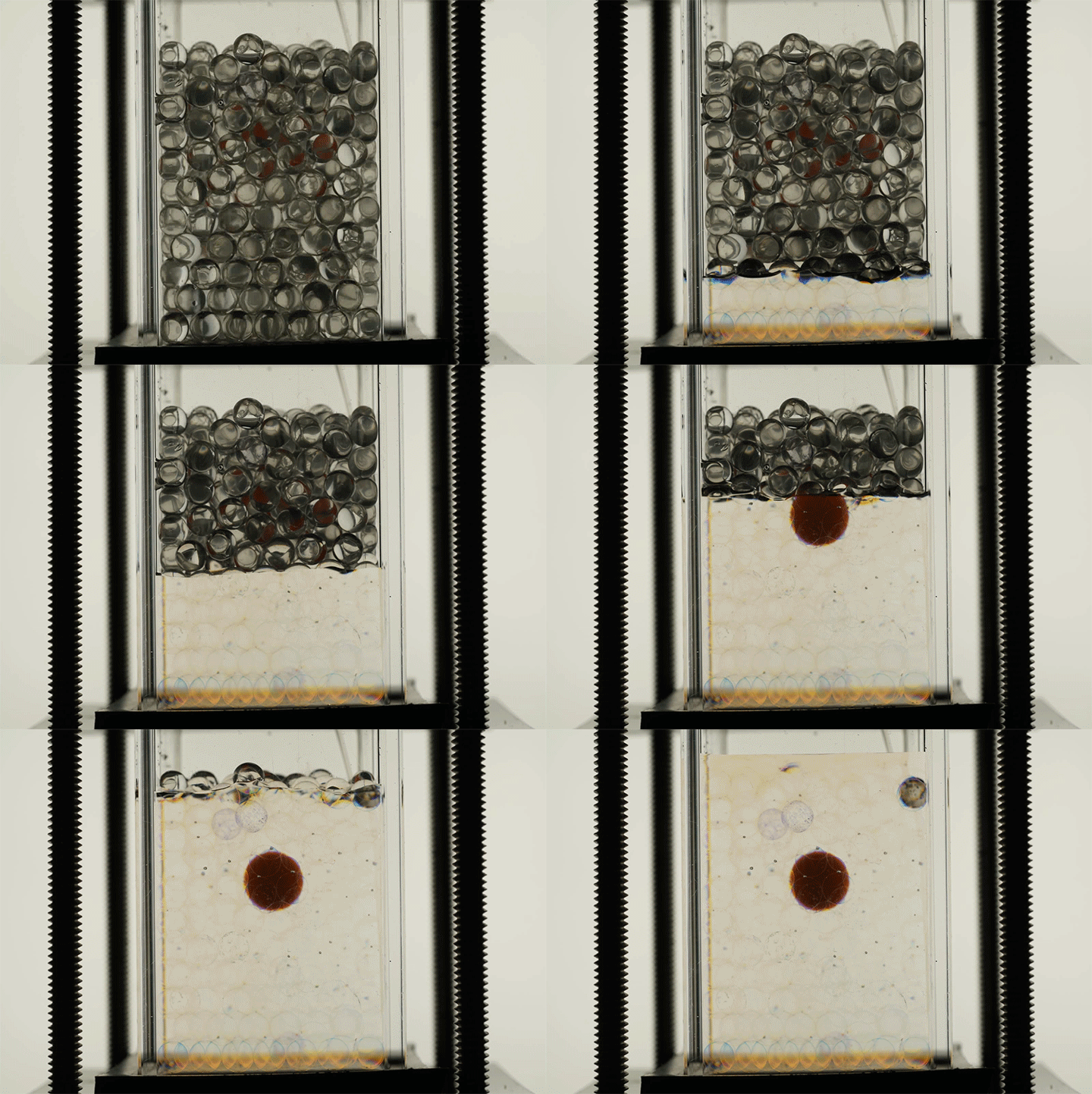
Often researchers are interested in flows around and between objects, but seeing those flows is a challenge in a crowded field of view. One useful trick for this problem is matching the refractive index of your objects and the fluid they’re immersed in. Here we see the glass beads in a container seemingly disappear when a mixture of water and ammonium thiocyanate is poured in. Now the researchers can use many different visual diagnostic techniques to observe the interior flow! (Image credit: Datta Lab, Princeton University, source)
Category: Phenomena

Wind Turbine Efficiency


Wind turbines face a paradoxical challenge: they must extract the wind’s kinetic energy while still allowing the air to pass. In this Minute Physics video, Henry gives a crash course on wind turbine efficiency, based on the restrictions of conservation of mass and conservation of energy. When the two are combined, they show that an ideal wind turbine reduces the wind speed by 2/3rds to achieve ~59% efficiency.
Of course, actual wind turbines are far from ideal. They’re typically placed in staggered configurations in which upstream turbines can disrupt the flow seen by those downstream. And real wind turbines have to contend with dust, bugs, and other grime that builds up on the blades and disrupts air flow and their efficiency. But calculations like this one are still important for engineers seeking to make these machines as efficient as they can be. (Image and video credit: H. Reich/Minute Physics)

Meeting Without Mixing
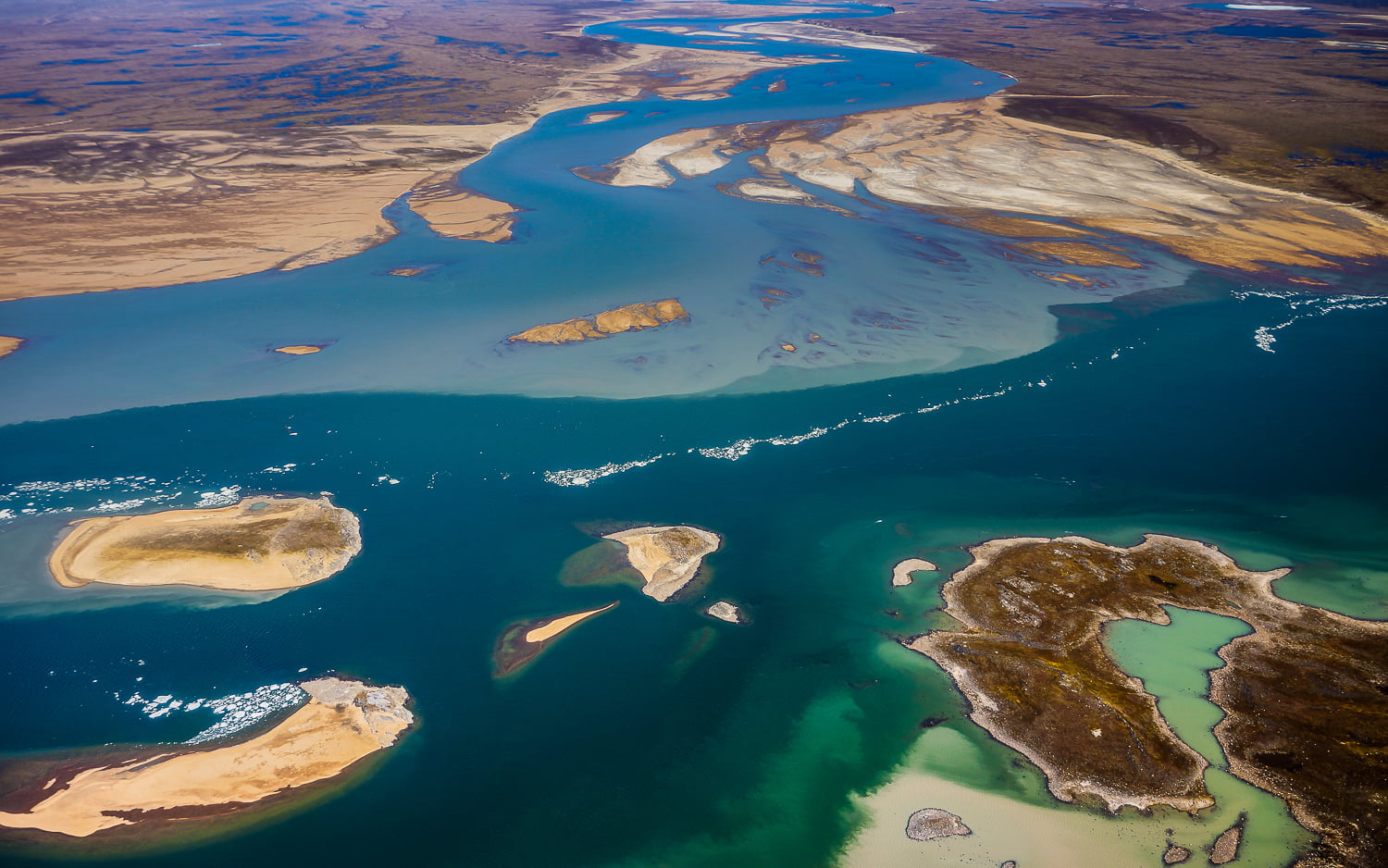
When bodies of water meet, they don’t always mix right away. Here we see the confluence of the Back and Hayes Rivers in the Canadian Arctic. The Back River appears as a darker blue-green color compared to the light turquoise Hayes River. The different colors reflect the levels of algae and sediment carried in their waters. As seen in both the aerial and satellite photos here, there’s a distinct line where the two waters meet without mixing, and that line persists for kilometers beyond their initial confluence. Typically, this lack of mixing between bodies of water is caused by differences in temperature, salinity, and turbidity (amount of sediment) that make the density of each river’s water different. (Image credit: top – R. Macdonald/Univ. of Manitoba, bottom – J. Stevens/USGS; via NASA Earth Observatory)

Underwater Explosions and Submarines


In the early days of submarines, it did not take physicists and engineers long to discover how destructive underwater explosions can be. In this Slow Mo Guys video, Gav gives us a glimpse of that destruction using a model submarine in a fish tank and several small explosives. You’ll have to be quick to notice the initial shock waves that ripple through the tank, but the footage captures spectacular detail on some of the slower-moving phenomena. You can see the uneven ripples of the explosion bubble’s surface as it expands. There are some great shots from the front and side showing the bubbly vortex ring that forms when the explosion hits the side of the tank wall (something that wouldn’t happen out in the ocean, of course). You can even catch a glimpse of some unexploded powder streaking out of the explosion. (Image and video credit: The Slow Mo Guys)
Signs of Spring


Nothing says, “Goodbye, winter!” quite like watching the ice disappear after a deep freeze. This timelapse video shows ice on Lake Michigan breaking up after a deep freeze. The first chunk to go is a massive plate of ice that moves off in a single large chunk. After that, the break-up takes place on a smaller scale, with individual pieces of ice tracing the flow of local currents. (Video and image credit: WGN News; submitted by ajhir)
Kelvin Wakes


Whether you’re watching ducks cruise by on a pond or a boat making its way across the ocean, you’ve probably noticed a distinctive V-shaped wake. This shape is known as a Kelvin wake, and it forms because waves in water don’t all move at the same speed. Instead, the speed a wave travels at depends on its wavelength; smaller wavelengths travel slower than larger ones, a phenomenon known as dispersion. The characteristic shape of a Kelvin wake is the result of many waves of different wavelength (and therefore speed) added together. (Video and image credit: Minute Physics)
Lava and Life
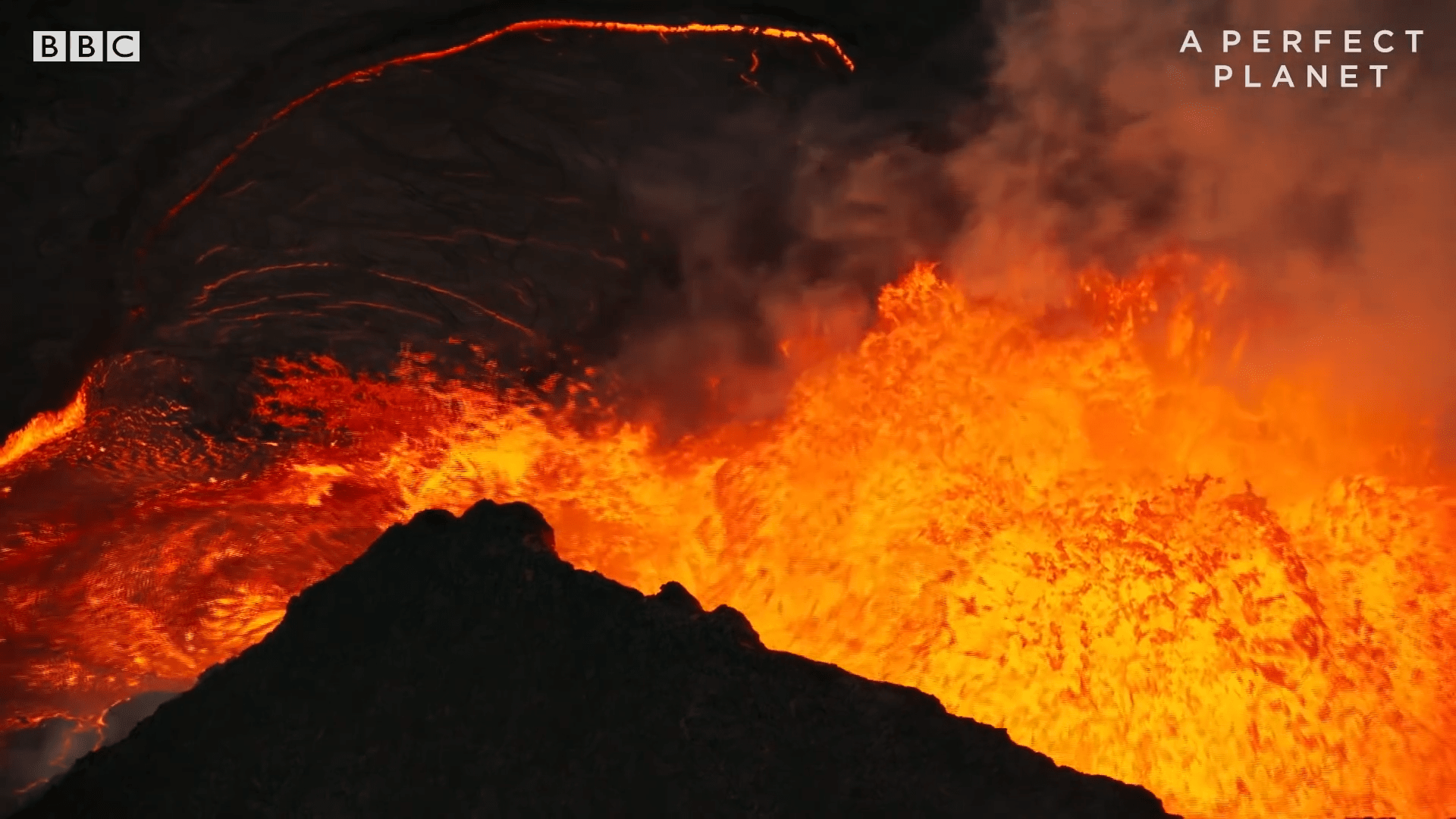

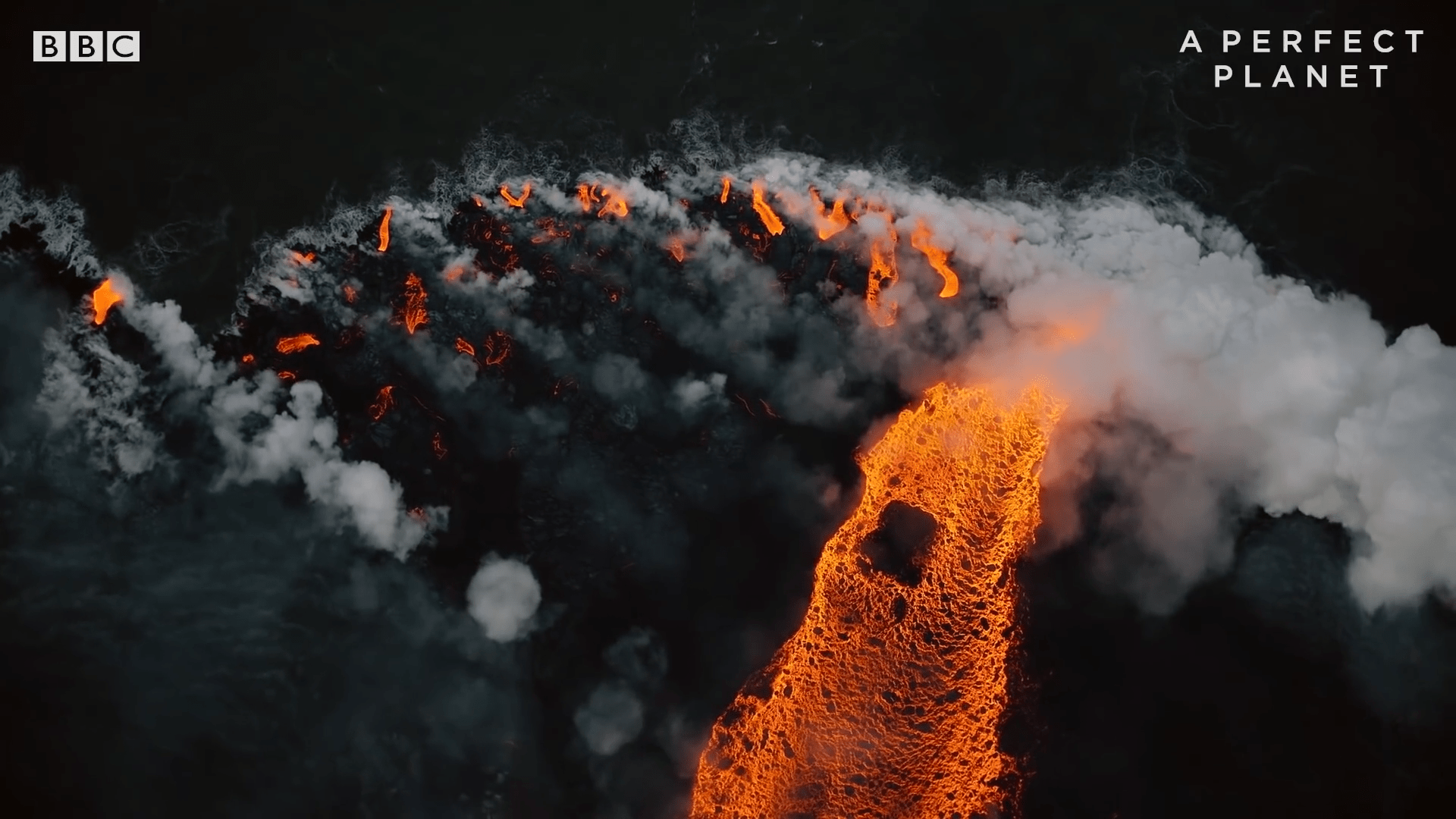
Kilauea’s 2018 eruption gave us some of the most stunning volcanic footage ever seen, a tradition carried on in this BBC footage. As powerful and destructive as lava is, it’s also critical to life as we know it here on Earth. Volcanoes are a piece of the tectonic activity on our planet that drives the carbon cycle, without which we’d have no oceans or breathable atmosphere. It’s tough to imagine the geological scales over which these cycles act, but fortunately, there are numerical simulations to help! (Image and video credit: BBC Earth)
Planes Lift


Need a little refresher on how airplanes fly? The middle school students of The Nueva School have you covered with their latest science rap parody. They take a look at the four main forces on a flying airplane and even dig a little bit into the principles behind lift generation. Check it out! (Video and image credit: Science With Tom/Science Rap Academy)

An Oasis Among Dunes
The Saudi Arabian oasis of Jubbah sits in the bed of an ancient lake. It’s protected from the westerly winds that sculpt the surrounding dunes by the wind shadow of the mountain Jabel Umm Sinman. The long, skinny shape of the settlement reveals the shape of the mountain’s wake! (Image credit: NASA; via NASA Earth Observatory)
Protecting From Storm Surge


The most dangerous and destructive part of a tropical cyclone isn’t the wind or rain; it’s the storm surge of water moving inland. This landward shift of ocean takes place because of a cyclone’s strong winds, which drive the water via shear. The depth storm surges reach depends on the wind speed and direction, shape of the shoreline, and many other factors, making exact predictions difficult.
Fortunately, engineers can — with enough foresight and investment — build structures and networks to help protect developed land from storm surge flooding. (Image and video credit: Practical Engineering)