The Cumbre Vieja volcano in the Canary Islands began erupting in mid-September 2021. This satellite image, captured October 1st, shows a peculiar bullseye-like cloud over the volcano. Hot water vapor and exhaust gases rose rapidly from the erupting volcano until colliding with a drier, warmer air layer at an altitude of 5.3 kilometers. The warm upper layer, known as a temperature inversion, prevented the volcanic gases from rising any further, so they instead spread horizontally. The outflow from the volcano varies and is non-uniform, and its fluctuations generated gravity waves that are visible here as the expanding rings of clouds. (Image credit: L. Dauphin; via NASA Earth Observatory)
Category: Phenomena

Filming a Calving Glacier


The San Rafael Glacier, one of the fastest calving glaciers in the world, sits above a fjord in Patagonia. About 10 – 25 meters of the glacier is lost to calving every day. Here, filmmakers take you behind-the-scenes to show what it takes to film in such a remote, unpredictable, and dangerous environment. (Image and video credit: BBC Earth)

Seeking Magma
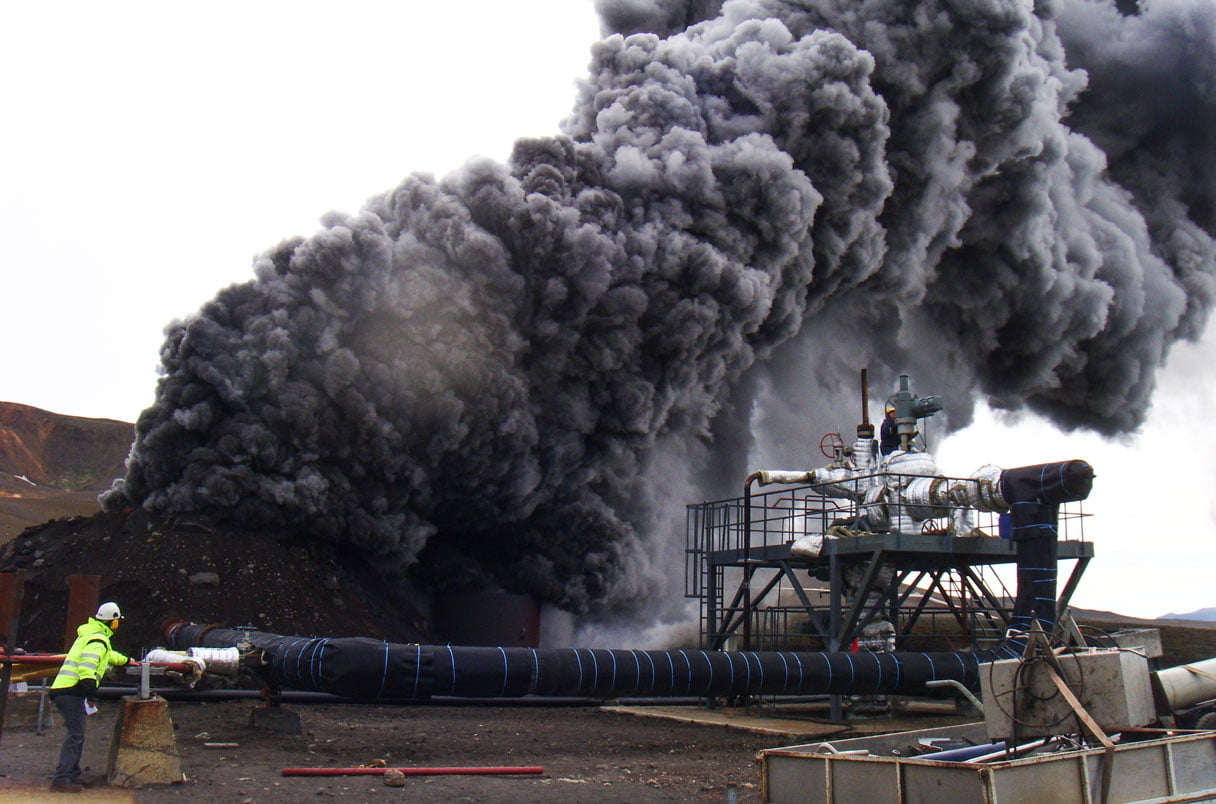
In 2009, drillers seeking geothermal energy in Iceland accidentally pierced a hidden magma chamber. After a billowing pillar of steam and glass shards poured out from the hole, it created the hottest geothermal well ever, until the casing failed. Now drillers are preparing to return to the area, this time with the intention of reaching magma. Capturing a sample of magma before it rises to the surface (thereby losing its trapped gases) is something of a holy grail for geophysicists, who otherwise rely on seismic wave detections and observations of magma that’s reached the surface. Building a long-term magma observatory will be an enormous engineering challenge, but the technologies developed may help us explore other hellish environments like the surface of Venus. (Image credit: G. Fridleifsson/IDDP; via Science)
RC Ground Effect Plane


The ekranoplan was a massive, Soviet-era aircraft that relied on ground effect to stay aloft. In this video, RC pilots test out their own homemade version of the craft, including some neat flow visualization of the wingtip vortices. When an aircraft (or, for that matter, a bird) flies near the ground, it experiences less drag than at higher altitudes. This happens primarily because of the ground’s effect on wingtip vortices.
In normal flight, the vortices from an aircraft’s wingtips create a downwash that reduces the wing’s overall lift. But in ground effect, the vortices cannot drift downward as they normally do. Instead, they spread apart from one another, thereby reducing the drag caused by downwash from the aircraft. The end result is better performance, though it comes with added risk since there’s very little time to correct an error when flying at an altitude less than half the aircraft’s wingspan. (Video and image credit: rctestflight; submitted by Simplicator)
The Noisy Gluggle Jug


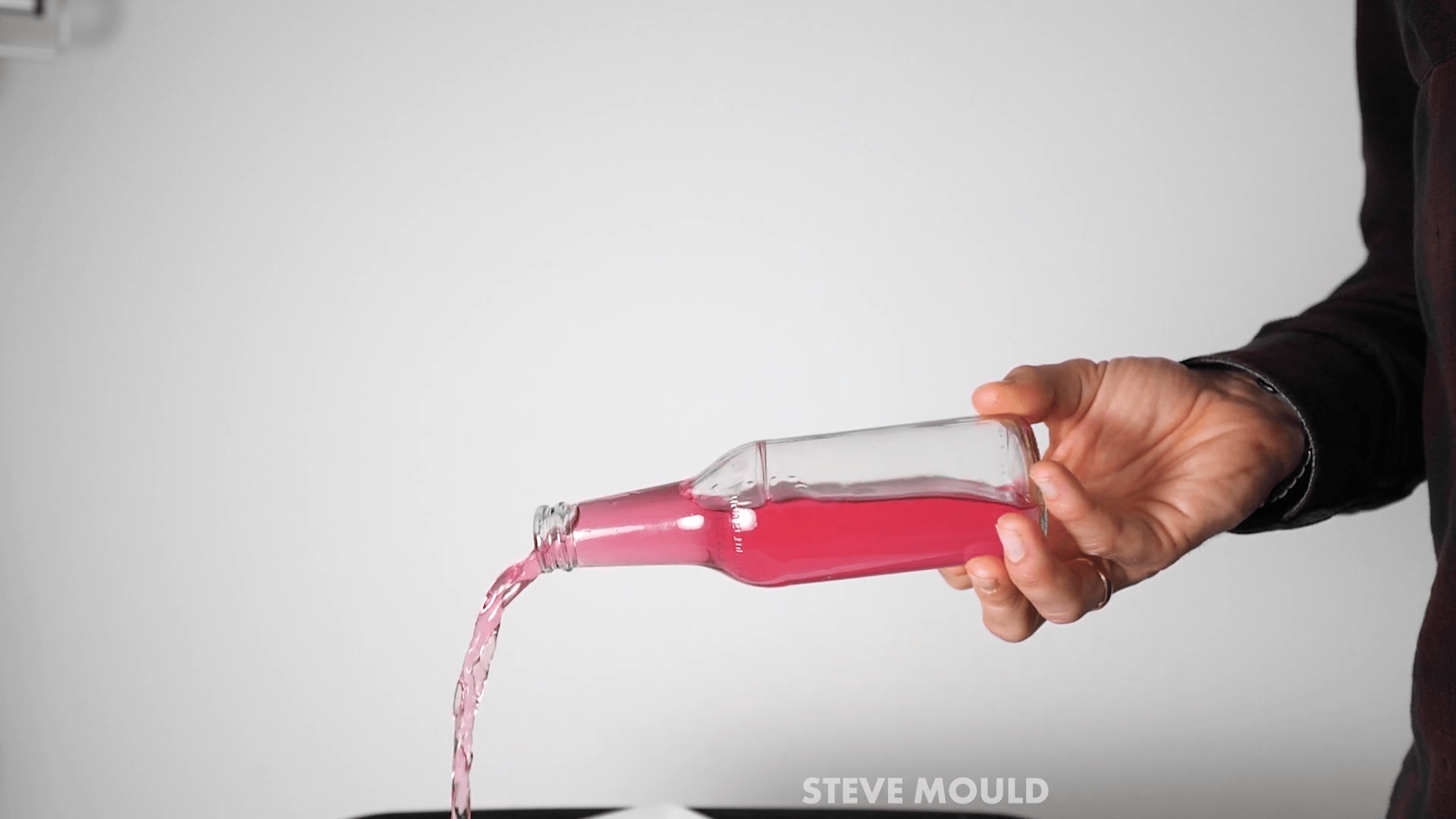
The fish-shaped Gluggle Jug makes an impressive set of sounds when tilted for pouring. Steve Mould explores their origin in this video. When liquid is poured from a container, air needs a path in to replace the poured liquid. You’re likely most familiar with this from long-necked bottles, where trying to pour the liquid too quickly results in a glug-glug noise as air bubbles periodically force their way through the bottle neck. The same thing happens in the Gluggle Jug, particularly at the joint between the tail and body of the pitcher. The volume and resonance of the jug’s sounds comes from the shape; the open mouth of the container amplifies the sound of bubbles popping back from the tail region. (Image and video credit: S. Mould)
Pressure At The Dam


Hydrostatic pressure in a fluid is based on the fluid’s depth. You’ll rarely see a more dramatic example of that power than with a water release from a dam. Here we see the outlet of the Verbund Hydro Power dam in Austria. With 190 meters of water behind the dam, the outlet jet is massive. It moves 20,000 liters of water per second at a speed of 50 meters per second. Imagine what it would be like to stand next to that! (Image and video credit: Discovery UK; submitted by Olwyn B.)

Zuiderzee Works
Few countries have to contend with water the way the Netherlands does. With 26% of its area and 21% of its population living below sea level, water control is critical. This satellite image shows some of the natural and manmade features that help protect the landscape. The West Frisian Islands, the long spine-like archipelago seen here, form the first barrier. Behind them lies the mudflats of the Wadden Sea, home to countless wetland species. The Wadden Sea is separated from the freshwater Lake Ijssel by the Afsluitdijk, constructed in 1932 to protect the country from rising seas. With the dam in place, the Dutch used wind power to drain the shallow lands behind the dam, reclaiming the polders labeled here. With the islands, mudflats, and lake between urban settlements and the sea, engineers have more options for diverting water and protecting people from disastrous flooding. (Image credit: A. Holmes/NASA’s Ocean Color Web; via NASA Earth Observatory)
How Sinkholes Form


Growing up in the Ozarks, I explored my fair share of caves and sinkholes. These geological features form when flowing groundwater erodes soil, sand, and even rock underground. The Ozark Plateau consists largely of limestone, which is water soluble, making it very prone to this internal erosion. As bedrock dissolves away, it is eventually unable to hold up the weight of ground above it, causing a catastrophic collapse into a sinkhole. Although my childhood sinkholes were naturally occurring, they can also form in spots where leaking pipes and infrastructure help wash underlying soil away. Unfortunately for engineers, this internal erosion can take place for years without any visible sign above ground. (Image and video credit: Practical Engineering)
Starlings Over Rome


Each winter millions of starlings migrate to Rome, where they form enormous murmurations in the sky above. The ephemeral and amorphous displays are driven by each bird responding to its neighbor’s motions. But the slight delay in individual responses gives the flock as a whole a wave-like, fluid appearance. Behaviors like this help protect the starlings from predators while they search out places to roost.
As neat as the displays are, though, they come with some real downsides, as the latter part of this video reveals. I don’t know about you, but I wouldn’t want to park my car outside in that storm! (Video credit: BBC Earth)
Really, Really Slow Mo Fluids


Fluid dynamics is a perfect subject for high-speed video. So much goes on at speeds that are far too quick for our eyes and brains to perceive. But there is such a thing as too slow – a concept explored in this Slow Mo Guys video, which takes everyday activities like turning on a faucet or splashing into a pool and slows them down a speed where one second lasts an hour. The video I’ve embedded here isn’t nearly that long; it speeds up and slows down. But if you really want to, you can watch Gav fall into a pool for a full hour. (Image and video credit: The Slow Mo Guys)