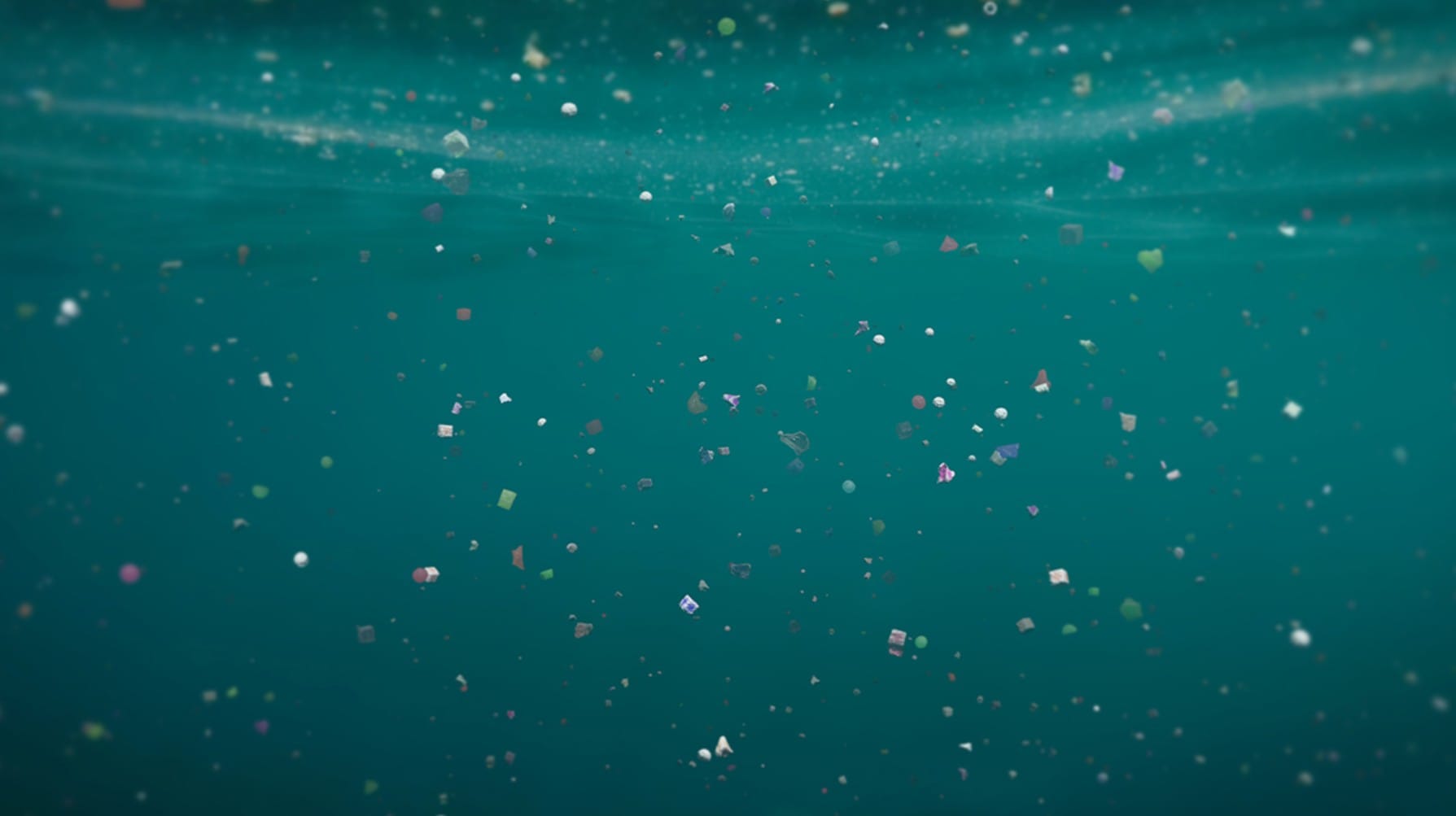
Of the more than 9 billion metric tons of plastic that’s been produced, a mere 9% has been recycled. About 12% has been incinerated, and the remainder is just out there–in our homes, our landfills, and, unfortunately, in our oceans. Exactly where all the plastic is continues to be an active question of research.
Plastic’s density is similar to that of water; some versions are a little denser than water, and some are a little lighter. So whether a piece of plastic floats at the ocean surface or sinks to the bottom depends on several factors, including its density, size, and shape. A large, dense plastic–think laundry detergent bottles–can float if it displaces enough water; after all, metal ships float!
But as sunlight and abrasion breaks that big container into smaller fragments, their buoyancy shrinks. Eventually, these small, millimetric pieces sink, carrying our pollution to ecosystems we once thought remote. Some of the highest rates of microplastic ingestion are found in nonmigratory species living between 1200 and 1500 meters below the surface. We may never visit those depths, but our garbage does. (Image credit: iStock/dottedhippo; via Eos)






Leave a Reply