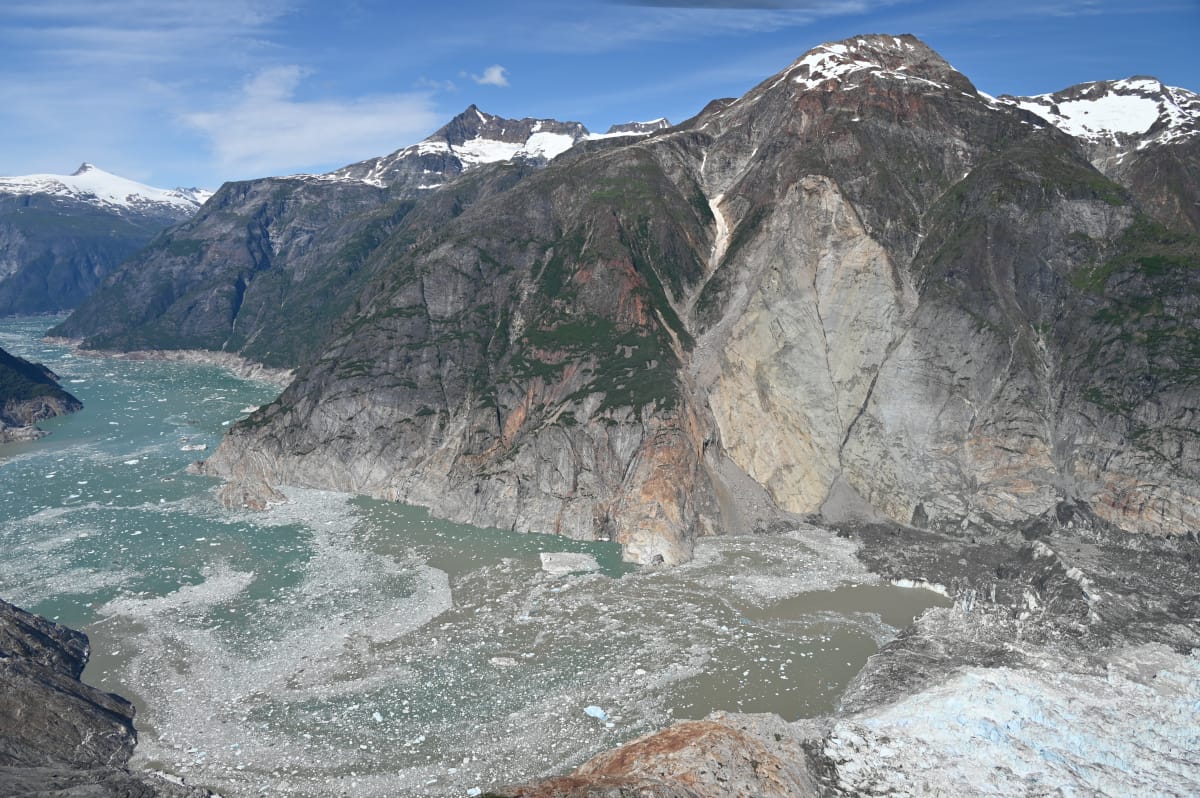
On 10 August 2025, the slopes of Alaska’s Tracy Arm Fjord gave way, sliding into the water. The resulting tsunami was the second-largest ever recorded, with a 481-meter runup after a 100-meter initial wave that moved at more than 70 meters per second. The fjord was fortunately empty at the time, though it is regularly visited by cruise ships. After the landslide, a seiche ricocheted through the fjord for 36 hours.
With no earthquake to trigger the tsunami, researchers had to piece together the accident through forensics. Their study concluded that the glacier’s retreat had left unstable slopes exposed, likening it to a child’s closet overstuffed with hastily gathered toys. The moment the door is no longer held closed, everything comes crashing out.
Ultimately, the landslide-induced tsunami is, therefore, a result of climate change. That result is disconcerting, given the increasing frequency of cruise ships visiting glacial fjords. Unlike earthquake-induced tsunamis, landslide-induced ones like the Tracy Arm event don’t come with a seismic warning. With rapid climate change and frequent tourism, risk management is critical. (Image credit: C. Read/USGS; research credit: D. Shugar et al.; via Eos)









Leave a Reply