Month: June 2025

  • Seeing the Sun’s South Pole For the First Time

    Seeing the Sun’s South Pole For the First Time

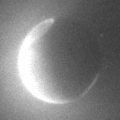
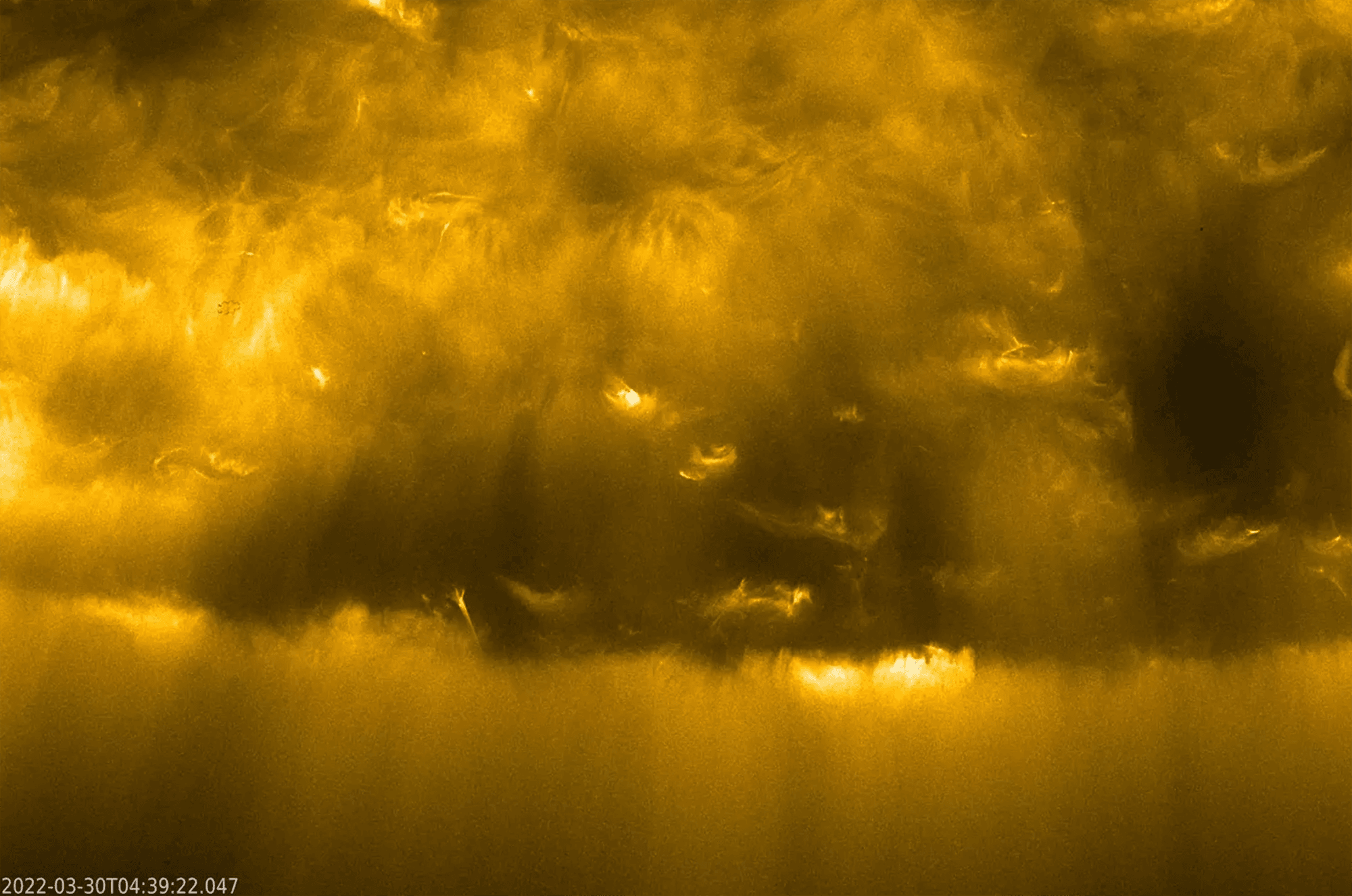
    The ESA-led Solar Orbiter recently used a Venus flyby to lift itself out of the ecliptic — the equatorial plane of the Sun where Earth sits. This maneuver offers us the first-ever glimpse of the Sun’s south pole, a region that’s not visible from the ecliptic plane. A close-up view of plasma rising off the pole is shown above, and the video below has even more.

    Solar Orbiter will get even better views of the Sun’s poles in the coming months, perfect for watching what goes on as the Sun’s 11-year-solar-cycle approaches its maximum. During this time, the Sun’s magnetic poles will flip their polarity; already Solar Orbiter’s instruments show that the south pole contains pockets of both positive and negative magnetic polarity — a messy state that’s likely a precursor to the big flip. (Image and video credit: ESA & NASA/Solar Orbiter/EUI Team, D. Berghmans (ROB) & ESA/Royal Observatory of Belgium; via Gizmodo)


    Fediverse Reactions
  • Featured Video Play Icon

    “Now I See – The Collection Vol. 2”

    In the next video of his current collection, Roman De Giuli takes us flying over liquid landscapes that look like our Earth in miniature. Many of them have the feeling of river deltas or glaciers. Sharp-eyed viewers will notice bubbles and flotsam in some of these streams. If you follow them, you can see how the flows vary — wiggling around islands, speeding up through constrictions and slowing down when the stream widens. It is, as always, a beautiful form of flow visualization. (Video and image credit: R. De Giuli)

    Fediverse Reactions
  • Predicting Yield

    Predicting Yield

    We’ve all experienced the frustration of ketchup refusing to leave the bottle or toothpaste that shoots out suddenly. These materials are yield stress fluids, which transition from solid-like behavior to liquid flow once the right amount of force is applied. A new study suggests that — despite their wide range of characteristics — these fluids share a universal relation: their yield transition (when they start to flow) depends on their characteristics when at rest. Interestingly, this relationship seems to hold not only for polymeric fluids like the one in the study but also nonpolymeric ones. (Image credit: haideyy; research credit: D. Keane et al.; via APS Physics)

    Fediverse Reactions
  • Featured Video Play Icon

    Evaporating Off Butterfly Scales

    This award-winning macro video shows scattered water droplets evaporating off a butterfly‘s wing. At first glance, it’s hard to see any motion outside of the camera’s sweep, but if you focus on one drop at a time, you’ll see them shrinking. For most of their lifetime, these tiny drops are nearly spherical; that’s due to the hydrophobic, water-shedding nature of the wing. But as the drops get smaller and less spherical, you may notice how the drop distorts the scales it adheres to. Wherever the drop touches, the wing scales are pulled up, and, when the drop is gone, the scales settle back down. This is a subtle but neat demonstration of the water’s adhesive power. (Video and image credit: J. McClellan; via Nikon Small World in Motion)

    Water droplets evaporate from the wing of a peacock butterfly.
    Water droplets evaporate from the wing of a peacock butterfly.
    Fediverse Reactions
  • Io’s Missing Magma Ocean

    Io’s Missing Magma Ocean

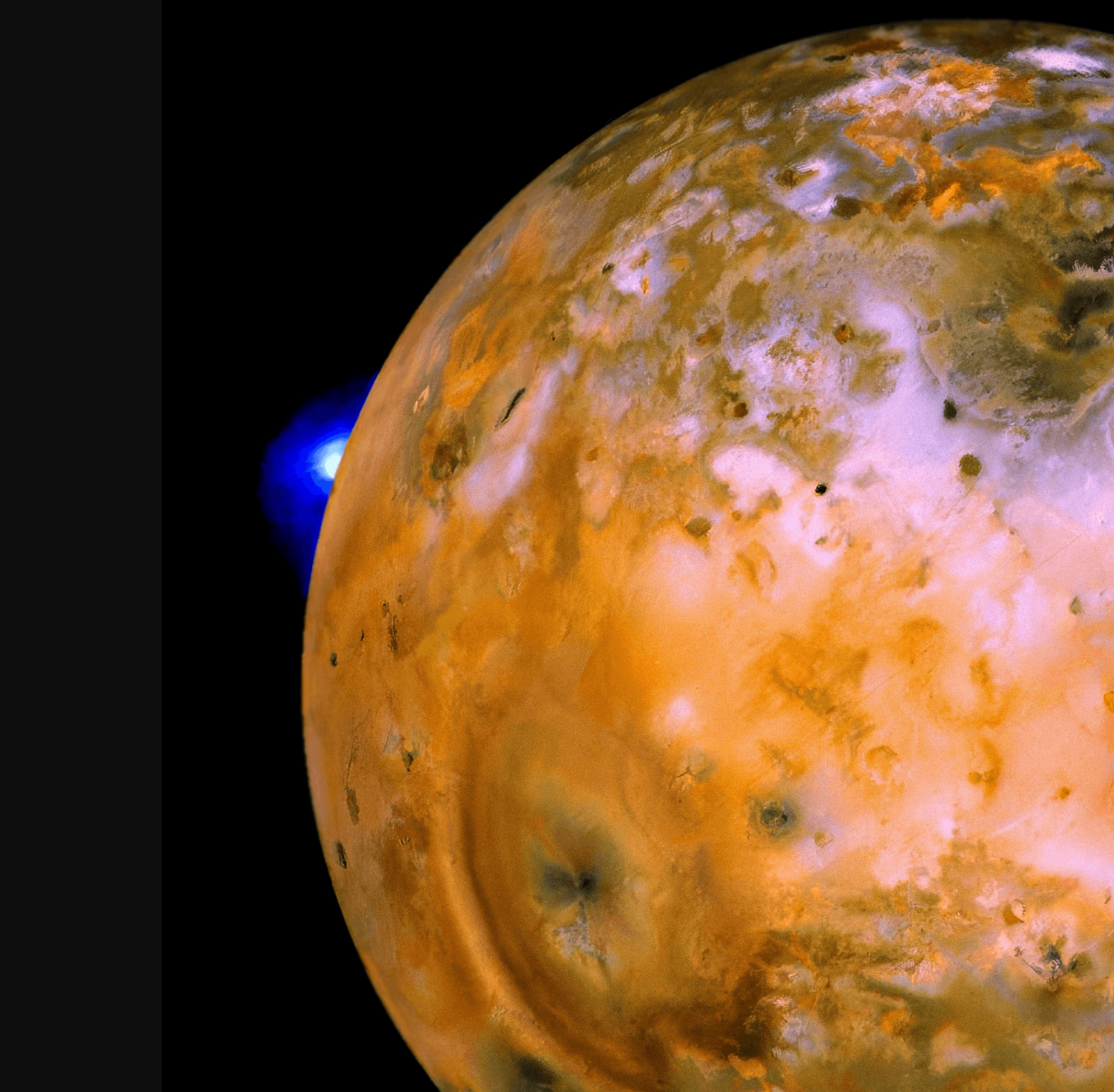
    In the late 1970s, scientists conjectured that Io was likely a volcanic world, heated by tidal forces from Jupiter that squeeze it along its elliptical orbit. Only months later, images from Voyager 1’s flyby confirmed the moon’s volcanism. Magnetometer data from Galileo’s later flyby suggested that tidal heating had created a shallow magma ocean that powered the moon’s volcanic activity. But newly analyzed data from Juno’s flyby shows that Io doesn’t have a magma ocean after all.

    The new flyby used radio transmission data to measure any little wobbles that Io caused by tugging Juno off its expected course. The team expected a magma ocean to cause plenty of distortions for the spacecraft, but the effect was much slighter than expected. Their conclusion? Io has no magma ocean lurking under its crust. The results don’t preclude a deeper magma ocean, but at what point do you distinguish a magma ocean from a body’s liquid core?

    Instead, scientists are now exploring the possibility that Io’s magma shoots up from much smaller pockets of magma rather than one enormous, shared source. (Image credit: NASA/JPL/USGS; research credit: R. Park et al.; see also Quanta)

    Fediverse Reactions
  • Featured Video Play Icon

    “Droplet on a Plucked Wire”

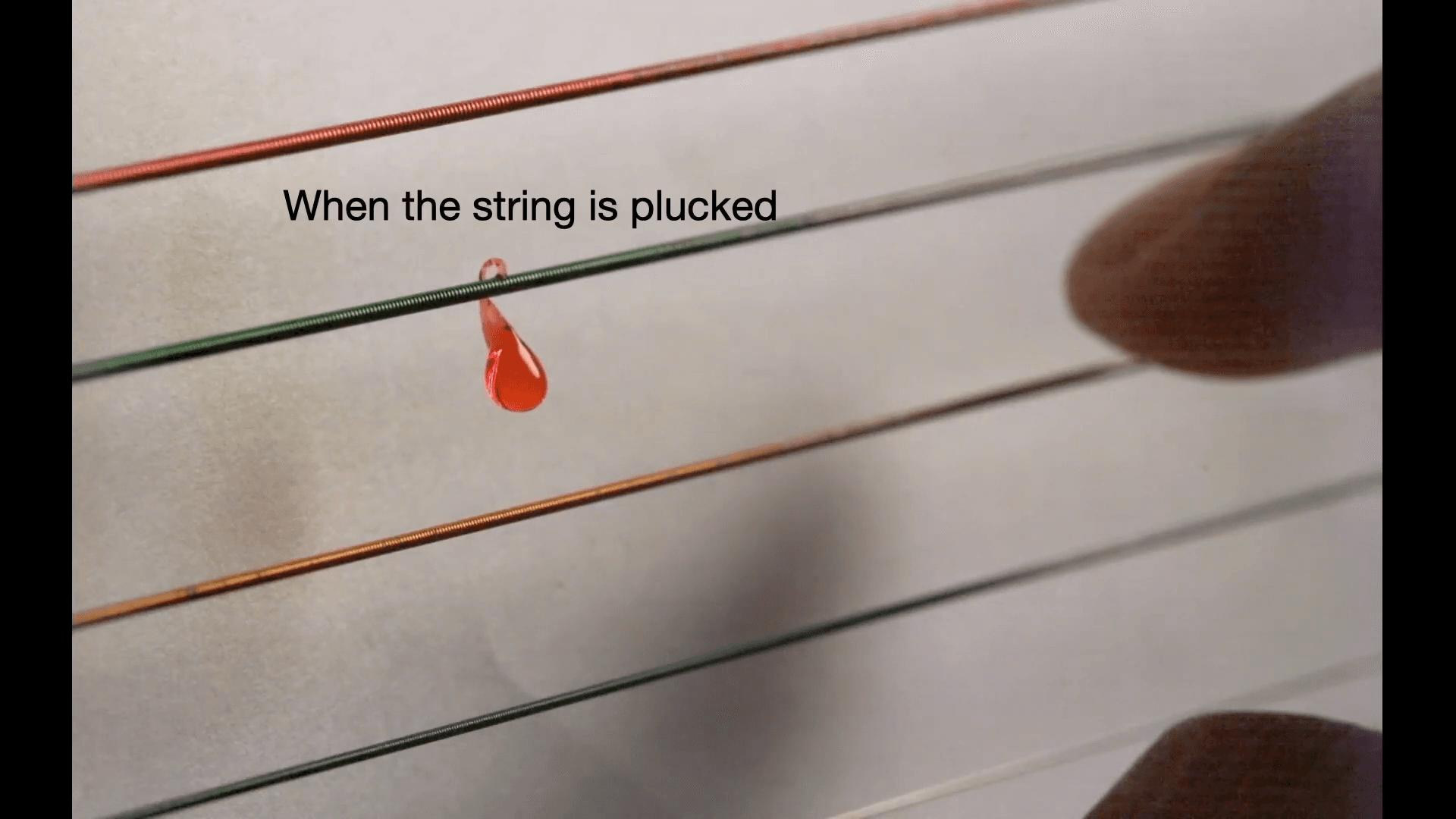
    What happens to a droplet hanging on a wire when the wire gets plucked? That’s the fundamental question behind this video, which shows the effects of wire speed, viscosity, and viscoelasticity on a drop’s detachment. With lovely high-speed video and close-up views, you get to appreciate even subtle differences between each drop. Capillary waves, viscoelastic waves, and Plateau-Rayleigh instabilities abound! (Video and image credit: D. Maity et al.)

    Fediverse Reactions
  • Featured Video Play Icon

    “C R Y S T A L S”

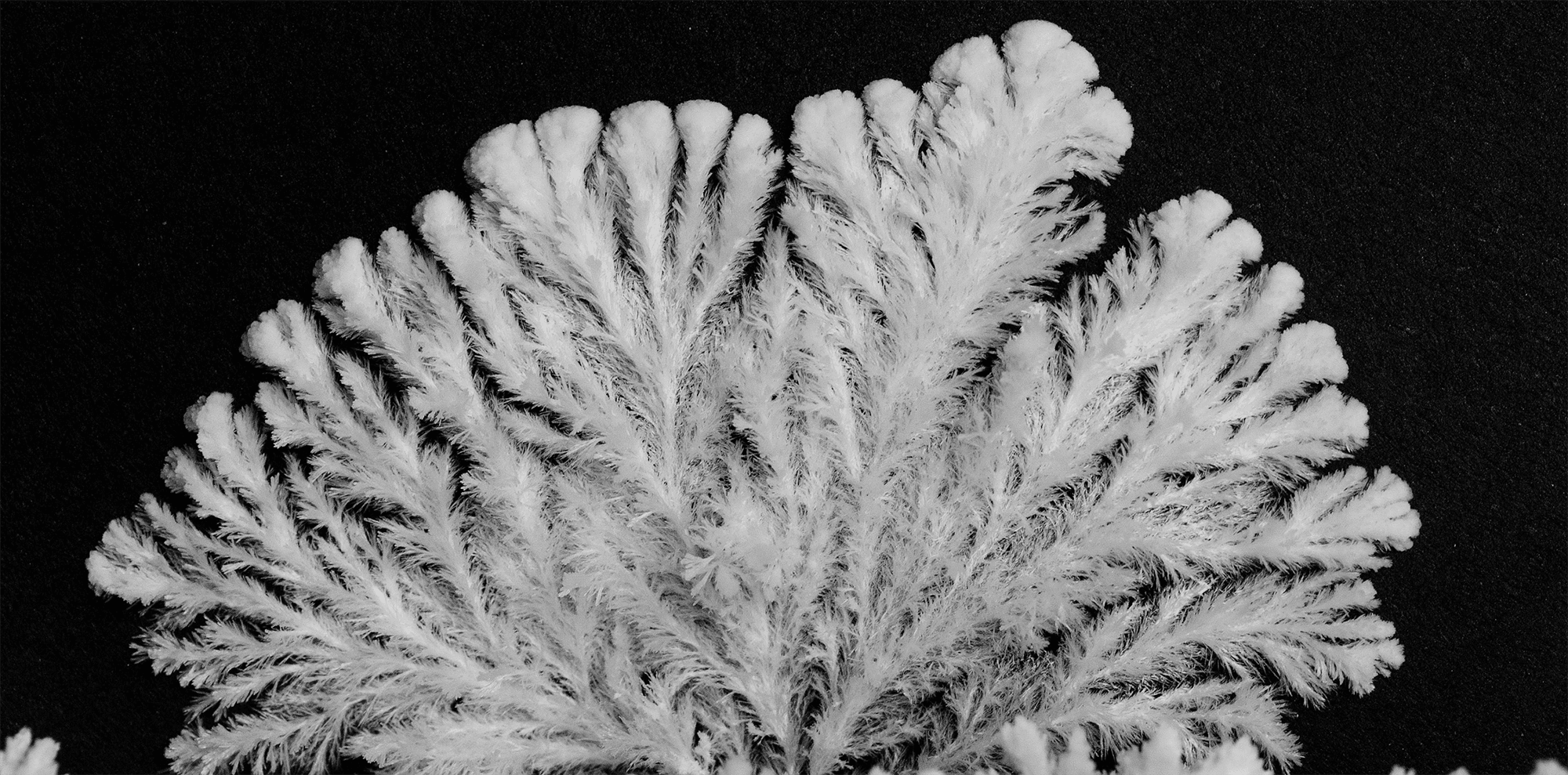
    In “C R Y S T A L S,” filmmaker Thomas Blanchard captures the slow, inexorable growth of potassium phosphate crystals. He took over 150,000 images — one per minute — to document the way crystals formed as the originally transparent liquid evaporated. Some crystals branch into fractals. Others bulge outward like a condensing cloud or a sprouting mushroom. (Video and image credit: T. Blanchard)

    Fediverse Reactions
  • Stunning Interstellar Turbulence

    Stunning Interstellar Turbulence

    The space between stars, known as the interstellar medium, may be sparse, but it is far from empty. Gas, dust, and plasma in this region forms compressible magnetized turbulence, with some pockets moving supersonically and others moving slower than sound. The flows here influence how stars form, how cosmic rays spread, and where metals and other planetary building blocks wind up. To better understand the physics of this region, researchers built a numerical simulation with over 1,000 billion grid points, creating an unprecedentedly detailed picture of this turbulence.

    The images above are two-dimensional slices from the full 3D simulation. The upper image shows the current density while the lower one shows mass density. On the right side of the images, magnetic field lines are superimposed in white. The results are gorgeous. Can you imagine a fly-through video? (Image and research credit: J. Beattie et al.; via Gizmodo)

  • Ponding on the Ice Shelf

    Ponding on the Ice Shelf

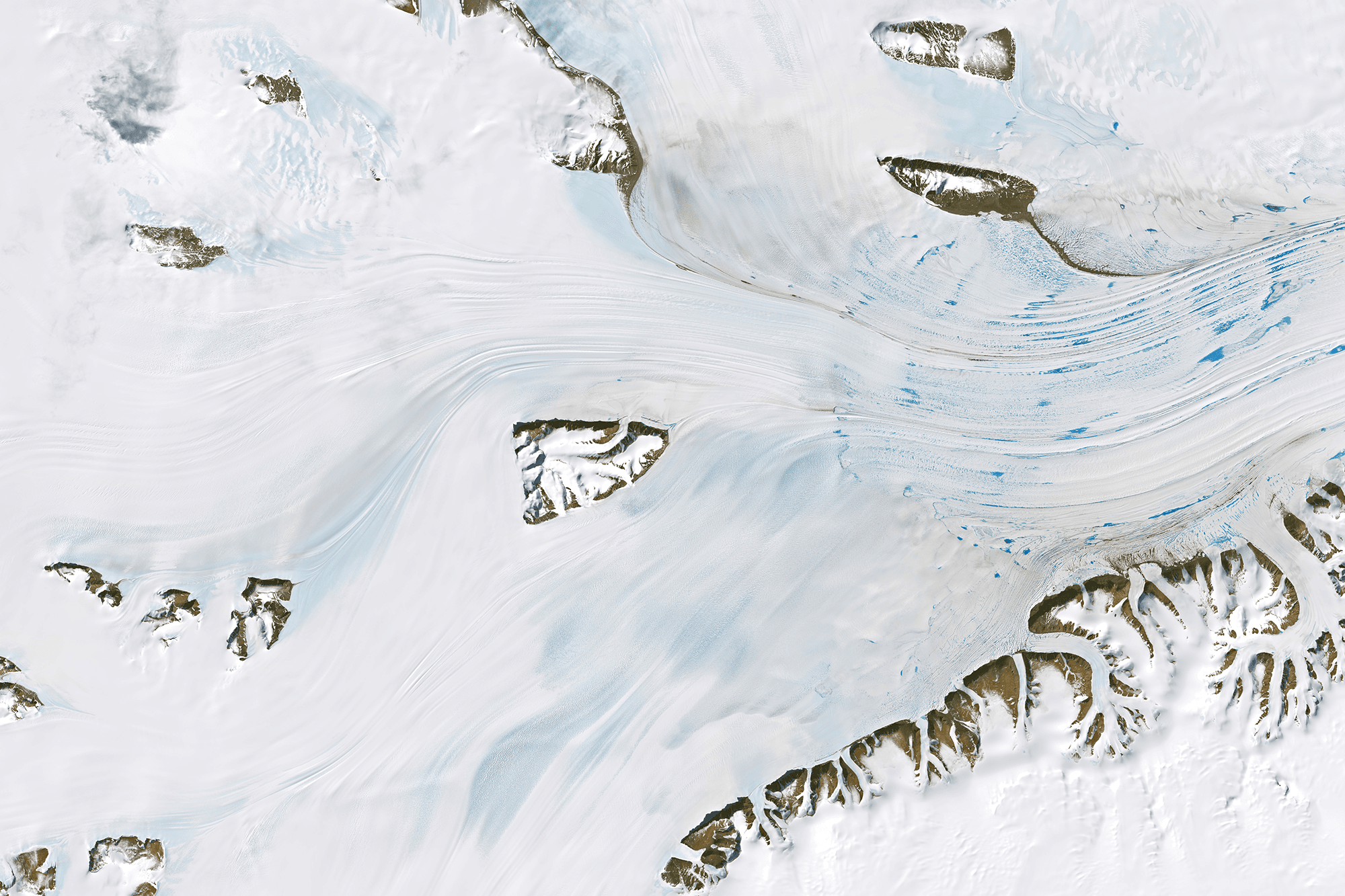
    Glaciers flow together and march out to sea along the Amery Ice Shelf in this satellite image of Antarctica. Three glaciers — flowing from the top, left, and bottom of the image — meet just to the right of center and pass from the continental bedrock onto the ice-covered ocean. The ice shelf is recognizable by its plethora of meltwater ponds, which appear as bright blue areas. Each austral summer, meltwater gathers in low-lying regions on the ice, potentially destabilizing the ice shelf through fracture and drainage. This region near the ice shelf’s grounding line is particularly prone to ponding. Regions further afield (right, beyond the image) are colder and drier, often allowing meltwater to refreeze. (Image credit: W. Liang; via NASA Earth Observatory)

    Fediverse Reactions
  • Penguin Poo Seeds Antarctic Clouds

    Penguin Poo Seeds Antarctic Clouds

    Forming clouds requires more than just water vapor; every droplet in a cloud forms around a tiny aerosol particle that serves as a seed that vapor can condense onto. Without these aerosols, there are no clouds. In most regions of the world, aerosols are plentiful — produced by vegetation, dust, sea salt, and other sources. But in the Antarctic, aerosol sources are few. But a new study shows that penguins help create aerosols with their feces.

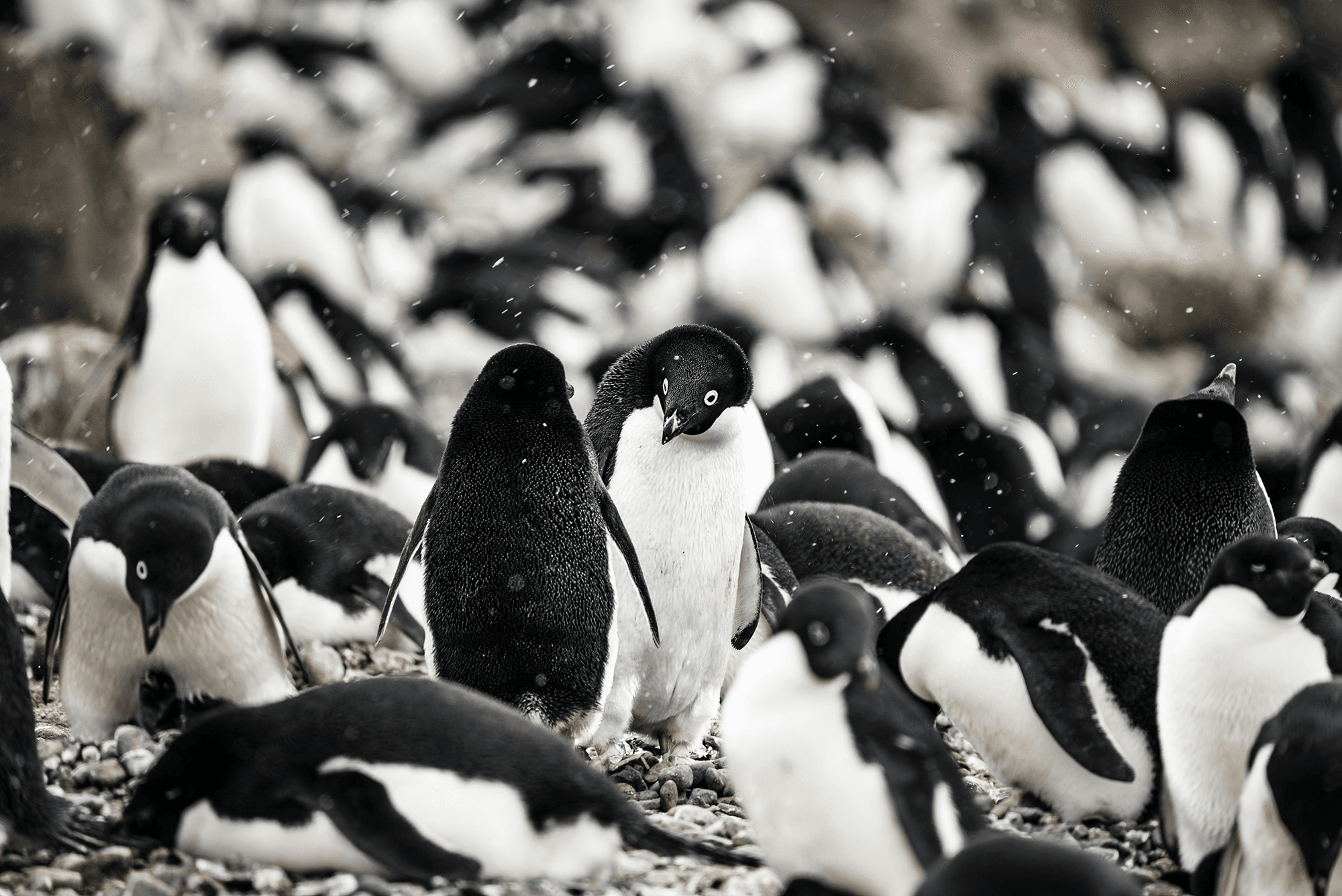
    Penguin feces is ammonia-rich, and that ammonia, when combined with sulfur compounds from marine phytoplankton, triggers chemistry that releases new aerosol particles. The researchers measured ammonia carried on the wind from nearby penguin colonies and found that the birds are a large ammonia source, producing 100 to 1000 times the region’s baseline ammonia levels. In combination with another ingredient in penguin guano, the researchers found the penguins boosted aerosol production 10,000-fold. That means penguins can actually influence their environment, helping to create clouds that keep Antarctica cooler. (Image credit: H. Neufeld; research credit: M. Boyer et al.; via Eos)

    Fediverse Reactions