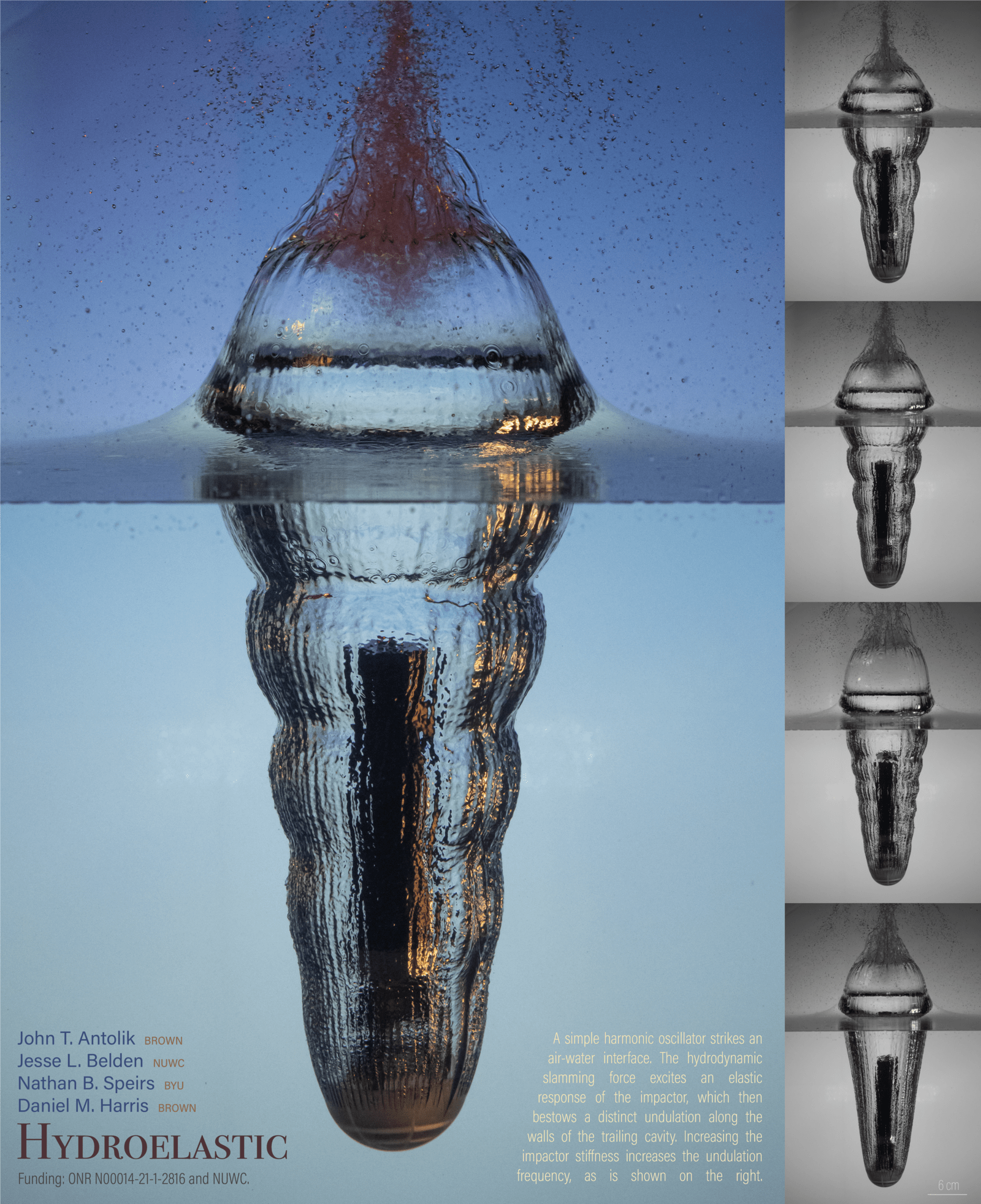
When objects impact water with enough speed, they create a smooth-walled, air-filled cavity around and behind them. Here, the impacting object is one with some give, like a spring. The initial impact squishes the object, setting it to oscillating along its length. The result is a wavy cavity. The stiffer the object, the more frequent the waves. (Image credit: J. Antolik et al.)
Month: January 2024

Calming the Waves
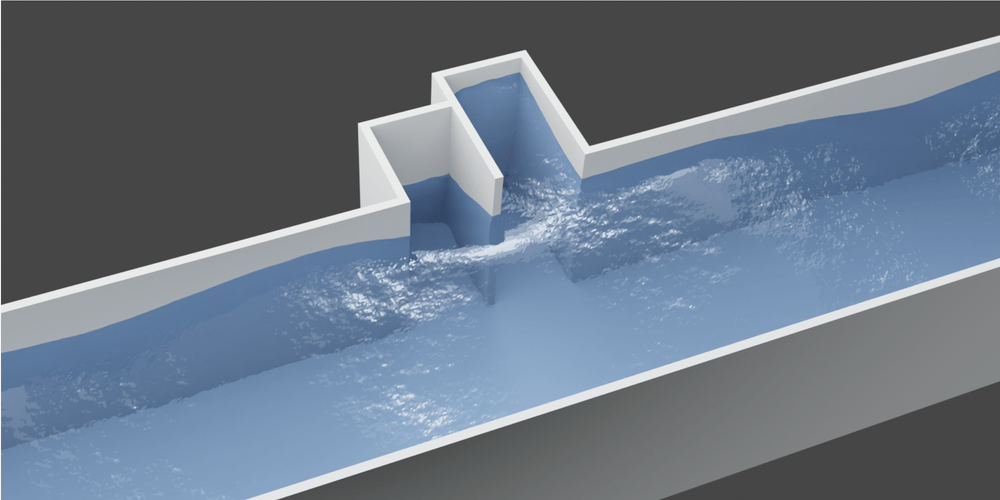
Wave action can be a major source of erosion along riverbanks and shorelines. But in a recent study, scientists were able to perfectly absorb incoming waves to create a downstream region with calm, wave-free waters.

Experimental data shows that waves approaching from the left interact with the resonant chambers and get perfectly absorbed, leaving the water on the right side still. The group began with a narrow channel that waves could move down. They added two small, side-by-side cavities perpendicular to the channel; as waves travel down the channel, they resonate with the cavities, which reflect and transmit their own waves back into the channel. With the right tuning to the size and spacing of the cavities, the team was able to make the cavities’ waves perfectly cancel the channel’s waves. The group demonstrated this absorption theoretically, numerically, and experimentally.
Currently, they’ve only managed perfect absorption with a single wave frequency, but an array of cavities should be able to absorb a range of incoming waves. The authors hope their work will one day help protect coastal structures and prevent erosion by countering incoming waves. (Image and research credit: L-P. Euvé et al.; via APS Physics)

The Best of FYFD 2023


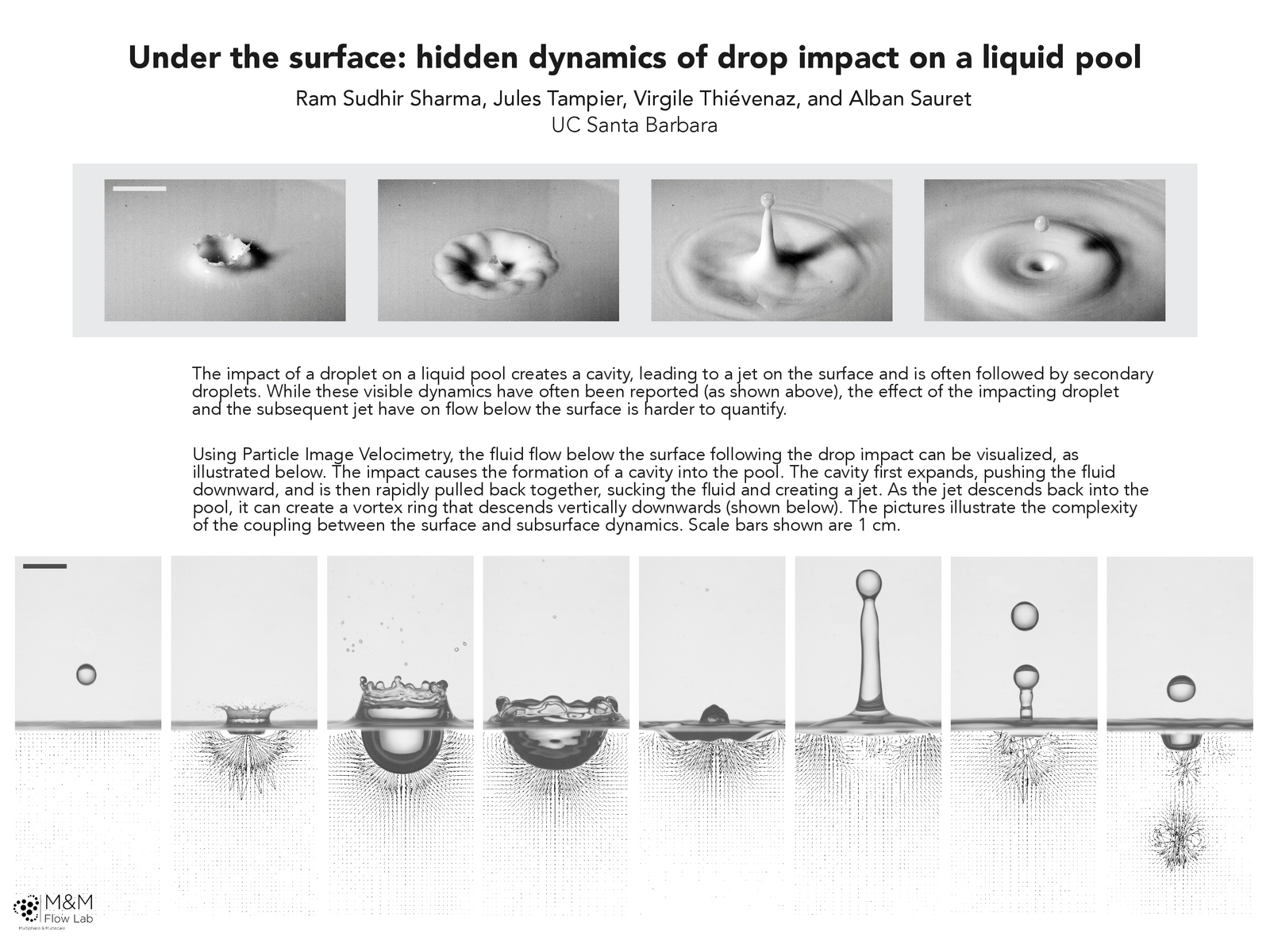

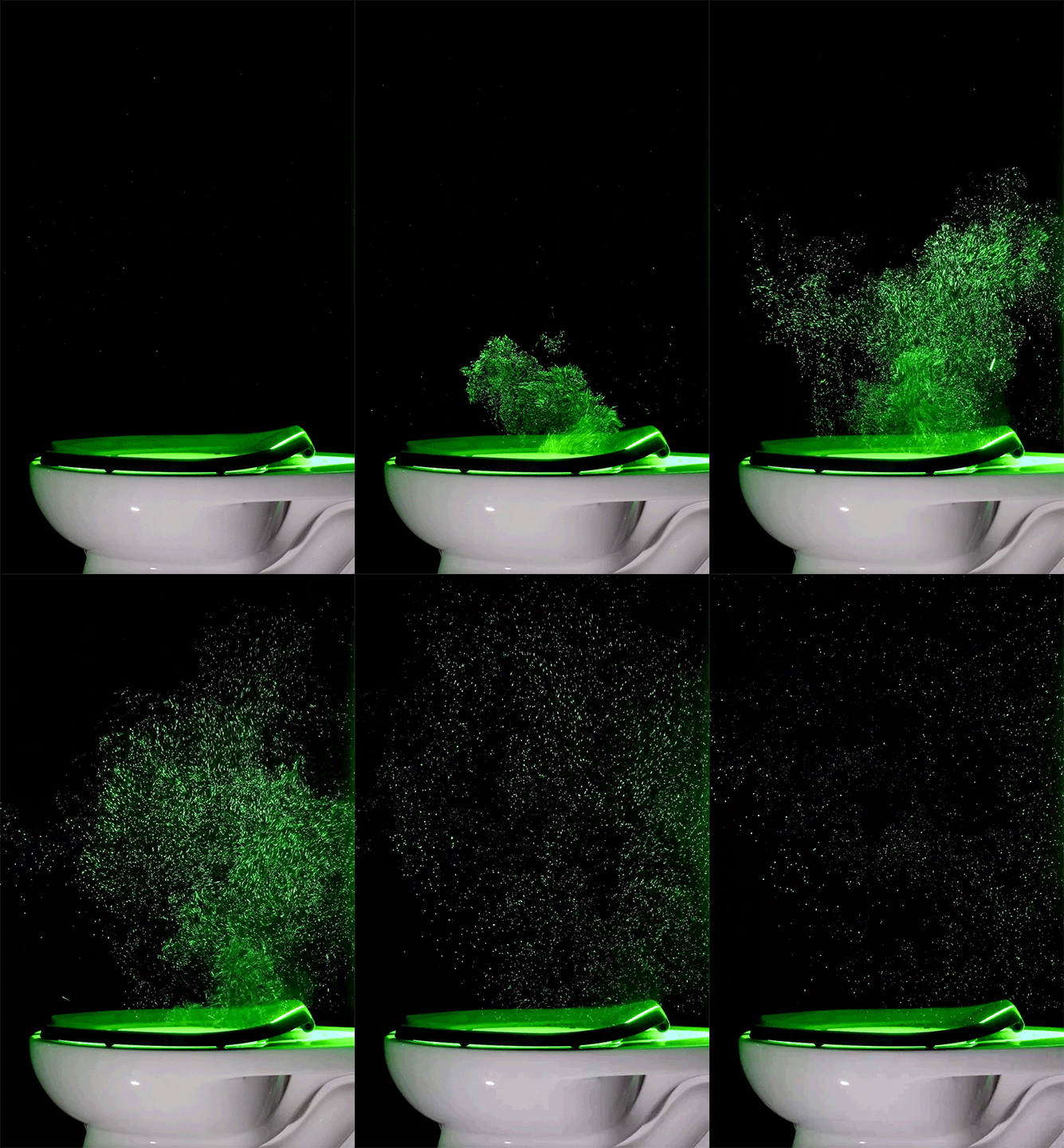


A fresh year means a look back at what was popular last year on FYFD. Usually, I give a numeric list of the top 10 posts, but this year the analytics weren’t as clear. So, instead, I’m combining from a few different sources and presenting an unordered list of some of the site’s most popular content. Here you go:
- Eroding the Sphinx
- Getting Water Out of Your Ear
- Can Water Solve a Maze?
- Dandelion Seeds
- Black Holes in a Bathtub
- Mixing With E. coli
- Beneath the Cavity
- Leidenfrost Explosions
- Toilet Plumes
- Exascale Simulations
- Ghosts of Rivers Past
- Blood Flow in a Fin
- Snake Tracks
- Lagoon Nebula
- “Chaosmosis”
I’m really pleased with the mix of topics this year; many of these topics are straight from research papers, and others are artists’ works. At least one is both. From swimming bacteria to star-birthing nebulas, fluid dynamics are everywhere!
If you enjoy FYFD, please remember that it’s a reader-supported website. I don’t run ads and it’s been years since my last sponsored post. You can help support the site by becoming a patron, making a one-time donation, buying some merch, or simply by sharing on social media. And if you find yourself struggling to remember to check the website, remember you can get FYFD in your inbox every two weeks with our newsletter. Happy New Year!
(Image credits: sphinx – S. Boury et al., ear model – S. Kim et al., maze – S. Mould, dandelion – S. Chaudhry, water tank – P. Ammon, e. coli – R. Ran et al., drop impact – R. Sharma et al., Leidenfrost – L. Gledhill, toilet – J. Crimaldi et al., engine sim – N. Wimer et al., rivers – D. Coe, fin – F. Weston, snake – P. Schmid, nebula – J. Drudis and C. Sasse, flames – C. Almarcha et al.)