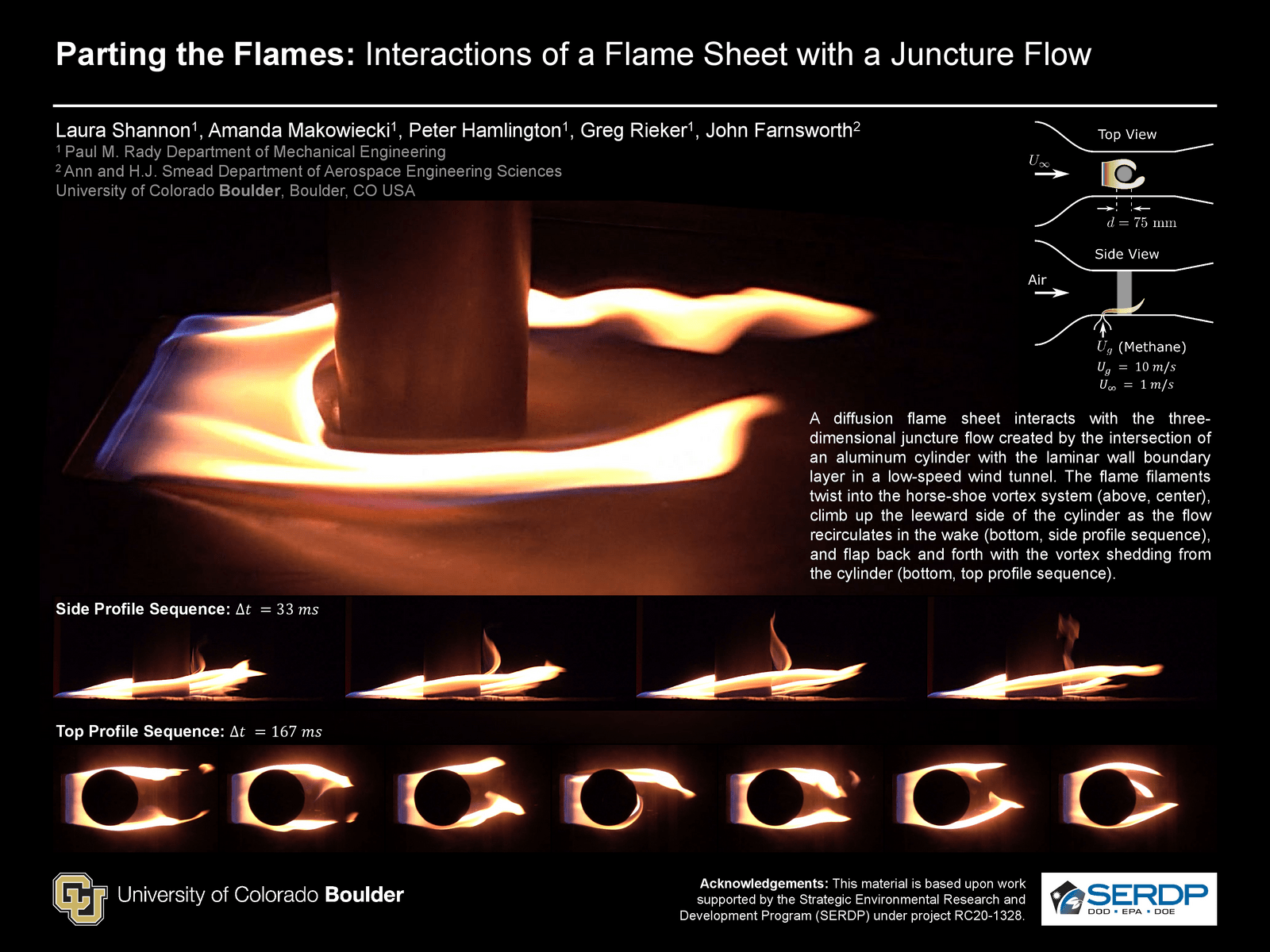
A sheet of flame splits around a cylinder in this Gallery of Fluid Motion poster. Looking at the image sequences, you can see how the flames lift up as they flow around the cylinder, following the arms of a horseshoe vortex. Researchers study situations like this one to better understand how wildfires move as they encounter obstacles. Understanding and predicting how fires flow is increasingly important with more wildfires encountering human-built infrastructure. (Image credit: L. Shannon et al.)
Month: January 2024

The Miscible Faraday Instability


Vibrate a pool of water in air and the interface will form a distinctive pattern of waves called the Faraday instability. But what happens when you vibrate the interface between two fluids that can mix? That’s the question at the heart of this video. The researchers consider the situation both in simulation and experiment, showing how what begins as a smooth interface quickly becomes a thick turbulent mixture. Since the thickness of that mixing layer can be predicted theoretically, this set-up could be useful in industrial applications where mixing is needed. (Video, image, and research credit: G. Louis et al.)

Fire in Ice
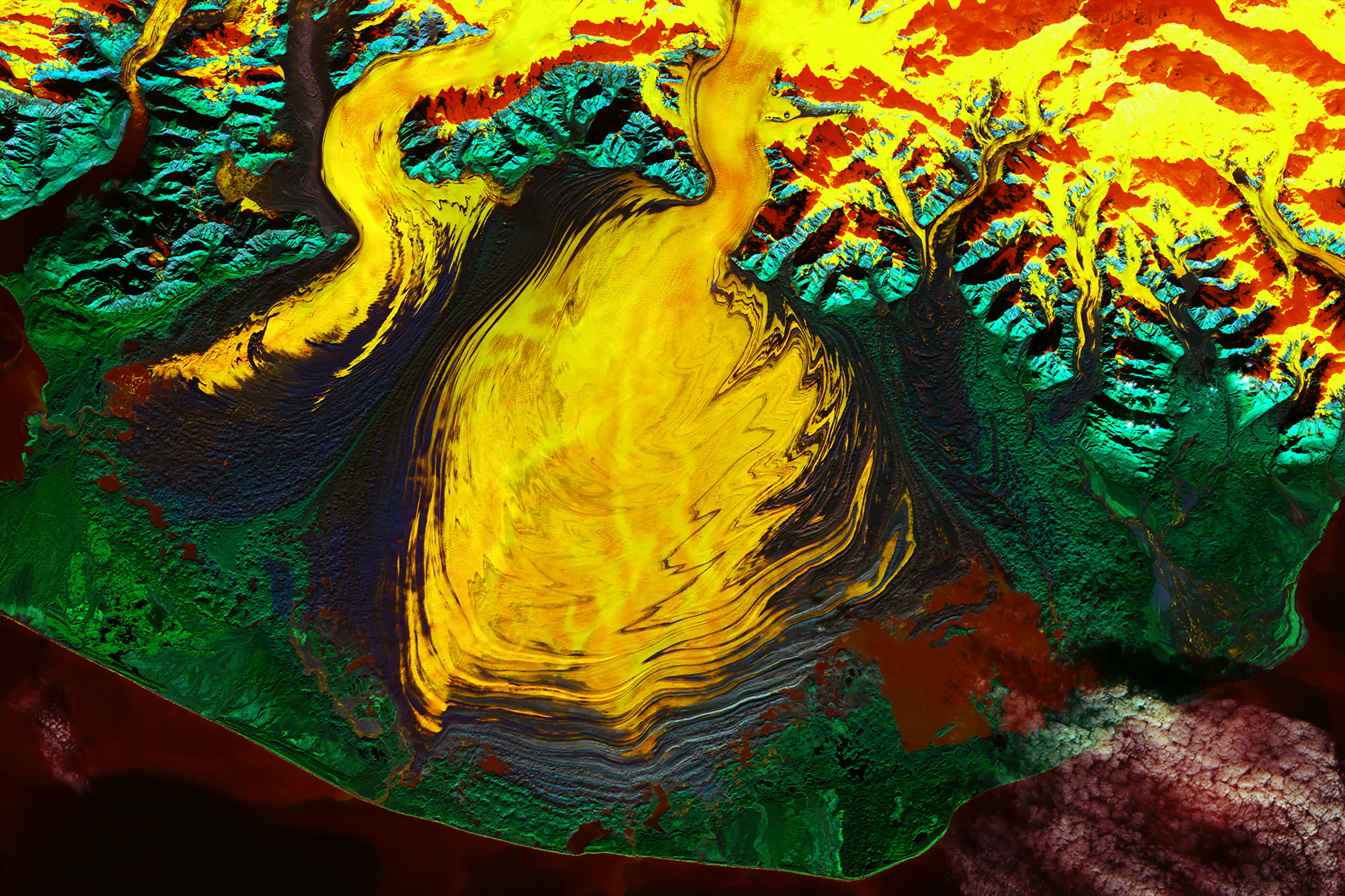
This false-color satellite image of Malaspina Glacier (Sít’ Tlein) is a riot of color. Composed of coastal/aerosol, near infrared, and shortwave infrared bands from Landsat 9, the colors highlight features otherwise hard to identify. Watery features appear in reds, oranges, and yellows; vegetation is green and rock appears in blue. The glacier covers more than 4000 square kilometers, an area larger than the state of Rhode Island. The dark lines atop the glacier are moraines, where rock, soil, and other debris has been scraped up along the glacier’s edge. Over time, changes in the glacier’s velocity cause the moraines to fold and shear, creating the zigzag pattern seen here. (Image credit: W. Liang; via NASA Earth Observatory)
“Winter”


Little by little, snow and ice transform the landscape in Jamie Scott’s film “Winter.” From individual snowflakes to entire forest vistas, the timelapses showcase how winter remakes every surface in its image. The growing icicles show freezing in action, but I especially love seeing the “flow” brought about by progressively greater snowfall. Tree limbs bow, shrubs swell, and riverbanks contract as the snow gets thicker. And that final shot that pulls out from single snowflakes to the entire forest? Stunning! (Video and image credit: J. Scott et al.; via Colossal)
Vortex Rings From a Square Outlet


When a vortex ring forms, it’s often from fluid forced through a round outlet, whether that’s someone’s mouth, a pipe, or a dolphin’s blowhole. But vortex rings can come from other shapes, too. This video shows us several examples, including slots and square outlets. The vortex rings blown from a square outlet are messier but still recognizable. The slot-shaped outlets produce even neater results, including twin vortex rings that move parallel to one another! (Image, video, and research credit: B. Steinfurth et al.)

Corralling Corals
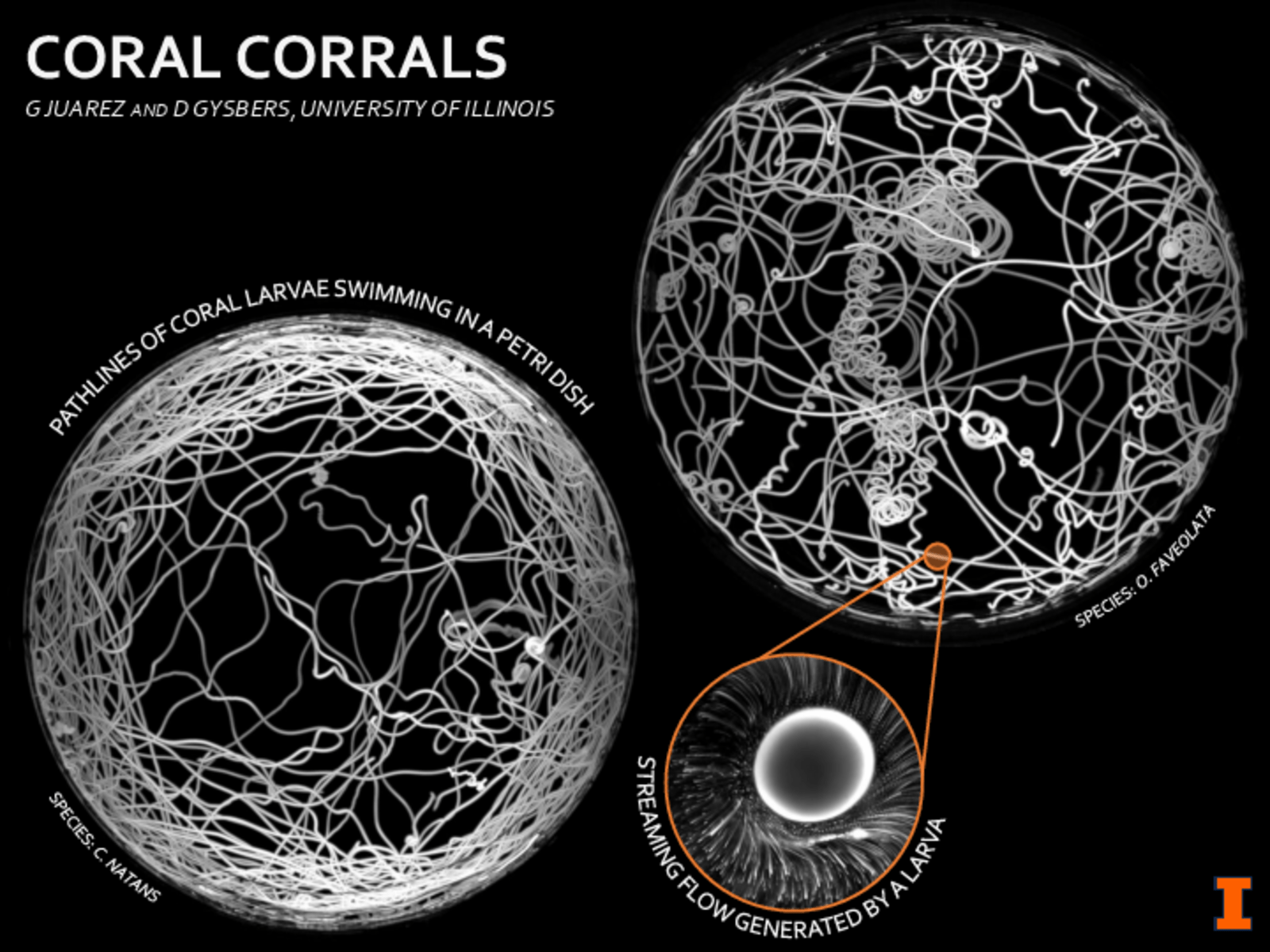
So much of fluid dynamics is seeking patterns. Shown here are two sets of patterns, each created by a different species of coral larvae. These tiny creatures form a streaming flow (orange inset) around them as they swim. Combined together in a petri dish, the larvae follow winding paths, shown in white. The overall pattern is distinctly different for the two species. One shows a clear preference for paths near the wall of the dish (left), while the other corkscrews through open spaces (right). This difference raises questions researchers can explore: do the larvae differ in their propulsion methods or in their collective behavior? (Image credit: G. Juarez and D. Gysbers)

The Sound of Bubbles
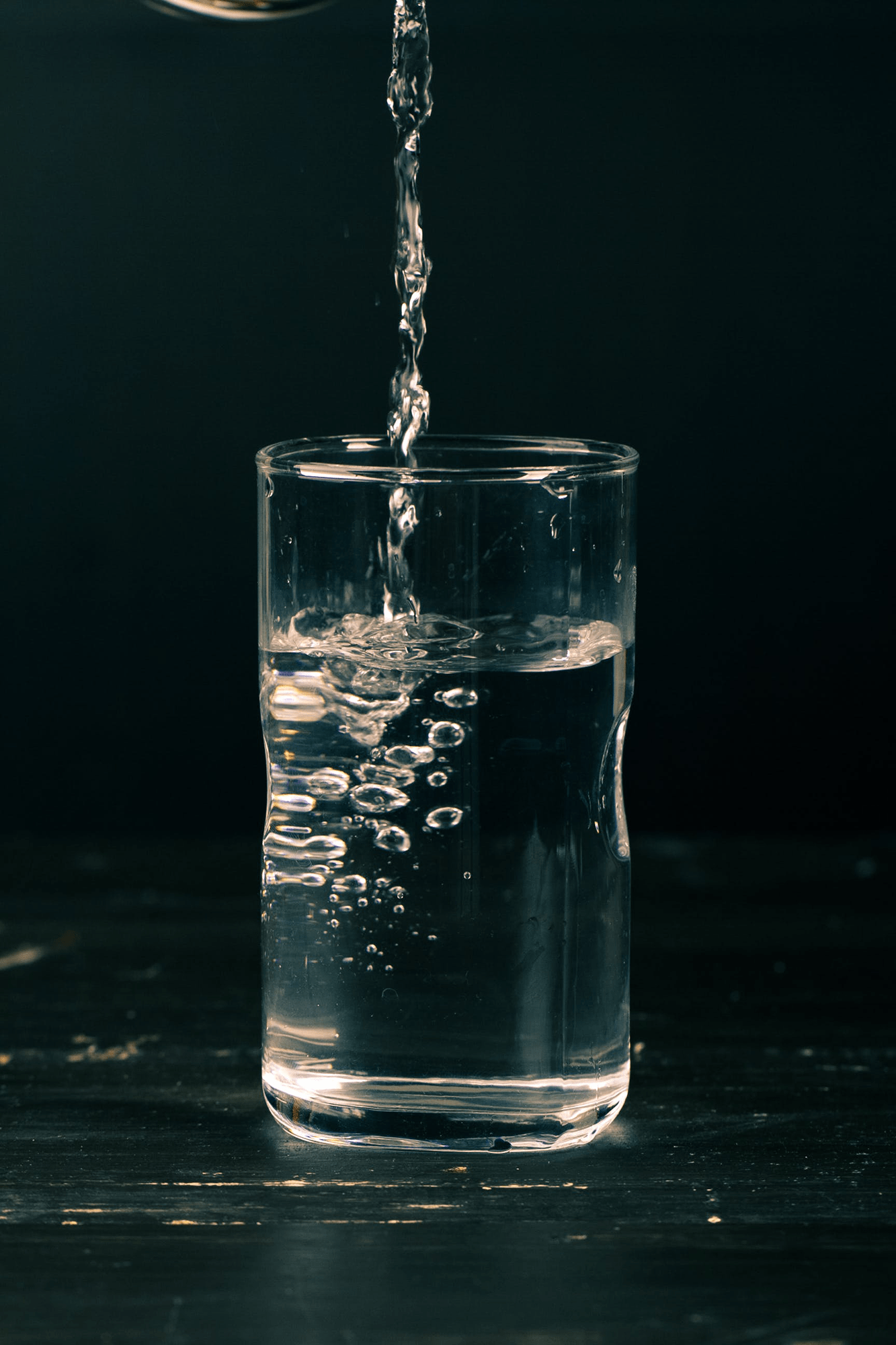
Every day I stand in front of my refrigerator and listen to the water dispenser pouring water into my glass. The skinny, fast-moving jet of water plunges into the pool, creating a flurry of bubbles. Those bubbles come from air the water jet pulls in with it, and the sound the water makes (minus the fridge’s noises) comes from those bubbles. A short, laminar jet will make fewer bubbles and, therefore, be quieter than a a jet that falls farther before hitting the water.
The reason? That tall jet falls for long enough that its walls start to wobble or even break up completely into separate droplets. Compared to a smooth jet, these wobbly or broken-up jets pull in more air and create more bubbles. That makes them louder. Researchers even suggest that listening to these bubbles can give a noninvasive method for finding how much fresh oxygen is in the water. (Image credit: R. Piedra; research credit: M. Boudina et al.; via APS Physics)
Liquid Lace
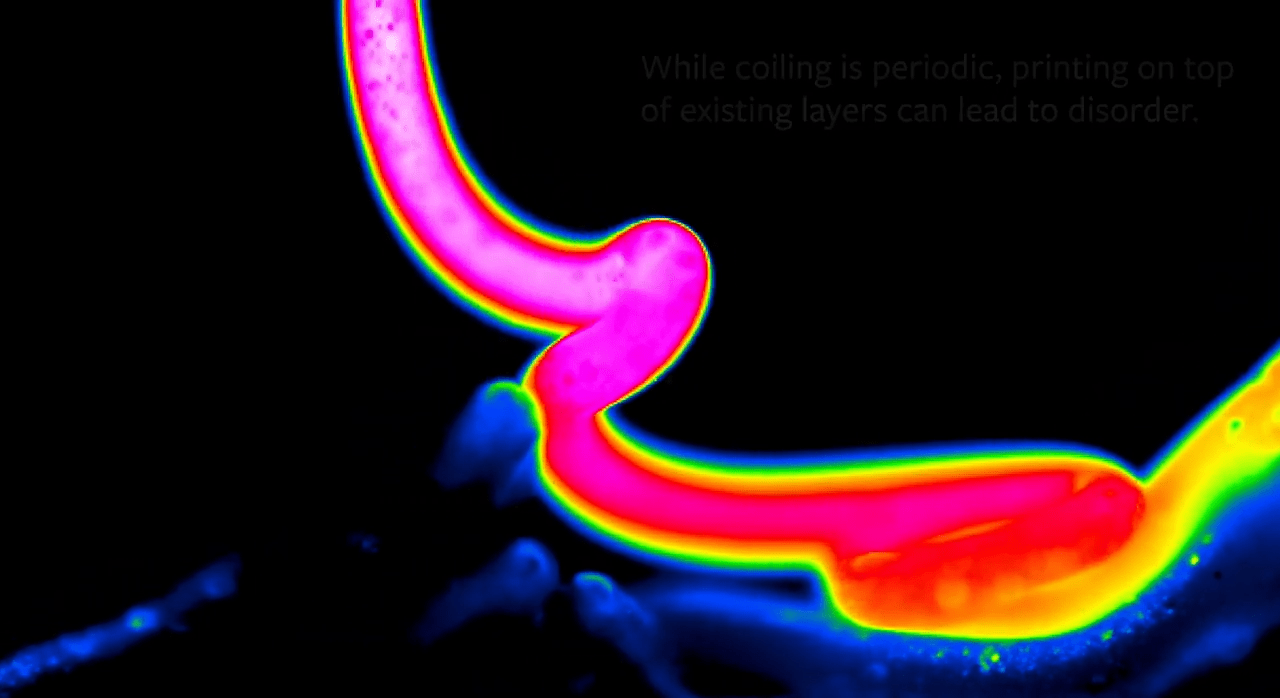

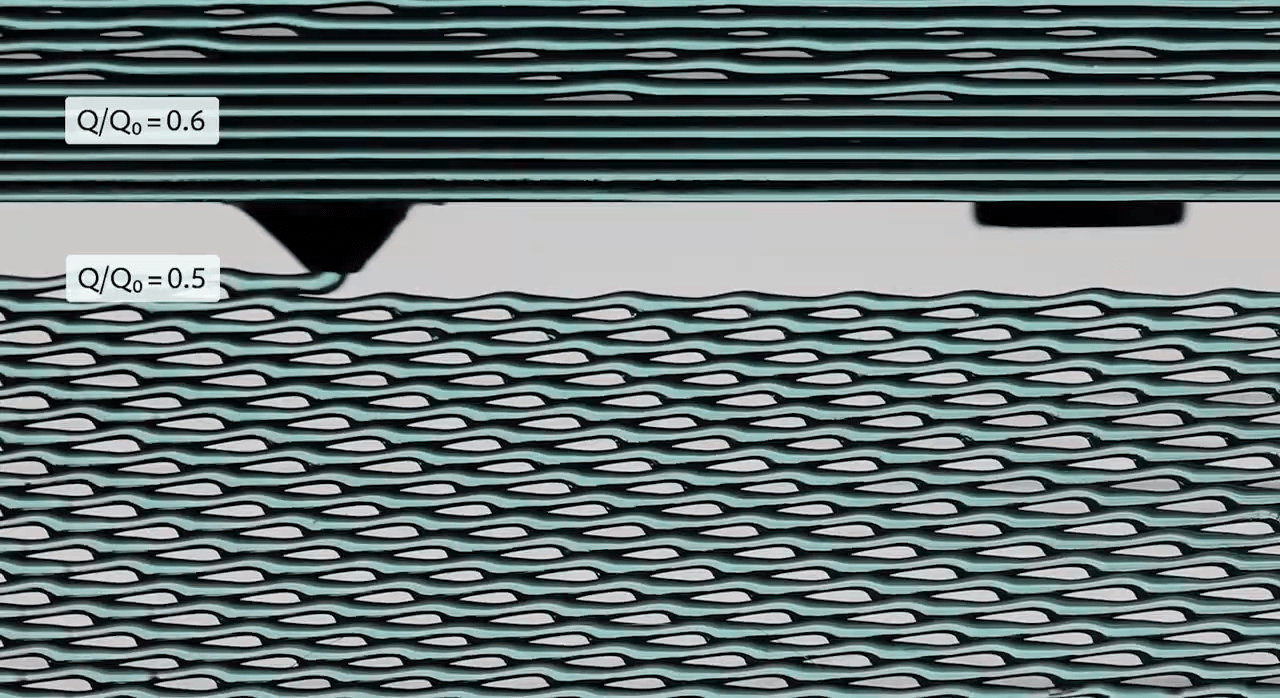
3D printers are a neat apparatus for exploring flow instabilities. If too much material is extruded compared to the speed of the printer head, coiling takes place. But under-extrusion creates patterns, too. Here, researchers show how under-extrusion can create a stable lace-like pattern. Once dried, the material can stretch, but only in certain directions, a bit like many textiles. (Video and image credit: L. Dreier et al.)
“High Flow”


Roman De Giuli’s “High Flow” is vibrant and energetic. Colorful paints and inks flow across the page, creating complex patterns. I love the blossoming flows, feathery fronds, and spreading Marangoni effects. De Giuli’s films never disappoint! (Video and image credit: R. De Giuli)

Water Jumping Hoops
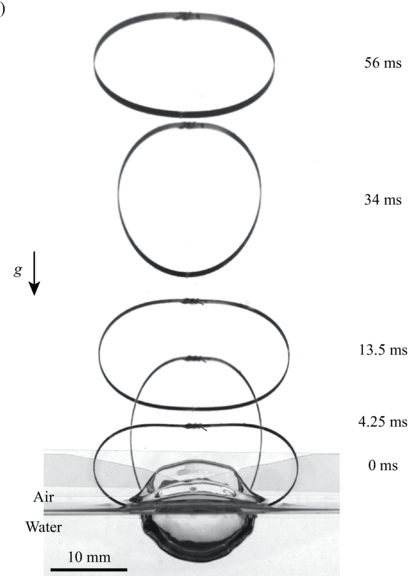
Small creatures like springtails and spiders can jump off the air-water interface using surface tension. But larger creatures can water-jump, too, using drag. Here, researchers study drag-based water jumping with a simple elastic hoop. Initially, two sides of the hoop are pulled closer by a string, deforming the hoop. Then, with the hoop sitting upright on the air-water interface, a laser burns the string, releasing the energy stored in the hoop. The hoop’s bottom pushes into the water, generating drag. That resistance provides a reaction force strong enough to launch the hoop.
Compared to the hoop’s jumps off land, it’s slower to take-off from water, and it’s less efficient at jumping. Lighter hoops, however, jump better off water than heavier ones — a wrinkle that isn’t seen in ground jumpers. That suggests that weight reduction is more important for aquatic jumpers than for their terrestrial counterparts. (Image and research credit: H. Jeong et al.)