Month: February 2023

  • Surface Fat Gives Chocolate’s Mouthfeel

    Surface Fat Gives Chocolate’s Mouthfeel

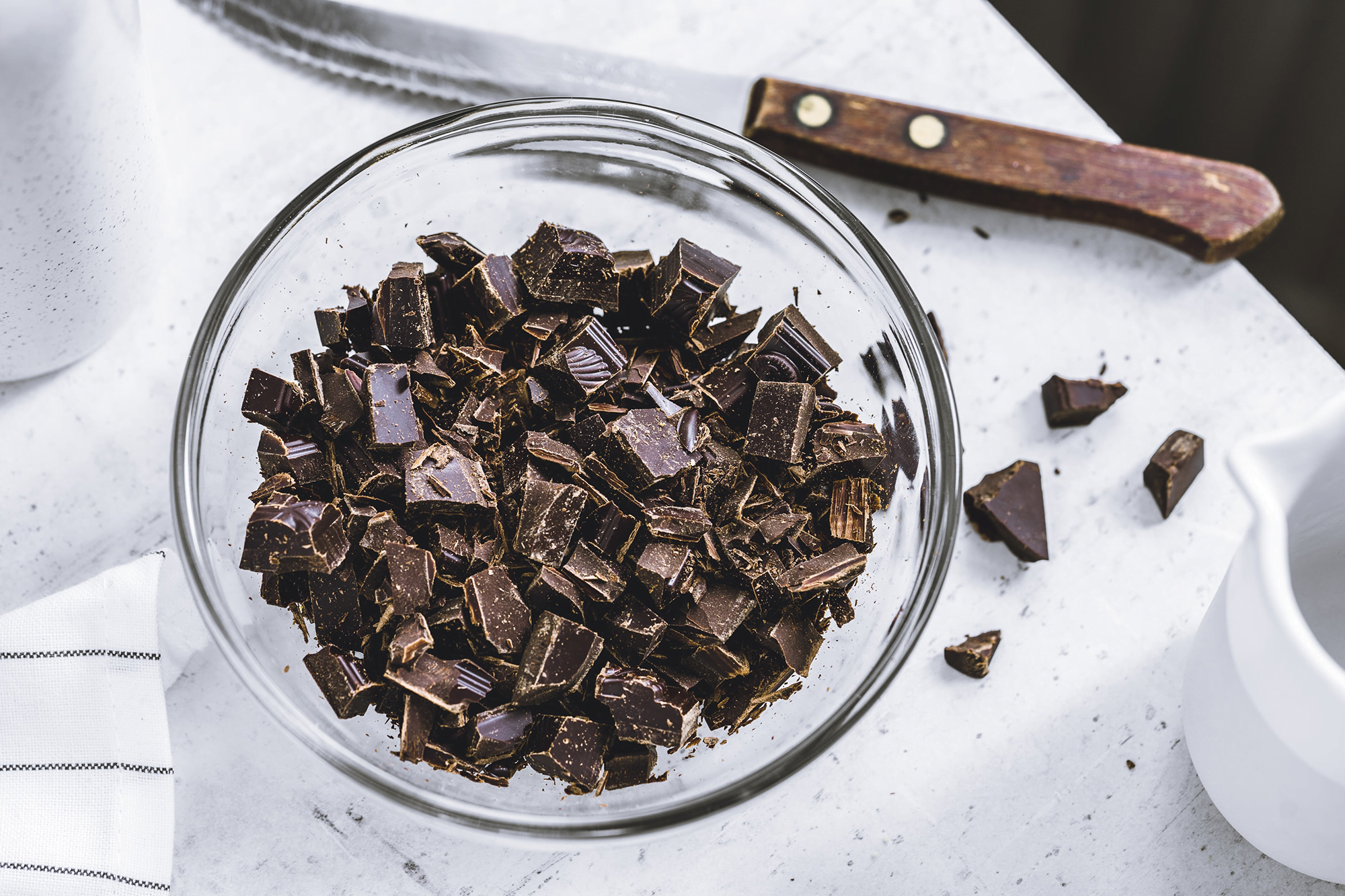
    Understanding the interactions of food and our mouths is incredibly difficult. There are lots of changes going on: shape changes from chewing, viscosity changes as saliva lubricates the food, and, sometimes, phase changes from the heat of our bodies. Add to that the sensitivity of our papillae-covered tongues, and it’s a lot to manage all at once. Recently, researchers have turned to 3D-printing to create a more realistic lab version of our mouths.

    The team 3D-printed a papillae pattern matching the size and distribution of an actual human tongue, then molded that pattern onto a silicone elastomer. The result? A replica tongue that matches a human one in terms of softness, wettability, and surface roughness. They then attached their tongue to a rheometer to measure the friction between the tongue and dark chocolate.

    Their experiments simulated licking, eating, and swallowing the confection. During licking and eating, they found that the chocolate was lubricated by a layer of fat directly between the tongue and the food. Their results suggest that one way to make healthier chocolate options is to concentrate fat into the surface layer of the chocolate while lowering the fat content inside the bar. (Image credit: D. Ramoskaite; research credit: S. Soltanahmadi et al.; via APS Physics)
  • Founts of Enceladus

    Founts of Enceladus

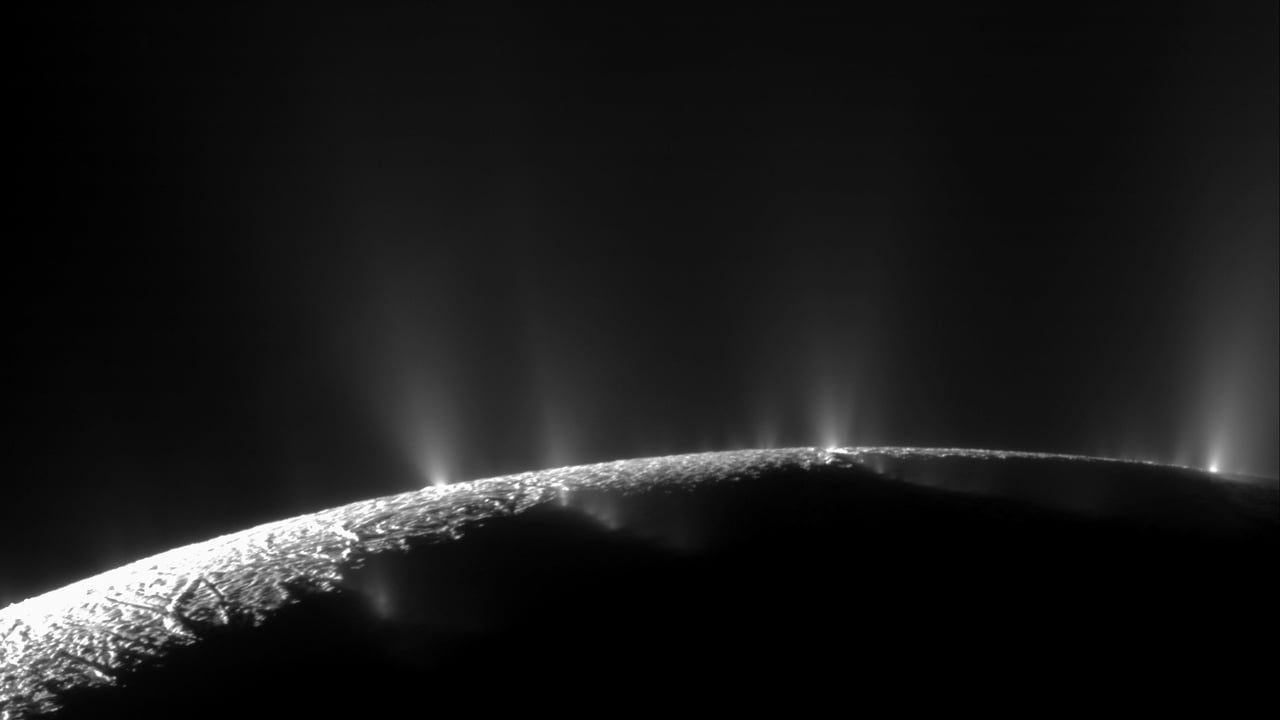
    In its exploration of Saturn, Cassini discovered that the moon Enceladus is home to icy eruptions. Beneath its shell of ice, Enceladus has a global ocean of salty liquid water. The average thickness of the ice is 20 kilometers, putting the ocean seemingly out of reach — except at the moon’s southern pole, where icy plumes of ocean water jet out.

    Here, where the ice is thinnest, the tidal forces Enceladus experiences from Saturn and its fellow moon Dione break through the ice. As the cracks open and close, liquid from the ocean sprays out, freezing into plumes that Cassini measured. Plans are underway for new missions that prioritize further sampling of Enceladus’ ocean. For now, we can only imagine what hides in its interior ocean. (Image credit: NASA/JPL-Caltech/SSI; for more, see M. Manga and M. Rudolph)

  • Featured Video Play Icon

    Paint Ejection

    Shaking paint on a speaker cone and filming it in high speed is an oldie but a goodie. Here, artist Linden Gledhill films paint ejection at 10,000 frames per second, giving us a glorious view of the process. As the paint flies upward, accelerated by the speaker, it stretches into long ligaments. As the ligaments thin, surface tension concentrates the paint into droplets, connected together by thinning strands. When those strands break, they snap back toward the remaining paint, imprinting swirling threads of different colors, thanks to their momentum. Eventually, surface tension wins the tug-of-war and transforms all the paint into droplets. (Video and image credit: L. Gledhill)

  • Stabilizing Paper Airplanes

    Stabilizing Paper Airplanes

    Making a good paper airplane is tough. Drop a simple sheet of paper and it will tumble and flip its way to the floor instead of gliding. The folds of a proper paper airplane add weight in just the right spots to stabilize its flight and let it glide smoothly through the air. To better understand what makes paper fly, researchers looked at how sheets of paper flew when weighted (with metallic tape) in different spots.

    Trajectories of pieces of paper with different weighting.
    Trajectories of pieces of paper with different weighting.

    An unweighted sheet of paper tumbled end-over-end. Shifting the center-of-mass too far forward or backwards also resulted in tumbles and nosedives. But when the weighting placed the center of mass between these two extremes, there was a sweet spot where the paper glided smoothly. In this situation, the aerodynamic forces on the paper could correct for changes in flight angle; if the paper tilted too far upward, the forces pushed it back down — and vice versa. This ability of the thin wing to self-stabilize is different than most large-scale aircraft, which need tails and other structures to provide stability to the main wing. (Image credit: paper airplane – K. Eliason, paper trajectories – H. Li et al.; research credit: H. Li et al.; via Ars Technica; submitted by Kam-Yung Soh)

  • Featured Video Play Icon

    How Spillway Gates Work

    Dams and reservoirs need a way to control their water level, and for many, that’s managed using spillway gates. In this video, Grady from Practical Engineering introduces several types of spillway gates, including their advantages and disadvantages. As always, he’s got neat tabletop demonstrations of each type, and he digs into the practical issues engineers face when building, maintaining, and repairing these critical pieces of infrastructure. (Image and video credit: Practical Engineering)

  • Flamingo Fluid Dynamics

    Flamingo Fluid Dynamics

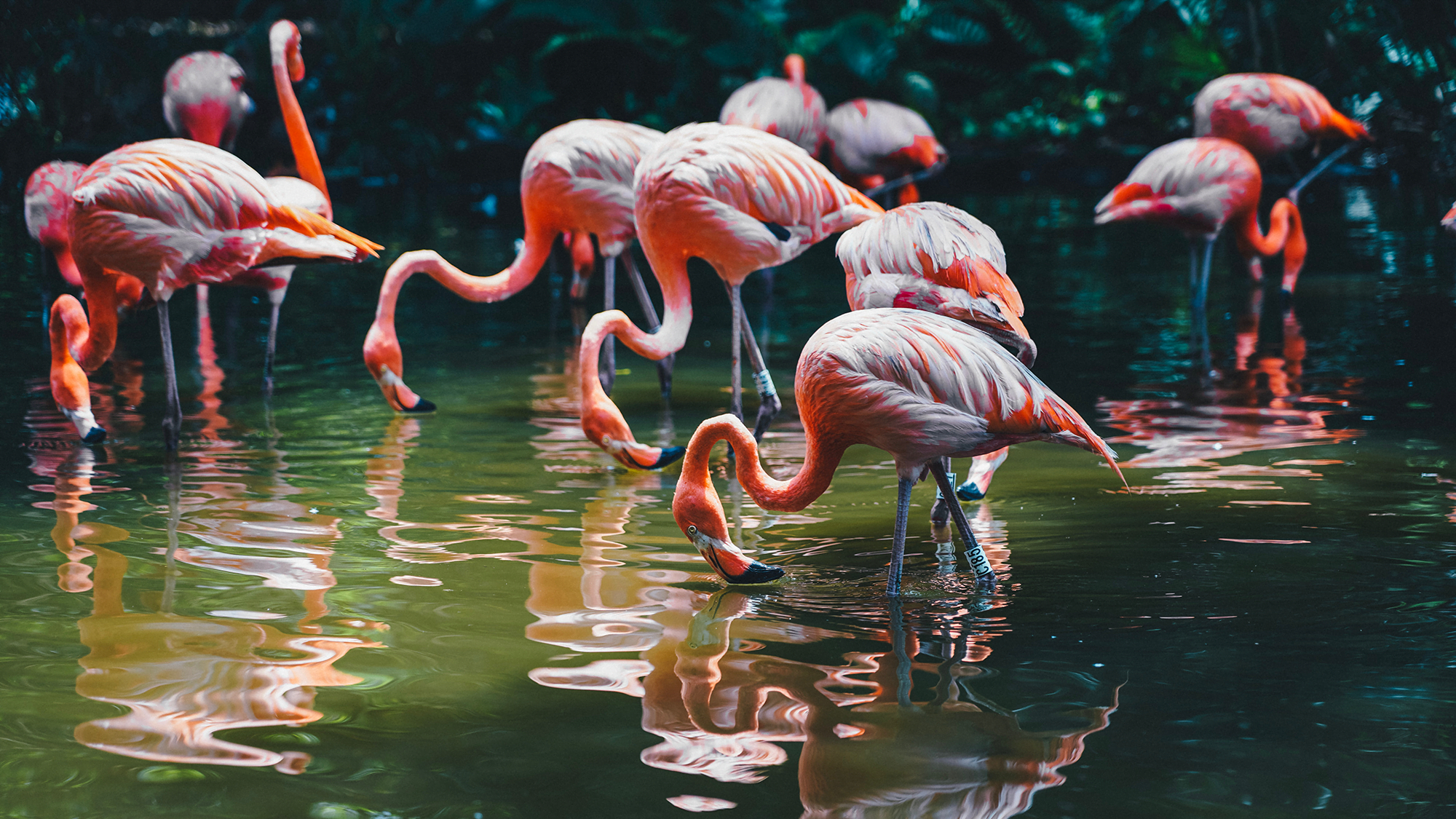
    Flamingos strut and dance and bob, but there’s more to these comical birds than meets the eye. Flamingos can thrive in nutrient-poor environments that other birds eschew, like salt flats and alkaline lakes. Their secret, it turns out, is a mastery of fluid dynamics.

    Researchers studying the behaviors of the Nashville Zoo’s flamingo flock discovered that their seemingly silly behaviors all had fluid dynamical consequences. When the birds stomped and danced in small circles, it stirred up the muck in the water they eat from. With their beaks below the surface, the birds then opened and closed their mouths, darting their tongues in and out; this generated suction to carry food particles toward them. Periodically, they’d bob their heads up, creating a vortex for extra suction. Even their walking, which they did while skimming the water surface with their bills facing backward, generated flows that helped carry food to their mouths. (Image credit: cshong; research credit: V. Ortega-Jiménez et al.; via Science; submitted by Kam-Yung Soh)

  • Featured Video Play Icon

    Collapsing Cavitation Bubbles

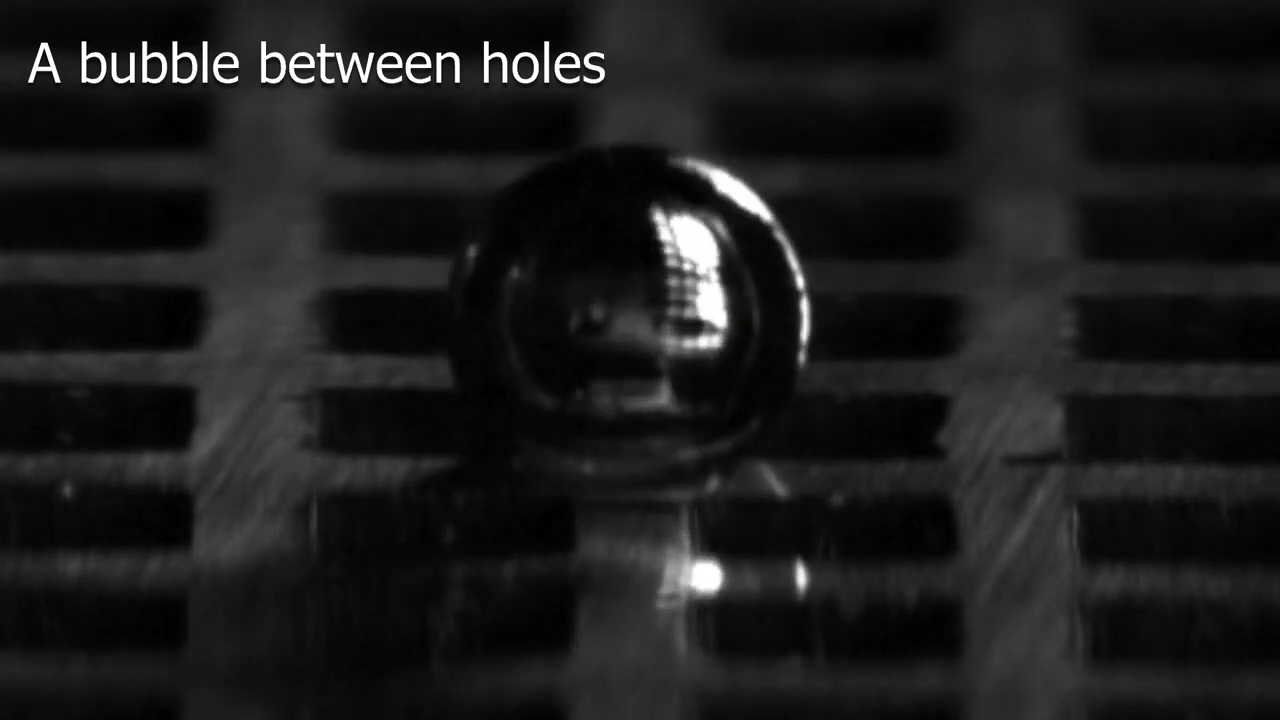
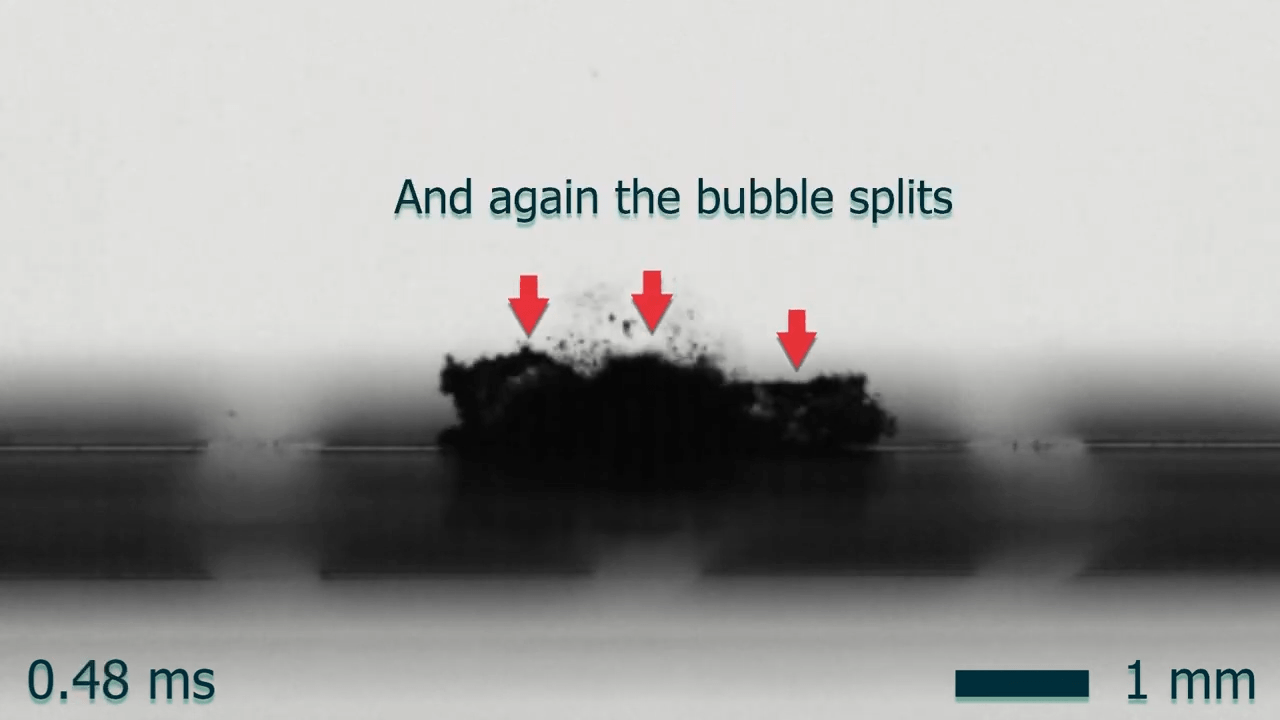
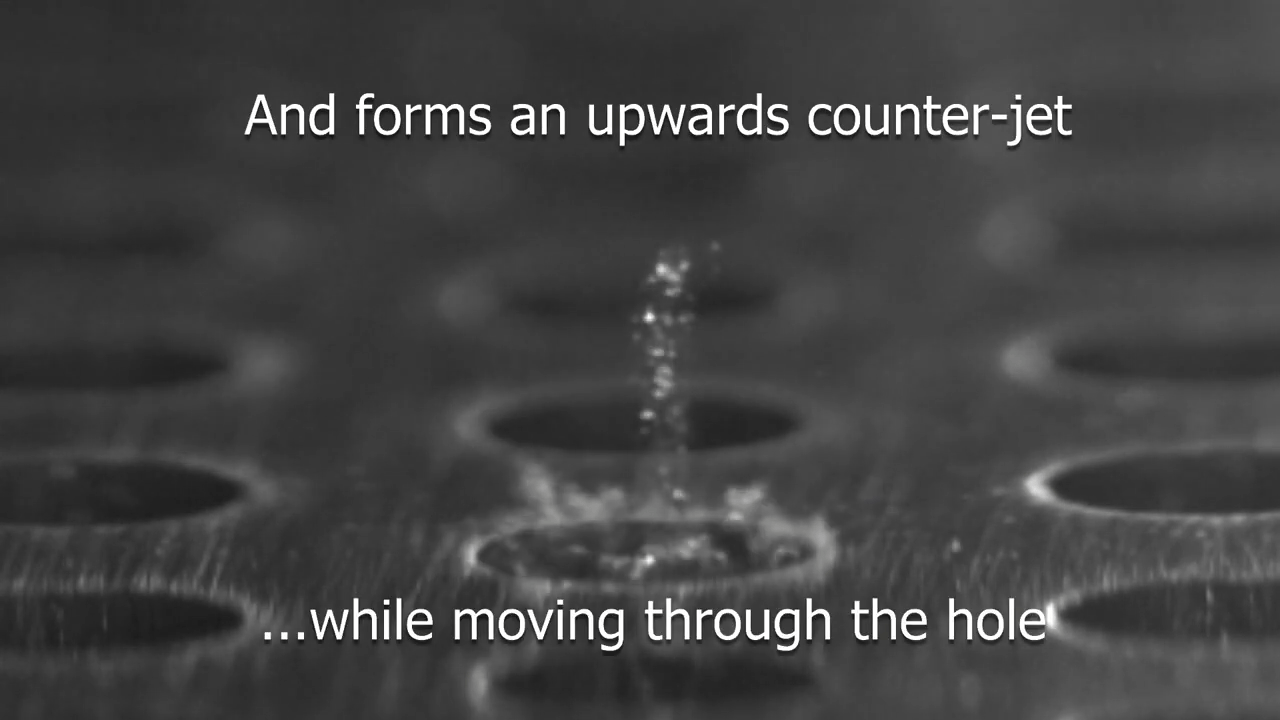
    Cavitation bubbles live short, violent lives. Triggered here with a laser, these bubbles rapidly expand and then collapse, sending out shock waves. In this video, researchers explore how bubbles collapse when they’re near a plate with holes in it. For bubbles sitting between holes, collapse becomes asymmetric, eventually splitting the bubble into two as it falls in on itself. Bubbles centered over a hole perform a disappearing act, sucking themselves down into the hole during collapse. (Image and video credit: E. Andrews et al.)

  • Featured Video Play Icon

    “Turbulence”

    In his recent short film, artist Roman De Giuli explores turbulence using metallic paints and inks in a fishtank. The effects are beautiful: sparkling pigments dispersing in clouds, mushroom- and umbrella-shaped Rayleigh-Taylor instabilities, and lots of swirling eddies. It’s exactly the kind of eyecandy to kick off your weekend with! (Image and video credit: R. De Giuli)

  • Mixing in a Winter Lake

    Mixing in a Winter Lake

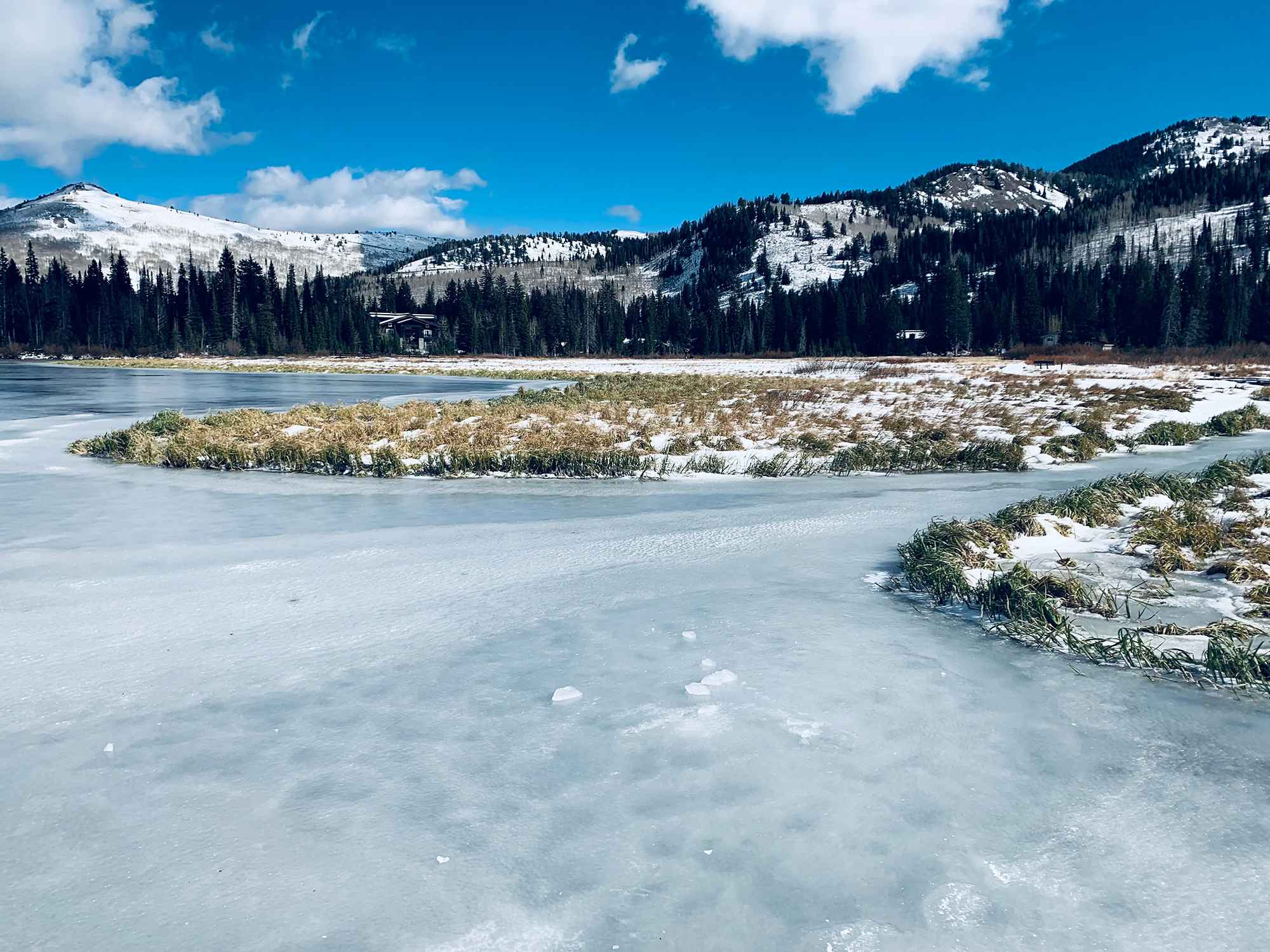
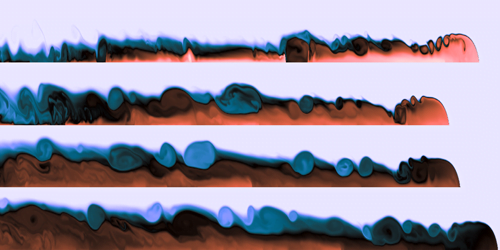
    A frozen winter lake can hide surprisingly complex flows beneath its placid surface. Since water is densest at 4 degrees Celsius — just above the freezing point — mixing two water sources can lead to counterintuitive effects. A cold lake, for example, may contain water below 4 degrees Celsius, while a stream running into the lake is a bit warmer than 4 degrees Celsius. When the two parcels of water meet, they mix to form water at an intermediate temperature. But because of water’s density anomaly, that mixed water can wind up denser than the average of its parents. This is known as cabbeling.

    Mixing patterns within a cold lake with a slightly warmer inflow. Image from A. Grace et al.
    Mixing patterns within a cold lake with a slightly warmer inflow. Image from A. Grace et al.

    As shown in a recent study, this newly mixed water sinks to the bottom of the lake, forming a warm current that heats the lake from below. The researchers were able to model this current and its behavior over a range of conditions. Understanding these winter circulation patterns is key to tracking both nutrient transport and how pollutants spread in the ecosystem. (Image credit: lake – G. Murry, simulation – A. Grace et al.; research credit: A. Grace et al.; via APS Physics)

  • Rippling Airglow

    Rippling Airglow

    Though we rarely notice it, our sky is always aglow. Washed in solar radiation, the oxygen and nitrogen molecules at high altitude get broken apart during the daytime and recombine at night, producing a luminescent glow that forms a uniform backdrop against the sky. In this image, the airglow forms a bull’s-eye-like set of rings, thanks to atmospheric gravity waves left behind by a thunderstorm. (Image credit: J. Dai; via APOD)