Year: 2020

  • Granular Fingers

    Granular Fingers

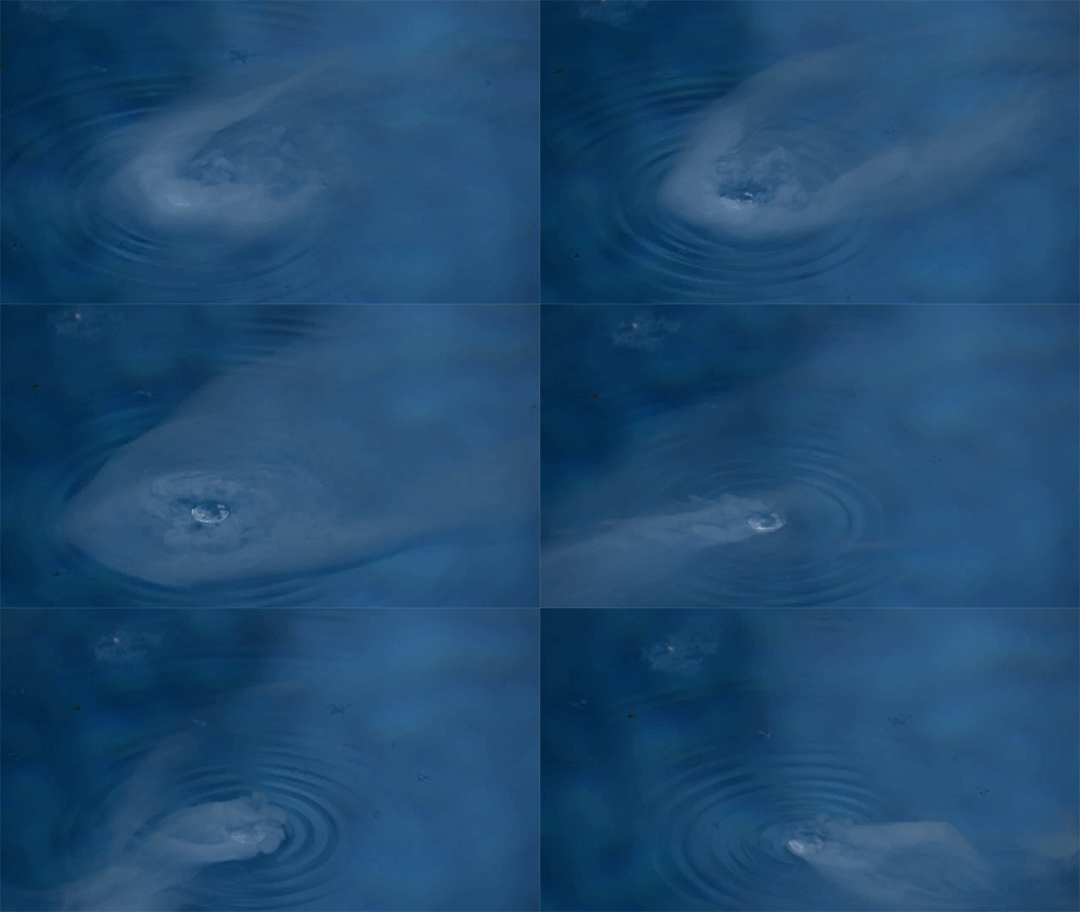
    Finger-like shapes often form on fluids injected between glass plates, but what happens when that injected fluid contains particles? That’s the situation in this recent study, where researchers sandwiched a fluid between two glass plates and then injected a second, similar fluid laced with particles.

    Despite the differences from the traditional Saffman-Taylor set-up, the granular-filled fluid still forms fingers as long as there’s even a slight density difference between the original and injected fluids. It doesn’t even matter which of the two fluids has the greater density! (Image and research credit: A. Kudrolli et al.)

  • Featured Video Play Icon

    Freshwater Mussels

    Freshwater bivalves like these California floater mussels are critical species for the health of our waters. And although we don’t think of mussels as being very mobile, they’re actually quite active. As larvae, the mussels get released from their parent bivalve and attach to the fins or gills of a fish. While they develop, they cling to the fish, hitching a ride until they’re ready to strike out on their own. Considering the fluid forces typical on those areas of a fish, that means the larvae must have some impressive strength!

    Once grown, the mussels anchor themselves using their tongue-like foot and begin their filter-feeding. They draw water in through a cilia-lined inlet, filter out algae, oxygen, and other nutrients, and expel clean water. This constant cycling, though largely invisible to the naked eye, is how bivalves keep their native waterways clean. (Image and video credit: Deep Look)

  • Recreating Infinity

    Recreating Infinity

    In the ocean, tiny organisms can migrate hundreds of meters through the water column. Recreating and tracking those journeys in a lab is quite a challenge, but it’s one the researchers behind the Gravity Machine have conquered. This apparatus uses a wheel to essentially give micro-organisms an infinite water column to traverse while keeping them fixed in the lab microscope’s field of view.

    With the device, researchers can watch organisms switch naturally between rising, sinking, and feeding behaviors as they would in the wild. The group is working to make it so that anyone with a microscope can recreate their set-up for observations. (Image, video, and research credit: D. Krishnamurthy et al.; see also Gravity Machine; submitted by Kam-Yung Soh)

  • Featured Video Play Icon

    Leidenfrost on Water

    When a skillet is hot enough, water droplets will skitter across the surface almost frictionlessly thanks to the Leidenfrost effect. The incredibly high temperature of the surface relative the the liquid’s boiling point causes part of the drop to vaporize, enveloping the remainder of the liquid in a protective vapor cocoon. 

    We see this effect for more than just solid surfaces, though. This video demonstrates how pouring liquid nitrogen on a pool of water creates plenty of Leidenfrost weirdness as well. It looks as though the initial pour freezes some condensation to dust or other particles, which then stream outwards on a cloud of vapor. Larger droplets of liquid nitrogen actually manage to hold together on the pool’s surface. Their vapor keeps them from touching the water, but that flow also jostles them, creating a ring of ripples around the jiggling drop. (Video and image credit: Science Marshal)

    Animation of a droplet of liquid nitrogen skittering on water

  • Green Swirls and Dark Streaks

    Green Swirls and Dark Streaks

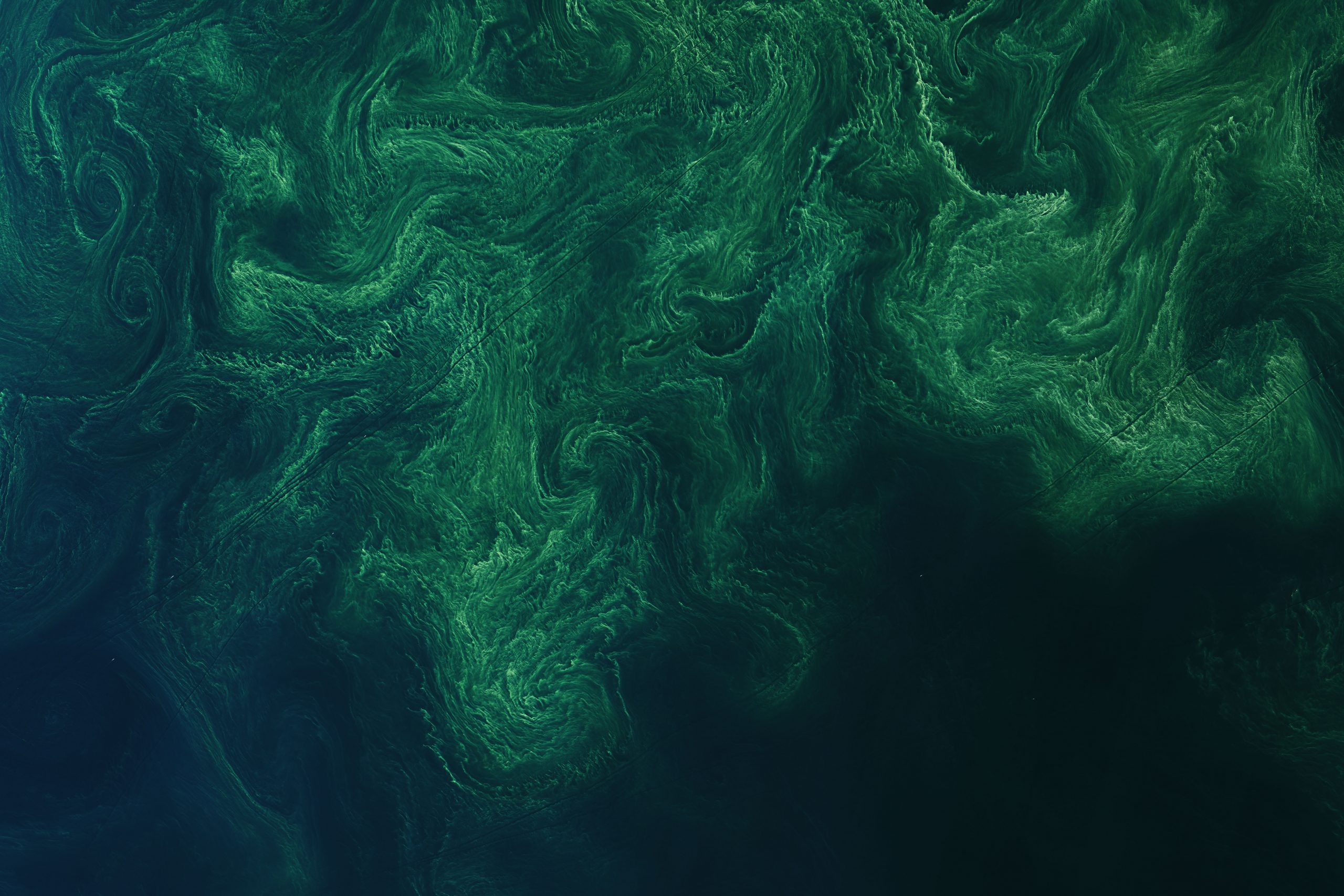
    Green phytoplankton blooms swirl through the currents of the Baltic Sea in this satellite image. Individual phytoplankton are microscopic, which makes them excellent tracer particles in the flow; together, they make the ocean’s motion visible. Look closely and you’ll see dark streaks across the images showing where ships’ wakes are disrupting the bloom. (Image credit: J. Stevens/USGS; via NASA Earth Observatory)

  • Featured Video Play Icon

    Landings Beyond Earth

    With planning for manned and unmanned missions to the Moon, Mars, and many asteroids underway, engineers are using numerical simulations to understand how spacecraft thrusters interact with planetary surfaces. Most practical data for this problem comes from the Apollo program and is of limited use for current missions. Recreating a Martian landing on Earth isn’t straightforward, either, given our higher gravity. Thus, supercomputers and numerical simulation are the best available tool for understanding and predicting how the plumes from a spacecraft’s thrusters will interact with a surface and what kind of blowback the spacecraft will need to withstand. (Video credit: U. Michigan Engineering; research credit: Y. Yao et al.; submission by Jesse C.)

  • Droplets From Speaking

    Droplets From Speaking

    Illnesses like COVID-19 can spread through droplets and aerosols produced by coughing, sneezing, or even speaking. New research looks at how regular speech patterns produce a spray of droplets. Researchers found that pronouncing many consonants causes a sheet of saliva to form between the speaker’s lips. That sheet stretches into filaments that then break into a spray of droplets.

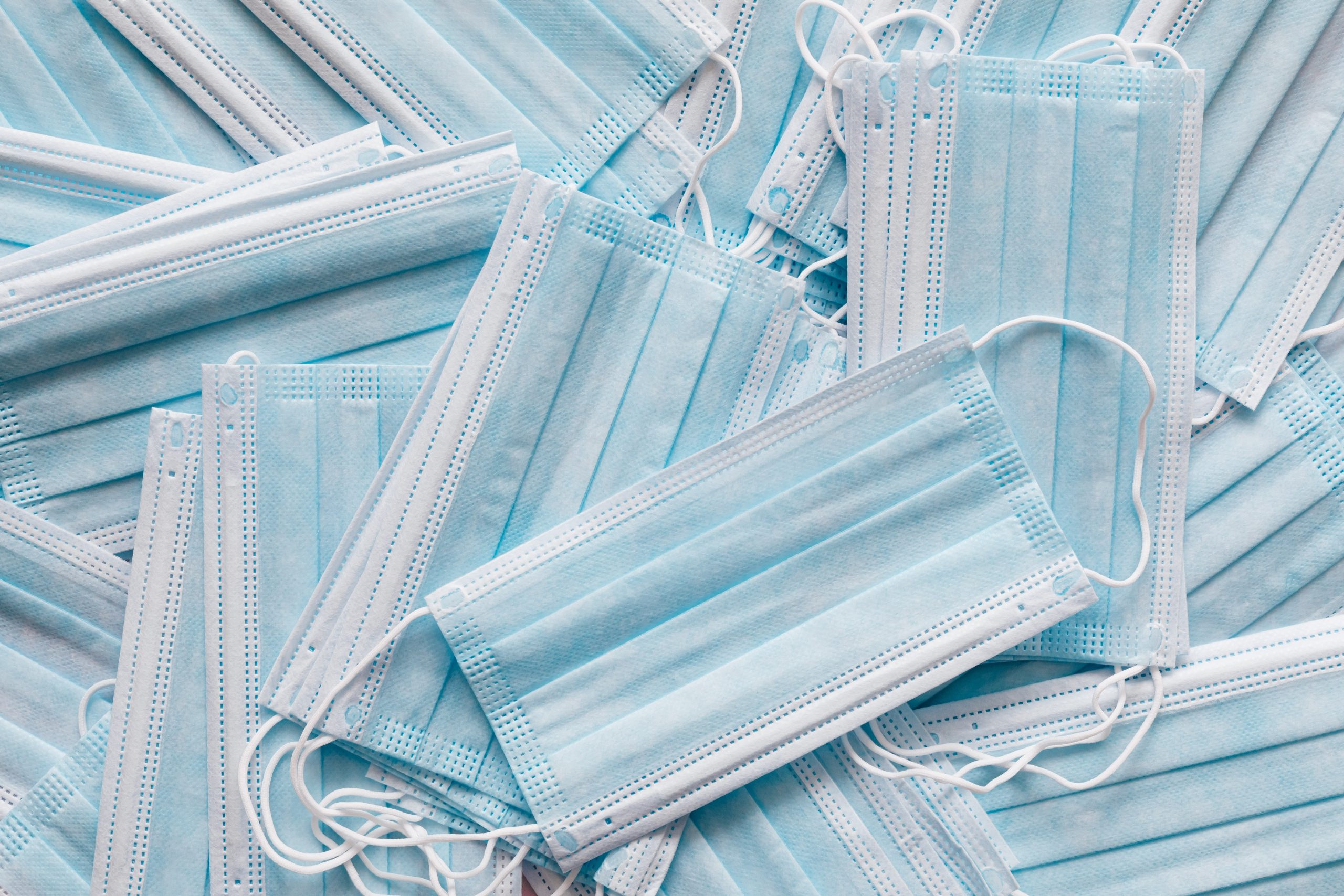
    Strong, plosive consonants like /p/ and /b/ create the most droplets (Images 2 and 3), but even milder consonants like /m/ create some (Image 1). Interestingly, the researchers found that wearing lip balm drastically decreased droplet production by altering the saliva sheet formation. Even so, there’s no substitute for wearing a properly fitted mask! (Image credits: masks – K. Grabowska, droplets – M. Abkarian and H. Stone; research credit: M. Abkarian and H. Stone; via APS Physics)

  • Chaos in the Lagoon Nebula

    Chaos in the Lagoon Nebula

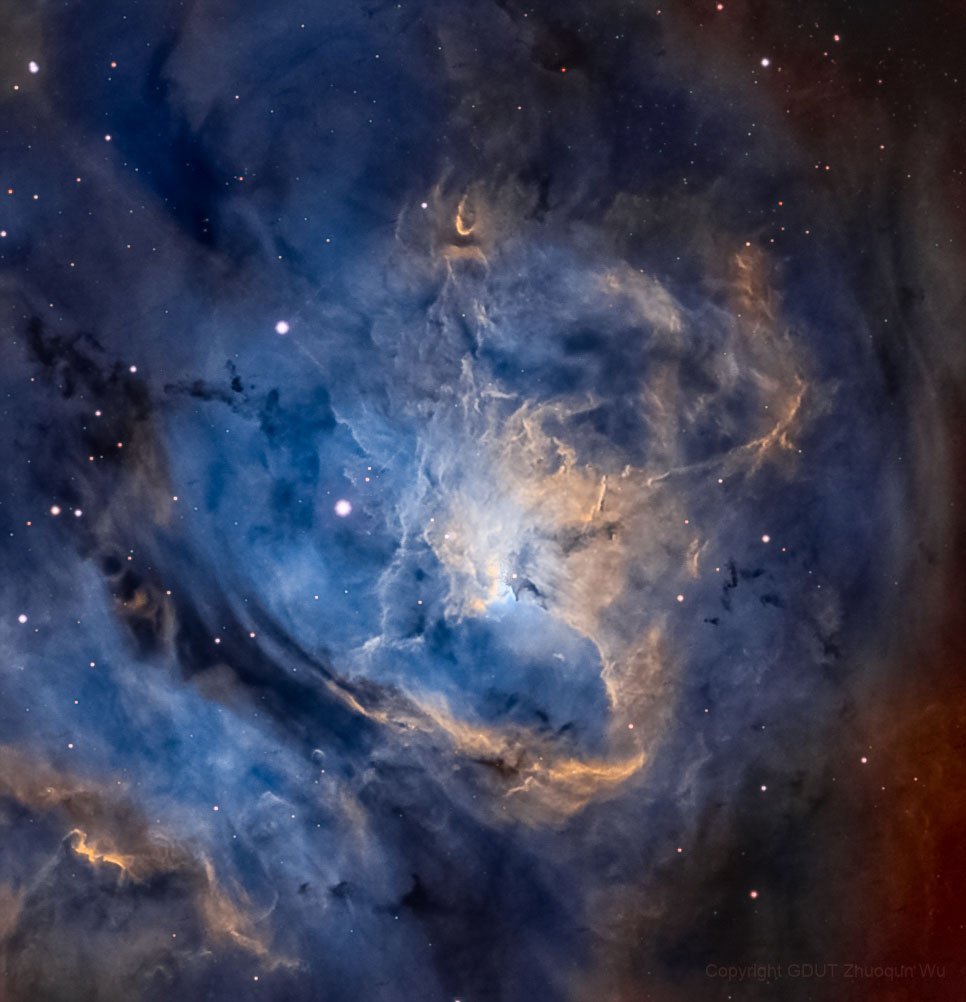
    Even on the scale of light-years, fluid dynamics plays a role in our universe. This photograph shows the Lagoon Nebula, where stars, gas, and dust are battling for supremacy. Jets from young stars push the dust left from supernova remnants into a chaotic patterns, and the high-energy particles streaming from the youthful stars illuminate interstellar gases, creating the nebula’s distinctive glow. This section of the nebula is about 50 light-years across, so every picture we capture is only the tiniest snapshot of the true scale of its turbulence. (Image credit: Z. Wu; via APOD)

  • Flying Through Waterfalls

    Flying Through Waterfalls

    Swifts and starlings often make their nests behind waterfalls. To explore how these birds traverse their watery curtain, researchers observed hummingbirds, a smaller sister species, flying through an artificial waterfall. They found that the birds tended to part the water with one wing while continuing to use the other to produce thrust. This behavior helped them cross the barrier smoothly and easily.

    In contrast, smaller and slower flyers, like the insect species the researchers tested, were typically unable to cross the waterfall. Instead, they got carried away by the flow or managed to pass through only to crash. The scientists suggest that protection from insects may be one reason birds choose to nest behind waterfalls. (Image and research credit: V. Ortega-Jimenez et al.; via Science; submitted by Kam-Yung Soh)

  • Featured Video Play Icon

    “Colors”

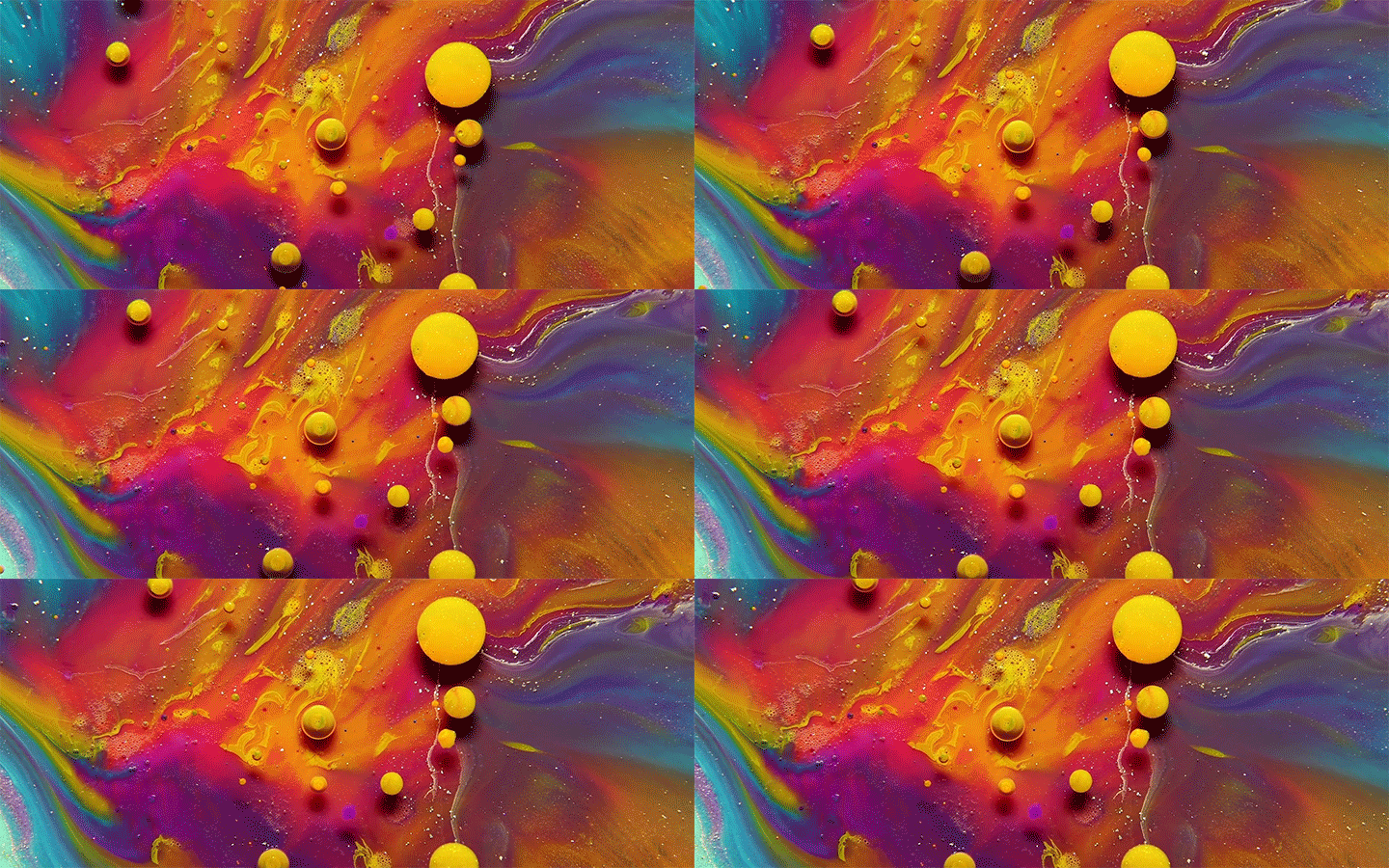
    Paint, soap, bleach, oil, and oat milk combine to create the gorgeous colorscapes of Thomas Blanchard’s short film “Colors”. Watch as droplets burst and waves of color flow past. It’s a lovely break from whatever you’re dealing with at the moment, and at less than 3 minutes long, you can spare the time! (Image and video credit: T. Blanchard)