Year: 2020

  • Featured Video Play Icon

    Tektites and Spinning Fluids

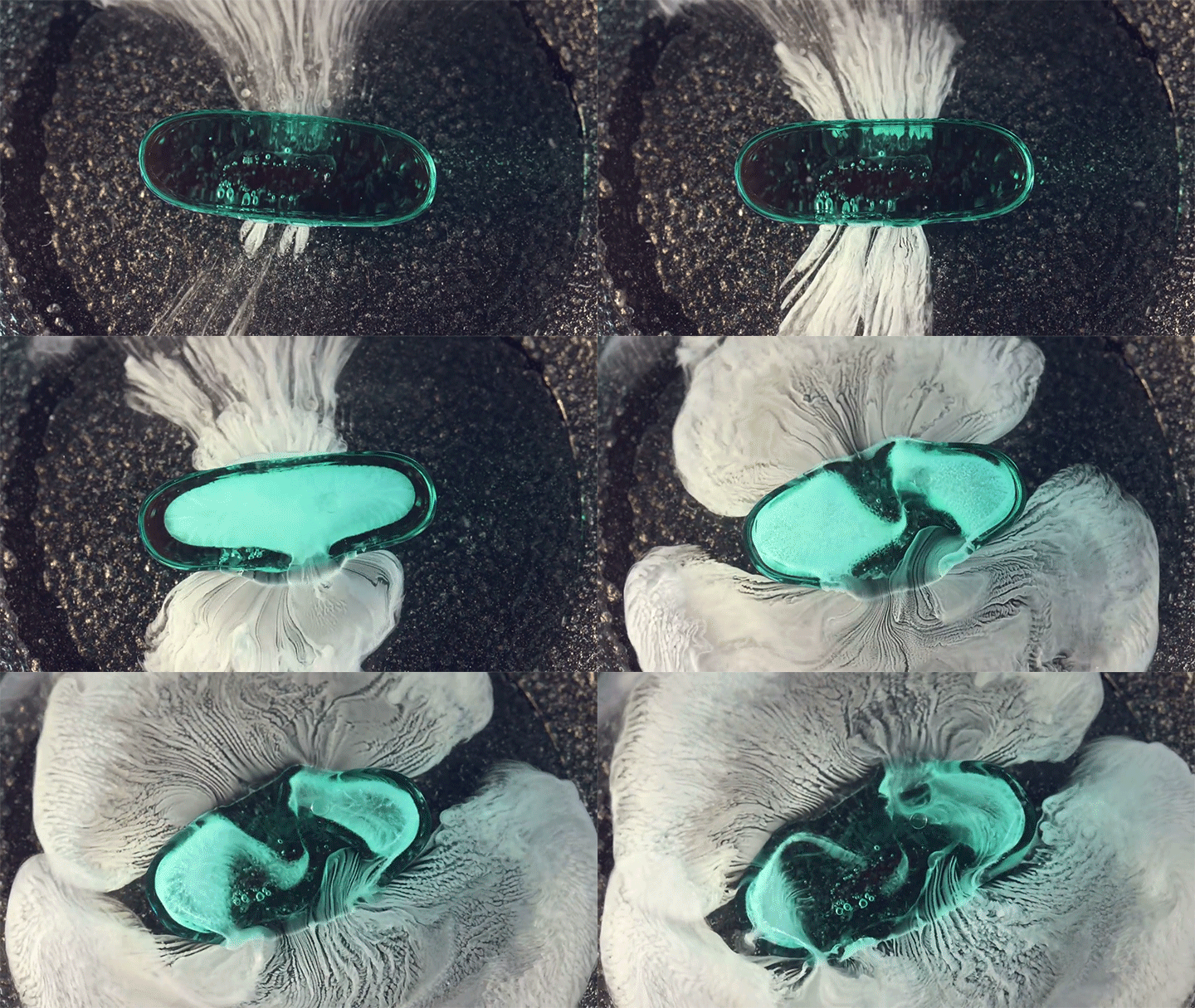
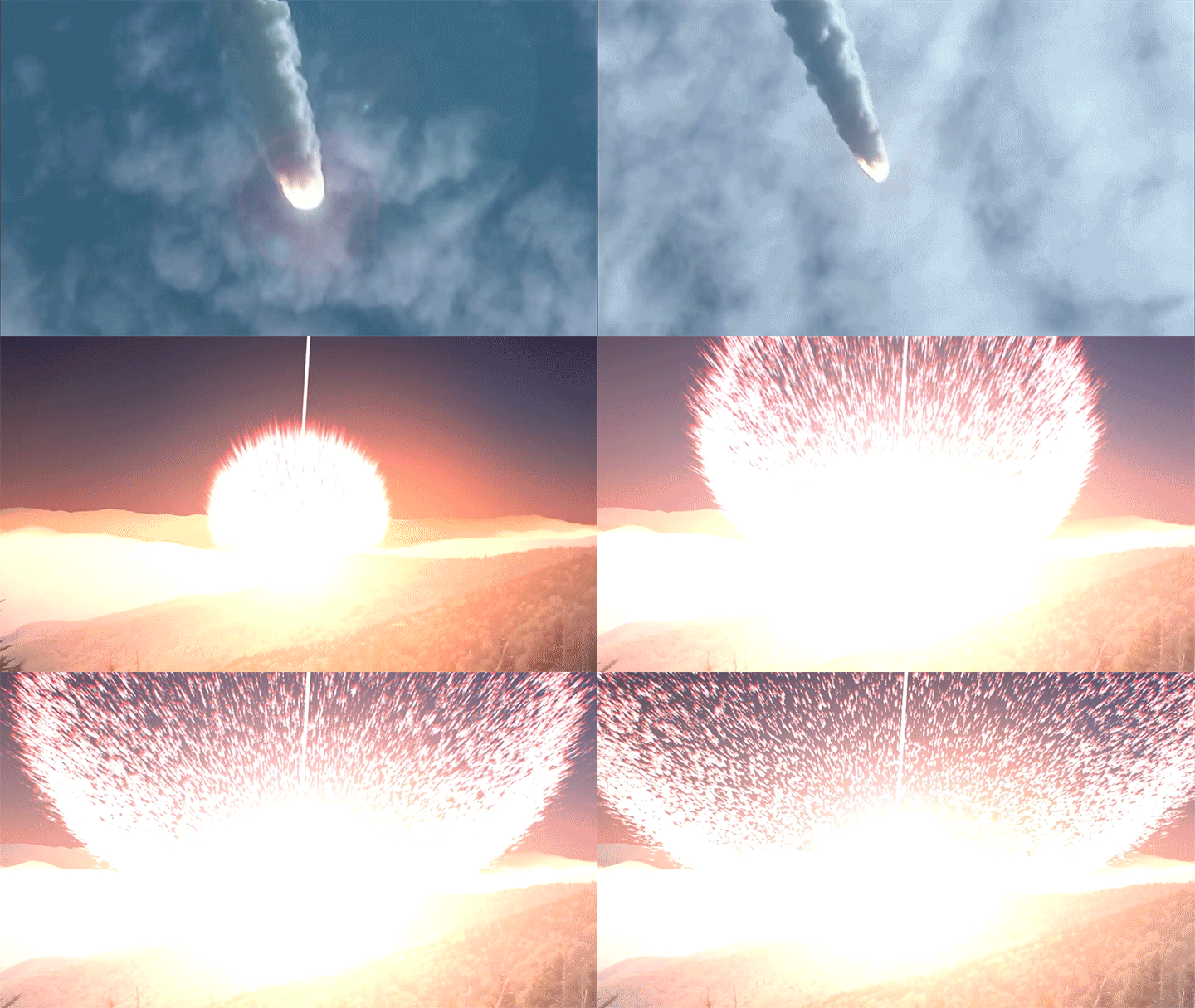
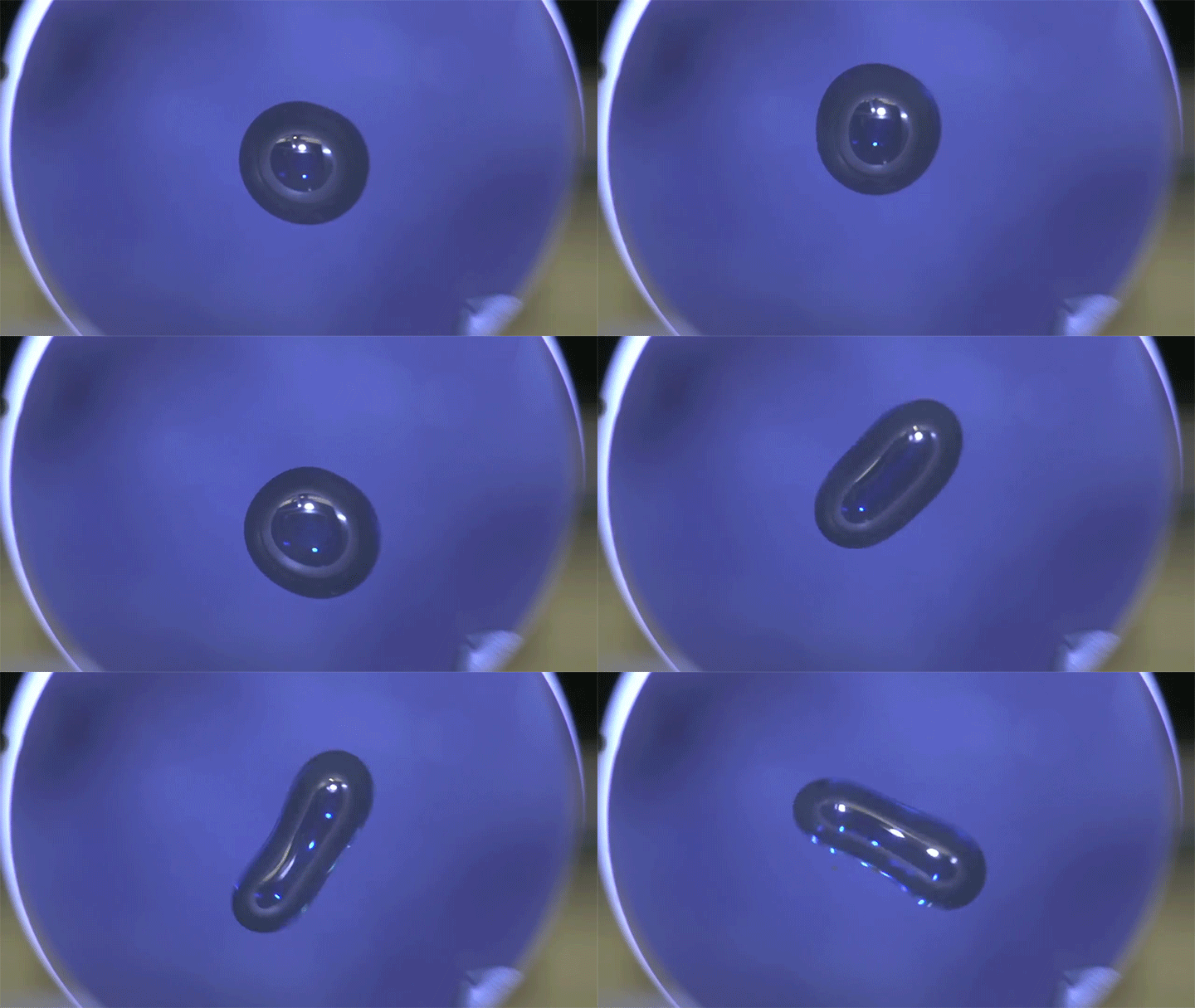
    Tektites, like obsidian, are a naturally-occurring glass formed from molten rock. But tektites are often dumbbell or figure-8-shaped because they form in midair from spinning bits of fluid sent skyward after the crash of a meteor. In this video, Steve Mould takes us through the process and discusses some recent work by scientists who’ve created artificial tektites in the lab by levitating and spinning candle wax and other fluids. (Video and image credit: S. Mould; research credit: K. Baldwin et al.)

  • Featured Video Play Icon

    “Focus, Vol. 1”

    In “Focus, Vol. 1,” photographer Roman De Giuli follows colorful droplets as they roll along, chase one another, and burst. You may notice that many of the drops seem attracted to one another. This is actually a surface tension effect caused by the dimples the droplets create on the surface; it’s the same effect responsible for Cheerios clumping together in your milk. Interestingly, though, the oil coating the drops doesn’t seem to drain quickly enough for the clumping drops to actually coalesce. (Image and video credit: R. De Giuli)

  • Featured Video Play Icon

    Why Animals Shake Themselves Dry

    For many animals, letting themselves air-dry is not an option. They would become hypothermic before their wet fur dried completely. This is why dogs and many other furry mammals shake themselves dry. It’s a remarkably efficient process, too, removing the majority of water from fur in a matter of seconds.

    The key is to shake at a frequency such that the centrifugal force of the shake overcomes surface tension’s ability to keep the water attached to fur. The looseness of a dog’s skin (compared to humans!) is a bonus for them; the extra translation as they shake increases the centrifugal force, allowing them to shed more water more quickly. (Image and video credit: BBC Earth; research credit: A. Dickerson et al.)

  • Bouncing Off Hydrophilic Surfaces

    Bouncing Off Hydrophilic Surfaces

    Droplets typically bounce off hydrophobic surfaces due to air trapped beneath the liquid that prevents contact between the drop and surface. But even extremely smooth, hydrophilic surfaces can elicit a bounce under the right circumstances, as shown in a new study.

    The key is that the droplet must bounce at exactly the right speed. If the bounce has too much momentum, it will squeeze the nanometer-sized air cushion too thin, allowing contact. Too slow and the Van der Waals attraction between the droplet molecules and wall molecules will have time to act. But between those lies a sweet spot where the dimple and cushion of air beneath the drop keep it from impacting. (Image credit: droplets – klickblick, drop bounce – J. Kolinski, bounce sim – J. Sprittles et al.; research credit: M. Chubynsky et al.; submitted by James S.)

  • Featured Video Play Icon

    Why Compressed Air Cans Get Cold

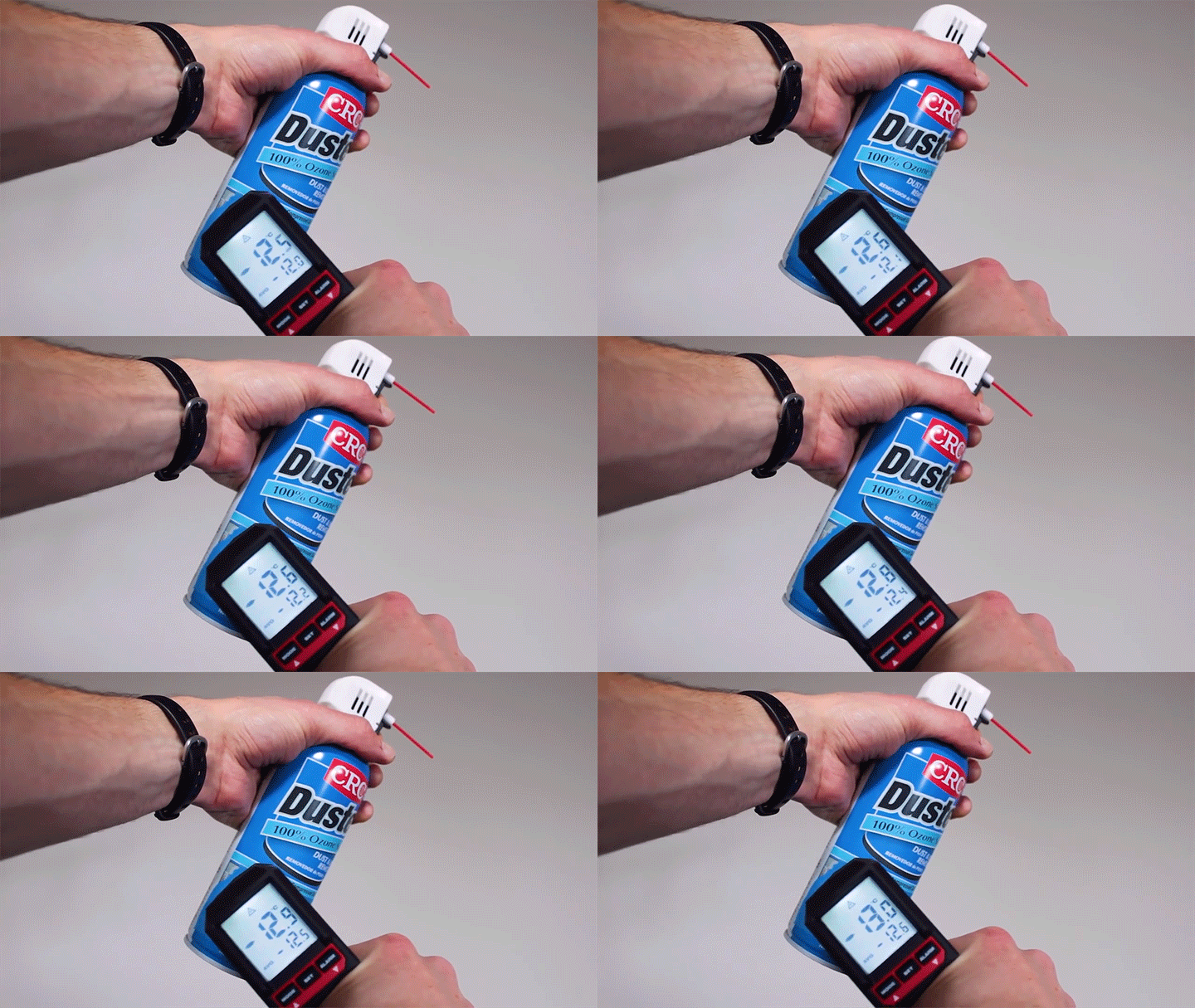
    Anyone who’s used a can of compressed air to clean their computer or keyboard knows that the can quickly gets quite cold to the touch. This Minute Physics video explores some of the thermodynamics behind that process. Henry first identifies a few explanations that don’t quite line up with observations, before focusing in on the contents of the can: 1,1-difluoroethane. Inside the sealed can, this chemical sits in an equilibrium of part-liquid, part-vapor. But when pressure is released by opening the nozzle, the liquid boils, generating extra vapor and cooling whatever remains in the reservoir.

    Although it’s not a good explanation for the compressed air can’s cooling, the cooling of an expanding gas is very important in applications like supersonic wind tunnels. That first equation you see at 0:36 in the video (for isentropic adiabatic expansion) is key to what happens in a nozzle with supersonic flow. As the flow accelerates to supersonic speeds, its temperature drops dramatically. When I was in graduate school, we actually had to preheat our hypersonic wind tunnel (in pretty much the same way you would preheat your oven at home) before we ran at Mach 6 because otherwise the temperature inside the test section would drop so low that the oxygen would liquefy out of the air! (Image and video credit: Minute Physics)

  • Featured Video Play Icon

    The Birth of a Liquor

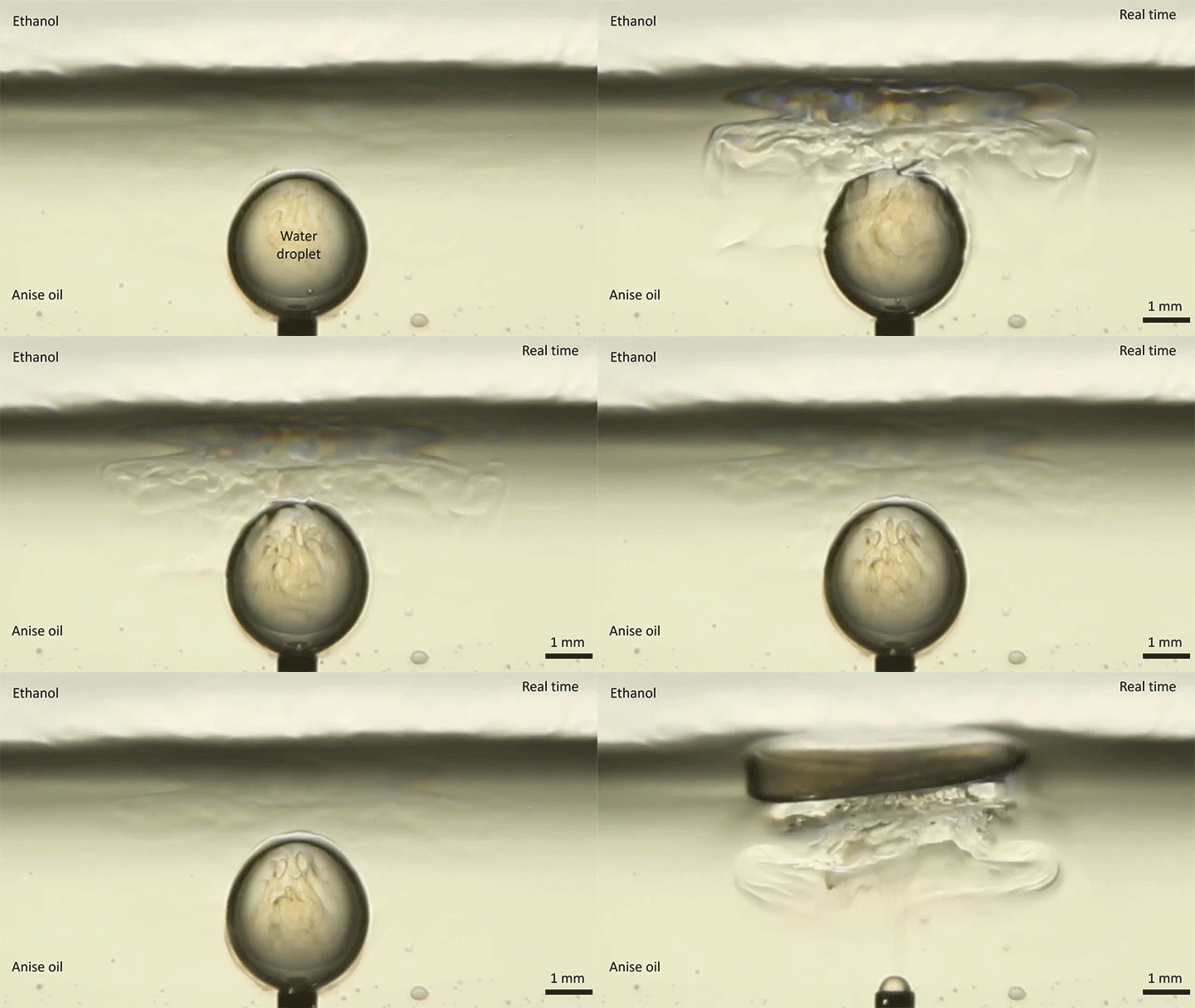
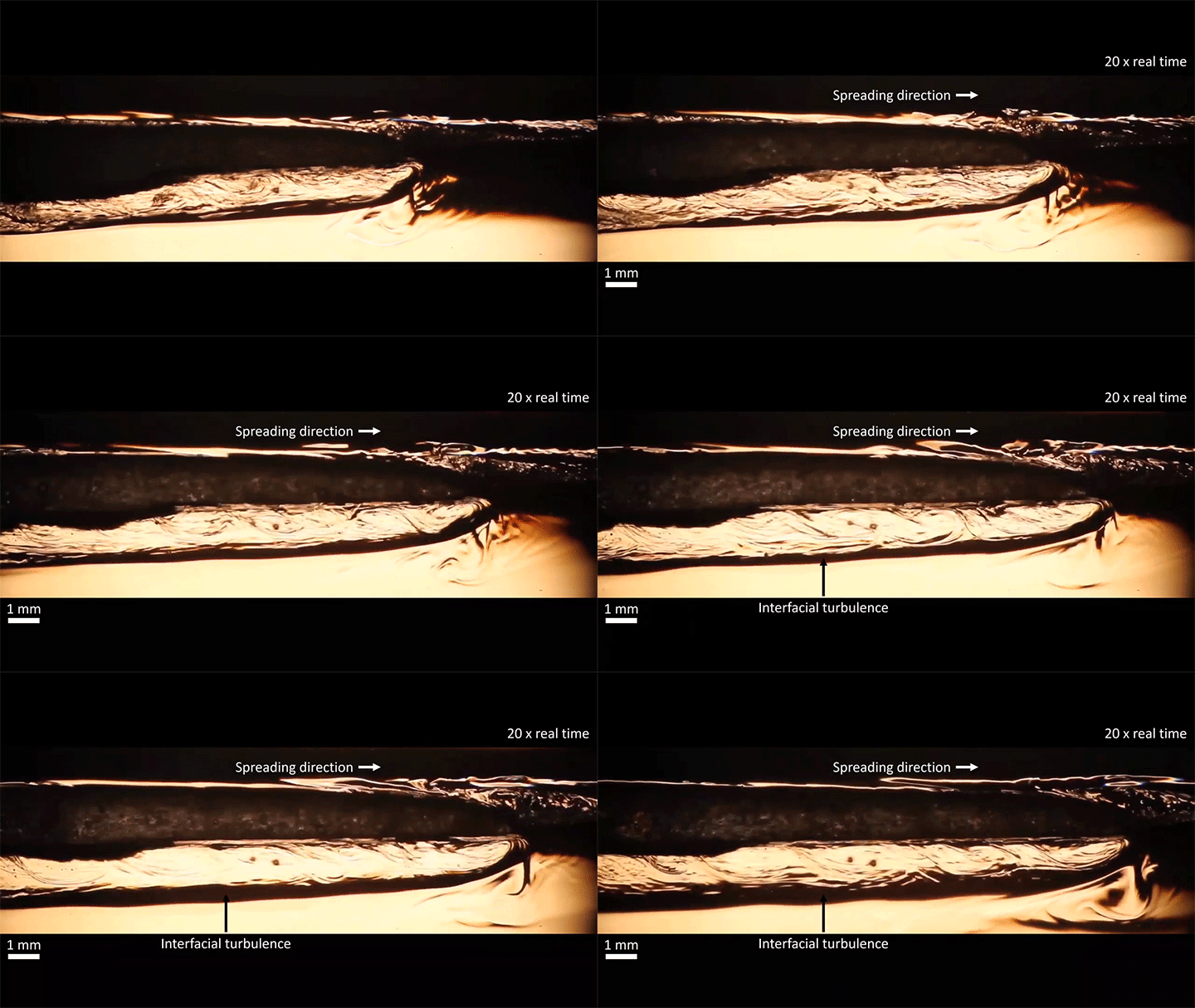
    A water droplet immersed in a mixture of anise oil and ethanol displays some pretty complicated dynamics. Its behavior is driven, in part, by the variable miscibility of the three liquids. Water and ethanol are fully miscible, anise oil and ethanol are only partially miscible, and anise oil and water are completely immiscible. These varying levels of miscibility set up a lot of variations in surface tension along and around the droplet, which drives its stretching and eventual jump.

    Once detached, the droplet takes on a flattened, lens-like shape that continues to spread. That spreading is driven by the mixing of ethanol and water, which generates heat and, thus, convection around the drop. This not only spreads the droplet, it causes turbulent behavior along the drop’s interface. (Image and video credit: S. Yamanidouzisorkhabi et al.)

  • Eroding Ice

    Eroding Ice

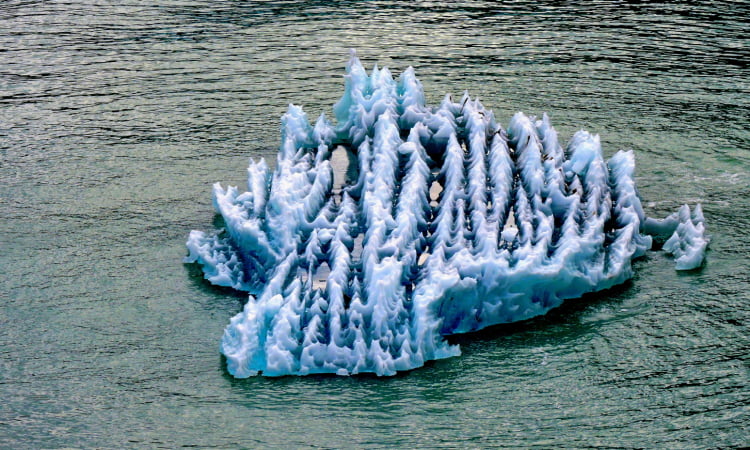
    When glaciers form, they do so in layers, with clear blue ice sandwiched between sediment and air-bubble-filled white ice. Because each of these layers absorbs sunlight differently, they don’t melt evenly. The spikes and ridges seen in this ice formed because of this differential melting between layers. The blue ice is particularly good at absorbing visible wavelengths of light, and so erodes more easily than the other layers.

    Although the results look somewhat similar to the penitente ice seen at high altitudes, the formation mechanisms are a little different. Penitentes rely heavily on sublimation — where their ice and snow change directly into a gas — rather than the melting seen here. That said, both eroded forms depend strongly on how different layers within them absorb and scatter sunlight. (Image credit: J. Van Gundy; via EPOD; submitted by Kam-Yung Soh)

  • Featured Video Play Icon

    Unsinkable Hydrophobic Metal

    Although we typically describe hydrophobic surfaces as “water-repelling,” we could just as easily focus on the fact that they’re “air-attracting.” This video from The Action Lab demonstrates that property nicely with a hydrophobic-coated “boat” that’s effectively unsinkable, thanks to its ability to trap air pockets.

    Even punching holes through the boat doesn’t sink it because its surface is so chemically and physically attractive to air that the bubble won’t budge. In fact, as the video demonstrates, the only effective way to remove the hydrophobicity is to remove the air bubble by using a vacuum chamber. But even then, the effect only lasts until air is reintroduced to the boat. (Image and video credit: The Action Lab)

    P.S. – No, this is not an April Fool’s joke, just actual science! – Nicole

  • Replacing Injections With Pills

    Replacing Injections With Pills

    In medicine, many medications contain molecules too large to be easily absorbed through the intestinal wall, so these so-called biologics — like the insulin administered to diabetics — are injected into the body. Researchers are studying ways that such injections could eventually be replaced with pills, but there are plenty of challenges involved.

    Some substances, known as transient permeability enhancers, allow the intestines to absorb larger molecules, but they work for only tens of minutes, which means researchers must understand how and when to administer them relative to the medication they help patients absorb. To do so, researchers are building computational fluid dynamics models of the human digestive system so that they can better understand how and when different kinds of pills break down in the body. (Image credit: Macro Room, source; via CU Engineering; submitted by Jenny B.)

  • Featured Video Play Icon

    “Dendrite Fractals”

    In this short film from the Chemical Bouillon team, dark ink drops spread in dendritic fractal patterns after being deposited on an unknown transparent liquid. Although the patterns look similar to those of the Saffman-Taylor instability, I suspect what we see here is actually driven by surface tension and not viscosity.

    The authors describe the ink they used as a “special old” “tree ink,” which — putting on my fountain pen aficionado hat — probably means some variety of iron gall ink. These inks draw on chemicals extracted from trees and other plants to create a permanent, waterproof ink. They tend to be highly acidic, which could play a role in the pattern formation seen here. (Video and image credit: Chemical Bouillon)