Year: 2020

  • Steering as a Boxfish

    Steering as a Boxfish

    Coral reefs are full of odd-looking denizens, but one of the funniest-looking ones must be the boxfish. This family of fish lives up to its name; their bodies feature an angular, bony carapace that helps protect them. But you don’t have to be a fluid dynamicist to wonder how in the world they swim with that kind of shape.

    There’s actually disagreement in scientific circles as to whether the basic shape of a boxfish is stabilizing or destabilizing, in other words, whether the fish’s body shape will try to automatically turn or roll when flow moves past. A new study focuses instead on the role the fish’s tail fin serves. Through experiments (on a fish model) and simulations, the researchers showed that boxfish rely on their tail fins both as rudders and course-stabilizers.

    Living around coral reefs means that boxfish need to be highly maneuverable, and this research indicates that the fish’s body shape, combined with the stabilizing power of its tail, are key to its ability to quickly and easily turn in any direction. (Image credits: boxfish – D. Seddon, simulation – P. Boute et al.; research credit: P. Boute et al.; via NYTimes; submitted by Kam-Yung Soh)

  • Featured Video Play Icon

    Mixing Leidenfrost Drops

    When placed on a very hot, patterned surface, droplets will self-propel on a layer of their own vapor. Here, researchers use this to drive droplets to coalesce so that they can observe how well they mix. After their head-on collision, the merged droplets have two major forces fighting in them: surface tension, which tries to minimize the overall surface area; and gravity, which tries to flatten the large droplet. Together, these forces drive the large oscillations we see in the merged drop, and those oscillations help mix the liquid from the two original drops together. (Image, video, and research credit: Y. Chiu and C. Sun)

  • Featured Video Play Icon

    Choosing Swimming Over Flight

    When studying modern birds it quickly becomes apparent that they can either be good at swimming or at flying, but not at both. The characteristics that make wings good for flying are diametrically opposed to those that make for a good swimmer. So most species have chosen to invest in one strategy or the other. Penguin ancestors chose the swimming route tens of millions of years ago, in the aftermath of the extinction event that emptied our oceans of the large reptilian predators that had ruled them during the age of the dinosaurs. This video explores what we know about the fossil record of these birds, and it’s pretty incredible. Did you know there used to be 2-meter-tall penguins? (Image and video credit: PBS Eons)

  • Breaking Up Granular Rafts

    Breaking Up Granular Rafts

    Particles at a fluid interface will often gather into a collection known as a granular raft. The geometry of the interface where it meets individual particles, combined with the surface tension, creates the capillary forces that attract these particles to one another. Colloquially, this is called the Cheerio’s effect; it’s the same physics that draws those cereal chunks together in your bowl.

    Once together, these granular rafts can be surprisingly difficult to break up. That’s the focus of a new study on erosion in granular rafts. As seen in the top image, the raft has to be moving quite quickly before individual beads get pulled away. The experimental set-up here is pretty neat, and it’s not apparent from the video, so I’ll take a moment to explain it. The particles you see are gathered at an interface between water and oil. To generate the movement we see, researchers take the metal cylinder seen at the left of the image and pull it downward. That curves the oil-water interface, effectively creating a hill for the raft to accelerate down.

    To focus in on the forces necessary to separate individual particles, the researchers also looked at a pair of particles (bottom image). With this set-up, they could more easily track the geometry of the contact line where the oil, water, and bead meet. What they found is that the attractive forces generated between the beads are two orders of magnitude larger than predicted by classical theory. To correctly capture the effect, they needed a far more precise description of the contact line geometry around a sphere than is typically used. (Image and research credit: A. Lagarde and S. Protière)

  • Featured Video Play Icon

    Shock Waves Drive Nova Brightening

    New observations of nova V906 Carinae have provided some of the first direct evidence that the observed brightening of these stellar objects is driven by shock waves. Novae form when hydrogen from a companion star settles onto a white dwarf. Once enough material accumulates, the white dwarf blows out the excess hydrogen in a donut-shaped shell moving about the speed of a typical solar wind.

    Next, another outflow — likely triggered by residual nuclear reactions on the dwarf’s surface — slams into the denser shell at about twice the speed. This collision triggers shock waves that emit light in the gamma and visible wavelengths. Weeks later, a third, even faster outflow expanded into the cloud, generating more shock waves and measurable flares. (Video credit: NASA Goddard; research credit: E. Aydi et al.)

  • Cavitation Through Acceleration

    Cavitation Through Acceleration

    Cavitation refers to the formation of destructive bubbles of vapor within a liquid. Traditionally, we think of it as occurring when the velocity in a flow becomes high enough for the pressure to drop below the local vapor pressure, causing bubbles to form. This is what we see around turbine blades and ship propellers.

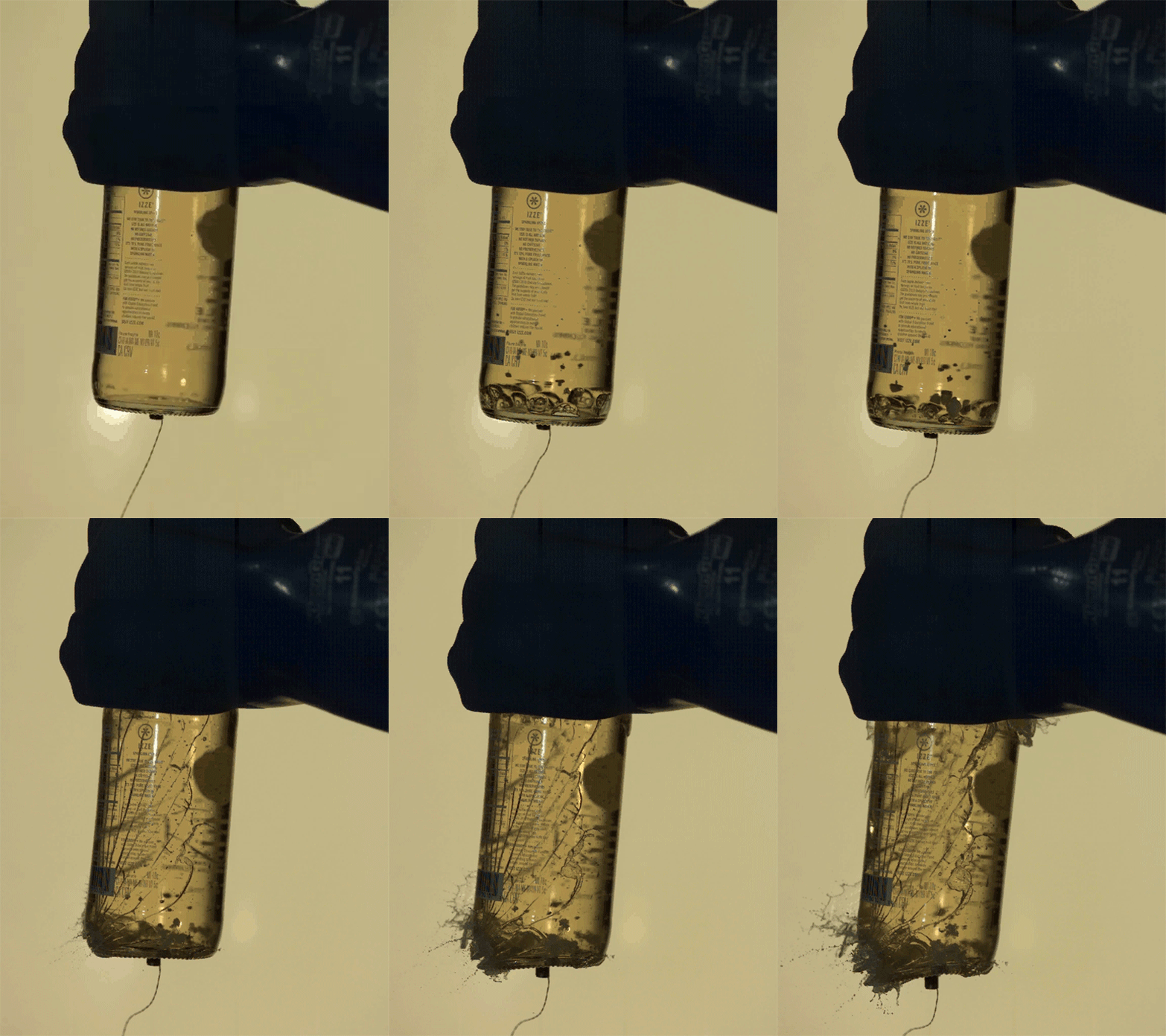
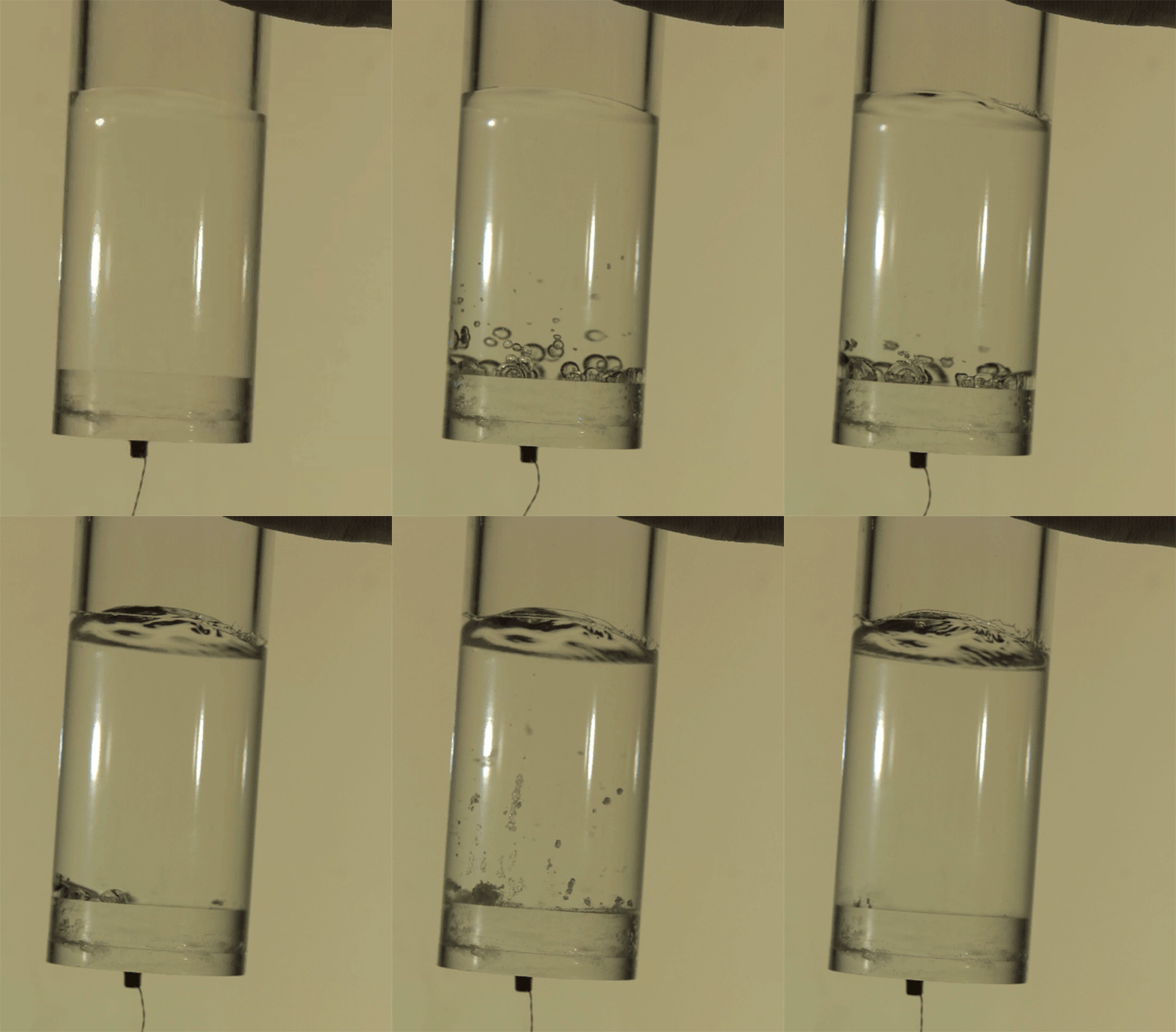
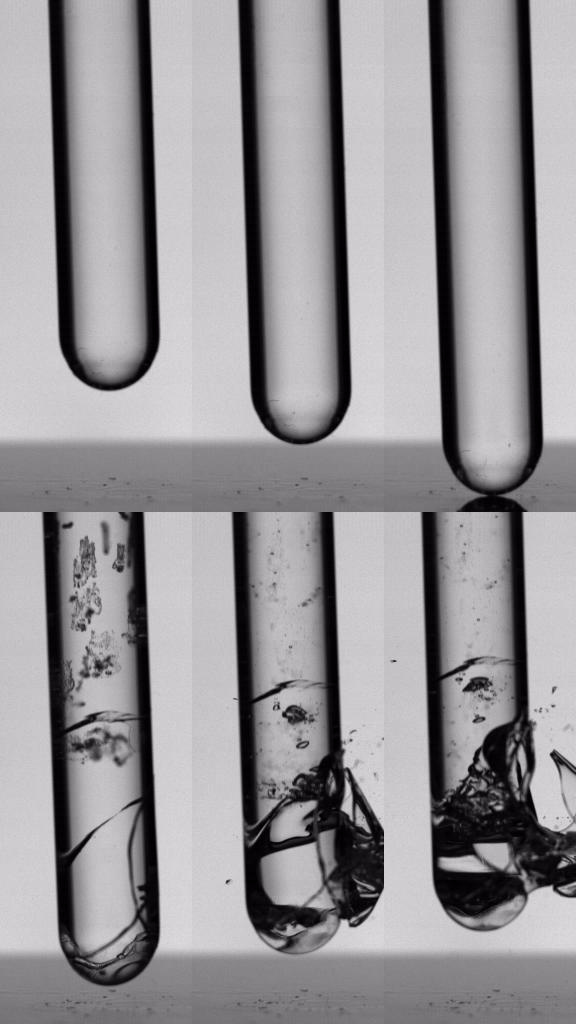
    But cavitation also occurs in situations where the overall velocity is relatively low, provided there’s a sudden acceleration. That’s the situation we see above. The impact — either of a mallet off-screen or of the tube striking the floor — causes the liquid inside suddenly accelerate upward. Notice in the second image how the liquid interface moves upward as the first bubbles form.

    Each of these cavitation bubbles has such a low pressure that they’re basically a vacuum, and their collapse can cause shock waves that reverberate through the container, causing it to break. Check out that test tube in the last image. Notice that there’s no sign of cracking when the test tube hits the floor; in fact, the researchers demonstrate in their paper that an empty test tube dropped from the same height doesn’t break. Fractures only form after the cavitation bubbles do. (Image and research credit: Z. Pan et al.; submitted by A.J.F.)

  • Featured Video Play Icon

    ‘Aila’Au: Forest Eater

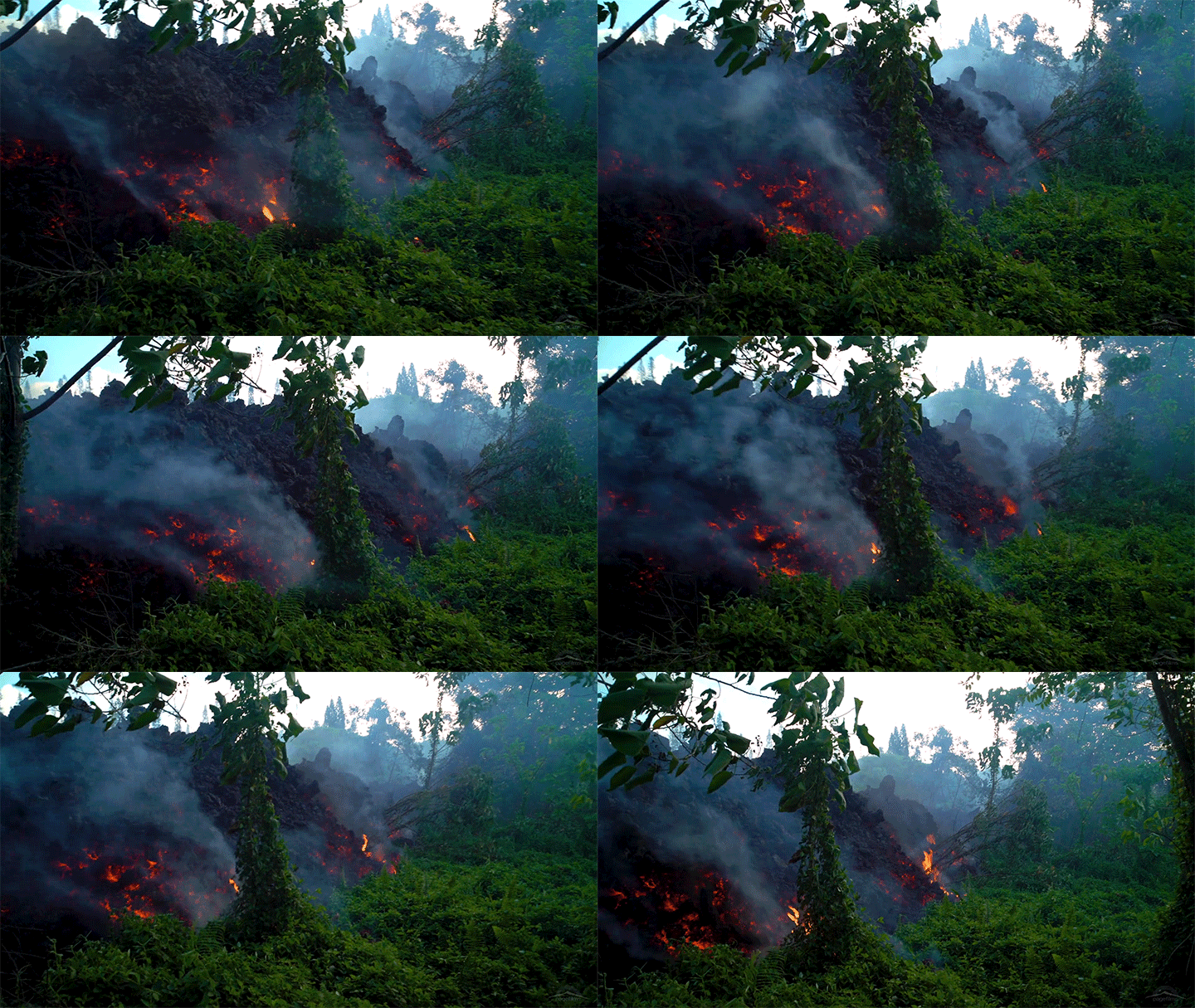
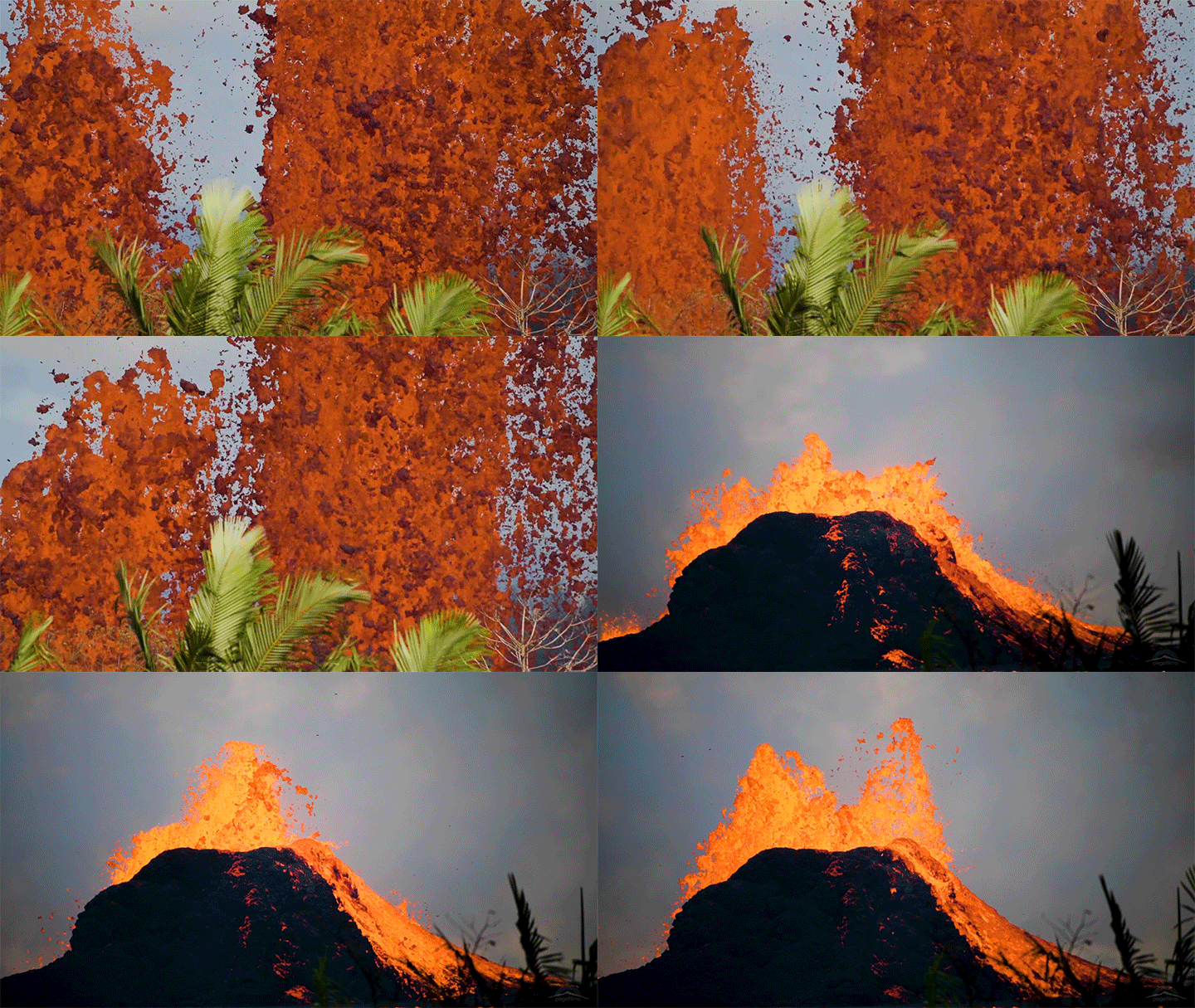
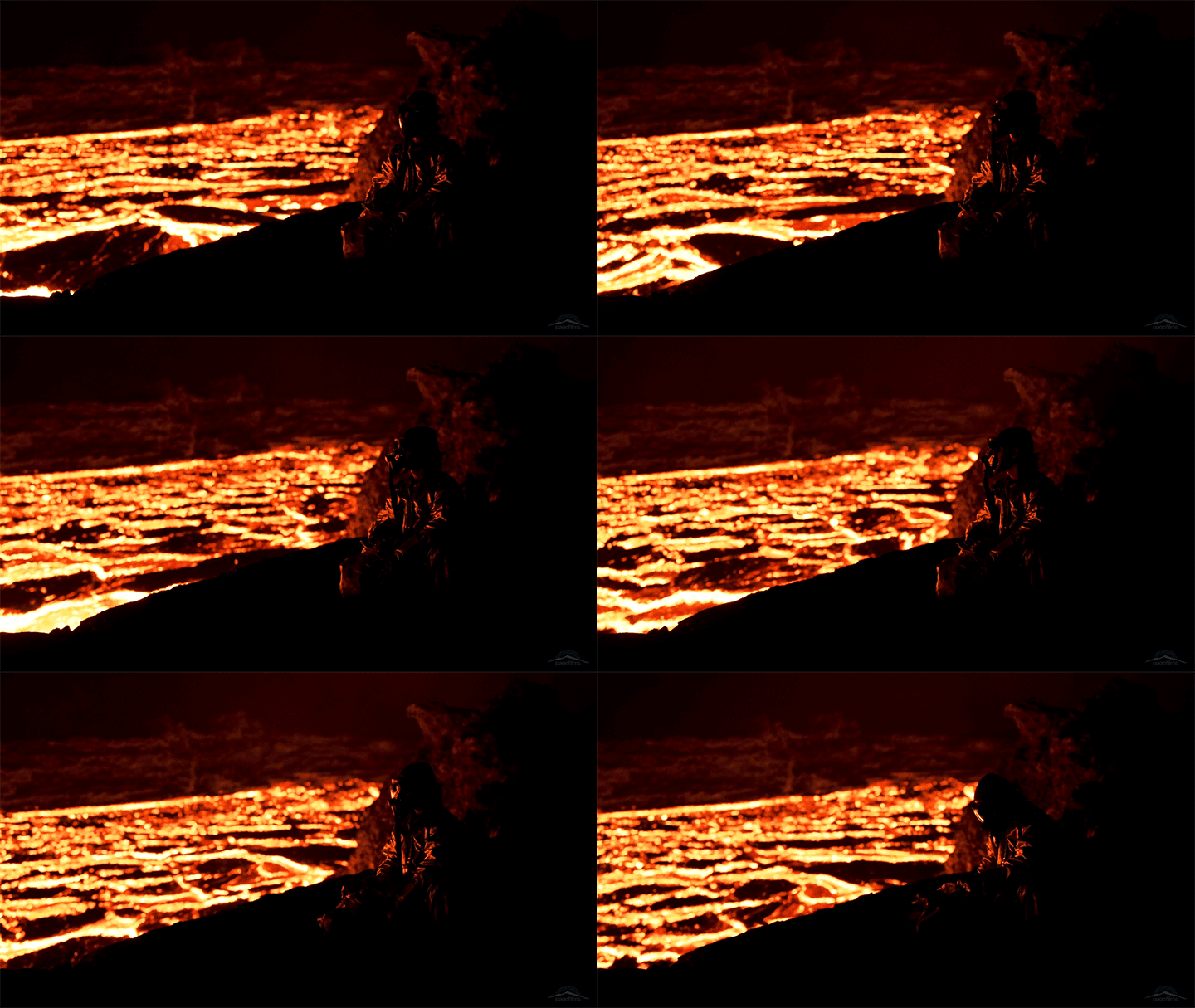
    The 2018 eruption of Kilauea was a dramatic example of nature’s power. This short film shows both some familiar views of that eruption as well as new ones. I found the slow-moving wall of cooling a’a lava eating the forest particularly intriguing, not least thanks to the glass-like sound of the lava advancing. Whether slow-moving or fast, lava’s destructive power is incredible to watch. (Video and image credit: Page Films)

  • Crisscrossing Wave Clouds

    Crisscrossing Wave Clouds

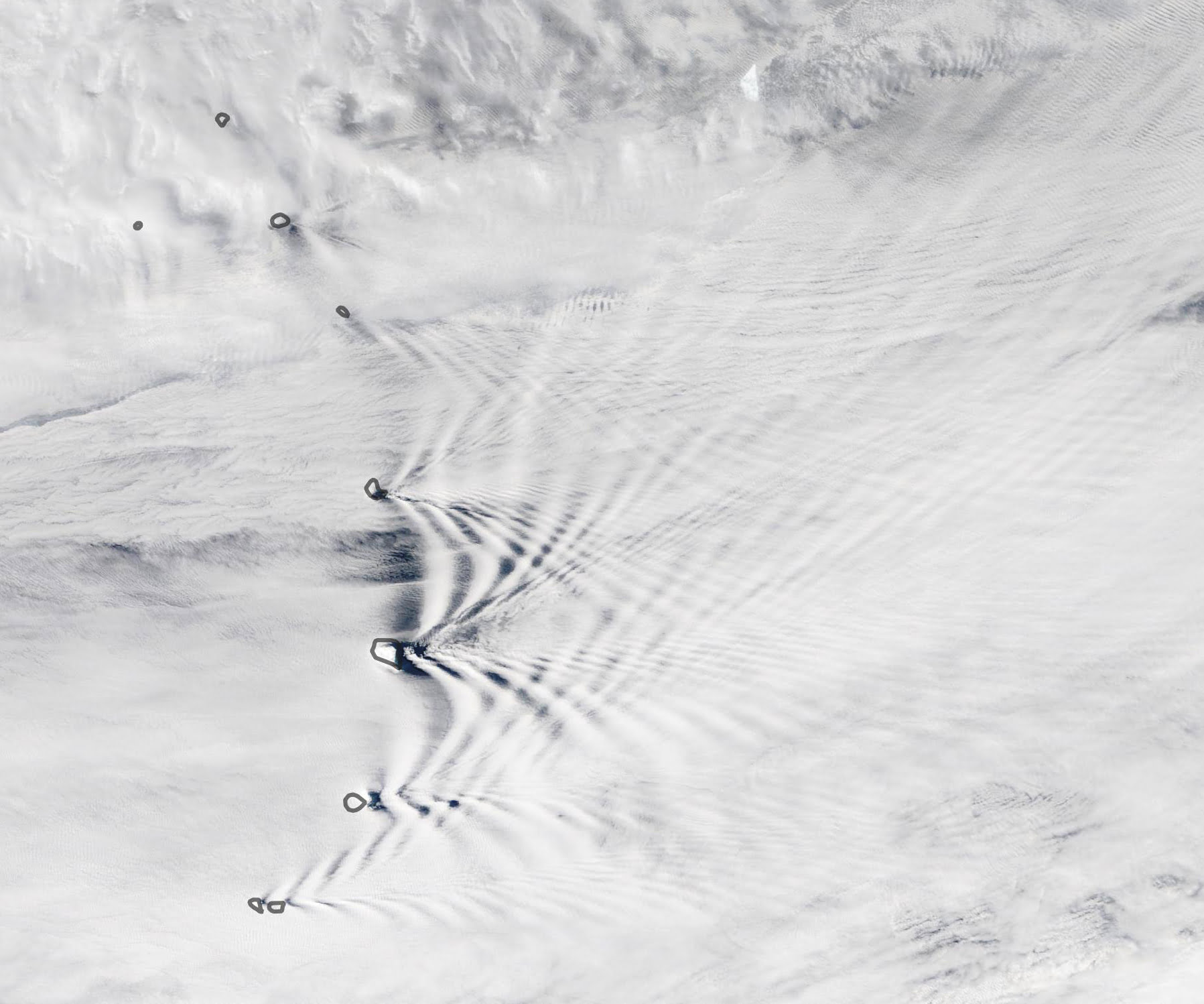
    Crisscrossing lines of wave clouds mark the wake of the Sandwich Islands in this satellite image. The tallest islands in the chain thrust rocky peaks more than 1000 meters above sea level, disrupting winds flowing across the ocean. Incoming air is forced up and over the mountain, which puts it at odds with the surrounding air at that height.

    Due to differences in temperature and density, the disrupted air will continue to rise and sink periodically as it flows onward. At some heights it will cool enough to condense its water vapor into clouds, and at others, it will warm enough to lose any cloud cover. This is what creates the bands of clouds we see behind each individual island. (Image credit: L. Dauphin/NASA; via NASA Earth Observatory)

  • COVID-19 and Outdoor Exercise

    COVID-19 and Outdoor Exercise

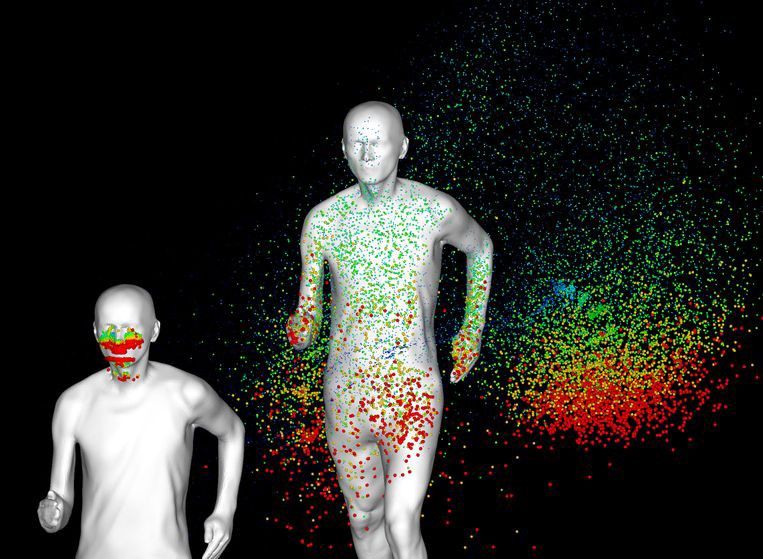
    By now you’ve probably come across some blog posts and news articles about a new pre-print study looking at the aerodynamics of running and the potential exposure to exhaled droplets. And you may also have seen articles questioning the accuracy and validity of such simulations. I’ve had several readers submit questions about this, so I dug into both the research and the criticisms, and here are my thoughts:

    Is this study scientifically valid?

    I’ve seen a number of complaints that since this paper hasn’t been peer-reviewed, we shouldn’t trust anything about it. That seems like an unreasonable overreaction to me considering how many studies receive press attention prior to their actual peer-reviewed publication. This is not a random CFD simulation produced by someone who just downloaded a copy of ANSYS Fluent. This work comes from a well-established group of engineers specializing in sports aerodynamics, and long-time readers will no doubt recognize some of their previous publications. Over the past decade, Blocken and his colleagues have become well-known for detailed experimental and simulation work that indicates larger aerodynamic effects in slipstreams than what we generally recognize.

    In this paper, they lay out previous (biological) studies related to SARS and droplet exhalation; they use those papers and several wind tunnel studies to validate computational models of droplet evaporation and runner aerodynamics; and then they use those inputs to simulate how a cloud of exhaled droplets from one runner affects someone running alongside, behind, or in a staggered position relative to the first runner.

    In other words, their work includes all the components one would expect of a scientific study, and it makes scientifically justifiable assumptions with regard to its methods. (That’s not, mind you, to say that no one can disagree with some of those choices, but that’s true of plenty of peer-reviewed work as well.) All in all, yes, this is a scientifically valid study, even if it has not yet undergone formal peer-review*.

    Can simulations actually tell us anything about virus transmission?

    One complaint I’ve seen from both biologists and engineers is that simulations like these don’t actually capture the full physics and biology involved in virus transmission. While I agree with that general sentiment, I would point out two important facts:

    1) Blocken et al. acknowledge that this is not a virology study and confine their scientific results to looking at what happens physically to droplets when two people are moving relative to one another. Whether those droplets can transmit disease or not is a question left to biological researchers.

    2) Most medical and biological research also does not account for the physics of droplet transmission and transport. For the past century, this research has focused almost exclusively on droplet sizes, with the assumption that large droplets fall quickly and small droplets persist a little longer. To my knowledge, some of the only work done on the actual physics of the turbulent cloud produced by coughing or sneezing comes from Lydia Bourouiba’s lab at MIT. And, to me, one of the fundamental conclusions from her work is that droplets (especially small ones) can persist a lot longer and farther than previously assumed. Can those droplets facilitate transmission of COVID-19? The general consensus I’ve seen expressed by medical experts is no, but, to my knowledge, that is based on opinion and assumption, not on an actual scientific study.

    The bottom line

    In my opinion, there’s a big disconnect right now between the medical/biological community and the engineering community. To truly capture the physics and biology of COVID-19 transmission requires the expertise and cooperation of both. Right now both sides are making potentially dangerous assertions.

    Honestly, based on what I know about aerodynamics, I am personally skeptical as to whether 6 ft of physical separation is truly enough; whether it is or not seems to depend on how transmissible the novel coronavirus is through small droplets, which, again, to my knowledge, is unestablished.

    Should we leave more distance than 6ft between us when exercising outdoors? Absolutely. Aerodynamically, it makes perfect sense that following in someone’s slipstream would put you inside their droplet cloud, which needs time and space to disperse. Personally, I’ve sidestepped the question entirely by doing all my cycling indoors while quarantined.

    tl;dr: There are a lot of open questions right now about COVID-19 transmission and what qualifies as safe distancing, but it’s smarter to err on the side of more distancing. Don’t hang close to others when running or cycling outdoors.

    (Image and research credit: B. Blocken et al.; submitted by Corky W. and Wendy H.)

    *I will add that, with my training, I have and do occasionally peer-review studies such as this one, and I read the full paper with the same sort of critical eye I would turn to a paper I was asked to review.

  • Watching a Droplet Freeze

    Watching a Droplet Freeze

    Whether it’s rain hitting an airplane wing or droplet-based 3D printing, the dynamics of a droplet impacting and solidifying on a surface are important. This new study observes the process from below, tracking the progress of freezing on a scale of hundreds of nanoseconds.

    All three of the drops you see above are liquid hexadecane. Each droplet was the same size and impacted at the same velocity. What differs in each image is how much colder the surface was than hexadecane’s melting point. The leftmost image shows a droplet on a surface only a few degrees cooler than the melting point. The initial expanding ring shows the droplet’s contact line expanding as it impacts. Then frozen crystals appear and grow inside the drop until the entire thing freezes.

    With a slightly colder surface (middle image), frozen crystals form while the contact line is still expanding, and rather than form in distinctive spots, they form as a cloud that quickly expands throughout the drop.

    But with an even colder surface (right image), something entirely new happens. As the drop freezes, we see multiple dark rings expand through the drop. Each of these rings is made up of frozen crystals. The researchers argue that we’re seeing a combination of freezing and hydrodynamics here. Essentially, whenever the frozen crystals get large enough, the outward flow of the impacting drop sweeps them toward the contact line. As new crystals grow near the center of the drop, they’re dragged out in a subsequent wave. (Image, research, and submission credit: P. Kant et al.)