Tag: water bridge

  • Liquid Bridges

    Liquid Bridges

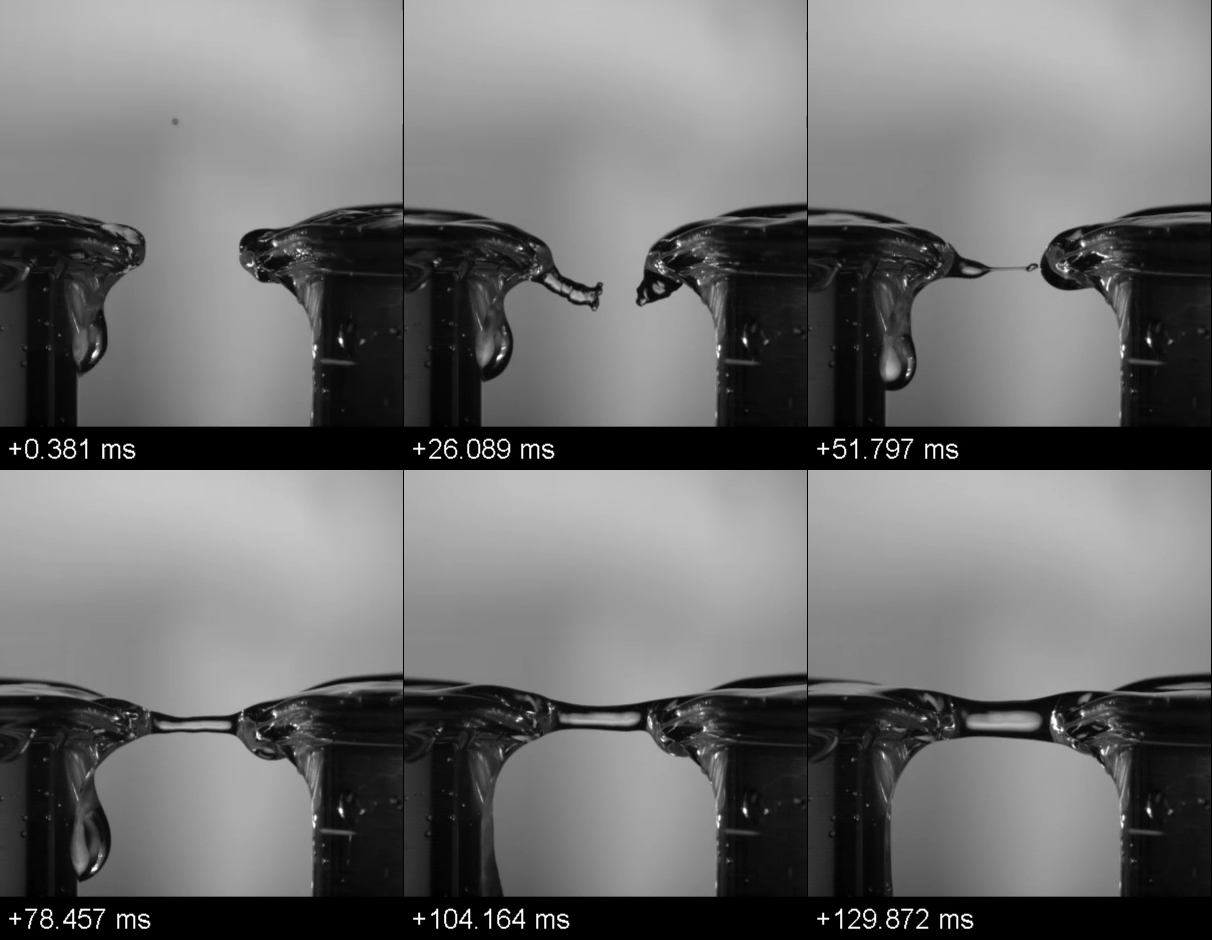
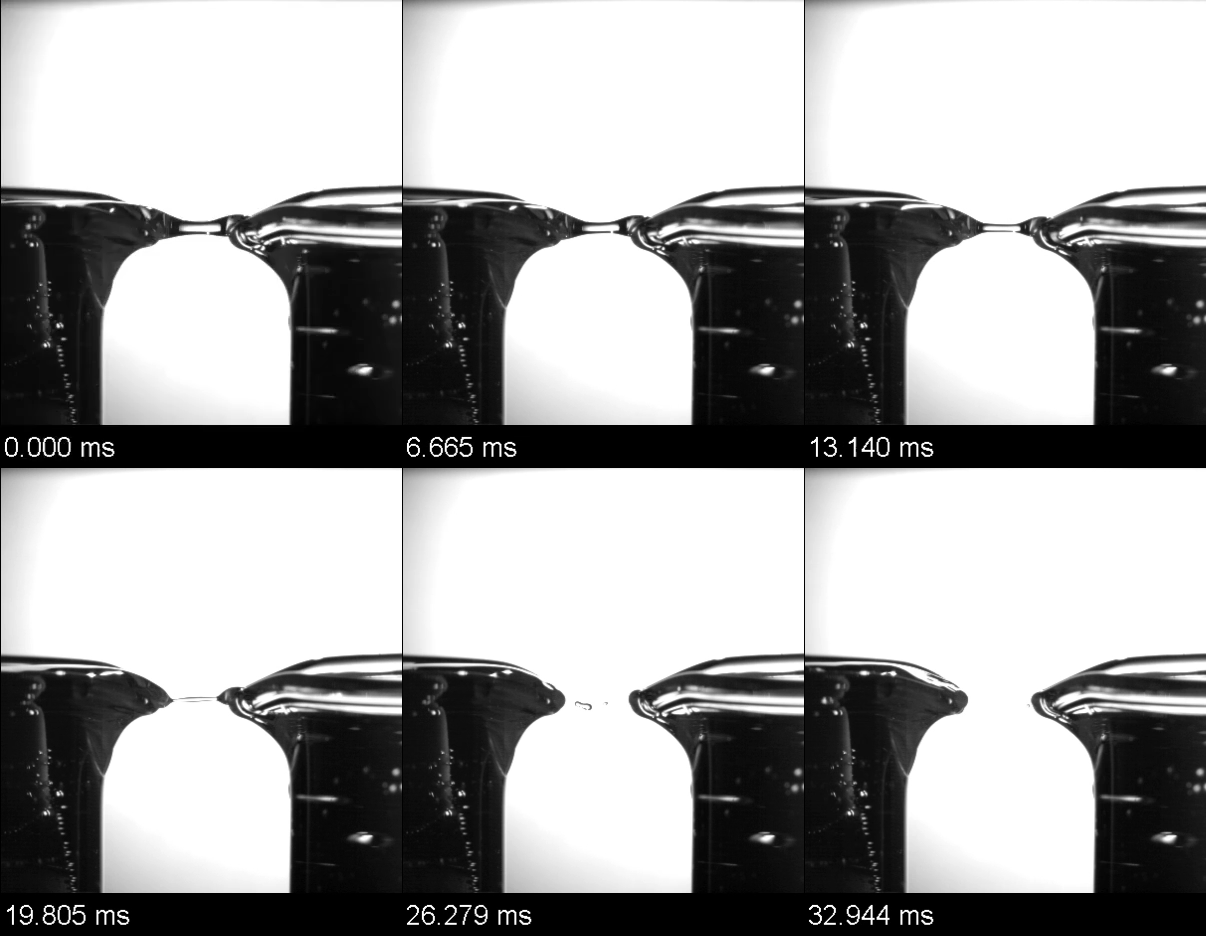
    In 1893, Baron Armstrong demonstrated a peculiar phenomenon — a liquid bridge of water suspended between two beakers with a strong electric charge between them (Image 1). More than a century later, the details of the mechanism remain challenging to pin down thanks to the setup’s combination of electohydrodynamics, heat transfer (Image 2), evaporation, and chemistry (the electrodes can split water).

    Researchers have pinned down a few details, though, like that the break-up of the liquid bridge (Image 3) depends on its effective length and that the effective length grows as applied voltage increases. Researchers also found that inducing an external flow can extend the bridge’s lifetime, though it does not affect the length at which it breaks up. Interestingly, the phenomenon is not limited to water (and its odd chemistry); ethanol and glycerol have been used for liquid bridges, too! (Image and research credit: X. Pan et al.)

  • Featured Video Play Icon

    Floating Water Bridges

    Water bridges that seem to float on air are an electrohydrodynamic phenomenon. By filling two beakers with extremely pure deionized water and applying a large voltage across them, flow is induced from one beaker to the other, as seen in the first few seconds of the video above. This flow is stable enough that the beakers can then be separated by a few centimeters without disturbing the bridge. Gravity tends to make the water bridge sag and capillary action tries to thin the bridge, but both effects are countered by the polarization forces induced in the water by the electric field. You can learn much more about the effect and see both photos and videos of it in action at Elmer Fuchs’ webpage. The flow visualization videos are especially neat! (Video credit: E. C. Fuchs)

  • Featured Video Play Icon

    The Water Bridge

    This short film offers an artistic look at the phenomenon of the water bridge. When subjected to a large voltage difference, such as the 30 kV used in the film, flow can be induced between water in two separated beakers. This creates a water bridge seemingly floating on air. There are two main forces opposing the bridge: gravity, which causes it to sag, and capillary action, which tries to thin the bridge to the point where it will break into droplets. These forces are countered by polarization forces induced at the liquid interface due to the electrical field separating the water’s positive and negative charges. This separation of charges creates normal stresses along the water surface, which counteracts the gravitational and capillary forces on the bridge. The artist has done a beautiful job of capturing the unsteadiness and delicacy of the phenomenon. (Video credit: Lariontsev Nick)

  • Featured Video Play Icon

    The Floating Water Bridge

    The interaction of electric fields and fluids can lead to some unexpected results. Here we see the formation of a water bridge formed between two beakers of demineralized water across which a large voltage difference (~15kV) is applied. The bridge is stable for separation distances up to about 2 cm. In order to achieve this feat, the water is overcoming two destabilizing forces: gravity, which bends the bridge, and capillary action, which makes the liquid bridge thin until it breaks into droplets. According to the authors, both forces are countered by induced polarization forces at interface; in short, the electrical field around the liquid causes the positive and negative charges in the liquid to separate, thereby polarizing the liquid. This separation of charges then creates normal stresses along the surface of the water that oppose the gravitational and capillary forces trying to break the bridge. (Video credit: A. Marin and D. Lohse)