Just as prairie dogs bark to warn the colony of danger, many plants can signal their neighbors when they’re under attack. This thale cress releases calcium when caterpillars eat it; neighboring plants pick up the chemical signal and pass it along. To better understand how the signal gets passed, researchers genetically modified this plant to fluoresce when extra calcium is on the move. It’s incredible to watch the flow from one side of a leaf to another. (Image and research credit: Y. Aratani et al.; via Colossal)
Tag: science

Convection in Action

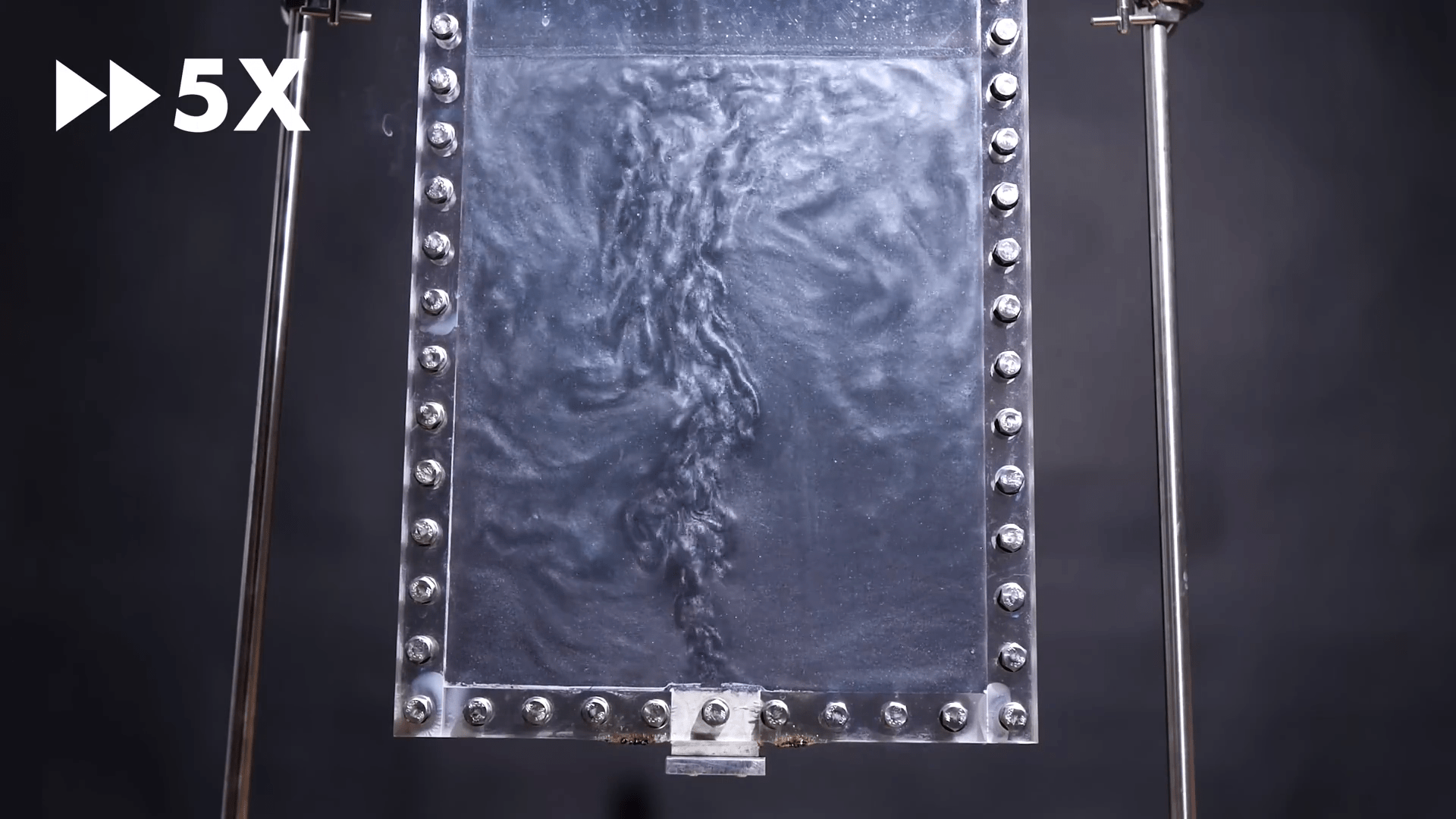
We’re surrounded daily by convection — a buoyancy-driven flow — but most of the time it’s invisible to us. In this video, Steve Mould shows off what convection really looks like with some of his excellent tabletop demos. The first half of the video gives profile views of turbulent convection, with chaotic and unsteady patterns. When he switches to oil instead of water, the higher viscosity (and lower Reynolds number) offer a more structured, laminar look. And finally, he shows a little non-temperature-dependent convection with a mixture of Tia Maria and cream, which convects due to evaporation changing the density. (Image and video credit: S. Mould; submitted by Eric W.)
“Lucid”


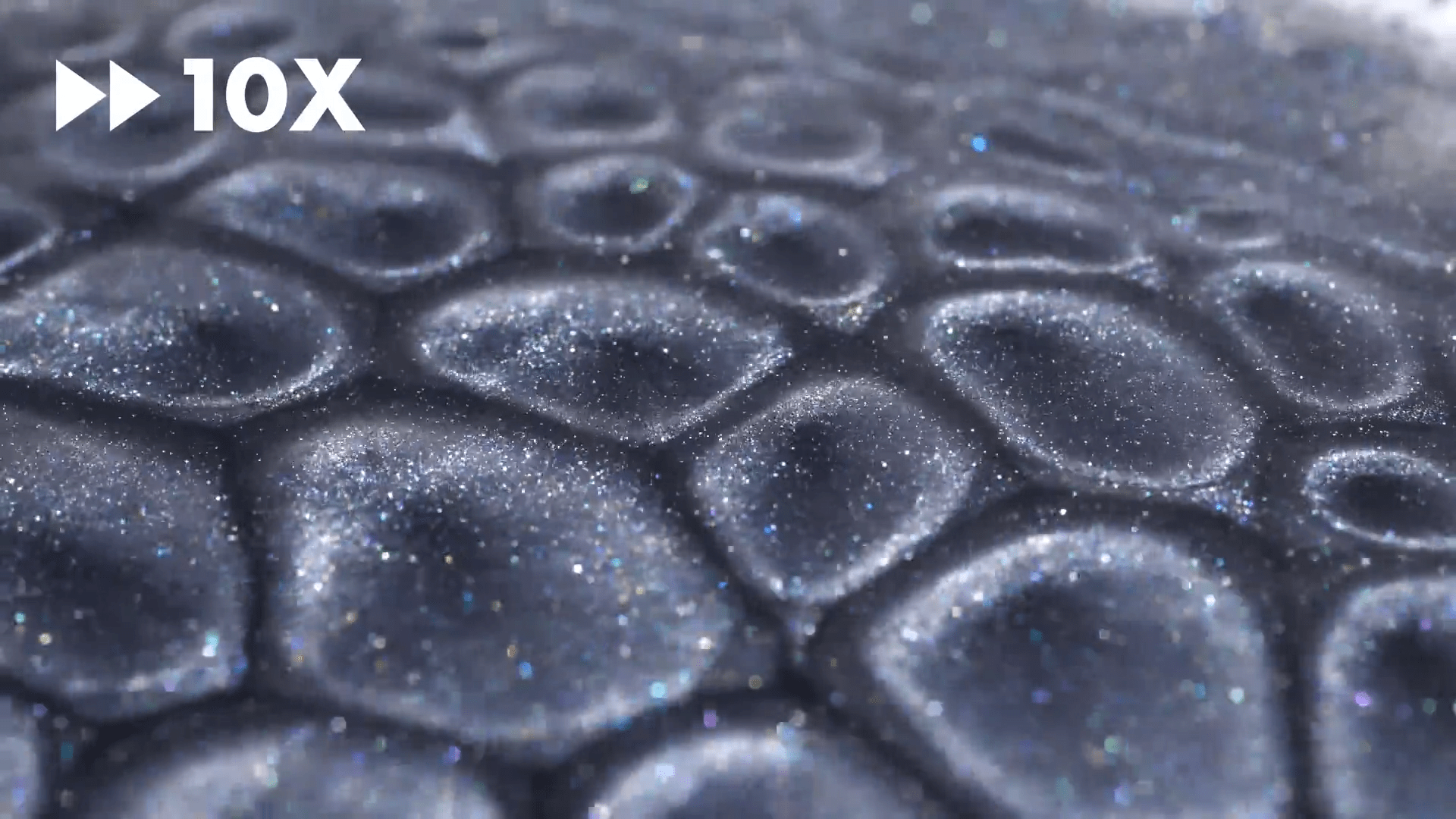
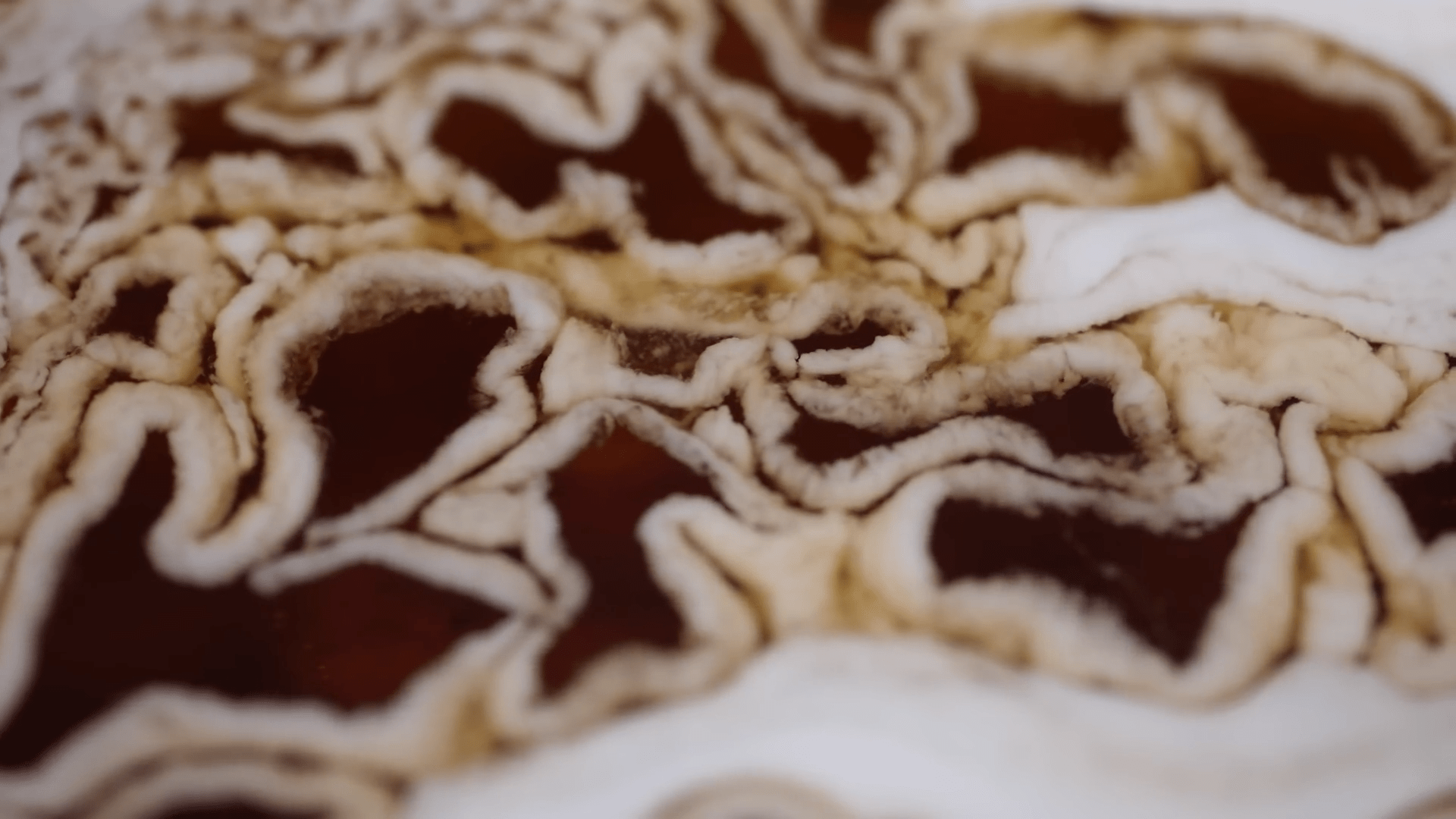
Artist Roman Hill made this official music video to go with Thomas Vanz’s “Lucid.” The imagery, formed from ink and other fluids, warps our sense of scale. Though the camera focuses on an extremely small area, to our eyes the results shift from nebulas to oceans and back again. There are likely a whole host of phenomena going on here, but without knowing more about Hill’s ingredients, I can only speculate that there are Marangoni flows driven by variations in surface tension and maybe some density instabilities going on between fluid layers. I’m also fairly confident that Hill has played with time reversal in the video editing. Regardless of the secrets in its making, the film is captivating and gorgeous. (Image and video credit: R. Hill)

Superfluid Heat Transfer
Near absolute zero, as atoms slow down, some materials become a superfluid, a type of matter with zero viscosity. Superfluids do all kinds of strange things like generate fountains, leak from sealed containers, and form quantized vortices. Theorists also predicted that in a superfluid heat would slosh back and forth like a wave, even without any flow. They call this “second sound” and researchers have now detected it for the first time.
In a typical experiment, we’d use an infrared camera to see how heat moves in a substance, but at the frigid temperatures of superfluids, that’s not possible. Instead, the team developed a method that measured the temperature of their atomic gas using radio frequency. When their lithium-6 fermions were at a higher temperature, they resonated with a higher radio frequency. Using radio frequency to probe the substance, they were able to observe exactly when heat stopped diffusing like in normal matter and switched to the superfluid second sound state. Since superfluids may live at the heart of neutron stars, further experiments will help us understand these exotic forms of matter. (Image credit: J. Olivares/MIT; research credit: Z. Yan et al.; via MIT News and Gizmodo)

Saharan Dust
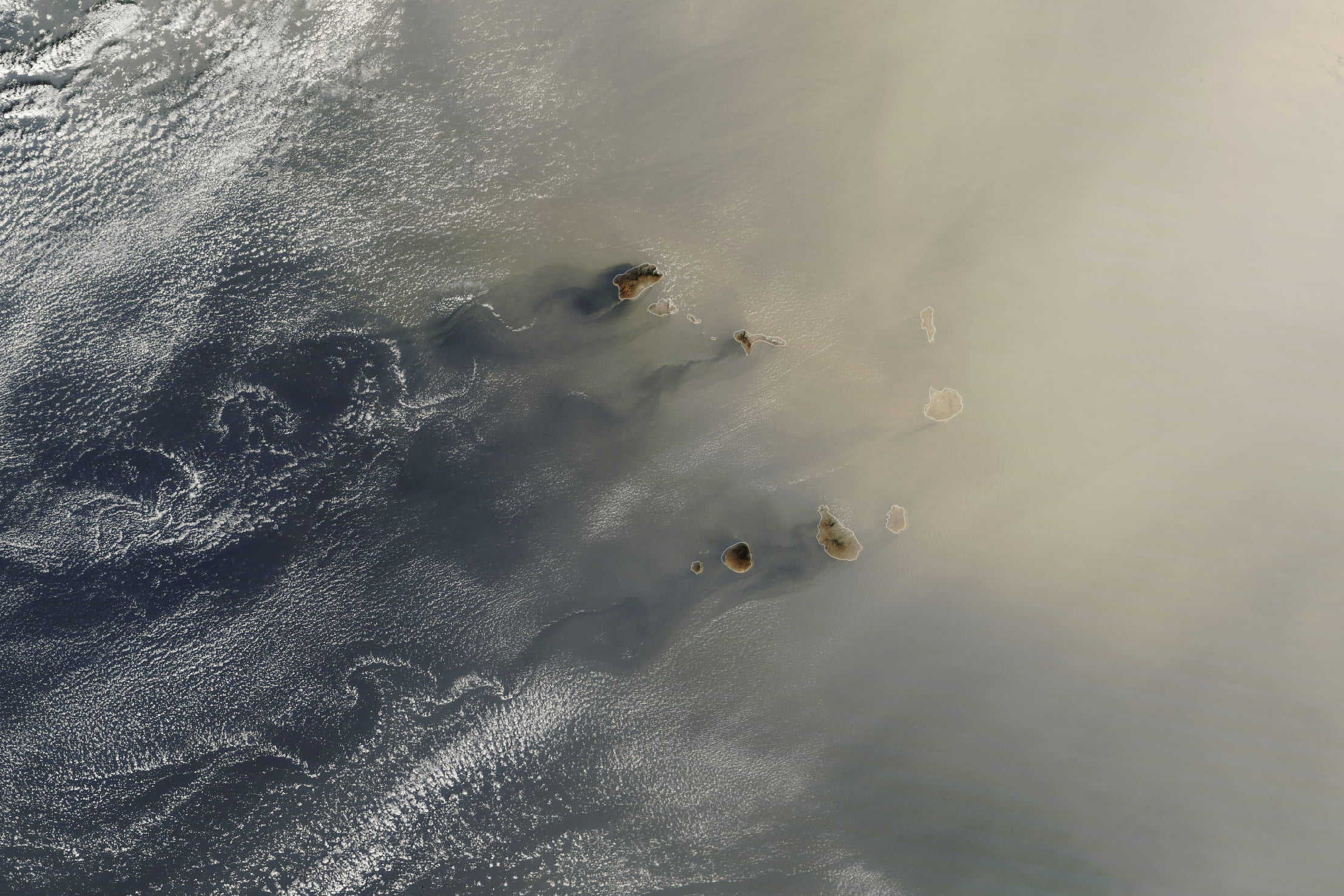
In late January, dust from the Sahara blew westward toward the Cabo Verde archipelago before turning northward toward Europe. During winter and spring, Saharan dust tends to stay at lower altitudes, where it can be carried by the northeast trade winds. In contrast, from late spring to early fall, dust rises higher, carried westward by the Saharan Air Layer; there, the dust can help suppress both the formation and intensity of the Atlantic’s hurricanes.
On the left side of the image scant clouds trace von Karman vortex streets behind the archipelago, marking the atmospheric disruption caused by the rocky islands. (Image credit: L. Dauphin; via NASA Earth Observatory)
Liquid Metal Printing


Engineers have developed a new 3D-printing technique that uses molten aluminum to quickly manufacture large-scale parts. This Liquid Metal Printing method deposits the metal into a bed of tiny glass beads, which hold the metal in place while it cools. In minutes, they can produce furniture-sized parts, but that speed comes at a cost in resolution; the printed parts are rough, but they have the strength to withstand further machining by bending, milling, etc. The process is also well-suited for reusing scrap metal. The team hopes their method will be a useful prototyping tool as well as a possible manufacturing technique in architecture and construction. (Image and video credit: MIT News; research credit: Z. Karsan et al.)
Moths in Flight


Moths and butterflies are such unique fliers among insects. Compared to their bodies, their wings are often enormous. High-speed video reveals the complex motions of their wing strokes. Some species have wings that flex dramatically, bringing sections of the opposite wing close enough to clap together. Other species, like the plume moth, have porous wings that resemble feathers. For these fliers, viscosity provides some resistance to keep air from simply flowing through the wing. But the little bit of air that does get through may help the moth aerodynamically. (Image and video credit: A. Smith/Ant Lab)

“Spitting Out Water Babies”
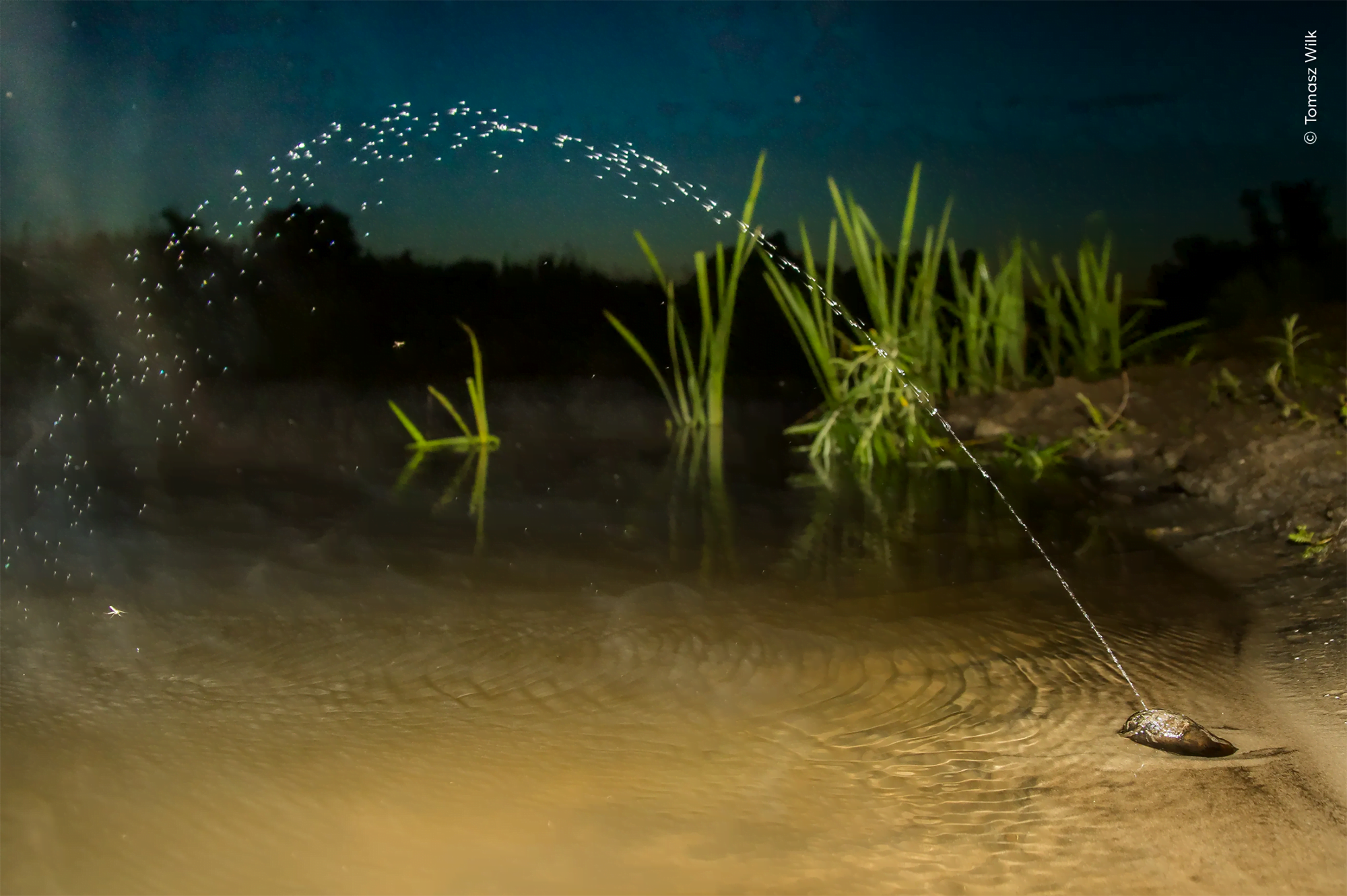
When Tomasz Wilk settled to camp one evening on the banks of a Polish river, he didn’t expect to find fountains in the shallows. Though reminiscent of an archer fish’s shot, this stream comes from a freshwater mussel. In spring, the mature female thick-shelled river mussels head to the shallows, where they edge a bit of their shell out of the water and release this fountain of water and larvae. Once dispersed, the larvae will attach (harmlessly) to the gills of fish until they grow into a juvenile mussel. (Image credit: T Wilk; via Wildlife POTY)

Open Call for the Traveling Gallery of Fluid Motion
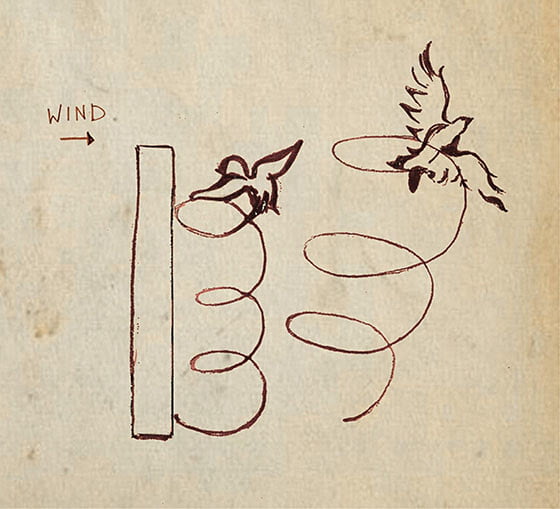
This year’s Traveling Gallery of Fluid Motion will be hosted in Salt Lake City. There’s currently an open call to scientists and artists for submissions inspired by Leonardo Da Vinci. From the organizer:
This particular exhibition aims to showcase the historical interplay between art and science, with Da Vinci serving as a guiding luminary whose multifaceted genius continues to inspire innovation and creativity.
Artists and scientists from diverse backgrounds and disciplines are invited to submit their works, whether new creations or existing pieces, that delve into the fascinating themes of fluid dynamics, aerodynamics, and flight. The exhibition will take place at The Leonardo Museum in Salt Lake City, Utah, during the Fall/Winter season of 2024.
We welcome submissions in any medium, size, or stage of production, including, but not limited to video, photography, painting, 3D printed models, sculpture, installation, mixed media, and beyond. Although not a requirement, artists and scientists are encouraged to explore the intersections between art and science by drawing inspiration from Da Vinci’s legacy while infusing their unique perspectives and interpretations.
Submission Deadline: April 1, 2024You can find out more on Instagram and apply for consideration here. (Image credit: L. Da Vinci; submitted by Azar P.)
Serpents and Ouroboros


Beads of condensation on a cooling, oil-slicked surface have a dance all their own in this video. Large droplets gobble up their fellows as they follow serpentine paths; each new droplet donates its interfacial energy to feed the larger drop’s kinetic energy. Eventually, the big drops switch to a circular path, like an ouroboros, the tail-eating serpent of mythology. This transition happens due to the oil shifted by the dancing droplets. You can recreate the effect at home by rubbing a thin layer of oil over glass and setting it atop a hot mug of your favorite beverage. (Video and image credit: M. Lin et al.; research credit: M. Lin et al.)