Tag: schooling

  • Schooling Together

    Schooling Together

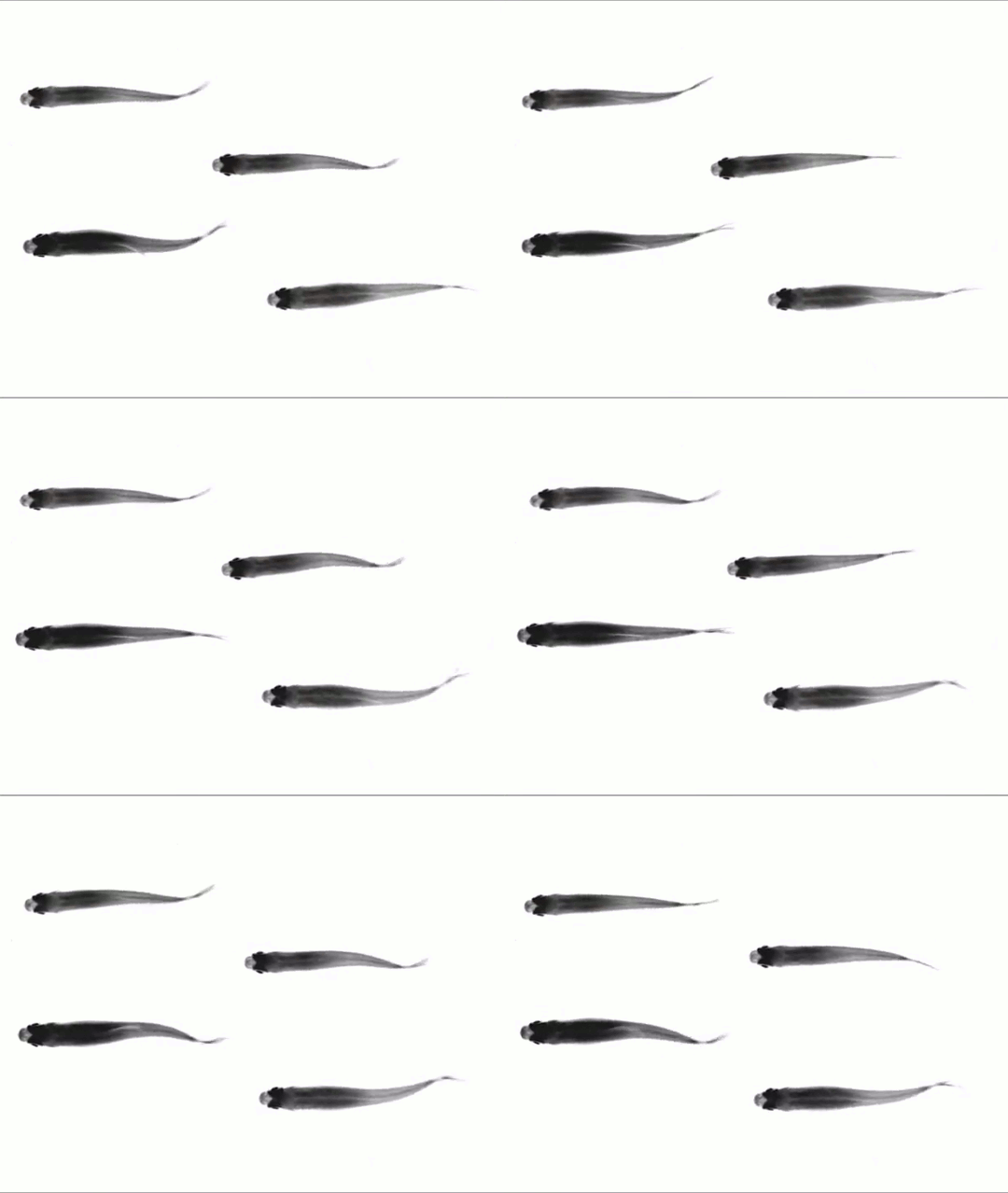
    Since the 1970s, fluid dynamicists have chased the idea that fish swim in schools for hydrodynamic advantage. The original 2D conception of the idea placed fish in a diamond pattern so that their wakes would constructively interfere and improve swimming efficiency. In nature, that exact pattern is rarely seen, possibly due to 3D effects or the difficulty of maintaining the exact orientation. Fish do, however, show signs of grouping themselves for efficiency – especially when they’re forced to swim quickly. 

    A recent study found that tetras, a type of small fish often used as pets, prefer a staggered diamond configuration (left) when free-swimming at low speeds around one body length per second. At higher speeds, around four body lengths per second, groups of tetras preferred a side-by-side or “phalanx” configuration (right). Here the fish tended to synchronize their tail-beat frequency with their neighbors, essentially working together for a mutually beneficial wake structure. The researchers found that this configuration was much more efficient than a lone swimmer or uncoordinated group, implying that fish do school for energy-savings when they’re swimming fast. (Image and research credit: I. Ashraf et al., source; via Hakai; submitted by Kam-Yung Soh)

  • Featured Video Play Icon

    Sheep as a Fluid

    Not all fluids are, well, fluid. Traffic, flocks of birds, ants, and even sheep can behave like fluids. This video shows an aerial perspective on sheep being herded, and despite the four-legged nature of these particles, they have a lot of fluid-like characteristics. You can watch ripples and waves travel through the herd and see how disturbances propagate. The herd is actually a brilliant example of compressible flow; notice how the sheep slow down and bunch up as they near the gate then speed up and spread out once they pass the constriction. This is exactly how supersonic fluids behave! (Video credit: T. Whittaker; submitted by Simon H and John B)

    If you’re in the DC area, I’ll be speaking at the Annals of Improbable Research Show at the AAAS meeting Saturday evening. Our session is open to the public, but it’s likely to be crowded, so you may want to arrive early!

  • Advantages of Schooling

    Advantages of Schooling

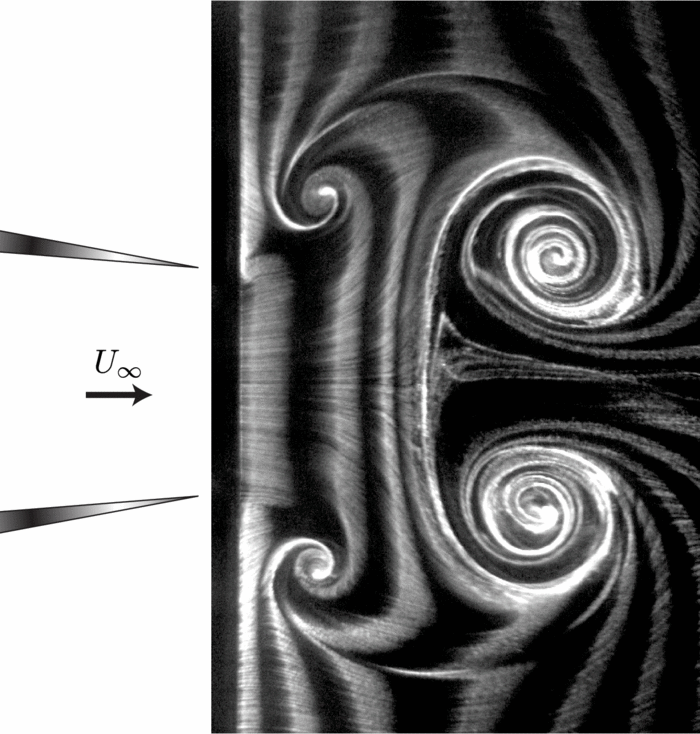
    Many fish swim in close proximity to one another in large schools, causing scientists to wonder if this behavior is motivated primarily by defense against predators or whether fish derive some hydrodynamic advantages from schooling. Examining the fluid dynamics of an entire school of fish is rather impractical, so researchers approximate two neighboring swimmers using flapping hydrofoils. The images above show flow visualizations of the wakes of these two mechanical swimmers. When the two hydrofoils flap in-phase with one another (top image), one oscillation period produces a complicated pattern of many vortices zig-zagging behind the foils. This configuration produces more efficient propulsion than a single hydrofoil, meaning that more of the energy in the wake is used to produce thrust. The cost, however, is reduced thrust overall. The bottom image shows the wake pattern for hydrofoils flapping out-of-phase. This behavior enhanced thrust without reducing propulsive efficiency. The results suggest that schooling fish might choose different swimming strategies depending on the situation.   (Image credits: P. Dewey et al.)

  • Featured Video Play Icon

    Ants as a Fluid

    The collective behavior of ants can mirror the flow of a viscous fluid. It would be interesting to see if any such parallels carry over to the flocking of birds or schooling of fish. The latter two behaviors are thought to increase aero- and hydrodynamic efficiency for the group. #