Tornadoes are some of the most powerful storms on Earth. Their difficult-to-predict nature means that we still have a relatively scant understanding of exactly how they form. We know the conditions that promote their development — warm, moist rising air, wind shear, and rotation — but how and when those translate into a dangerous funnel cloud is harder to pin down. In this video, we hear from one of National Geographic’s storm researchers, Anton Seimon, who chases these storms in search of answers. (Image and video credit: National Geographic)
Tag: physics

Inside Drying Wood
Wood must dry before it can be used in most applications, but with its complex internal structure exactly how wood dries out has been unclear. New experiments combining MRI and x-ray imaging reveal a process quite different than expected.
Inside hardwoods like poplar — the species studied here — wood contains both solid structures and pores where water can gather. The pores do not form a fully interconnected network, so capillary action alone is unable to carry water through the pores and out to a surface where it can evaporate.
Instead, researchers found that water evaporating at the surface came from so-called “bound water” in the wood’s solid structures. As the bound water evaporated, it caused water in the wood pores to diffuse into the solid walls, becoming bound and continuing to feed the evaporation. (Image and research credit: H. Penvern et al.; via APS Physics)

“Chocolate Lullaby”
In this music video for the song “Chocolate Lullaby,” the Macro Room team feature all kinds of fluid dynamical phenomena. It begins with pouring viscous fluids, which, like honey or cake batter, fold and stack before they spread. From there things get significantly less viscous and more turbulent. There’s some neat coalescence, billowing streams colliding, and some gorgeous turbulence. Enjoy! (Image and video credit: Macro Room)

Interview: Fountain Pen Physics
It’s not much of a secret that I love fountain pens. Recently, I got to combine two of my passions by explaining fountain pen physics on the Stationery Orbit podcast. Check out my episode here. (Image credit: N. Sharp)

Permeable Pavement
Controlling storm water is a major challenge in urban environments, where many surfaces are impermeable. In a city, rain cannot simply soak into the ground and filter into the water table. One potential solution is permeable pavement, which uses the same ingredients as its common counterpart minus the sand that usually packs into gaps between the gravel. Without the sand, the final pavement allows water to soak through, as seen above. In practice, the water sinks into a porous reservoir beneath the pavement that helps store and regulate the water’s discharge into the soil.
Unfortunately, this solution has its limitations. Permeable pavement is not as strong as the regular variety, so it doesn’t work for highly trafficked areas like roadways. It’s also not well-suited to colder areas, where freezing and thawing may disrupt its operation. But it is another tool in engineers’ toolboxes when it comes to keeping urban environments in harmony with nature’s needs. (Image and video credit: Practical Engineering)

Cutting Coronavirus Risk in Cars
Even in a pandemic, it’s sometimes necessary to share a car with someone outside one’s bubble. When that’s the case, it’s important to know how to limit risks of coronavirus exposure. For this study, researchers used computational fluid dynamics to simulate flow around and inside a Prius-like four-door sedan with a driver and a single passenger located in the rear passenger-side seat. Assuming the air conditioner was on and the car was moving at 50 miles per hour, the researchers found that the baseline flow of air inside the car moves from the back of the cabin toward the front. With the windows closed, the simulation suggested that 8-10% of the aerosol particles exhaled by one passenger could reach the other.
Opening the car’s windows increases the ventilation and reduces exposure risk. The best configuration the researchers found opened two windows: the front passenger-side window and the rear driver-side window. By opening the window opposite each person, the airflow in the car creates a sort of curtain between the two that reduces aerosol exposure to only 0.2-2% of what’s exhaled by the other occupant. (Image credit: rideshare – V. Xok, CFD – V. Mathai et al.; research credit: V. Mathai et al.; via NYTimes; submitted by Kam-Yung Soh)


Kugel Fountains
At science museums and tourist attractions around the world, visitors can spin the multi-tonne spheres of kugel fountains with the brush of their hand. The secret of the sphere’s mobility is aquaplaning – the same phenomenon that can cause cars to lose traction in wet conditions. In these fountains, the massive sphere sits in a precisely-shaped cup, with their surfaces separated by a thin layer of water. The entire system acts like a hydrostatic bearing, which allows the sphere to move freely. But even a relatively small disruption can destroy the effect, as happened to the Science Museum of Virginia’s original Grand Kugel after it cracked. (Image credit: E. Roberts; via Atlas Obscura; submitted by Kam-Yung Soh)

Bubbles Affect Lava Flow
During the 2018 eruption at Kilauea, scientists noticed that the lava flowed very differently depending on how bubbly it was. In this experiment, researchers used corn syrup as a lava analogue and studied how bubbly and particle-filled bubbly flows differed from bubble-free ones. They found that bubble-free syrup flowed fastest, while particle-filled bubbly flows were by far the slowest.
The bubbles also affected the structure of the flows. Large bubbles gathered near the surface of the flow’s leading edge, allowing faster flow beneath. And in the particle-filled flow, the corn syrup developed channels that flowed at different speeds. The authors hope that their relatively simple experimental set-up will inspire more research on bubbly lava flows. (Image and research credit: A. Namiki et al.; via AGU Eos; submitted by Kam-Yung Soh)

Rocking From The Waves
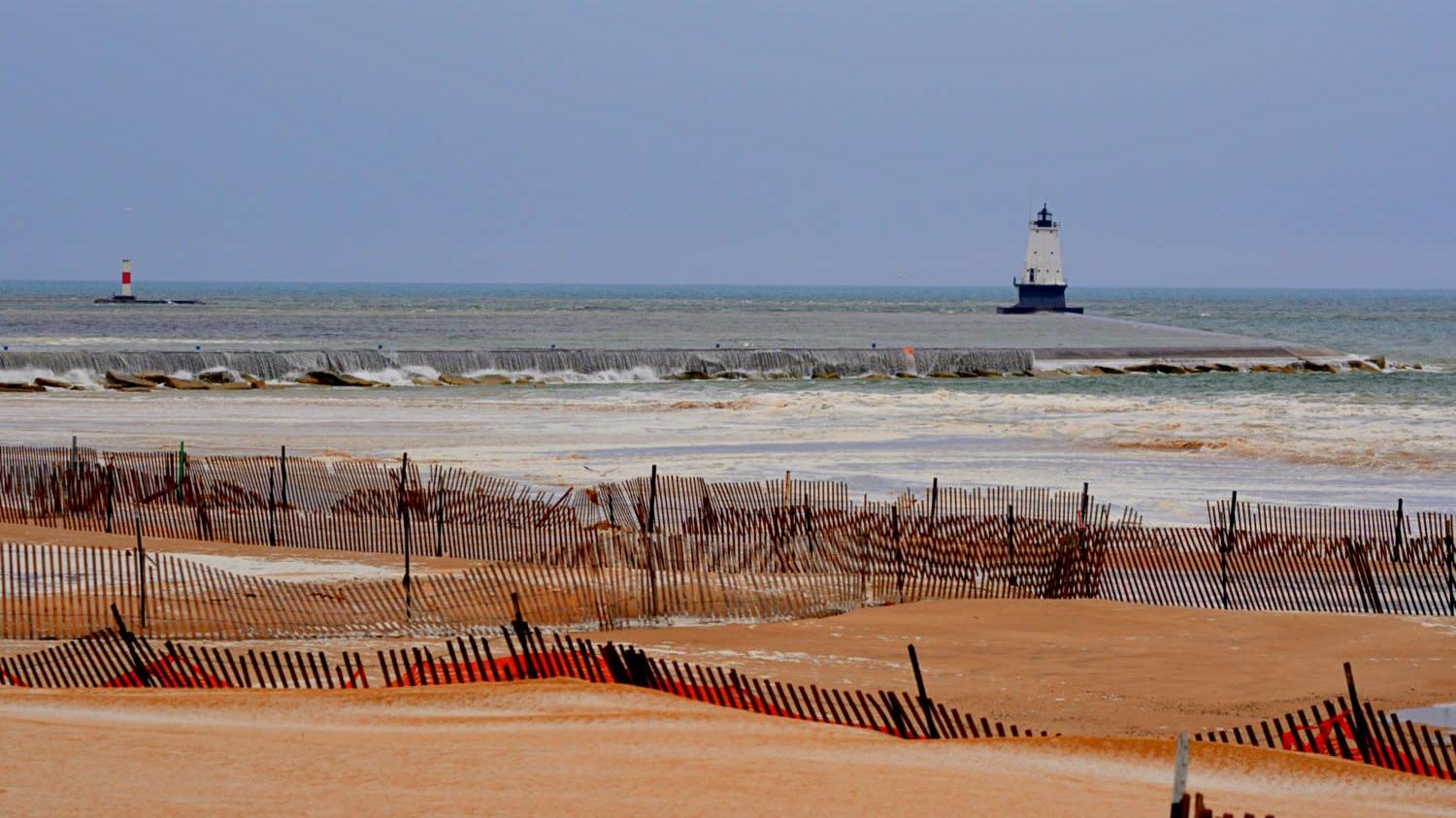
Not all seismic activity stems from earthquakes. In fact, much of Earth’s measured seismic waves come from interactions of the ocean and atmosphere with solid ground. Some of the strongest vibrations come from interactions of ocean waves, which transmit pressure waves that don’t attenuate with depth before passing into the solid Earth.
How those waves propagate and scatter inside the Earth has been a matter of contention for decades, but recent simulations are beginning to uncover the mechanisms that lead to the waves seismologists measure. (Image credit: I. Mingazova; via Physics Today)

“Catalysis”
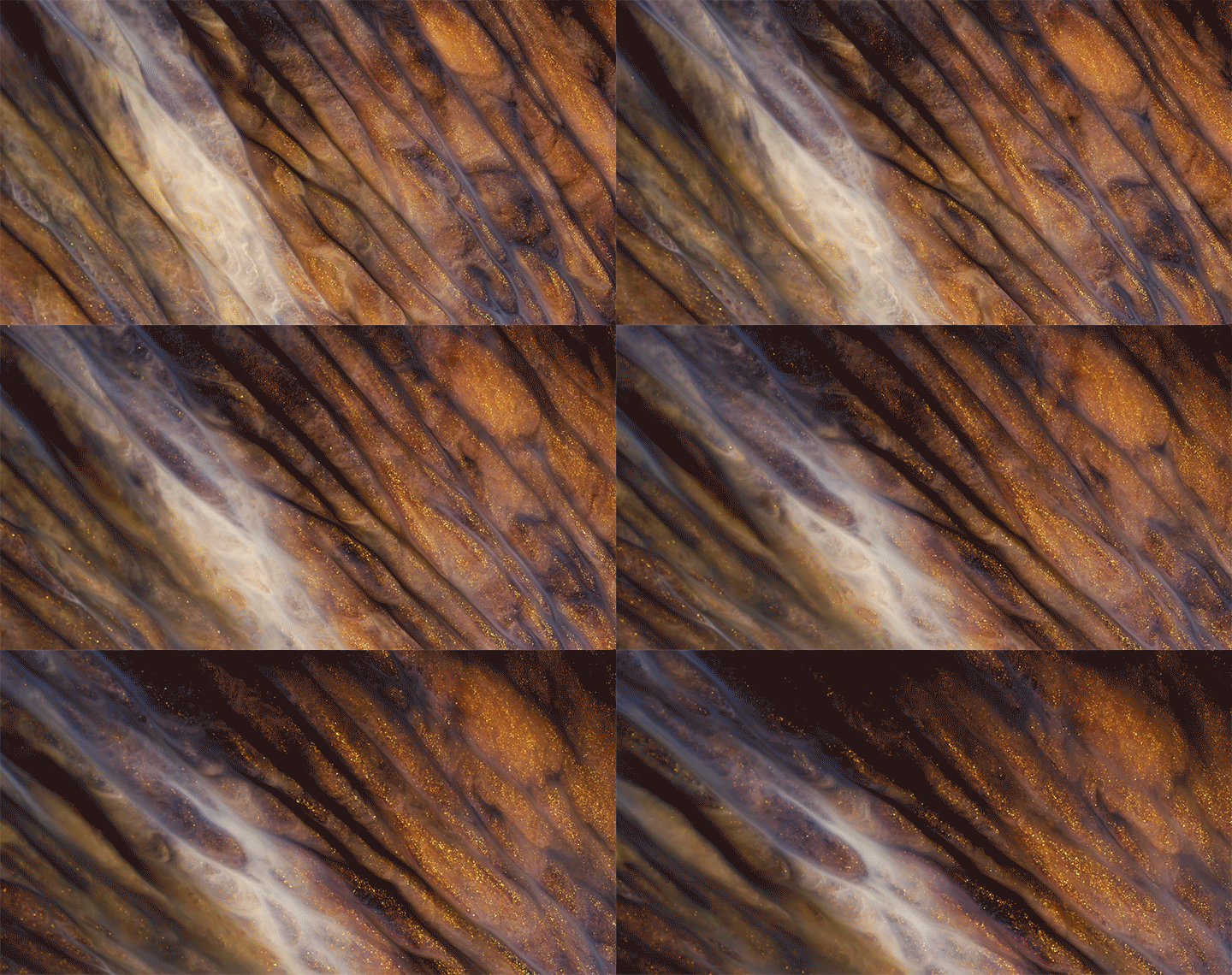
Catalysts speed up chemical reactions without being consumed themselves. In “Catalysis” the Beauty of Science team shows 5 different examples of catalytic reactions, from acetone oxidation to yeast fermentation. The film is full of bubbles, sparks, and wave-like pulses of chemical reaction. As always, it’s a lovely glimpse of processes we’re not used to watching so closely. (Image and video credit: Beauty of Science)