Tag: particle tracking

  • Tumbling in Air

    Tumbling in Air

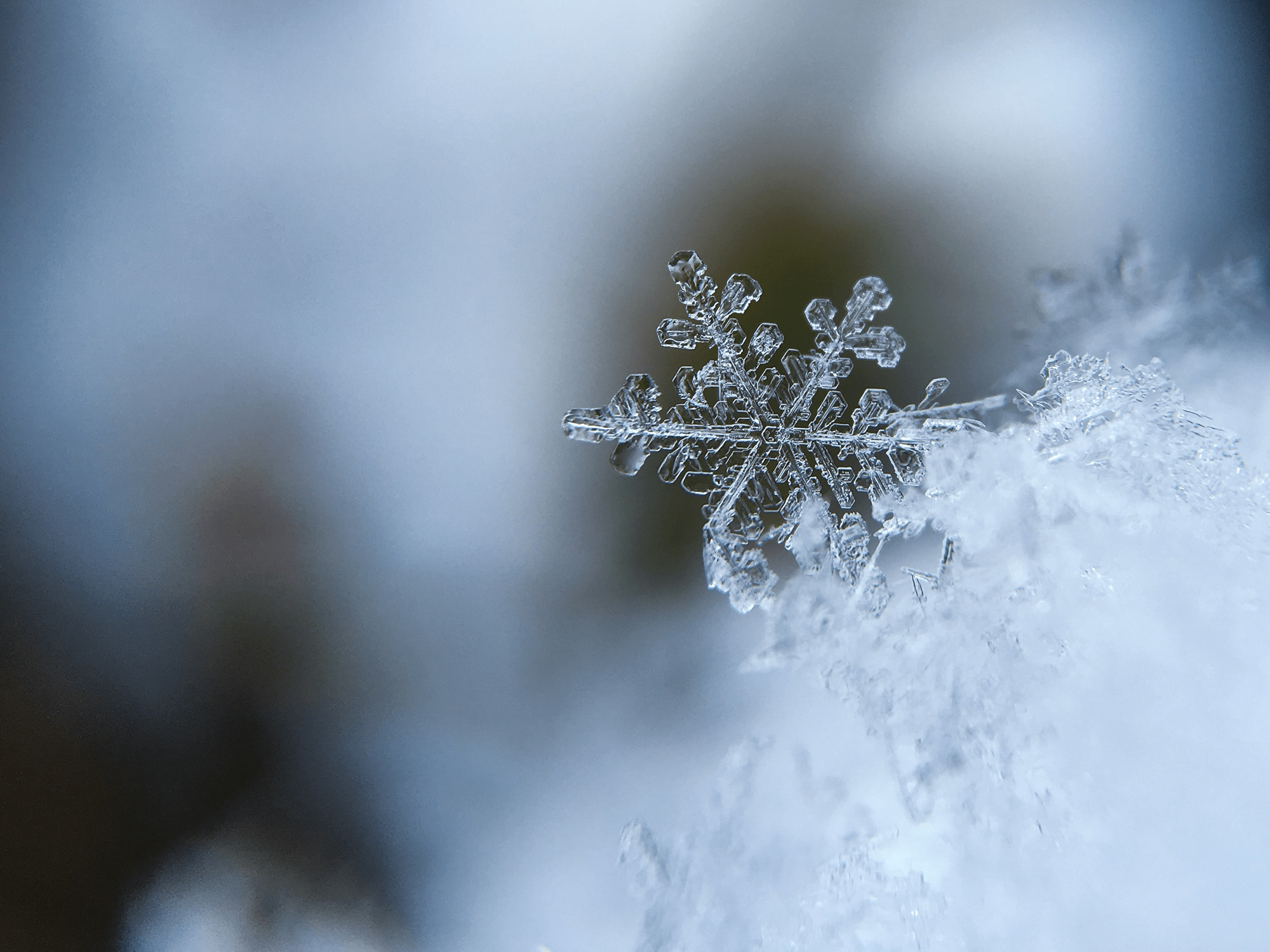
    When snowflakes and volcanic ash fall, they tumble. Historically, it’s been too hard to observe this behavior first hand — the particles are too small to easily follow with a camera — so scientists instead looked at larger particles falling through water. That change preserves important characteristics of the physics, but it misses out on one key feature: in air, the density of the falling particle is much higher than air’s.

    A football-shaped particle wobbles around its stable orientation as it falls through air.
    A football-shaped particle wobbles around its stable orientation as it falls through air.

    To account for that, researchers built a special apparatus that drops particles one-at-a-time through the field of view of four high-speed cameras. This setup gave them a narrow 1-mm band where they could track a falling particle’s orientation — provided the particle fell through the band, which happened about 20% of the time. Their results show that particles in air tumble and oscillate back and forth around their stable orientation more than in water experiments. This difference affects how quickly particles settle, which, in turn, affects how much they tend to clump and grow. (Image credit: snow – A. Burden, experiment – T. Bhowmick et al.; research credit: T. Bhowmick et al.; via APS Physics)

  • Featured Video Play Icon

    Particle-Tracking in Granular Flows

    One of the challenges of experimental fluid dynamics is gathering sufficient data in environments that can be fast-changing, visually dense, and sometimes harsh. Ideally, researchers want to gather as much data–velocities, temperatures, pressures–at as many points as possible and do so without disturbing the flow with a probe. No technique can provide everything, and thus new diagnostics are always under development. This video shows a new particle tracking method developed for fluidized granular flows where the high concentration of particles makes other techniques unsuitable. Such flows are often seen in industrial applications in chemical processing, pharmaceuticals, and powder transport. Interestingly, the technique can also be used in particle-seeded fluid flows like those normally studied with particle image velocimetry (PIV). (Video credit: F. Shaffer and B. Gopalan; submitted by @ASoutolglesias)