Tag: music

  • Featured Video Play Icon

    Understanding Acoustic Dissonance

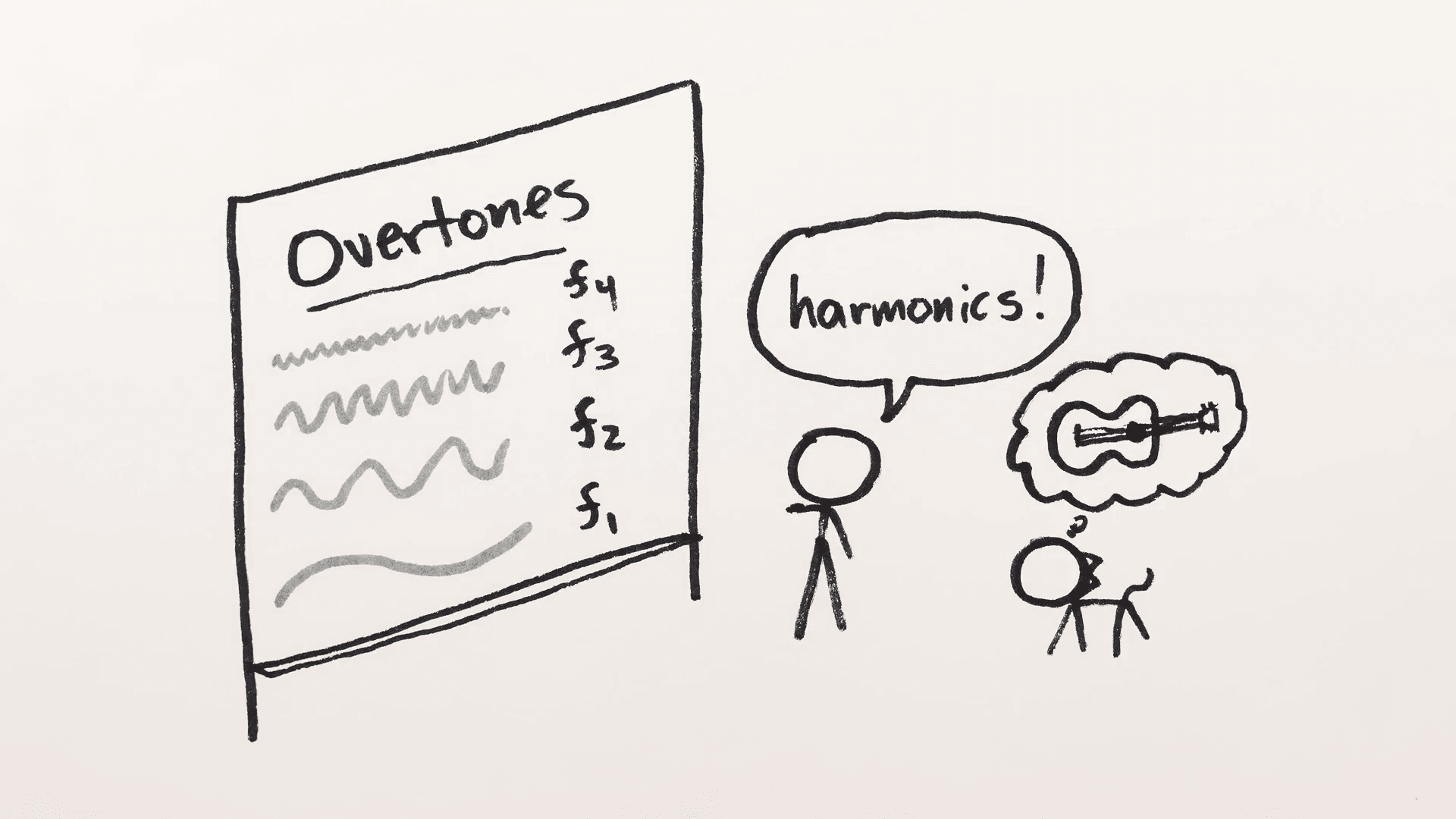
    Dissonance — the discomfort we feel when two or more musical notes feel mismatched — is more than just a subjective measure. In this video, Henry of Minute Physics delves into some of the physics involved in dissonance, first with simple sine waves and then with musical instruments. Our ears — and our brains — seem most troubled when two notes (and their overtones) are close but not quite matching in frequency. And, as Henry explains, the peaks and valleys between those agreements lead to many of the musical systems we have today. (Video and image credit: Minute Physics)

    Fediverse Reactions
  • “Architecture in Music”

    “Architecture in Music”

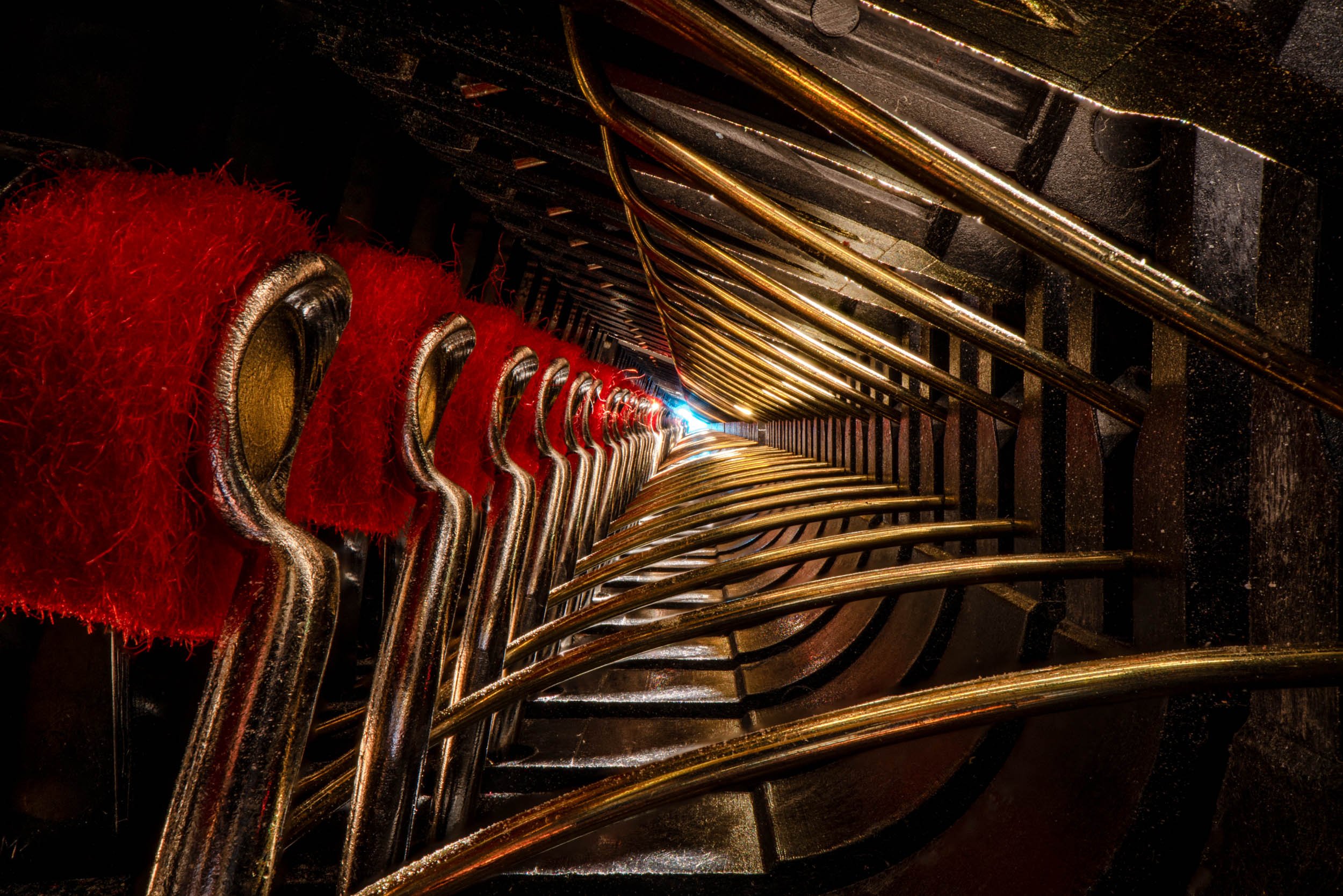
    Inside musical instruments gapes an emptiness that, to the eye of photographer Charles Brooks, resembles the vast architecture of music halls and cathedrals. In his series “Architecture in Music,” Brooks takes us into these empty spaces, revealing where the resonance at the heart of the instrument’s sound lies. In a stringed instrument like a violin, the vibration of the strings makes a relatively quiet sound on its own; it’s only in making the violin’s entire hollow body vibrate that resonance amplifies the strings. Similarly, wind instruments rely on air resonating within them to produce their sound. (Image credit: C. Brooks; via Colossal)

    Fediverse Reactions
  • The Architecture of Music

    The Architecture of Music

    Photographer Charles Brooks offers a rare glimpse into the interiors of musical instruments in this series. Whether stringed, wind, or percussion, an instrument’s unseen interior structure creates the acoustic resonance needed for their music. Brooks makes these spaces feel like vast cathedrals of sound, which, to the pressure waves emanating from the instruments, they are. Which is your favorite? Personally, I love the graceful lines of the cello and the rough surface of the didgeridoo. (Image credit: C. Brooks; via Colossal)

  • Airflow in the Opera

    Airflow in the Opera

    Like so many other performers, the singers and musicians of New York’s Metropolitan Opera House were left without a way to safely perform when the SARS-CoV-2 pandemic began in early 2020. In search of safe ways to perform and rehearse, the Met turned to researchers at nearby Princeton University, who worked directly with the performers to explore aerosol production and airflow in the context of professional opera.

    Through visualization and other experiments, the team found that the highly-controlled breathing of opera singers actually posed a lower risk for spreading pathogens than typical speaking and breathing. Most of a singer’s voiced sounds are sustained vowels, which produce a slow, buoyant jet that remains close to a singer. The exception are consonants, which created rapid, forward-projected jets.

    In the orchestra, the researchers found that placing a mask over the bell of wind instruments like the trombone reduced the speed and spread of air. One of the highest risk instruments they found was the oboe. Playing the oboe requires a long, slow release of air, but between musical phrases, oboists rapidly exhale any remaining air from their lungs and take a fresh breath. That rapid exhale creates a fast, forceful jet of air that necessitates placing the oboist further from others. (Image credit: top – P. Chiabrando, others – P. Bourrianne et al.; research credit: P. Bourrianne et al.; via APS Physics; submitted by Kam-Yung Soh)

  • Featured Video Play Icon

    Opera Singer Air Flow

    What does the air flow from a trained opera singer look like? That’s the question behind this study, which combines music and fluid dynamics. Using an infrared camera tracking carbon dioxide (CO2) exhalations from a singer during a performance allowed researchers to identify several important flow features. When breathing, air flows out the singer’s nose in a tight, downward jet with an initial velocity around 1 m/s.

    While singing, air leaves the mouth at a much lower velocity, especially during vowels where the mouth is open. With less momentum behind these exhalations, they can drift upward on the buoyant warmth of the singer’s breath. During consonants — especially plosives like t, k, p, b, d, and g — a rapid burst of air leaves the mouth, traveling at nearly 10 m/s. From the perspective of COVID-19 safety, it’s these plosive jets that are likely to spread contaminated droplets. (Image and video credit: MET Orchestra; research credit: P. Bourrianne et al.; via Improbable Research; submitted by Kam-Yung Soh)

  • Controlling Aerosols Onstage

    Controlling Aerosols Onstage

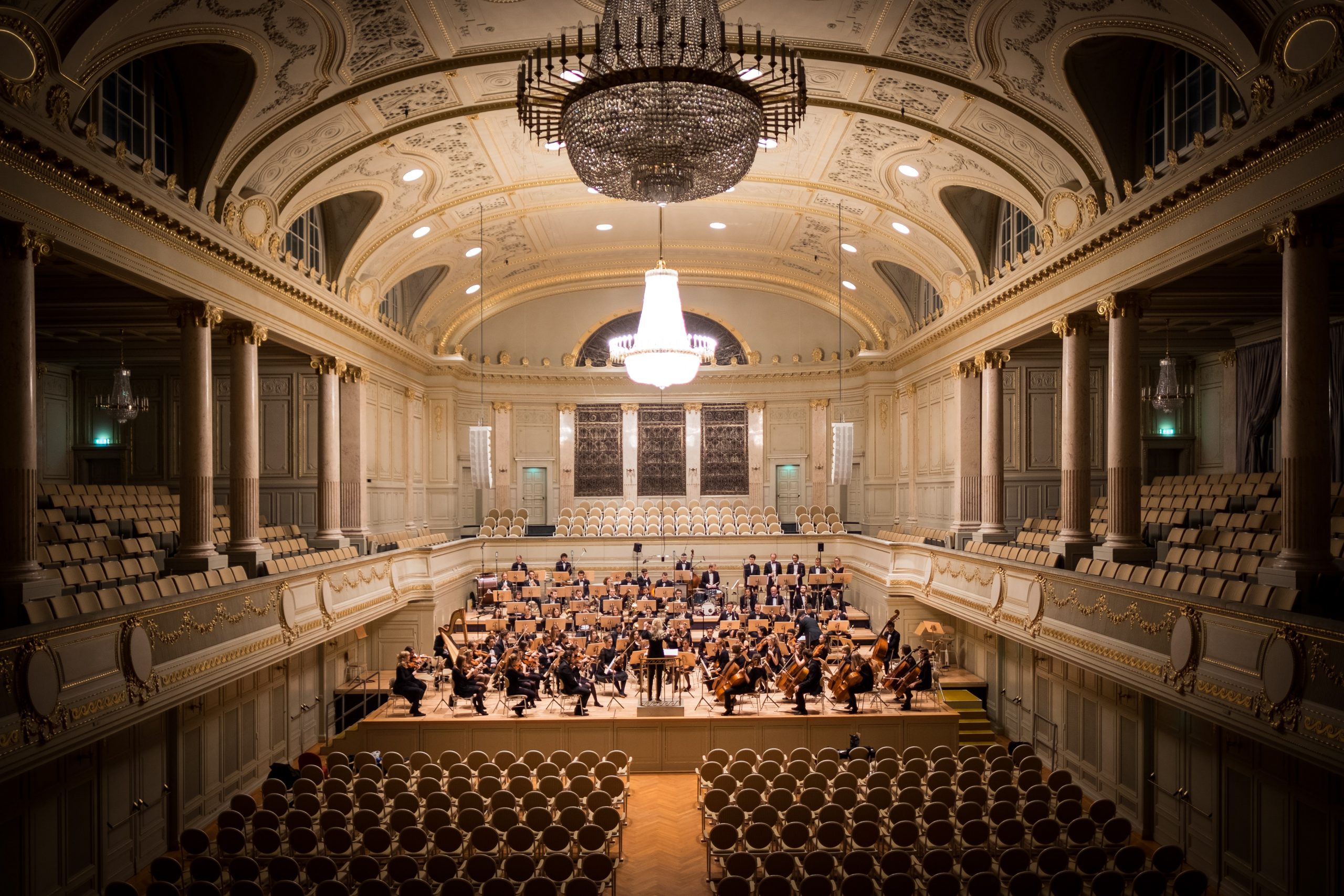
    Few industries saw more disruption from the pandemic than the performing arts. To help orchestras return to the concert hall in a way that keeps performers and audience members safe, researchers have simulated air flow and aerosols around musicians onstage. Some instruments — like the trumpet — are super-spreaders when it comes to aerosol production, and, in the conventional organization of orchestras, those aerosols have to travel through other sections of the orchestra before reaching air vents, putting more musicians at risk.

    (Upper left) Aerosol concentration for an orchestra performing in their original arrangement, with doors to the hall closed; (Upper right) Aerosol concentration in the modified musician arrangement, with doors open; (Bottom row) Time-averaged aerosol concentration in the breathing zone of performers for (left) the original arrangement and (right) with modified seating.
    (Upper row) Aerosol concentration for the orchestra’s original seating arrangement (left) and in the modified arrangement (right). (Bottom row) Time-averaged concentration of aerosol particles in the breathing zone of each musician in the original (left) and modified arrangements (right).

    Using Large Eddy Simulation, researchers looked at alternate seating arrangements for the Utah Symphony that could mitigate these risks. By rearranging the musicians so that instruments that produce lots of aerosols are closer to the air vents and open doors, the team reduced the average concentration of aerosols around musicians by a factor of 100, giving the performers a chance to return to the stage far more safely. (Image credit: top – M. Nägeli, simulation – H. Hedworth et al.; research credit: H. Hedworth et al.; via NYTimes; submitted by Kam-Yung Soh)

  • Featured Video Play Icon

    Dendritic

    “What happens when two scientists, a composer, a cellist, and a planetarium animator make art?” The answer is “Dendritic,” a musical composition built directly on the tree-like branching patterns found when a less viscous fluid is injected into a more viscous one sandwiched between two plates.

    Normally this viscous fingering instability results in dense, branching fingers, but when there’s directional dependence in the fluid, the pattern transitions instead to one that’s dendritic. In this case, that directionality comes from liquid crystals, whose are rod-like shape makes it easier for liquid to flow in the direction aligned with the rods.

    For more on the science, math, and music behind the piece, check out this description from the scientists and composer. (Video, image, and submission credit: I. Bischofberger et al.)

  • Featured Video Play Icon

    “It’s All About Flow”

    Fluid dynamicists, like other scientists, have lives and interests well beyond our research. Ivo Nedyalkov, for example, is a professional rapper in addition to a PhD-level fluid dynamicist. In “It’s All About Flow,” Dr. Ivo brings those areas of expertise together with a rap all about fluid dynamics. The version embedded here is a bit shorter than the full version, which digs not only into experimental fluid dynamics but into computational work as well.

    Check it out, and if you’d like to see the full lyrics and explanation behind them, he’s posted those as well. You can also ping me here or on Twitter if you’d like to know more about the phenomena he discusses. (Video and image credit: I. Nedyalkov/ASME; full video here; lyrics and explanation)

  • Featured Video Play Icon

    Fighting Resonance

    Resonance is a funny creature, as Dianna discovered when she tried to sing a rising scale through a tube. At certain notes, everyone who attempted to do it had their voices crack. Tracking down the source of the mystery means digging into what exactly resonance is and what the differences are between driving a system just before, at, and after resonance. Check out the video for the full acoustic story. (Video credit: Physics Girl)

  • Featured Video Play Icon

    The Mystery of Carnegie Hall’s Sound

    For nearly a century, the acoustics of Carnegie Hall were touted as among the very best in the world. But after a much-needed renovation in 1986, musicians and critics felt the magic of the old sound had been lost. In this video, Gizmodo explores the mystery of what changed. Was it a hole in the ceiling? The curtains that had been removed?

    Eventually, a second renovation – this time for warping of the stage floor – revealed the likely culprit. Concrete had been installed to reinforce the stage in the first renovation, and this changed the stage’s resonance. Previously, instruments like the bass had caused the wooden floor to vibrate, which amplified their sound. The concrete damped that vibration, cutting out a key ingredient in Carnegie’s acoustics. When the second renovation restored the all-wooden stage, suddenly the venerable concert hall had its sound back. (Video credit: Gizmodo)