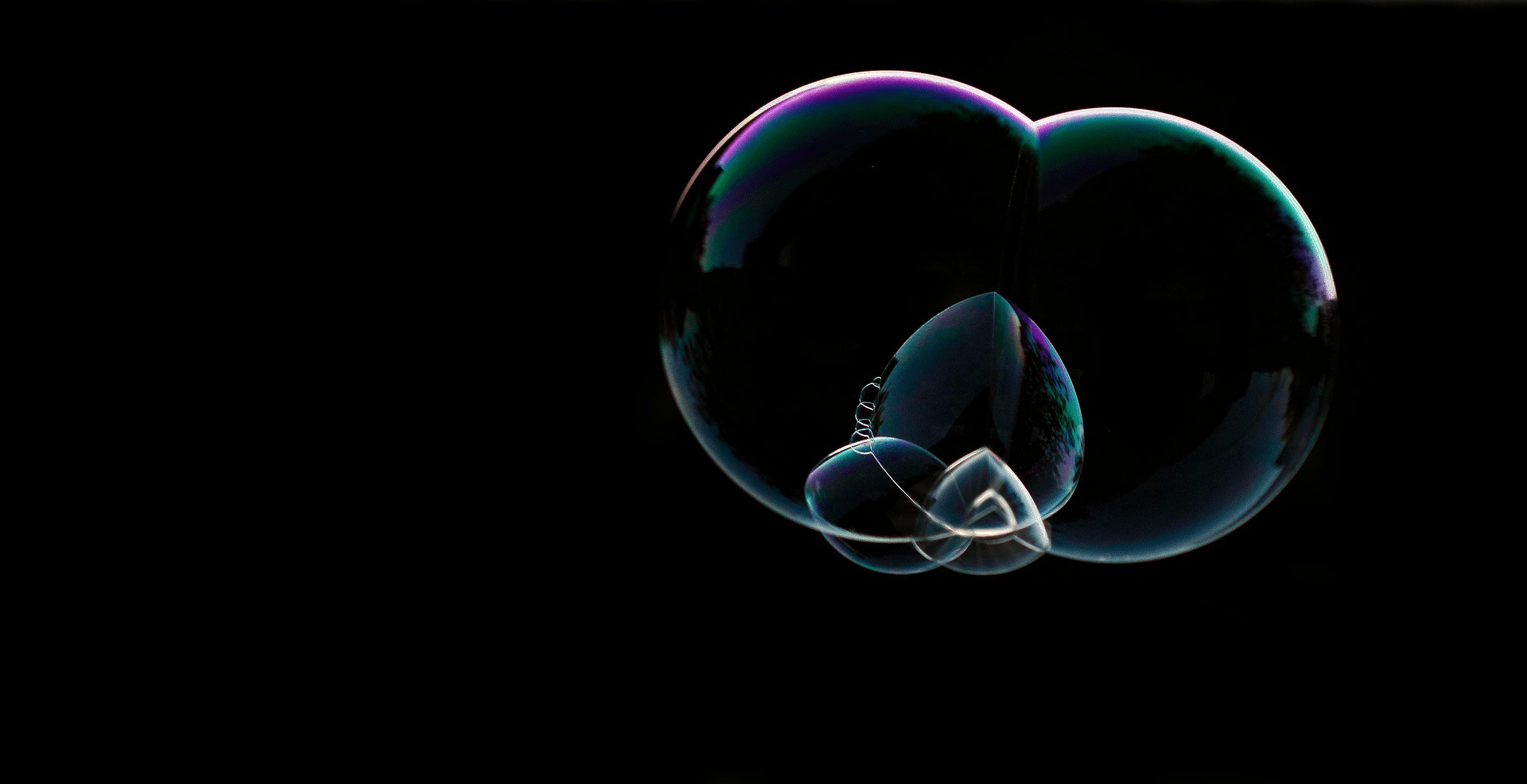
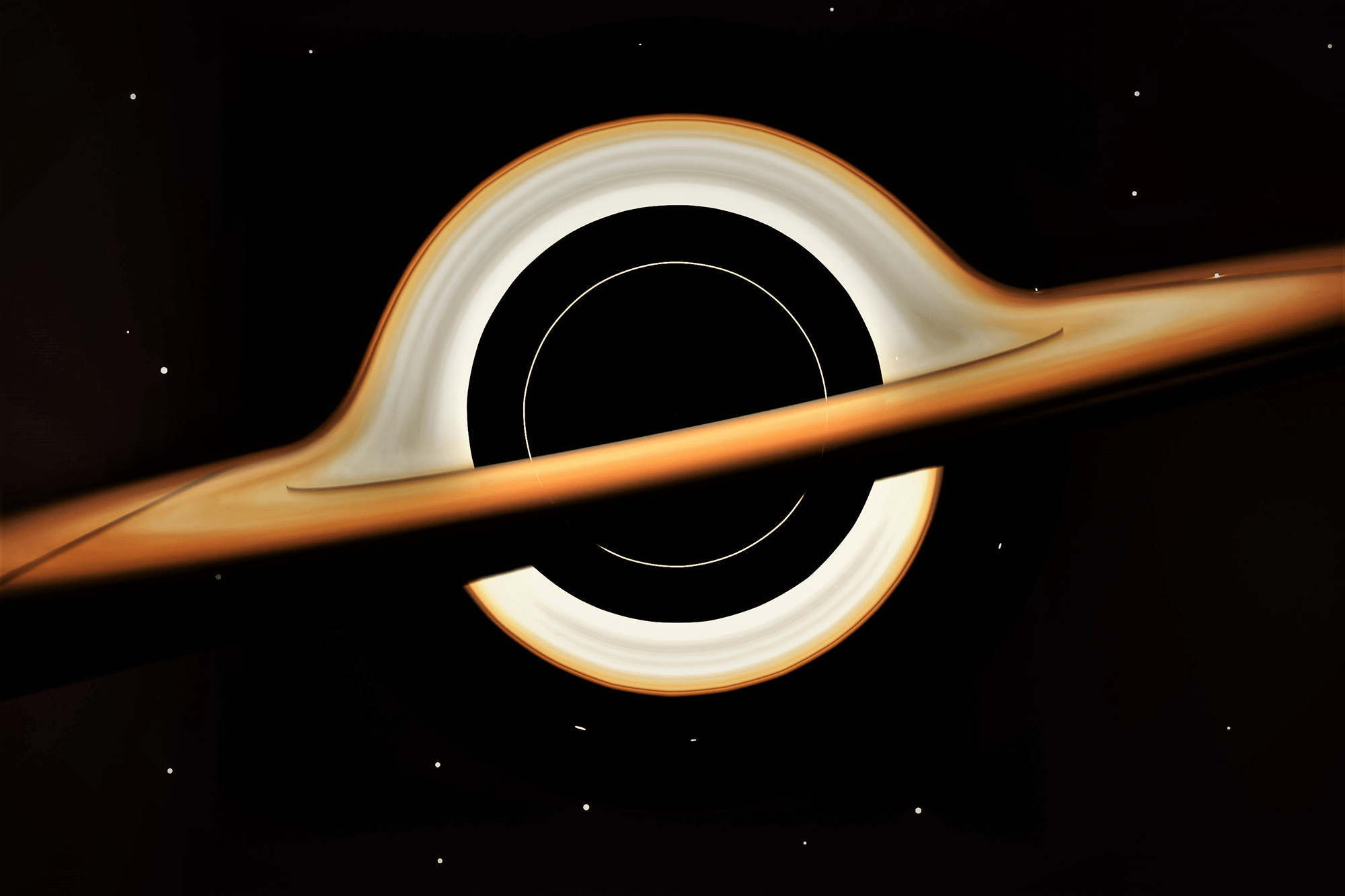
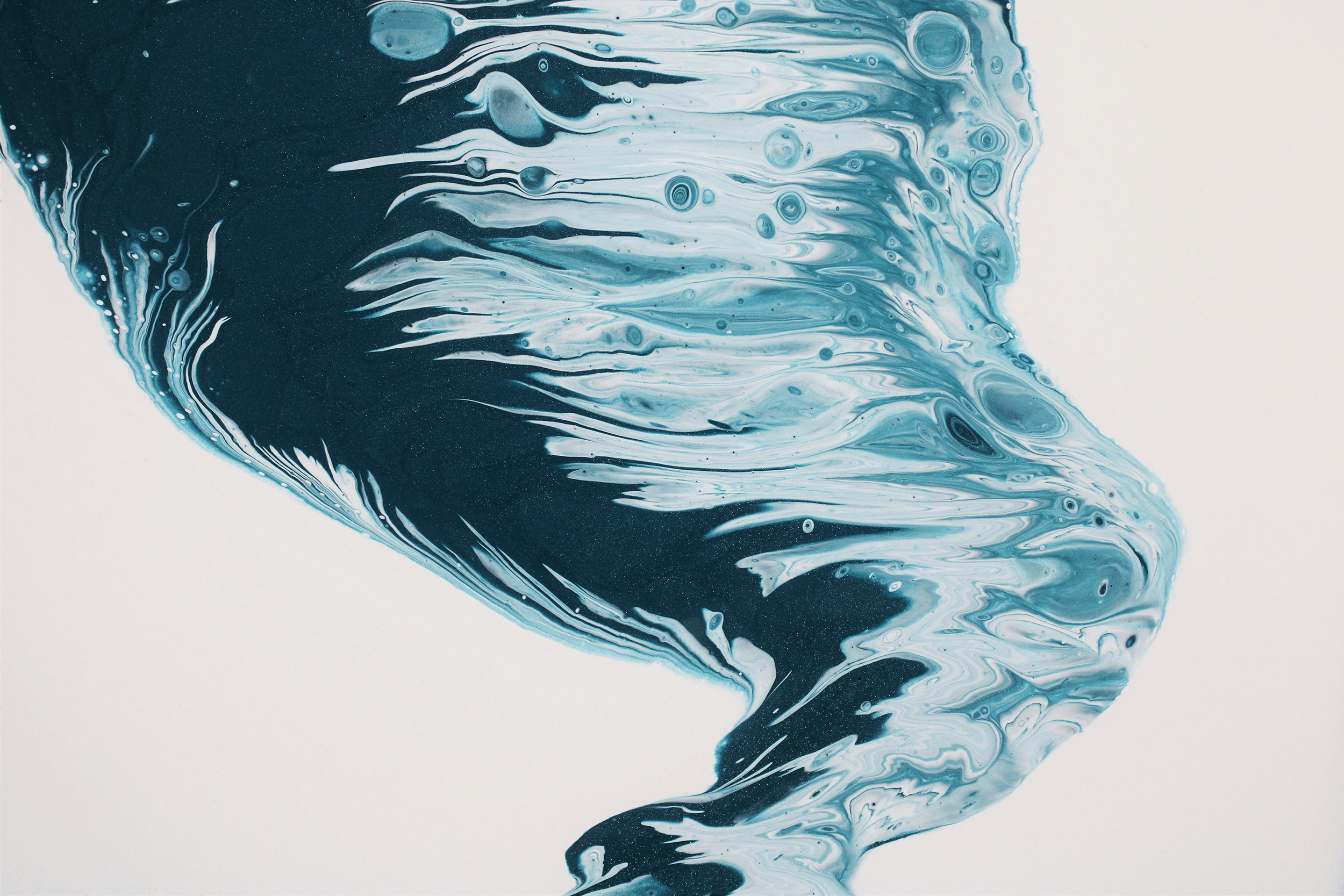
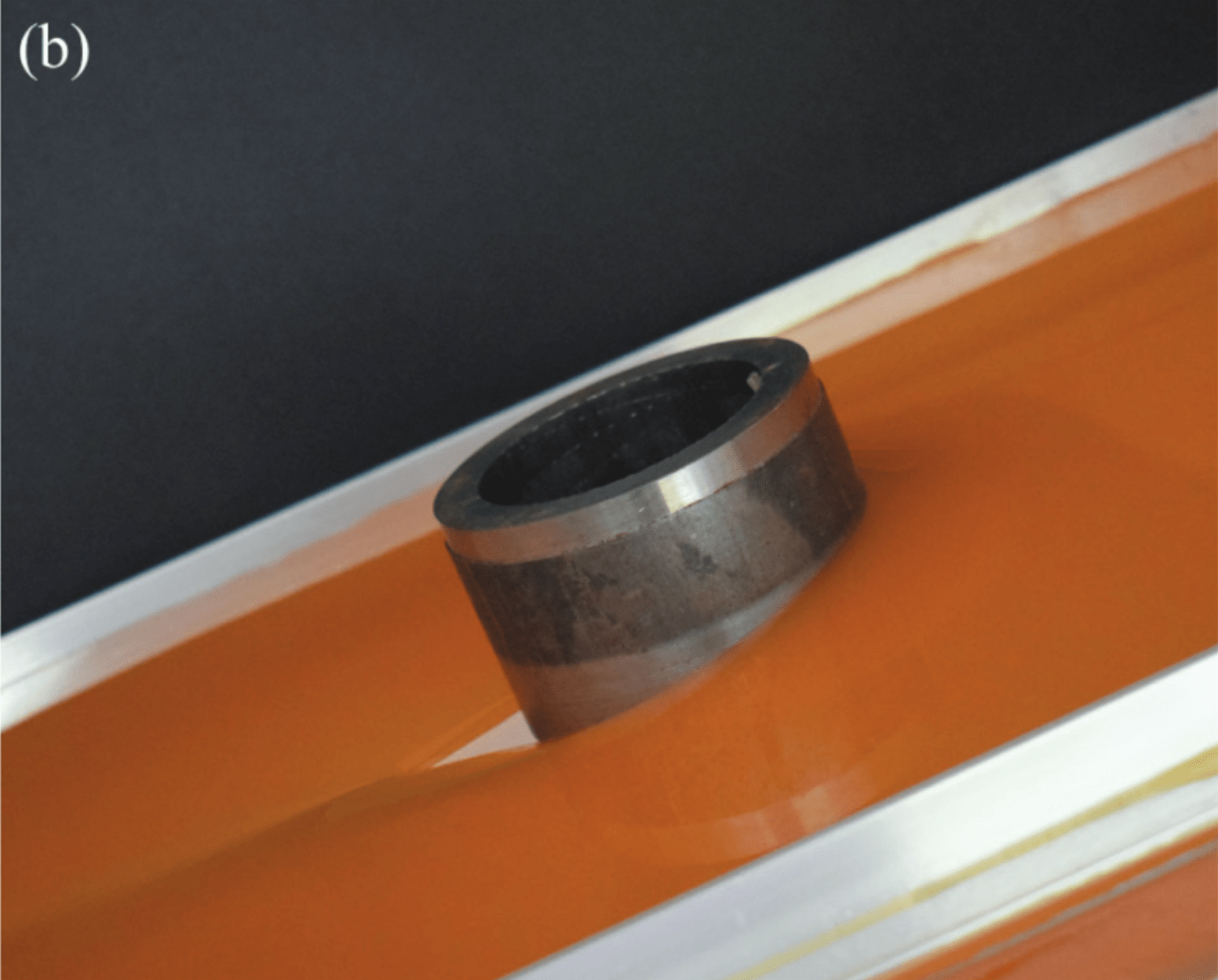
While not directly fluid dynamical, this video from Steve Mould uses water to illustrate mathematical concepts like fractals and space-filling curves. Water, it turns out, does a great job of drawing our eyes to the way these one-dimensional curves fill up two- and three-dimensional space. Check out the full video for a mathematical dive into the concepts. (Video and image credit: S. Mould)
Tag: mathematics

Abel Prize Winner Luis Caffarelli
Tomorrow mathematician Luis Caffarelli will receive the Abel Prize — one of the highest honors in mathematics — in part for his work in fluid dynamics. Caffarelli is one of the authors of a partial proof of regularity for the Navier-Stokes equations, the equations governing fluid motion. A full proof of regularity and smoothness — essentially showing that the equations never break down or blow up to infinity — is one of the open Millennium Problems. Caffarelli is the first mathematician born and educated in South America to receive the Abel Prize. Congratulations to Professor Caffarelli! (Image credit: N. Zunk/University of Texas at Austin; via Nature; submitted by Kam-Yung Soh)

Optimal Bubble Clusters
With a bubble wand, it’s quite easy to create clusters of two or more soap bubbles. These clusters seem to instantly find the lowest energy state, forming a shape that minimizes the cluster’s surface area (including interior walls) for the volume of air they enclose. But mathematicians have struggled for thousands of years to prove that this is actually the case.
In 1995, mathematician John Sullivan had a breakthrough conjecture, at least for some types of bubble clusters. A proof for double bubble clusters quickly followed. But then progress stalled out, with the triple bubble version seemingly out of reach. But now a duo of mathematicians have published proofs for Sullivan’s bubble clusters in triple and quadruple clusters. Learn their story over at Quanta. (Image credit: N. Franz; via Quanta Magazine)

Squeeze or Splatter?
Many a white shirt has met the disaster of a nearly-empty condiment bottle. One moment, you’re carefully squeezing out ketchup, and the next — sppplltlttt — you’re covered in red splatters. This messy phenomenon of gas displacing a liquid is widespread, showing up in condiments, some volcanic eruptions, and even the reinflation of a collapsed lung. Researchers have now constructed a mathematical model to fully capture and explain the process.
When you squeeze a container with both air and a liquid — like ketchup — in it, the air is easily compressed but the liquid is not. The extra pressure of the air creates a driving force that pushes the liquid out, despite its viscous resistance. Most of the time, these two forces are balanced, and the ketchup flows smoothly out of the container. But when the volume of ketchup is small compared to the air, squeezing can overpressurize the air, driving the ketchup out in an uncontrolled burst.
Luckily, the mathematics also suggest a solution to this problem: squeeze more slowly and double the size of the nozzle. You can also, they note, simply remove the top to avoid splatter. (Image credit: Rodnae Productions; research credit: C. Cuttle and C. MacMinn; via Ars Technica; submitted by Kam-Yung Soh)

Searching for Stability
At present, there is no theory of relativistic fluid dynamics, which is problematic for those studying black holes, neutron star mergers, and heavy-ion collisions, where fluids may wind up moving at near-light speeds. Many current models for these systems allow energy to dissipate using equations that permit faster-than-light speeds. A new study shows that these assumptions lead to problematic results.
The paper shows that, if the mathematical equations allow for faster-than-light speeds — thereby breaking causality — then the fluid system will behave stably to one observer and unstably to an observer in a different reference frame. In other words, there will always be a frame of reference where disturbances grow exponentially and destroy the system. That’s clearly not ideal.
Fortunately, the paper also offers an important solution: if causality holds, the stability (or instability) of a system is the same regardless of reference frame. That’s incredibly powerful for researchers because it means that they only have to show the stability of the system in one reference frame to know that the result applies to all reference frames, so long as they’re not breaking causality. (Image credit: A. Pal; research credit: L. Gavassino; via APS Physics; submitted by Kam-Yung Soh)

Blowing Up Euler
The mathematics of fluid dynamics still have many unknowns, which makes them an attractive playground for mathematicians of all stripes. One perennial area of interest is the Euler equations, which describe an ideal (i.e., zero viscosity), incompressible fluid. Mathematicians suspect that these equations may produce impossible answers — vortices with infinite velocities, for example — under just the right circumstances, but so far no one has been able to prove the existence of such singularities.
A recent Quanta article delves into this issue and the race between researchers using traditional methods and those using new deep learning techniques. Will the singularities be found and who will get there first? It’s well worth a read, whether theoretical mathematics is your thing or not. (Image credit: S. Wilkinson; see also Quanta; submitted by Jo V.)

Why Masks Cut COVID-19 Transmission So Well
Face masks are an important tool for curtailing disease transmission, and this video explains how even imperfect masks do a much better job of protecting people than you may think. Strictly speaking, this video is not fluid dynamical — fluid dynamics plays more of a role in the details of what makes a mask effective — but the video is so good and so timely that I just have to share it. Given it a watch and then go explore the interactive essay to get an even better handle on mask mathematics. (Image and video credit: Minute Physics; see also The Multiplicative Power of Masks)

Lava Barriers
Inspired by protecting people and property from lava flows, researchers investigated how viscous fluids flow downhill past large obstacles. As seen above, when the obstacle is tall enough that the flow does not overtop it, there’s substantial deflection of the fluid both up- and downstream. Upstream of the barrier, the flow gets deeper, and downstream there’s a dry region left behind.
The researchers modeled these flows numerically, leading to equations designers can use to predict the necessary height, strength, and shape of barrier necessary to protect areas from encroaching lava. (Image and research credit: E. Hinton et al.)

Breaking the Euler Equations
Mathematicians like to break things. Or, more exactly, they like to know when the equations we use to describe physics break down. One popular target in fluid mechanics are the Euler equations, which describe the motion of frictionless, incompressible flows. Mathematicians have been on the hunt for centuries for situations where these equations predict singularities, points where the velocity or vorticity of a fluid change infinitely quickly. Since that can’t happen in reality (at least as far as we understand it), these singularities indicate weaknesses in our mathematical description and may help uncover fundamental flaws in our understanding.
Despite centuries of effort, the Euler equations withstood mathematical assault… until recently. Since 2013, a series of mathematicians have been successfully chipping away at the Euler equations’ seeming perfection with a series of scenarios that seem to lead to singularities. One is similar to stirring a cup of tea, except that you stir the upper part of the cup in one direction and the bottom half in the opposite. As the flow develops, a singularity occurs where the secondary flows of these two stirring motions collide. For more, check out these two articles over at Quanta. (Image credit: L. Fotios; see also Quanta Magazine 1, 2)

An Introduction to the Reynolds Number
For those who’d like an overview of the mathematics involved in fluid dynamics, Numberphile has a lovely introduction, given by our friend Tom Crawford. The governing equations in fluid dynamics, the Navier-Stokes equations, are quite complicated, but that’s just been inspiration for scientists and mathematicians to come up with clever ways to simplify them. And, ultimately, that’s what the Reynolds number is — a way to help us judge which forces, and therefore which mathematical terms, are the most important in a given problem. (Video credit: Numberphile; submitted by COMPLETE)