Tag: insects

  • The Froghopper’s Incredible Suction

    The Froghopper’s Incredible Suction

    The tiny froghopper feeds on the sap in xylem, a feat that requires overcoming more than a megapascal of negative pressure. Plants, as you may recall, transport water and nutrients from their roots to their leaves through negative pressure, essentially pulling on the water as if it were a rope. So drinking that sap is not as simple as making a hole and waiting for sap to flow. Instead, froghoppers must generate even more suction than the plant. Some scientists have been so skeptical that such a feat is even possible that they’ve disputed whether plants are truly at such high negative pressures.

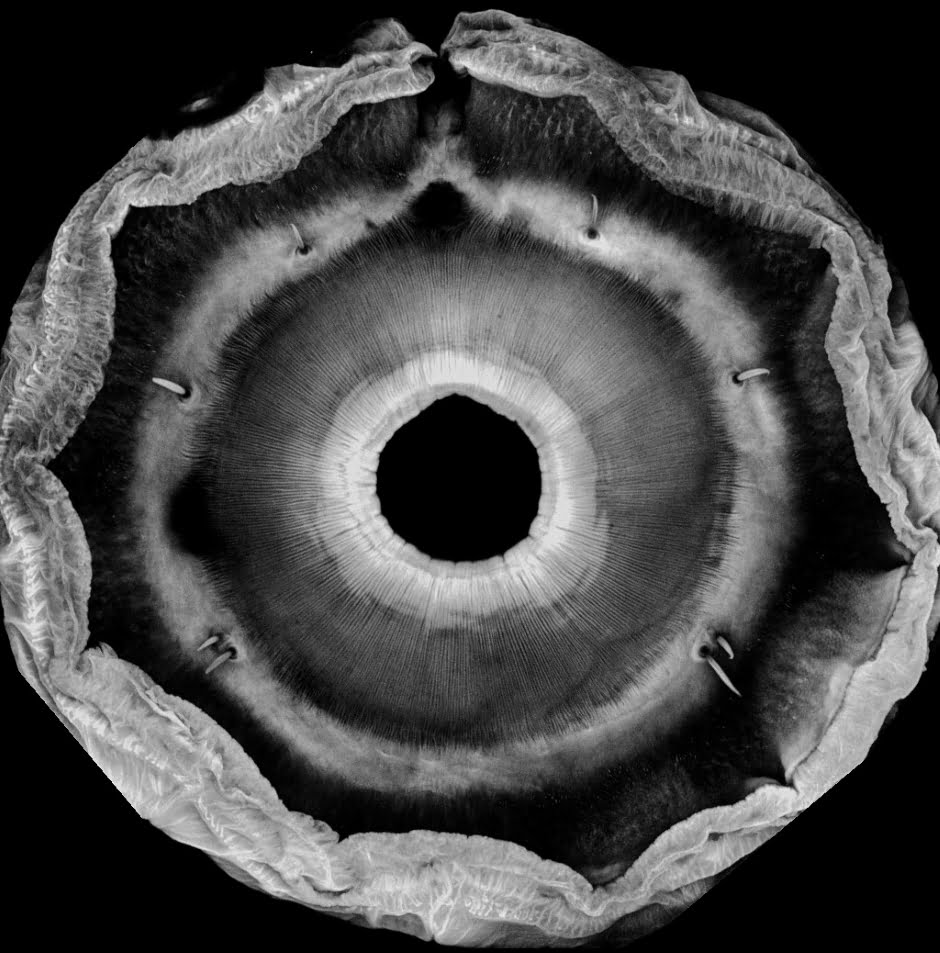
    But a new study shows that froghoppers can, indeed, generate immense suction – up to nearly 1.5 megapascals. (By comparison, humans generate less than a tenth of that suction, even on a stubborn milkshake.) The researchers used two complementary methods to prove the insects’ ability. First, they studied the anatomy of the pumplike structure in the froghoppers’ heads, where the suction is generated, and determined the insects’ sucking potential from a simple calculation of force divided by area. Then, they observed feeding froghoppers in a chamber where they could measure their metabolic rates through carbon dioxide output. As the froghoppers fed, their metabolic rates spiked to 50 – 85% higher than when at rest. Only when the xylem tensions exceeded the theoretical biomechanical limits for froghopper suction did the tiny insects seem to stop feeding. (Image and research credit: E. Bergman et al.; via Science News; submitted by Kam-Yung Soh)

  • Featured Video Play Icon

    Unusual Insects Taking Off

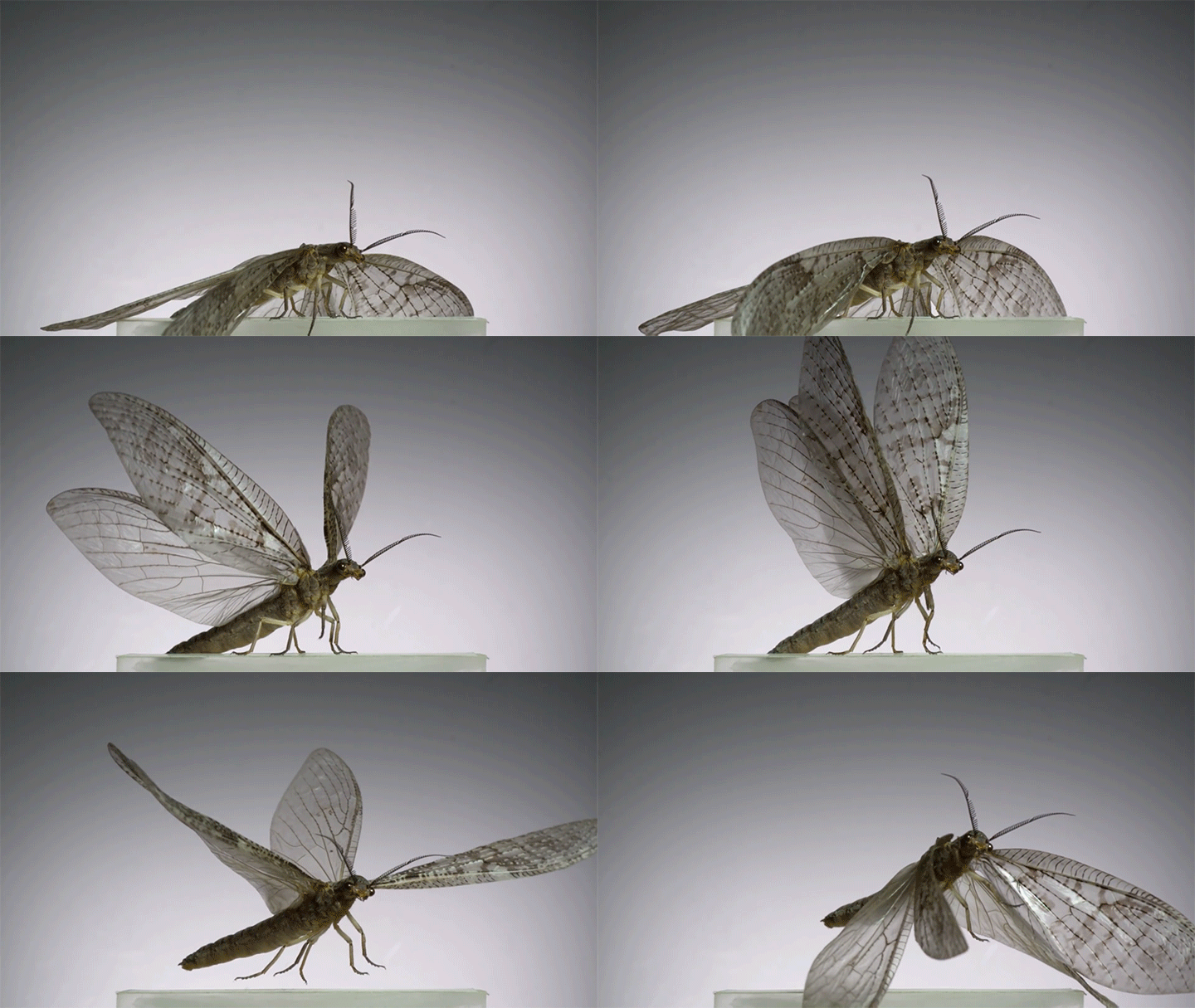
    What do you do when you’re an insect researcher with a high-speed camera? Why, film all sorts of unusual insects from your backyard as they take off and fly! Here Dr. Adrian Smith of Ant Lab shows us a slew of insects that are not unusual for their rarity — you can probably find many of these in your own yard — but they are rarely seen in insect flight research. Like many of the species we’ve seen before, lots of these fliers use a figure-8 wingstroke to stay aloft. But one feature that really struck me as I watched was how amazingly flexible many of their wings were. For many of them, parts of their wings actually curl back on themselves during parts of the stroke. As engineers, our first instinct would be to avoid that kind of complexity, but I expect that it must give the insects some kind of benefit — otherwise nature would have eliminated it. (Image and video credit: Ant Lab/A. Smith; via Colossal)

  • Featured Video Play Icon

    How Animals Stay Dry in the Rain

    Getting wet can be a problem for many animals. A wet insect could quickly become too heavy to fly, and a wet bird can struggle to stay warm. But these animals have a secret weapon: tiny, multi-scale roughness on their wings, scales, and feathers that helps them shed water. Watch the latest FYFD video to learn how! (Image and video credit: N. Sharp; research credit: S. Kim et al.)

  • Featured Video Play Icon

    The Cricket’s Chirp

    Growing up, my summer nights often featured a chorus of crickets and bull frogs. Even now, the sound of those chirps reminds me of home. So how do crickets make their calls? As this video shows, it’s a matter of scraping the hard edge of one wing along a tiny series of spines, similar to the teeth of a comb, that sit on the other wing.

    How fast the cricket’s wings move affects how frequently the chirps are heard. Being cold-blooded, the insects’ speed is affected by the external temperature, which is why you can count cricket chirps to estimate the temperature. Essentially, the chemical reactions necessary to regulate wing movement are temperature-dependent, so colder crickets produce slower chirps. (Video and image credit: Deep Look)

  • Holding Fast in the Flow

    Holding Fast in the Flow

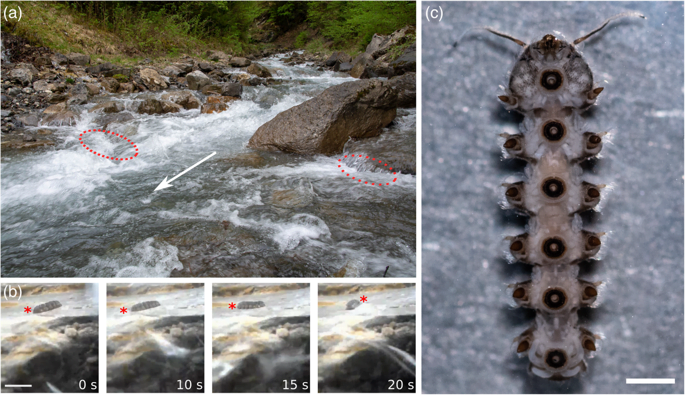
    Many tiny creatures in the natural world face living in fast flows. The larvae of the net-winged midge, for example, forage their way through fast-flowing Alpine springs with speeds of 3 m/s or more. You or I would find standing in such water a challenge, but these larvae are unbothered, thanks to the clever suction-cup-like appendages that help anchor them to rough rocks.

    The larvae generate their strong attachment with an outer rim flexible enough to conform to uneven surfaces. When they activate the central piston of the suction cup, this creates a seal strong enough to withstand forces up to 600 times the larvae’s body weight. But holding on to one spot forever is hardly useful, so the larvae also have a V-shaped notch in the cup controlled by dedicated muscles. When activated, this quickly breaks the seal, allowing the larvae to relocate. (Image and research credit: V. Kang et al.; via The Engineer; submitted by Marc A.)

  • Featured Video Play Icon

    “-N- Uprising”

    Although Thomas Blanchard’s latest short film, “-N- Uprising”, is less overtly fluid dynamical, fluids underlie almost every aspect of it. The blossoming of flowers is often driven by osmosis and water pressure. Spiders rely on hydraulic pressure to move their limbs, and many insects first unfurl their wings by pumping hemolymph through the network of veins that lace them. Even when hidden beneath the surface, fluid dynamics is everywhere. (Video credit: T. Blanchard; via Colossal)

  • Featured Video Play Icon

    The Sharpshooter Insect

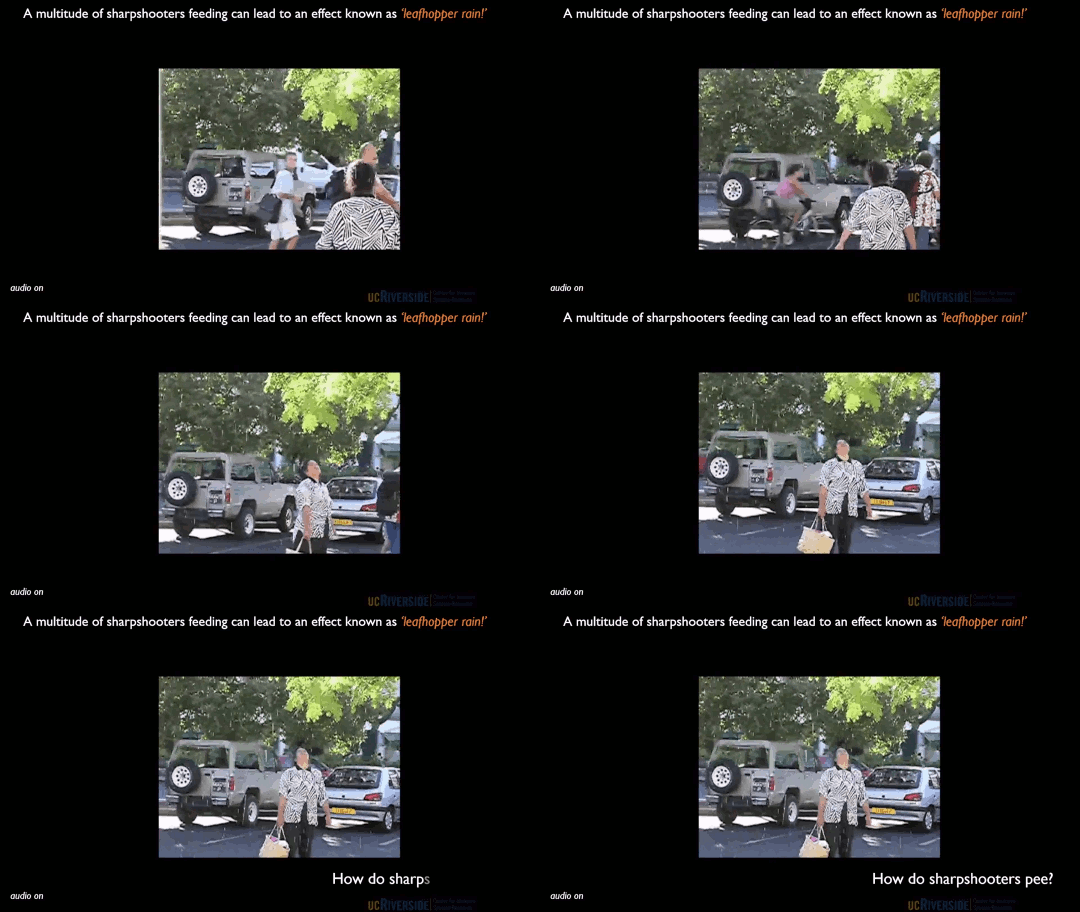
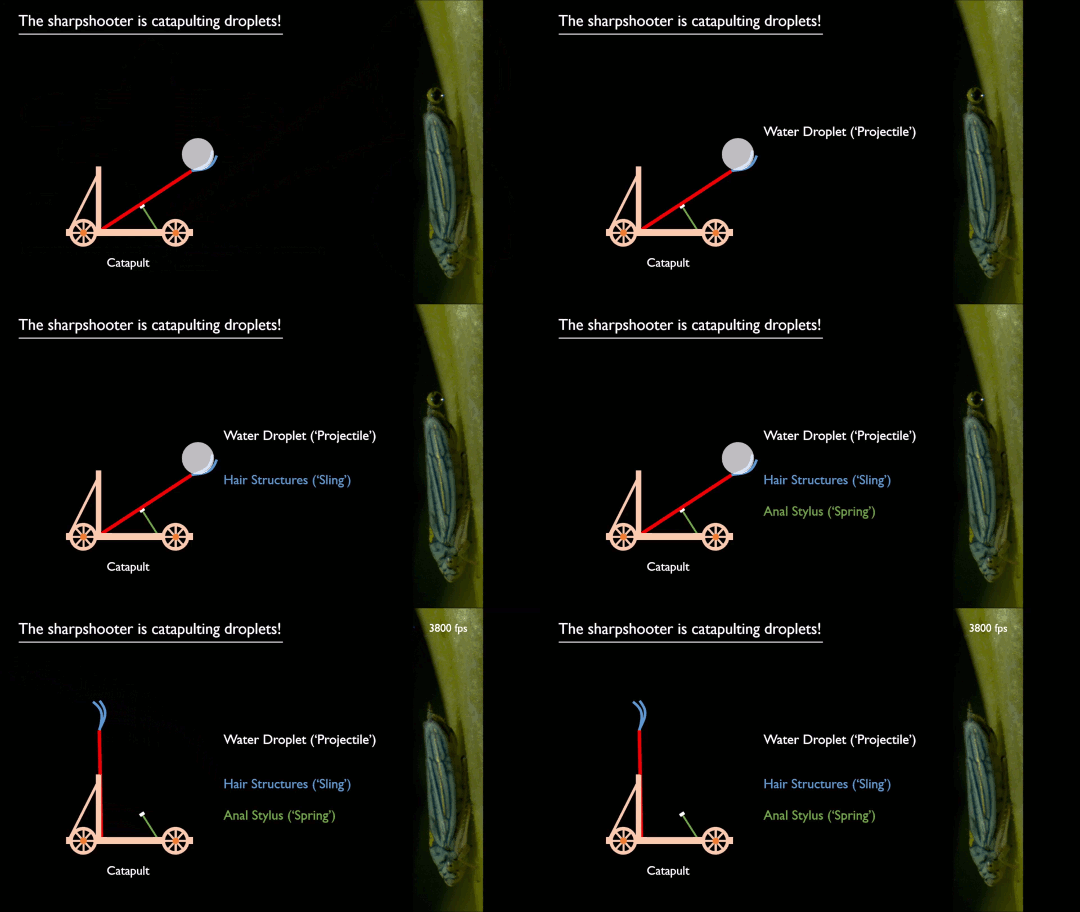
    The sharpshooter is a small, sap-sucking insect capable of consuming more than 300 times its body weight in fluid each day. To sustain that level of intake, the insect also has to have a robust mechanism for expelling excess fluid, and that particular talent has earned the insect the nickname of the “pissing fly”. Together a group of sharpshooters can expel enough fluid to imitate rain (top).

    Individually, the insects form a droplet on hydrophobic hairs near their anus. Once the droplet is large enough, those hairs bend like a spring, and the droplet gets catapulted off the insect with an acceleration greater than 20g. That makes it among the fastest reactions in the natural world – more than twenty times the acceleration of a cheetah. Understanding this mechanism is valuable for engineers building robotics as well as for finding ways to counter the agricultural menace the sharpshooters present when it comes to spreading diseases among infected crops. (Image and video credit: E. Challita et al.; via WashPo; submitted by Marc A.)

  • Review: “How to Walk on Water and Climb Up Walls”

    Review: “How to Walk on Water and Climb Up Walls”

    “An eight-year-old girl kicked her feet back and forth on the seat of a Long Island Railroad train. I beckoned her to cover over and pointed to the top of my winter jacket, which I slowly unzipped. Inside, nestling against me for warmth, were ten snakes, their forked tongues waving back and forth. The child shrieked and ran back over to her mother, who was napping. ‘That man has a coat full of snakes,’ she shouted.”

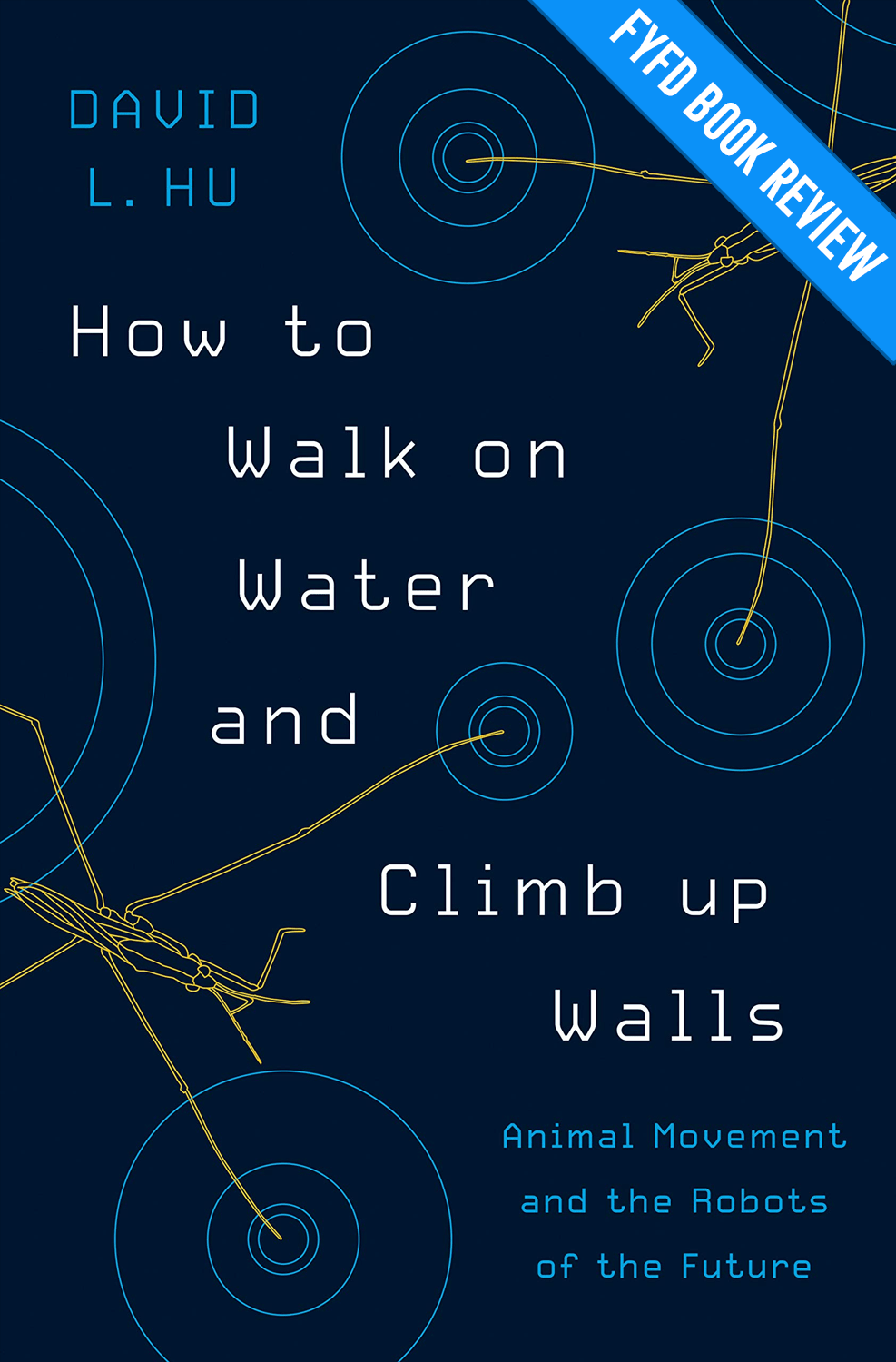
    So begins Chapter 2 of Dr. David Hu’s new book, How to Walk on Water and Climb Up Walls (*), a captivating and funny journey through animal locomotion and biorobotics. Don’t let that fool you, though; this book has plenty of fluid dynamics to it. Long-time FYFD readers will recognize some of the topics, such as the fluid-like behavior of fire ants, how eyelashes keep our eyes clean and moist, and why swimming behind an obstacle is so easy even a dead fish (like the one shown above) can do it.

    There are plenty of exciting, new stories as well, like how sandfish – a type of lizard – can swim under sand and why a lamprey’s nervous system may lead to better robots. The explanation of how cockroaches are virtually unsquishable and able to squeeze themselves into crevices a quarter of their height absolutely floored me. 

    Hu’s book offers a front-row seat to research at the cutting edge of biology, engineering, and physics, with anecdotes, explanations, and applications that will stick with you long after you put the book down. If you’re looking for a holiday gift for yourself or another science-lover, check this one out for certain (*).

    *Disclosures: I purchased my copy of this book using my own funds, and this review is not sponsored in any way. This post contains affiliate links – marked with (*); if you click on one of these links and purchase something, FYFD may receive a small commission at no additional cost to you.

    (Image credits: book – Princeton University Press; fish – D. Beal et al.; ants – Vox/Georgia Tech; eyelashes –  G. Diaz Fornaro; shark denticles – J. Oeffner and G. Lauder)

  • Featured Video Play Icon

    Flying Beetles, Stinging Nettles, and Jellyfish

    In the latest JFM/FYFD video, we tackle some of the less pleasant aspects of summer weather: stopping invasive insects, understanding how plants dispense poison, and looking at the physics behind jellyfish stings. And if you’ve missed any of our previous videos, we’ve got you covered. (Image and video credit: T. Crawford and N. Sharp)

  • Staying Dry Underwater

    Staying Dry Underwater

    Many insects are known to quest underwater, but few are as adept at it as the alkali fly. This species has taken common attributes among flies – being covered in tiny hairs and a waxy layer – and really upped the ante. Their extra hairiness and extra waxiness make them extremely difficult to get wet, even in the excessively salty and alkaline waters of California’s Mono Lake, which are enough to defeat all but algae, brine shrimp, bacteria, and alkali flies.

    Staying dry is a challenge, but only one of many this insect tackles. The combination of hair and wax over the insect makes it superhydrophobic, coating it in a silvery layer of air as it crawls below the surface. All that air is buoyant, so to walk underwater, the fly has to exert forces up to 18 times its body weight just to keep from popping back up to the surface.

    The shimmering bubble also helps the fly breathe. Insect respiratory systems use openings all over the exoskeleton to exchange oxygen with the ambient atmosphere via diffusion. While diffusion of oxygen does still happen underwater, it’s a much slower process there. The air sheath around the fly creates a large surface area for oxygen to diffuse, which helps counter the lower diffusion rate. Inside the sheath, the fly breathes as it normally does. (Image and research credit: F. van Breugel and M. Dickinson; via Gizmodo; submitted by @1307phaezr)