Tag: icing

  • Avoiding Ice

    Avoiding Ice

    Keeping ice from forming on a surface is a major engineering challenge. Typically, there’s no controlling certain factors – like the size and impact speed of droplets – so engineers try to tame ice by changing the surface. This can be through chemicals – as with deicing fluids used on aircraft – or by tuning the surface itself.

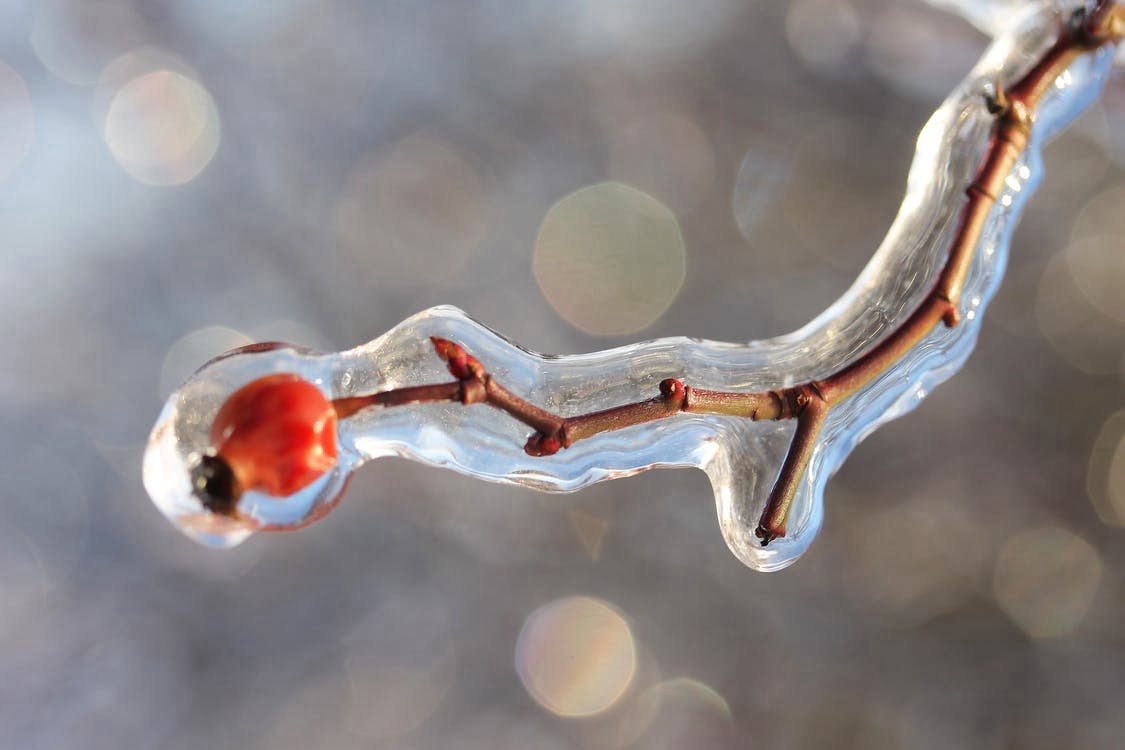
    One way to do this is by making the surface superhydrophobic – or extremely water repellent. These surfaces are rough on a nanoscale level, but they’re delicate, and once ice gets a grip on them, it’s even harder to remove. In a recent study, however, researchers used particles with both hydrophobic and hydrophilic – water-attracting – properties to create a superior ice-resistant surface. The combination of hydrophobic and hydrophilic aspects to the particles made supercooled droplets break up on contact with the surface. This made the drops smaller and decreased their contact time, making it harder for them to stick and freeze. (Image credit: Pixabay; research credit: M. Schwarzer et al.; via Chembites; submitted by Kam-Yung Soh)

  • Surfaces That Scrape Off Ice

    Surfaces That Scrape Off Ice

    Ice can be a terrible pest, freezing to surfaces like roads and airplane wings and causing all sorts of havoc. Some surfaces, though, can actually prompt a freezing drop to scrape itself off. There are a couple key effects in play here. The first is that the surface is nanotextured – in other words, it has extremely small structures on its surface. This makes it hydrophobic, or water-repellent. The second key ingredient is that the drop is cooling evaporatively; that means heat is escaping along the air-water interface instead of conducting through the solid surface. As a result, the freezing front forms at the interface and pushes inward. Water expands as it freezes, which tries to force the interior liquid out, toward the bottom of the drop. On a normal surface, this would force the contact line – where air, water, and surface meet – to push outward. But the nanotexture of the hydrophobic surface pins that line in place. So the expanding ice pushes the frozen drop upward, scraping it off the surface! (Video and image credit: G. Graeber et al., source)

  • Ice Bridges

    Ice Bridges

    During winter, Canada’s Arctic Archipelago, home of the Northwest Passage, generally fills with sea ice. These ice bridges form in the long and narrow straits between islands. A new paper models ice bridge formation and break-up, showing that ice bridges can only form when ice floating in the strait is sufficiently thick and compact. To form a bridge, wind must first push the ice together and then frictional forces between individual pieces of ice must be large enough to resist wind or water driving them apart. As temperatures drop, the individual ice chunks can then freeze together into solid sheets until summer returns.

    The existence of a critical thickness and density of the ice field for ice bridge formation has important implications for climate change. As Arctic temperatures warm for longer periods, these waters may no longer generate ice of sufficient thickness and quantity for ice bridges to form. Since ice bridges serve as important oases for marine mammals and sea birds and help isolate Arctic sea ice from warmer waters, their loss will have a profound impact on both Arctic ecology and global climate. (Image credit: NASA Earth Observatory; research credit: B. Rallabandi et al.; via Physics Buzz)

  • Icy Spikes

    Icy Spikes

    Water is one of those strange materials that expands when it freezes, which raises an interesting question: what happens to a water drop that freezes from the outside in? A freezing water droplet quickly forms an ice shell (top image) that expands inward, squeezing the water inside. As the pressure rises, the droplet develops a spicule – a lance-like projection that helps relieve some of the pressure. 

    Eventually the spicule stops growing and pressure rises inside the freezing drop. Cracks split the shell, and, as they pull open, the cracks cause a sudden drop in pressure for the water inside (middle image). If the droplet is large enough, the pressure drop is enough for cavitation bubbles to form. You can see them in the middle image just as the cracks appear. 

    After an extended cycle of cracking and healing, the elastic energy released from a crack can finally overcome surface energy’s ability to hold the drop together and it will explode spectacularly (bottom image). This only happens for drops larger than a millimeter, though. Smaller drops – like those found in clouds – won’t explode thanks to the added effects of surface tension. (Image credit: S. Wildeman et al., source)

    ETA: A previous version of this post erroneously said this was freezing from the “inside out” instead of “outside in”.

  • Featured Video Play Icon

    Growing Snowflakes

    Watching a snowflake grow seems almost magical–the six-sided shape, the symmetry, the way every arm of it grows simultaneously. But it’s science that guides the snowflake, not magic. Snowflakes are ice crystals; their six-sided shape comes from how water molecules fit together. The elaborate structures and branches in a snowflake are the result of the exact temperature and humidity conditions when that part of the snowflake formed. The crystals look symmetric and seem to grow identical arms simultaneously because the temperature and humidity conditions are the same around the tiny forming crystals. And the old adage that no two snowflakes are alike doesn’t hold either. If you can control the conditions well enough, you can grow identical-twin snowflakes! (Video credit: K. Libbrecht)

  • Featured Video Play Icon

    Fish, Feathers, and Phlegm

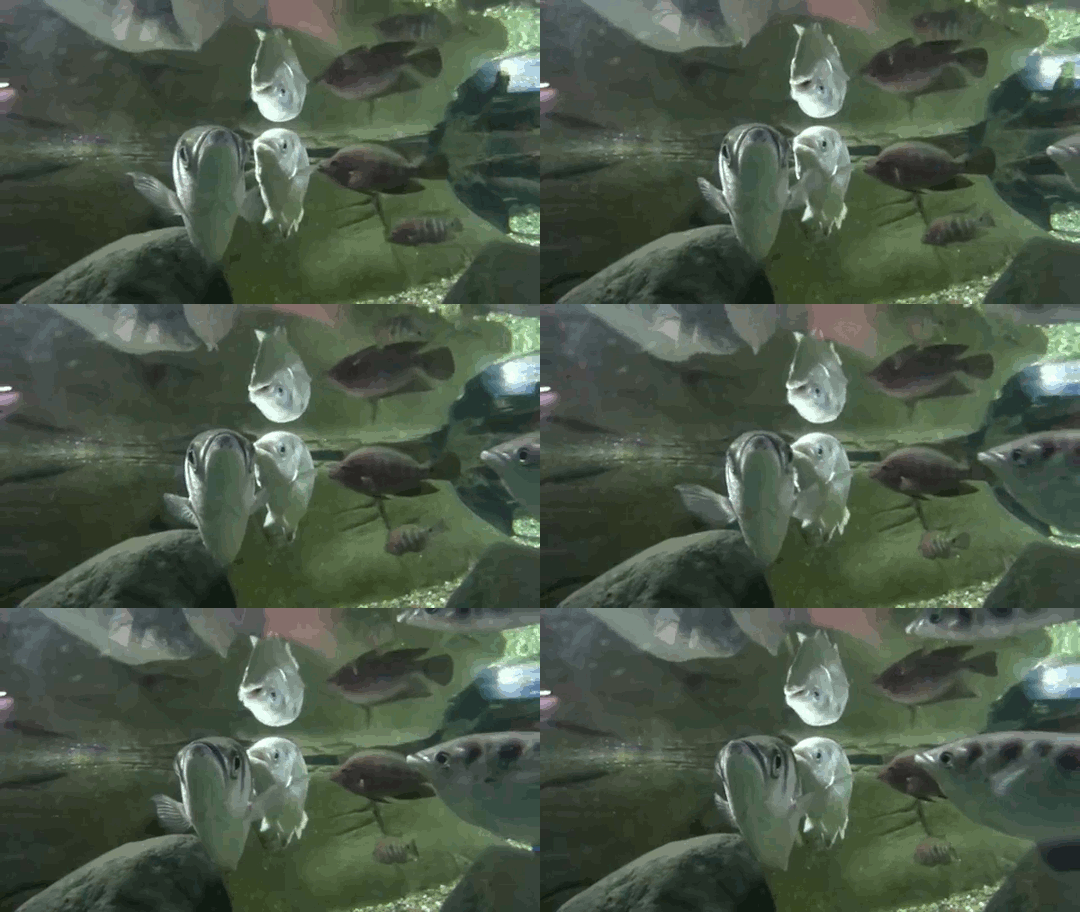
    Inside Science has a new documentary all about fluid dynamics! It features interviews with five researchers about current work ranging from the physics of surfing to the spreading of diseases. Penguins, sharks, archer fish, 3D printing, and influenza all make an appearance (seriously, fluid dynamics has everything, guys). If you’d like to learn more about some of these topics, I’ve touched on several of them before, including icing, penguin physics, shark skin, archer fish, and disease transmission via droplets.  (Video credit: Inside Science/AIP)

  • Featured Video Play Icon

    Freezing Soap Bubbles

    I’m not a winter person, but there’s something almost magical about the way water freezes. From instant snow to snow rollers and weird ice formations to slushy waves, winter brings all kinds of bizarre and unexpected sights. The video above is an artistic look at one of my favorites – freezing soap bubbles. Normally, the thin film of a soap bubble is in wild motion, convecting due to gravity, surface tension differences, and the surrounding air. Such a thin layer of liquid loses its heat quickly, though, and, as ice crystals form, the bubble’s convection and rotation slow dramatically, often breaking the thin membrane. Happily photographer Paweł Załuska had the patience to capture the beautiful ones that didn’t break!  (Video credit: P. Załuska; via Gizmodo)

    If you enjoy FYFD and want to help support it, please consider becoming a patron!

  • Pancake Ice in the Sea

    Pancake Ice in the Sea

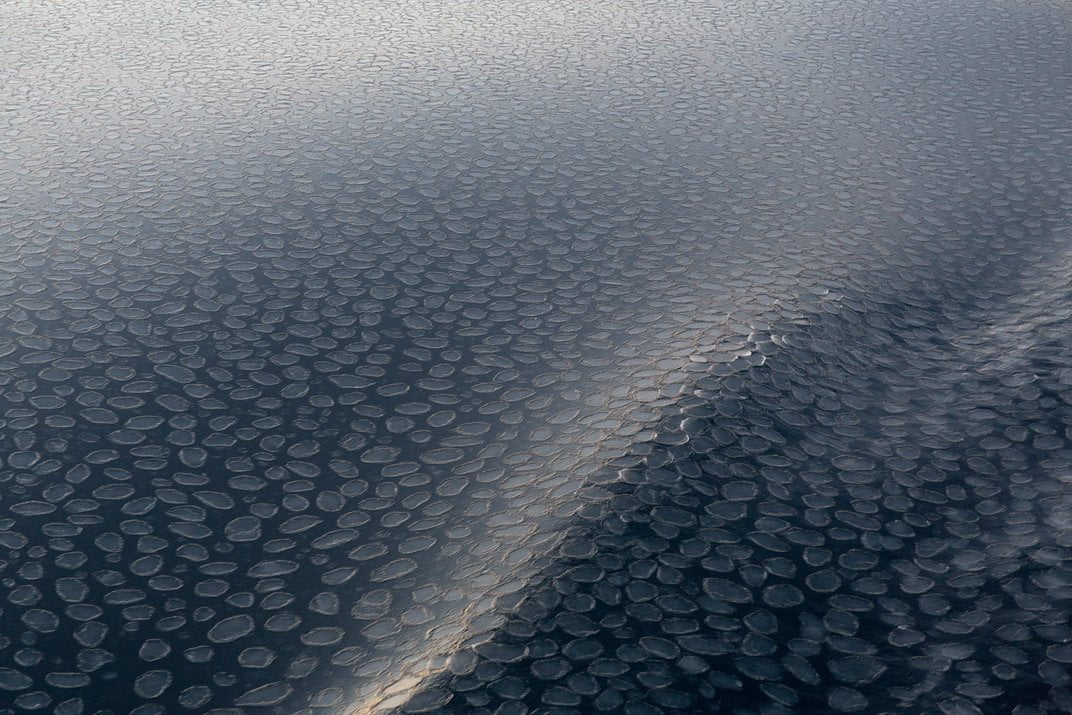
    Sea ice forms in patterns that depend on local ocean conditions. Pancake ice, like that shown in the above photo from the Antarctic Ross Sea, is formed in rough ocean conditions. Each individual pancake has a raised ridge along its edge, due to wave-induced collisions with other pieces of ice. Over time the smaller pieces of ice will merge together, forming large sheets. Evidence of its turbulent formation will persist, however, in the rough surface of the ice’s underside. For more, check out the National Snow and Ice Data Center. (Image credit: S. Edmonds; via Flow Visualization)

    Do you enjoy FYFD and want to help support it? Then please consider becoming a patron!

    Reminder: If you’re at the University of Illinois at Urbana-Champaign, I’m giving a seminar this afternoon. Not in Illinois? I’ve got other events coming up, too!

  • Featured Video Play Icon

    Growing Icicles

    For those from colder climates, icicles are a familiar part of winter. They come in a multitude of shapes and sizes, many of which have been captured and cataloged in the Icicle Atlas project. The site contains images, videos, and measurements of more than 230 icicles grown in the lab over the course of four years of research into how and why icicles form the way they do. One interesting result of the work was the discovery that the ripples commonly found on icicles are directly related to impurities. Icicles grown with pure water remain smooth, and only those with ionic impurities, like salt, develop ripples. Check out more images and icicle research at the Atlas. (Video credit: A. Chen and S. Morris/The Icicle Atlas; via Discover)

  • Featured Video Play Icon

    Bounce or Freeze?

    Icing is a major problem for aircraft.  When ice builds up on the leading edge of a wing it creates major disruptions in flow around the wing and can lead to a loss of flight control. One of the important factors in predicting and controlling ice building up is knowing when and where water droplets will freeze. The video above shows how surface conditions on the wing affect how an impacting droplet freezes. On a subzero hydrophilic surface, a falling droplet spreads and freezes over a wide area, which would hasten ice buildup. A hydrophobic surface is slightly better, with the droplet freezing over a smaller area, whereas a superhydrophobic surface shows no ice buildup. Unfortunately, at present superhydrophobic surfaces and surface treatments are extremely delicate, making them unsuitable for use on aircraft leading edges. (Video credit: G. Finlay)