Tag: fluids as art

  • Sea Swirls by the Shore

    Sea Swirls by the Shore

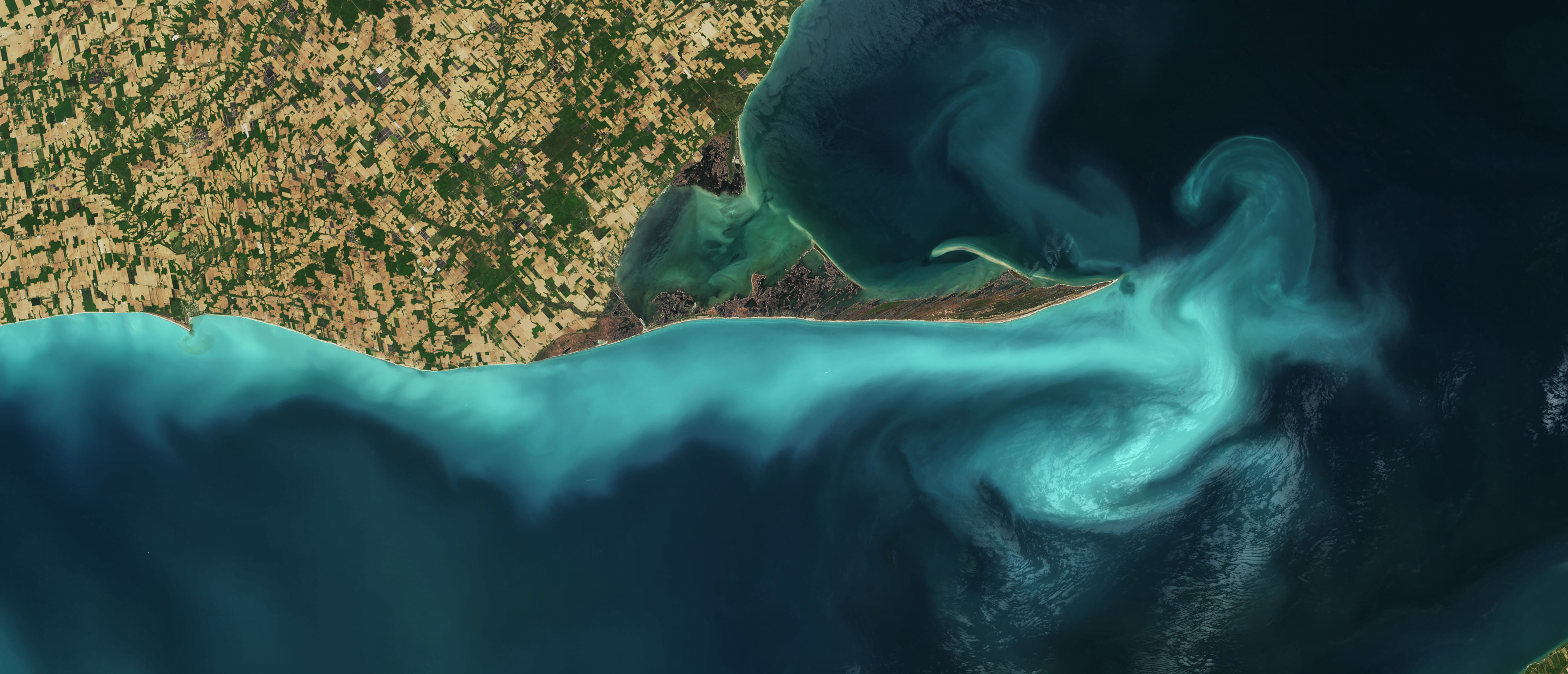
    Water and sediments swirl in these enhanced satellite photos of China’s Leizhou Peninsula. Color-filtering algorithms have drawn out the details of the flows, but the patterns themselves are real. Tides, currents, sediment, and human activity combine to form these complex flows along the peninsula’s shores. The straight parallel lines seen off Liusha Bay, for example, are likely the result of a traditional fishing method using nets suspended off poles anchored into the seabed. (Image credit: N. Kuring; via NASA Earth Observatory)

  • Featured Video Play Icon

    “Geodaehan”

    In “Geodaehan” Roman De Giuli’s macro fluid art mimics massive landscapes. The film takes us over deltas, rivers, glaciers, and landslides. Some look like earthbound locations, others look like something from Mars or Titan. All are, in fact, paint, ink, and glitter on paper! It’s truly incredible how artists capture large-scale fluid physics on such a tiny canvas. (Image and video credit: R. De Giuli)

  • Featured Video Play Icon

    Lava at Night

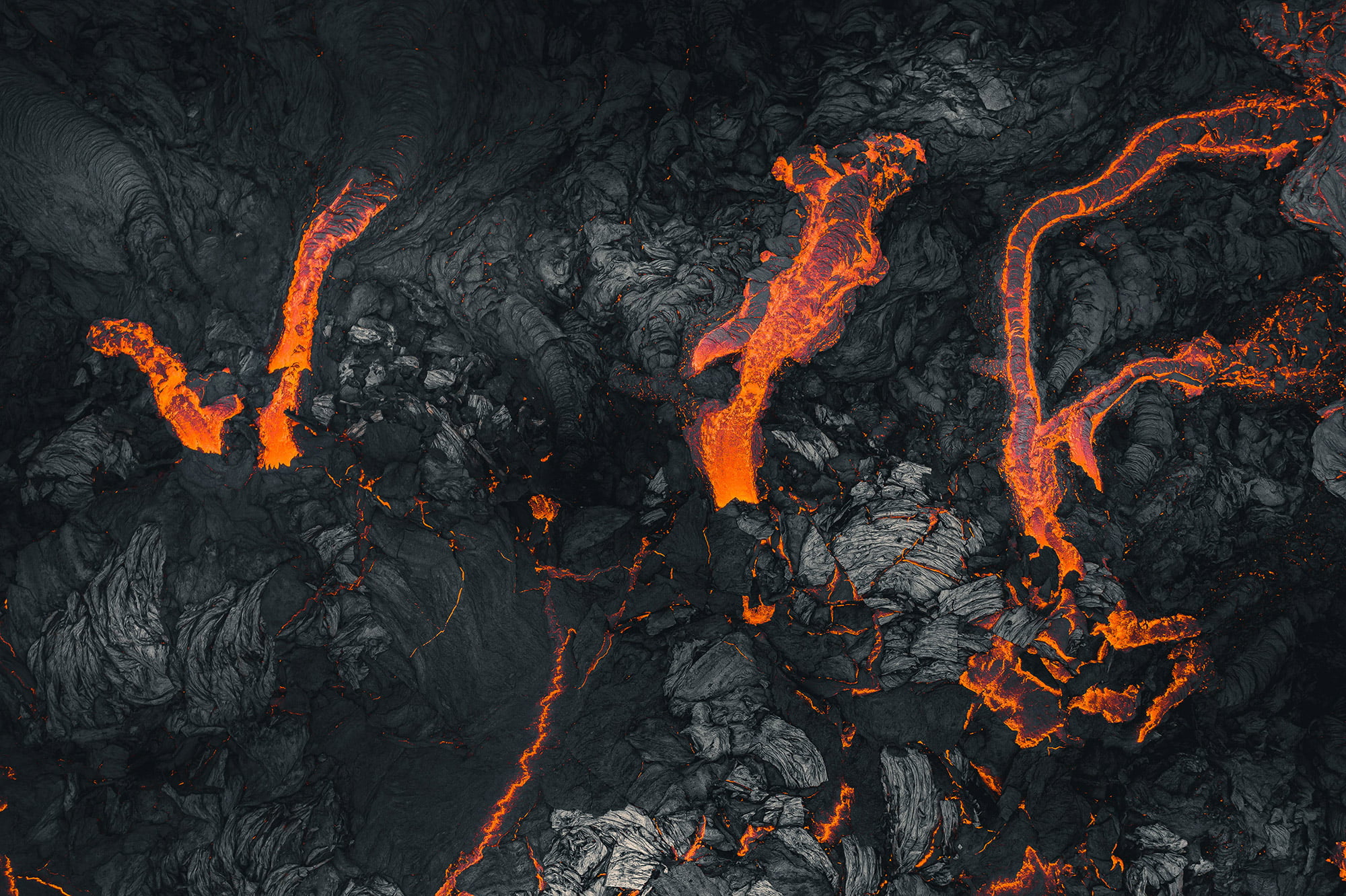
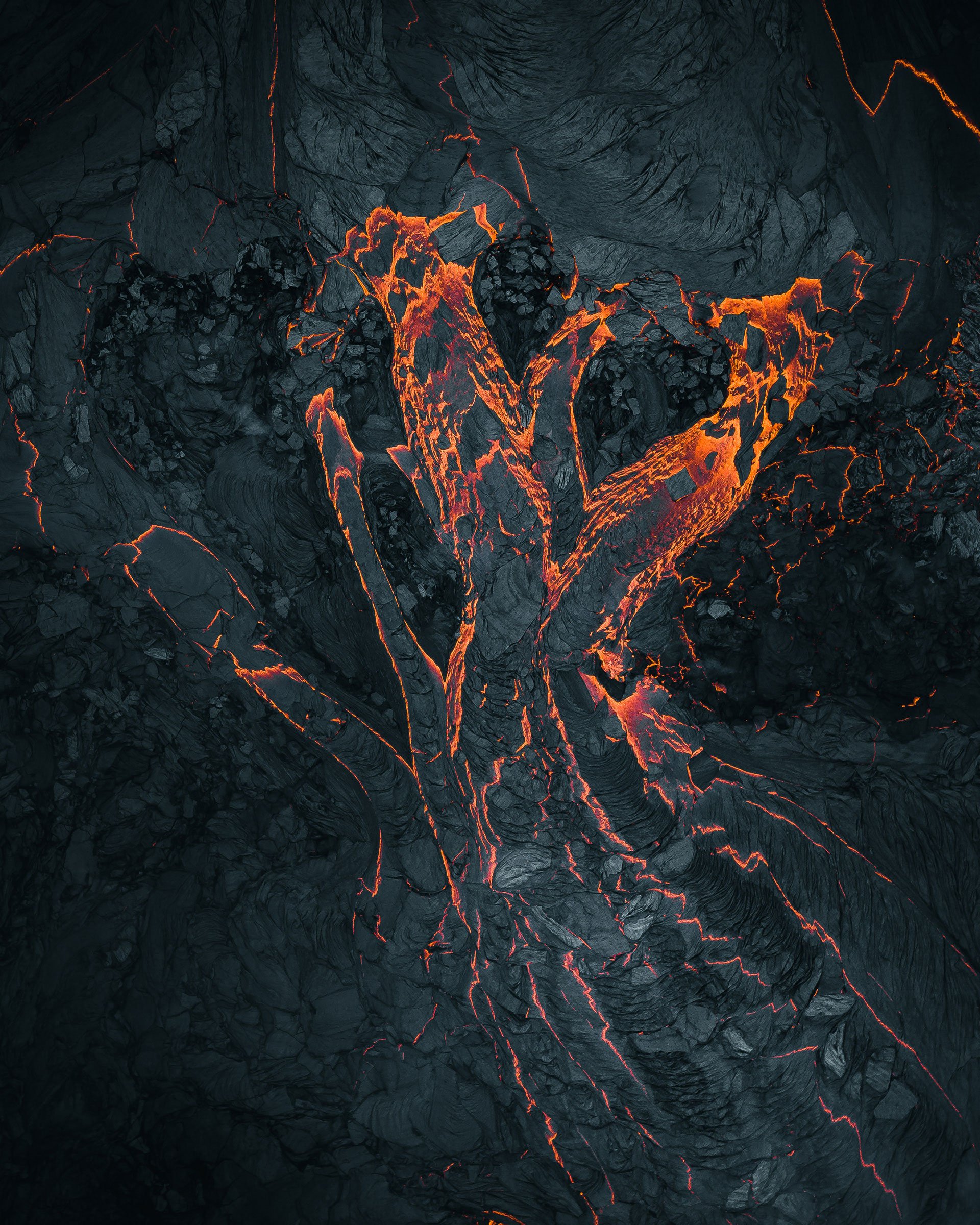
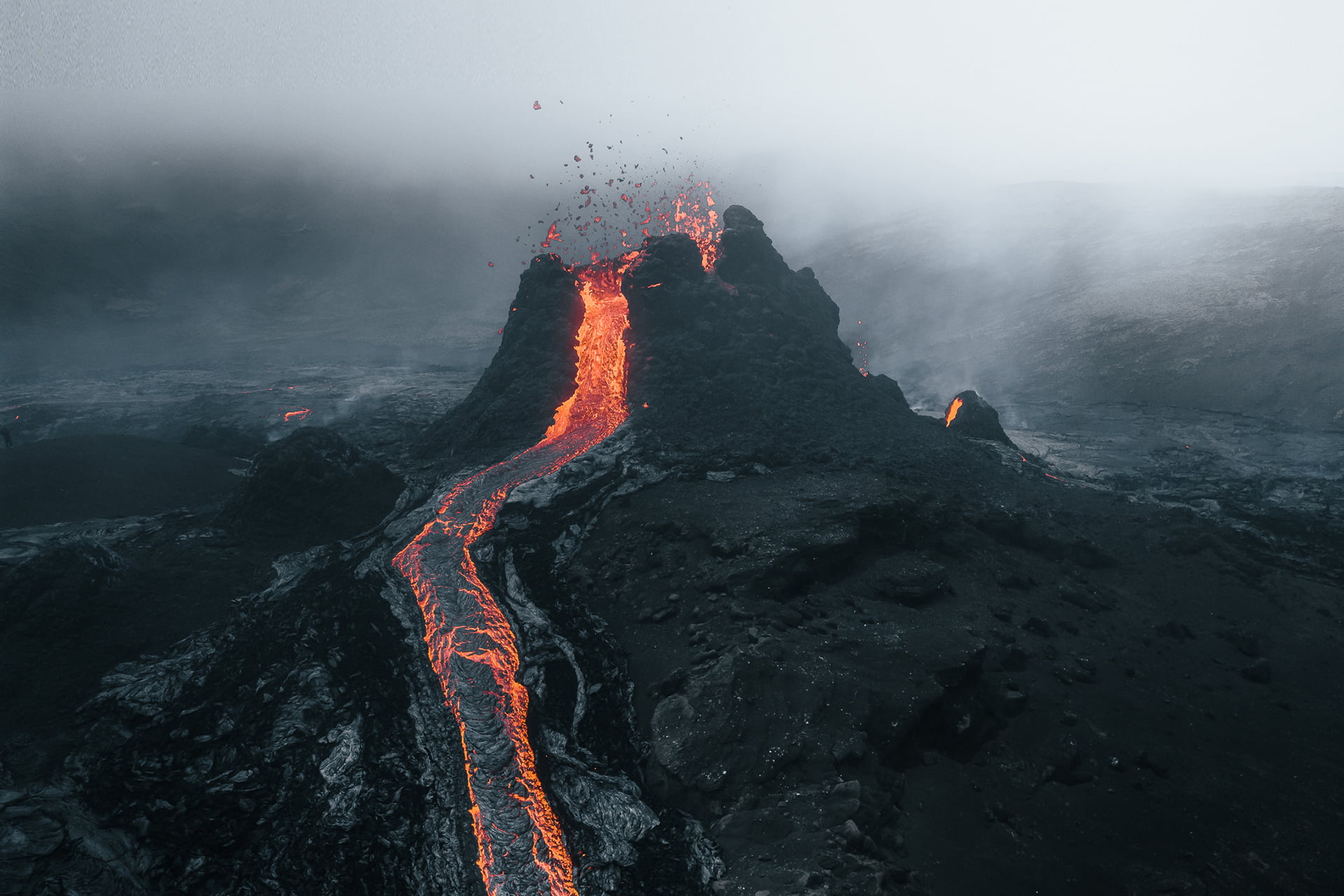
    Today’s cameras and drones capture volcanic eruptions in ways that were unthinkable in years past. This incredible footage shows the recent eruption in Iceland as it glows in the night. I love the crisp details of the flow. You can clearly see how the hotter, molten lava moves compared to the cooling crust. There’s some great footage of spurting fountains and blocks of lava getting swept along by the river. Enjoy! (Image and video credit: B. Steinbekk; submitted by jpshoer)

  • Whiskey Webs

    Whiskey Webs

    Unlike scotch whisky, when American bourbon whiskeys are diluted, they form unique web-like evaporation patterns. These differences arise in part from the way the liquors are aged: scotch is aged in re-used barrels, whereas bourbons require aging in a new, charred American white oak barrel*.

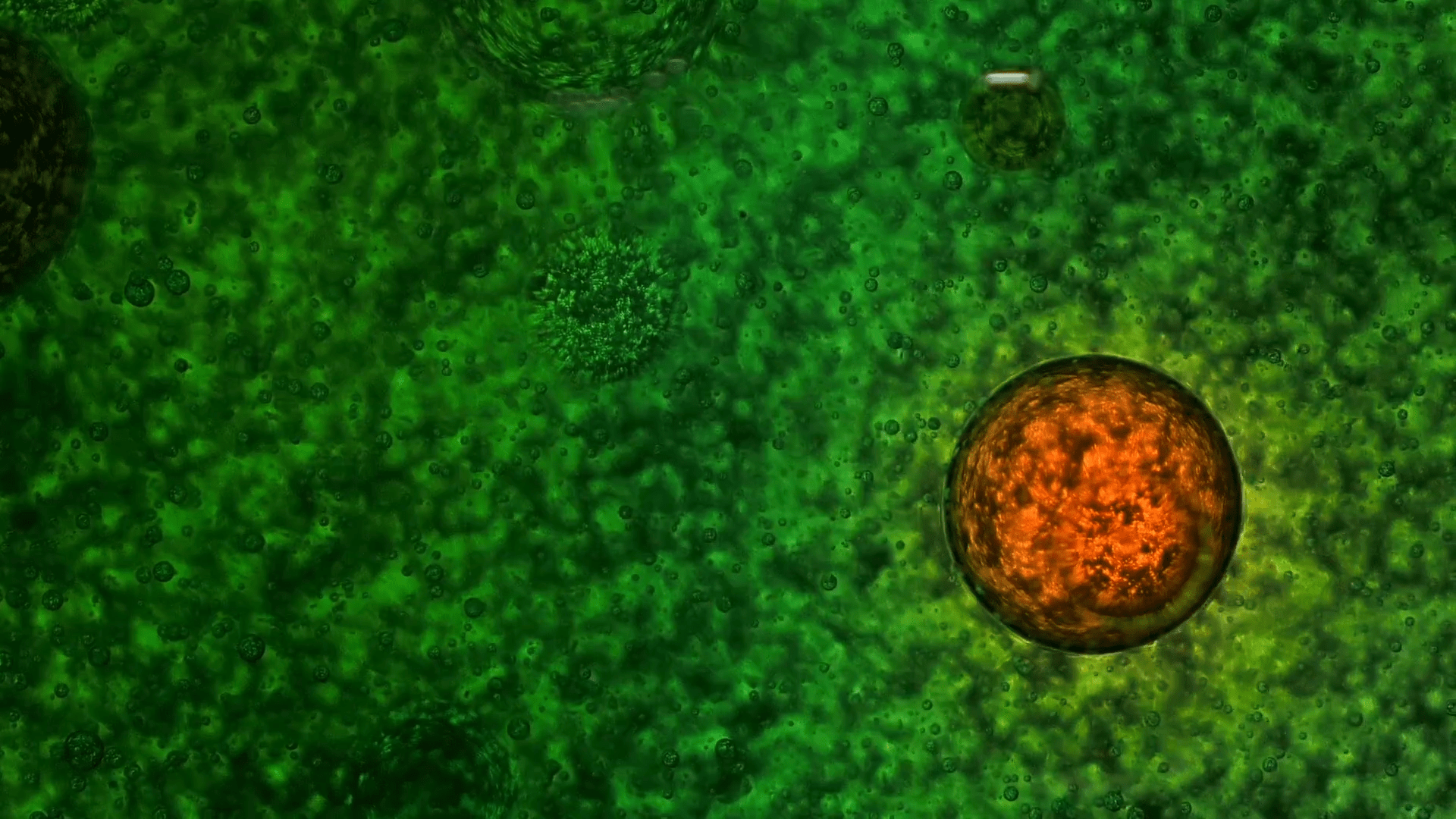
    During aging, the whiskey picks up water-insoluble chemicals from the barrel. When water is added to the bourbon, it helps transport those insoluble components to the surface of a droplet, where they form a monolayer of fatty acid chains (Image 2; in green). As evaporation continues and the droplet gets smaller, the molecules at the shrinking surface collapse inward, forming the rigid web structure we see left behind. The patterns that form act as a kind of fingerprint for the bourbon. Check out some of the brand-to-brand variations over at the researchers’ Whiskey Webs site. (Image and research credit: S. Williams et al.; via Physics Today)

    * In case you were wondering, this is actually a legal requirement in order to be considered bourbon. Bourbons must also be made from a grain mixture that is >50% corn.

  • Featured Video Play Icon

    Visualizing Radiation

    Radiation is invisible, but it’s not too difficult to build an apparatus that lets you see it. This video shows the ghostly aftermath of passing radiation in a cloud chamber, one of the first set-ups used to study radiation. The chamber contains a radioactive source and chilled isopropyl alcohol. The alcohol forms a supersaturated vapor — essentially a cloud in waiting — inside the chamber.

    When a radioactive particle gets emitted from the source, it streaks through the chamber, colliding with atoms and ionizing them. Those ions then serve as nucleation sites where alcohol condenses into droplets. It’s these condensation trails that we see bloom and decay in the particle’s wake. (Image and video credit: L. Gledhill)

  • Featured Video Play Icon

    “Dancing With Danger”

    Filmmaker Chris Bryan captures surfer Kipp Caddy as he rides an enormous wave in “Dancing With Danger.” Nothing quite captures the majesty of these powerful flows like high-speed videography. Enjoy the break, the spray, and those awesome rib vortices. (Image and video credit: C. Bryan)

  • Featured Video Play Icon

    “Radiolarians”

    “Radiolarians” is a short film by artist Roman De Giuli using ink, alcohol, and oil. Much of the fluid motion involves break-up into droplets. The effects appear to rely heavily on Marangoni bursting, the physics of which you can learn about in this previous post. (Image and video credit: R. De Giuli)

  • “Liquid Skies”

    “Liquid Skies”

    “Liquid Skies” by Roman De Giuli is full of colorful but nebulous fluid imagery. The visuals consist of liquids like paint, ink, and alcohol filmed in macro atop paper. You can catch a behind-the-scenes glimpse of De Giuli at work here. (Image and video credit: R. De Giuli)

  • Featured Video Play Icon

    “Flux Capacitor”

    Sandro Bocci’s short film “Flux Capacitor” explores the geometry and dynamics of soap films. When you dip wire models into soapy solution, the films that cling to the model can form complicated shapes as surface tension works to minimize the overall surface area. Bocci’s macro photography highlights the intense flows going on in the narrow regions where films meet. It’s a different take on soap films and neat to see! (Image, video, and submission credit: S. Bocci et al.)

  • Featured Video Play Icon

    “Mini Planets”

    In Thomas Blanchard’s “Mini Planets” oil-coated paint droplets swirl on colorful backgrounds. With band-like streaks, they truly do look like miniature planets rotating. I love that a few of them even have distinctive vortices! (Image and video credit: T. Blanchard)