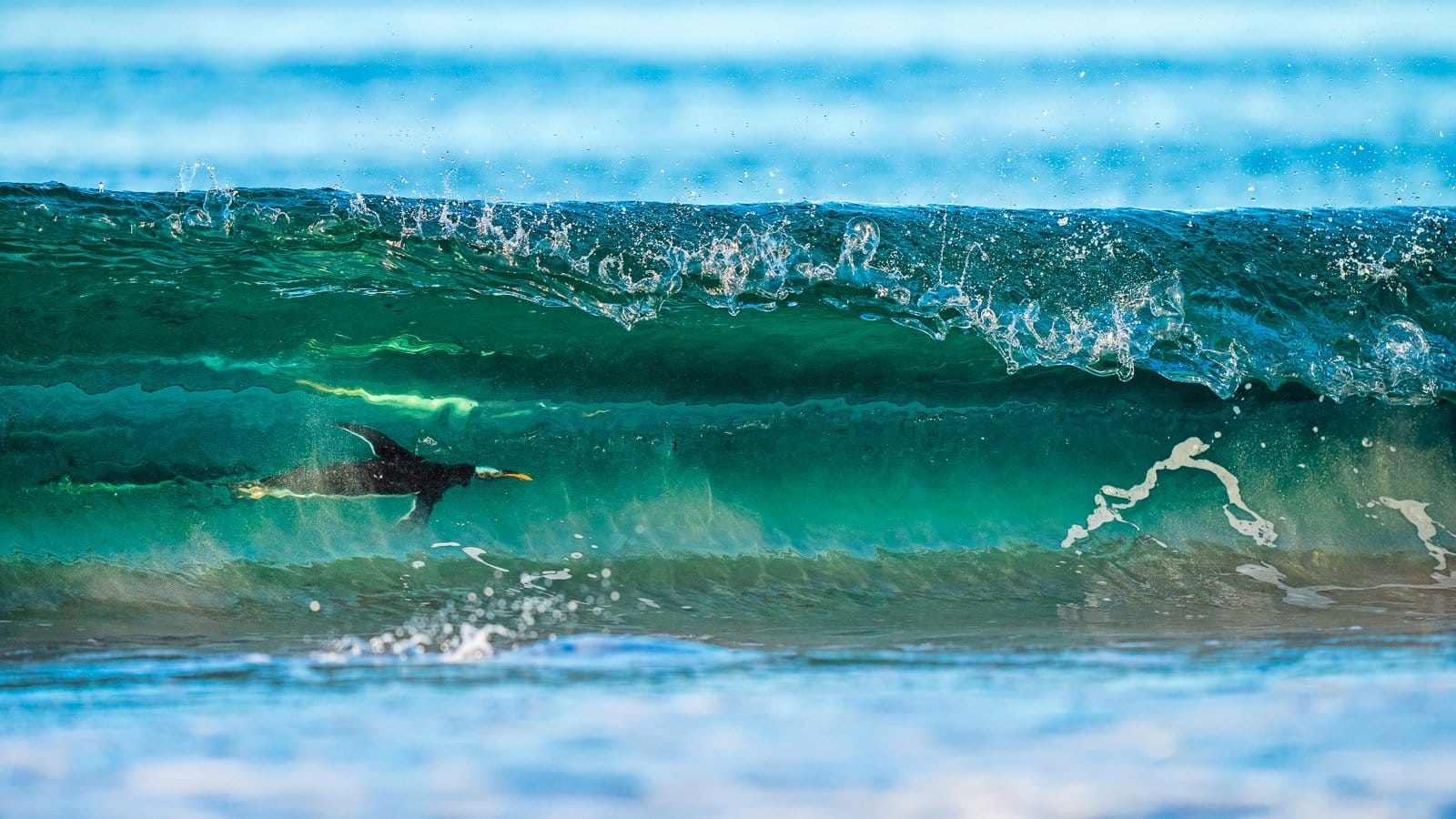
Surfers come in many forms — humans, robots, birds, and even honeybees. Most of the time, though, we see surfers above the water. In this award-winning photo, on the other hand, the surfing penguin shoots by beneath the water, riding beneath the wave’s crest. Keeping pace with the breaking wave should be no trouble for a penguin. They waddle awkwardly on land, but they have incredible speed in the water. Years ago, a penguin streaked past me in the water like a rocket to my paper airplane. (Image credit: L. Fitze/BPOTY)
Tag: fluid dynamics

A Dandelion-Like Supernova Remnant
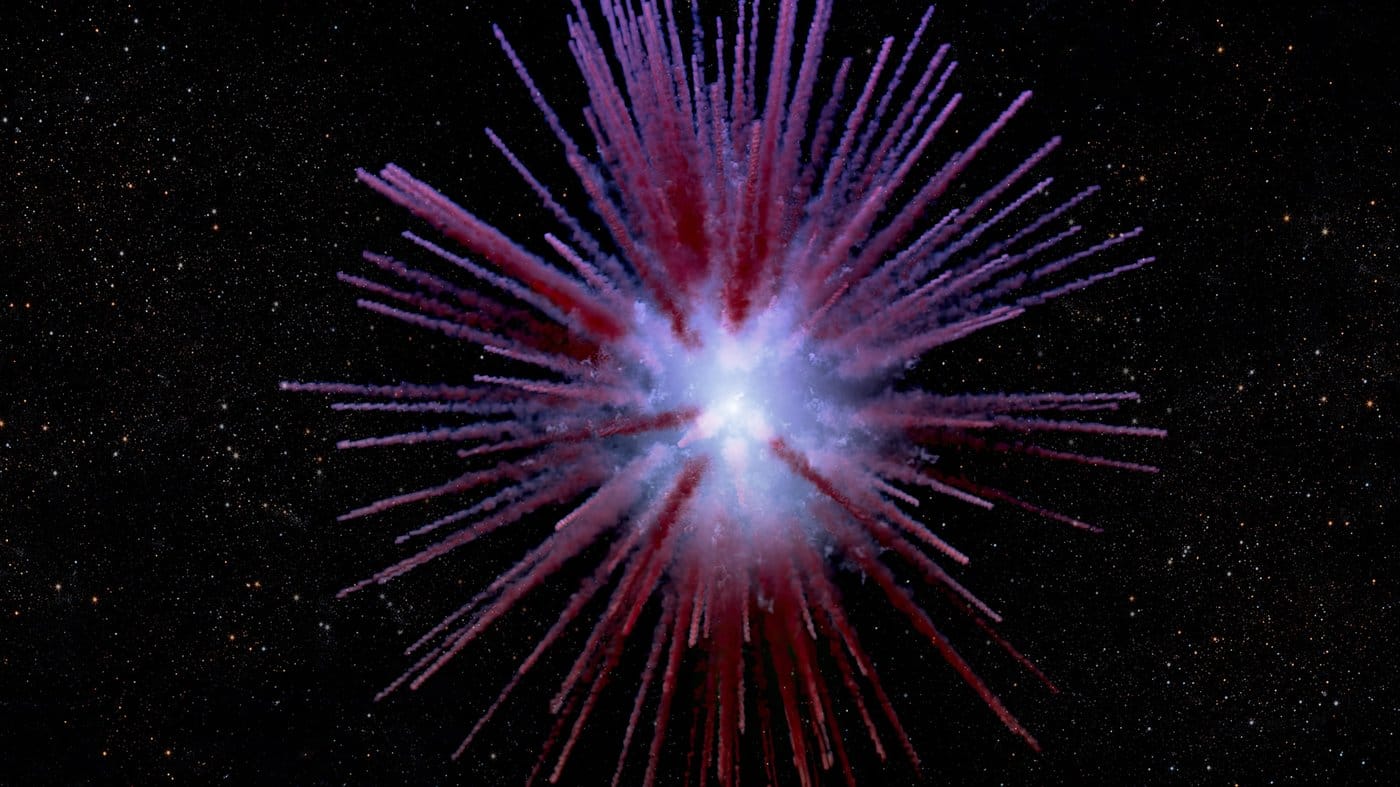
In 1181 CE, astronomers in China and Japan recorded a new, short-lived star in the constellation Cassiopeia. After burning for nearly six months, this historic supernova disappeared from the naked eye. It was only in 2013 that an amateur astronomer identified a nebula in the vicinity of that supernova, and, in the years since, astronomers have collected evidence that identifies the object, known as Pa 30, as the remnants of that 1181 supernova. Now, astronomers have mapped the supernova remnant, revealing an unusual dandelion-like structure (shown in an artist’s conception above and below). Filaments of sulfur project outward from a dusty central region that houses the remains of the original star. Normally, a supernova destroys its original star, but this was a Type Iax supernova, a “failed” explosion that left behind a hot, inflated star that may eventually cool into a white dwarf star.
Why the supernova remnant has this strange shape remains unclear. Scientists speculate that shock waves may have helped concentrate sulfur into these clumpy filaments. The material’s velocity suggests a ballistic trajectory (meaning, essentially, that it has neither sped up nor slowed down since the original explosion). Winding the trajectory backwards pegs their origin to 1181, helping confirm that Pa 30 is, indeed, the remains of that 1181 supernova. (Image and video credit: W.M. Keck Observatory/A. Makarenko; research credit: R. Fesen et al.; via Gizmodo)

Lines of Ice Eddies
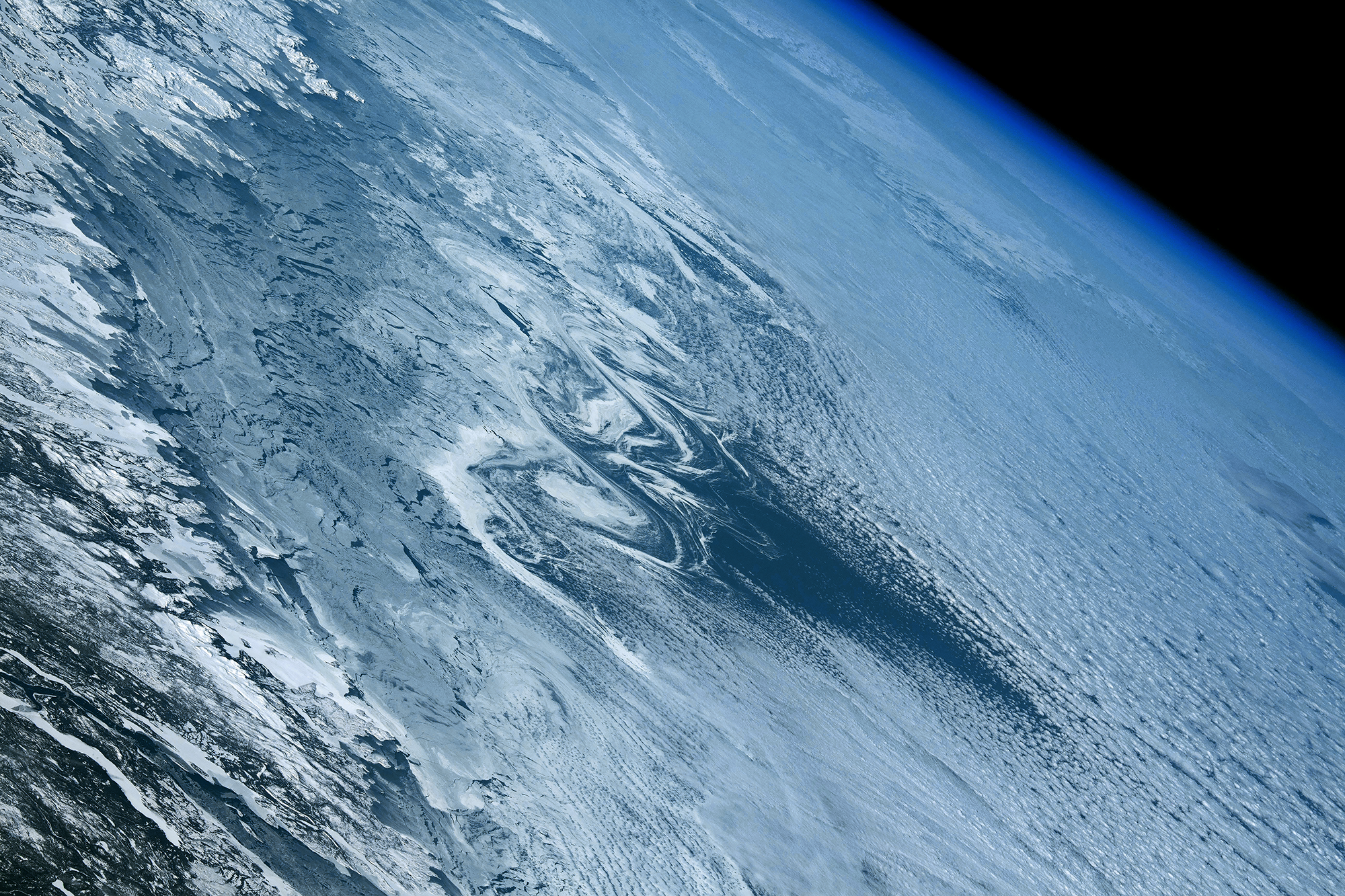
In February 2024, the North Atlantic’s sea ice reached its furthest extent of the season, limning the coastline with tens of kilometers of ice. These images — both capturing the Labrador coast on the same day — show the swirling patterns marking the wispy edges of ice field. In this region, the ice is likely following an eddy in the ocean below. Eddies like these can form along the edges where warm and cold currents meet. An ice eddy is particularly special, though, as the water must be warm enough to fragment the sea ice, but not so warm that it melts the smaller ice pieces. (Image credit: top – NASA, lower – M. Garrison; via NASA Earth Observatory)

This satellite image shows sea ice off the Labrador coast, on the same day in February 2024. 
“There is a crack in everything…”


When millimeter-sized drops of water infused with nanoparticles dry, they leave behind complex and beautiful residues. As water continues evaporating, the residues warp, bend, and crack. In this video, researchers set their science to the music of Leonard Cohen. The results resemble blooming flowers and flying water fowl. If you’d like to learn more about the science behind the art, check out the two open-access papers linked below. (Video and image credit: P. Lilin and I. Bischofberger; submitted by Irmgard B.; see also P. Lilin and I. Bischofberger and P. Lilin et al.)
Running Out of Sand?


Headlines over the past few years have suggested that the world is running out of sand — specifically, that we’re running out of the angular sand grains preferred for concrete. Grady breaks down this idea in this Practical Engineering video, showing that the issue is more complicated than the shape of a sand grain. Yes, angular sand grains make stronger concrete than rounded ones for the same ingredient ratios. But concrete’s water content is also a major factor for strength, and rounded sand grains need less water to form a spreadable, workable concrete. Using less water also makes for stronger concrete.
And though we may be short on some types of sand in certain places, sand is a manufacturable substance. We have machines and processes capable of breaking rocks into sand. It’s more a matter of choosing between the economics of mining and manufacturing. (Video and image credit: Practical Engineering)

“Alive Painting”



Artist Akiko Nakayama’s intuitive grasp of fluid dynamics is so good that she manipulates liquids live to musical accompaniment. Her dendritic paintings — made from a combination of acrylic paint and isopropyl alcohol — inspired scientific research papers. There’s no substitute, I’m sure, for seeing her art live, but you can get a taste of her performances in the video below. Then you can head over to Physics World for more on the artist, her inspirations, and her scientific collaborations. (Image credits: H. Akagi and A. Nakayama; video credit: Eternal Art Space; via Physics World)

How Magnetic Fields Shape Core Flows
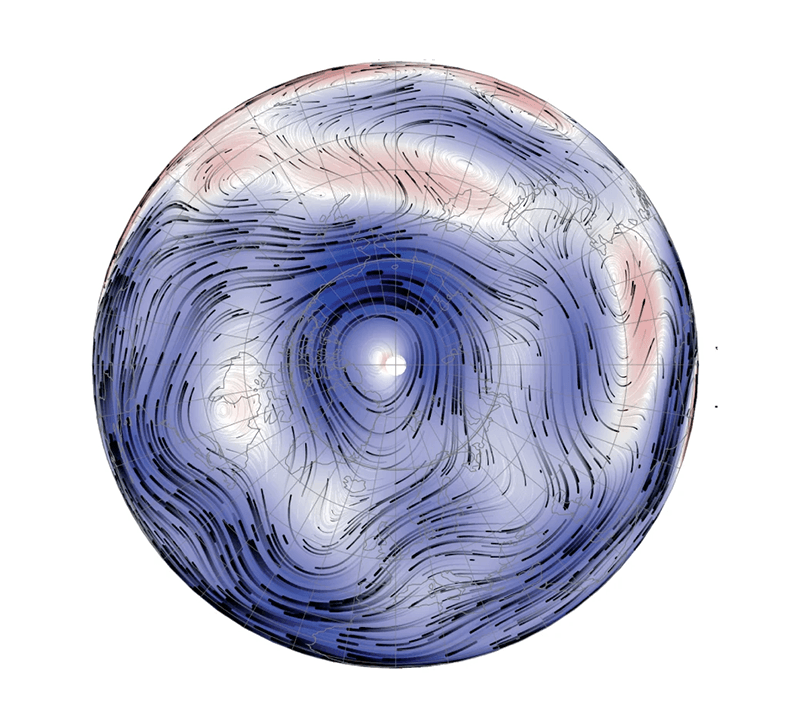
The Earth’s inner core is a hot, solid iron-rich alloy surrounded by a cooler, liquid outer core. The convection and rotation in this outer core creates our magnetic fields, but those magnetic fields can, in turn, affect the liquid metal flowing inside the Earth. Most of our models for these planetary flows are simplified — dropping this feedback where the flow-induced magnetic field affects the flow.
The simplification used, the Taylor-Proudman theorem, assumes that in a rotating flow, the flow won’t cross certain boundaries. (To see this in action, check out this Taylor column video.) The trouble is, our measurements of the Earth’s actual interior flows don’t obey the theorem. Instead, they show flows crossing that imaginary boundary.
To explore this problem, researchers built a “Little Earth Experiment” that placed a rotating tank (representing the Earth’s inner and outer core) filled with a transparent, magnetically-active fluid inside a giant magnetic. This setup allowed researchers to demonstrate that, in planetary-like flows, the magnetic field can create flow across the Taylor-Proudman boundary. (Image credit: C. Finley et al.; research credit: A. Pothérat et al.; via APS Physics)
The Taum Sauk Dam Failure and Its Legacy
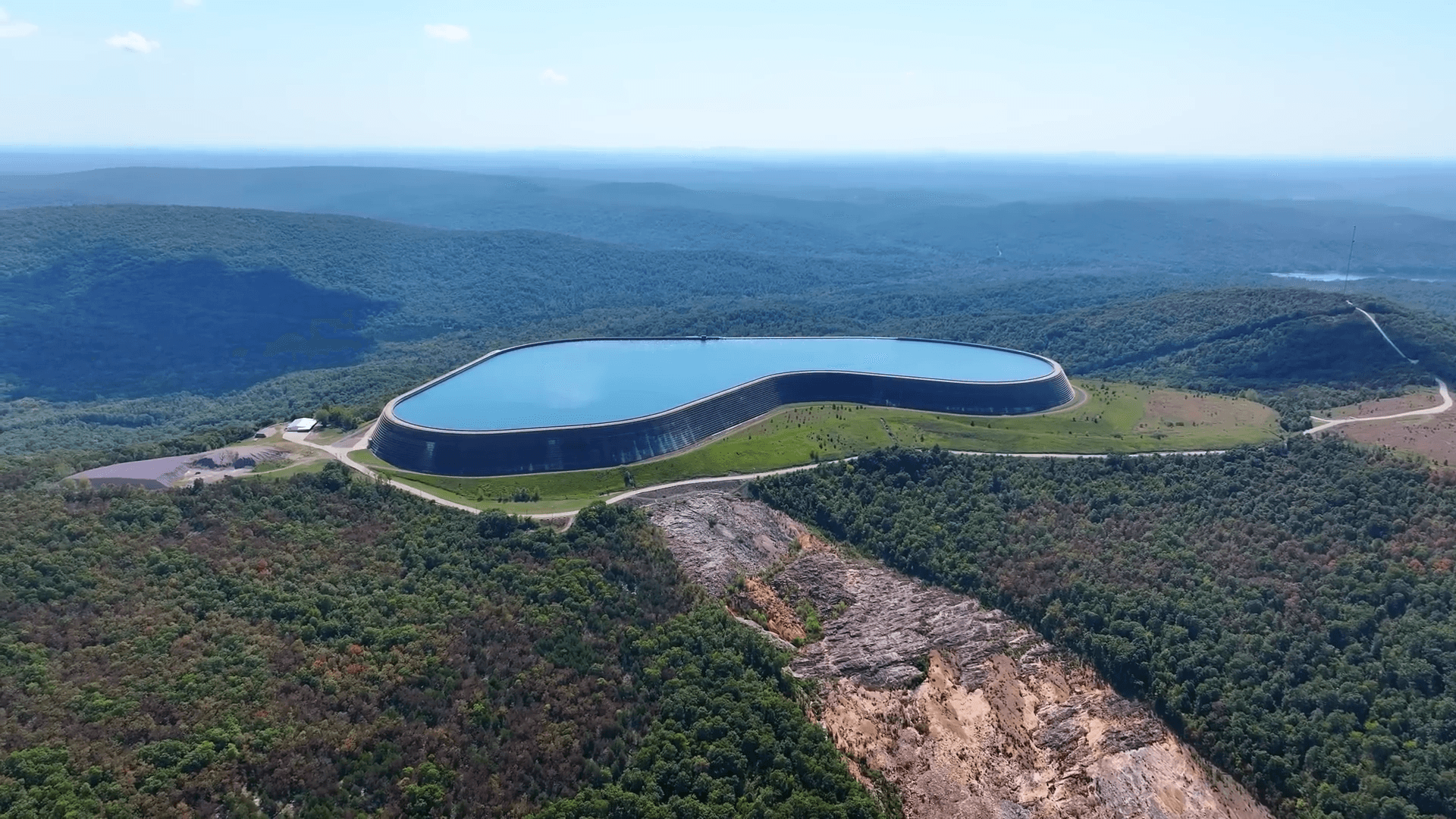


Managing an electrical grid is all about balancing the electricity that plants can supply with the instantaneous demands of consumers. If there’s more power available than people need, it needs to get stored somehow. And for decades, the best way to store that excess supply has been in hydroelectric reservoirs like at the Taum Sauk Dam. These facilities pump water to a reservoir at a higher elevation when there’s extra electrical power available, and, when more power is needed, release that water to run through hydroturbines.
But storing water atop a mountain comes with unusual challenges for dam, and the 2005 failure of the Taum Sauk Dam facility highlights some important lessons for engineers. As Grady lays out in this Practical Engineering video, there was no single mistake that led directly to the dam’s failure. Instead, post-collapse investigations found a series of seemingly minor issues that, together, led to catastrophe. It’s well worth watching, especially for engineers; we could all use an occasional reminder that a “quick stopgap measure” isn’t enough. (Video and image credit: Practical Engineering)
Ember Bursts Spread Wildfires
In a wildfire, a burst of embers lofted upward can travel far, starting a new spot fire when they land. Although large ember bursts only happen occasionally, researchers found that these events — with orders of magnitude more embers than usual — play an outsized role in wildfire spread. In their experiments, researchers observed a bonfire with high-speed cameras to track ember bursts, and they also collected fallen embers from around their fire. They found large (>1 mm) embers could travel much further than current fire models predicted, carried by rare but powerful updrafts that coincided with large bursts. Their work indicates that wildfire models need a better way to simulate these kinds of events that are far from the fire’s baseline state but which occur often enough and with enough impact that they can spread fires. (Image credit: C. Cook; research credit: A. Peterson and T. Banerjee; via Physics World)
Convection in Blue
Convection cells like these are all around us — in the clouds, on the Sun, and in our pans — but we rarely get to watch them in action. Convection results from densities differing in different areas of a fluid. Under gravity’s influence, having a dense fluid over a lighter one is unstable; the dense fluid will always sink and the lighter one will rise. When that motion has to take place across a large surface area, we often end up with cells like the ones seen here.

Convection cells in an alcohol-paint mixture. What drives the density differences in the fluid? That depends. Often there’s a temperature difference that drives warmer fluid to rise and cool fluid to sink. But that’s not always the source of convection. Evaporating a volatile chemical — like alcohol — out of a mixture can also create the density differences needed for convection. That may be the source of the convection we see here in a mixture of paint and alcohol. (Video and image credit: W. Zhu; via Nikon Small World in Motion)