When I was a teenager, I liked riding my bike along the river boardwalk near my house. There were fields there, like those in the image above and video below, with tall grass that would bend and sway in the wind. The long stalks undulated almost like a fluid, and they were mesmerizing. This video gives you a higher vantage point, where you can see the larger patterns of motion. What you’re seeing, I think, are some of the large-scale turbulent variations in the wind. Rather than being uniform and laminar, the wind contains pockets of turbulent gusts, which the sway of the long grass reveals to the naked eye. In terms of physical mechanism, I suspect it’s similar to how wind imprints its patterns on water. (Video and image credit: N. Moore)
Tag: fluid dynamics

Exploding a Drop
Leidenfrost drops levitate over a hot substrate on a thin layer of their own vapor, constantly replenished as the drop evaporates. For the most part, previous studies have focused on pure droplets, but a new one looks at what happens when you add surfactants – and the results are, well, explosive.
Surfactants are a type of chemical that like to gather at the surface of a drop, and, unlike water, they’re nonvolatile – they don’t evaporate easily. So as the Leidenfrost drop evaporates and shrinks, the surface of the drop becomes more and more crowded with surfactant molecules. Eventually, they form an elastic shell around the remaining water, making evaporation more difficult.
Inside the droplet, the temperature continues to rise, eventually reaching a point where bubbles of vapor can nucleate inside. When that happens, the bubbles expand almost instantaneously and the internal pressure spike bursts the shell, causing the entire droplet to explode. (Image and research credit: F. Moreau et al.)

Inside Fondue
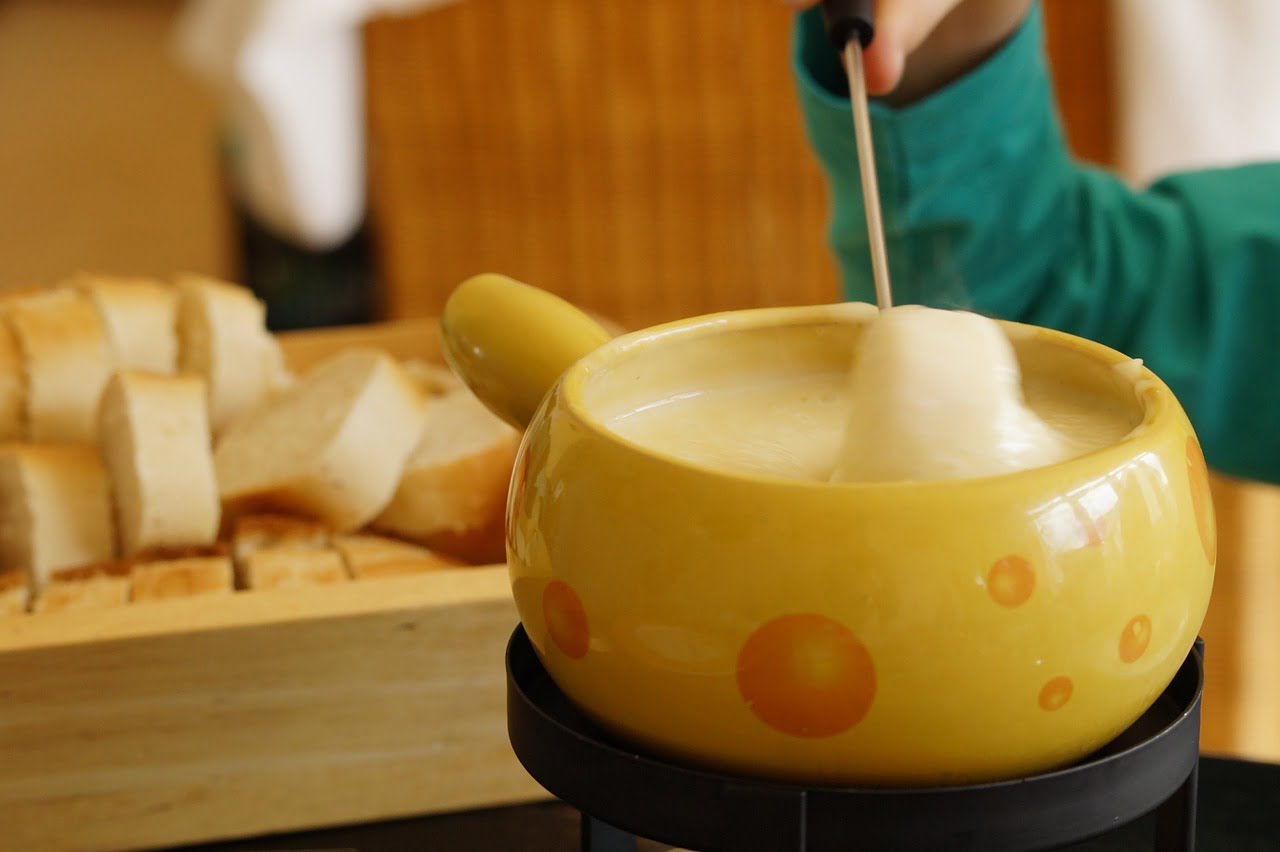
Cheese fondue is a complex – and delicious – Swiss delicacy. The perfect fondue requires the right mix of ingredients and preparation to get the rheology – the flow character – just right. Fondue is a colloid, a fluid containing a mixture of suspended insoluble particles.
The major components, rheologically speaking, are fat globules and casein proteins from the cheese, ethanol from the wine, and some added starch. Left on their own, the fat and casein tend to separate, something that’s sure to ruin the fondue. Adding the right amount of starch prevents that separation and keeps the fondue together. The viscosity of fondue is very important as well. If it’s too runny or too gummy, the mouthfeel will be wrong and it may not stick to the bread when dipped. Adding wine decreases the viscosity.
All in all, the quality and perception of a good fondue relies heavily on its rheological character. Without the right proportion of ingredients to set the perfect viscous and chemical character, the dish literally comes apart. (Image credit: Pixabay; research credit and submission: P. Bertsch et al.)

Collective Motion: Nematodes


We often imagine that collective motion creates an advantage – that the schooling fish and flocks of birds gain something from this behavior – but that’s not always the case. Above, you see nematodes moving through a thin liquid layer. Random collisions occasionally bring the nematodes into contact, and once that happens, surface tension holds them together with a force that exceeds what their muscles can supply. Essentially, they move together for the same reason that Cheerios clump together in your cereal bowl. But despite being stuck alongside one another, there’s no change in how the nematode moves. It sees neither an advantage nor a disadvantage from being attached to its neighbor. (Image and research credit: S. Gart et al., source)
This post completes our series on collective motion. Check out the previous posts about honeybee waves, how crowds are like sand, the fluid properties of worms, and why a lack of randomness makes predicting group behaviors hard.

Collective Motion: Waving Bees
Giant honeybees live in huge open nests. To protect themselves, they’ve developed a mesmerizing wave-like defense known as shimmering. When shimmering, the bees in a hive, beginning from a distinct spot, will flip over to expose their abdomens. Taken together, this creates large-scale patterns like those seen above.
Scientists have connected the behavior to the presence of wasps that prey on the bees. It seems that shimmering helps to repel the wasps without putting individual bees in danger. If shimmering doesn’t ward off the wasps, the bees can also use their flight muscles to heat the area around the intruder to a wasp-lethal temperature – or, individuals bees can sacrifice themselves by stinging the wasp. (Image credit: Beekeeping International, source; research credit: G. Kastberger et al.; via Gizmodo)
This post is part of our series on collective motion. Check out our previous posts about how crowds are like sand, the fluid properties of worms, and why a lack of randomness makes predicting group behaviors hard.

Collective Motion: Crowds
It’s sometimes taken for granted that, in groups, people can behave a lot like a fluid or a granular material. This allows scientists to adapt models developed for those materials to understand how crowds move. But in doing so, it’s always important to test just how far the comparison holds; in other words, just how much does a crowd of people behave like a fluid or granular material?
That’s the purpose behind the experiment you see above, where a dense crowd of people shift in response to a “cylindrical intruder”. This is a classic experiment for something like a granular material, and there are clear similarities. Most of the crowd’s shifting comes only a short way from the intruder, and their passage leaves a small, empty wake that slowly fills back up.
But other aspects of the experiment are very different from the granular equivalent. Instead of moving only when contact forces cause them to, the crowd shifts in anticipation of the intruder’s passage. They also use a more confined motion; crowd members primarily shift to the side to allow the intruder by, whereas grains tend to follow a more circular pattern of motion. Interestingly, if the intruder approaches from behind – and thus crowd members cannot anticipate them – the crowd’s motions will actually better match a granular material. (Image and research credit: A. Nicholas et al., source)
All this week at FYFD we’re looking at collective motion. Check out our previous posts here and here.
Collective Motion: Worms


Although most animals are more solid than fluid, what happens when you put many of them together can be strikingly fluidic. Above you see the black aquatic worm, Lumbriculus variegatus, which must keep moist to stay alive. An individual worm will die within an hour of being removed from the water, but, in a group, the worms can survive far longer. They do so, in part, by acting like a viscoelastic fluid, a material with both solid (elastic) and fluid (viscous) properties.
In small groups, the worms squirm tightly together to minimize their collective surface area and prevent themselves from drying out. But in larger groups, the worm blobs begin sending out feelers, searching for more advantageous circumstances. In the top image, you can see this causes three of the blobs to ultimately merge into an even bigger one. The worm collective can also “liquify”, allowing the blob to change shape and tackle obstacles like flowing through a pipe. (Image and research credit: Y. Ozkan-Aydin et al.; via Science)
This is the second post in our series on collective motion. Check out the first post here.

Collective Motion: Intro

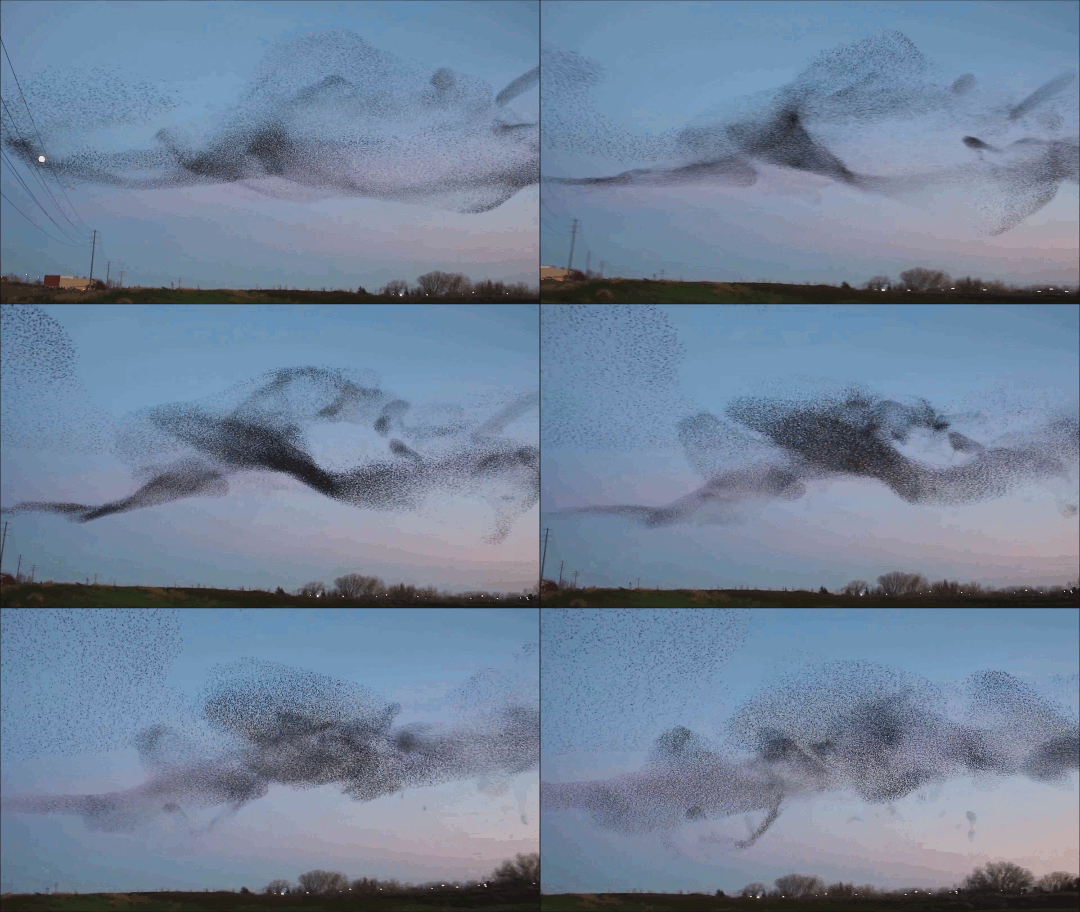

Herds, flocks, schools, and even crowds can behave in fluid-like ways. On Science Friday, Stanford professor Nicholas Ouellette explains some of the physics behind these similarities. Fluids are, after all, made up of a many, many individual particles – typically molecules – just the way a crowd of people or a school of fish contains many individuals. What makes the collective behaviors of groups harder to model than a fluid, however, is a lack of randomness. In something like water, all the molecules move randomly, which allows scientists to make certain simplifications in how we describe that motion.
In animal group behaviors, on the other hand, the motion of an individual is not completely random. It instead seems to be governed by relatively simple rules based on the observations that an individual can make. Combine those rules across a large number of individuals and you can get what’s called emergent behavior – exactly the sort of large-scale patterns we see in swarms of insects, flocks of birds, and schools of fish. (Image credits: fish – N. Sharp; starlings – N. Fielding, source; battle – New Line Cinema; podcast credit: Science Friday; submitted by Michelle D.)
This week on FYFD, we’ll explore the world of collective motion and how it overlaps with fluid dynamics.

Avoiding Ice
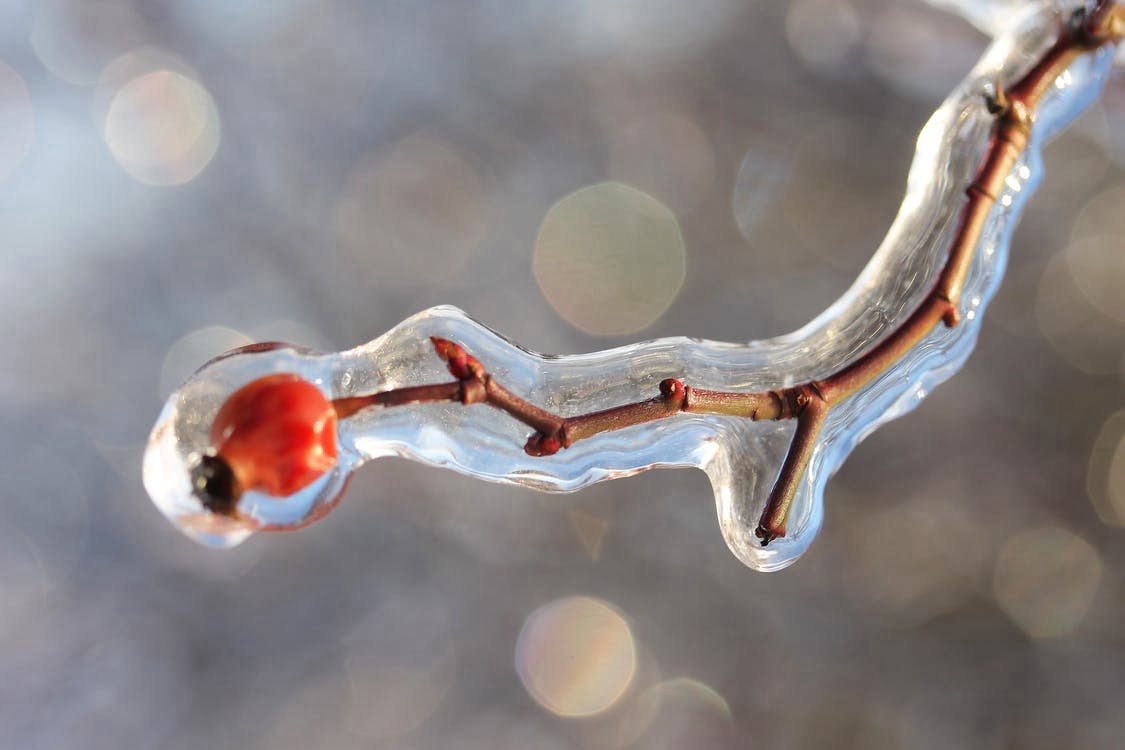
Keeping ice from forming on a surface is a major engineering challenge. Typically, there’s no controlling certain factors – like the size and impact speed of droplets – so engineers try to tame ice by changing the surface. This can be through chemicals – as with deicing fluids used on aircraft – or by tuning the surface itself.
One way to do this is by making the surface superhydrophobic – or extremely water repellent. These surfaces are rough on a nanoscale level, but they’re delicate, and once ice gets a grip on them, it’s even harder to remove. In a recent study, however, researchers used particles with both hydrophobic and hydrophilic – water-attracting – properties to create a superior ice-resistant surface. The combination of hydrophobic and hydrophilic aspects to the particles made supercooled droplets break up on contact with the surface. This made the drops smaller and decreased their contact time, making it harder for them to stick and freeze. (Image credit: Pixabay; research credit: M. Schwarzer et al.; via Chembites; submitted by Kam-Yung Soh)
Simulating Solar Flares
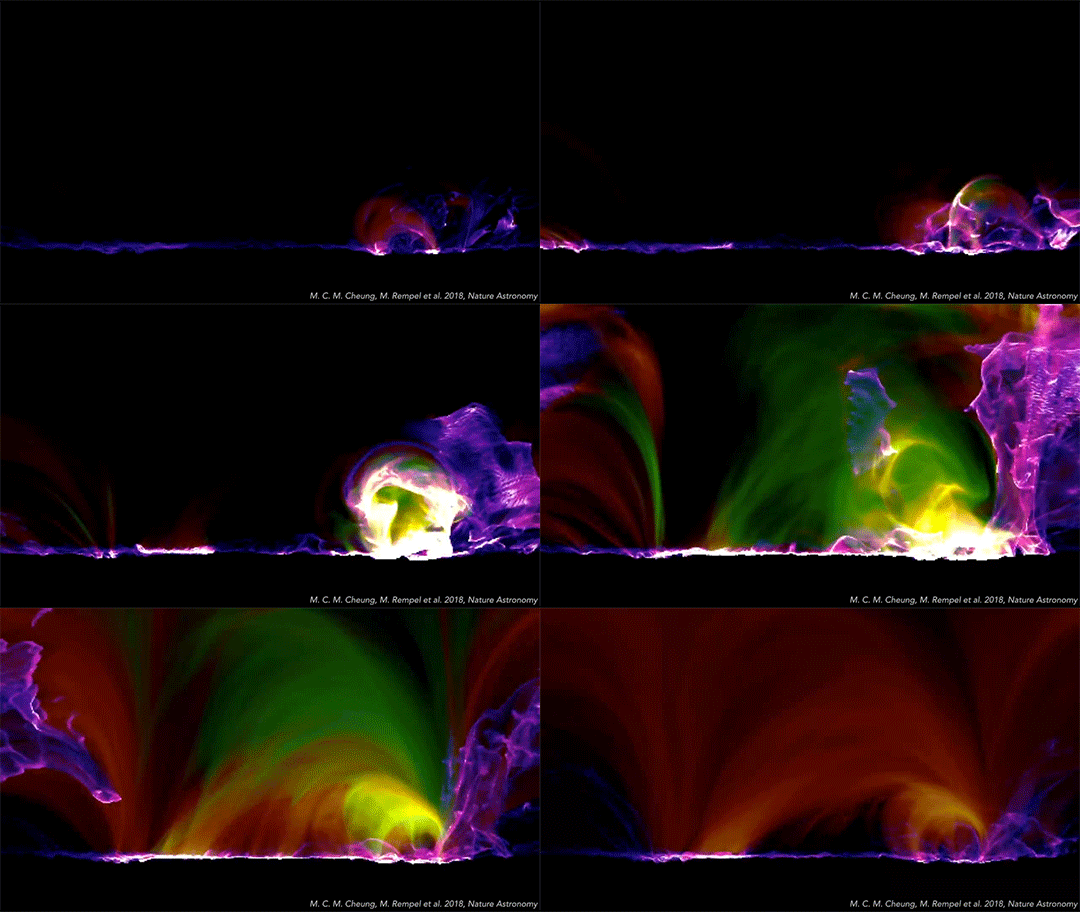
Few topics in fluid dynamics are more mathematically complicated than magnetohydrodynamics – the marriage between electromagnetism and fluids. That mathematical complexity, along with the vast range of scales necessary to describe physical systems like our sun, means that, until now, researchers had to simplify their assumptions when simulating solar physics. But now, for the first time, a group has built a comprehensive, three-dimensional simulation capable of generating realistic solar flares. This is what you see above.
Solar flares occur when a tangle of magnetic loops near the sun’s surface break and reconnect, releasing enormous magnetic energy and spewing a fountain of ionized plasma into the corona. They’re a danger particularly to satellites in orbit, so being able to simulate these events realistically is a major advance toward understanding the physics of space weather. (Image and video credit: NCAR & UCAR Science; research credit: M. Cheung et al.; via Bad Astronomy; submitted by Kam-Yung Soh)