Tag: fish

  • Under the Sea

    Under the Sea

    Deep below the ocean surface, light is in short supply. But dive photographer Steven Kovacs specializes in capturing the ethereal creatures that live in this darkness. Many of his subjects are larval fish, whose forms defy our hydrodynamic expectations. Why would young (presumably less energetic) fish have so many long, drag-inducing appendages? Clearly there’s more to life under the sea than streamlining alone!

    Perhaps our instincts are wrong and these shapes are not as detrimental as they look at first glance. Flexibility can make a drastic difference in hydrodynamics, after all. And some of these species are preparing themselves for a life not spent entirely underwater, anyway. (Image credit: S. Kovacs; via Colossal)

  • Swimming Together

    Swimming Together

    Scientists have long pondered the possibilities of hydrodynamic benefits to the ways fish school. But most analyses of schooling have assumed a fixed spacing that’s far more orderly than what we observe in nature. In this experiment, researchers instead used a pair of robotic swimmers (essentially hydrofoils) to explore a range of swimming formations. What they found was a map of places where a second swimmer could easily “lock in” to a position relative to the leader and have their positioning stabilized by interactions with the leader’s wake (lower image). Interestingly, the beneficial regions extend much further downstream for fish positioned diagonally to the leader than they do for one directly following. With such a wide range of easily-stabilized following positions, it’s no wonder that schools of fish are amorphous instead of strictly crystalline! (Image credit: top – S. Pena Lambarri, map – J. Newbolt et al.; research credit: J. Newbolt et al.)

    The shaded areas of this map represent areas where a second swimmer can passively "lock-in" relative to the leader's position, shown in gray. This data is based on tests with robotic swimmers.
    The shaded areas of this map represent areas where a second swimmer can passively “lock-in” relative to the leader’s position, shown in gray. This data is based on tests with robotic swimmers.
  • Featured Video Play Icon

    Schooling Relies on Vision

    For fish, collective motions like schooling rely on a few mechanisms, including flow sensing and — as beautifully demonstrated in this experiment — vision. Researchers used an infrared camera to track fish motions both in light and dark conditions and compared how orderly the school of fish was in each. As expected, the school’s motion was much more orderly when the fish could see one another clearly. Interestingly, the researchers then ran an experiment in which the illumination rose continuously from dark to fully bright. The fish school’s organization grew continuously with the light! The better they could see one another, the more organized their schooling. (Video and research credit: L. Baptiste et al.)

  • Featured Video Play Icon

    Fish Versus Bird

    You’ve seen birds catch fish, but have you ever seen a fish that catches birds? In this video, giant trevally fish hunt fledgling terns — including those in flight! To do so, the fish must correctly assess the bird’s speed and trajectory across the water interface, a feat reminiscent of the archer fish’s aim. They also need the power and control to leap from the water and catch the birds in their mouth without relying on the suction technique so many fish use underwater. (Image and video credit: BBC Earth, from “Blue Planet II”)

  • Benefits of Schooling

    Benefits of Schooling

    Though fluid dynamicists have long theorized about the hydrodynamic benefits of fish swimming in schools, nailing down the actual physics has been quite difficult. Fish rarely swim exactly as an experimenter would like, and measuring quantities like swimming efficiency in a living fish is tough to do. In the numerical realm, it’s tough to simulate multiple fish swimming at realistic conditions. So some teams have turned to biomimetic robotic platforms to study schooling, as in this new research.

    Once you’ve built a robotic fish that swims in a realistic way, that fish will have no problem swimming the same experimental patterns over and over. In this work, the researchers compared their robots swimming solo and swimming with a partner. In the partnered studies, they looked at fish swimming in phase — with their undulations matching one another — and out of phase — where the fish move opposite one another. They found that having a nearby partner improved the speed and efficiency for both fish, regardless of phase. But they also found a peculiar exception.

    If one fish modifies their tailbeat frequency relative to their partner, they can slightly increase their power efficiency. But if they do so, it costs their partner more energy. That implies that fish could employ competitive dynamics, but, of course, it doesn’t tell us that they do! (Image and research credit: L. Li et al.; submitted by Kam-Yung Soh)

  • The Best of FYFD 2020

    The Best of FYFD 2020

    2020 was certainly a strange year, and I confess that I mostly want to congratulate all of us for making it through and then look forward to a better, happier, healthier 2021. But for tradition and posterity’s sake, here were your top FYFD posts of 2020:

    1. Juvenile catfish collectively convect for protection
    2. Gliding birds get extra lift from their tails
    3. How well do masks work?
    4. Droplets dig into hot powder
    5. Updating undergraduate heat transfer
    6. Branching light in soap bubbles
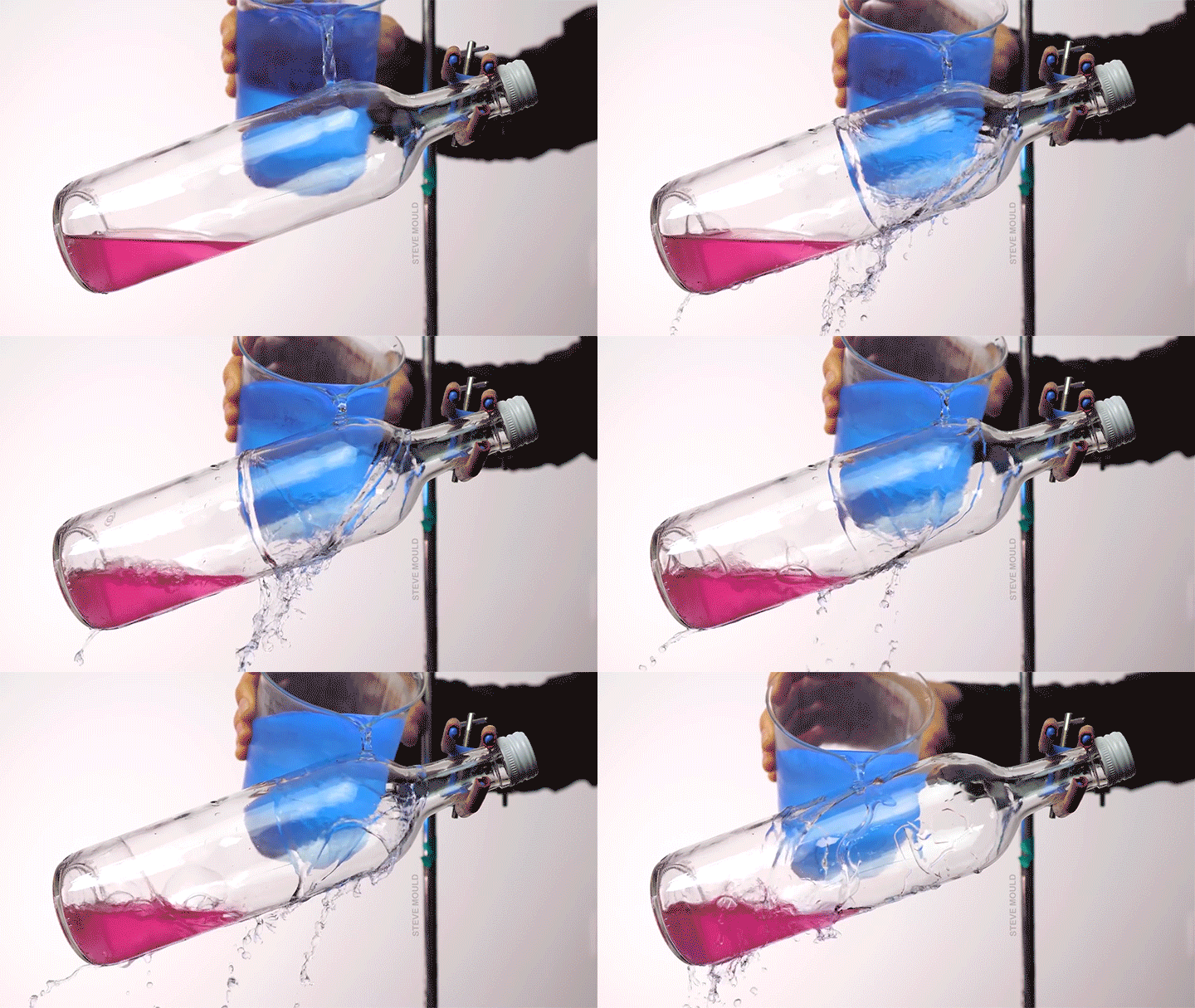
    7. Boiling water using ice water
    8. Concentric patterns on freezing and thawing ice
    9. Bouncing off superhydrophobic defects
    10. To beat surface tension, tadpoles blow bubbles

    There’s a good mix of topics here! A little bit of biophysics, some research, some phenomena, and some good, old-fashioned fluid dynamics.

    If you enjoy FYFD, please remember that it’s primarily reader-supported. You can help support the site by becoming a patronmaking a one-time donationbuying some merch, or simply by sharing on social media. Happy New Year!

    (Image credits: catfish – Abyss Dive Center, owl – J. Usherwood et al., masks – It’s Okay to Be Smart, droplet – C. Kalelkar and H. Sai, boundary layer – J. Lienhard, bubble – A. Patsyk et al., boiling – S. Mould, ice – D. Spitzer, defects – The Lutetium Project, tadpoles – K. Schwenk and J. Phillips)

  • The Challenges of Being Small

    The Challenges of Being Small

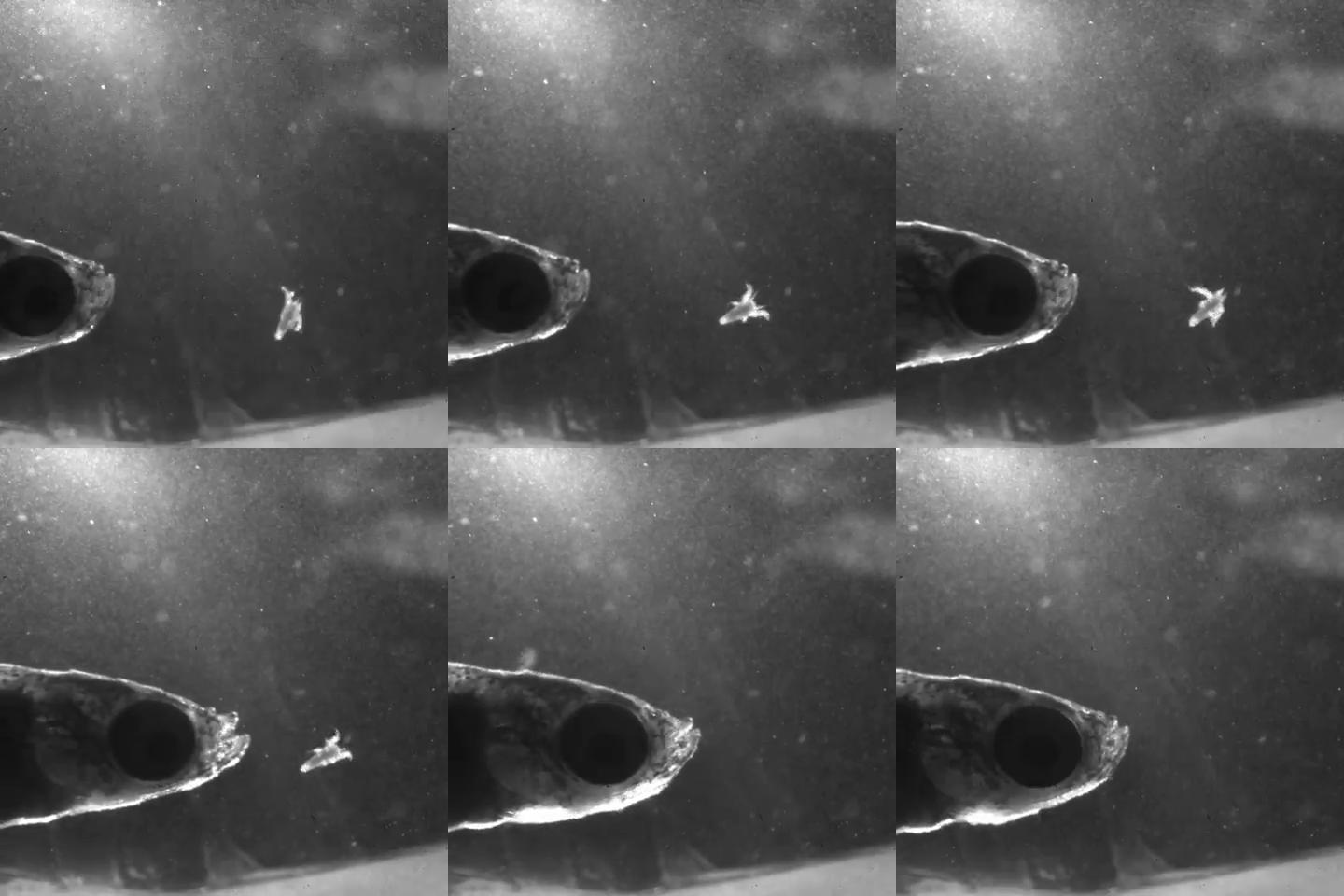
    For juvenile fish, feeding is a challenge. Their small size — often less than 5 mm in length — makes hydrodynamically capturing prey much harder because of viscosity’s relatively larger effect on them. But size may not be the only factor in determining their success, as a new study shows.

    Researchers studied feeding behaviors of two, equally-sized species’ larvae: zebrafish and guppies. The biggest difference between these two species is their developmental time prior to beginning to hunt on their own. Guppies develop five times longer than zebrafish larvae before they start feeding.

    Both fish have the same hydrodynamic limitations to overcome. If you look closely at the first image, you’ll see fluid being pushed ahead of the fish as it swims. The researchers refer to this as a bow wave, and it effectively announces to any prey that the fish is approaching. To sneak up on prey, the fish has to be able to generate enough suction force to pull its food in from beyond the bow wave’s reach. The experiments showed that guppies were able to do this reliably, while zebrafish could not. The subsequent difference in their feeding success was stark: the guppies’ success rate was almost five times that of the zebrafish! (Image and research credit: T. Dial and G. Lauder, source; via G. Lauder)

  • Steering as a Boxfish

    Steering as a Boxfish

    Coral reefs are full of odd-looking denizens, but one of the funniest-looking ones must be the boxfish. This family of fish lives up to its name; their bodies feature an angular, bony carapace that helps protect them. But you don’t have to be a fluid dynamicist to wonder how in the world they swim with that kind of shape.

    There’s actually disagreement in scientific circles as to whether the basic shape of a boxfish is stabilizing or destabilizing, in other words, whether the fish’s body shape will try to automatically turn or roll when flow moves past. A new study focuses instead on the role the fish’s tail fin serves. Through experiments (on a fish model) and simulations, the researchers showed that boxfish rely on their tail fins both as rudders and course-stabilizers.

    Living around coral reefs means that boxfish need to be highly maneuverable, and this research indicates that the fish’s body shape, combined with the stabilizing power of its tail, are key to its ability to quickly and easily turn in any direction. (Image credits: boxfish – D. Seddon, simulation – P. Boute et al.; research credit: P. Boute et al.; via NYTimes; submitted by Kam-Yung Soh)
  • Featured Video Play Icon

    Collective Catfish Convection

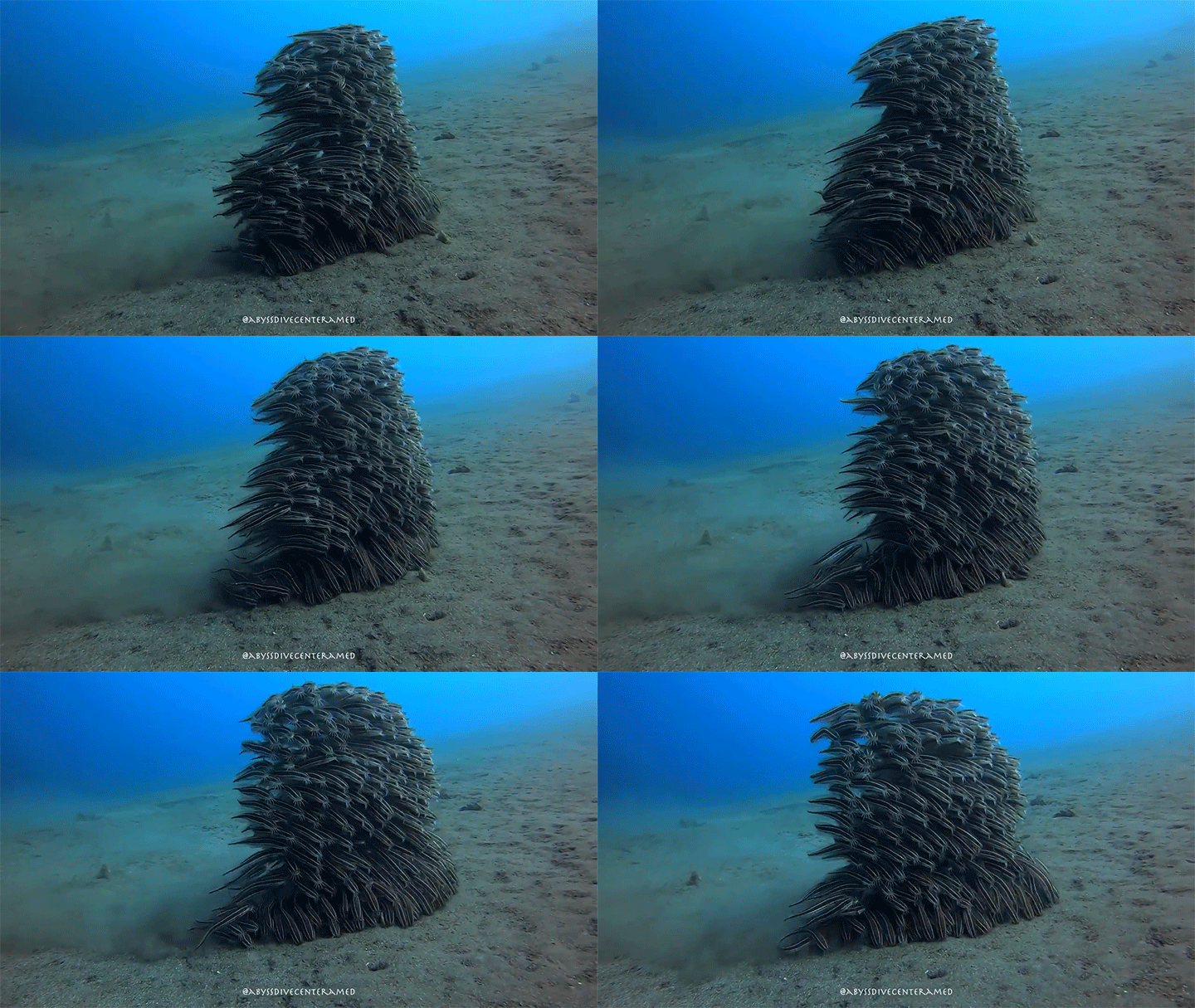
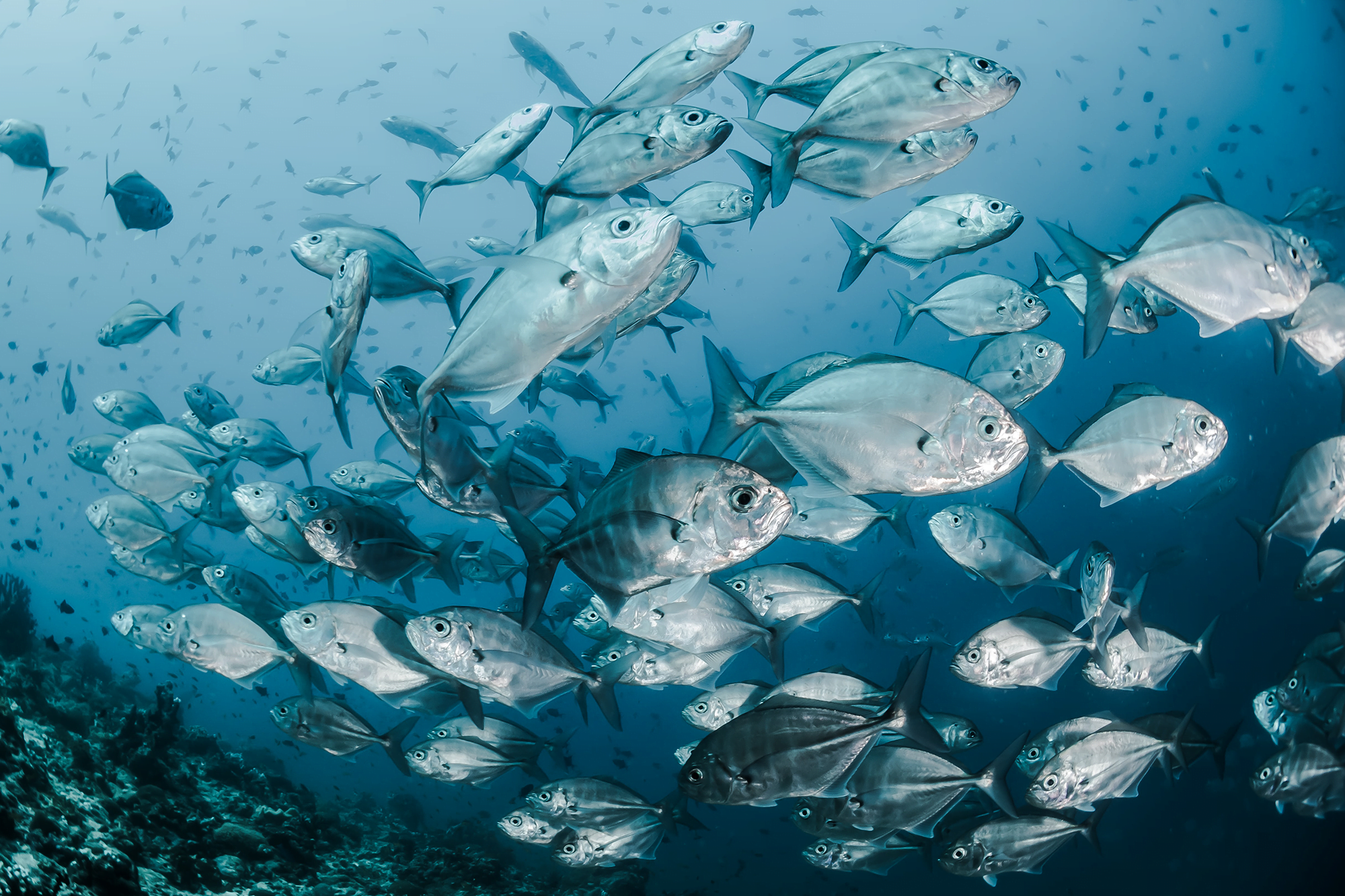
    Gather many birds, fish, or humans together and you often get collective motion that’s remarkably fluid-like in appearance. This video shows a group of juvenile striped eel catfish, an (eventually) venomous species that uses strength in numbers for protection while young. Their movement is rather mesmerizing, and if you watch individual catfish, you’ll see a sort of convective motion inside the blob. There’s a general downward trend near the front of the school and a rising one on the backside. Perhaps they’re taking turns feeding near the bottom of the pack? (Image and video credit: Abyss Dive Center; via Colossal)

  • The Microscopic Ocean

    The Microscopic Ocean

    When you’re the size of plankton, water may as well be molasses. Viscosity rules at these scales, and swimming plankton leave distinctive wakes that are slow to dissipate. Fish that feed on plankton use these trails to find their prey. But this microscopic world is changing as the ocean warms.

    At higher temperatures, water is less viscous, and plankton wakes don’t last as long. To make matters worse for hungry fish, warmer waters have led to an explosion in a species of faster plankton, capable of moving hundreds of body lengths a second. This species is far more difficult to catch, which may explain some of the collapses we’re observing in populations of fish like cod and haddock. (Video and image credit: BBC Earth Lab)