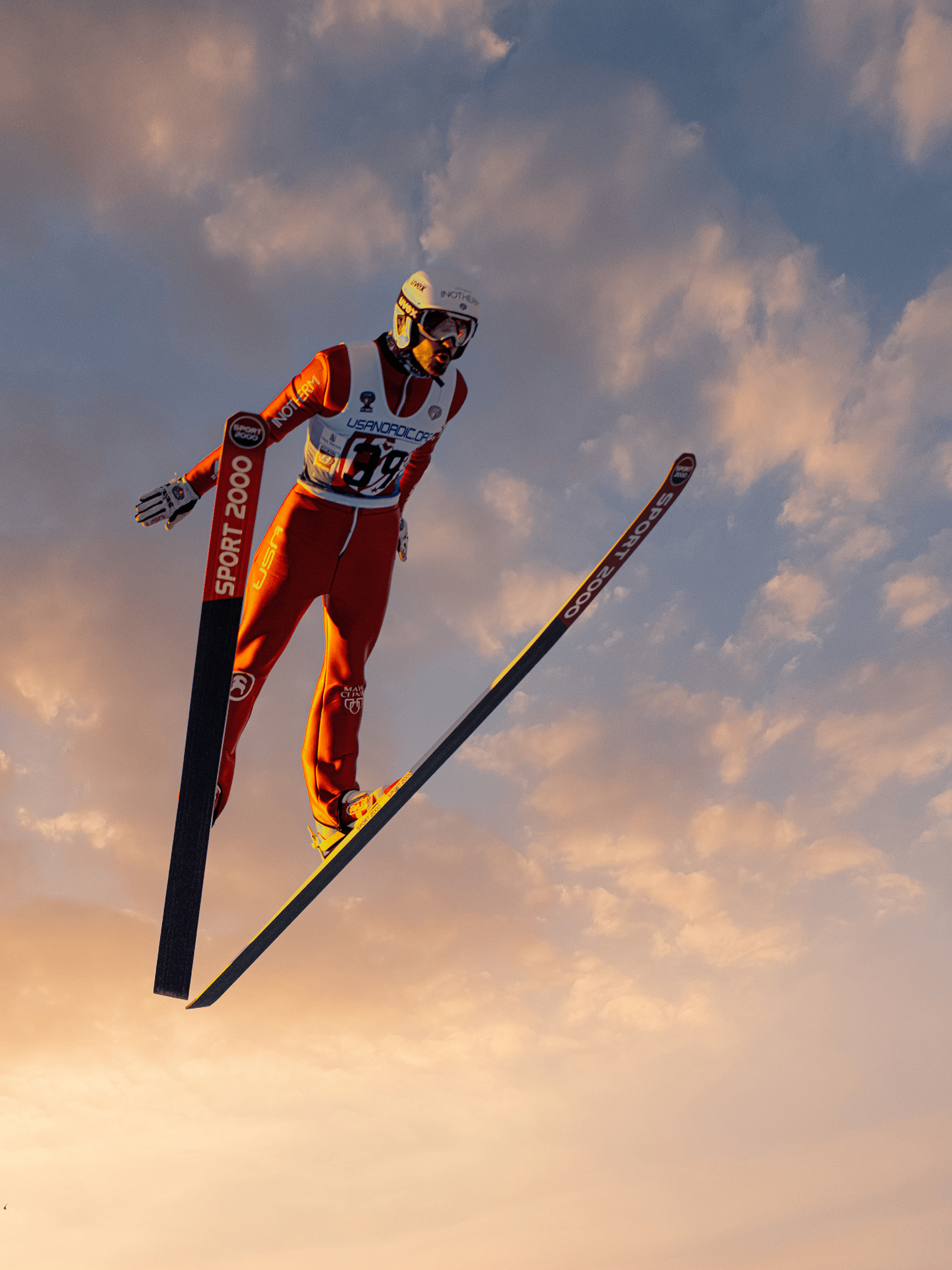
In ski jumping, aerodynamics are paramount. Each jump consists of four segments: the in-run, take-off, flight, and landing. Of these, aerodynamics dominates in the in-run — where jumpers streamline themselves to minimize drag and maximize their take-off speed — and in flight. During flight, ski jumpers spread their skis in a V-shape and lift their arms to the sides to turn themselves into a glider. Their goal is to maximize their lift-to-drag ratio, so that the air keeps them aloft as long as possible. Because of the short flight time and high risk of taking jump after jump, many elite ski jumpers use wind tunnel time to practice and hone their flight positioning, as seen in the video below.
Weather also plays a significant role in ski jumping; it’s one of the few sports where a headwind is an advantage to athletes. To try to adjust for wind effects, scoring for the sport uses a wind factor. (Image credit: T. Trapani; video credit: NBC News)
The ekranoplan was a massive, Soviet-era aircraft that relied on ground effect to stay aloft. In this video, RC pilots test out their own homemade version of the craft, including some neat flow visualization of the wingtip vortices. When an aircraft (or, for that matter, a bird) flies near the ground, it experiences less drag than at higher altitudes. This happens primarily because of the ground’s effect on wingtip vortices.
In normal flight, the vortices from an aircraft’s wingtips create a downwash that reduces the wing’s overall lift. But in ground effect, the vortices cannot drift downward as they normally do. Instead, they spread apart from one another, thereby reducing the drag caused by downwash from the aircraft. The end result is better performance, though it comes with added risk since there’s very little time to correct an error when flying at an altitude less than half the aircraft’s wingspan. (Video and image credit: rctestflight; submitted by Simplicator)
Flying fish and diving birds often navigate the interface between water and air in their flight, but few studies have actually looked at the effects of this transition on lift. In this work, researchers measured forces on a small, fixed wing as it egresses from water into air at a constant velocity.
The tests showed that exit velocity had a large effect on lift generation. At low speeds, an exiting wing experienced a strong, positive lift spike as soon as the leading edge broke the surface. But that lift changed to strongly negative as the wing continued out of the water. At higher speeds, the wings had no lift reversal but also reached lower peak lift coefficients. The team studied the effects of angle of attack and starting depth as well, concluding that any vehicles intended to navigate the water-air transition will need robust control systems prepared to deal with fast-changing forces. (Image credit: fish – J. Cobb, wing – W. Weisler et al.; research credit: W. Weisler et al.)
Birds have a level of control in flight that would make any engineer jealous. This 2021 Audubon Photography Award winning video by Bill Bryant shows off the skills of a red-tailed hawk. On this occasion, the hawk is using strong winds coming off the Rocky Mountains to hover in place. Notice how active his wings and tail are in adjusting to the changes in the wind while his head is perfectly still. With his head still, the hawk can scan the ground for mice and other prey. It’s absolutely incredible to see how effortlessly the hawk is accounting for unsteadiness in the wind here! (Video and image credit: B. Bryant; via Audubon)
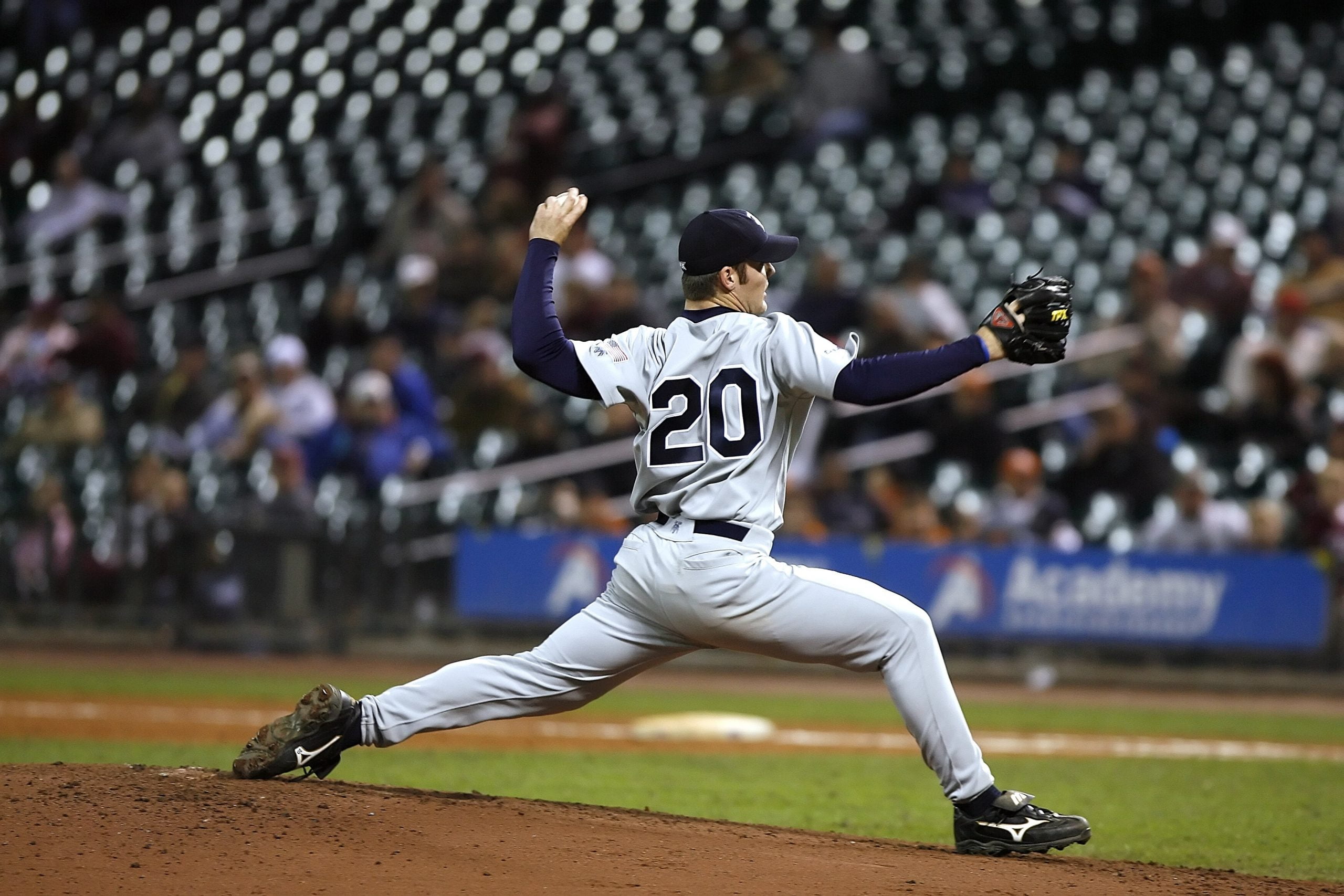
For a long time, people thought baseball aerodynamics were simply a competition between gravity and the Magnus effect caused when a ball is spinning. But the seams of a baseball are so prominent that they, too, have a role to play. Here’s a baseline image of flow around a non-spinning baseball:
An non-spinning baseball with a straight, unaltered wake.
As in our previous post on golf, the colors indicate the direction of vorticity but don’t matter much to us here. What’s important is that the wake behind the ball is straight, indicating that there is no additional force beyond gravity and drag acting on the ball. Contrast this to the spinning baseball below:
Flow around a baseball spinning clockwise.
This ball is spinning in a clockwise motion, which causes flow to separate from the ball earlier on the advancing (bottom) side and later on the retreating (top) side. As a result, the wake is tilted downward. This indicates an upward force on the ball, caused by the Magnus effect.
But what if the seams fall in a place where they affect the flow? Here’s another baseball that’s not spinning:
Flow around a non-spinning baseball with a seam-shifted wake caused by early separation on the top surface of the baseball.
Notice that seam sitting just past the widest point on the top of the baseball. Flow around that wide point (called the shoulder) is very sensitive to disturbances essentially because the boundary layer is just barely hanging on to the ball. The blue arrow marks where the boundary layer separates from the ball on the top, which takes place earlier than the flow separation on the bottom, marked by the red arrow. As a result, the wake of the ball is tilted upward, indicating a downward force on the ball. The researchers who first proved this effect call it a seam-shifted wake, and it turns out to be a very common effect in baseball. They’ve got a great blog dedicated to baseball aerodynamics where you can learn tons more if you’re interested. (Image credit: top – Pixabay, others – B. Smith; research credit: B. Smith; see also Baseball Aerodynamics)
Today wraps up our Olympic coverage, but if you missed our earlier posts, you can find them all here.
It’s a bit mindboggling, but by exploiting physics and geometry, a sailboat can reach speeds faster than the wind propelling it. Steve Mould demonstrates how in this video using some cool tabletop set-ups. Like a wing, a sail generates force by changing the direction of the incoming air. But the optimal speed for a sail is the one where the the flow doesn’t get deflected from its initial path at all (middle). If the sail were moving slower than this, the air would get pushed aside, creating a force that accelerates the boat. If the sail were moving faster, the air’s deflection would generate low pressure that would slow the boat down. Given this ideal match, it’s straightforward to show that, with the right sail angle, a boat can cover more distance than the air pushing it does in the same amount of time (right). Part of the mark of a great sailor is knowing how to manipulate this relationship to maximize your boat’s speed! (Image and video credit: S. Mould)
Golf returned to the Olympics in 2016 in Rio and is back for the Tokyo edition. Golf balls — with their turbulence-promoting dimples — are a perennial favorite for aerodynamics explanations because, counterintuitively, a dimpled golf ball flies farther than a smooth one. But today we’re going to focus on a different aspect of golf aerodynamics, namely, what happens when a golf ball is spinning. Here’s an animation showing the difference between flow around a non-spinning golf ball and flow around a golf ball spinning at 3180 rpm. Both balls are moving to the left at 30 m/s.
Animation toggling between a non-spinning and spinning golf ball moving at 30 m/s.
The colors in this image indicate the direction of vorticity (which is unimportant for us at the moment). What matters are the blue and red arrows, which mark where flow is leaving the surface of the golf ball, in other words, where the wake begins. For the non-spinning golf ball, flow leaves the ball at the same streamwise position on both sides of the ball. This gives a symmetric wake that is neither tilted upward nor downward.
On the spinning ball, though, the blue arrow on top of the ball moves backward, indicating that separation occurs later. On the lower surface, the red arrow moves forward, so separation happens earlier. These shifts cause the golf ball’s wake to tilt downward, which — by Newton’s Third Law — tells us that the ball is experiencing an upward force. This is known as the Magnus effect, and it plays a big role in soccer, volleyball, tennis, and any other sports with spinning balls.
Like footballs and baseballs, the trajectory of a volleyball is strongly influenced by aerodynamics. When spinning, the ball experiences a difference in pressure on either side, which causes it to swerve, per the Magnus effect. But volleyball also has the float serve, which like the knuckleball in baseball, uses no spin.
In this case, how the ball behaves depends strongly on the way the ball is made. Some volleyballs use smooth panels, while others have surfaces modified with dimples or honeycomb patterns, and researchers found that these subtle changes make a big difference in aerodynamics. A float serve’s trajectory is unpredictable because the ball will swerve whenever air near the surface of the ball on one side goes turbulent or separates. And without spin to influence that transition, everything comes down to the ball’s speed and its surface.
Researchers found that volleyballs with patterned surfaces transition to turbulence at lower speeds, which makes their behavior more predictable overall. But players who want to maximize the unpredictability of their float serve might prefer smooth-paneled balls, which don’t make the transition until higher speeds. (Image credit: game – Pixabay, volleyballs – U. Tsukuba; research credit: S. Hong et al., T. Asai et al.; via Ars Technica)
Stick around all this week and next for more Olympic-themed fluid physics!
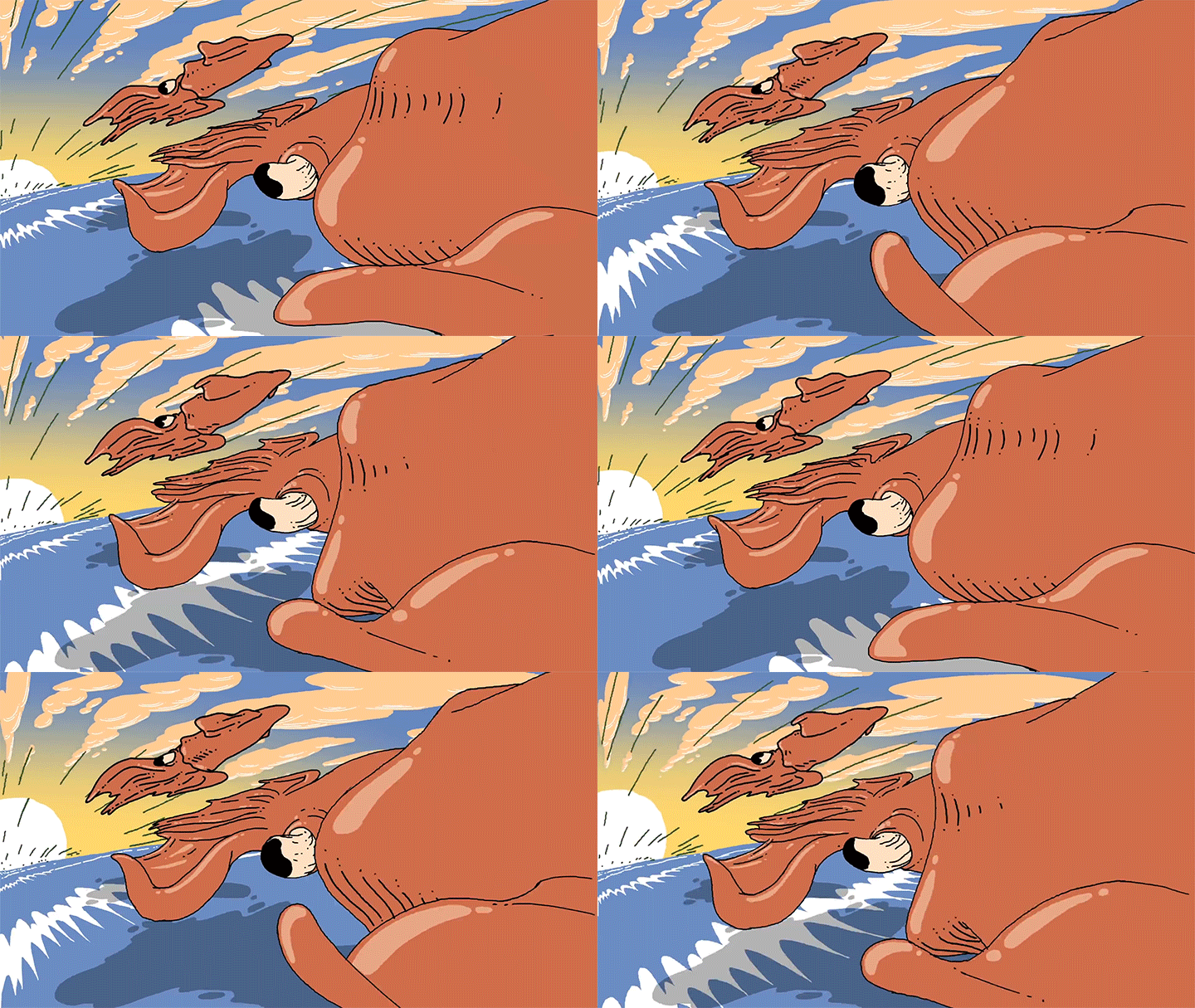
Some species of squid fly at speeds comparable to a motorboat for distances of 50 meters. The cephalopods get into the air the same way they swim underwater: by expelling a jet of water through the center of their body. Once aloft, the squids spread their tentacles to form a semi-rigid wing-like surface for lift. They can also use fins on their mantle as a canard for additional lift or control of their altitude. Researchers suspect the squids use flight as an escape mechanism to put distance between themselves and predators, but it could also be a low-energy migration strategy since a single pulse carries a squid farther in air than in water. (Video and image credit: TED-Ed)
Years ago as I sat on a plane taxiing at Heathrow, I caught a glimpse of a Concorde out on the tarmac. My classmates couldn’t understand why I was so excited to see that funny looking plane, but even as a high schooler, I was fascinated by the prospect of flying faster than sound.
Unfortunately, there are a lot of challenges to overcome in making supersonic flight widely available — fuel efficiency, cost effectiveness, and sonic boom control, to name a few. This video delves into some of the major issues and touches on some of the recent work at NASA and other organizations studying the problem. Perhaps as new technologies develop and mature we’ll once again see faster-than-sound air travel outside of rocket launches and military jets. (Video and image credit: TED-Ed)