Tomorrow (October 14), I’m heading off on vacation for a couple weeks out of range of the Internet. I’ve queued up entries for while I’m gone and my friend Claire from Brilliant Botany (check it out!) has kindly agreed to watch over the Tumblr queue and make sure it posts like it’s supposed to. So you should hopefully experience no interruptions to regular posts. But I won’t be responding to asks, submissions, emails, etc. until after I return at the end of the month.
Have a lovely October, readers! I’m off in search of penguins and iguanas.
Whether you’ve been here for 1 post or for all 1500, thank you! And special thanks, of course, to my Patreon patrons. If you’re a fan and want to help FYFD keep flowing and growing, please consider becoming a patron, too. (There’s cool perks available.) Here’s to the next 1500 posts!
tl;dr version: FYFD is launching a Patreon campaign. If you enjoy FYFD and want to help support its continued growth, please become a patron today!
And the longer version: At the start of the year, I hinted that there were big things ahead for FYFD. Today’s announcement is part of that. In the past five years, FYFD has grown beyond my wildest dreams. I’m so excited, grateful, and happy to share my love for science with all of you. As FYFD’s audience has grown, so have my plans and dreams for expanding the site and what it does. I want to bring you more: videos that take you behind-the-scenes to see the scientific process firsthand, interviews that let you meet the people behind the work, and articles that explore new and exciting fluid phenomena.
All of the research, filming, writing, and editing necessary to bring those dreams to life takes time and money. I can provide the first: from now on, I’ll be dedicating my full-time attention to FYFD. But I need your help and support to make this possible. That’s why I’m launching a campaign on Patreon. If you enjoy FYFD and want to help it continue and grow, please consider becoming a patron. Your monthly support will enable me to dedicate my full energy to FYFD and will provide funding for materials, equipment, and travel so that I can bring the science back to you.
There are also some pretty cool rewards available to patrons! All patrons will have access to a patrons-only activity feed where I post behind-the-scenes content and extras like video outtakes. It’s also a place where I’ll look for feedback on new ideas. Think of it as an extra dose of FYFD. Other rewards include getting your name added to the FYFD supporter page, getting a handwritten postcard from me, and access to a monthly webcast where I’ll chat with guest scientists and patrons. (I’m really excited about that last one!)
Whether you become a patron or not, I want to thank you for your support. None of those would be possible without you and your enthusiasm. As always, the best thing you can do to support FYFD is to tell others how much you like it.Thank you!
If you have any questions, I’ll be online all day. You can reach me via Tumblr, Twitter, or email.
When it’s really cold outside–to the tune of -40 degrees (Fahrenheit or Celsius)–physics can get a little crazy. In this photo, boiling-hot water from a thermos turns into an instant snowstorm when tossed. How is this possible? It turns out there are a combination of factors that affect this. Firstly, the rate of heat transfer between two objects depends on the magnitude of the temperature difference between them. The bigger the difference in temperature, the faster the hot object cools. Of course, as the hot object cools down, the temperature difference between it and its surroundings is smaller and the rate of heat transfer decreases.
The second important factor here is that the water is being tossed. When you throw water, it breaks into droplets, and droplets have a large surface area compared to their volume. As it turns out, the rate of heat transfer also depends on surface area. By breaking the hot water into smaller droplets, you increase the surface area exposed to the cold air, allowing the hot water to freeze faster. (Image credit: M. Davies et al.; via Gizmodo)
Also: Since there are a few events scheduled around the country over the next couple months, I’ve added an events page where you can find details for those appearances. And as always, if you’re interested in scheduling a talk or event, feel free to contact me directly.
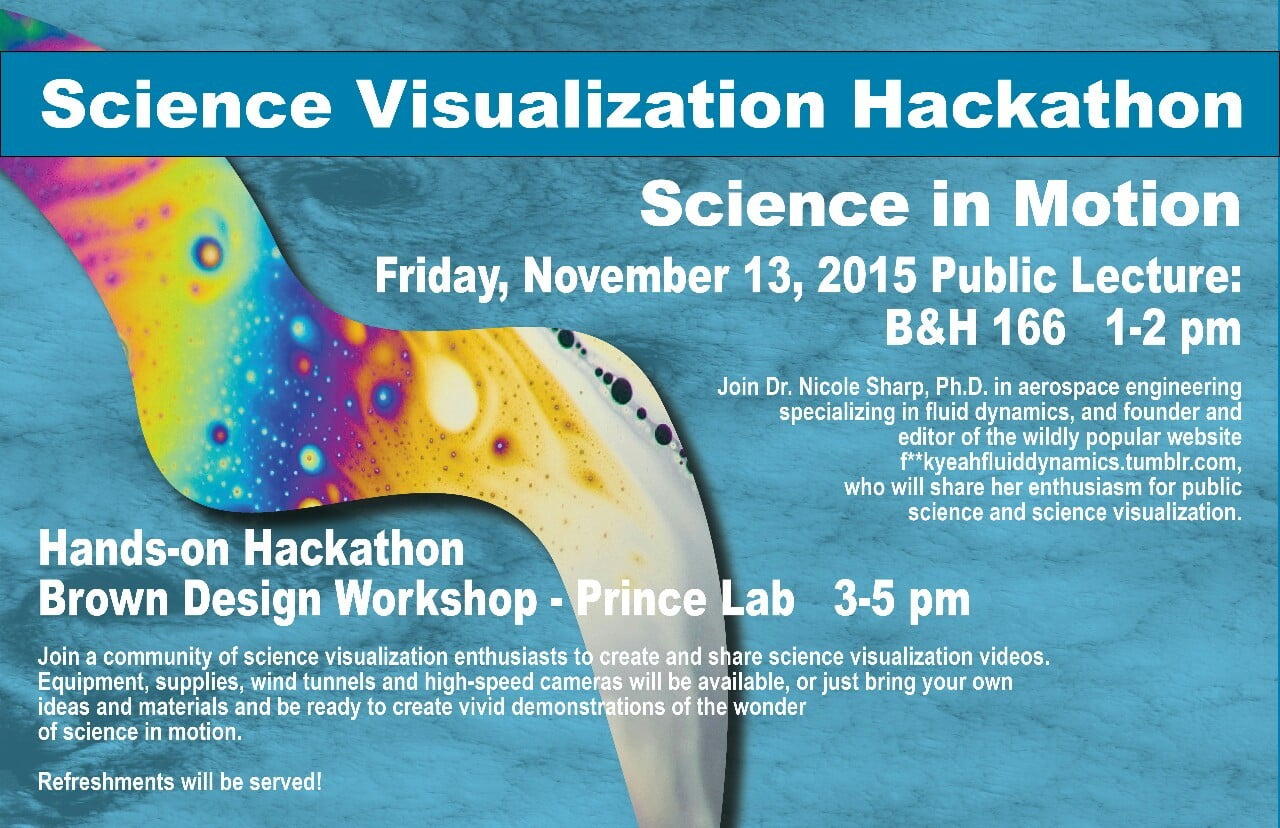
Just a heads-up that I’ll be at Brown University tomorrow giving a talk and then helping out with a science visualization hackathon. I’m super excited for the opportunity to have some hands-on flow visualization fun with folks!
The lecture is public, but I think only Brown students can register for the workshop.
FYFD is 5 years old! Hard to believe it’s been five whole years. Thank you to everyone who has helped along the way, especially those of you who produce, submit, and share such beautiful fluid dynamics.
Thanks also to everyone who is participating in our reader survey. We’re getting a lot of great feedback. If you haven’t taken it yet, there’s still time!
And, finally, in honor of five years of FYFD, I present you with the five most popular FYFD posts of all time:
I’d like to extend a special welcome to all our new followers here at FYFD. It’s been an exciting week since getting featured in the Tumblr Spotlight! In general, we try to bring you new fluid mechanical tidbits every weekday, but we also accept submissions and user questions, so if you’ve seen something cool online that’s not already in the archive or you have a burning question about how something works, speak up!
Today marks the one year anniversary of FYFD! I’d like to thank each of you for reading, commenting, submitting posts and asking questions. It’s been fun, and, hopefully a bit educational, too. Next week, in addition to new content, I want to feature some favorites from the archives. So take a gander at the past year of FYFD and comment with your favorites. What deserves a re-visit? What would you like to see in the future?
As of now, commenting has been added to FYFD via Disqus, which allows users to log in via Twitter, Facebook, etc. Hopefully, this will encourage greater interaction and discussion on the site. For example, if you have any suggestions for general audience fluid dynamics books, you can recommend them directly now!