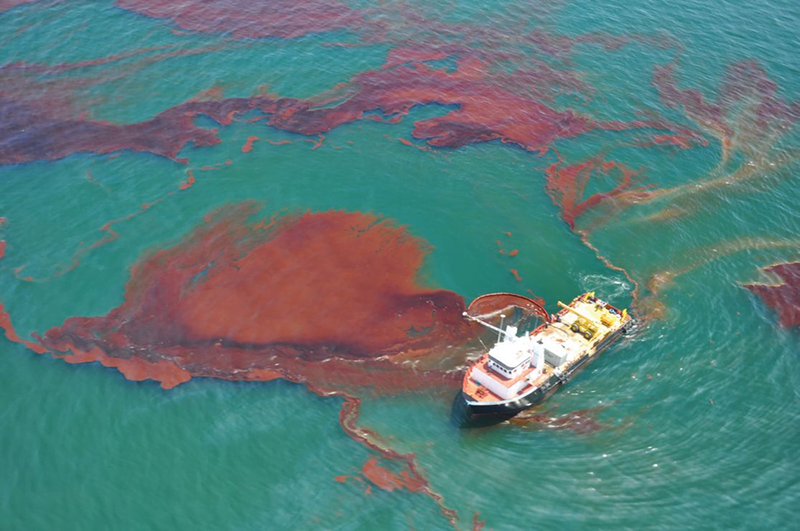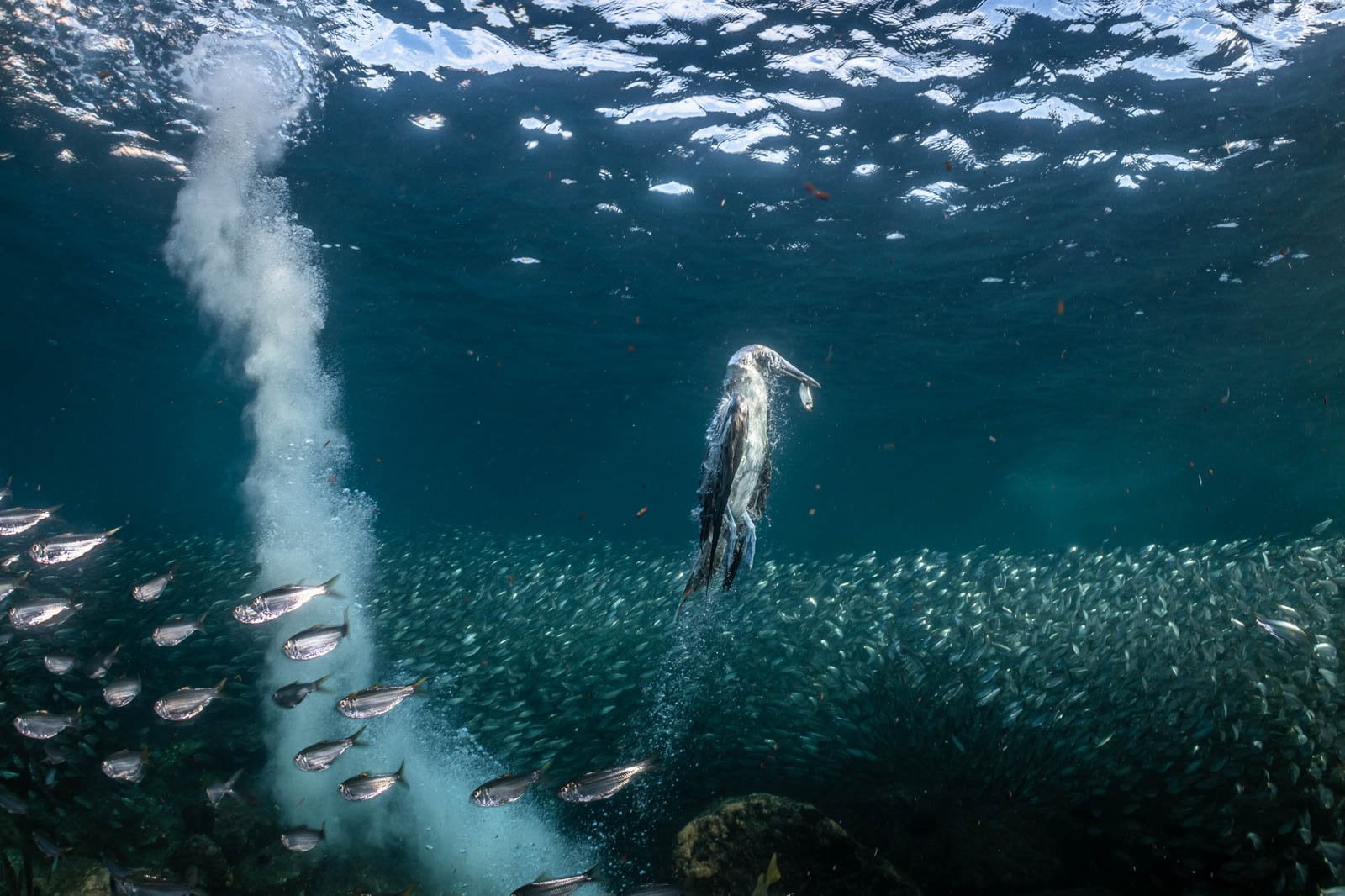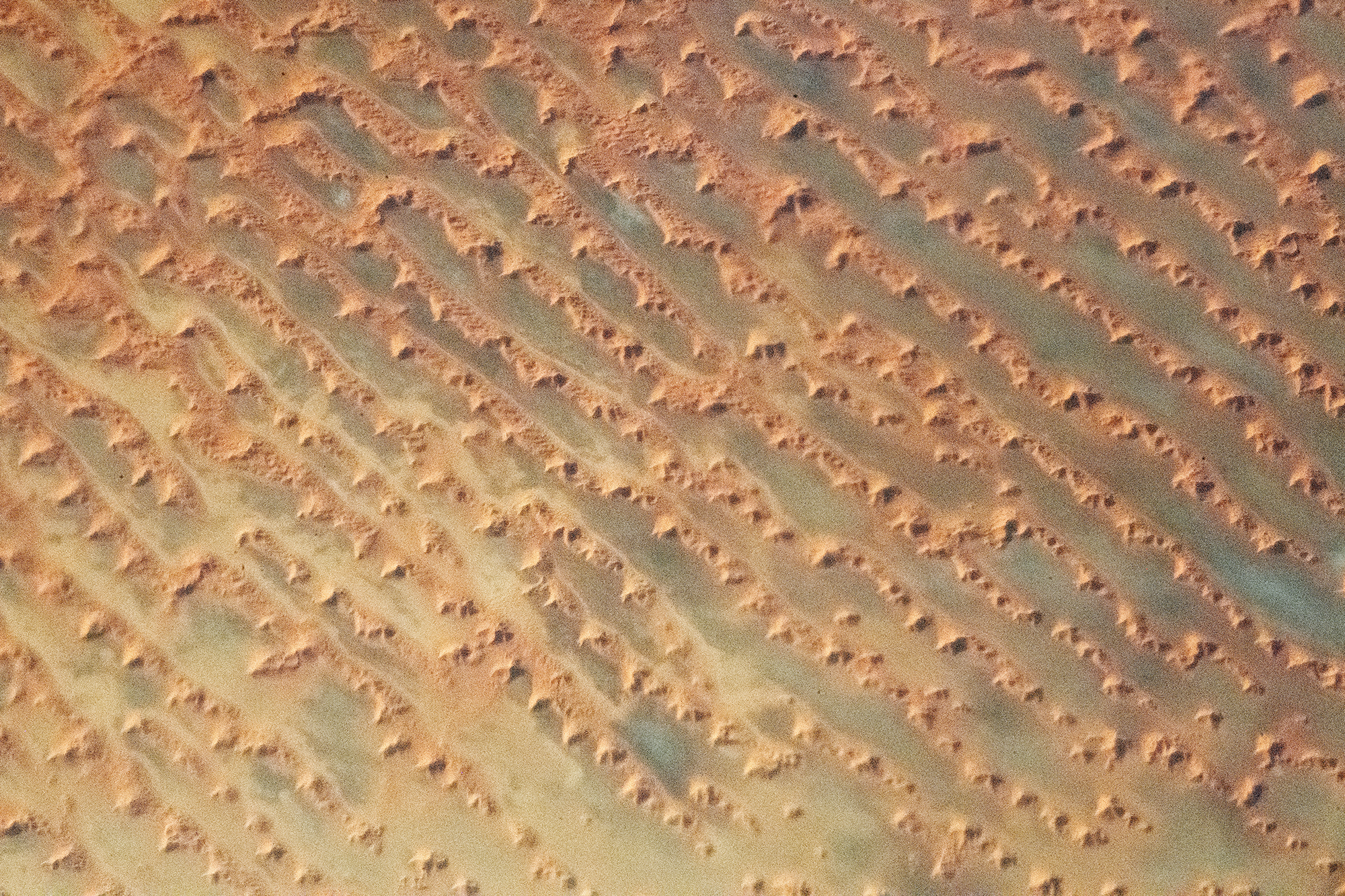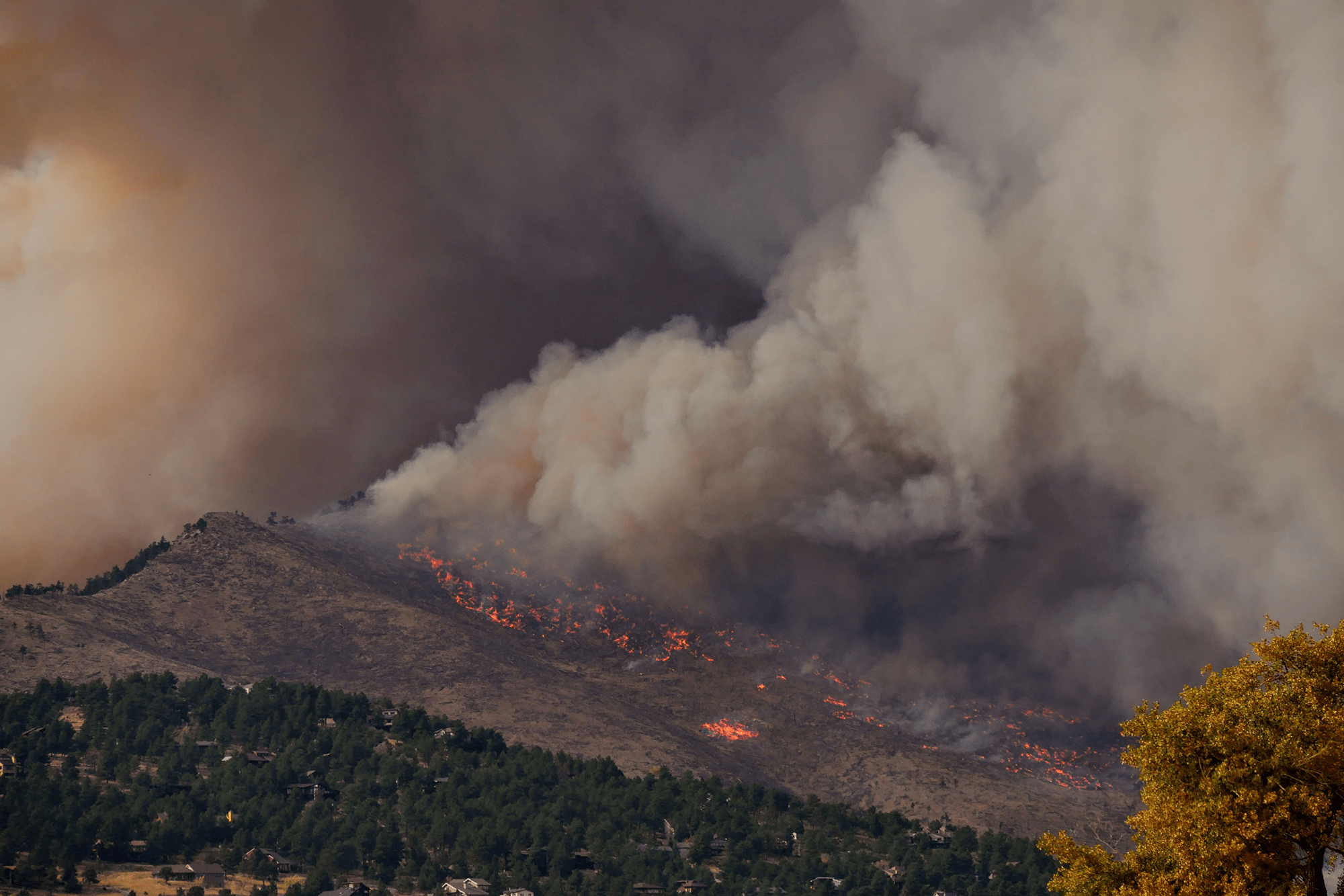
Tomorrow mathematician Luis Caffarelli will receive the Abel Prize — one of the highest honors in mathematics — in part for his work in fluid dynamics. Caffarelli is one of the authors of a partial proof of regularity for the Navier-Stokes equations, the equations governing fluid motion. A full proof of regularity and smoothness — essentially showing that the equations never break down or blow up to infinity — is one of the open Millennium Problems. Caffarelli is the first mathematician born and educated in South America to receive the Abel Prize. Congratulations to Professor Caffarelli! (Image credit: N. Zunk/University of Texas at Austin; via Nature; submitted by Kam-Yung Soh)
Search results for: “art”

“Fusion of Helios”
Built from approximately 90,000 individual images, “Fusion of Helios” reveals the wisp-like corona of our Sun. Astrophotographers Andrew McCarthy and Jason Guenzel joined forces to combine eclipse images with data from NASA to build this fusion of art and science. Jets of plasma, known as spicules, dot the sun’s surface, and a towering tornado of plasma shoots off one side. For scale, that vortex stretches as far as 14 Earths stacked atop one another. (Image credit: A. McCarthy and J. Guenzel; via Colossal)

Acoustic Cameras
Acoustic cameras use arrays of microphones to isolate where sounds are coming from. As Steve Mould shows in this video, they have some incredibly cool properties. They can show engineers which part of a device is producing particular sound frequencies, which is handy, for example, when trying to quiet a vacuum cleaner or learn which wheels on a train need maintenance. They can also show how sound moves around a room; near the end of the video, you can see the echo from a clap flashing around a room. Check out the full video for more! (Video credit: S. Mould)

Drying Cracks
Droplets with particles in them can leave complex stains when they dry — just look at coffee rings and whiskey marks! Here, researchers look at the patterns left on glass by small droplets that evaporated and left behind their nanoparticles. As evaporation takes place, the droplet’s shape changes, adding stress to the growing layer of nanoparticle residue. Cracking is one way to relieve that stress. Another method is delamination — peeling up from the surface. On the leftmost drop, the outer rim of nanoparticles delaminated — as seen from the circular fringes — which released stress without cracking. The rightmost drop, which had a smaller contact angle with the surface, couldn’t delaminate and instead cracked throughout. (Image credit: M. Ibrahim et al.)

Banzai Pipeline From Above
On the north shore of O’ahu, Hawaii, Banzai Pipeline is known for some of the most thrilling and deadly surfing in the world. The area’s barrel rolls are triggered when incoming waves break over the shallow reef. Photographer Kevin Krautgartner captures the waves from above, showcasing the incredible energy inherent in the ocean. The motion and texture of the water is mesmerizing. I feel like I could stare at these all day long! (Image credit: K. Krautgartner; via Colossal)

Switchable Explosives
Explosives are used in many fields, including mining and demolition, but storing these devices is difficult and dangerous. Hundreds of accidents — many resulting in fatalities — have happened over the decades, simply because there is no true “off-switch” for explosive devices. But a group out of Los Alamos believe they’ve changed that.

Without water in the device, the outer surfaces burn, but no explosion takes place. Using 3D-printing, the researchers built an explosive lattice filled with empty voids. With air in these gaps, any attempt to light the explosive fizzle. The outer layers of the explosive burn, but there’s no detonation. It is, relatively speaking, safe for storage.

When the voids are filled with water, the explosive detonates when lit. But once the device is filled with water (or another liquid), the story is different. In this situation, the blast wave propagates and the explosive detonates, releasing 98% more energy than in its “storage” mode. Changing the liquid inside the device can enhance the explosive energy, too, which could allow users to tune the discharge. (Image credit: S. Moses; video and research credit: C. Brown et al.; via APS Physics)

Polygonal Jumps
When you turn on your kitchen faucet, you may have noticed a big circle that forms on the bottom of the sink. This is a hydraulic jump, a region where fast-moving, shallow flow shifts to a slower-moving, deeper flow. Although these jumps start out circular, if the fluid is deeper than a critical value, the jump will break down and form polygons, like the one above. Exactly what shape the jump forms depends on many factors: flow speed, fluid depth, and flow history. The same flow conditions can even form more than one shape. But all of these shapes have one thing in common: their corners are universally around 114 degrees with a radius of 3.5 millimeters. (Image and research credit: S. Tamim et al.; via PRF)

100 For the Ocean
One hundred photographers of all genres are coming together this month to raise money for ocean conservation in “100 For the Ocean.” Through the end of this month, they’re selling prints of these and other images, starting at $100 apiece. All proceeds will go to ocean conservation. Check out all the prints here, and if your wall has a bare spot, now’s a great time to add some artwork on a fluidsy nature. (Image credits: 100 For the Ocean, individual photographers listed in gallery titles; via Colossal)
Disclosure: I have no affiliation whatsoever with this fundraiser. I just like great photos and preserving nature.

Honeybee Feeding
Busy bees feed on millions of flowers for each kilogram of honey they produce. To gather nectar, bees use their hairy tongues, which project out of a sheath-like cover. Protraction (i.e., sticking their tongue out) is relatively fast because all the hairs on the tongue initially lie flat. In the nectar, those hairs flare out, creating a miniature forest that traps viscous nectar and drags it back into the bee during retraction.

Bees feed by projecting their tongues into nectar. Tongue extension is faster because the tongue’s hairs lie flat. During the slower retraction phase, the hairs flare out, trapping nectar and pulling it back into the bee. Through modeling and experiments, researchers found that the time it takes a bee to retract its tongue depends on the bee’s overall mass. Smaller bees are slower to the retract their tongues, likely to allow enough time for their shorter tongues to capture enough nectar. With bee populations on the decline, the team’s predictions may help communities select flowers with nectar concentrations that best fit their local bees’ needs. (Image credits: top – J. Szabó, bee eating – B. Wang et al.; research credit: B. Wang et al.; via APS Physics)

Ominous Mammatus
Mammatus clouds are fairly unusual and often look quite dramatic. Most clouds have flat bottoms, caused by the specific height and temperature at which their droplets condense. But mammatus clouds have bubble-like bottoms that are thought to form when large droplets of water or ice sink as they evaporate. Although they can occur in the turbulence caused by a thunderstorm, mammatus clouds themselves are not a storm cloud. They appear in non-stormy skies, too. The clouds are particularly striking when they’re lit from the side, as in the image above. (Image credit: J. Olson; via APOD)