Search results for: “art”

  • Holding Steady

    Holding Steady

    Before a mammalian cell divides, the spindle — a protein structure — divides the cell’s genetic material in two. As it does, the cytoplasm inside the cell forms a toroidal flow (below, left). Researchers wondered how the spindle manages to stay in place with this flow; the spindle sits just where the flow diverges, a spot that seems ripe for unstable shifts in position. But, contrary to expectations, their analysis showed that — although a smaller spindle would be unstable in that spot — the protein spindle is large enough that its size distorts the cell’s flow and creates a pressure that moves it back into place if it shifts. (Image credit: top – ColiN00B, illustration – W. Liao and E. Lauga; research credit: W. Liao and E. Lauga; via APS Physics)

    Left: illustration of the toroidal flow near the spindle (purple) in a cell. Right: schematic of flow near the spindle's fixed point.
    Left: illustration of the toroidal flow near the spindle (purple) in a cell. Right: schematic of flow near the spindle’s fixed point.
    Fediverse Reactions
  • The Best of FYFD 2024

    The Best of FYFD 2024

    Welcome to another year and another look back at FYFD’s most popular posts. (You can find previous editions, too, for 2023, 2022, 2021, 2020, 2019, 2018, 2017, 2016, 2015, and 2014. Whew, that’s a lot!) Here are some of 2024’s most popular topics:

    This year’s topics are a good mix: fundamental research, civil engineering applications, geophysics, astrophysics, art, and one good old-fashioned brain teaser. Interested in what 2025 will hold? There are lots of ways to follow along so that you don’t miss a post.

    And if you enjoy FYFD, please remember that it’s a reader-supported website. I don’t run ads, and it’s been years since my last sponsored post. You can help support the site byΒ becoming a patron,Β buying some merch, or simply by sharing on social media. And if you find yourself struggling to remember to check the website, remember you can get FYFD in your inbox every two weeks with our newsletter. Happy New Year!

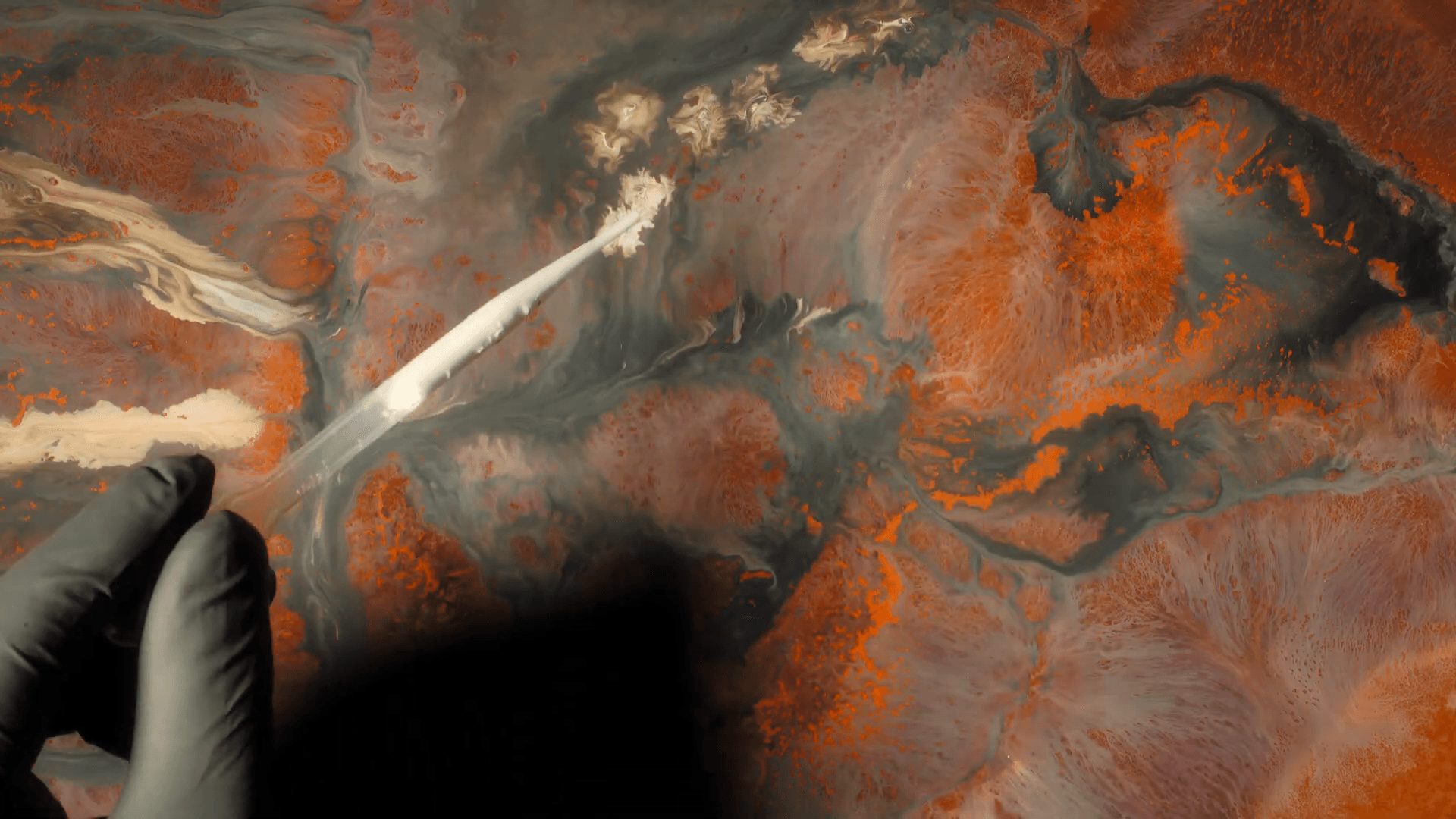
    (Image credits: dam – Practical Engineering, ants – C. Chen et al., supernova – NOIRLab, sprinkler – K. Wang et al., wave tank – L-P. EuvΓ© et al., “Dew Point” – L. Clark, paint – M. Huisman et al., iceberg – D. Fox, flame trough – S. Mould, sign – B. Willen, comet – S. Li, light pillars – N. Liao, chair – MIT News, Faraday instability – G. Louis et al., prominence – A. Vanoni)

    Fediverse Reactions
  • Tracking Ice Floes

    Tracking Ice Floes

    To understand why some sea ice melts and other sea ice survives, researchers tracked millions of floes over decades. This herculean undertaking combined satellite data, weather reports, and buoy data into a database covering nearly 20 years of data. With all of that information, the team could track the changes to specific pieces of ice rather than lumping data into overall averages.

    They found that an ice floe’s fate depended strongly on the route it took: ice that slipped from its starting region into warmer, more southern regions was likely to melt. They also saw region-specific effects, like that thick sea ice was more likely to melt in the East Siberian Sea’s summer, possibly due to warmer currents. The comprehensive, fine-grained analyses possible with this ice-tracking technique offer a chance to understand why some Arctic regions are more vulnerable to warming than others. (Image credit: D. Cantelli; research credit: P. Taylor et al.; via Eos)

  • Featured Video Play Icon

    Tar Pit, Sweet Tar Pit

    The La Brea Tar Pits have delivered countless creatures to their doom over tens of thousands of years. But the sticky quagmire of the pits’ natural asphalt is a comfy home to at least one animal: the petroleum fly. The fly’s maggots secrete a lipophobic — in other words, oil-repelling — fluid that allows them to move freely through the viscous black tar. That freedom means they can take full advantage of the asphalt’s trapping power by consuming a smorgasbord of stuck victims. Any asphalt the maggots swallow just passes harmlessly through them. As adults, only their feet are asphalt-resistant, but the petroleum fly still spends most its time hanging out in the pit, seeding the next generation. (Video and image credit: Deep Look)

    Fediverse Reactions
  • “Magic of the North”

    “Magic of the North”

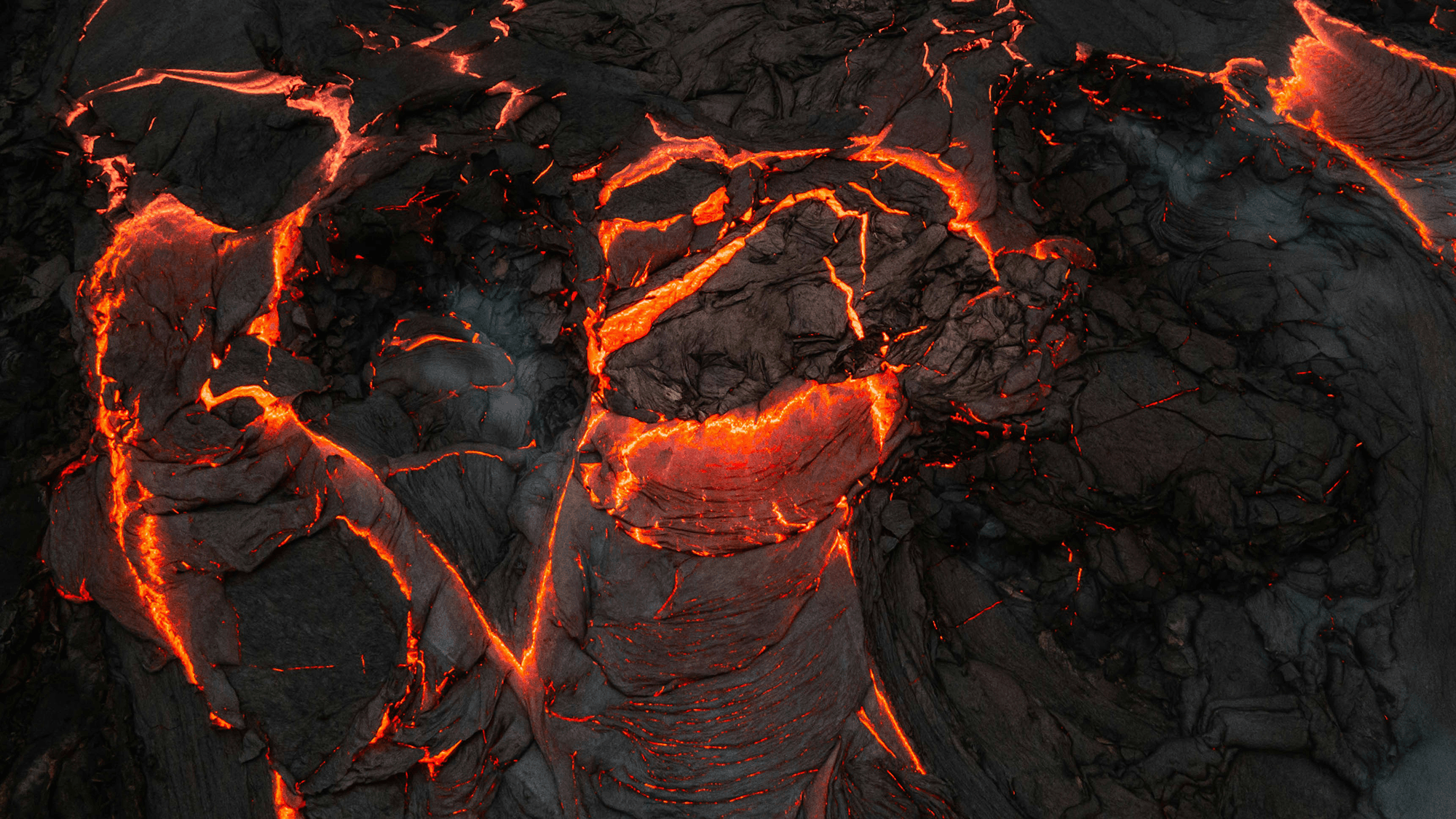
    Fires glow above and below in this award-winning image from photographer Josh Beames. In the foreground, lava from an Icelandic eruption spurts into the air and seeps across the landscape as it slowly cools. Above, the northern aurora ripples through the night sky, marking the dance of high-energy particles streaming into our atmosphere, guided by the lines of our magnetic field. Throw in some billowing turbulent smoke, and it’s hard to get more fluid dynamical (or beautiful!) than this. (Image credit: J. Beames/NLPOTY; via Colossal)

  • Active Cheerios Self-Propel

    Active Cheerios Self-Propel

    The interface where air and water meet is a special world of surface-tension-mediated interactions. Cereal lovers are well-aware of the Cheerios effect, where lightweight O’s tend to attract one another, courtesy of their matching menisci. And those who have played with soap boats know that a gradient in surface tension causes flow. Today’s pre-print study combines these two effects to create self-propelling particle assemblies.

    The team 3D-printed particles that are a couple centimeters across and resemble a cone stuck atop a hockey puck. The lower disk area is hollow, trapping air to make the particle buoyant. The cone serves as a fuel tank, which the researchers filled with ethanol (and, in some cases, some fluorescent dye to visualize the flow). Like soap, ethanol’s lower surface tension disrupts the water’s interface and triggers a flow that pulls the particle toward areas with higher surface tension. But, unlike soap, ethanol evaporates, effectively restoring the interface’s higher surface tension over time.

    With multiple self-propelling particles on the interface, the researchers observed a rich series of interactions. Without their fuel, the Cheerios effect attracted particles to each other. But with ethanol slowly leaking out their sides, the particles repelled each other. As the ethanol ran out and evaporated, the particles would again attract. By tweaking the number and position of fuel outlets on a particle, the researchers found they could tune the particles’ attractions and motility. In addition to helping robots move and organize, their findings also make for a fun educational project. There’s a lot of room for students to play with different 3D-printed designs and fuel concentrations to make their own self-propelled particles. (Research and image credit: J. Wilt et al.; via Ars Technica)

    Fediverse Reactions
  • Featured Video Play Icon

    Revealing Gravity Waves

    Severe weather — like thunderstorms, tornadoes, and hurricanes — can push air upward into a higher layer of the atmosphere and trigger gravity waves. Aboard the International Space Station (ISS), the Atmospheric Waves Experiment (AWE) instrument captures these waves by looking for variations in the brightness of Earth’s airglow (above). Recently, when Hurricane Helene hit the southeastern United States, AWE caught a series of gravity waves some 55 miles up, pushed by the storm (below). It’s incredible to see these long-ranging ripples spreading far beyond the heart of the storm. (Video credits: NASA Goddard and Utah State University)

  • Beneath a River of Red

    Beneath a River of Red

    A glowing arch of red, pink, and white anchors this stunning composite astrophotograph. This is a STEVE (Strong Thermal Emission Velocity Enhancement) caused by a river of fast-moving ions high in the atmosphere. Above the STEVE’s glow, the skies are red; that’s due either to the STEVE or to the heat-related glow of a Stable Auroral Red (SAR) arc. Find even more beautiful astrophotography at the artist’s website and Instagram. (Image credit: L. Leroux-GΓ©rΓ©; via APOD)

    Fediverse Reactions
  • Glacial Tributaries

    Glacial Tributaries

    Just as rivers have tributaries that feed their flow, small glaciers can flow as tributaries into larger ones. This astronaut photo shows Siachen Glacier and four of its tributaries coming together and continuing to flow from the top to the bottom of the image. The dark parallel lines running through the glaciers are moraines, where rocks and debris are carried along by the ice. Those seen here are medial moraines left by the joining of tributaries. When glaciers retreat, moraines are often left behind, strewn with sediment that ranges from the fine powder of glacial flour all the way to enormous boulders. (Image credit: NASA; via NASA Earth Observatory)

    Fediverse Reactions
  • A Seismic Warning for the Tongan Eruption

    A Seismic Warning for the Tongan Eruption

    In mid-January 2022, the Hunga Tonga-Hunga Ha’apai (HTHH) volcano had one of the most massive eruptions ever recorded, destroying an island, generating a tsunami, and blanketing Tonga in ash. Volcanologists are accustomed to monitoring nearby seismic equipment for signs of an imminent eruption, but researchers found that the HTHH eruption generated a surface-level seismic wave picked up by detectors 750 kilometers away about 15 minutes before the eruption began. They propose that the seismic wave occurred when the oceanic crust beneath the caldera fractured. That fracture could have allowed seawater and magma to mix above the volcano’s subsurface magma chamber, creating the explosive trigger for the eruption. Their finding suggests that real-time monitoring for these distant signals could provide valuable early warning of future eruptions. (Image credit: NASA Earth Observatory; research credit: T. Horiuchi et al.; via Gizmodo and AGU News)

    Fediverse Reactions