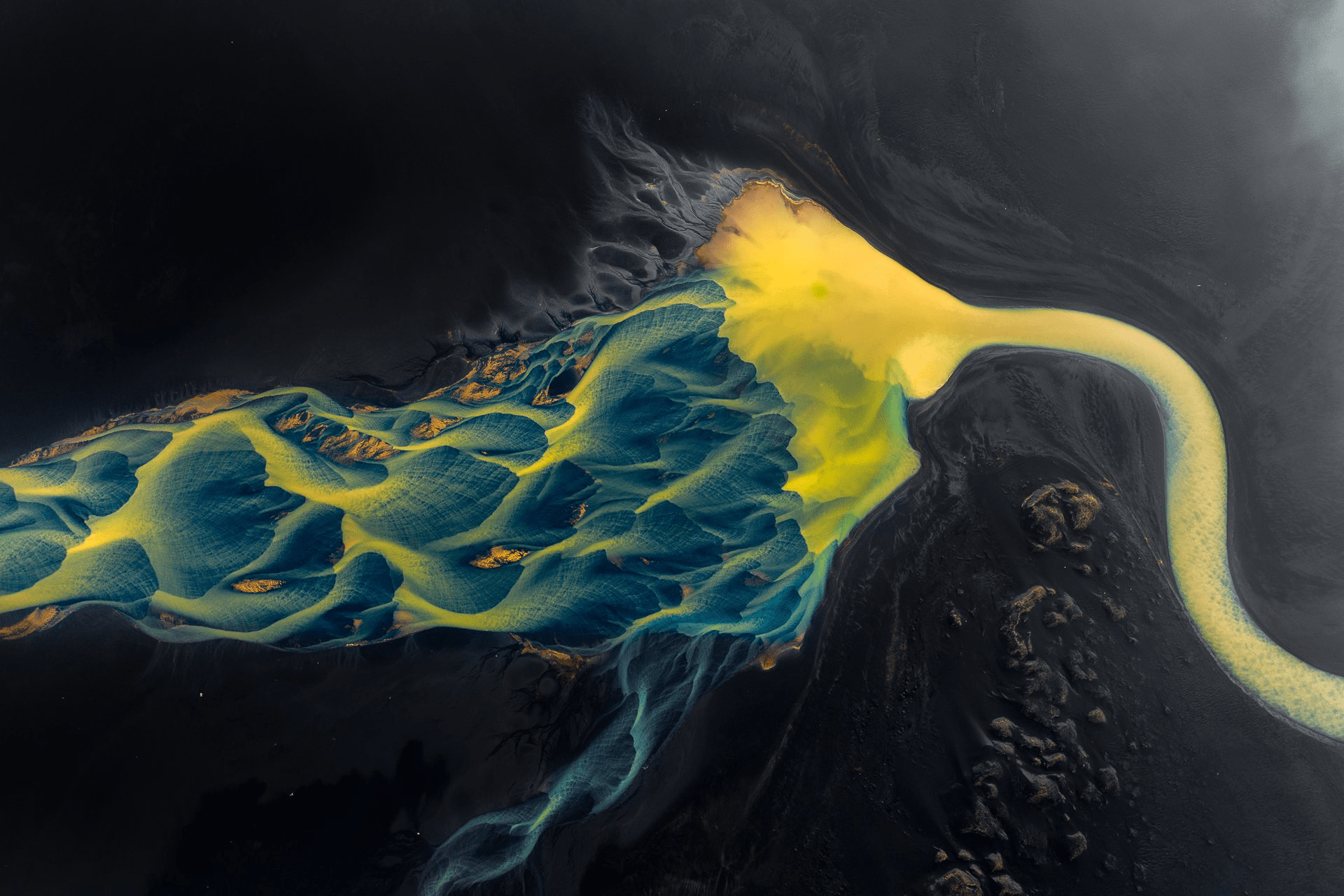
Streams of blue and yellow braid across Iceland’s volcanic landscape in this award-winning photo from Miki Spitzer. Glacial water shows an icy blue and sediments glisten in gold. Together, their interplay creates an arresting delta viewed from above. (Image credit: M. Spitzer; via WNPA)
Category: Art

“Storm Warning”
A calm, sunny day erupted into a thunderstorm off the coast of Scotland for photographer Brian Matthews. Turbulent clouds streak the sky, and a downpour on the left releases a stream of precipitation. Storms like these were once uncommon in the United Kingdom, but with increasingly hot weather due to climate change, more water vapor and more energy in the atmosphere create conditions for storms like these. (Image credit: B. Matthews; via Wildlife POTY)

“Dew Point” Deposits Droplets
Artist Lily Clark loves to work in water. One of her recent sculptures, “Dew Point,” uses superhydrophobic ceramic to grow and manipulate water droplets over and over and over. Droplets coalesce in four corners until they grow large enough for gravity to pull them into a circular depression. Given their limited contact with the ceramic, the falling water droplets zip and slide on their way to a return slit in the center of the piece. You can see more of the action in the video below. Personally, I’m reminded of coins falling into a collection box! (Video credit: L. Turczan; artwork by: L. Clark; via Colossal)

“Running on Water”
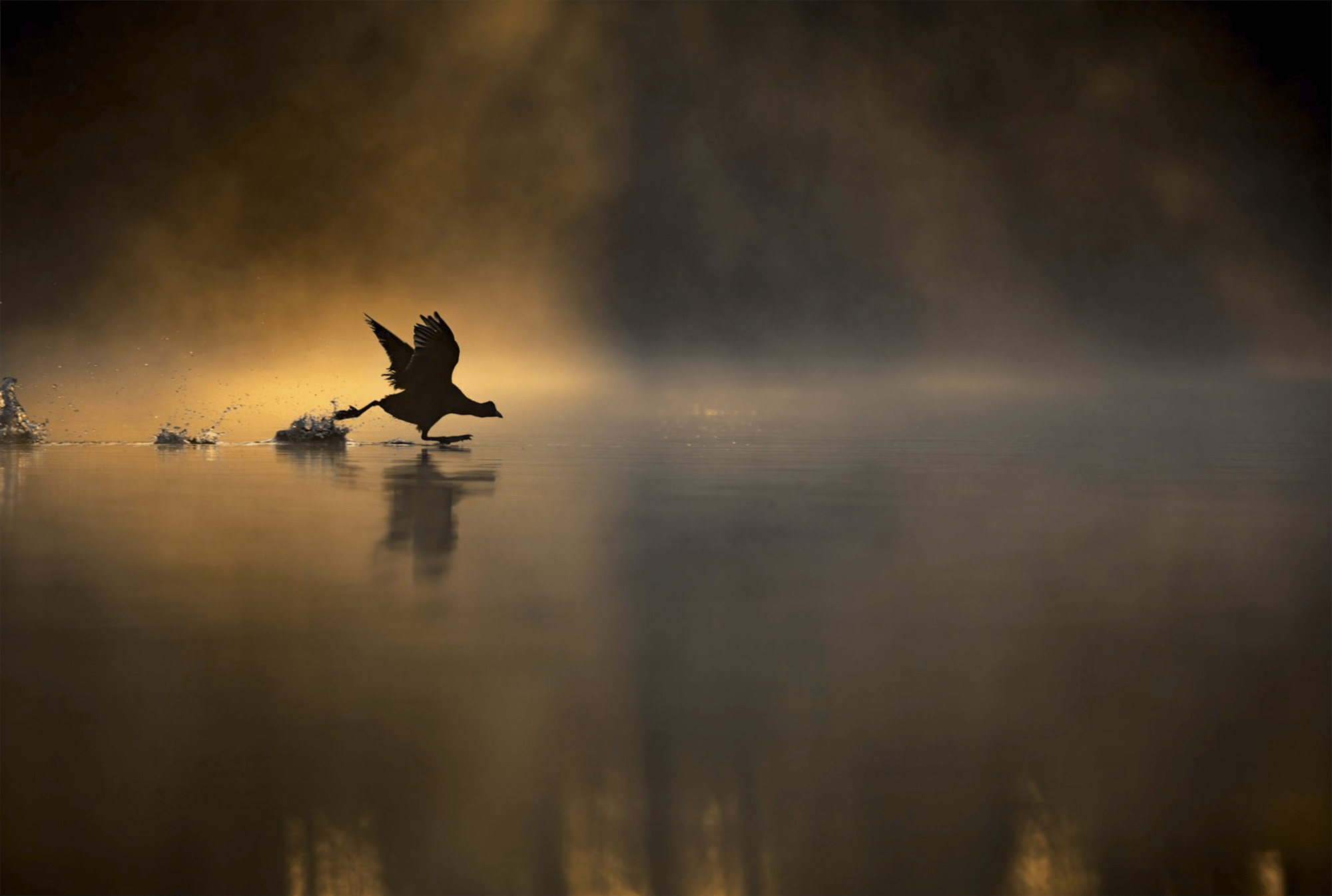
In the early morning light, young photographer Max Wood captured this coot escaping a fight. With wings flapping, the bird runs across the water surface. Each slap and stroke of a foot provides a portion of the vertical force needed to stay atop the water; lift from its wings provides the rest. With enough speed, the bird will take off. Some birds, however, are born water-walkers; certain species of grebe don’t need to use their wings to run on water. (Image credit: M. Wood; via BWPA)

Wind Sculptures


Vibrantly colored fabrics move in the breeze in artist Thomas Jackson’s outdoor installations. During the golden hours, he captures that movement in photographs like these. Jackson uses tulle, silk, and other everyday objects in his projects, and when finished, he takes a “leave no trace” approach, removing all materials and recycling them into new projects. Find more work on his website and Instagram. (Image credit: T. Jackson; via Colossal)

“Serenity”


Peering from directly above, landscapes take on a whole different aspect. That idea is the heart of Vadim Sherbakov’s “Serenity,” filmed by drone. From seething waters and meandering rivers to eroded landscapes and twisting ice, there’s lots of fluid dynamics on display here. (Video and image credit: V. Sherbakov)
Fediverse Reactions
-

“Divebomb”
Seabirds like gannets and boobies are engineered for diving. They fly to a certain altitude, locate fish underwater, and then fold themselves into a streamlined projectile. With this, they plunge into the water at high-speed, positioned to protect themselves from the forces of impact. Under the water, they dart among their prey, hunting with singular purpose. Photographer Kat Zhou’s “Divebomb” captures the underwater side of this behavior, while showing off the energetic bubbles (and bubble rings!) created by the birds. (Image credit: K. Zhou; via UPY 2024 and Colossal)

Geyser Sculptures
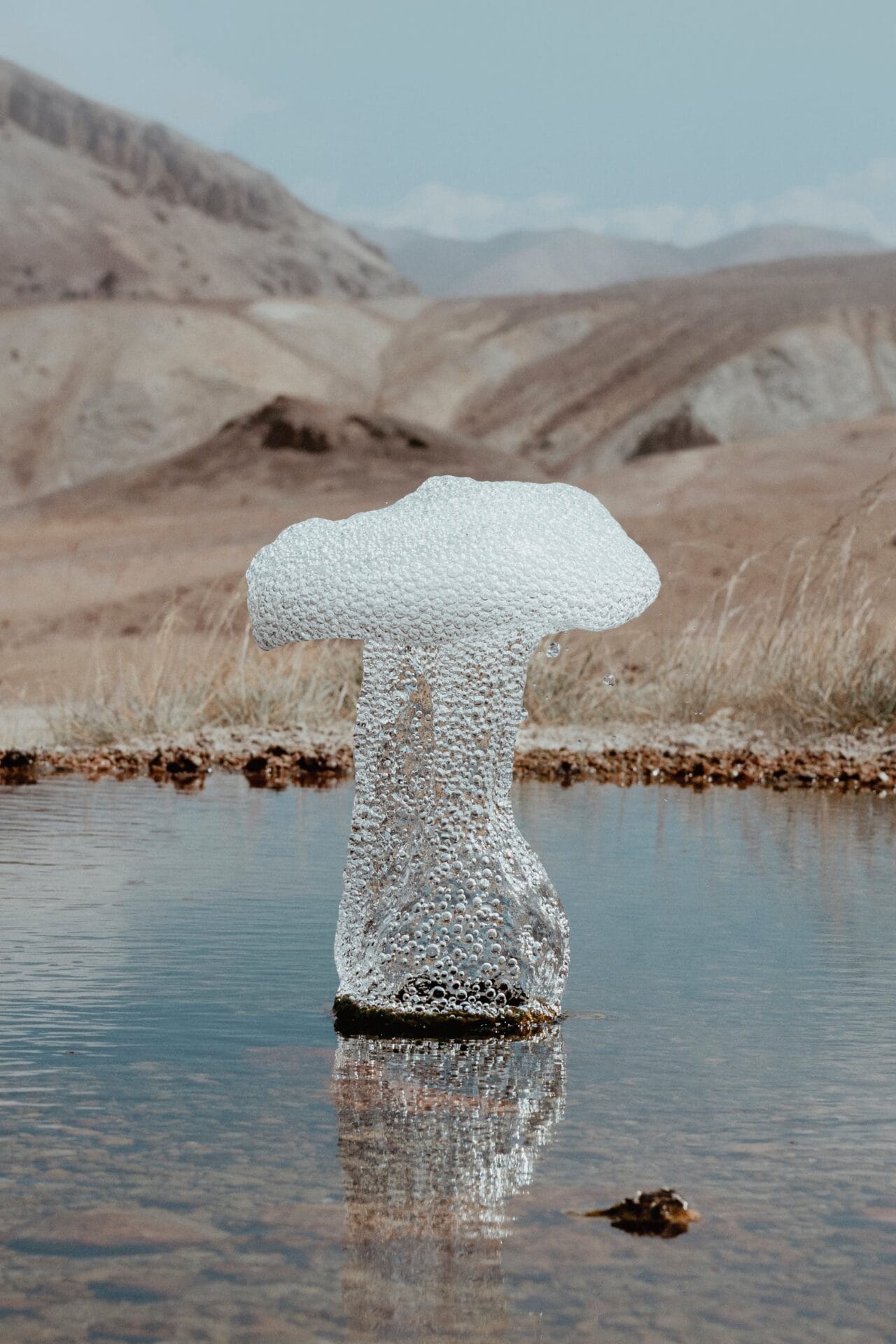
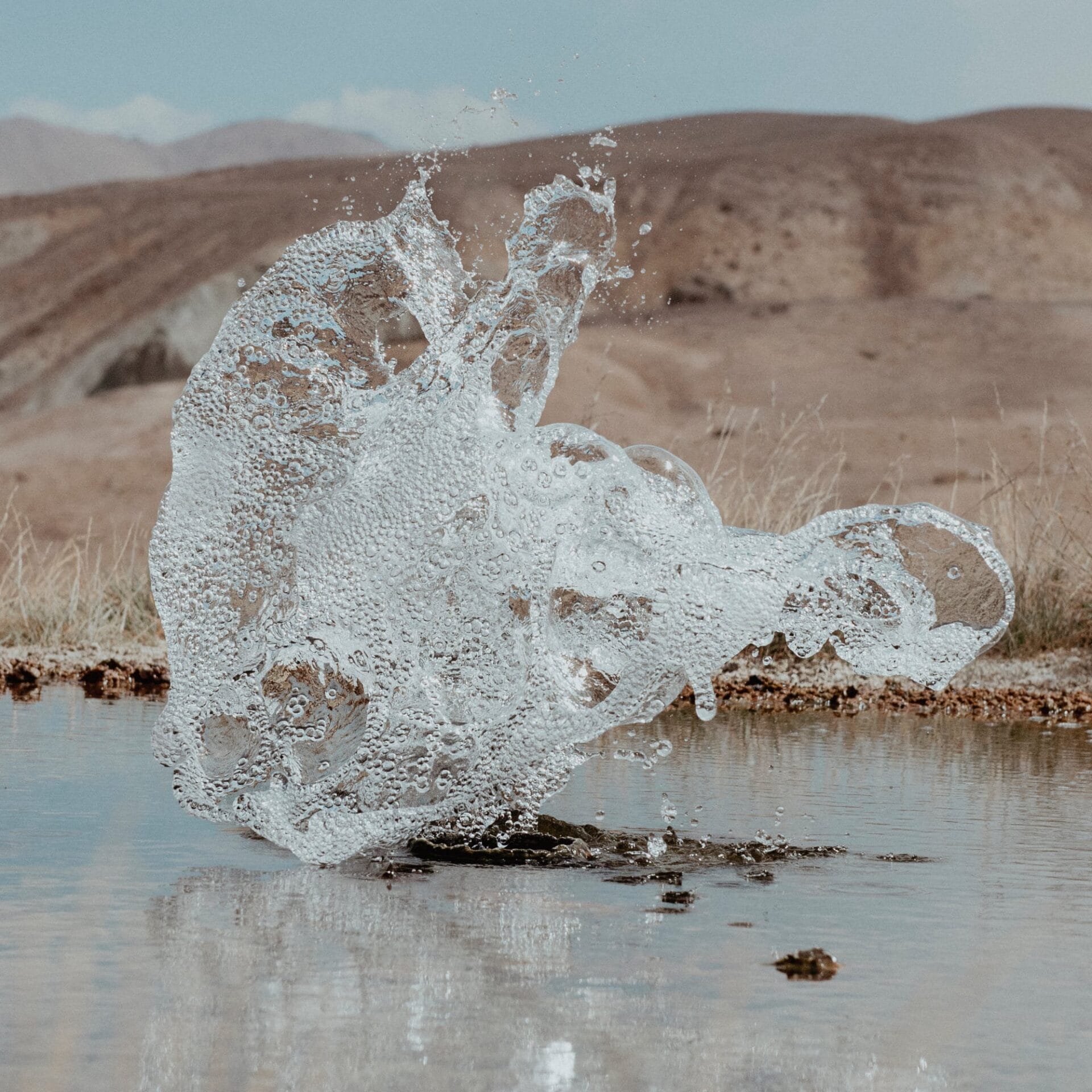
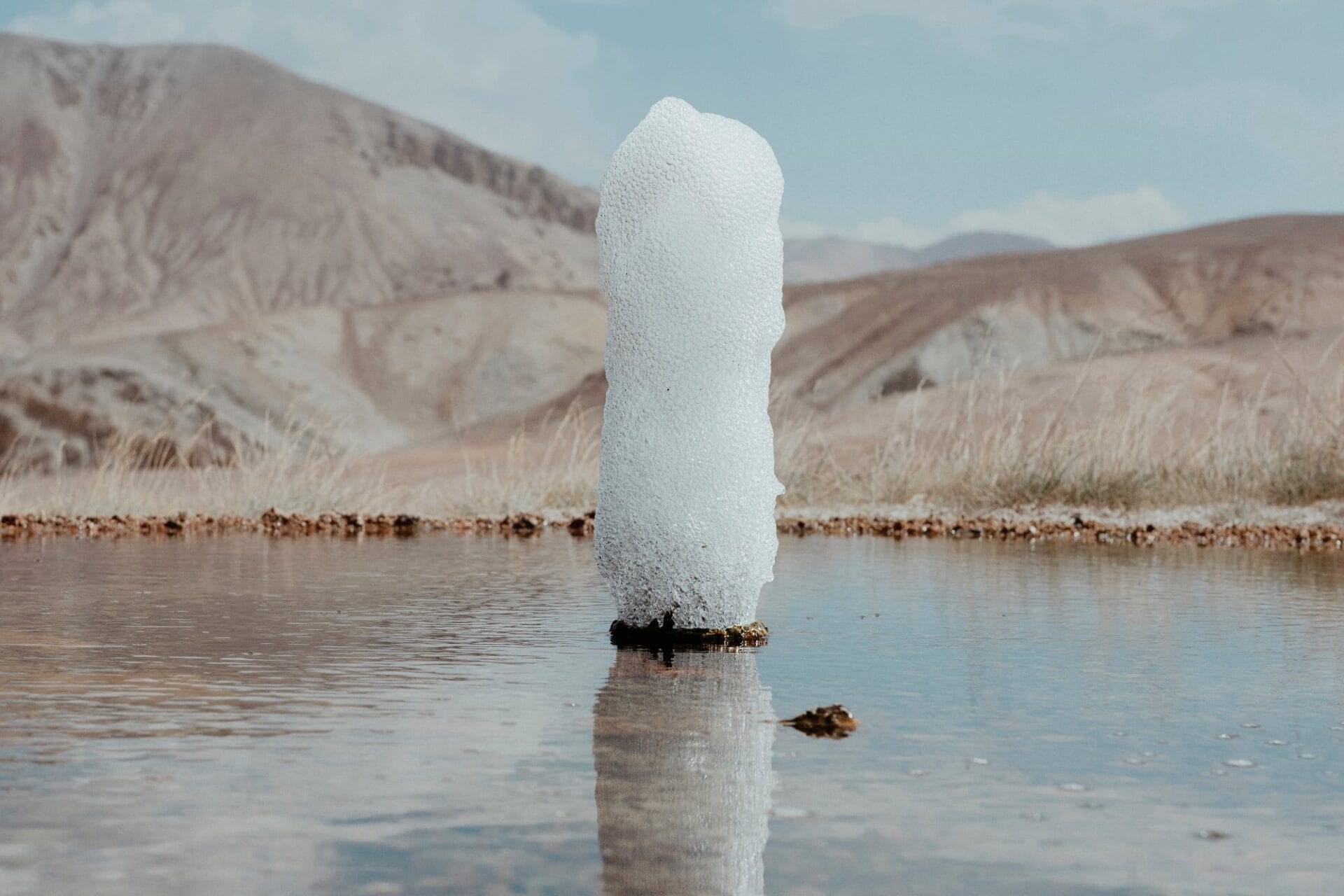


In the remote landscape of Tajikistan, photographer Øystein Sture Aspelund discovered a small geyser near a high-altitude lake. With a fast shutter, he “froze” the shapes of the eruption, capturing bubbly columns, mushrooms, and splashes. I love the sense of texture here. Aspelund’s photographs really highlight the difference between a geyser and an artificial fountain: bubbles. Geysers erupt because of the buildup of steam and pressure in their underground plumbing. Those bubbles are the signature of that process. (Image credit: Ø. Aspelund; via Colossal)

“Ferro Field”
Ferrofluid forms a labyrinth of blobs and lines against a white background in this award-winning photo by Jack Margerison. Ferrofluids are a magnetically-sensitive fluid, typically created by suspending magnetic nanoparticles in oil. Depending on the ferrofluid’s surroundings that and the applied magnetic field, all sorts of patterns are possible from spiky crowns to wild mazes. (Image credit: J. Margerison from CUPOTY; via Colossal)
“Color Show”


Brightly colored paints and inks mix and flow in artist Roman De Giuli’s “Color Show.” De Giuli typically creates this fluid art in thin layers atop paper. He’s a master of the form, manipulating surface tension gradients to create streaming flows, dendritic patterns, and feathery wisps. If this kind of art is your jam, he offers an app full of live wallpapers* for Android phones. See more of his work on his website and on Instagram. (Video and image credit: R. De Giuli)
*Not sponsored, I just like his art!