Tag: Rayleigh-Benard convection

  • Featured Video Play Icon

    Convection in Action

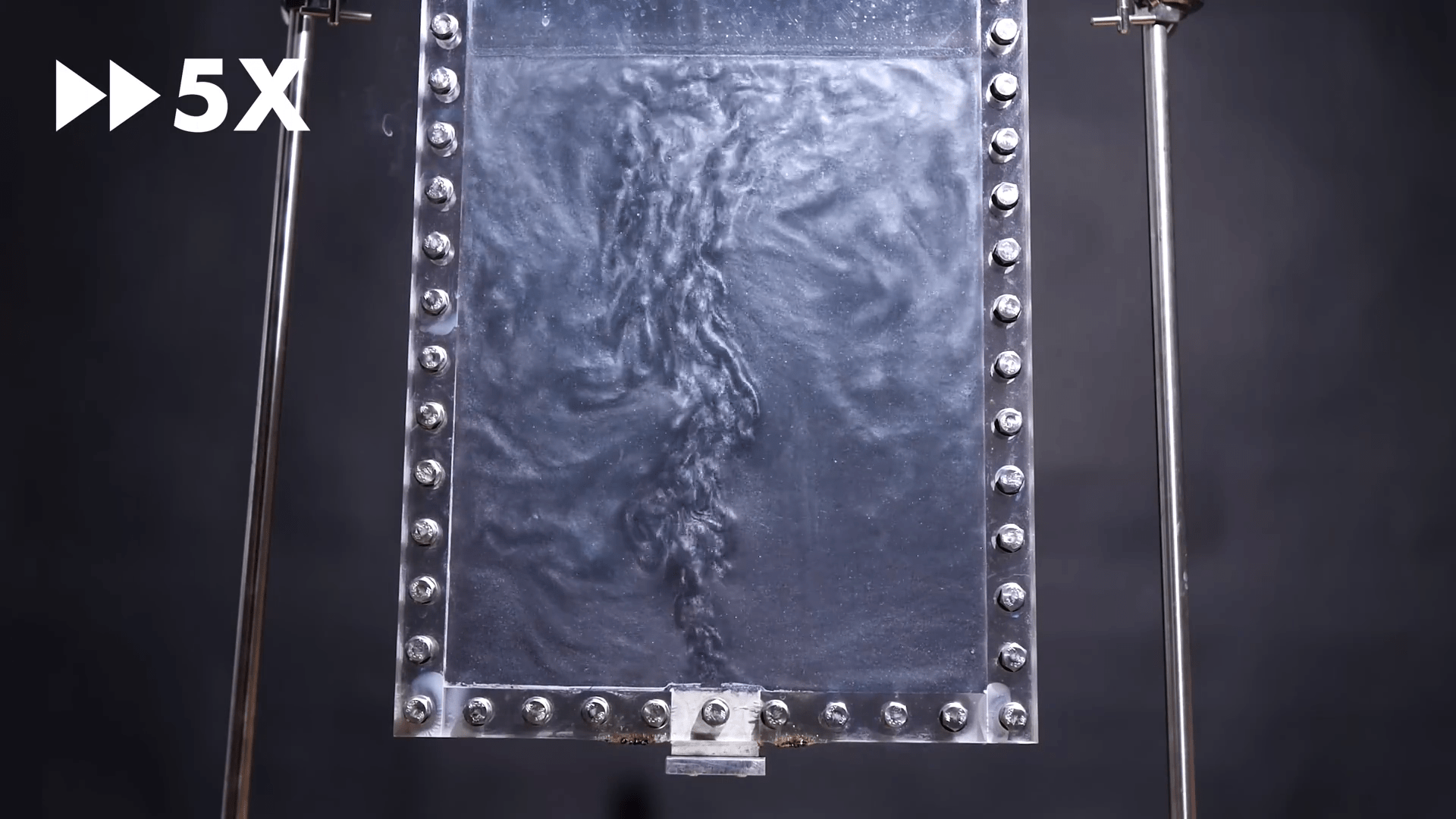
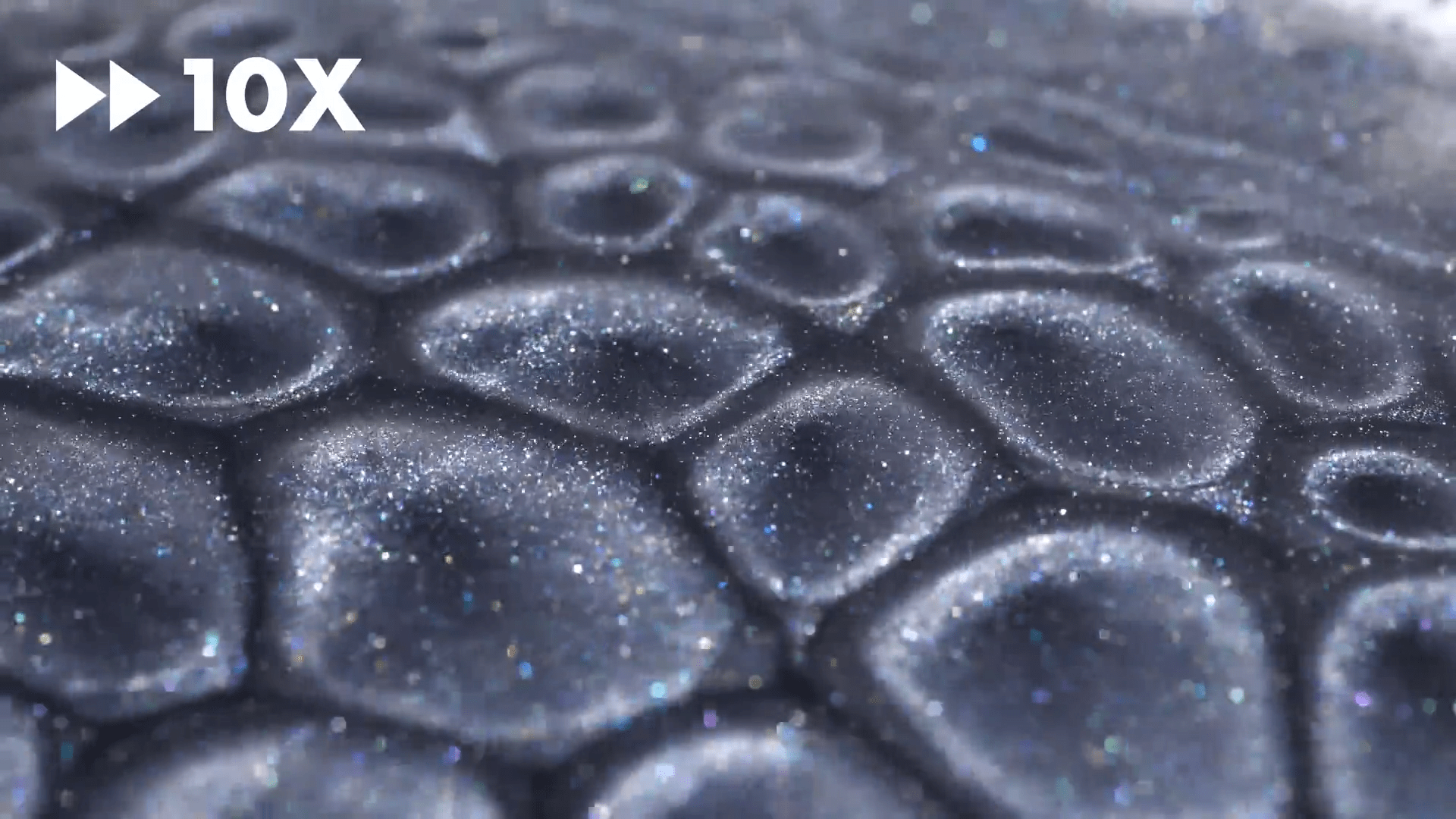
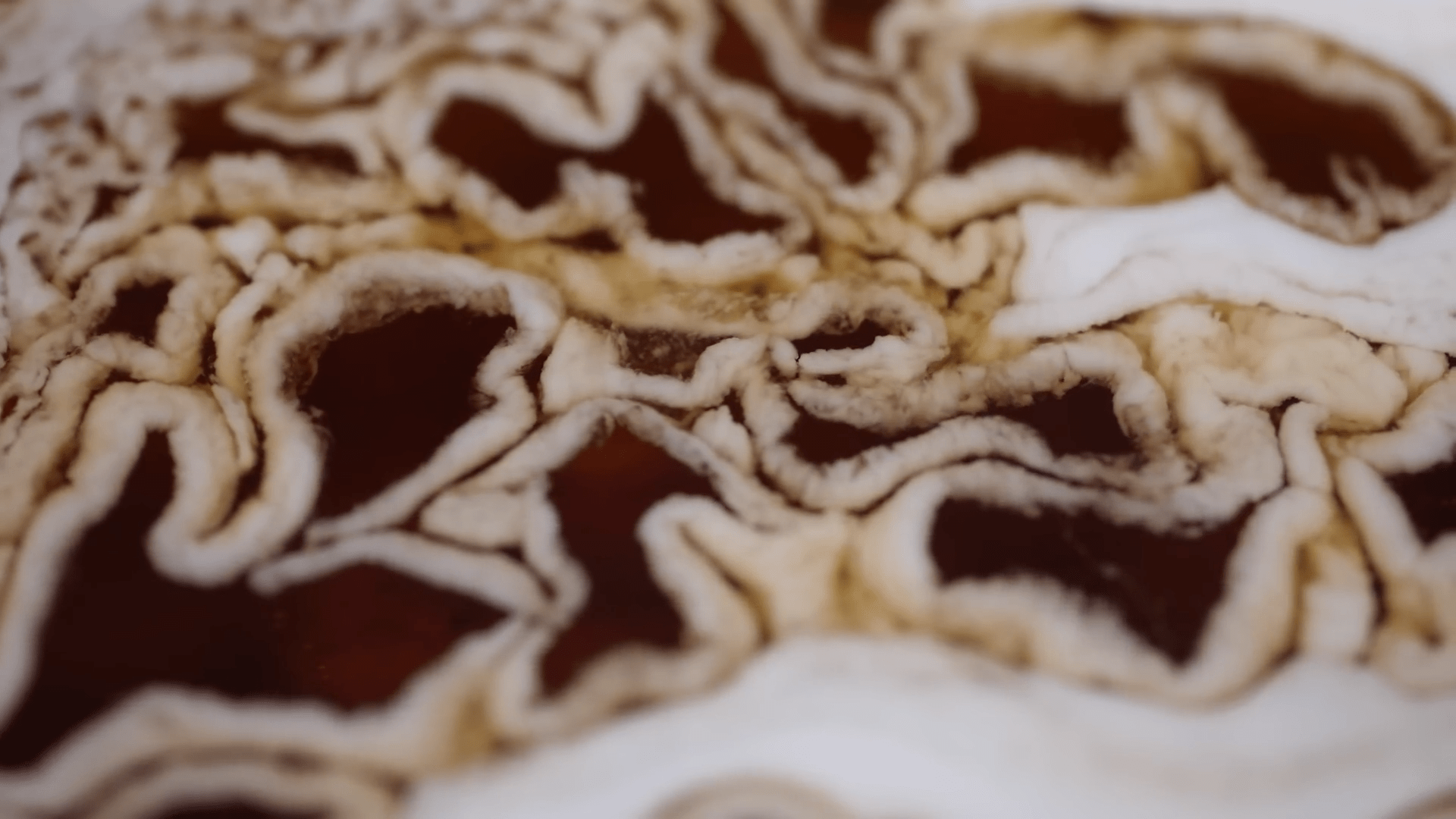
    We’re surrounded daily by convection — a buoyancy-driven flow — but most of the time it’s invisible to us. In this video, Steve Mould shows off what convection really looks like with some of his excellent tabletop demos. The first half of the video gives profile views of turbulent convection, with chaotic and unsteady patterns. When he switches to oil instead of water, the higher viscosity (and lower Reynolds number) offer a more structured, laminar look. And finally, he shows a little non-temperature-dependent convection with a mixture of Tia Maria and cream, which convects due to evaporation changing the density. (Image and video credit: S. Mould; submitted by Eric W.)

  • Turbulent Thermal Convection

    Turbulent Thermal Convection

    In the winter, warm air rises from our floor vents or radiators, creating a complex, invisible flow in the background of our lives. Buoyancy lifts warmer air upward while cooler, denser air sinks back down. This thermal convection is everywhere: in our buildings, the ocean, the sky overhead — even in the visible layer of our sun.

    In nature, these systems are so large and complex that fully measuring or simulating them remains impossible. Instead, researchers focus on a simplified system — a Rayleigh-Bénard cell — that’s essentially an idealized version of a pot on a stovetop. The lower surface of the cell is heated — like the bottom of a pan on the burner — while the upper surface of the fluid cools. Even this idealized system is a challenge, though, and neither lab-scale versions nor simulations can reach the same conditions that we find in nature.

    To bridge the gap, scientists rely on mathematical models — theories built on our best understanding of the physics — and physical analogies to similar systems — like flow over a flat plate — that are “easier” to measure. For a thorough overview of recent work in the area, check out this review in Physics Today. (Image credit: A. Blass; research credit: D. Lohse and O. Shishkina in Physics Today)

  • Flow Inside Convection Cells

    Flow Inside Convection Cells

    Looking at convective cells, it’s easy to think that they are still and unmoving. But when you add particles, their inner flow becomes obvious. Warm, light fluid moves up through the center of each cell, skims along the surface, and then sinks at the edges of the cell after losing its heat at the cooling surface. Below, the fluid moves back toward the cell center, getting warmer as it’s heated by the lower surface. Once it reaches the middle of the cell, it’s light enough to rise up and start the process again. Convective cells like these are typical in cooking – watch for them forming in your miso soup or hot chocolate – but they can also be found on the sun and even in situations without heating! (Image credit: G. Kelemen, source)

  • Creating Clouds

    Creating Clouds

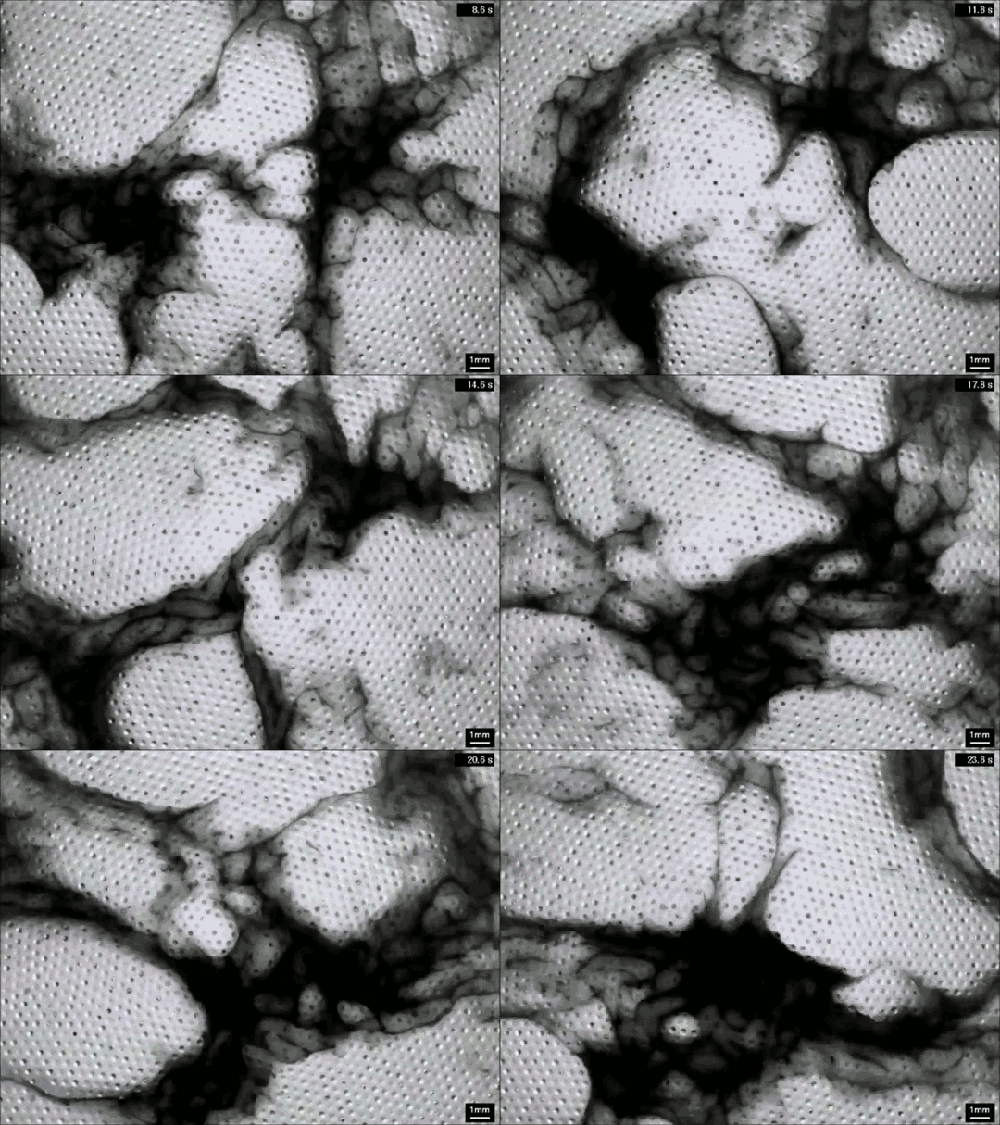
    What you see here is the formation of clouds and rain – but it’s not quite what you’re used to seeing outside. This is an experiment using a mixture of sulfur hexafluoride and helium to create clouds in a laboratory. Everything is contained in a cell between two transparent plates. Liquid sulfur hexafluoride takes up about half of the cell, and when the lower plate is heated, that liquid begins evaporating and rising in the bright regions. When it reaches the cooled top plate, the liquid condenses into droplets inside the dimples on the plate, eventually growing large enough to fall back as rain. The dark wisps you see are areas where cold sulfur hexafluoride is sinking, much like in the water clouds we are used to. Setups like this one allow scientists to study the effects of turbulence on cloud physics and the formation of droplets. (Image credit: E. Bodenschatz et al., source)

    Boston-area folks! I’ll be taking part in the Improbable Research show Saturday evening at 8 pm at the Sheraton Boston. Come hear about the Boston Molasses Flood and other bizarre research!

  • Turbulent Convection

    Turbulent Convection

    These golden lines reveal the complexity of turbulent convective flow. They come from a numerical simulation of turbulent Rayleigh-Benard convection, a situation in which fluid trapped between two plates is heated from below and cooled from above. This situation would typically create convection cells similar to those seen in clouds or when cooking. Inside these cells, warm fluid rises to the top, cools, and sinks down along the sides. With large enough temperature differences, instabilities will occur and cause the flow to become turbulent so that the clear structure of convection cells breaks down into something more chaotic. Such is the case in this simulation. This visualization shows skin friction on the bottom (heated) plate in a flow of turbulently convecting liquid mercury. The bright lines are areas with large velocity changes at the wall, an indication of high shear stress and vigorous convective flow. (Image credit: J. Scheel et al.; via Gizmodo)

  • Convection Cells

    Convection Cells

    This magnified photo shows Rayleigh-Benard convection cells in silicone oil. This buoyancy-driven convection occurs when a fluid is heated from below and cooled above. Inside the cells, fluid rises through the center and sinks along the edges; this motion is made apparent here thanks to aluminum flakes in the oil. The distinctive hexagonal shape of the cells is actually due to surface tension. Here, the upper surface of the fluid is left open to the air and this free surface boundary condition causes hexagonal shapes to form. If the fluid were instead covered by a solid surface, the convection cells that form would be shaped differently. (Image credit: M. Velarde et al.; via Van Dyke’s An Album of Fluid Motion)

    ——————

    LAST CALL: FYFD reader survey closes Wednesday! I’ve teamed up with researcher Paige Brown Jarreau to create a survey of FYFD readers. By participating, you’ll be helping me improve FYFD and contributing to novel academic research on the readers of science blogs. It should only take 10-15 minutes to complete. You can find the survey here.

  • Featured Video Play Icon

    Convection Cells

    Human eyesight is not always the best for observing how nature behaves around us. Fortunately, we’ve developed cameras and sensors that allow us to effectively see in wavelengths beyond those of visible light. What’s shown here is a frying pan with a thin layer of cooking oil. To the human eye, this would be nothing special, but in the infrared, we can see Rayeigh-Benard convection cells as they form. This instability is a function of the temperature gradient across the oil layer, gravity, and surface tension. As the oil near the bottom of the pan heats up, its density decreases and buoyancy causes it to rise to the surface while cooler oil sinks to replace it. Here the center of the cells is the hot rising oil and the edges are the cooler sinking fluid. The convection cells are reasonably stable when the pan is moved, but, even if they are obscured, they will reform very quickly.  (Video credit: C. Xie)

  • Featured Video Play Icon

    Holiday Fluids: Cocoa Convection

    If you make a proper cup of hot chocolate this holiday, watch carefully and you just may catch some Rayleigh-Benard convection like the video above. (Note, video playback is 3x.) The canonical Rayleigh-Benard problem is one in which fluid is heated from below and cooled from above. For the cup of hot chocolate, the cooling comes from the colder, ambient air at the cocoa’s surface. Because cooler fluid is denser than warmer fluid, the cocoa near the surface will tend to sink down, allowing warmer cocoa to rise. As that warm cocoa reaches the surface, it too will cool and sink back down, continuing the cycle. The effect relies on buoyancy and, by extension, gravity; on the International Space Station, for example, astronauts would not observe such convection. The distinctive shape of the cells depends on the boundaries of the cup. This post is part of our weeklong holiday-themed fluid dynamics series. (Video credit: Armuotas)

  • Featured Video Play Icon

    Peering Inside the Kettle

    Here natural convection is explored experimentally in a quasi-2D environment. The researchers demonstrate how this phenomenon, which is much like that seen in a boiling pot, can be investigated by measuring the refractive distortions caused by the thin heated fluid layer. They also demonstrate types of boiling that can occur.  Typically, bubbles nucleate at the heated surface and then rise to pull hot fluid with them.  At high enough temperatures above the liquid’s boiling point, however, an unstable layer of vapor can form over the heated surface.  This “boiling crisis” or critical heat flux produces a marked reduction in heat transfer due to the insulation provided by the vapor layer. (Video credit: S. Wildeman et al.)

  • Featured Video Play Icon

    Convective Cells

    Convective cells form as fluid is heated from below. As the fluid near the bottom warms, its density decreases and buoyancy causes it to rise while cooler fluid descends to replace it. This fluid motion due to temperature gradients is called Rayleigh-Benard convection and the cells in which the motion occurs are called Benard cells. This particular type of convection is essentially what happens when a pot is placed on a hot stove, so the shapes are familiar. Similar shapes also form on the sun’s photosphere, where they are called granules.