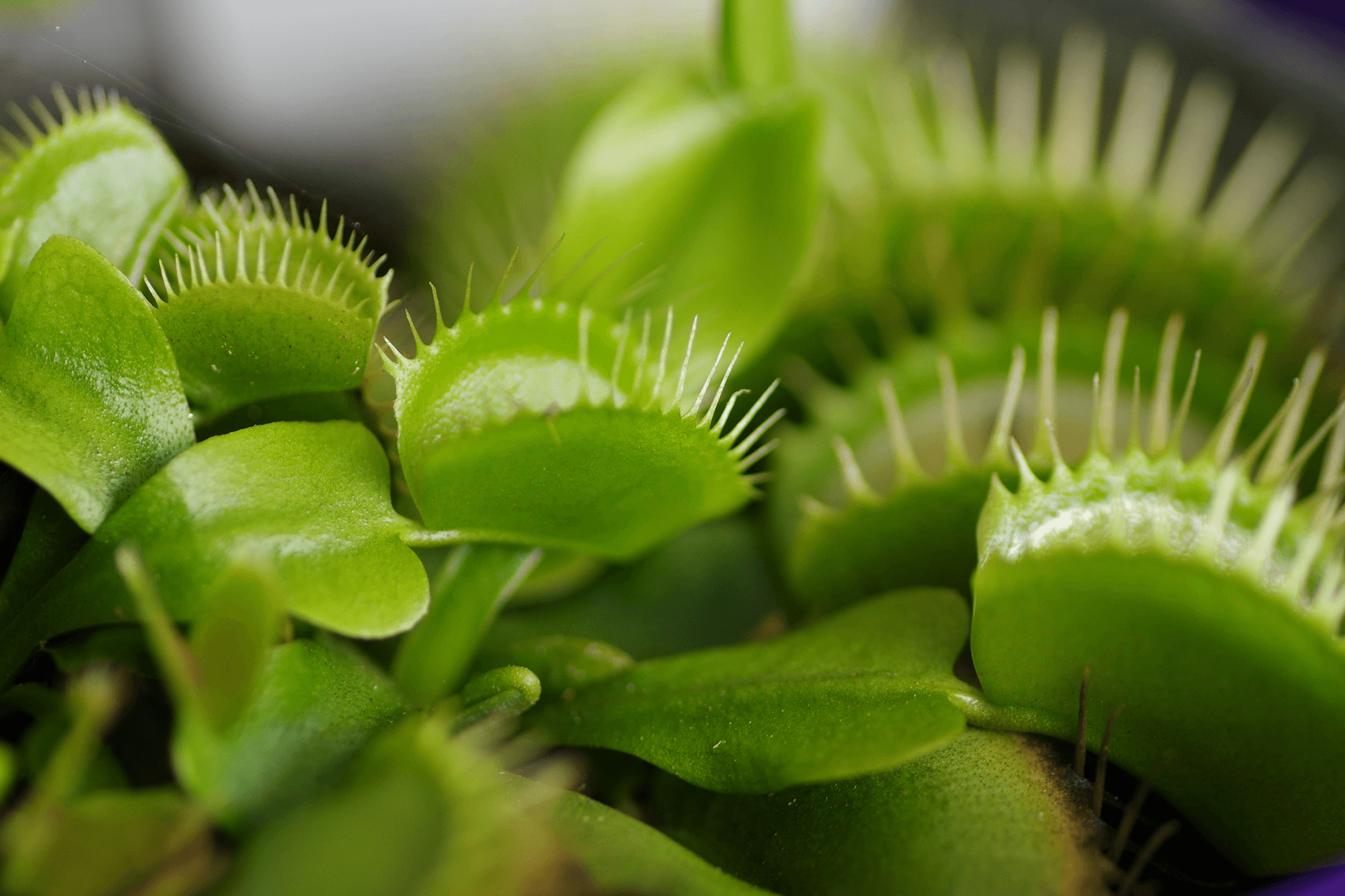
The Venus fly trap has long fascinated scientists with its ability to catch fast-moving prey. Just how the plant closes its “trap” leaf so quickly is a matter of debate. A new study gives us more detail–but not complete clarity–about what’s going on.
One way that plants move rapidly is by moving water into or out of cells, changing their internal pressure. The new experiments showed that this is not what the fly trap does. Specifically, by watching the speed at which individual Venus fly trap cells take up water, the team concluded that closing the leaf would take 30-150 seconds–far more than the 1 second observed.
Instead, the team showed that the trap’s rapid closure happens because the plant’s cell walls rapidly soften, making the leaf unable to stay open against previously-stored elastic energy. Instead, the trap snaps closed. The physical mechanism behind the softening is still unclear, though, so the charismatic plant still has mysteries for us to discover. (Image credit: N. Suzuki; research credit: J. Ryu et al.; via Nature and Gizmodo)







Leave a Reply