Month: June 2026

  • On Dolphin Turbulence

    On Dolphin Turbulence

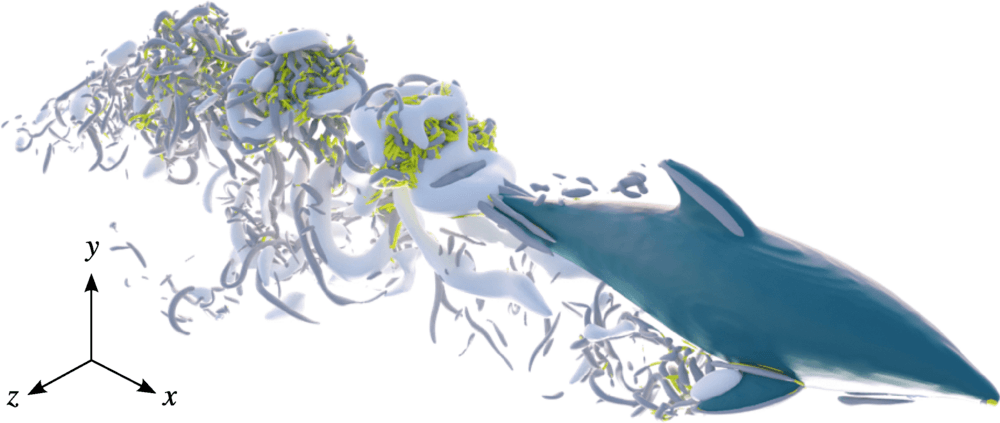
    Dolphins are such fast and agile swimmers that, naturally, scientists have long wanted to understand how they swim so well. A recent study draws on numerical simulation to analyze the flow a dolphin creates when flapping its tail.

    The resulting flow is highly turbulent–researchers were only able to simulate up to a fraction of a dolphin’s actual Reynolds number–with both large-scale vortices and a cascade of smaller ones. The largest vortices, shown here in white, form on the upper and lower surface of the dolphin’s tail, then slide off the tail in a vortex ring. It’s these vortex rings, the researchers found, that provide the bulk of a dolphin’s thrust.

    The smaller-scale vortices, in contrast, get formed by the large vortices, and they make little to no contribution to the dolphin’s propulsion. Interestingly, these results suggest that we might be able to describe the propulsion of dolphins and other highly turbulent swimmers by focusing only on the largest scales in the flow. (Video, image, and research credit: Y. Motoori et al.; via Ars Technica)


    Animation of the simulated flow from a swimming dolphin.
    Animation of the simulated flow from a swimming dolphin.
    Fediverse Reactions
  • Seeking Quieter Supersonic Flight

    Seeking Quieter Supersonic Flight

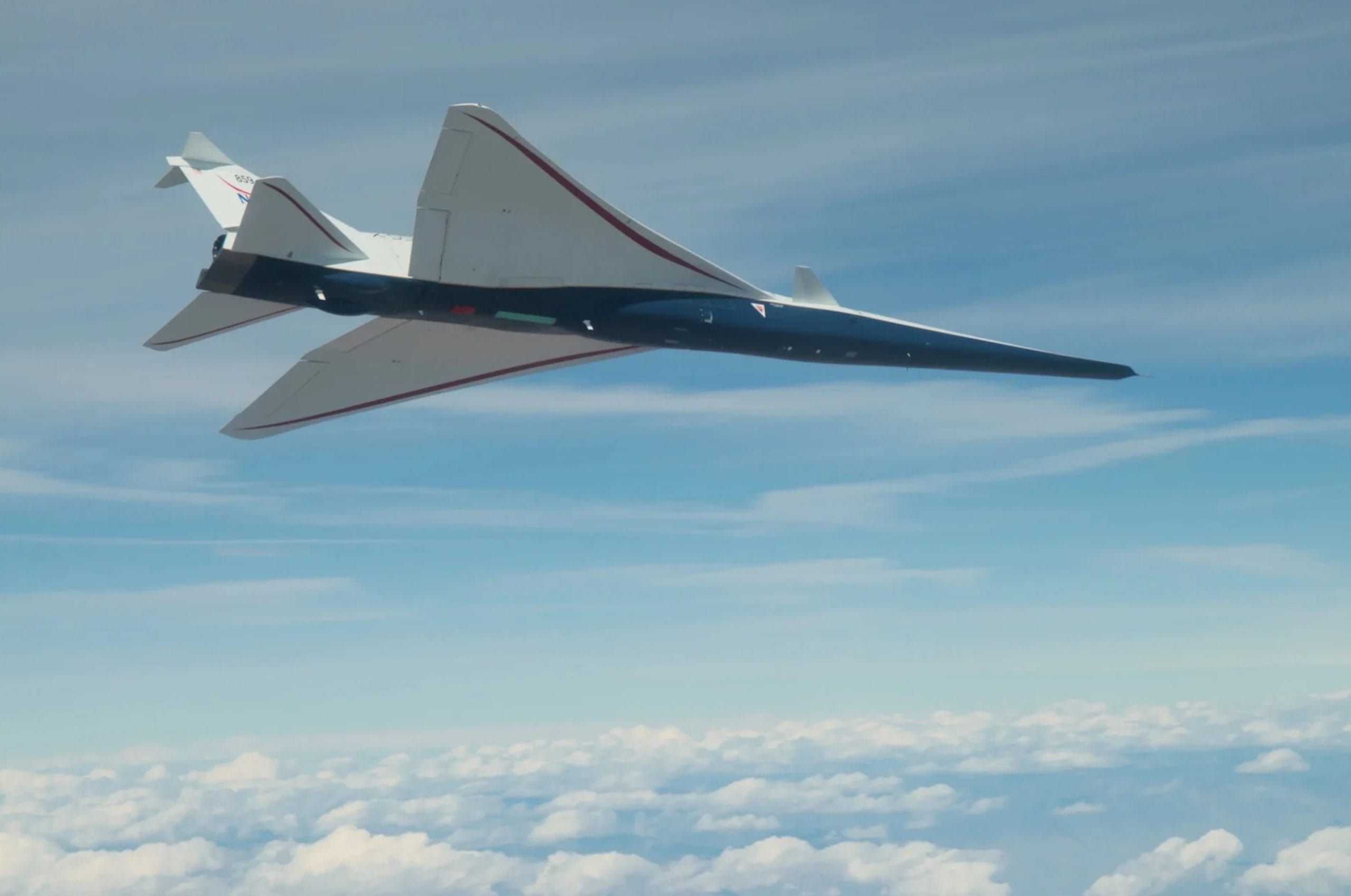
    Supersonic flight over the U.S. has been banned by all non-military aircraft for more than fifty years. The ban gained momentum in the 1960s after test programs over St. Louis and Oklahoma provoked public outcry. But NASA’s X-59 aircraft is working to lift the ban by softening the sonic booms that encouraged the ban in the first place. Although it hasn’t been tested at supersonic speeds yet, pilots are putting the sharp and skinny X-59 through its paces, slowly widening the flight envelope.

    In the video above, NASA shares footage of some of the recent test flights, including various maneuvers like phugoids, banking rolls, flutter, and landing gear tests. Pay close attention to the pilot’s view and the radio chatter, and you’ll hear that they’re hovering around Mach 0.98 in some cases–just underneath the point of generating a shock wave around the aircraft. It will be neat to see what happens when they finally do go supersonic. Will it be as quiet as promised? (Video credit: NASA; image credit: NASA/L. Losey; see also NASA; via Gizmodo)

    Fediverse Reactions