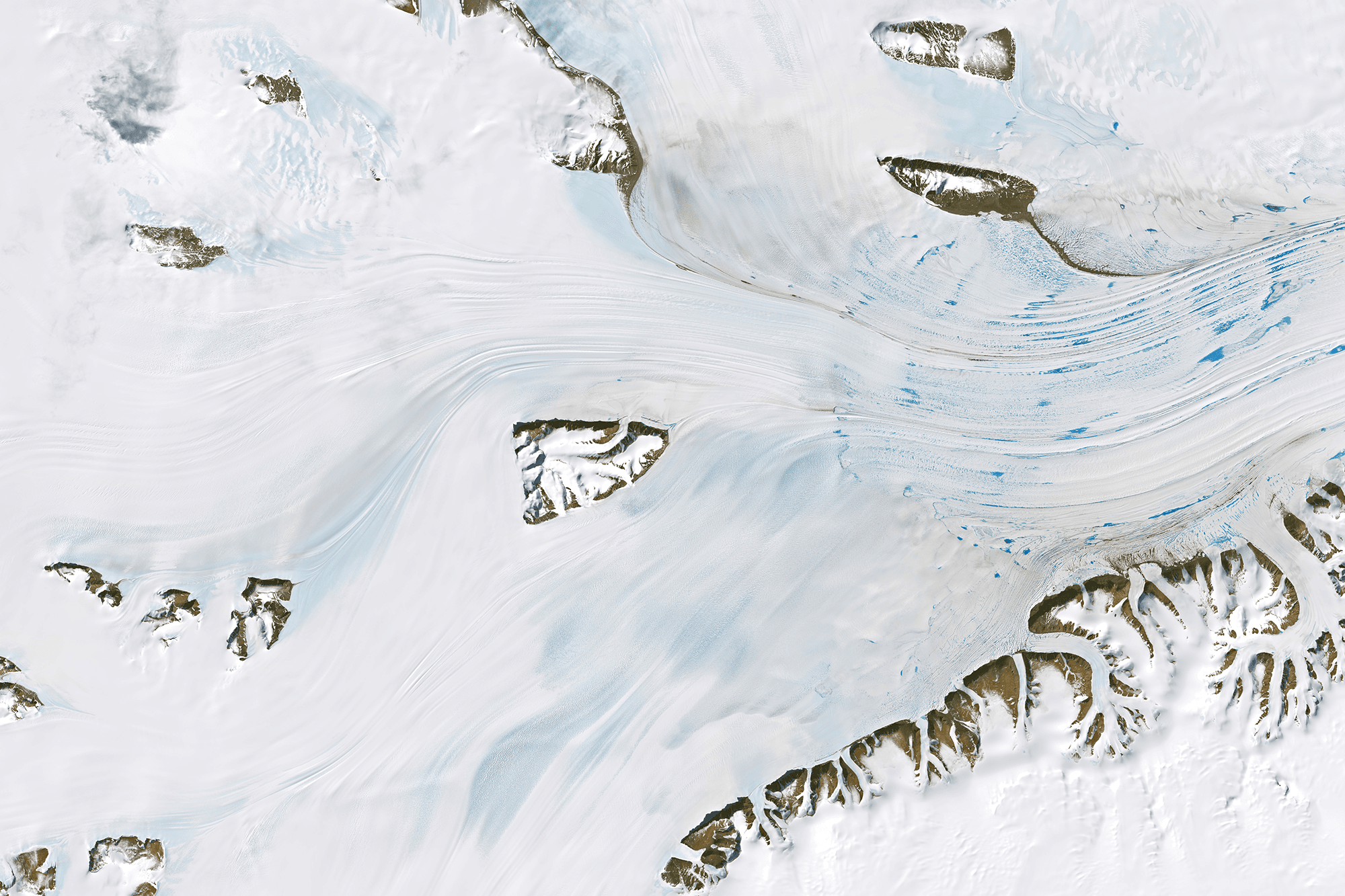
Glaciers flow together and march out to sea along the Amery Ice Shelf in this satellite image of Antarctica. Three glaciers — flowing from the top, left, and bottom of the image — meet just to the right of center and pass from the continental bedrock onto the ice-covered ocean. The ice shelf is recognizable by its plethora of meltwater ponds, which appear as bright blue areas. Each austral summer, meltwater gathers in low-lying regions on the ice, potentially destabilizing the ice shelf through fracture and drainage. This region near the ice shelf’s grounding line is particularly prone to ponding. Regions further afield (right, beyond the image) are colder and drier, often allowing meltwater to refreeze. (Image credit: W. Liang; via NASA Earth Observatory)
Year: 2025

Penguin Poo Seeds Antarctic Clouds
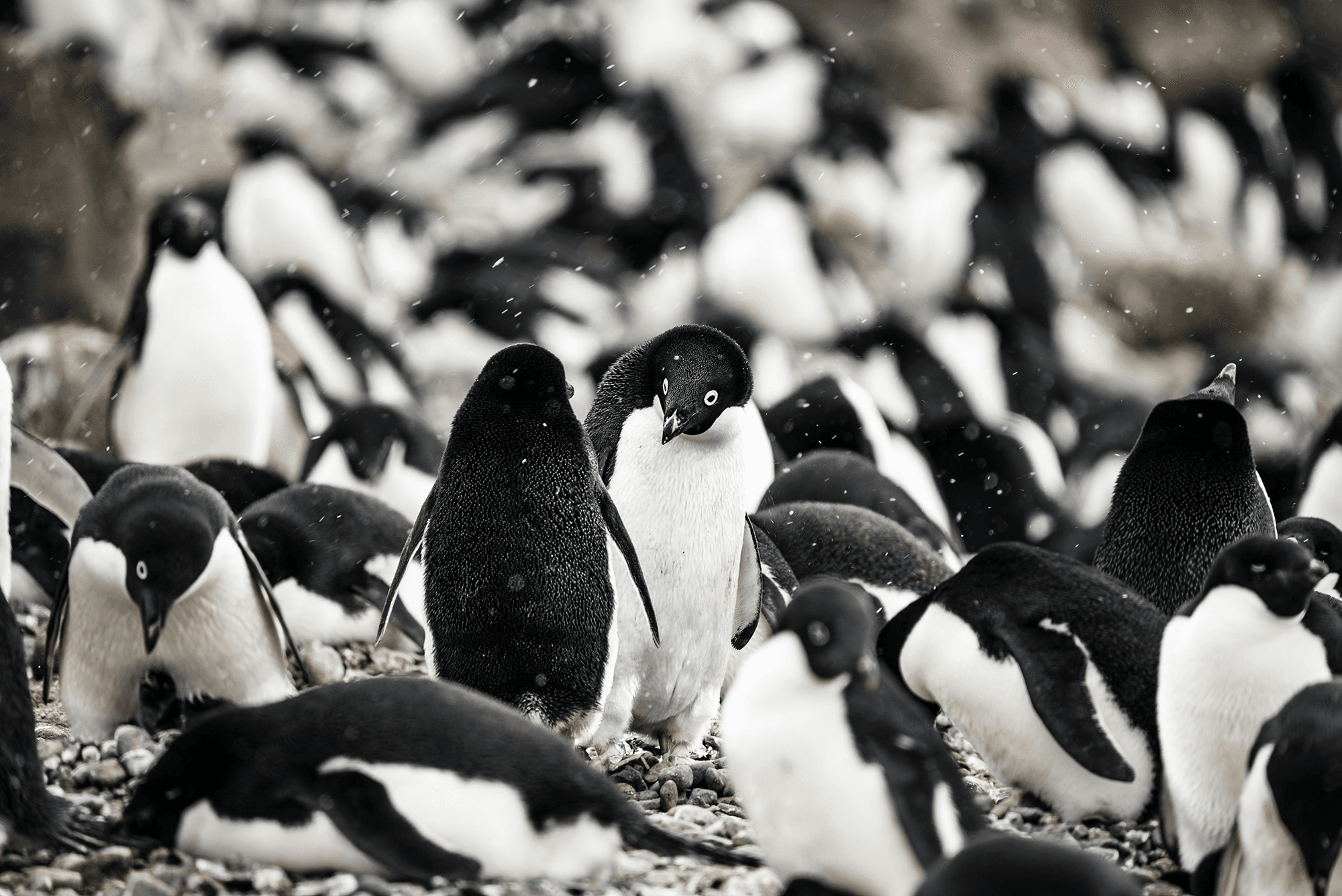
Forming clouds requires more than just water vapor; every droplet in a cloud forms around a tiny aerosol particle that serves as a seed that vapor can condense onto. Without these aerosols, there are no clouds. In most regions of the world, aerosols are plentiful — produced by vegetation, dust, sea salt, and other sources. But in the Antarctic, aerosol sources are few. But a new study shows that penguins help create aerosols with their feces.
Penguin feces is ammonia-rich, and that ammonia, when combined with sulfur compounds from marine phytoplankton, triggers chemistry that releases new aerosol particles. The researchers measured ammonia carried on the wind from nearby penguin colonies and found that the birds are a large ammonia source, producing 100 to 1000 times the region’s baseline ammonia levels. In combination with another ingredient in penguin guano, the researchers found the penguins boosted aerosol production 10,000-fold. That means penguins can actually influence their environment, helping to create clouds that keep Antarctica cooler. (Image credit: H. Neufeld; research credit: M. Boyer et al.; via Eos)
Fediverse Reactions
-

Cat’s Eye Halo
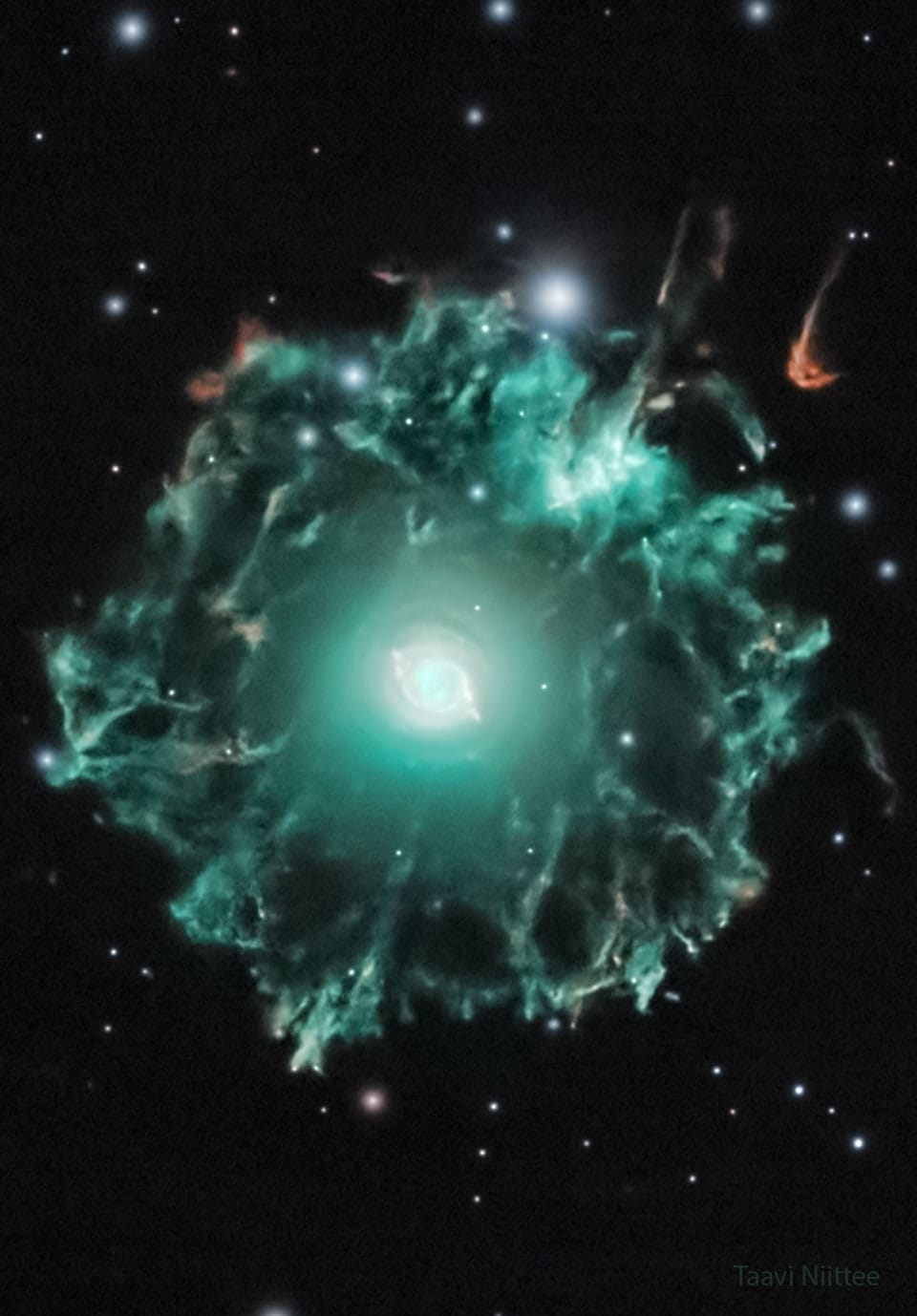
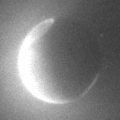
The Cat’s Eye Nebula is a planetary nebula located in the Draco constellation. At its center is a dying star. Seen here is the faint halo that stretches 3 light-years around the central nebula. The filaments of the halo are estimated to be 50,000 to 90,000 years old and were shed during earlier periods in the star’s evolution. Their shape is reminiscent of Rayleigh-Taylor instabilities, to my eye. (Image credit: T. Niittee; via APOD)
Fediverse Reactions
-

“Monsoon 7”


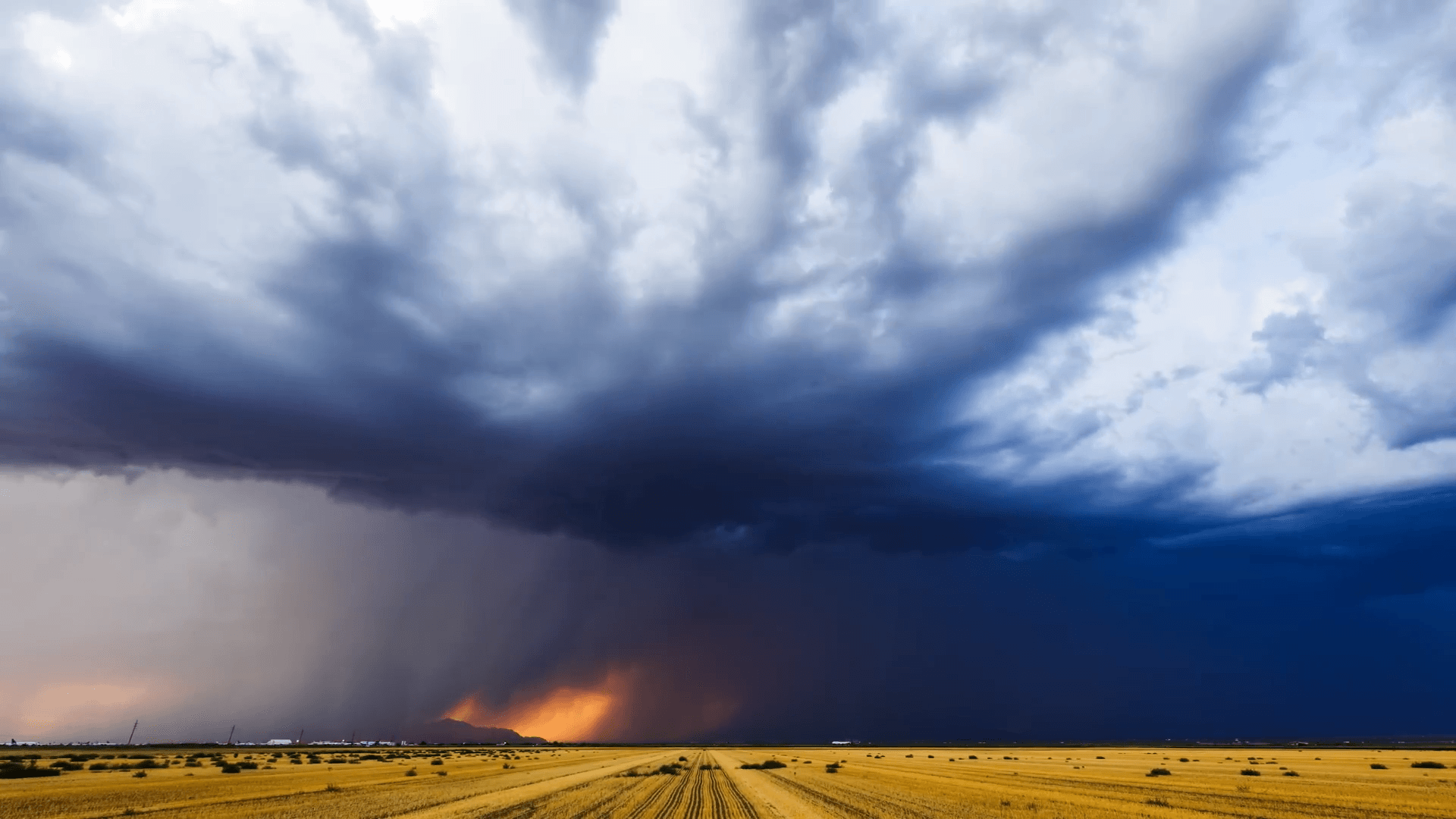


Storm-chasing photographer Mike Olbinski (previously) returns with another stunning timelapse of summer thunderstorms in the western U.S. I never tire of watching the turbulent convection, microbursts, billowing haboobs, and undulating clouds Olbinski captures. His work is always a reminder of the incredible power and energy contained in our atmosphere and unleashed in cycles of warming and cooling, evaporation and condensation. (Video and image credit: M. Olbinski)

Proving Superdiffusion
Turbulence is very good at spreading things out. Drop dye into a turbulent flow and it will quickly disperse. Add in particles — like rubber ducks — and they can spread apart, often at speeds quicker than one would expect, based on the background flow. This is (roughly speaking) a phenomenon known as “superdiffusion,” where turbulence makes particles that start out as neighbors part ways.
Physicists conjectured that turbulence — including simplified and idealized versions of it that are simpler to deal with — had this superdiffusion property, but no one was able to show that in a mathematically rigorous way. But now a group of mathematicians has done so, using a technique known as homogenization. There’s a lot more on the story over at Quanta, or you can check out the original papers on arXiv. (Image credit: J. Richard; research credit: S. Armstrong et al. and S. Armstrong and T. Kuusi; see also Quanta)
Fediverse Reactions
-

Artificial Reoxygenation
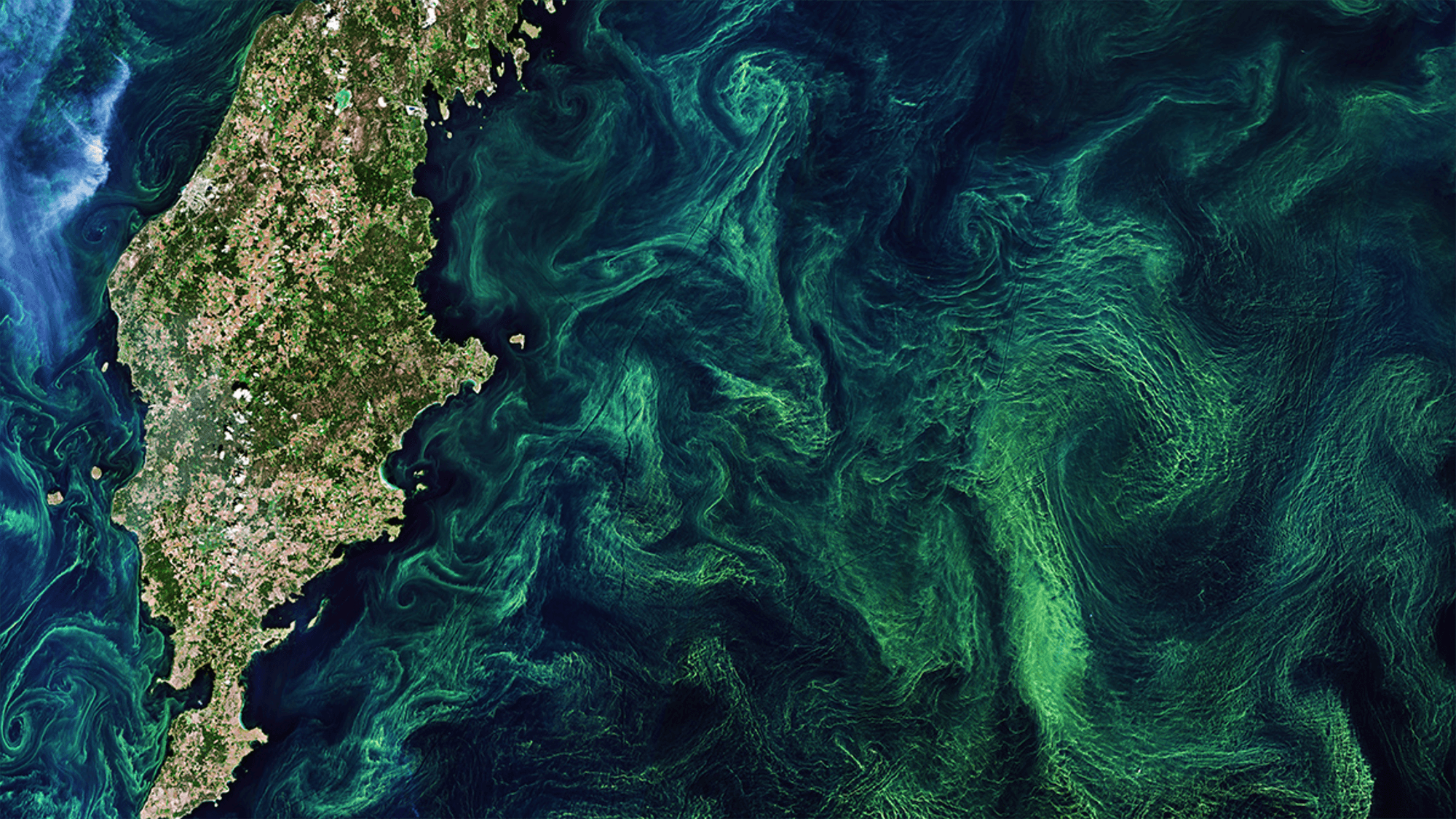
Phytoplankton blooms have blossomed in coastal waters around the world, driven by phosphorus and nitrogen in agricultural run-off. These large algal blooms deplete oxygen in the water, creating dead zones where fish and other marine life cannot survive. Typically, oxygen makes its way into the ocean at the surface, where breaking waves trap air in bubbles that, when tiny enough, dissolve their oxygen into the water. But this process mainly helps surface-level waters, and without means to circulate oxygen-rich water down to the depths, the low-oxygen state persists.
Artificial reoxygenation is a possible countermeasure. Either by bubbling oxygen directly into deeper waters or by pumping surface-level water downward, we could increase oxygen levels in the water column. So far, though, artificial reoxygenation’s success has been limited; tests in a few bays and estuaries show that it’s possible to reoxygenate the water, but the effects only last as long as the artificial mechanism remains active. Stop the pumps and bubblers and the water will revert to its low-oxygen state in just a day. Even so, the measures may be worthwhile on a temporary basis in some places while we adjust agricultural practices and try to mitigate warming. (Image credit: Copernicus Sentinel/ESA; via Eos)
Fediverse Reactions
-

Clapping Hands
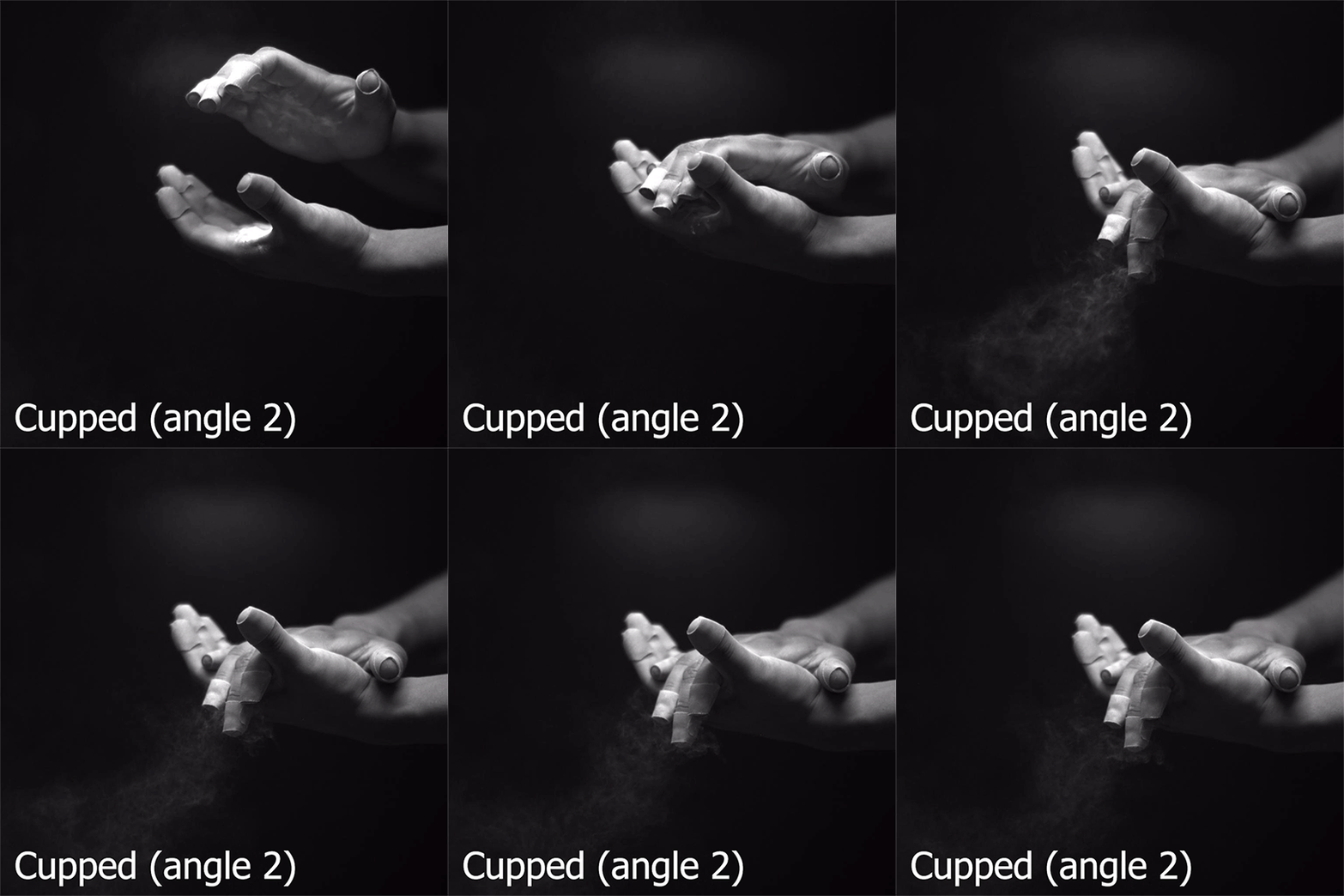


Although often associated with applause, hand clapping is more universal than that. The distinctive sound can mark rhythms, draw attention, and even test the surrounding acoustics. But how exactly does hand clapping work? A recent study shows that the acoustics of hand clapping come from more than just the collision of hands. Especially in a cupped configuration, clapping hands act like a Helmholtz resonator (think blowing across a bottle top), producing a resonant jet that squeezes out between the forefinger and thumb of the impacted hand. Check out the images above to see how that jet appears in various clapping configurations. (Image and research credit: Y. Fu et al.; via Physics Today)
Fediverse Reactions
-

Melting in a Spin
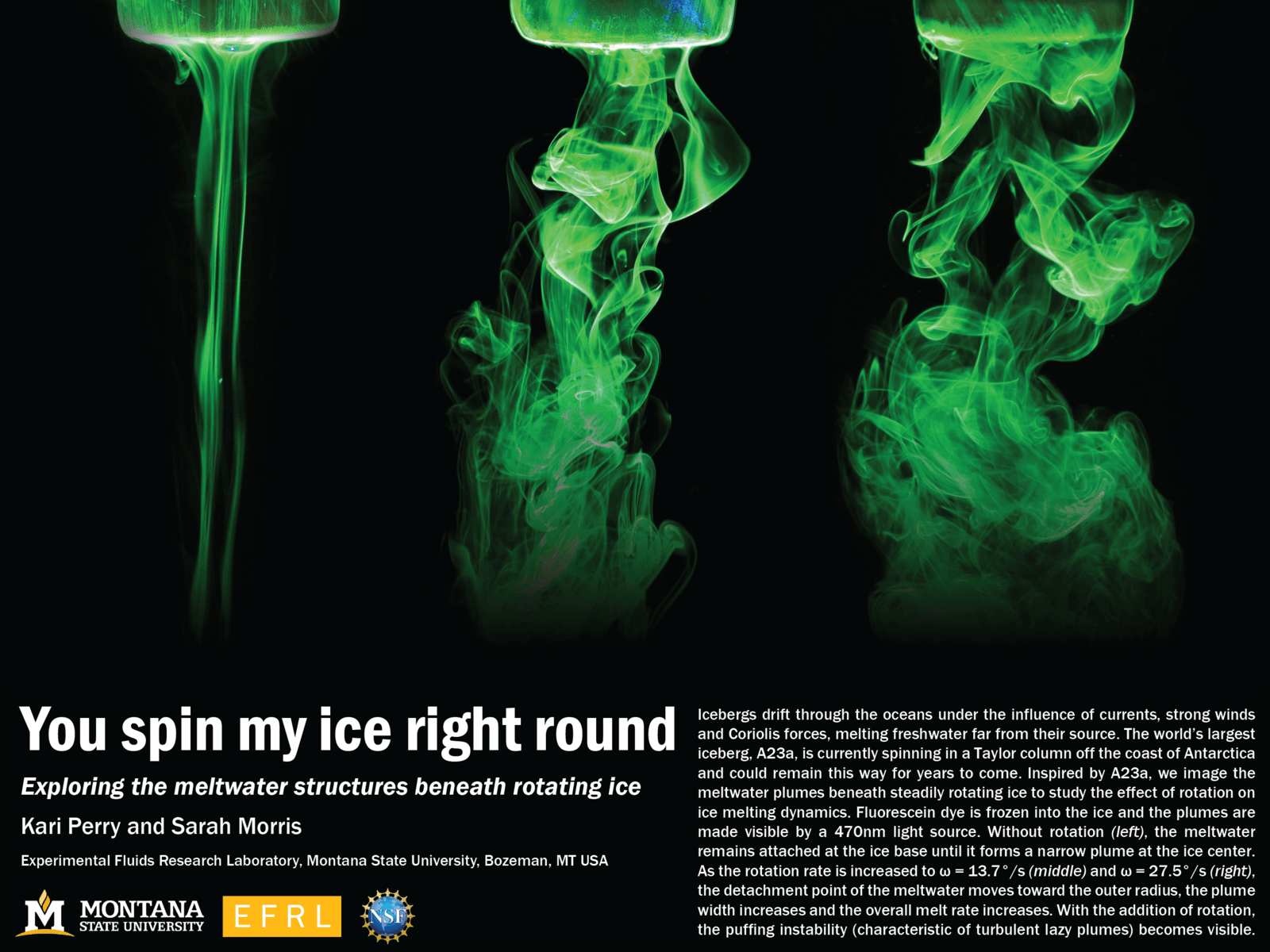
The world’s largest iceberg A23a is spinning in a Taylor column off the Antarctic coast. This poster looks at a miniature version of the problem with a fluorescein-dyed ice slab slowly melting in water. On the left, the model iceberg is melting without rotating. The melt water stays close to the base until it forms a narrow, sinking plume. In the center, the ice rotates, which moves the detachment point outward. The wider plume is turbulent compared to the narrow, non-rotating one. At higher rotation speeds (right), the plume is even wider and more turbulent, causing the fastest melting rate. (Image credit: K. Perry and S. Morris)
Fediverse Reactions
-

“Architecture in Music”


Inside musical instruments gapes an emptiness that, to the eye of photographer Charles Brooks, resembles the vast architecture of music halls and cathedrals. In his series “Architecture in Music,” Brooks takes us into these empty spaces, revealing where the resonance at the heart of the instrument’s sound lies. In a stringed instrument like a violin, the vibration of the strings makes a relatively quiet sound on its own; it’s only in making the violin’s entire hollow body vibrate that resonance amplifies the strings. Similarly, wind instruments rely on air resonating within them to produce their sound. (Image credit: C. Brooks; via Colossal)
Fediverse Reactions
-
Manu Jumping, a.k.a. How to Make a Big Splash


The Māori people of Aotearoa New Zealand compete in manu jumping to create the biggest splash. Here’s a fun example. In this video, researchers break down the physics of the move and how it creates an enormous splash. There are two main components — the V-shaped tuck and the underwater motion. At impact, jumpers use a relatively tight V-shape; the researchers found that a 45-degree angle works well at high impact speeds. This initiates the jumper’s cavity. Then, as they descend, the jumper unfolds, using their upper body to tear open a larger underwater cavity, which increases the size of the rebounding jet that forms the splash. To really maximize the splash, jumpers can aim to have their cavity pinch-off (or close) as deep underwater as possible. (Video and image credit: P. Rohilla et al.)
Fediverse Reactions
-