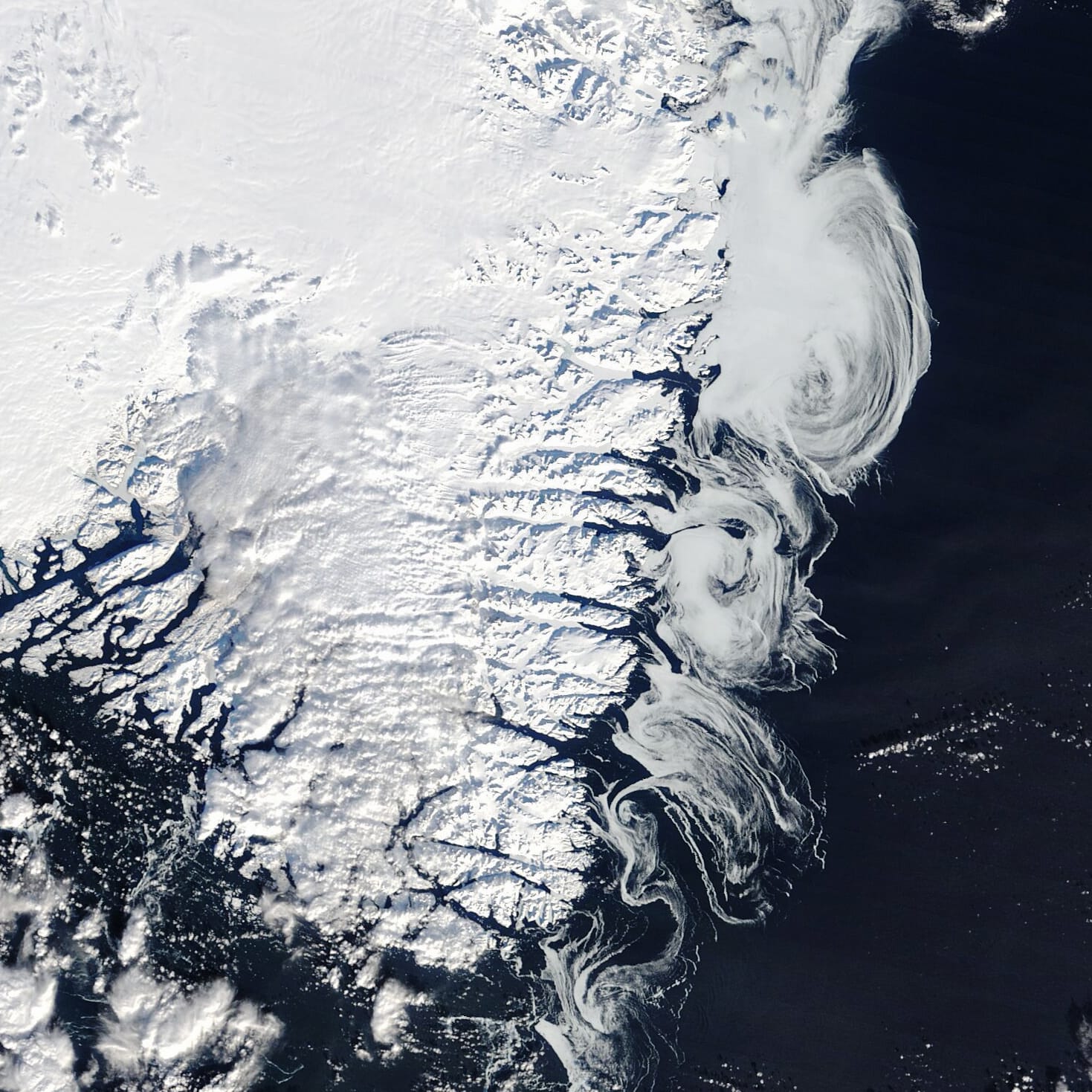
Fresh snow shines white on the southern end of Greenland in this satellite image, taken in late February 2025. Whorls of sea ice sit off the coast, where they trace out patterns that reflect the winds and ocean currents of the region. Arctic sea ice typically reaches its largest extent by early March before experiencing a long season of melting. Both the presence and absence of sea ice have a large effect on the Arctic regions. Sea ice helps dampen wave activity; without it, seas are higher and more dynamic, creating more aerosols that seed cloud cover in the Arctic and elsewhere. (Image credit: L. Dauphin; via NASA Earth Observatory)
Whorls of Sea Ice





Leave a Reply