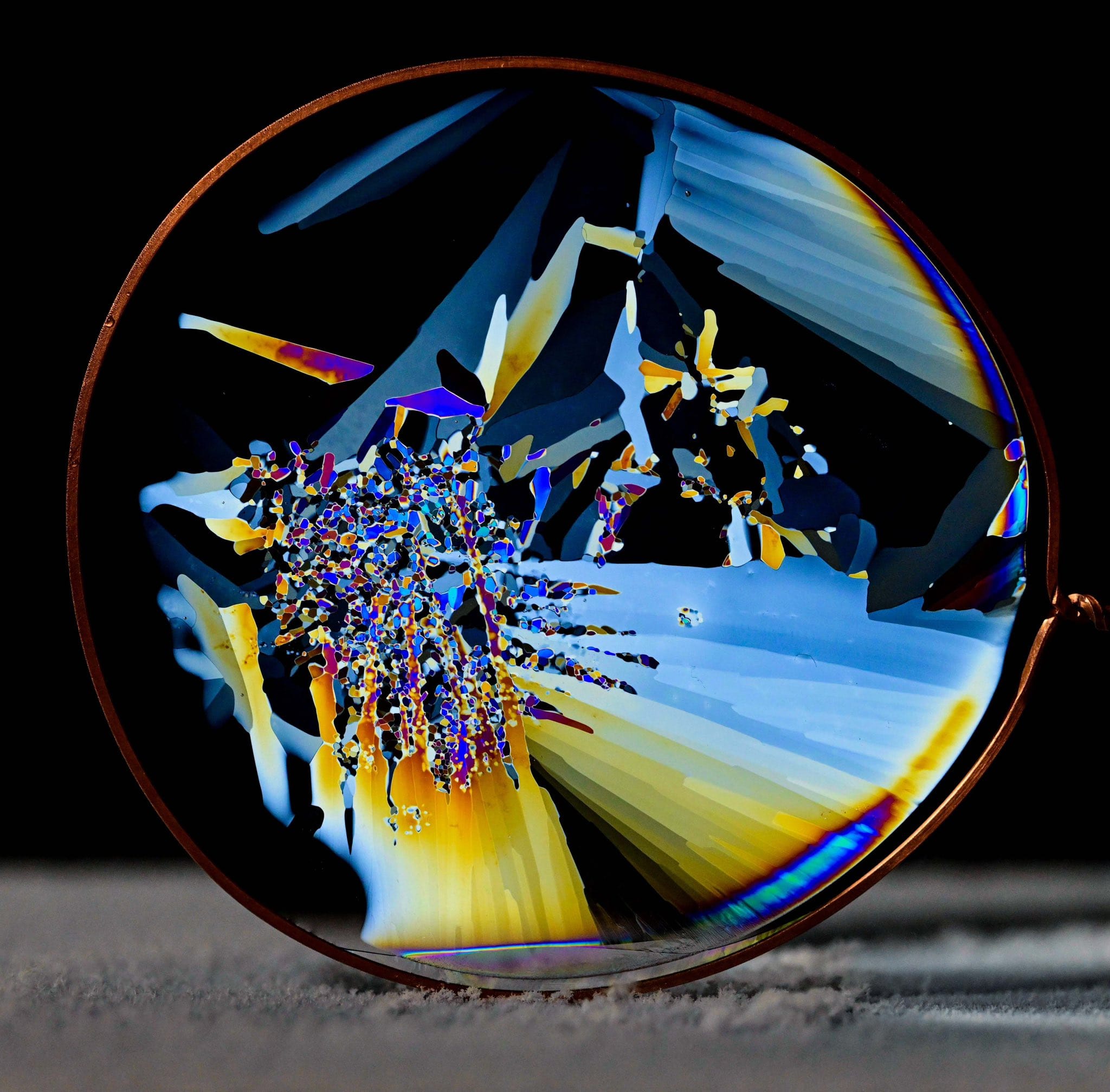
Astronaut Don Pettit is back in space, and that means lots of awesome microgravity experiments. Here, he grew thin wafers of ice in microgravity in a -95 degree Celsius freezer. Then he took the ice wafers and photographed them between crossed polarizers, creating this colorful image. The colors highlight different crystal orientations within the ice and give us a hint about how the freezing front formed and expanded. I can’t wait to see more examples! (Image credit: D. Pettit/NASA; via Ars Technica; submitted by J. Shoer)
Month: November 2024

Seeking Mars’ Past
Although Mars is quite dry and inhospitable today, our rovers continue to search for evidence of a past Mars that could have sustained life. A recent study suggests that, at least in Gale Crater, the opportunities for life to flourish may have been short-lived. In particular, the team looked at carbonates found by the Curiosity rover. These minerals contain varying amounts of carbon and oxygen isotopes that can hint at the conditions the carbonates formed under. The team found a high proportion of heavier isotopes, which suggest one of two possible formation paths. In the first, Gale Crater underwent wet-dry cycles that alternated between more- and less-habitable conditions for life. The second possibility is a cryogenic past, where most of the local water was locked in ice, and life would have had to survive — if possible — in small pockets of extremely salty water. Neither possibility is a great one for the kinds of life we’re accustomed to. (Image credit: NASA; research credit: D. Burtt et al.; via Gizmodo)

Herding Sheep
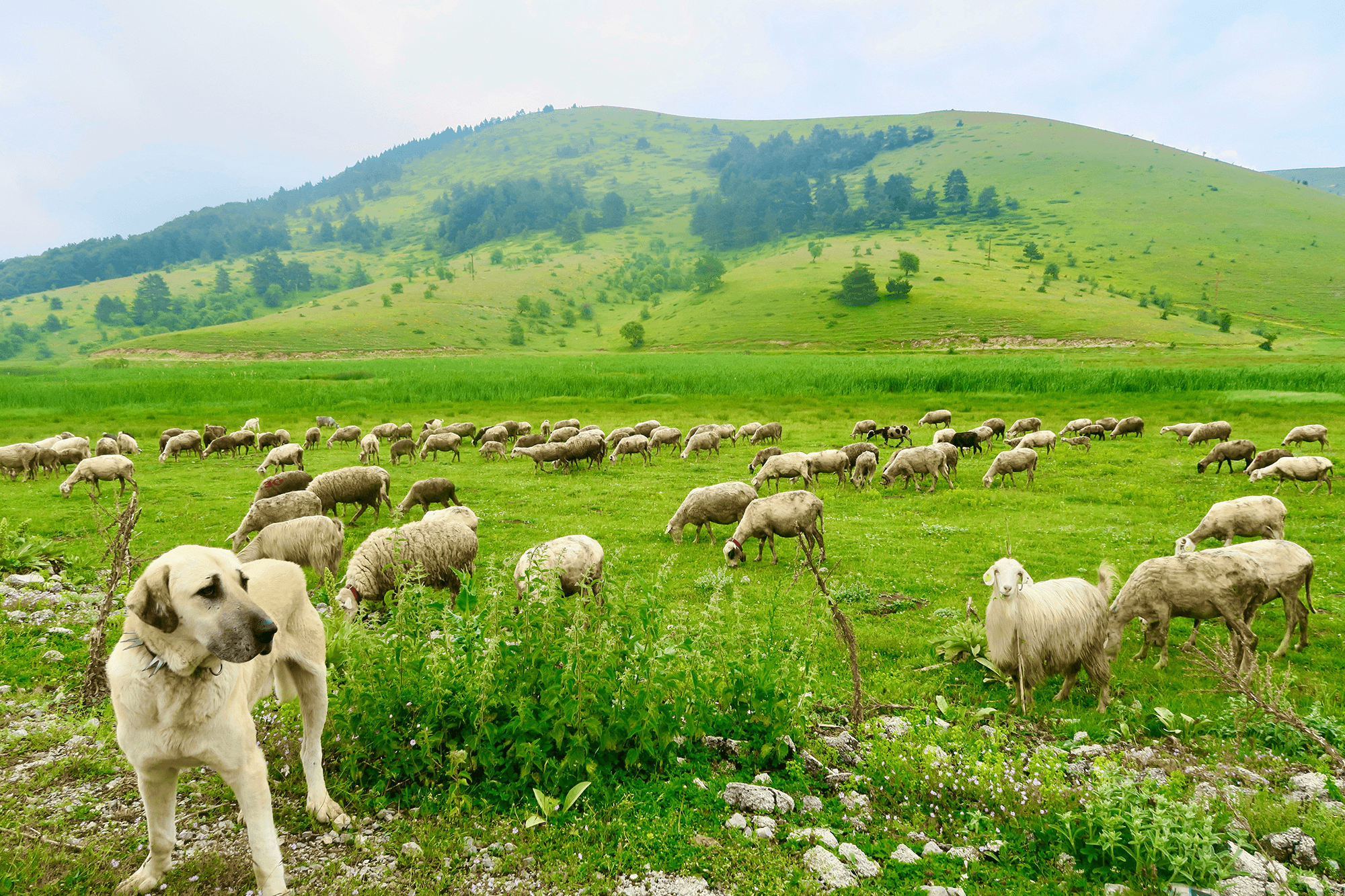
Flocks of birds, schools of fish, and herds of sheep all resemble fluids at times, and physicists have been trying to recreate their collective motion for decades. Many of these models simplify the animals into particles that follow simple rules based on the direction and speed of their neighbors. Over time, the models have grown more complex; for example, some might differentiate a “sheepdog” particle from “sheep” particles. And some models even tweak the “sheep” to account for the personality traits that real sheep show, like how skittish they behave toward a sheepdog. Physics World has a neat overview of several studies in this vein. (Image credit: E. Osmanoglu; via Physics World)

Non-Newtonian Raindrops


Fluids like air and water are called Newtonian because their viscosity does not vary with the force that’s applied to them. But many common fluids — almost everything in your fridge or bathroom drawer, for example — are non-Newtonian, meaning that their viscosity changes depending on how they’re deformed.
Non-Newtonian droplets can behave very differently than Newtonian ones, as this video demonstrates. Here, their fluid of choice is water with varying amounts of silica particles added. Depending on how many silica particles are in the water, the behavior of an impacting drop varies from liquid-like to completely solid and everything in between. Why such a great variation? It all has to do with how quickly the droplet tries to deform and whether the particles within it can move in that amount of time. Whenever they can’t, they jam together and behave like a solid. (Image, video, and research credit: S. Arora and M. Driscoll)
Who Killed the Colorado River?


From its source high in the snowy Rocky Mountains, the Colorado River runs through two countries and five states on its way to the Gulf of California. Or at least it used to. The river hasn’t met the sea in decades. All that water disappeared into a complicated web of poor management, short-sighted policies, and human infrastructure, as this video from PBS Terra explores. Unfortunately, while the details vary, this story is not unique, and many rivers around the world are no longer completing their journey. The good news is that we can still change that and rehabilitate the landscapes we’ve lost. (Video and image credit: PBS Terra)
“Chemical Somnia”


Under a macro lens, even a petri dish worth of fluids comes vividly to life. Here, artist Scott Portingale explores crystallization, Marangoni effects, and other phenomena alongside a haunting soundtrack from musician Gorkem Sen. Enjoy! (Image and video credit: S. Portingale et al.)

Hello, STEVE
A purple glow arcs across the night sky. Just another aurora, or is it? First described in 2018, this is a STEVE — Strong Thermal Emission Velocity Enhancement. (Yes, the name “Steve” came first and the acronym came later.) Scientists still aren’t entirely sure how to classify this glowing phenomenon. Although it looks similar to an aurora, its color spectrum is continuous between 400 and 700 nanometers; classic auroras, in contrast, have a discrete spectrum dependent on which atmospheric molecules are getting stimulated by the incoming solar wind. Scientists have noticed that STEVE appears before midnight and is accompanied by a fast 5.5 km/s westward ion flow. A dawnside equivalent with an eastward ion flow was reported just this year.
With newly identified phenomena like this, the research papers are fast and furious as the scientific community searches for consensus on exactly what STEVE is and how it’s formed. But this domain is not reserved for professional astronomers alone; citizen scientists were the first to identify STEVE and open projects like Aurorasaurus continue to provide valuable data and observations. (Image credit: K. Trinder/NASA; research credit: S. Nanjo et al.; via Gizmodo)

Sea Ice Swirls
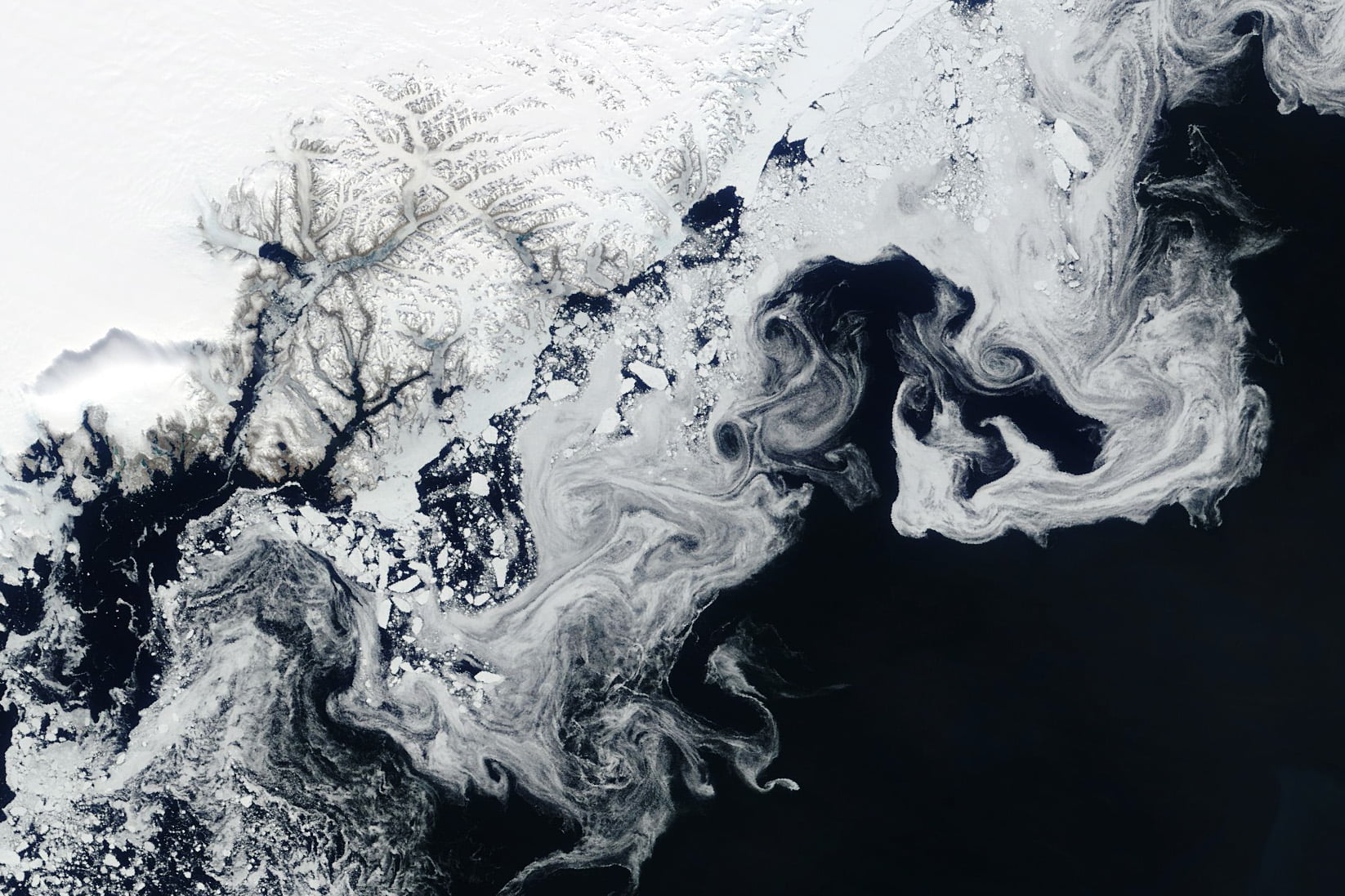
Fragments of sea ice tumble and swirl in this satellite image of Greenland’s east coast. In spring, Arctic sea ice journeys down the Fram Strait between Greenland and Svalbard. Along the way, large ice floes break — and melt — into smaller pieces. Large pieces of sea ice are visible closer to the coastline, but the smaller individual floes get, the wispier they appear in the satellite image. In the haziest portions of the image, the ice may be only meters across. In recent years, less and less Arctic sea ice has survived the journey southward, shifting the temperature and salinity of Arctic contributions to global ocean circulation. (Image credit: W. Liang; via NASA Earth Observatory)

Blocking Bubbles
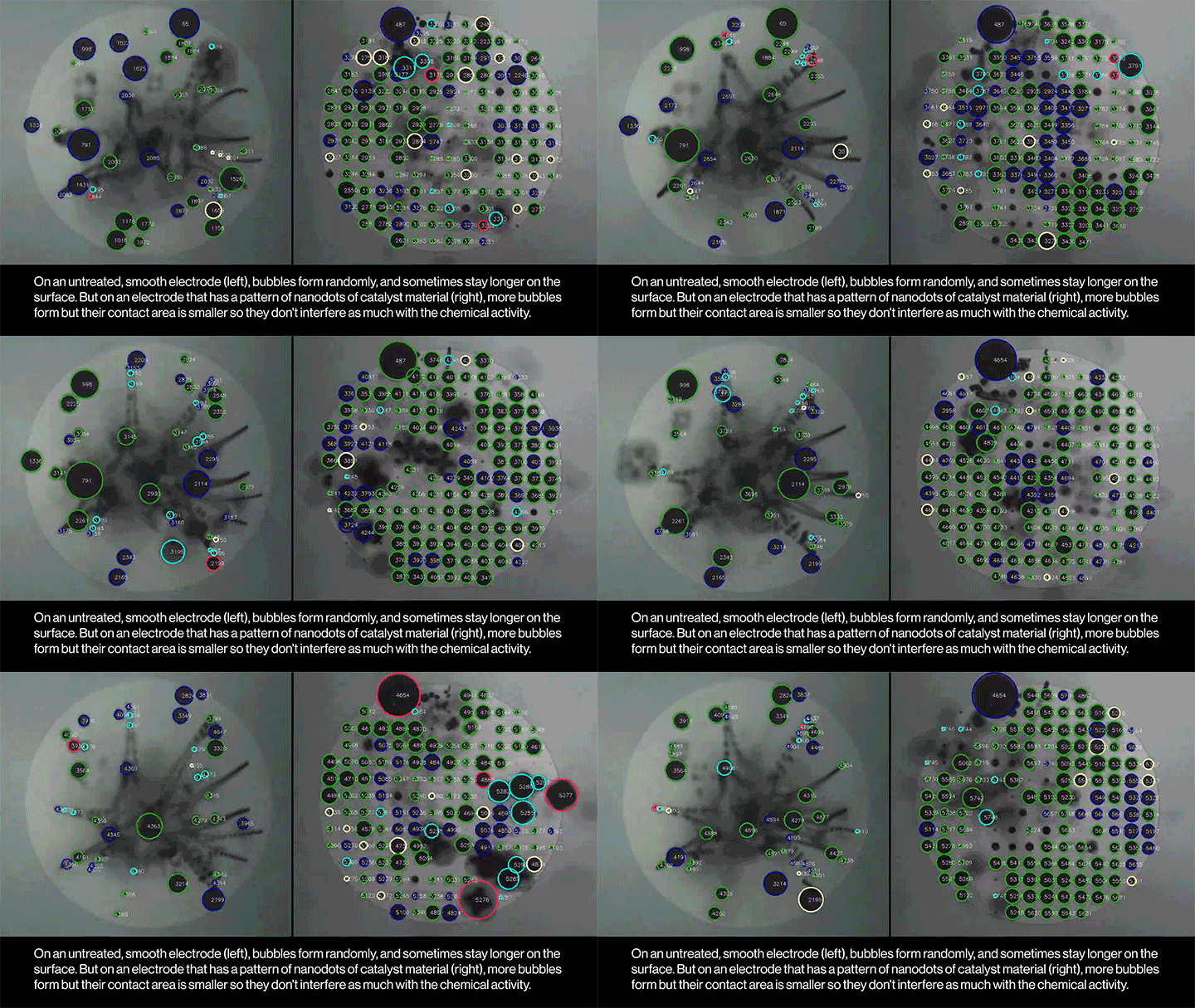
Many industrial processes, including those producing aluminum and “green” hydrogen, use electrodes to speed up chemical reactions. Unfortunately, bubbles that form on the electrode reduce its efficiency anywhere from 10 to 25 percent by blocking parts of the electrode. The assumption has been that any area shadowed by bubbles is blocked, but a recent study shows that’s not the case. Instead, it’s only the electrode area in direct contact with the bubble that’s blocked.
To show this, researchers looked at a smooth electrode where bubbles formed randomly (left) and a nanotextured one with many spots where bubbles could form (right). In the animation above, bubble shadows are highlighted with circles. There are clearly more bubbles on the nanotextured electrode, but it actually performs better than the smooth electrode because the bubble contact area is smaller. (Image and research credit: J. Lake et al.; via MIT News)

A Comet’s Two Tails
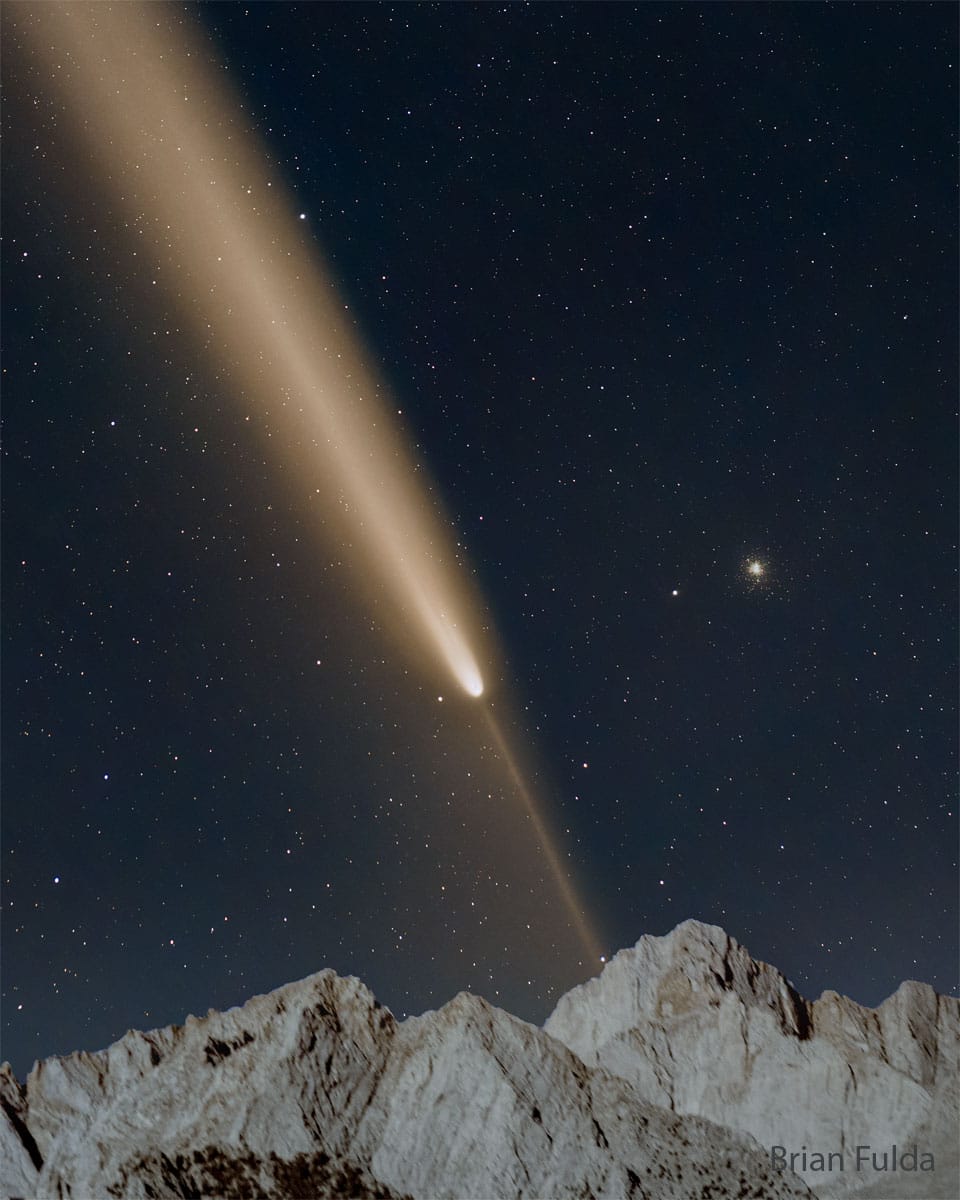
The bright tail of a comet doesn’t actually stream out behind it. Instead, the tail points away from the sun, showing off all the ice, dust, and gas blown off the comet by the solar wind. Because the tail is tied to the sun’s direction and not the comet’s trajectory, comets sometimes have a second tail, called the anti-tail. The anti-tail consists of material that came off the comet previously, so it does mark the comet’s previously traveled path. In this image of Comet Tsuchinshan-ATLAS from October 2024 the dimmer anti-tail points opposite of the brighter tail. That means the comet’s direction of travel is diagonally upward, from right to left. Since that aligns with its bright tail, we can tell that the comet is moving away from the sun in this photo. (Image credit: B. Fulda; via APOD)