Snakes’ forked tongues have long inspired fear, but, in reality, they are part of a highly-effective sensory system. When snakes flick out their tongues, they waggle them up and down about 15 times a second. That motion draws air inward toward the tongue (Image 2), allowing scent molecules to stick to the saliva on either side of the tongue. Once those molecules are gathered, the snake pulls its tongue back into its mouth, where it settles into two grooves (Image 3). Each one has its own path to the snake’s olfactory organs, giving the snake independent spots to evaluate the left and right forks. That means the snake knows which side has a stronger scent and is better able to track its prey. (Video and image credit: Deep Look)
Ruslan Khasanov’s “Space Iris” explores the similarities between nebulae and eyes. Made entirely with common fluids like paint, soap, and alcohol, the film shows off the gorgeous possibilities of surface-tension- and density-driven instabilities. Marangoni flows abound! I even see some hints of solutal convection, perhaps? (Video and image credit: R. Khasanov; via Colossal)
As climate change and human development continue to encroach on animals’ territories, mass migrations will become more and more common. But animals aren’t all equally able to travel long distances at speed. In general, larger animals are faster than smaller ones. But a new study shows that there’s another important factor in an animal’s top speed: heat dissipation.
By studying the characteristics of over 500 animals that walk, fly, and swim, the team found that animals were limited in their speed by how well they could dissipate heat. This makes sense, even from a human perspective; we may be able to run long distances, but once we’re too hot, we have to slow down. The same principle holds for animals, and the bigger the animal, the longer it takes to dissipate heat. As a result, the team found that the fastest animals over long distances all have intermediate body mass. At their size, they can balance the mechanical ability to produce speed with the thermodynamic requirement to dissipate heat. (Image credit: N. and Z. Scott; research credit: A. Dyer et al.; via APS Physics)
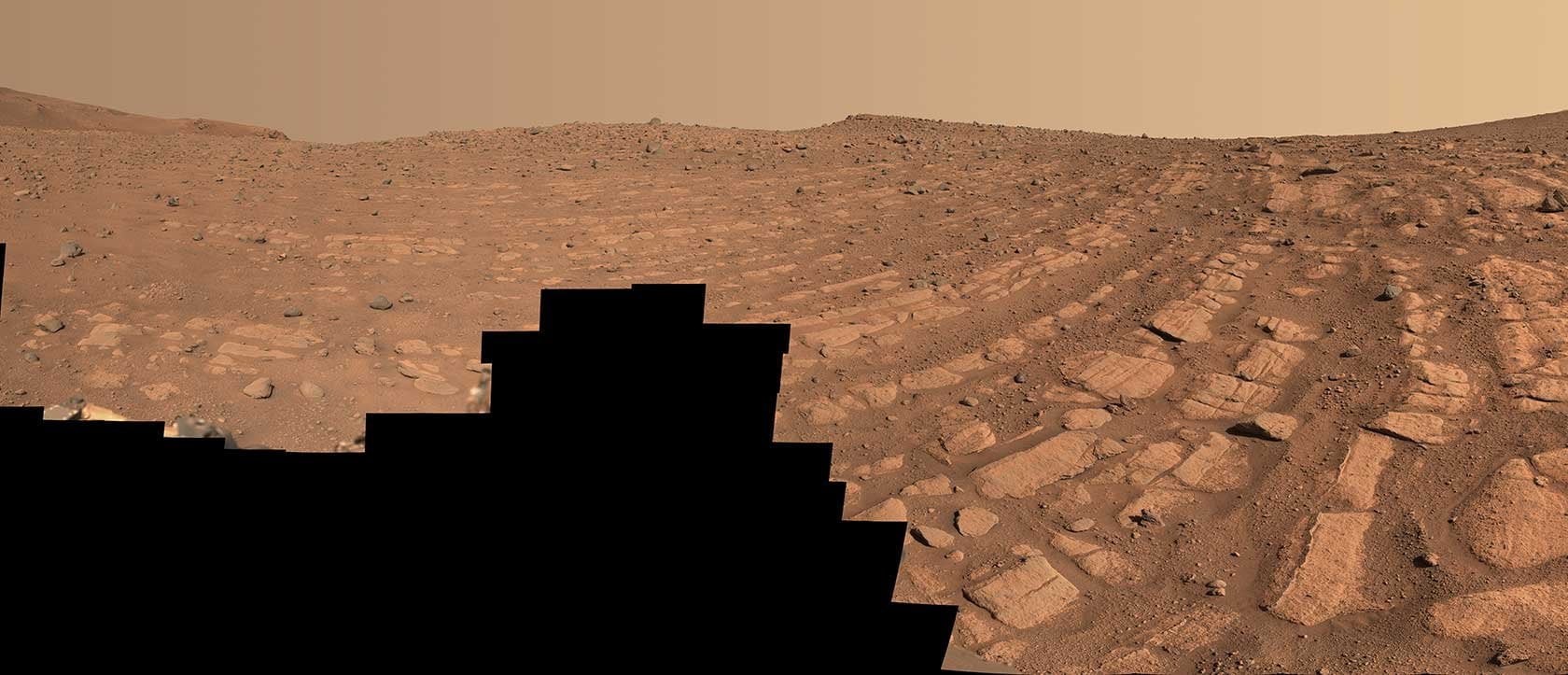
For the first time, scientists have found evidence of deep, fast-flowing ancient rivers on Mars. After examining images taken recently by the Perseverance rover in Jezero Crater, fluvial experts have spotted familiar signs of turbulent river flow. The mosaic above shows an area nicknamed “Shrinkle Haven,” where curved bands of rock mark the landscape. Although scientists are confident that a powerful river deposited these rocks, they’re still debating whether that river was a meandering one like the Mississippi or a braided river like the Platte.
Nicknamed “Pinestand,” this hill’s sedimentary layers were likely formed by a deep, fast-moving river.
In another area, known as “Pinestand,” scientists spotted hills as high as 20 meters tall with clear sedimentary layers. Like Shrinkle Haven’s rock bands, formations like this are most often associated with a large, fast-flowing river. (Image credits: NASA/JPL-Caltech/ASU/MSSS; via Gizmodo; see also NASA JPL)
Swimming often results in water getting stuck in our ear canals. The narrow space, combined with the waxy surface, is excellent at trapping small amounts of water. If left in place, that excess fluid distorts hearing, can cause pain, and may eventually lead to an ear infection. So most people’s common response is to tilt their head sideways and shake it or jump to knock the water out. This recent study looks at just how much acceleration is needed to dislodge that water.
An acceleration of 7.8g isn’t enough to remove the water from this artificial ear canal.
The team built an artificial ear based on the shape of a human’s ear canal and observed how much acceleration was needed to knock the water out. The answer? Quite a bit. As seen above, nearly 8g of acceleration was enough to distort the interface of the water in the ear canal, but it didn’t move the water out.
At higher accelerations — above 20 times the acceleration due to gravity – the air-water interface distorts enough to get the water to flow. But accelerations that large are enough to potentially damage brain tissues.
At over 24g, the acceleration is enough to dislodge the water from this artificial ear canal. But accelerations this high can cause brain damage.
The problem is worse for children and babies, whose tiny ear canals necessitate even larger accelerations. For them, shaking hard enough to remove water could cause real damage. Instead, a couple drops of vinegar or alcohol in the ear will lower the surface tension and make the fluid easier to remove. (Image credit: top – J. Flavia, others – S. Kim et al.; research credit: S. Kim et al.; submitted by Sunny J.)
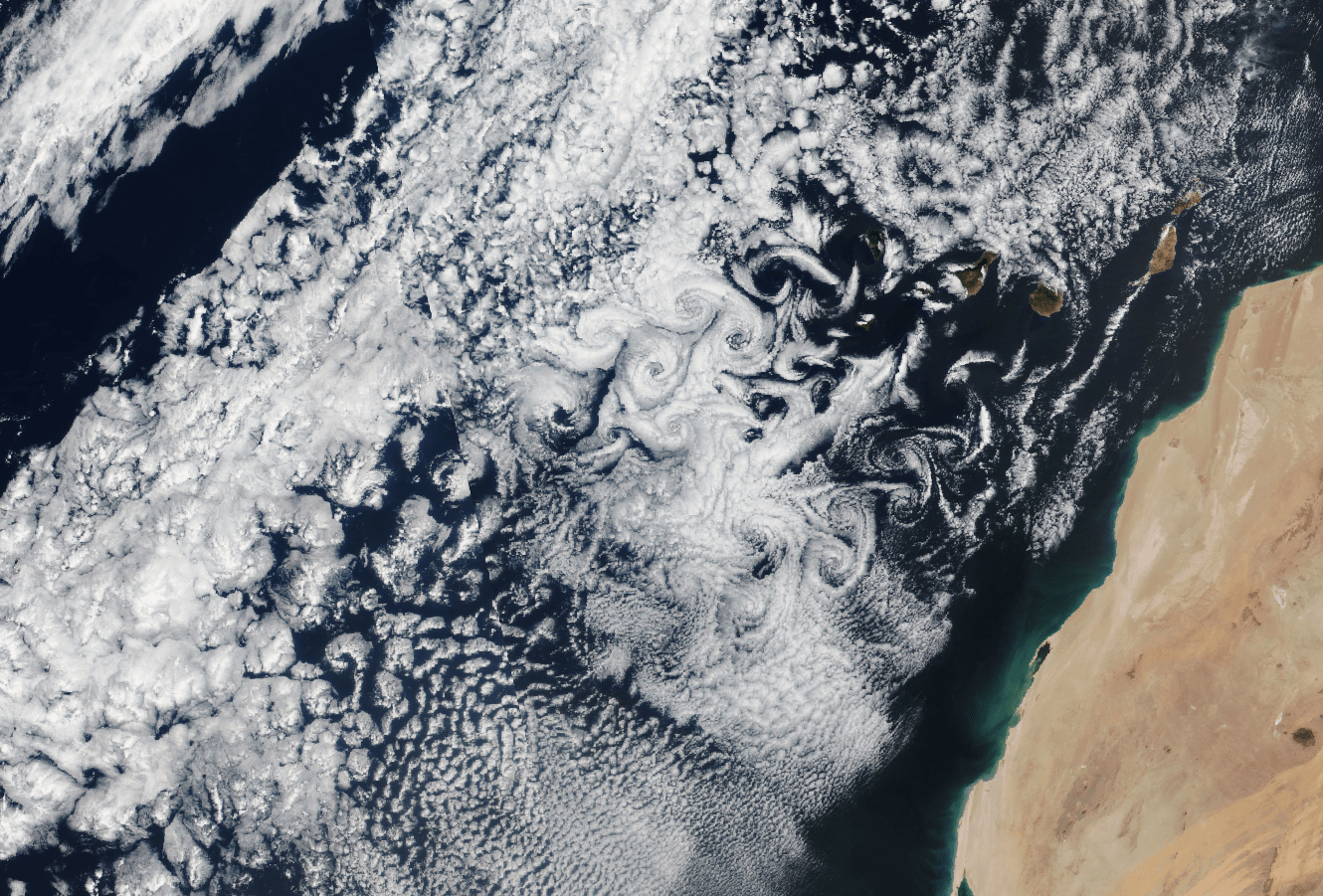
Rocky, isolated islands disturb the atmosphere, sending air swirling off one side of the island and then the other. The effects are not always visible to the naked eye, but, as they do here, they can show up in satellite imagery as whirling von Karman vortex streets. The eddies of this image are due to the Canary Islands, and if you follow the line of swirls backward, you’ll find their originating islands. Note that the cloudy swirls don’t appear immediately behind the islands. That’s because there wasn’t enough moisture in the air for clouds to condense yet; the same swirls that you see in the downstream clouds exist in the clear air closer to the islands. (Image credit: A. Nussbaum; via NASA Earth Observatory)
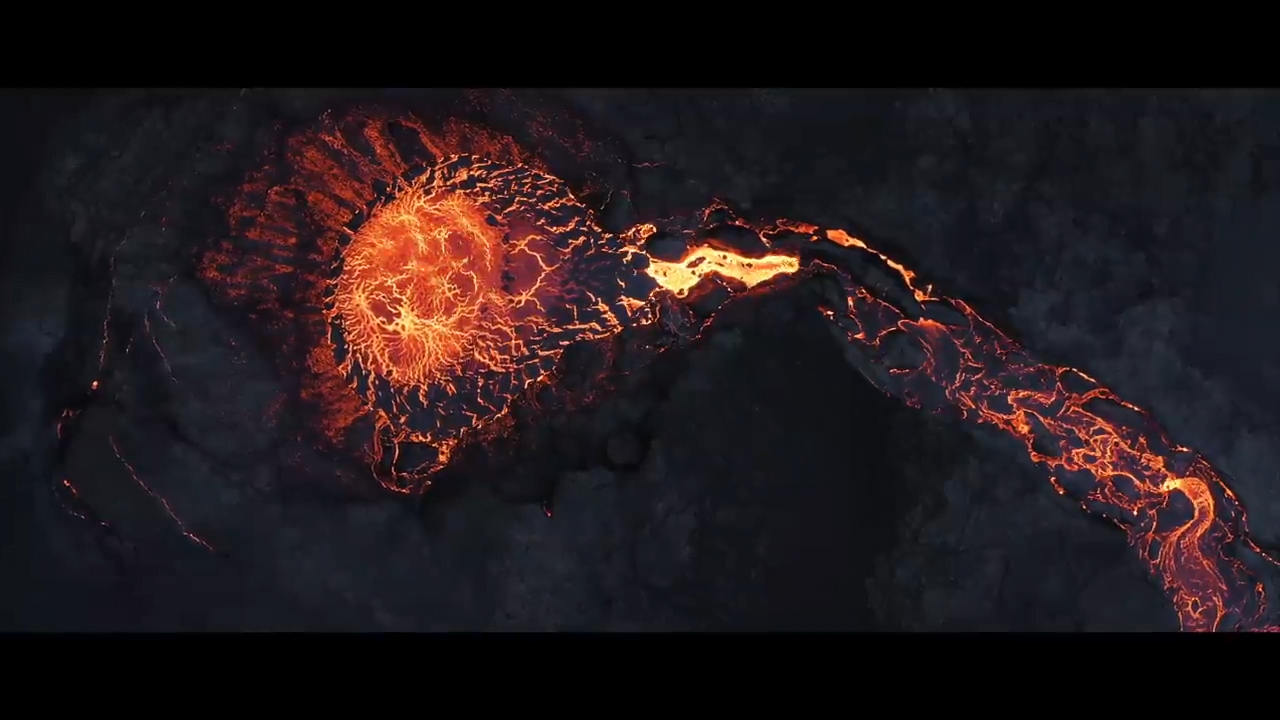
Volcanoes are endlessly fascinating to watch, especially in this era of drone photography. Joey Helms’s short film “The Beauty in Creation” shows the Fagradalsfjall eruption in Iceland. Sail over rivers of lava, watch fountains spurting, and even see lava dripping back into the caldera. They’re views that no human gets to witness directly, but they certainly do highlight the peculiar collision of destruction and creation inherent in volcanic eruption. (Video credit: J. Helms)
“Shouting into the wind” usually means a failure to communicate, but it turns out that shouting into the wind doesn’t work the way people usually think. In fact, it’s easy for people upstream to hear your shouting, thanks to an acoustical effect called convective amplification. You’ve likely experienced it firsthand as an ambulance approaches. With its sirens blaring, the ambulance sounds louder as it comes toward you and quieter after it’s past. (This is separate from the Doppler effect, which changes the pitch of the approaching and receding vehicle.)
So why does shouting into the wind seem so hard? It’s because your ears are downstream of your mouth. Like the ambulance that’s already gone by, your voice comes from ahead of your ears and therefore sounds quieter to you than it does to your audience upstream. (Image credit: I. Huhtakallio; research credit: V. Pulkki et al.; via Science News; submitted by Kam-Yung Soh)
Zooplankton are tiny creatures found throughout Earth’s oceans. During the daytime, they linger in the twilight depths, where they are harder for predators to spot. But once the sun sets, zooplankton migrate hundreds of meters upward to reach the abundant food near the surface. When sunrise comes, they migrate back downward. Given their size, this feat is astounding; equivalent to a human running two 10-kilometer races a day at Olympic marathon speeds. And, despite their tiny size, these motions leave a mark; researchers have shown that the collective action of all these tiny swimmers is large-scale turbulence with serious mixing potential. (Video and image credit: Be Smart)
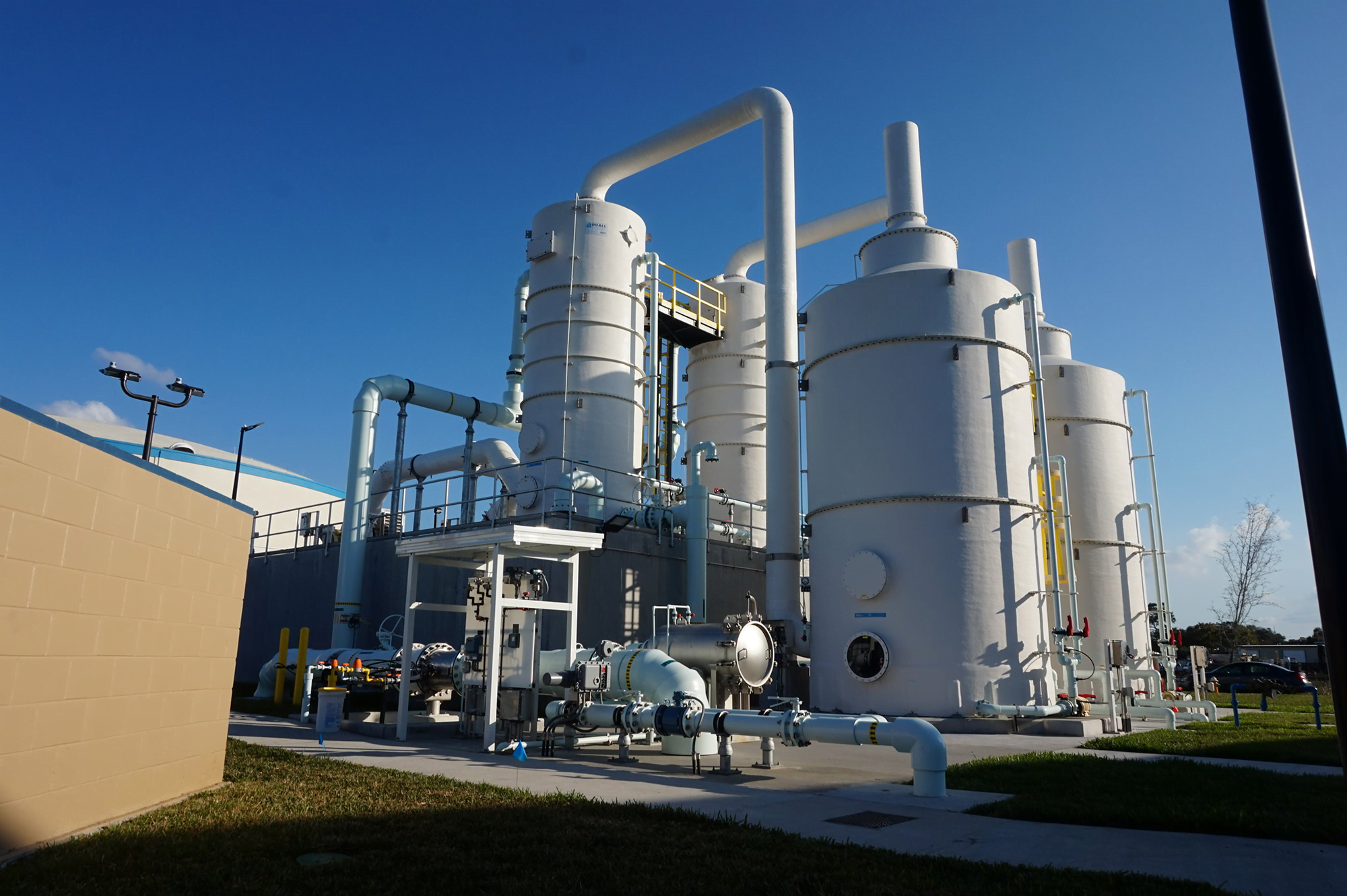
Desalination and water treatment plants both rely on reverse osmosis to generate clean water for human use. The standard theory behind reverse osmosis for the last half century suggested that the membranes separated water and other chemicals by forcing water molecules, driven by chemical gradients, to travel one-by-one through a dense membrane forest. But over the years, researchers saw signs that this theory didn’t hold up; for one, the membranes water travels through have pores in them that are larger than individual water molecules.
A new study examines the underlying assumptions of the prevailing model and finds instead that water moves through reverse osmosis membranes by pore flow. Instead of individual molecules pushed by concentration, flow takes place through pores and is driven by a pressure gradient. The difference is important because it enables engineers to design more efficient membranes according to real-world physics. By understanding the underlying mechanism, designers can tweak the pore size, density, and other features of reverse osmosis membranes to better filter unwanted chemicals and to remove salt from water with less energy input. (Image credit: Florida Water Daily; research credit: L. Wang et al.; via Wired; submitted by Kam-Yung Soh)