In the Hakkōda Mountains of Japan, snow encases the trees, transforming the ski slopes into a hoodoo-filled winter wonderland. Photographer Sho Shibata captured these images while journeying through the area a few years ago. The combination of wind and snow sculpts the trees into surprisingly similar shapes! (Image credit: S. Shibata; via Colossal)
Springtails are small, jumping insects. Semiaquatic varieties use their tails to jump off water in order to move around and escape predation. Among these water jumpers, results vary; some, like in the third image, have little to no control over their landings and will frequently faceplant or land on their backs. But some species in the family have a better technique.
These springtails grab a water droplet with their hydrophilic ventral tube (seen in the second image with a red identifying arrow) during take-off. This tiny water droplet serves several purposes. First, it adds extra weight to the insect, allowing it to better orient its body to land belly-down. Second, the drop gives the insect a way to adhere to the water during landing, preventing it from bouncing. Check out the video to see lots of high-speed video of these tiny acrobats! (Video and image credit: A. Smith/Ant Lab; research credit: V. Ortega-Jimenez et al.)
In their natural state, rivers are variable in their course, shifting and meandering. Sometimes they deposit sediment, and sometimes they erode it. In this video, Grady from Practical Engineering digs into the principles behind these changes. With help from Emriver‘s stream tables, which demonstrate years of changes in a river over minutes, Grady shows how changing the sediment load, flow rate, and other factors in a river affect its course. (Video credit: Practical Engineering)
The tiny glassy-winged sharpshooter feeds exclusively on nutrient-poor sap from plant xylem. Since the sap is 95% water, the insects have to consume massive amounts, necessitating lots of urination — up to 300 times their body weight each day! With so much urine to get rid of and so little energy to spare, the sharpshooter has developed an ingenious, low-energy method to expel its waste. The insect forms a droplet on its anal stylus and flings it. A recent study reveals just how clever the insect’s method is.
Researchers found that sharpshooters fling their droplets 40% faster than their stylus moves. This superpropulsion is only possible because the stylus’s motion is finely tuned to the droplet’s elasticity. Essentially, the insects achieve single-shot resonance with every throw. The energy-savings for the insects is substantial; researchers estimate that making a jet of urine instead would cost four to eight more times energy. (Video credit: Georgia Tech; image and research credit: E. Challita et al.; via Ars Technica; submitted by Kam-Yung Soh)
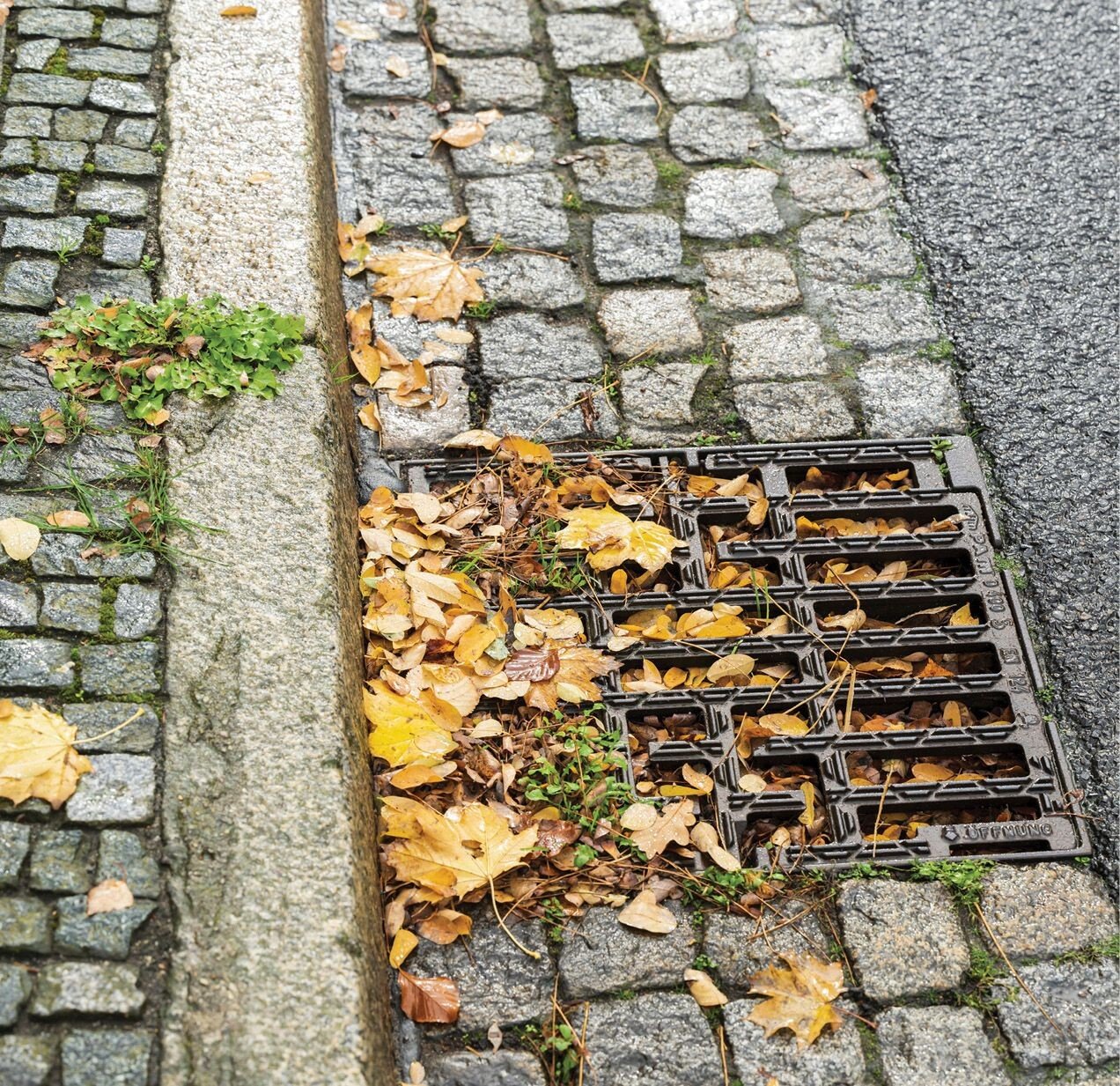
Clogging is one of those phenomenons that we encounter constantly, from overflowing storm drains to the traffic jam at the door when a lecture ends. It happens at all scales, too; ink-jet cartridges and microfluidic circuits can jam up just as thoroughly as a grain silo. Although there are many complexities to clogging, the basic mechanisms fall into three categories: sieving, bridging, and aggregation.
Of these, sieving is the most familiar; it occurs when a particle too large for the constriction gets stuck. That includes both a rock too large to fit down a storm drain and a leaf that gets caught in the wrong orientation.
Bridging, on the other hand, occurs when too many small particles reach a constriction at the same time. Although each one is small enough to fit on its own, their simultaneous arrival means that they jam together into a bridge that blocks the constriction. Given time, all flow comes to a stand still, as seen in the images below.
Sequence of images showing the formation of a particle bridge and subsequent clogging of the entire constriction.
The last mechanism, aggregation, is a more gradual blockage, formed as individual particles begin sticking to a surface, making the constriction progressively smaller. Think of those hard-water buildups that eventually block your shower head.
Some of these mechanisms are easier to prevent or clear than others, but researchers are making progress. For an overview of the field’s current standing, check out this Physics Today article. (Image credit: drain – R. Rampsch, bridging – D. Jeong et al.; see also B. Dincau et al. at Physics Today)
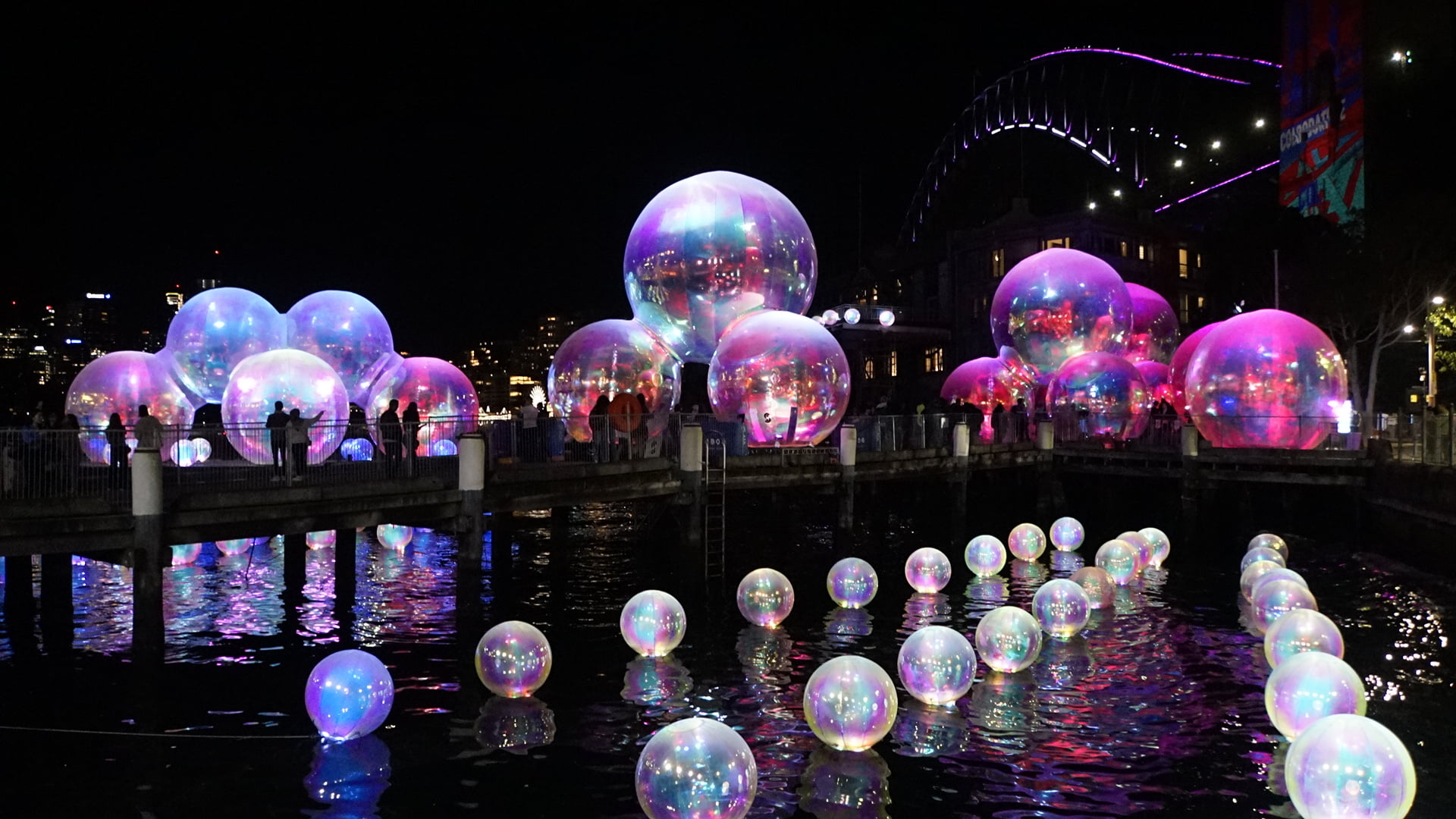
Giant iridescent inflatables dot public spaces in the “Evanescent” exhibit. The “bubble-tecture” is the work of Sydney-based artistic collaboration Atelier Sisu. Conceived during the pandemic, the duo “endeavoured to communicate this feeling of transient beauty and the need to live in the moment through the idea of the bubble.” The exhibit has appeared in more than 22 cities in 12 different countries. (Image credit: Atelier Sisu; via Colossal)
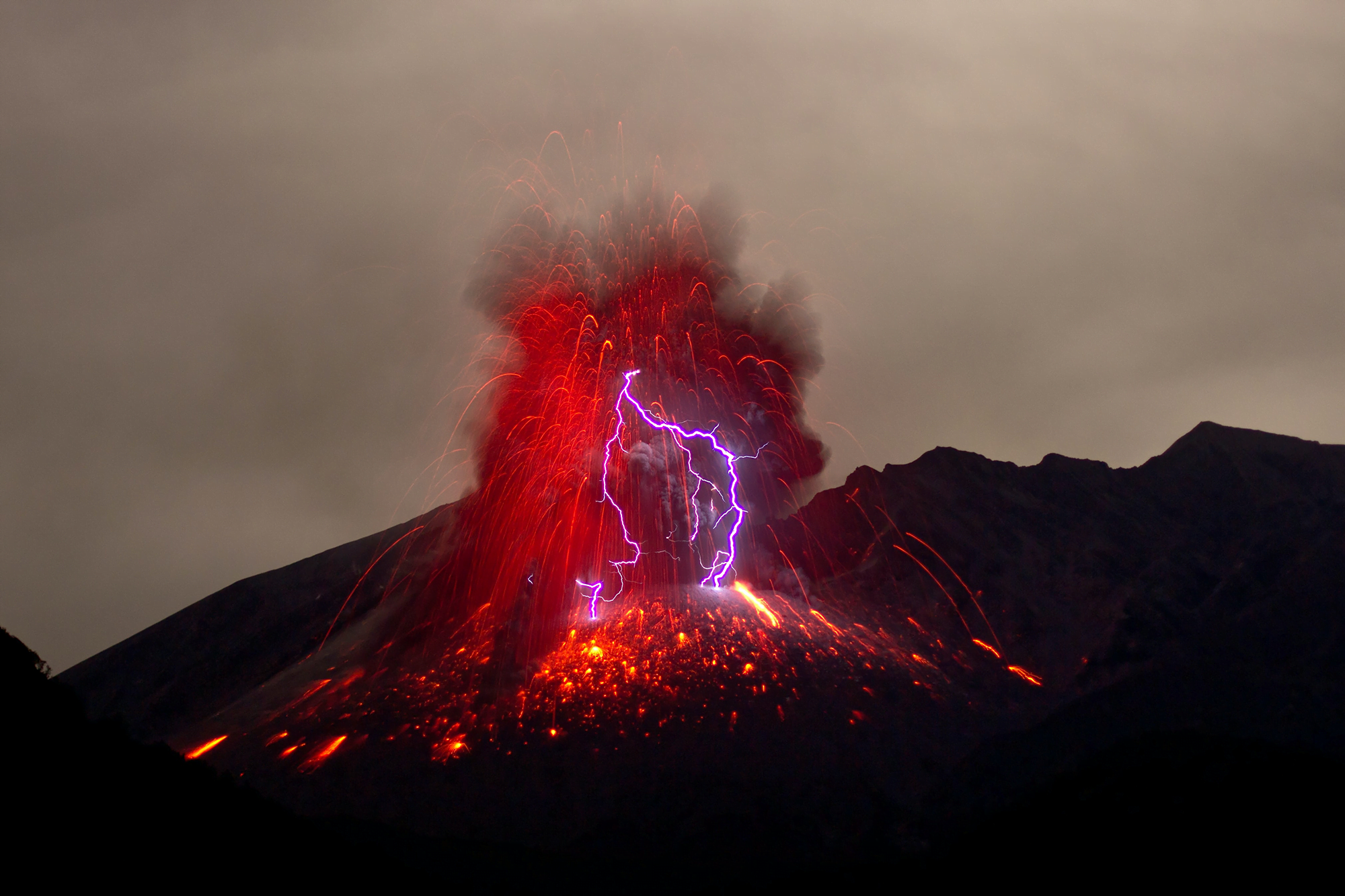
The ancient Greeks first recognized static electricity, but the mechanisms behind it remain somewhat mysterious. In particular, it’s unclear how two pieces of the same material can build a charge between them simply by touching. Yet we regularly see examples of this when volcanic ash creates enough charge to discharge lightning. A new study sheds light on the question by studying the impact of a single grain of silica on a silica disk.
The researchers used acoustic levitation to hold their silica particle in place. By turning the acoustic waves off, they could bounce the grain off the disk, then catch the particle again with the acoustic field. After a bounce, they swept an electrical field across the particle and observed its oscillations to determine how much charge the particle held. When necessary, they could also discharge the particle.
This animation demonstrates the three phases of an experiment. In the first (left), the acoustic field is shut off, allowing the silica grain to fall and strike the disk. Then the field is turned back on to “catch” the particle. In the second phase (middle), the researchers use a sweeping electrical field to determine the charge built up on the grain. In the third phase (right), they periodically discharge the built-up charge on the particle.
What they found was that charge on the particle grew with the number of impacts. They also saw that they could reverse the polarity of the charge with careful cleaning and baking of their objects. Their conclusion is that adsorption of water from the surrounding air is what enables the build-up of static charge on identical materials. (Image credit: volcano – M. Szeglat, experiment – G. Grosjean and S. Waitukaitis; research credit: G. Grosjean and S. Waitukaitis; via APS Physics)
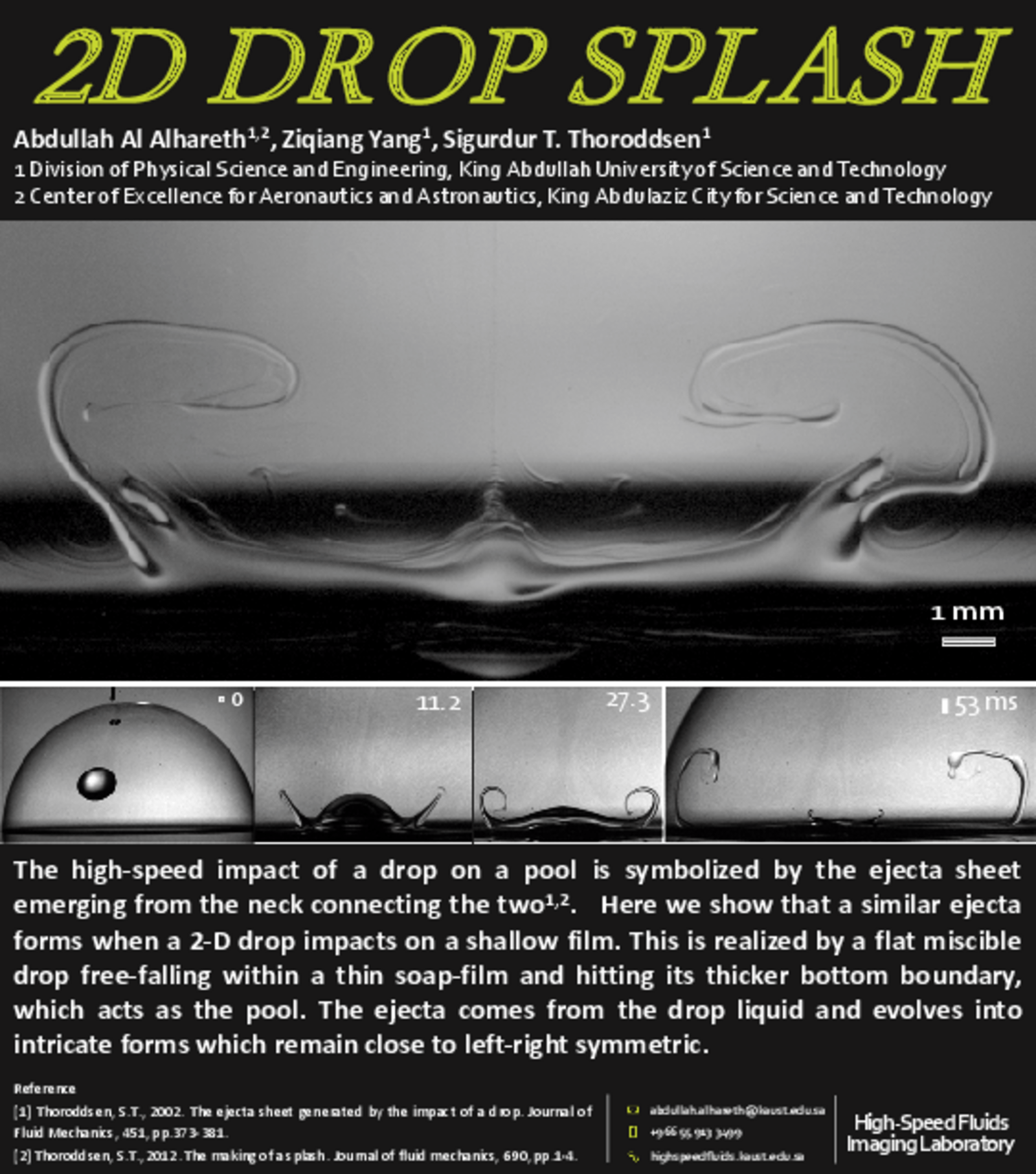
We see plenty of droplets splash when they fall into a pool, but what happens when the drop and pool are two-dimensional? Here researchers captured the familiar process of a splash in an unfamiliar way by looking at a falling drop contained within a soap film. As the drop reached the thicker lower boundary of the soap film (which acts like a pool), its impact sent up ejecta that stretch and curl, much like the three-dimensional splashes we’re accustomed to. (Image credit: A. Alhareth et al.)
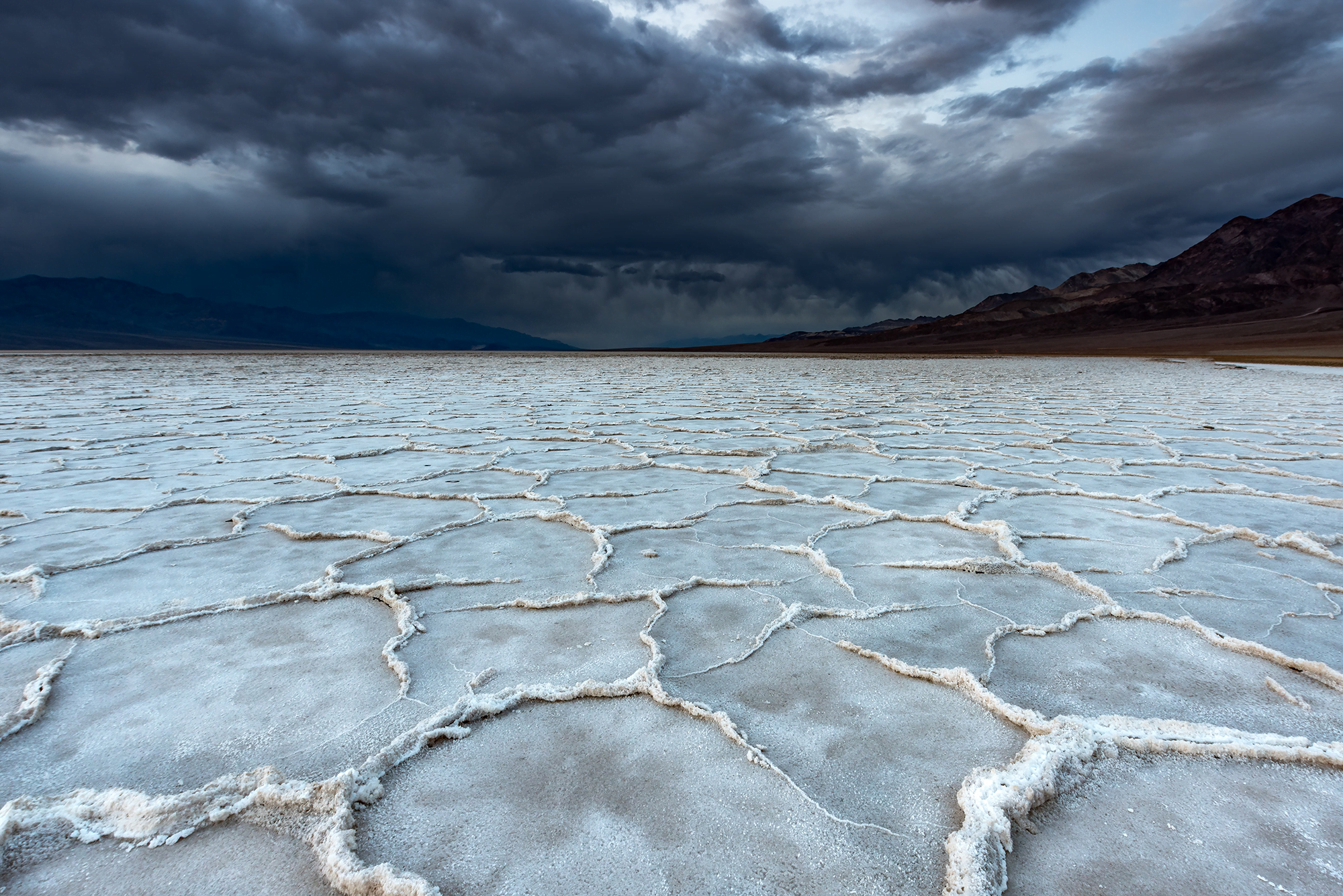
Around the world, salt playas are criss-crossed with meter-sized polygons formed by ridges of salt. The origins of these structures — and the reason for their consistency across different regions of the world — have been unclear, but a new study shows that salt polygons form due to convection happening in the soil underground.
Through a combination of numerical modeling, simulation, lab-scale experiment, and field work, the team revealed the mechanism underlying salt polygons. Areas that form polygons have much greater rates of evaporation than precipitation, and, as water evaporates, these areas draw groundwater from nearby. Salt gets carried with this groundwater.
With strong evaporation, the lake bed forms a highly-concentrated layer of salty water near the surface. Convection cells form, with some regions drawing less saline water upward, while denser, saltier water sinks in other areas. The subsurface convection lines up exactly with the surface structures. The interior regions of polygons are areas where less salty water rises, and salt instead concentrates along the edges of polygons, where saltier water sinks below the surface while evaporation draws solid salt to the surface.
This snapshot shows a numerical simulation of the subsurface convection and surface evaporation that lead to salt polygon formation. Low salinity areas are yellow, while high salinity ones are black. At the surface, blue regions have the maximum upward flow and red regions have the maximum downward flow. The dark, highly saline fingers under the surface align to the red areas on the surface, indicating areas where salty water is sinking.
It’s a beautiful result that matches the size, shape, and development time observed for salt polygons in the real world. The team even excavated below salt polygons in Death Valley to confirm that the salt content below ground matched their model’s patterns. Since salt playas are a major source for dust and aerosols that affect climate, their work will be an important factor in future climate modelling. (Image credit: feature – T. Nevidoma, simulation – J. Lasser et al.; research credit: J. Lasser et al.; via APS Physics; submitted by Kam-Yung Soh)
In the United States, we expect clean water from our taps, but the experiences of Jackson, Mississippi over the last several years are a reminder that we cannot take that water for granted. Since 2020, aging infrastructure, chronic underfunding, and extreme weather have placed the city in a state of emergency. Residents are often under boil water notices, if they have water pressure at all. In this video, Grady from Practical Engineering dissects the engineering side of this crisis and what’s needed to keep a city’s residents supplied with clean water. Check out the video’s links for more on the racism and politics that impact the crisis. (Video credit: Practical Engineering)