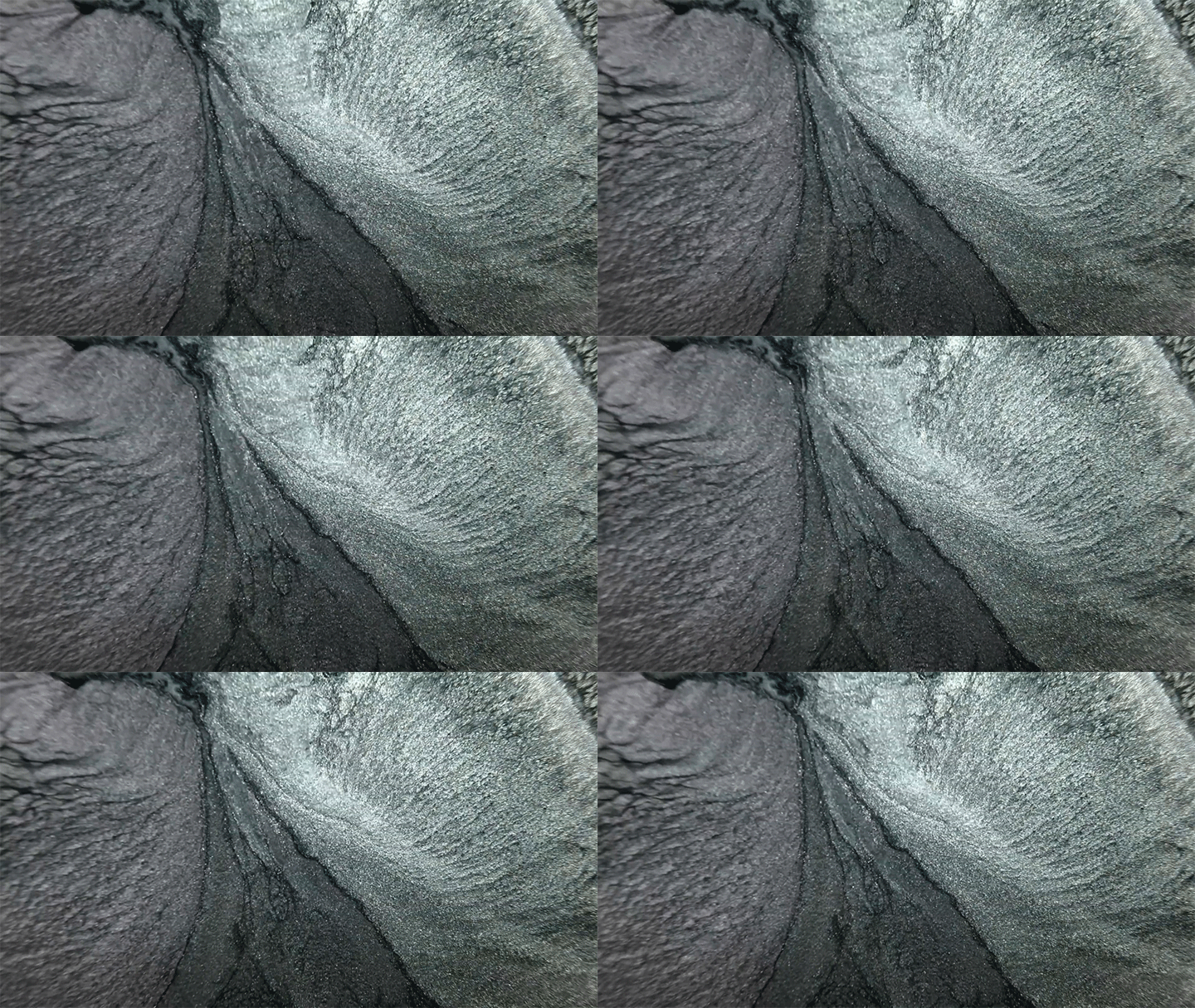
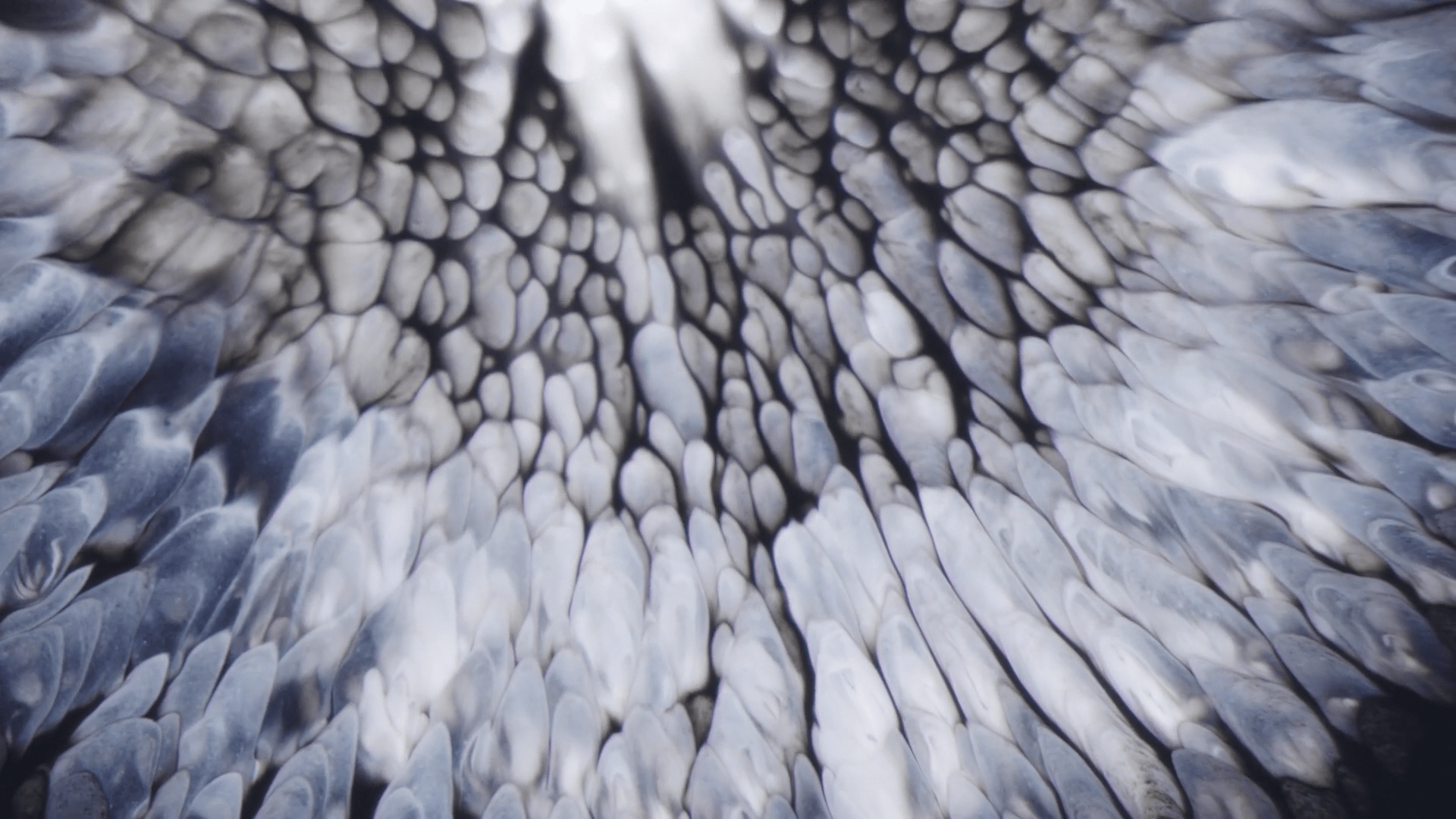
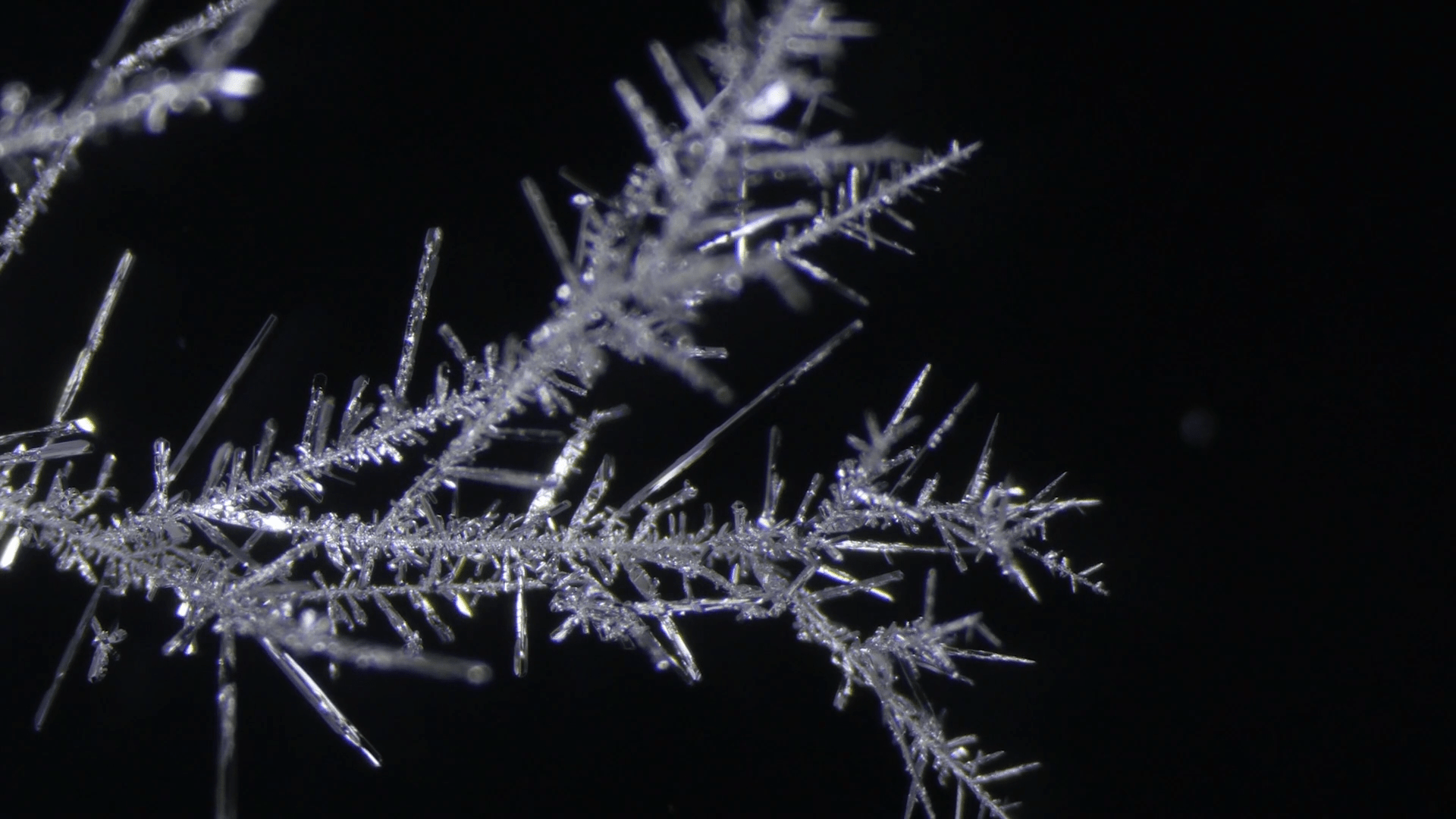
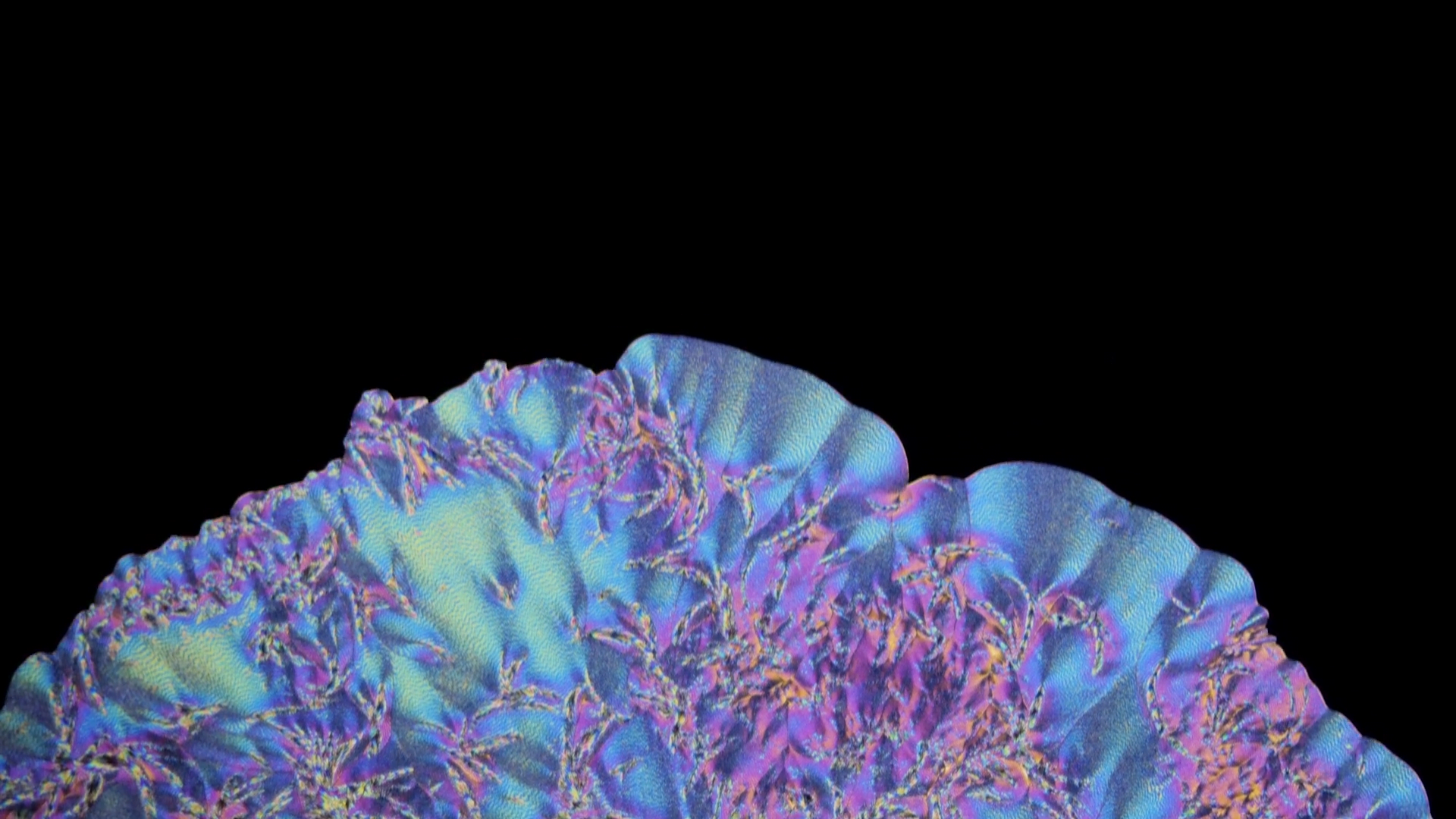
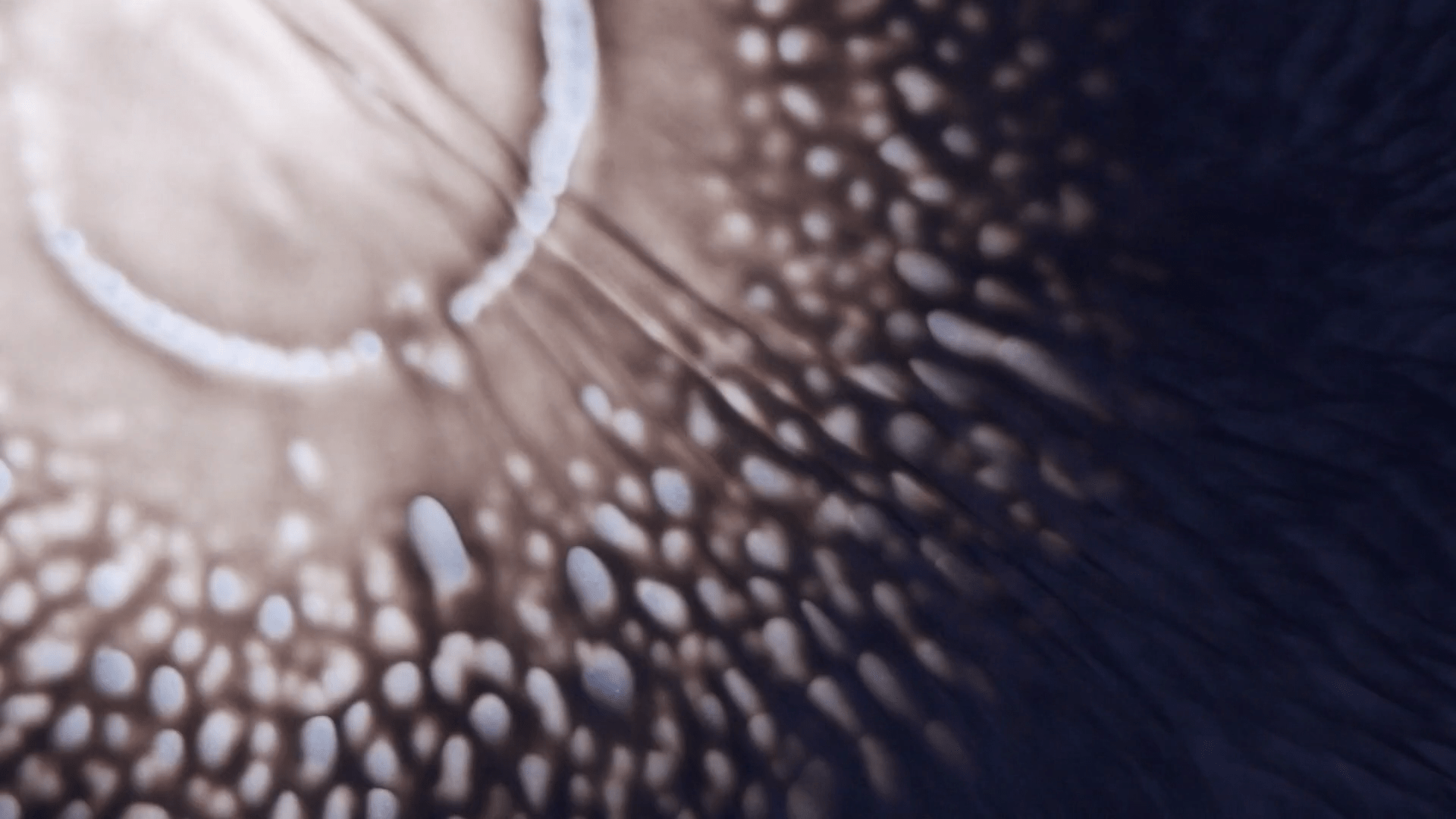
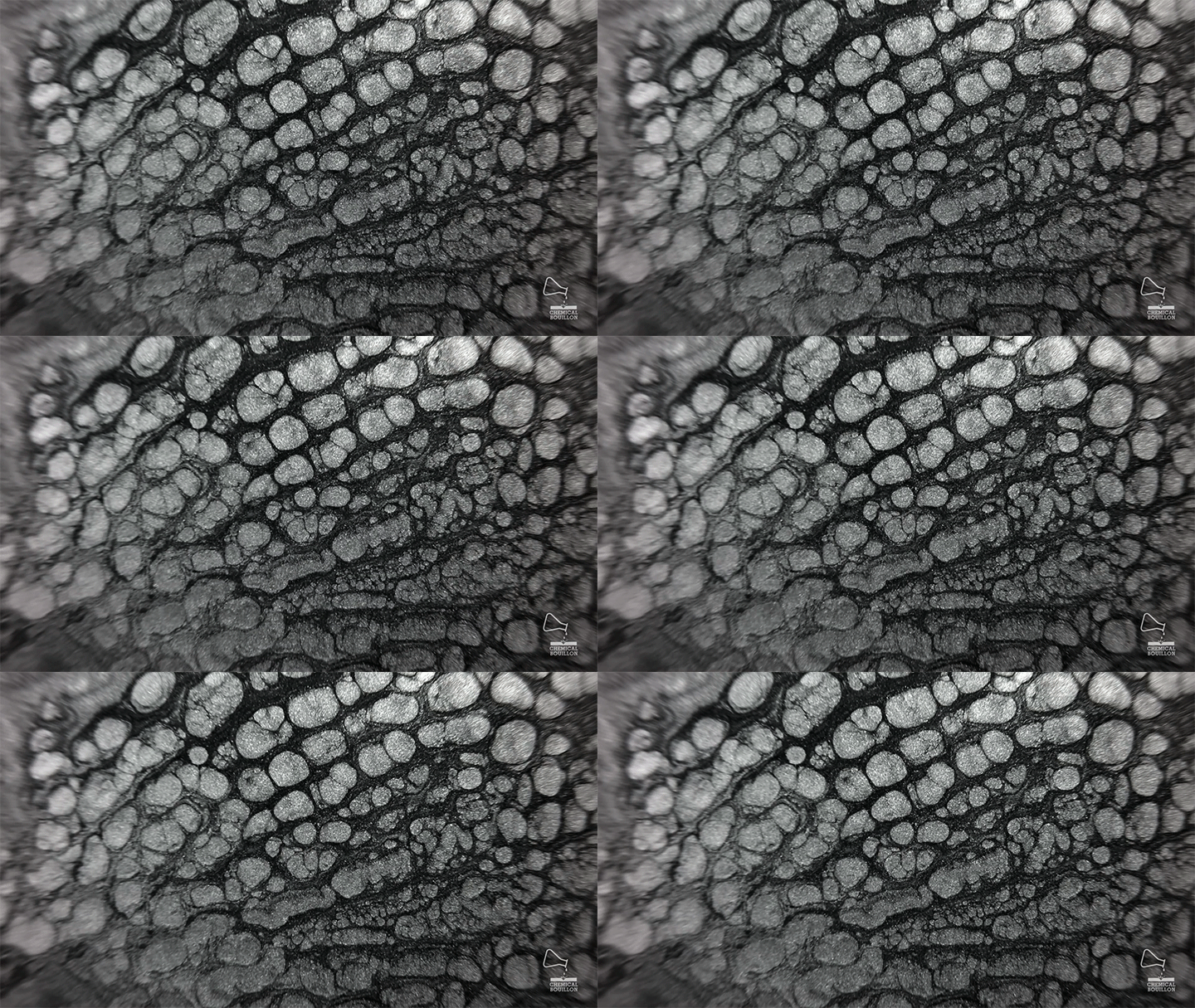
Metallic paint flows like silver lava in this macro video from Chemical Bouillon. The paint has been mixed with an unknown fluid (my guess is alcohol) to produce the flows we see here. My suspicion is that we’re seeing solutal convection where variations in surface tension create convective flow within the liquid. What do you think? (Video and image credit: Chemical Bouillon)
Year: 2021

Oil-Coated Bubbles
Bubbles in industrial applications are often more complicated than a simple pocket of air surrounded by water. Here researchers investigate the formation of an air bubble coated in oil before it rises through water. The photo above shows a series of snapshots as the bubble forms. Initially, a droplet of oil sits pinned on the surface. As air gets injected, the oil stretches around the growing bubble. Eventually, buoyancy pulls the bubble off the injector, creating a rising air bubble coated in oil. The team found that oil-coated bubbles could grow much larger than those in water alone. (Image and research credit: B. Ji et al.)

Meeting Without Mixing
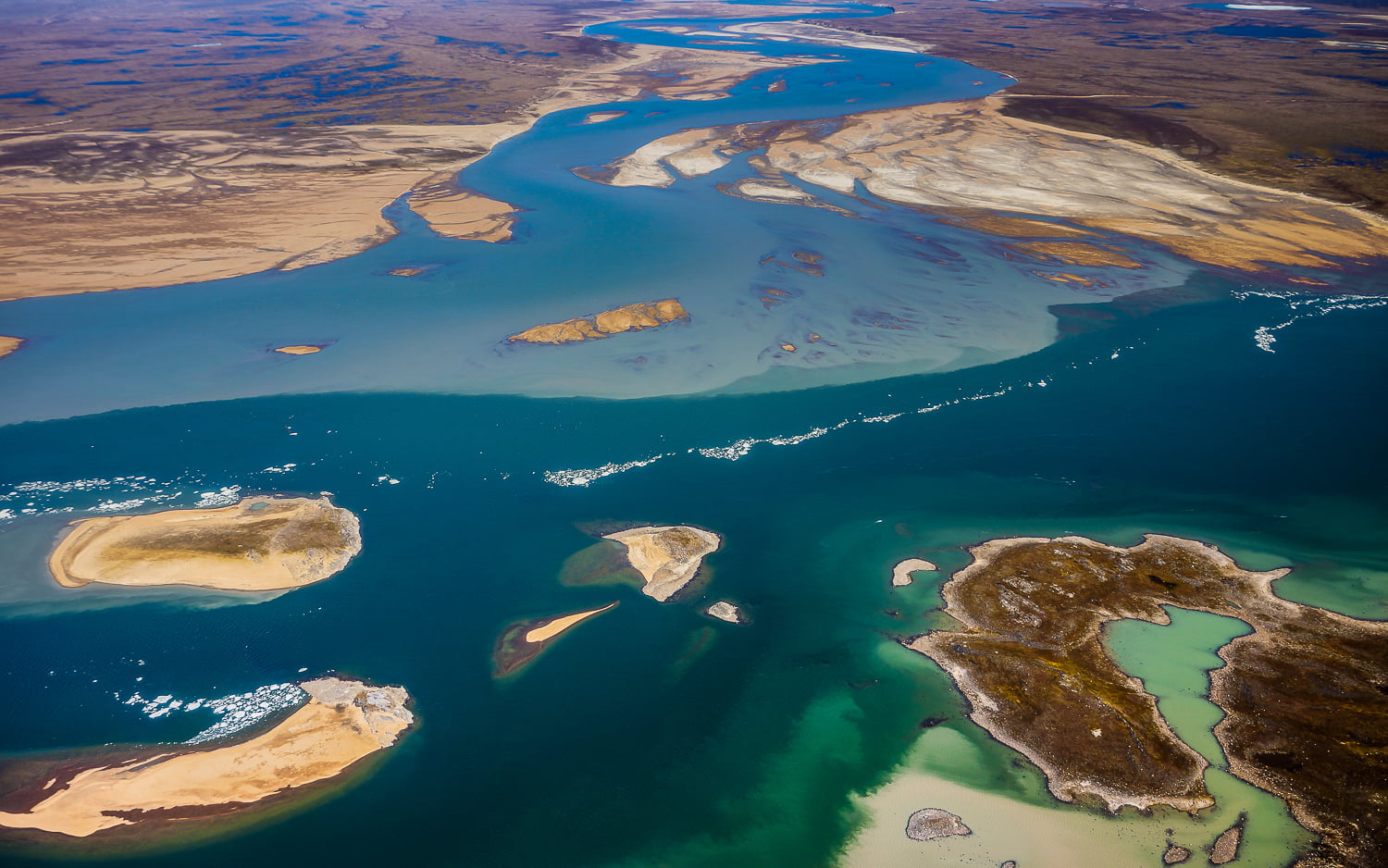
When bodies of water meet, they don’t always mix right away. Here we see the confluence of the Back and Hayes Rivers in the Canadian Arctic. The Back River appears as a darker blue-green color compared to the light turquoise Hayes River. The different colors reflect the levels of algae and sediment carried in their waters. As seen in both the aerial and satellite photos here, there’s a distinct line where the two waters meet without mixing, and that line persists for kilometers beyond their initial confluence. Typically, this lack of mixing between bodies of water is caused by differences in temperature, salinity, and turbidity (amount of sediment) that make the density of each river’s water different. (Image credit: top – R. Macdonald/Univ. of Manitoba, bottom – J. Stevens/USGS; via NASA Earth Observatory)


How the Hummingbird Got Its Hum
Summer hikes in the Rocky Mountains are frequently pierced by a hum that can deepen to a bomber-like buzz as hummingbirds flit by. They’re so small and fast that they’re hard to see, but they’re never hard to hear. A new study pins down just where that telltale hum comes from.
To determine the specific origin of the hummingbird’s sound, researchers observed hovering hummingbirds with an array of over 2,000 microphones and multiple high-speed cameras. With this set-up, they could create a 3D acoustic map of the bird’s sounds, correlated with its motions. They found that the bird’s sounds come primarily from aerodynamic forces generated during their distinctive wingstroke – not from vortices or the fluttering of their feathers.
They also found that the hummingbird’s fast wingstroke — about 40 times per second — fed into sounds at 40 and 80 Hz, as well as higher frequency overtones. Since these sounds are well within human hearing range, they make up most of what we hear from the birds. (Image credit: P. Bonnar; research credit: B. Hightower; via The Guardian; submitted by Kam-Yung Soh)

Underwater Explosions and Submarines
In the early days of submarines, it did not take physicists and engineers long to discover how destructive underwater explosions can be. In this Slow Mo Guys video, Gav gives us a glimpse of that destruction using a model submarine in a fish tank and several small explosives. You’ll have to be quick to notice the initial shock waves that ripple through the tank, but the footage captures spectacular detail on some of the slower-moving phenomena. You can see the uneven ripples of the explosion bubble’s surface as it expands. There are some great shots from the front and side showing the bubbly vortex ring that forms when the explosion hits the side of the tank wall (something that wouldn’t happen out in the ocean, of course). You can even catch a glimpse of some unexploded powder streaking out of the explosion. (Image and video credit: The Slow Mo Guys)

“Columbia”
“Columbia” is a music video illustrated with fluid dynamics, chemistry, and biology by the Beauty of Science team. It’s got everything from precipitation to crystallization, from infrared imagery of wakes to timelapses of growing molds. How many phenomena can you identify? (Video and image credit: Beauty of Science)

Loopy Networks and Bird Lungs
When mammals breathe, air flows back and forth inside our lungs. But in birds that inhale and exhale get transformed into one-directional flow inside their lungs. To figure out how, researchers built loopy networks of pipes that turn oscillating flow into unidirectional flow.
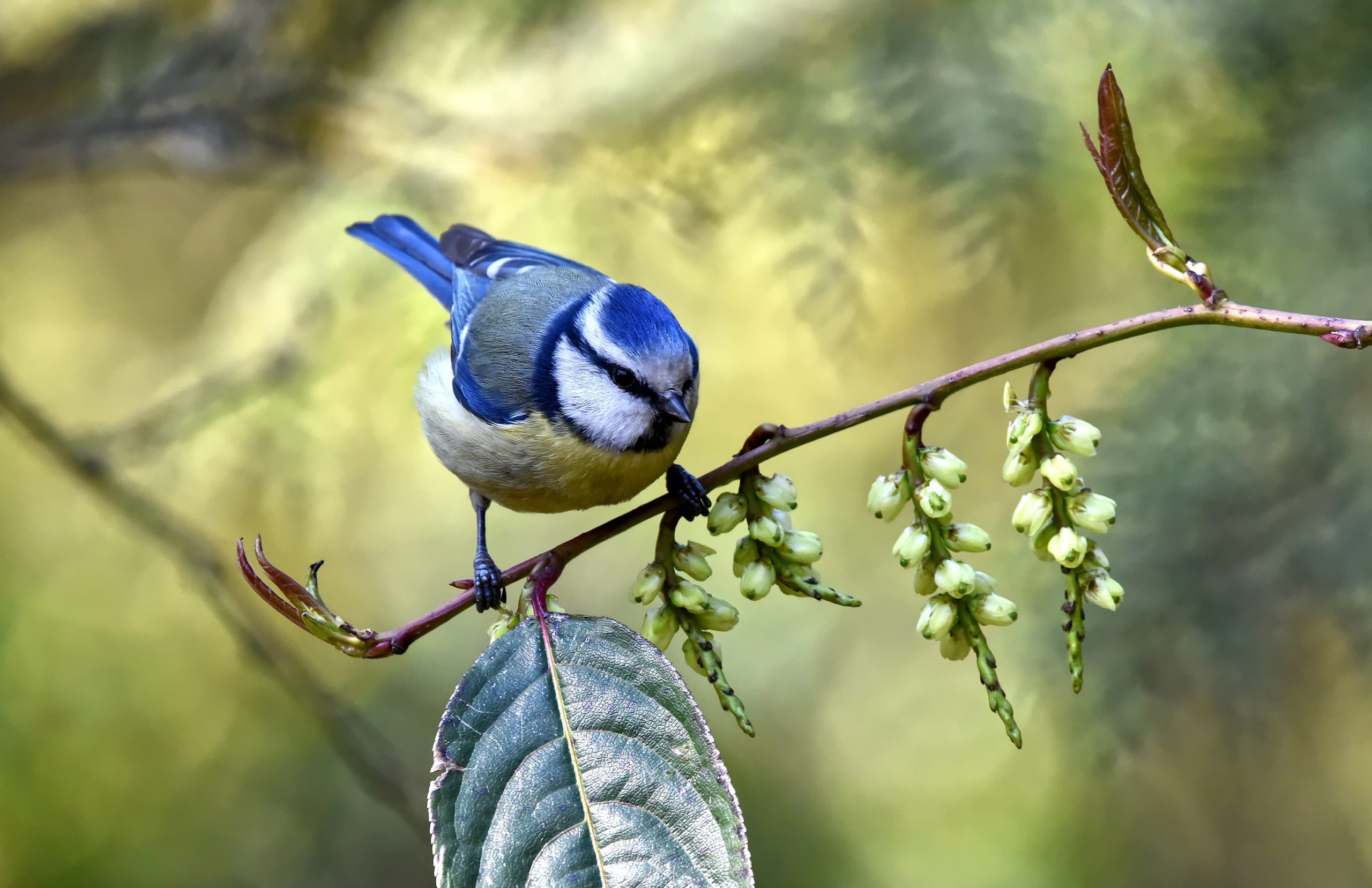
The simplest structure that does this is shown above. The main loop is driven by a pump that oscillates back and forth. A second loop connects through two T-junctions, oriented at 90-degrees to one another. Watch the particles in each loop carefully. Those in the bottom loop move back and forth, driven by the oscillating pump. But the particles in the upper loop only move in one direction! The key to this, the researchers found, are vortices that form at the T-junctions (last image). When the flow in the main loop changes direction, it creates vortices that block flow along one arm of the T-junction, thereby isolating the upper loop. (Image credit: bird – A. Mckie, others – Q. Nguyen et al.; research credit: Q. Nguyen et al.; via APS Physics; submitted by Kam-Yung Soh)

Signs of Spring
Nothing says, “Goodbye, winter!” quite like watching the ice disappear after a deep freeze. This timelapse video shows ice on Lake Michigan breaking up after a deep freeze. The first chunk to go is a massive plate of ice that moves off in a single large chunk. After that, the break-up takes place on a smaller scale, with individual pieces of ice tracing the flow of local currents. (Video and image credit: WGN News; submitted by ajhir)

Viscoelastic Coiling
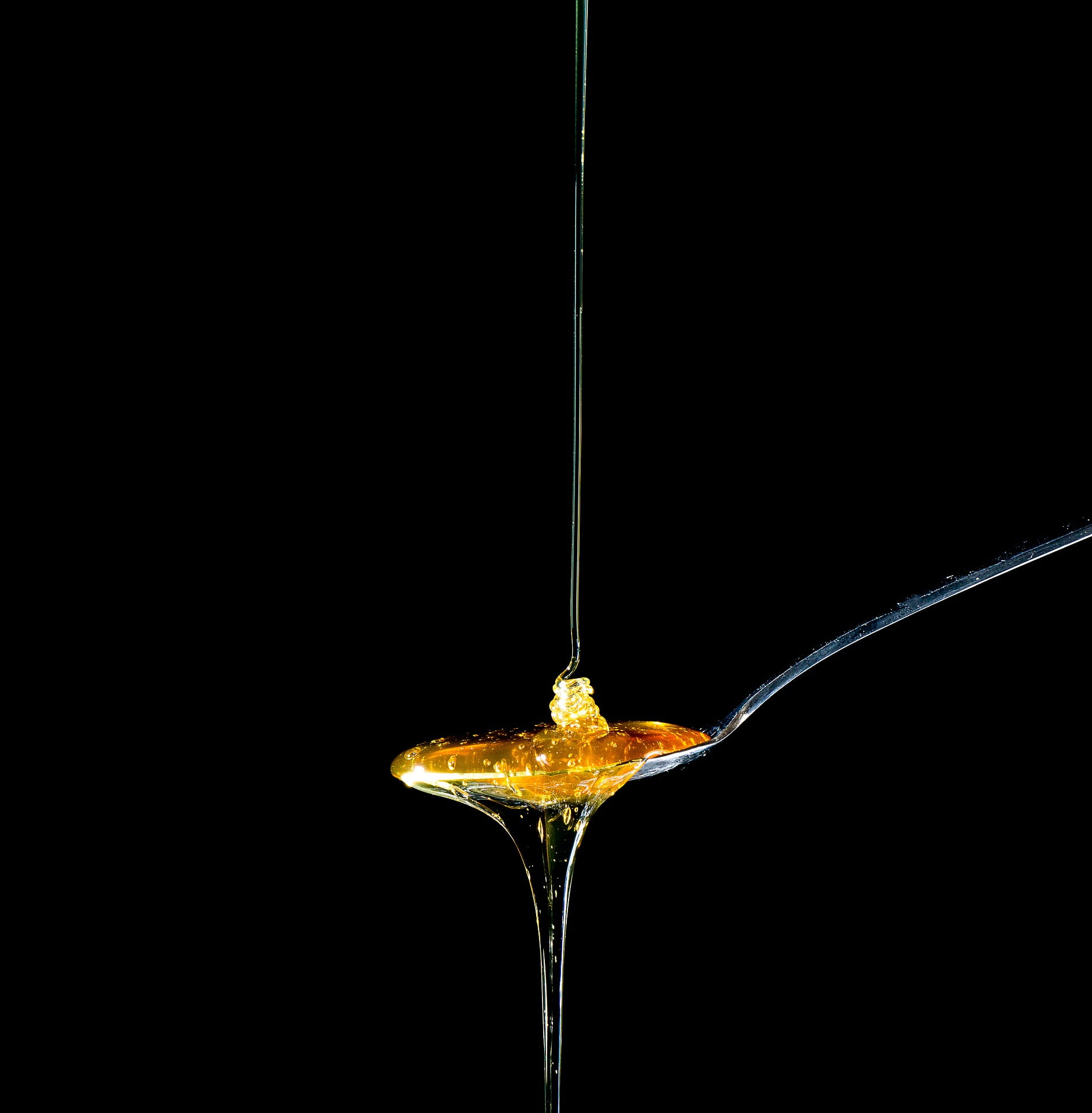
Drizzle honey or syrup from high enough, and you’ll see it coil like a liquid rope. This feature of viscous fluids also extends to polymer-filled viscoelastic fluids. But recent work shows that the elasticity of these fluids delays the onset of coiling; put differently, if you pour two fluids of comparable viscosity, the viscoelastic one will have to fall farther before it will start coiling. The authors also found that the coiling frequency for a viscoelastic fluid is smaller than a viscous one, given the same experimental conditions. (Image credit: flo222; research credit: Y. Su et al.)

Kelvin Wakes
Whether you’re watching ducks cruise by on a pond or a boat making its way across the ocean, you’ve probably noticed a distinctive V-shaped wake. This shape is known as a Kelvin wake, and it forms because waves in water don’t all move at the same speed. Instead, the speed a wave travels at depends on its wavelength; smaller wavelengths travel slower than larger ones, a phenomenon known as dispersion. The characteristic shape of a Kelvin wake is the result of many waves of different wavelength (and therefore speed) added together. (Video and image credit: Minute Physics)