When swimming in open waters, it pays to keep your ducks (or your goslings!) in a row. A recent study examined the waves generated behind adult water fowl and found that babies following directly behind them benefit from their wake. In the right spot behind its mother, a duckling sees 158% less wave-drag than it would when swimming solo. That’s such a large reduction that the duckling actually gets pulled along! And the advantage doesn’t just help one duckling; a properly-placed duckling passes the benefit on to its siblings as well. So any duckling that stays in line has a much easier time keeping up, but those who slip out of the ideal spot will have a much tougher time. (Image credit: D. Spohr; research credit: Z. Yuan et al.; via Science News; submitted by Kam-Yung Soh)
Month: November 2021

Flying on Soap Films?
YouTube channel Viral Video Lab has two videos showing 3D-printed gliders flying on wings formed from soap films. It’s a neat idea for a toy aircraft, though obviously not practical. But are the videos real? The channel features plenty of obviously fake concepts, like perpetual motion machines, and explicitly states in its About page that “videos shown on the channel may contain CGI effects.” They’re clearly not strangers to stretching the truth.
Sadly, I don’t have the means to properly test the concept, but it at least seems plausible (although there are some flight sequences in the videos themselves that I don’t think are totally real). There are bubble solutions out there capable of making quite giant, long-lasting bubbles, though they are more complicated than the simple soap and water solution suggested in the video. And having essentially flat wings doesn’t preclude gliding, as long as you have a positive angle of attack. I’d be interested to see if someone with a 3D-printer can recreate the effect. Let me know if you give it a try! (Video credit: Viral Video Lab; via Gizmodo)
“Beyond the Horizon”


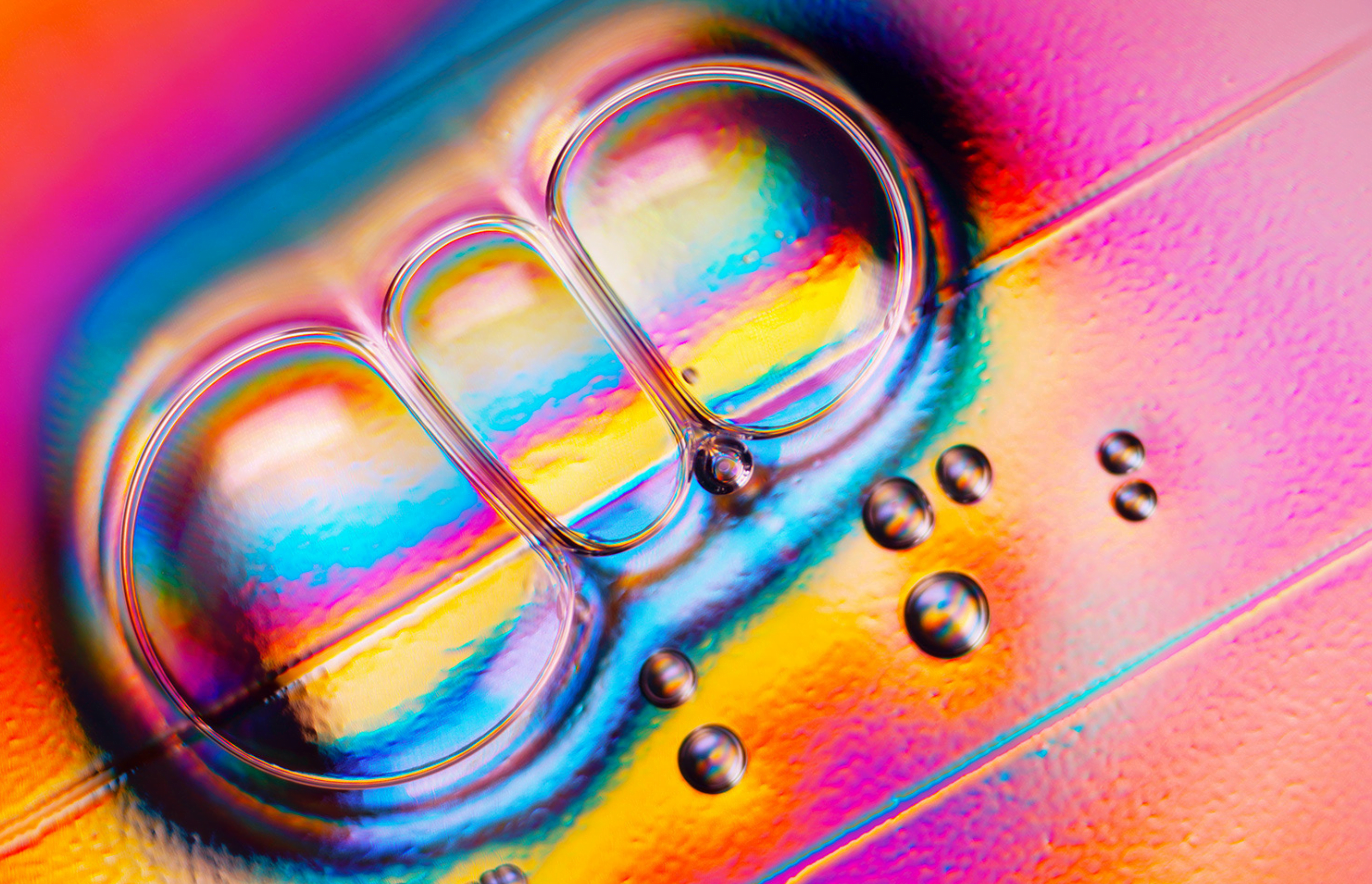
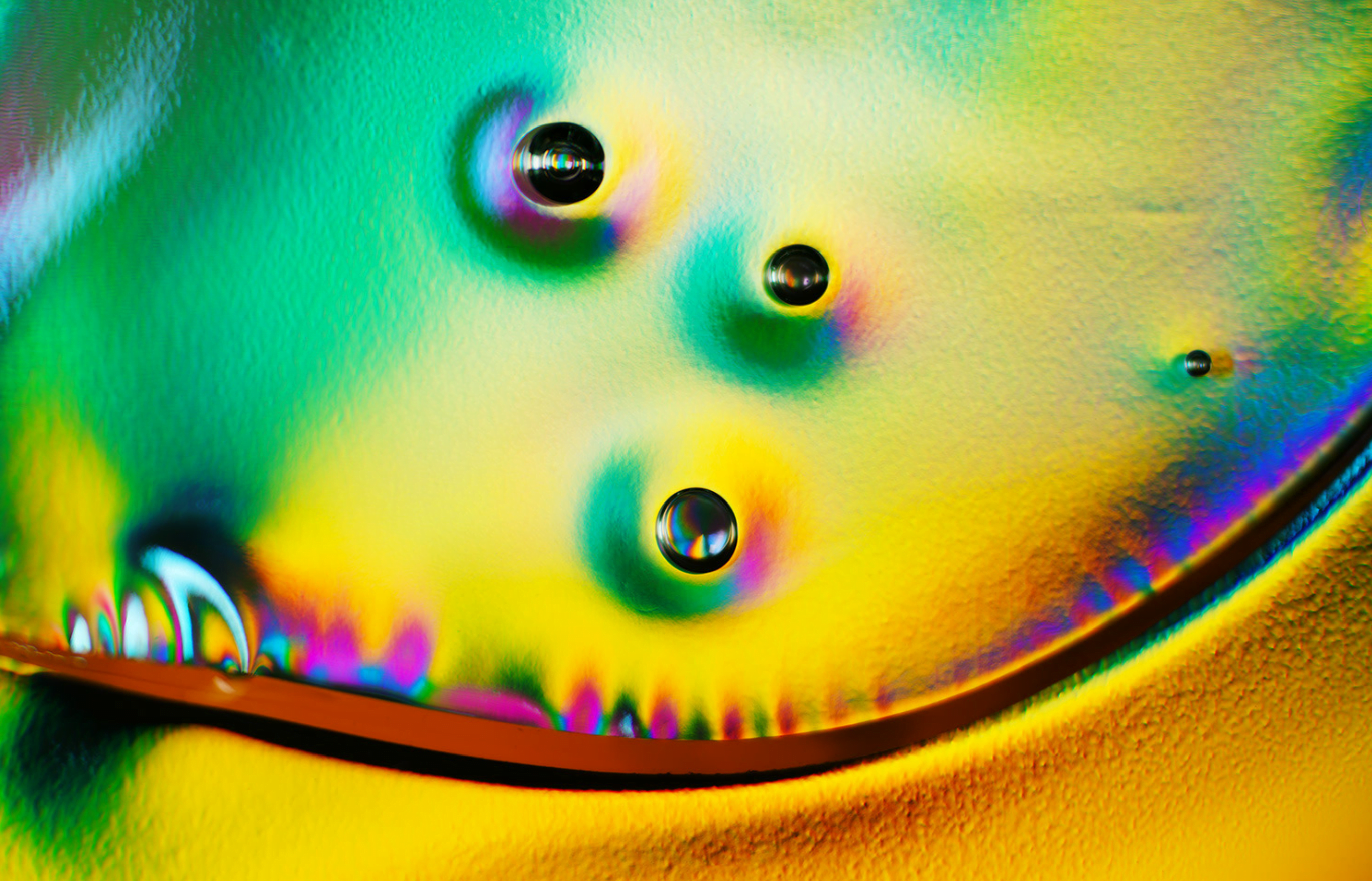


Shifting bubbles and psychedelic colors abound in this abstract video from artist Rus Khasanov. He provides no specifics as to the materials he uses for this video, but my guess is they likely include oil, soap, and polarizing filters. It’s a fun and funky video! See more of Khasanov’s work on his website and Instagram. (Image and video credit: R. Khasanov)

Mountains in the Sky
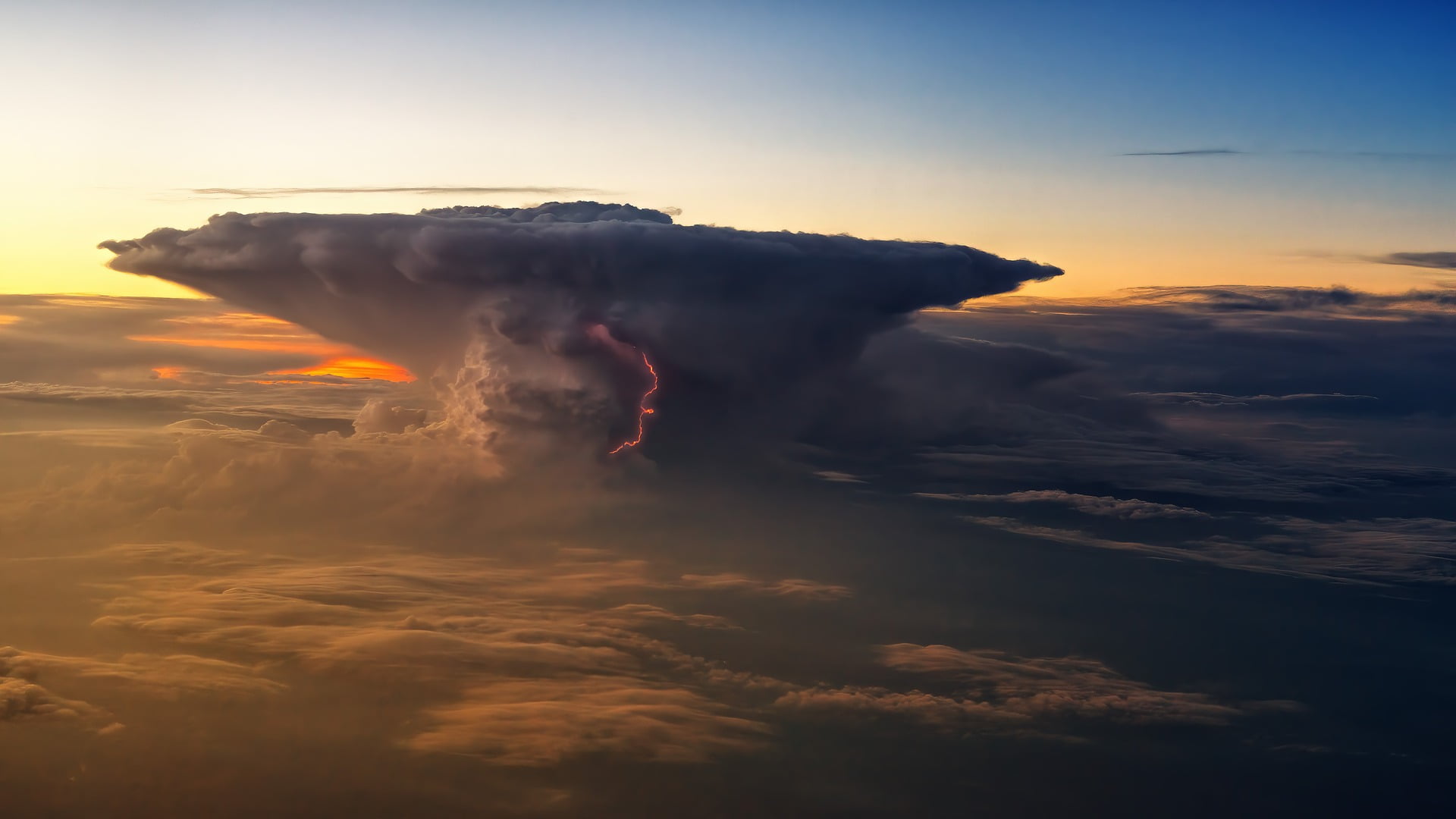
Our skies can sometimes presage the weather to come. In thunderstorms, a cirrus plume above an anvil cloud will often appear (visible by satellite) about half an hour before severe conditions are reported on the ground. A new study delves into the origins of these plumes and finds that they result from an internal hydraulic jump in the storm that acts a bit like an artificial mountain, driving air — and the moisture it contains — higher in the stratosphere than normal. Once the jump is established, the authors found it could drive 7 tonnes per second of water vapor into the stratosphere! (Image credit: jplenio; research credit: M. O’Neill et al.; via Science)

Liquid Umbrellas
Two well-timed and properly aligned droplets combine to create these umbrella-like fluid sculptures. The initial drop creates a jet that shoots upward. When the second drop hits that jet, it forms an expanding sheet of liquid like a miniature parasol. The higher the viscosity of the drops, the less lacy and unstable the sheet’s rim will be.
Although set-ups for these sorts of pictures can be finicky, they’re very doable, even for amateur photographers. In fact, the techniques used here have been around for about a century! (Image and research credit: A. Kiyama et al.)

Dune Invasion
Migrating sand dunes can encounter obstacles both natural and manmade as they move. Dunes — both above ground and under water — have been known to bury roads, pipelines, and even buildings. A recent experimental study looks at which obstacles a dune will cross and which will trap it in place. Their set-up consists of a narrow channel built in a ring, essentially a racetrack for dunes. Flow is driven by a series of paddles that rotate opposite the tank’s rotation.
The team studied obstacles of different shapes and sizes relative to their dunes, and they found that dunes were generally able to cross obstacles that were smaller than the dune. Obstacles larger than the dune would trap it in place, and, for obstacles close to the same size as the dune, round obstacles were easier to cross whereas sharp-angled ones tended to trap the dune.
The idealized nature of their experiment means that their results aren’t immediately applicable to the complex dunes of the outside world, but the study will be an important touchstone for those predicting dune behavior through numerical simulation. Studies like those require experimental cases to validate their baseline simulations. (Image credit: top – J. Bezanger, figure – K. Bacik et al.; research credit: K. Bacik et al.; via APS Physics)

On the Butterfly Effect
Fluid dynamics is a veritable playground of chaotic systems, but that doesn’t always translate to easy explanations, as Henry Reich points out in this Minute Physics video. The common metaphor for chaos is the Butterfly Effect, an idea that a butterfly flapping its wings causes a typhoon on the other side of the world. I agree with Henry that this is a poor example of chaos, for many of the same reasons he lays out. In reality, we call a system chaotic when its outcome is so sensitive to the initial conditions that the result becomes effectively unpredictable. And there are some very simple systems that are chaotic, like a double pendulum or a three-body problem. The weather is, honestly, too complicated of a system for the metaphor to make sense, but fluid dynamics does have other, simpler examples, like mixing in porous media, bouncing droplets, or, my personal favorite, the fluid dynamical sewing machine. (Video credit: Minute Physics)

Stormy Landscapes


Photographer Mitch Dobrowner captures the power of major storm systems across the western United States and Canada in these dramatic black-and-white images. Misty clouds, massive downpours, bulbous mammatus clouds, and lonely landscapes abound. You can find more of his work on his website and Instagram. (Image credit: M. Dobrowner; via Colossal)
Marshland Wave Damping
Coastal marshes are a critical natural defense against flooding. The flexible plants of the marsh both slow the water’s current and help damp waves. As a result of that hydrodynamic dissipation, marshes help protect against erosion and reduce the magnitude of flooding events. But coastal managers looking to maintain or improve their marshes in order to mitigate climate-change-driven storms need to be able to predict what level of vegetation they need.
To that end, a team of researchers has built a new model to better capture the flow effects of marsh grasses. Building from an individual, flexible plant (as opposed to a rigid cylinder, as grass is often represented), the authors constructed a model able to predict wave dissipation for many marsh configurations, which should help better predict the infrastructure changes needed in different coastal regions. (Image credit: T. Marquis; research credit: X. Zhang and H. Nepf; via APS Physics)
Siberia’s Lena River Delta
As rivers near the sea, they often slow down and branch out, creating intricate paths through delta wetlands. This video explores the Arctic’s largest river delta, that of the Lena River in Siberia, during its spring and summer flood season. The images were all taken by satellite and processed with color enhancements to highlight patterns in the water. Although this is not quite how the area would appear by eye, all of the visible patterns are real. (Image credit: N. Kuring/NASA’s Ocean Color Web; video credit: K. Hansen; via NASA Earth Observatory)