As sea ice disappears in the Arctic Ocean, it leaves behind higher waves on the open water. These large waves help inject sea salt and organic matter into the atmosphere, where they can serve as nucleation sites for ice crystals. A recent field expedition in the Chukchi Sea observed high concentrations of organic particulates in the air and more ice-producing clouds during periods of high wave action. So, oddly enough, the loss of sea ice may lead to more cloud cover and precipitation in the Arctic (though the effect is likely not strong enough to entirely mitigate the effects of ice loss). It’s another example of the intricate and complex connections between ice, ocean, and atmosphere in the Arctic climate. (Image credit: A. Antas-Bergkvist; research credit: J. Inoue et al.; via Gizmodo)
Month: November 2021

Making Lava Lamps


Since their invention in the 1960s, lava lamps have been a fascinating example of convection in action. In this video, we see how they’re manufactured, including blowing the glass bottles, shaping the metal holder, and filling the lamps. The key to the lamp’s performance is the delicate thermal balance of its two liquids. As the waxy liquid warms, it floats up the lamp until it reaches the top, cools, and sinks back down to begin again. The exact formulation of the liquids is a closely guarded secret! Want more lava lamps? Check out how a wall of them help secure Internet traffic. (Image and video credit: Business Insider)
Making Horsehair Pottery


Native American potter Eric Louis combines traditional and modern techniques in his horsehair pottery. Like his mother and grandmother before him, he collects local clay and pottery shards to make the slip that forms his pieces. After molding and an initial firing in a kiln, he uses wood chips to keep the pottery hot while he applies horsehair. The hair ignites and carbonizes, leaving behind distinctive patterns in the clay that create a backdrop for his etchings. See more of his finished work here. (Image and video credit: Insider)

Hagfish Slime
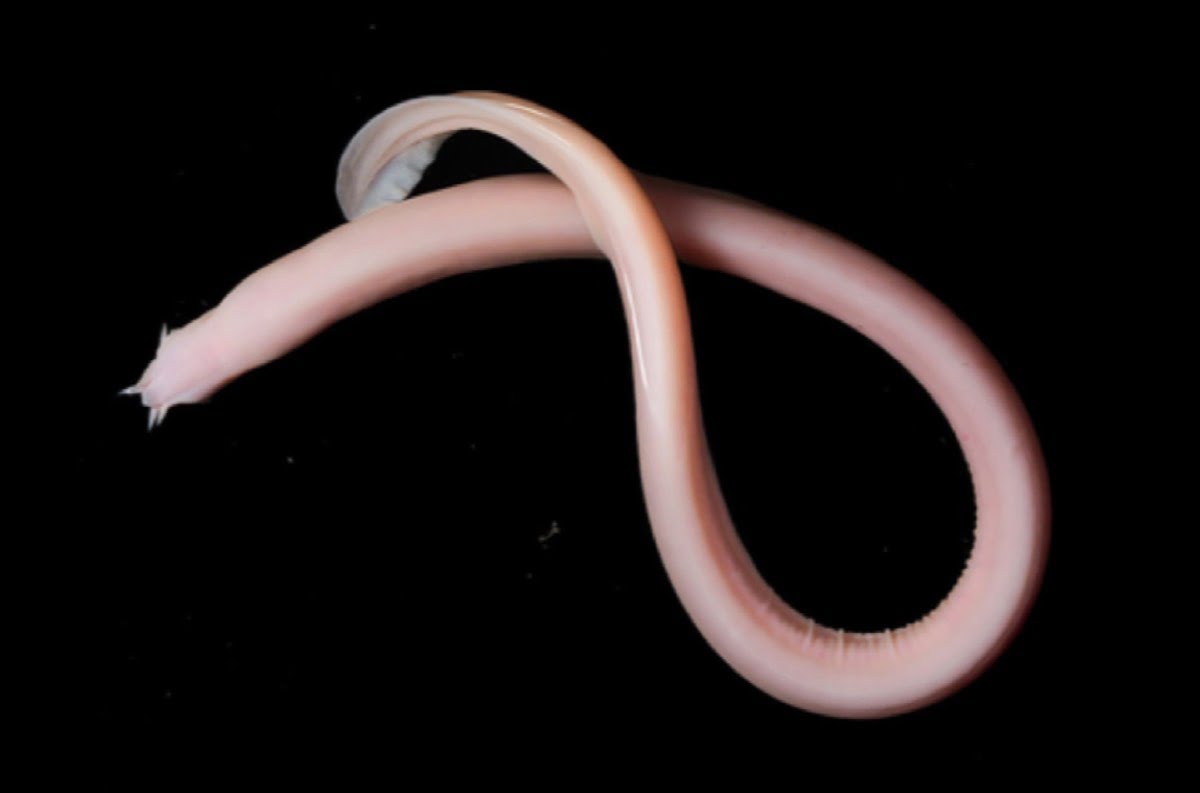
The eel-like hagfish is a superpowered escape artist, thanks to its slime. When threatened, the hagfish releases long protein-rich threads that, when combined with turbulent sea water, unravel to form large volumes of viscoelastic slime that clog the gills of its predators. A new study shows that larger hagfish produce longer and thicker threads in their slime, enabling them to escape larger predators than their smaller brethren can.
The properties of hagfish slime are tuned for defense. When stretched, the long protein threads resist, making the slime more viscous. Since most fish use suction methods to catch prey, that means a predator attacking a hagfish will quickly exacerbate its slimy problems. But the hagfish itself can easily escape its slime by tying itself in a knot. The threads inside the slime collapse when sheared, so the knot-tying of the hagfish slips the slime right off. (Image credit: T. Winegard; research credit: Y. Zeng et al.; via Ars Technica; submitted by Kam-Yung Soh)
Paint Spinning
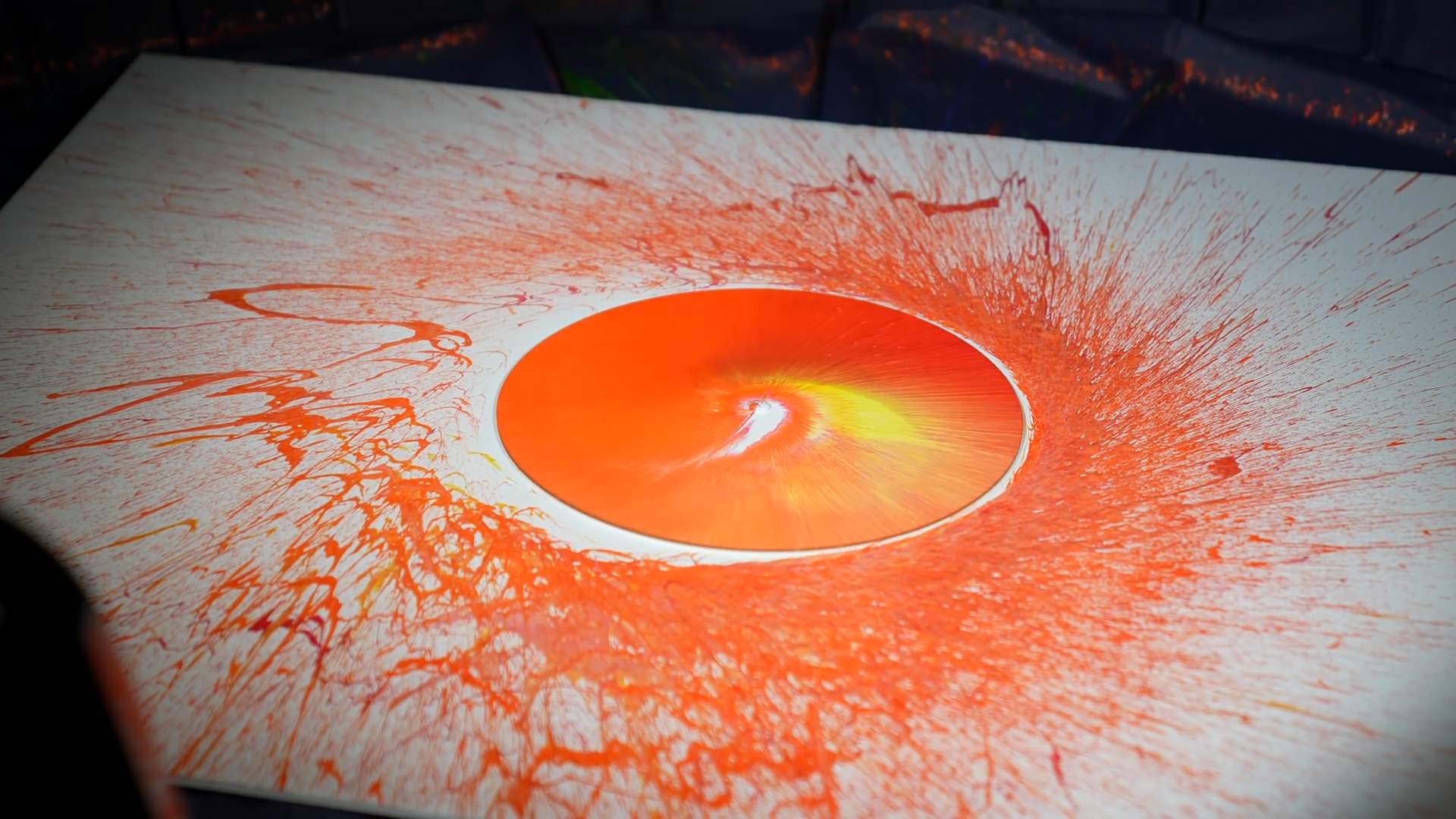
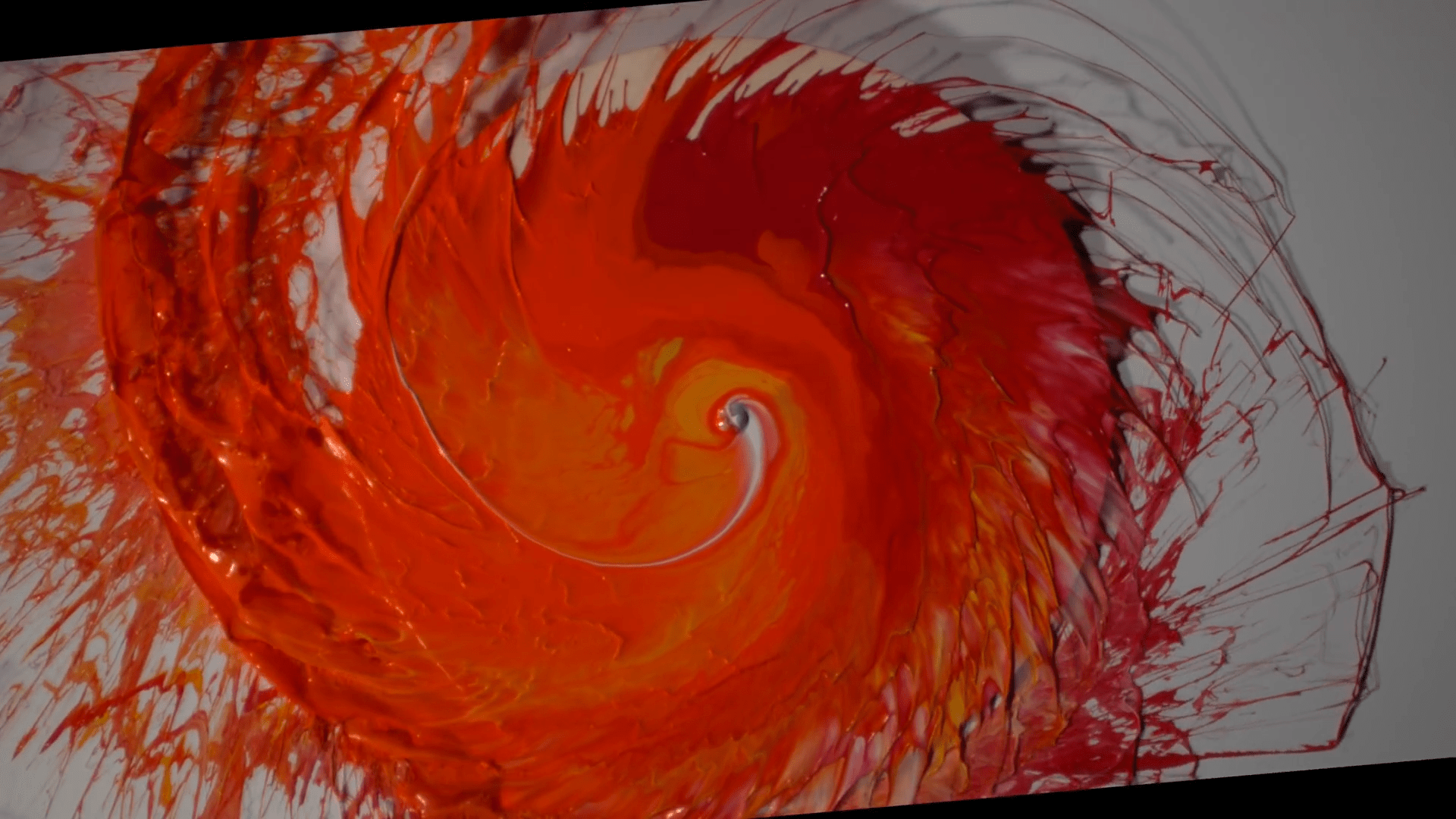
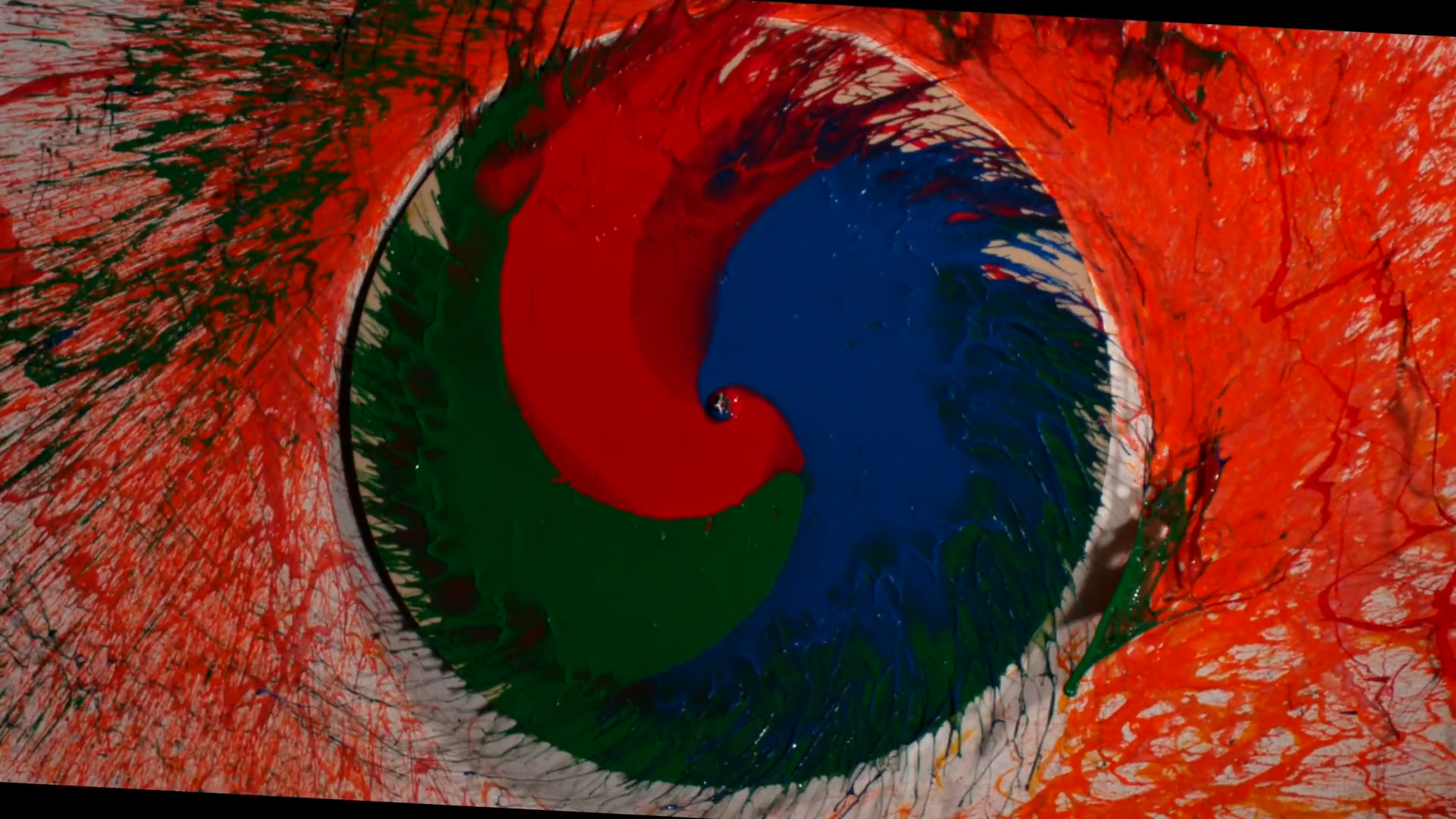
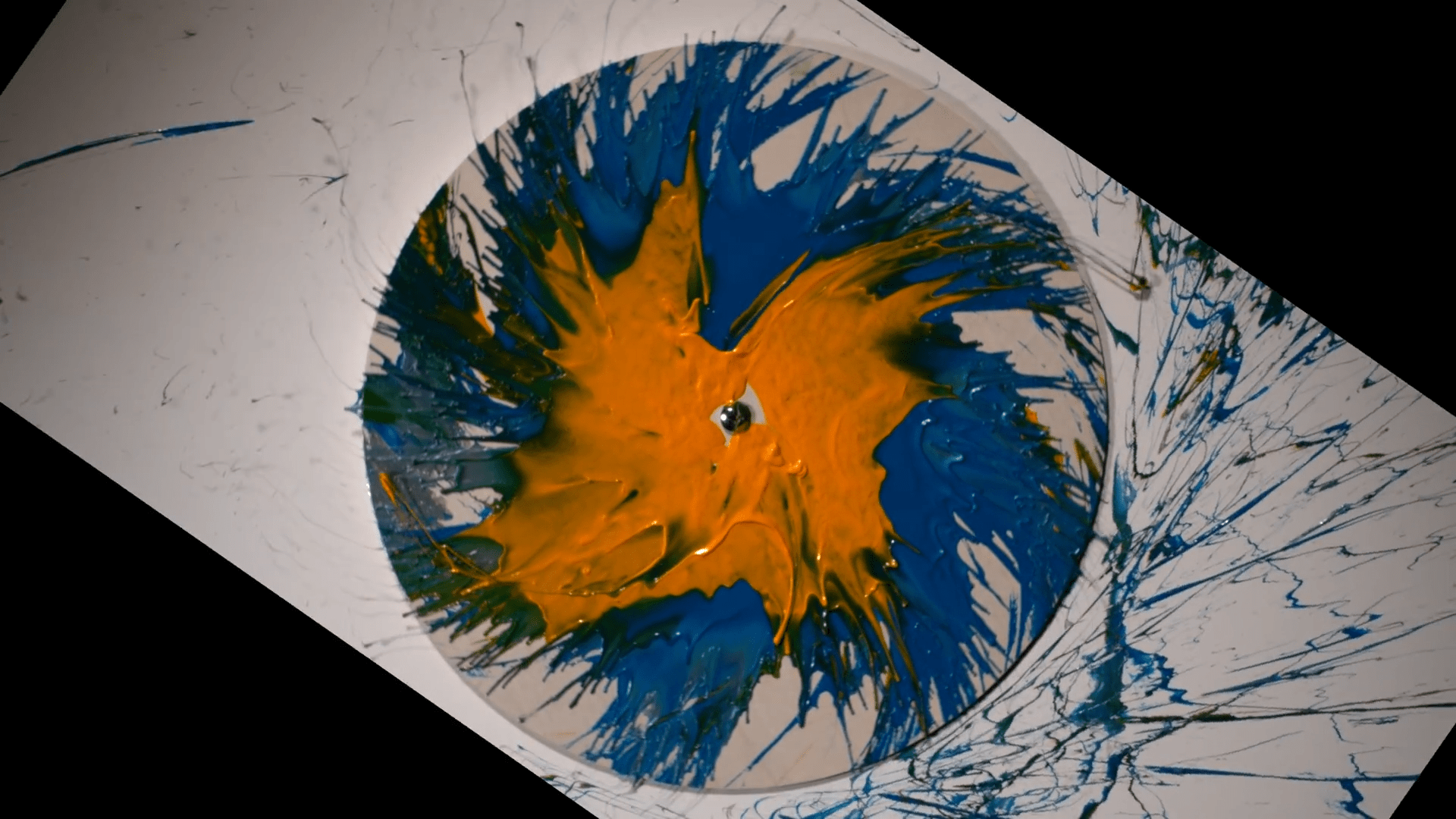
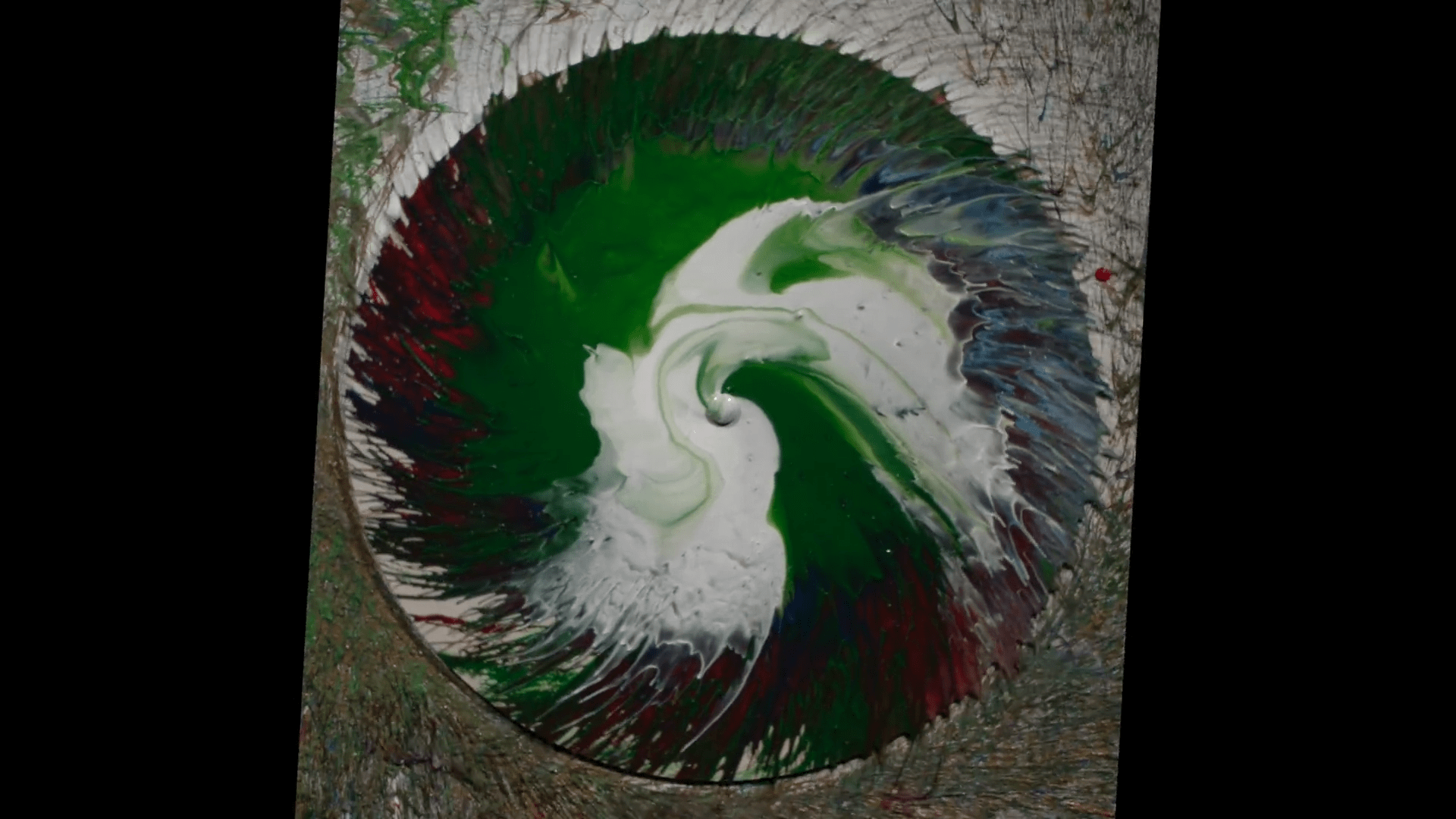
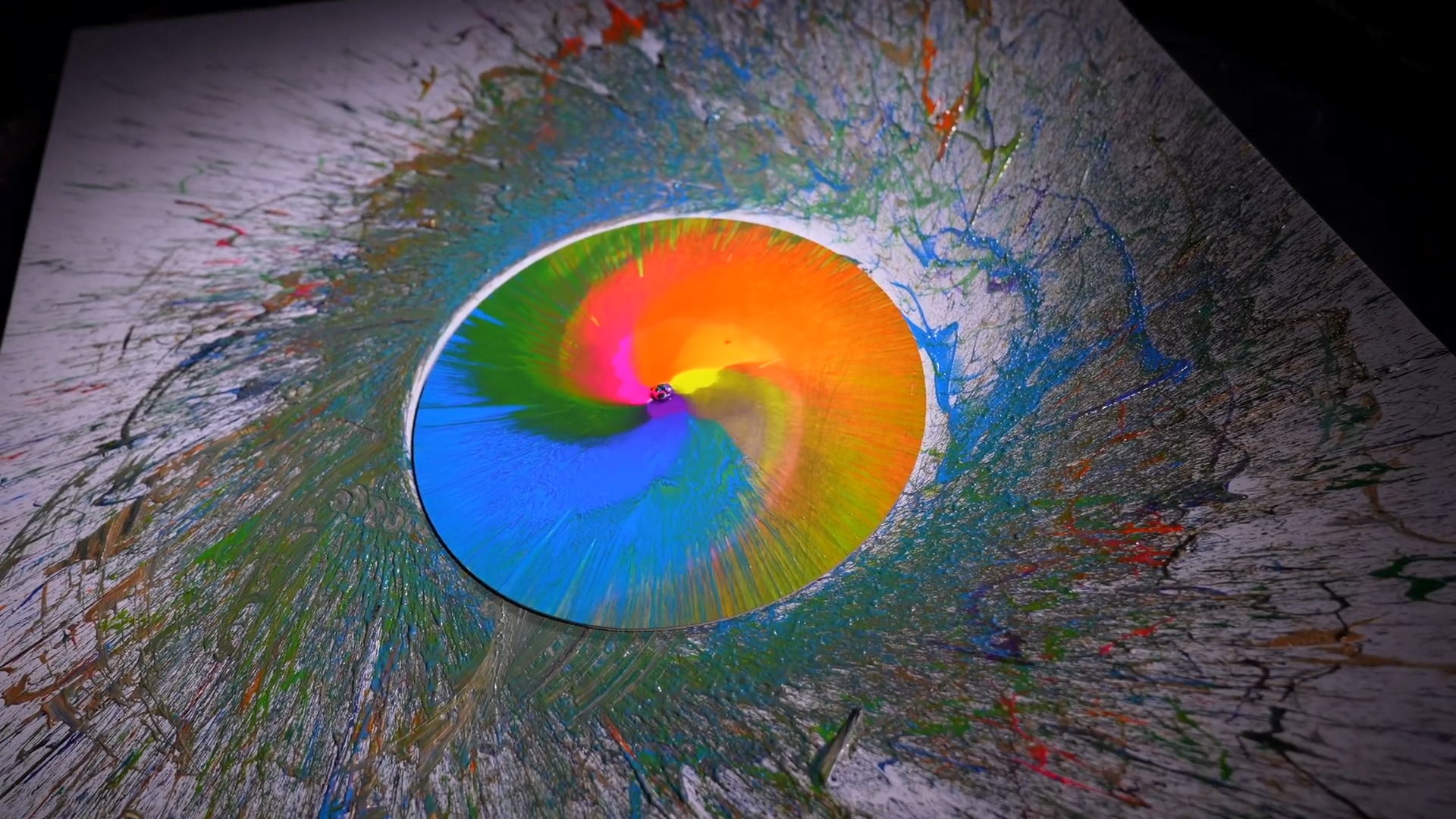
In a return to their roots, this Slow Mo Guys video features paint flowing on (and off!) a spinning disk. To help us see what’s going on, Gav uses a trick that’s familiar to many fluid dynamicists: he rotates the high-speed footage at the same speed that the disk rotates. This transformation places the viewer into a reference frame where the disk appears stationary, so that small changes in the flow are apparent.
It makes for a gorgeous view as centrifugal force flings the paint outward and eventually breaks it into drops. The rotation speed is unfortunately so high that the spinning completely dominates all other forces. The few runs with more viscous acrylic paint show some hints of more interesting behaviors that might be visible with a slower rotation rate (which would make the tug of war between inertia/viscosity/surface tension and centrifugal force less one-sided). Anyone got a high-speed camera, some speed control, and a willingness to get messy? (Image and video credit: The Slow Mo Guys)

Turbulent Puffs
When a burst of air gets expelled into still surroundings — like when a person coughs — it forms a turbulent puff like the one seen here. Puffs can be surprisingly long-lasting, though these miniature clouds slow down and expand over time. How they behave is critical to understanding the spread of pollution as well as how respiratory illnesses like COVID-19 travel. In this study, researchers found that buoyancy is also a critical factor. When the puff is warmer than its surroundings, it rises higher, lasts longer, and travels further. That might help explain why respiratory illnesses like the flu spread more readily in the winter than in warmer months. (Image and research credit: A. Mazzino and M. Rosti; via Physics World; submitted by Kam-Yung Soh)

Bullseye
The Cumbre Vieja volcano in the Canary Islands began erupting in mid-September 2021. This satellite image, captured October 1st, shows a peculiar bullseye-like cloud over the volcano. Hot water vapor and exhaust gases rose rapidly from the erupting volcano until colliding with a drier, warmer air layer at an altitude of 5.3 kilometers. The warm upper layer, known as a temperature inversion, prevented the volcanic gases from rising any further, so they instead spread horizontally. The outflow from the volcano varies and is non-uniform, and its fluctuations generated gravity waves that are visible here as the expanding rings of clouds. (Image credit: L. Dauphin; via NASA Earth Observatory)

“Ruin of the Tides”
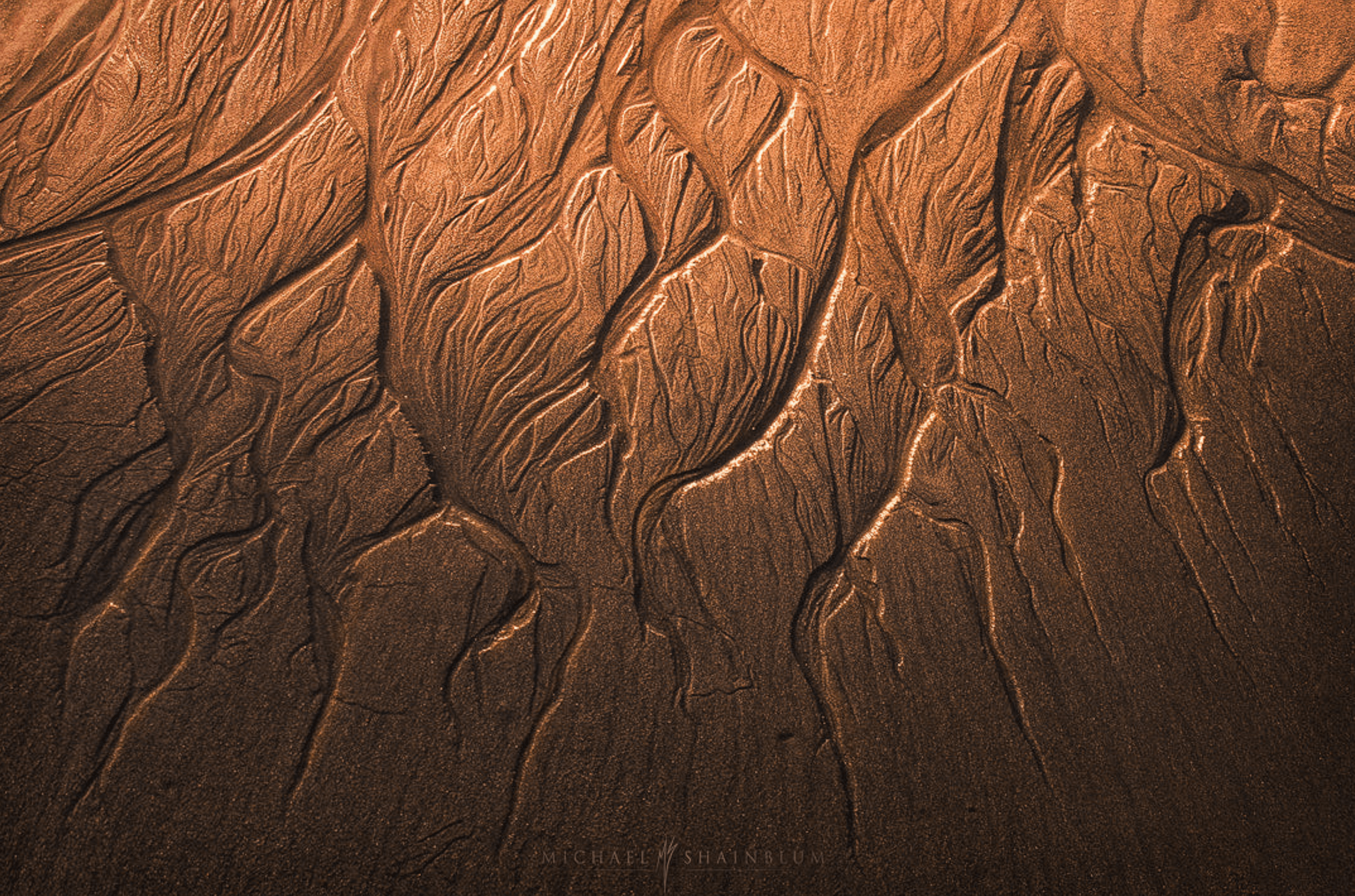
As tides and waves flow back and forth over a beach, they erode the sandy shore. Here photographer Michael Shainblum captures the streaks and rivulets left by a falling tide. These “ruins” resemble an extensive river delta viewed from above. I love the complicated branches carved by the water’s retreat. (Image credit: M. Shainblum)

Modelling Volcanic Bombs
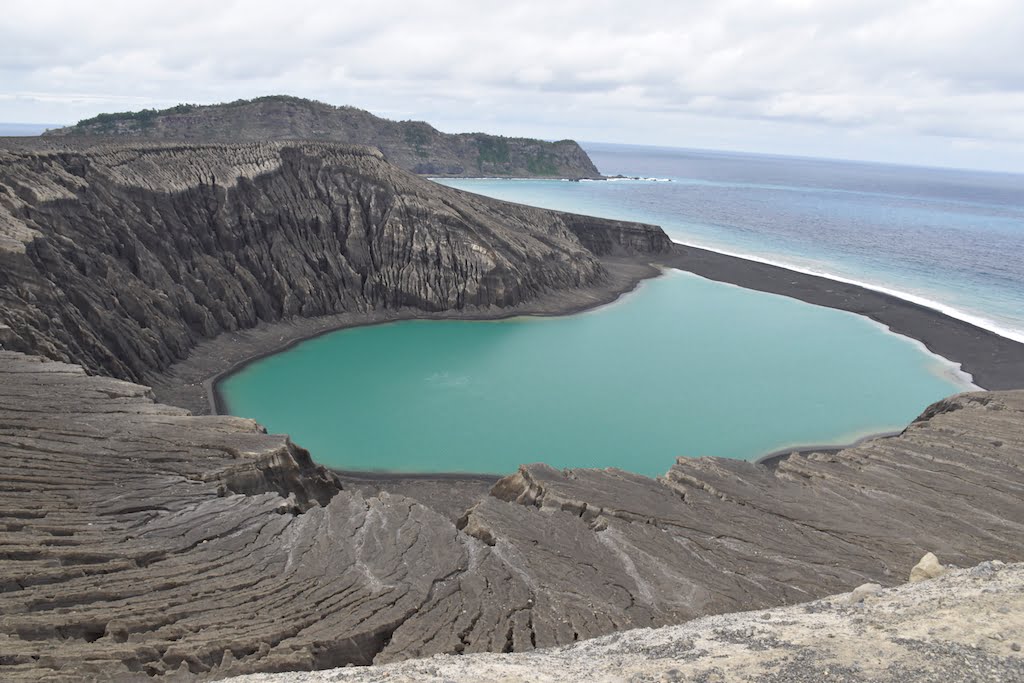
When magma meets water on its journey to the surface, the two form a large, partially molten chunk known as a volcanic bomb. As you would expect from their name, these bombs can often be explosive, either in the air or upon impact. But a surprising number of these bombs never explode. Since catching volcanic bombs in action is far too dangerous, researchers modeled them instead to determine what makes a dud.

The type of volcanic bomb they were most interested in comes from Surtseyan eruptions, where the bombs travel through shallow sea or lake water, collecting moisture along the way. When the water reaches the molten interior of the volcanic bomb, it flashes into steam. That’s where the pressure to explode the bombs comes from. But the team found that the bombs are also extremely porous, thanks to bubbles created as the magma depressurizes on its trip to the surface. If the bomb is porous enough, steam escapes the rock before it can build to explosive pressures. (Image credit: top – NASA, others – E. Greenbank et al.; research credit: E. Greenbank et al.; via NYTimes; submitted by Kam-Yung Soh)

The Acoustics of Stonehenge
Stonehenge has long been an astronomical wonder, but did you know it’s an aural wonder as well? A team of acoustic engineers and an archaeologist constructed and tested a 1:12 scale model of the monument as it existed around 2200 B.C. Their model included 157 3D-printed stones (which took about nine months to print!), carefully engineered to reflect ultrasonic frequencies the way the full-size Stonehenge reflects frequencies in our auditory range. (Using the higher frequency sound at a smaller physical scale allows engineers to match the physics of the real henge.)
The team found that the stones of the henge amplified sound by about 4 decibels, enough to make a speaker’s voice easy to hear, even when facing a different direction. The structure also provided some reverberation that would enhance musical instruments or singing. Stonehenge had reverberation levels similar to a modern-day large movie theater, which is absolutely incredible for a prehistoric structure constructed in the open air.
For more interesting details on the model’s construction and testing, check out this article at Physics Today. (Image and research credit: T. Cox et al.)